Transcranial ultrasound stimulation (TUS) is an emerging non-invasive neuromodulation technique that requires careful planning of acoustic and thermal simulations. The methodology describes an image processing and ultrasound simulation pipeline for efficient, user-friendly, streamlined planning for human TUS experimentation.
Method Article
Pipeline for Planning and Execution of Transcranial Ultrasound Neuromodulation Experiments in Humans
In This Article
Summary
Abstract
Transcranial ultrasound stimulation (TUS) is an emerging non-invasive neuromodulation technique capable of manipulating both cortical and subcortical structures with high precision. Conducting experiments involving humans necessitates careful planning of acoustic and thermal simulations. This planning is essential to adjust for bone interference with the ultrasound beam's shape and trajectory and to ensure TUS parameters meet safety requirements. T1- and T2-weighted, along with zero-time echo (ZTE) magnetic resonance imaging (MRI) scans with 1 mm isotropic resolution, are acquired (alternatively computed tomography x-ray (CT) scans) for skull reconstruction and simulations. Target and trajectory mapping are performed using a neuronavigational platform. SimNIBS is used for the initial segmentation of the skull, skin, and brain tissues. Simulation of TUS is carried over with the BabelBrain tool, which uses the ZTE scan to produce synthetic CT images of the skull to be converted into acoustic properties. We use a phased array ultrasound transducer with electrical steering capabilities. Z-steering is adjusted to ensure that the target depth is reached. Other transducer configurations are also supported in the planning tool. Thermal simulations are run to ensure temperature and mechanical index requirements are within the acoustic guidelines for TUS in human subjects as recommended by the FDA. During TUS delivery sessions, a mechanical arm assists in the movement of the transducer to the required location using a frameless stereotactic localization system.
Introduction
Commonly used non-invasive neurostimulation techniques include transcranial direct current stimulation (tDCS) and transcranial magnetic stimulation (TMS). However, both have limited penetration depth and low precision1,2. By contrast, transcranial ultrasound (TUS) is an emerging non-invasive technique capable of enhancing or suppressing neuronal activity3,4,5 and targeting cortical or subcortical structures at millimeter precision6,7. Animal models using rodents4,8,9, rabbits10, sheep5,11, swine6, and nonhuman primates7,12,13,14 have shown the efficacy and safety of TUS. Studies have demonstrated that targeting various brain regions can elicit limb movements8 in rats, somatosensory evoked potentials (SSEPs) in swine6, and changes in visuomotor activity12, cognitive, and motivational decision-making in nonhuman primates13 among other changes in behavior. In humans, TUS has been observed to change motor evoked potentials (MEPs) and performance on a reaction time task when targeting the primary motor cortex15,16 and altered performance on a tactile discrimination task and SSEPs when targeting the somatosensory cortex17 and sensory thalamus18. Histological analyses have revealed no gross or microscopic structural changes associated with TUS in swine6, sheep5,11, rabbits10, and nonhuman primates14, and no side effects have been seen that significantly differ from other non-invasive neurostimulation techniques19.
TUS uses pulsed low-intensity focused ultrasound at a frequency between 200 kHz and 700 kHz to produce a transient neuromodulatory effect. The typical spatial-peak pulse-average intensity (Isppa) in situ is 10 W/cm2 or less, with reported duty cycles (percentage of time when ultrasound is on) ranging from 0.5% to 70% in humans20,21,22,23,24. Although the mechanisms of TUS neuromodulation have been proposed to mainly involve mechanical agitation of lipid membranes leading to the opening of ion channels25,26,27, possible thermal and cavitation effects cannot be ignored. They are assessed through mechanical (MI) and thermal (TI) indices. The MI describes the predicted cavitation-related bioeffects that will occur with TUS, whereas the TI describes the potential temperature increase within tissues following ultrasound application28,29. Furthermore, changing the frequency and input intensity also causes the MI and TI to change. Higher frequencies have better spatial resolution and decrease the probability of mechanical bio-effects; however, they have stronger absorption in the tissue, which increases the potential for temperature rise28. Alternatively, lower frequencies at the same intensity increase the MI. Similarly, increasing the intensity tends to increase the magnitude of mechanical and thermal bio-effects30. It is, therefore, imperative that careful planning and simulation be performed before experimentation sessions for all TUS parameters that will be implemented.
Planning a TUS experiment requires the identification of the target and trajectory of interest and the performance of thermal and acoustic simulations. Simulations assist in optimizing mechanical effects and mitigating the thermal effects of TUS on tissues. They require understanding the prediction of skull heating, pressure amplitude of the ultrasound at the focal point, focal correction, and other heating within the skull and skin. Adequate simulation ensures the focal point will reach the target of interest and safety parameters for ultrasound use set out by the safety guidelines on biophysical safety as recommended by the International Transcranial Ultrasonic Stimulation Safety and Standards Consortium (ITRUSST)31, which are based on FDA and Health Canada recommendations, are followed. Recent studies have also highlighted an auditory confounding effect accompanied by TUS32,33,34 in animals and humans, whereby TUS stimulation can activate auditory pathways in the brain to elicit responses32,33,34. Transection of the auditory nerves32, removal of cochlear fluid32, or chemical deafness33 in rodents have been employed to diminish these effects in animals. In humans, administering an auditory tone through headphones has been used to effectively mask auditory noise from TUS, controlling for the TUS-induced auditory activity confound34. This highlights the need to control for auditory noise in sham stimulation conditions, which must be incorporated into protocol planning, design, and implementation.
Here, we present a guide on how to appropriately complete the preparation (step 1, step 2), planning (step 3), simulations (step 4), and TUS delivery (step 5) required to perform TUS neuromodulation experiment in humans.
Protocol
All methods involving the use of human subjects were performed in compliance with the Tri-Council Ethical Conduct for Research Involving Humans, and the protocol was approved by the Conjoint Health Research Ethics Board (CHREB) at the University of Calgary. All subjects provided informed written consent before participation. Human participants were required to be healthy, right-handed adults between ages 18 and 40 willing and able to complete a magnetic resonance imaging (MRI) scan. Exclusion criteria included family history of seizure, mood, or cardiovascular disorders, ear trauma, alcohol or drug dependency, use of prescription medications, metal implants including a pacemaker, pregnancy, cardiovascular disorders, history of neurological or psychiatric disorder, inability to communicate with investigator and study staff, and legal incapacity or limited legal capacity. The protocol described below follows the recommendations by ITRUSST on the standardized reporting of TUS studies35. The details of the equipment, software, and necessary weblinks used in this study are listed in the Table of Materials.
1. High-resolution magnetic resonance imaging
- Image the participant using a 24-channel head/neck coil.
NOTE: Alternatively, the best head/neck coil available at the site is sufficient to obtain an anatomical MRI. - Collect T1- and T2-weighted MR images, and Zero-time echo (ZTE) sequences at 1 mm resolution.
NOTE: It is recommended that MR images are collected without the participant wearing over-ear headphones, as it can impact image reconstruction and make subsequent planning and implementation steps difficult. Instead, it is recommended that the participant only wear earplugs for MR safety.- For T1-weighted imaging, use a 3D inversion recovery-prepared fast spoiled gradient echo (FSPGR) sequence with the following parameters: repetition time (TR) = 8.4 ms, echo time (TE) = 3.2 ms, inversion time (TI) = 650 ms, flip angle of 10 degrees, a field of view measuring 256 mm x 256 mm x 188 mm, matrix size of 256 x 256 x 188, GRAPPA (ARC) factor of 2 in the phase encode direction, and sagittal-oblique orientation to approximate alignment with AC-PC.
NOTE: The total scan time is 5 min and 21 s. - For T2-weighted imaging, use a 3D fast-spin echo (FSE) with the following parameters: TR = 3000 ms, TE = 60-90 ms, an echo train length of 130, the field of view measuring 256 mm x 225 mm x 188 mm, matrix size of 256 x 256 x 188, and a sagittal-oblique orientation approximating alignment with the AC-PC axis. A GRAPPA (ARC) factor of two was utilized in the phase encode and slice direction.
NOTE: The total scan time is 3 min and 58 s. - For ZTE images, use an isotropic 3D ZTE scan with the following settings: TR = 698 ms, TE = 16 µs, flip angle of 1 degree, receiver bandwidth of 62.5 kHz, number of averages = 3.5, a field of view measuring 256 mm x 256 mm x 256 mm, matrix size of 256 x 256 x 256.
NOTE: The total scan time is 5 min and 23 s.
NOTE: MR images must be completed before TUS planning can commence.
- For T1-weighted imaging, use a 3D inversion recovery-prepared fast spoiled gradient echo (FSPGR) sequence with the following parameters: repetition time (TR) = 8.4 ms, echo time (TE) = 3.2 ms, inversion time (TI) = 650 ms, flip angle of 10 degrees, a field of view measuring 256 mm x 256 mm x 188 mm, matrix size of 256 x 256 x 188, GRAPPA (ARC) factor of 2 in the phase encode direction, and sagittal-oblique orientation to approximate alignment with AC-PC.
2. Pre-processing participant images
- Convert T1-w, T2-w, and ZTE DICOM scan files from DICOM to Nifti format using the dcm2niix tool. In a terminal window, execute: dcm2niix .
NOTE: The dcm2niix tool is available on GitHub (see Table of Materials). The BabelBrain tool co-registers the participant's images to accommodate for images collected on separate days. If T1-w images are not isotropic, they are resampled to 1 mm isotropic voxels; however, CT/ZTE images are not. Instead, the masks for the simulation are resampled to the final resolution in terms of PPW. No additional co-registration or alignment steps are required. - Execute co-registration and tissue mask extraction using SimNIBS's charm tool. In a terminal window, execute: charm , where is a string for identification. At this point, the experiment planning can be paused and continued at another time.
NOTE: The files created will be saved in an m2m subdirectory, which will be used in subsequent planning stages. Pre-processing images with the charm tool is necessary for tissue segmentation purposes, as this is required for use in the BabelBrain tool36.
3. Trajectory planning
- Open Brainsight, click on New Empty Project, and load the participant's T1-w Nifti image, produced in step 2.1.
NOTE: If using a Brainsight version before v2.5.3, either "New Empty Project" or "New SimNIBS Project" can be chosen. If using Brainsight v2.5.3 onwards, there is integration between Brainsight and BabelBrain and it is highly recommended to click "New SimNIBS Project"; however, both are still sufficient to complete planning steps. "New Empty Project" requires loading the T1-w image, while "New SimNIBS Project" requires loading a .msh file that directly loads the T1-w image. All other functionalities and steps remain the same. - Click on Overlays, and then on Configure Overlays to create and view an overlay. Click on Add to select the file to overlay.
NOTE: If the target cannot be visualized on a T1-w image, it must first be localized on a co-registered T2-w image (so the T1-w and T2-w coordinates are the same). Then, transfer the coordinates onto a T1-w image for subsequent planning steps. The charm tool in step 2.2 produces a co-registered T2-w image in the m2m /T2_reg.nii.gz file path. - Close the overlays section, click on the Targets tab, followed by Configure Targets. Click on the blue information button to change the opacity, colour, and threshold of the overlay to allow for a comparison of the images.
NOTE: This can be performed to visualize co-registered Nifti images and should be used to observe how the acoustic simulations will overlay with the target. - Click on the Reconstructions tab, then on the New Reconstruction… drop-down menu. Click on Skin, followed by Compute Skin in the new window. Once complete, click on the close button in the top left corner of the window.
- Within the "Reconstructions" tab, click on the New Reconstruction… drop-down menu followed by Full Brain Curvilinear.
- Adjust each box on the sagittal (Figure 1A), coronal (Figure 1B), and transverse (Figure 1C) images by dragging the edges of the green box, so the lines are tightly surrounding the brain (Figure 1).
- Scroll through all the slices to ensure no edges of the tissue are overlapping. Click on Compute Curvilinear and adjust the peel depth to 4 mm (Figure 1D).
NOTE: The full brain curvilinear provides a 3D reconstruction of the cortex, which can be peeled to observe different depths. It allows for accurate and consistent placement of a TMS coil over the brain to localize the region of interest.
- Click on the Landmarks tab on Brainsight, followed by Configure Landmarks.
- Place the crosshairs (cursor) on the tip of the nose, and in the "Name:" field label the landmark "Nose" (Figure 2A). Place the crosshairs between the eyes above the bridge of the nose and label the landmark "Nasion" (Figure 2A).
- Place the crosshairs on the left ear and label the landmark "L Ear" (Figure 2B). Place the crosshairs on the right ear and label the landmark "R Ear" (Figure 2C).
- Click on the Targets tab and use the crosshairs (cursor) to localize the target of interest.
- Place the crosshairs (cursor) on the location of the desired target and use the angle toggles on the right side of the screen to set the trajectory angle.
- Once the desired target and trajectory are selected, click on the New drop-down menu, and choose Trajectory. Name the target by typing into the text box next to "Name:".
- Export the target by clicking on Export… and save it in the appropriate subject folder. Once the file is saved, the planning can pause, and the experiment can restart later.
NOTE: The target will be used in subsequent steps to complete thermal and acoustic simulations.
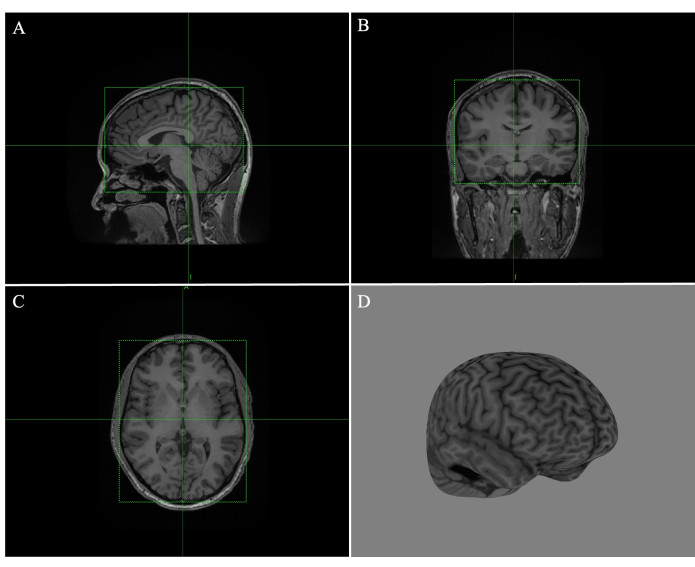
Figure 1: Creating a full brain curvilinear in Brainsight. (A) Box adjusted to the edge of the sagittal MR image. (B) Box adjusted to the edge of the coronal MR image. (C) Box adjusted to the edge of the transverse MR image. (D) Full brain curvilinear reconstruction with a peel depth of 4 mm. Please click here to view a larger version of this figure.
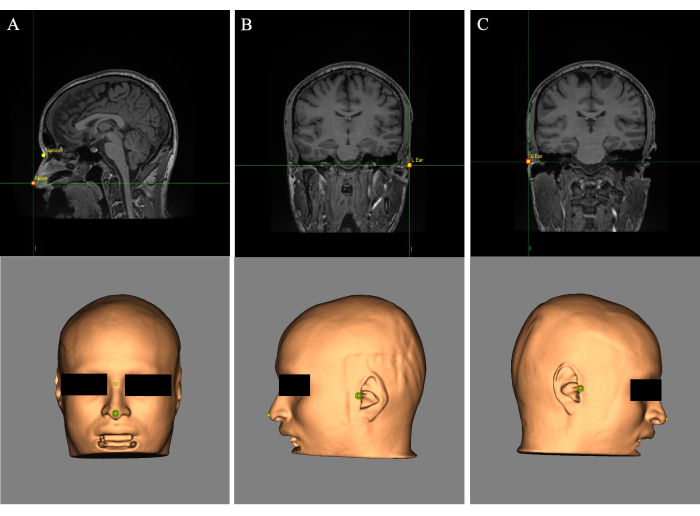
Figure 2: Landmarks placed on the skin reconstruction and MR image. (A) Nose and nasion landmarks placement. (B) Left ear landmark placement. (C) Right ear landmark placement. Please click here to view a larger version of this figure.
4. Simulations with BabelBrain
NOTE: Details for simulation with BabelBrain can be consulted in BabelBrain's manual: https://proteusmrighifu.github.io/BabelBrain/index.html.
- Open BabelBrain and select the required files for acoustic and thermal simulations.
NOTE: This submission uses a phased array transducer; however, other transducers are fully compatible with this planning software. This program can complete simulations for Single, CTX_500, H-317, H-246, and transducers. In the following method, the H-317 will be used as the selected transducer.- Select the txt file previously exported from Brainsight during step 3.7.3 by clicking on Select Trajectory… and choosing the appropriate participant file. Click on Select SimNIBS… to choose the SimNIBS file (m2m_folder name) created in Step 2. Click on Select T1W… and choose the T1-w image produced in step 2.1 used previously for target and trajectory mapping.
- Within the drop-down beside the "Use CT?" label, choose real CT if using a CT scan, ZTE if using a ZTE scan, or NO if using a simplified mask generated by the charm tool if only T1- and T2-w images are available. When using a CT or ZTE image, click on the Correg.? drop-down menu followed by CT to MR. Click on Select and choose the corresponding image from the appropriate participant file.
- Click "Select Thermal Profile …" and choose the thermal profile file that describes the experiment's sonication parameters in terms of duration on, duration off, and duty cycle.
NOTE: Details can be consulted in BabelBrain's manual: https://proteusmrighifu.github.io/BabelBrain/index.html. Examples of profiles are available at https://github.com/ProteusMRIgHIFU/BabelBrain/tree/main/Profiles. - Click on the drop-down menu beside "Transducer" and select the transducer used for experimentation. Click on the drop-down menu beside "Computing backend" and choose the computing backend of the computer running the simulations. Once all information is entered, click on CONTINUE to complete the rest of the simulations.
- Sub-step A: Calculate Mask.
- Select the ultrasound frequency of the transducer and the appropriate point per wavelength (PPW).
NOTE: 6 PPW is enough for most scenarios. - Leave the normalized ZTE range and Hounsfield units (HU) as are.
NOTE: If using a real CT, only the HU threshold will appear. If no ZTE or CT scan is provided, this entry will be absent. - Click on Calculate planning mask. Inspect the image, checking to ensure the bounds for the skin, skull, and brain were accurately recognized.
NOTE: If any discrepancies are present, adjust the normalized ZTE range and/or HU threshold.
- Select the ultrasound frequency of the transducer and the appropriate point per wavelength (PPW).
- Sub-step B: Acoustic Simulation. Click on the Step 2 - Ac Sim tab to open.
NOTE: This tab will look different depending on the selected transducer. What follows is specific to the H-317 transducer.- Adjust the distance from the cone to focus to reflect the distance from the cone's surface to the target by typing in the appropriate distance.
NOTE: This is dictated by the physical cone to be used in experiments. - Execute the simulation by clicking on the Calculate Fields button.
- Adjust the Z steering (mm) value so the crosshairs (indicating the target) are in the center of the focal point (Figure 3). Press the up or down arrows or manually enter the required value, then click on Calculate Fields.
NOTE: Positive values will direct the focal spot deeper into the brain, whereas negative values will cause the focal spot to move superficially. - Adjust X/Y mechanical if the focal spot is lateral to the intended target. Leave Z mechanical as is. Click on Calculate Fields.
NOTE: Z mechanical is recalculated as a function of the distance from the cone in 4.3.1. If required to adjust the Z steering, X/Y mechanical, or maximal depth beyond the target after completing a calculation, acoustic simulation files must be re-calculated. Click on Calculate Fields and select Yes to re-calculate. Select No to re-load the existing files.
- Adjust the distance from the cone to focus to reflect the distance from the cone's surface to the target by typing in the appropriate distance.
- Sub-step C: Thermal Simulation. Click on the Step 3 - Thermal Sim tab, then click on Calculate Thermal Fields. Assess the mechanical and thermal simulations (Figure 4) to ensure they meet the acoustic guidelines in human subjects as recommended by ITRUSST31 (Mechanical index (MI) in soft tissue ≤1.9; thermal rise ≤2 °C, thermal dose ≤0.25 CEM43, exposure time restricted to 80 min for 1.5 < cranial thermal index (TIC) ≤ 2.0, 40 min for 2.0 < TIC ≤ 2.5, 10 min for 2.5 < TIC ≤ 3.0, 160 s for 3.0 < TIC ≤ 4.0, 40 s for 4.0 < TIC ≤ 5.0, and 10 s for 5.0 < TIC ≤ 6.0).
NOTE: BabelBrain solves the Bioheat Transfer Equation to estimate the rise of temperature36. In rare occasions, abnormal high-temperature voxels may occur, in which case MR images should be analyzed if any anatomical features could explain the unusual temperature rise.- Adjust the Isppa by clicking on the up or down arrows beside the Isppa(W/cm2) box or manually entering a value above 0.1 to observe how the parameters change with different intensities.
NOTE: A summary of all intensities, temperature changes, and mechanical indices can be exported as a CSV file for reference. The software calculates the required intensity in water conditions (Isppa in water) that needs to be applied to achieve the desired intensity in situ. - Click on the MTB, MTS, and MTC buttons in the lower region of the interface to view the slice with the highest temperature in the brain, skin, and skull. After the thermal simulation step is finished, simulations are complete.
NOTE: Files will be saved automatically in the same location as the T1-w image.
NOTE: Acoustic files with an ending <…FullElasticSolution_Sub_NORM.nii.gz> can be loaded in Brainsight to visualize the acoustic field overlay in T1 space. There will be files for water-only conditions (with the infix "Water" in the filename) and files for tissue-present conditions (no infix in the filename). Follow the steps in the note following step 3.1 to add an overlay. After the thermal simulation step, simulations are complete, and the experiment can be paused until the TUS delivery session.
- Adjust the Isppa by clicking on the up or down arrows beside the Isppa(W/cm2) box or manually entering a value above 0.1 to observe how the parameters change with different intensities.
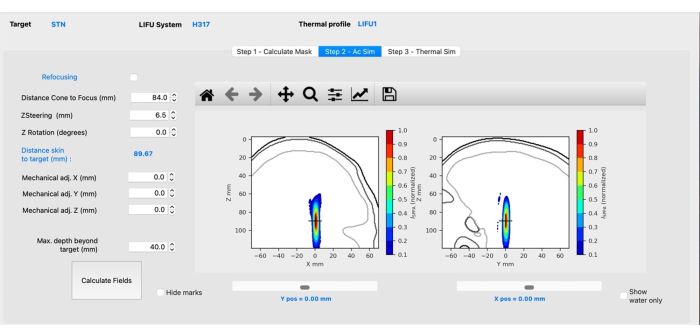
Figure 3: Acoustic simulation using BabelBrain. Please click here to view a larger version of this figure.
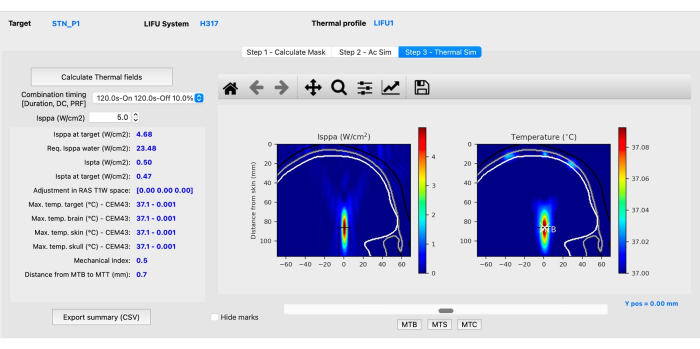
Figure 4: Thermal simulation using BabelBrain. Please click here to view a larger version of this figure.
5. TUS delivery session
- Open Brainsight and click on Open Existing Project. Select the Brainsight file created and saved during trajectory and target mapping.
- Click on Sessions to begin a new experimentation session. Click on the drop- down and select New, followed by Online Session. Click on the target name followed by Add, and Next to add the target to the experiment session and continue to the experimentation window.
NOTE: If TUS delivery is performed using a different computer than what was used for the planning, Brainsight will require the appropriate T1-w image to be chosen. In this case, a new window will open and prompt you to select the associated T1-w participant image from their participant file. - Click on Window, and Tool Calibration, and select the tools to be used, followed by Re-Calibrate.
NOTE: This step must be completed for the transducer and all other tools used during the experimental session, such as a TMS coil.- Secure the large coil tracker and the calibration block to the transducer. Ensure the camera can see the fiducials on both tools. Click on Begin Calibration Countdown to re-calibrate.
NOTE: Saving the calibration will ensure it remains the same for that day of experiments. If this is not performed and the computer turns off, the equipment will require re-calibration.
- Secure the large coil tracker and the calibration block to the transducer. Ensure the camera can see the fiducials on both tools. Click on Begin Calibration Countdown to re-calibrate.
- Set up the transducer according to its set-up procedures for experimentation. Remove the tracker on the transducer before setting it up so it is not damaged.
NOTE: The set-up described is for the H-317 transducer with a customized coupling cone.- Assemble the cone as required, placing the transducer film between the cone and the end cap. Attach the coupling cone to the flange on the transducer using screws, washers, and nuts, ensuring all are tight so there are no leaks.
- Fill the transducer with de-ionized water and attach the tubes from the pump to the transducer, connecting the tube labeled "IN" to "OUT" and the "OUT" to "IN". Plug the water hole while pressing "DRAIN" on the pump to relieve pressure.
- Flip the transducer upside down to isolate the air bubbles on the film, then rotate upwards, allowing them to exit through the transducer tube labeled "OUT". Repeat this until all visible air bubbles are removed. Set up the transducer so its "OUT" tube is angled forward and at the highest point, and leave with the pump running for 30 min.
- Flip the transducer upside down to verify that all air bubbles have been removed. If some remain, isolate the air bubbles on the film, and rotate the transducer as before to ensure they exit through the "OUT" tube. Repeat until all bubbles have been removed.
- Turn off the pump, detach the hoses, and lock the transducer at neutral. Re-attach the tracker to the transducer and proceed with participant set-up.
- Attach the subject tracker to the participant's head using either glasses, a headband placed above the ears and eyebrows (Figure 5), or the lightweight adhesive tracker. Ensure the fiducials are oriented so they are visible to the camera and will not be blocked or hit by the transducer when moving towards or once it has reached its final position.
- Place the camera in front of the participant so it can see the subject tracker and the pointer.
NOTE: If they are not visible, the indicator at the bottom left of the screen will be red. This can also be verified by entering the "Polaris" tab on Brainsight.
- Place the camera in front of the participant so it can see the subject tracker and the pointer.
- Click on the Registration tab in Brainsight. Place the pointer on all four landmarks set during step 3.6, stabilizing it with both hands, then click on Sample & Go To Next Landmark.
NOTE: It is important that the headband or glasses remain tight on the participant's head and that the subject tracker does not move. If this happens, perform the registration again. If the fiducials must be rotated to accommodate transducer movement after registration has been completed, re-do the registration. - Click on the Validation tab to validate the participant registration. Lightly place the pointer on various positions along the scalp and ensure all points are less than 3 mm.
NOTE: Commercial neuronavigation systems created for TMS are being utilized for TUS experimentation in humans. A 3 mm translational error is acceptable for handheld transducer calibration37, as it is consistent with target accuracy38,39 and other neuronavigation systems40. The 3 mm value is embedded into the Brainsight neuronavigation software.- If any points are greater than 3 mm, click on the Add button to add additional landmark points for up to a maximum of three points. If more than three points are required to achieve a consistent validation under 3 mm, re-do the registration.
NOTE: To improve the success of the registration, it is recommended that MR images are collected without the participant wearing over-ear headphones, as it can impact image reconstruction and make registration difficult. Be cautious that the pointer is placed as close to the landmark as possible before clicking on Sample & Go To Next Landmark, and ensure that the pointer is stabilized using both hands. The validation provides reassurance that the average of all points along the scalp surface is below the threshold. Do not proceed until all random locations on the scalp are below the 3 mm threshold.
- If any points are greater than 3 mm, click on the Add button to add additional landmark points for up to a maximum of three points. If more than three points are required to achieve a consistent validation under 3 mm, re-do the registration.
- Secure the participant's head with the chin rest and stabilizer placed on the back of the head to prevent movement (Figure 5). Ensure they are seated comfortably in the chair for the duration of the experiment.
- Click on Perform. Use the mechanical arm to position the transducer over the target of interest along the selected trajectory.
NOTE: Ensure to practice and be familiar with how the components of the mechanical arm move to reach the target. Success in positioning the mechanical arm comes through understanding the mobility of the arm and being familiar with how it moves about the head orientation, as this is highly dependent on the location of the target.- Use the crosshairs on the bullseye window to achieve the correct positioning and angle (Figure 6). Align both circles (translational and rotational) so they are positioned on the crosshairs and refer to the accuracy reading for verification.
- Part the subject's hair along its natural part and comb in the ultrasound gel to ensure there are no air pockets within the hair. If a large area requires coupling, apply ultrasound gel to the transducer film. Fill any remaining air pockets with additional ultrasound gel using a syringe.
- Lower the transducer to the appropriate height by observing when the crosshairs are in the middle of the box surrounding the target (Figure 6). This will indicate when the appropriate target depth has been reached.
- A custom-made Python script uses the results from simulations in step 4 to program the 128-amplifier unit and generate sound through headphones (https://github.com/ProteusMRIgHIFU/TUSApp). If performing an online and/or double-blind experiment, ensure that masking audio is played through headphones34,41 or ramp the stimulus on- and offset over the burst duration42,43,44 as methods to reduce potential auditory confounding effects.
NOTE: At this step, if using a commercially available unit, such as a CTX-500 transducer, prescribe the intensity that was simulated in water conditions, along with other parameters (PRF, duration, duty cycle). The H-317 transducer uses a dedicated script to run the transducer; therefore, that step is omitted from this submission.- Generate the masking audio in MATLAB to play upon the start of TUS delivery. Sound during sham stimulation combines a continuous sin wave at 250 kHz, a square wave at a burst frequency of 100 Hz sampled at 48 kHz, with random noise to closely replicate the sound produced from the transducer. During TUS, only random noise plays through the headphones, as the sound emitted from the transducer will also be heard by the subject.
- Following completion of TUS delivery, remove the transducer, gel, and tracker from the participant's head before any subsequent experimental procedures.
- To clean up the TUS equipment, remove the tracker from the transducer to avoid damage. Disassemble the transducer by removing the plug on the top and flipping it upside down to drain the water. Remove the coupling cone and disassemble it to allow the pieces to air dry.
- Return the transducer to neutral and ensure all arm components are locked tight at 90˚ for storage until the next TUS experimental session.
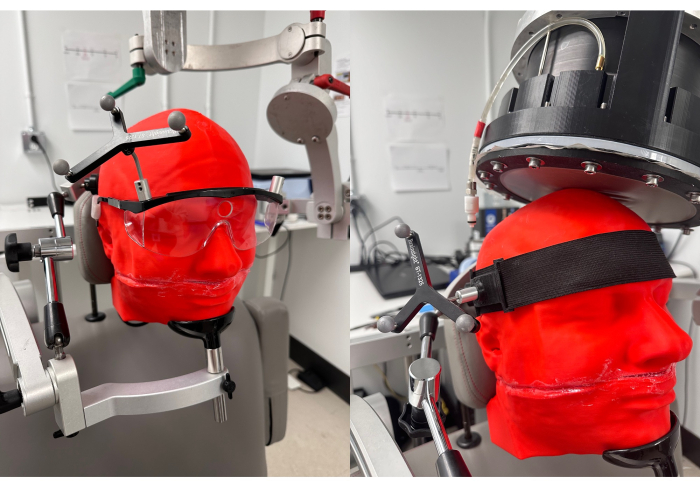
Figure 5: Fiducials to be used for neuronavigation. Glasses (left) and headband (right) with fiducials attached for subject tracking. The subject's head is secured with a chin rest and stabilizer behind their head. Please click here to view a larger version of this figure.
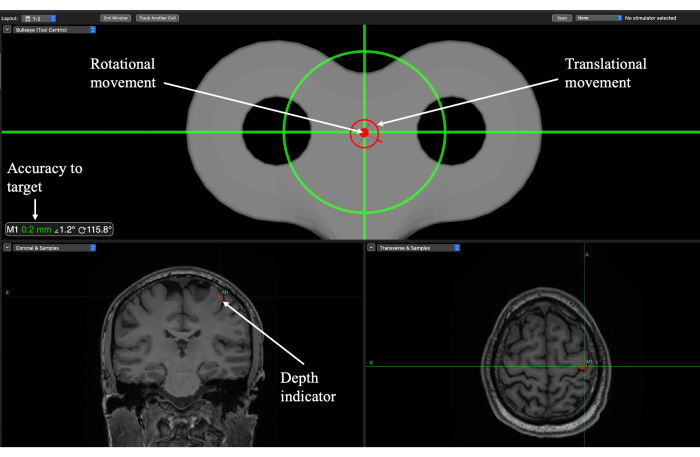
Figure 6: Brainsight neuronavigation screen for target localization during TUS delivery session for a primary motor cortex (M1) target. Rotational and translational indicators guide the experimenter on where to position the transducer over the scalp and when the trajectory angle has been achieved. Accuracy to target indicates how close the translational and rotational orientation is to the target and should be used to fine-tune movement. The depth indicator shows the depth of the focal spot and should be used to lower the transducer to the appropriate height. Please click here to view a larger version of this figure.
Results
Figure 7 illustrates comparative session samples from one of our studies42, featuring two distinct participants employing specific ultrasound parameters (fundamental frequency of 250 kHz, sonication duration of 120 s, a pulse repetition frequency (PRF) of 100 Hz, a duty cycle of 10%, and an ISPPA of 5 W/cm²). In this research, T1-, T2-w, and ZTE MRI scans with 1 mm isotropic resolution were obtained from neurologically healthy subjects. TMS targeted the primary motor cortex (M1) to assess the impact of varied TUS PRFs (10 Hz, 100 Hz, and 1000 Hz) on corticospinal excitability at distinct time points pre - and post-TUS (30 single-pulse TMS measurement at each time point as indicated by the individual points in the figure). Figure 7 encompasses results from a successful experiment, displaying a prolonged inhibitory effect following TUS (Figure 7A), alongside data from a participant where a significant effect was not observed (Figure 7B). Previous TUS studies have reported that some participants do not show any significant effects associated with ultrasound stimulation45,46. Similar results have been observed in studies using TMS47,48 and tDCS49,50, showing that NIBS techniques do not always result in expected effects. This highlights the necessity of carefully planning and implementing TUS experiments in humans using protocols such as the one described to maximize the chance of achieving experimental success.
The study by Zadeh et al.42 accentuates the differential effects of TUS, showing that 10 Hz and 100 Hz PRFs can induce prolonged inhibitory effects, unlike the negligible impact observed with a 1000 Hz PRF. Importantly, the research demonstrates that a 100 Hz PRF is most effective, achieving an extended suppression of MEPs exceeding 60 min, in contrast to the 30 min suppression achieved with a 10 Hz PRF. Alternative methods of assessing the effect of TUS may be employed, such as measuring SSEPs or task performance, each requiring a unique interpretation of results.
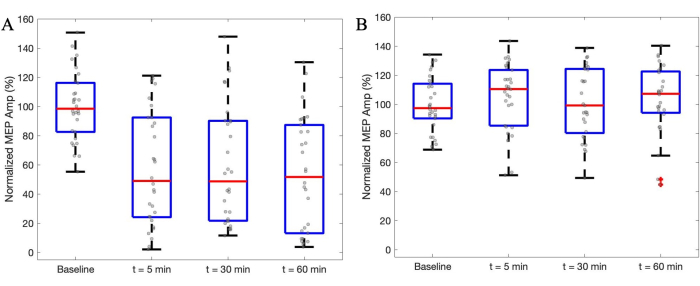
Figure 7: Transcranial magnetic stimulation (TMS) targeting the primary motor cortex (M1) to assess the impact of varied TUS pulse repetition frequencies (PRF) on corticospinal excitability. TUS was delivered at a fundamental frequency of 250 kHz, sonication duration of 120 s, pulse repetition frequency (PRF) of 100 Hz, a duty cycle of 10%, and an ISPPA of 5 W/cm2. Thirty trials at each time point were recorded, as indicated by the individual dots. The results presented highlight the differences in the median normalized MEP amplitude over 5 min, 30 min, and 60 min after TUS exposure. Error bars show the interquartile range for trials at each time point. (A) Subject showing successful experimental results exemplifying prolonged inhibitory effects. (B) Subject showing no significant effect. Please click here to view a larger version of this figure.
Discussion
In this method, subject-specific simulations are performed to predict and assess possible thermal and mechanical effects resulting from TUS application to the brain. Data sets between participants must remain separate and carefully documented, as using an incorrect scan or data file will lead to inaccurate simulations. When numerous participant scans are collected, and planning is performed together, it is important to ensure proper labeling of images and folders and proceed with caution when sorting and saving files.
To accurately perform simulations, the skull must be correctly modeled to gain a subject-specific understanding of acoustic and geometric properties. BabelBrain, therefore, requires the completion of a CT or ZTE scan; if neither is available, BabelBrain can use a simplified mask of the skull bone obtained with the charm tool. CT scans provide the most accurate information about skull characteristics to predict how the ultrasound will propagate in the brain once it contacts the skull. This is achieved by using voxelized information of the skull bone, although estimation of bone volume is still difficult to predict due to its heterogeneous nature51. However, more recently, ultra-short TE MRI sequences, such as the ZTE scan, have been used to determine the acoustic properties of the skull and perform TUS simulations. Bone pixel resolution and contrast are not as high in a ZTE image as they are in CT; however, compared to simplified masks derived from just T1-w and T2-w MRI, ZTE images still provide an improved estimation of heating with TUS simulations52 having predictions similar to those made with CT scans53. Using ZTE scans in simulations eliminates any unnecessary exposure to radiation and additional time required to obtain X-ray CT images, as ZTE sequences can be added to the original MRI scanning session. However, ZTE protocols are not a standard product on most MRI scanners, and additional research is required to improve ZTE-based post-processing for use in TUS modeling. If neither CT nor ZTE images are available, the charm tool utilized with BabelBrain creates a simplified mask from T1- and T2-w images to predict skull characteristics. A comparison of simulations performed with a CT versus a simplified mask has seen minimal differences in steering (1.00 mm ± 1.3 mm) and mechanical repositioning (x-direction 0.2 mm ± 0.4 mm; y-direction 0.1 mm ± 0.5 mm) required to reach the target, however slightly different intensity distribution (focus length 6% ± 8%; focus width 2.7% ± 2%; focus volume 10.4% ± 16%; peak pressure -0.5% ± 15% for simplified mask relative to CT)36. This reveals that the CT provides more accurate simulations; however, if unable to utilize a CT or ZTE scan, the simplified mask is adequate to complete simulations for TUS experimentation in humans.
Mapping methods of acoustic properties remain a necessary area of research, as prediction of the speed of sound and attenuation from CT and MR images still require a better understanding and streamlined workflow. Therefore, a caveat of potential deviation in thermal or mechanical effects from what is predicted in the simulation remains. Modeling of acoustic effects in BabelBrain is achieved using an open-source BabelViscoFDTD54,55 library, which allows modeling of both linear compressional and shear wave transmission. This model has been validated against multiple other models for position, size, and magnitude of focus, differing less than 10 % in focal pressure and less than 1 mm in focal positioning56. Acoustic simulations are, therefore, in agreement with other simulation models. Thermal predictions are more difficult and have not been experimentally validated since MR thermometry cannot be performed in the skull, and the temperature changes are expected to be very small, which creates a source of uncertainty. The thermal modeling used in BabelBrain is consistent between papers, solving the Bioheat Transfer Equation (BHTE) to simulate the heating of the skull through modeling thermal diffusion, effects of perfusion, and acoustic power36,51. Estimates of thermal rise from models of attenuation and absorption are used to predict the effects in the skull with TUS based on other published literature57, serving as the best alternative to date for simulating skull heating. As seen in the methods described, the user specifies the duration of ultrasound, time off after ultrasound, duty cycle, and desired spatial-peak pulse-average intensity in brain conditions, of which the safety parameters are calculated as a function of parameter selection. The user must, therefore, inspect all parameters to be employed to ensure they are within safety requirements. Various neuronavigational systems used to position the transducer over the region of interest have also been seen to have a target registration error of approximately 3 mm38,58,59. However, depending on the frequency employed and the size of the target, the focal spot may still be large enough to cover the target, even with 3 mm of error. Although this may be a limitation, it still offers a greater benefit over alternative navigational systems due to the invasiveness of stereotactic localization methods.
BabelBrain streamlines planning steps required to complete TUS experiments in humans as it is efficient, easy to use, and is the only open-source accessible planning tool to date. This allows for transparency in experimental methods in published literature, as the scripts used are openly accessible. The method described completes data preparation and image processing steps, eliminating the need for customized scripts or any external collaboration to run simulations. It, therefore, removes a major barrier for experimenters, allowing them to complete planning and simulations directly and enabling more laboratories to complete successful TUS experimentation. In addition to prospective planning of experiments, this method also has potential applications in planning cavitation-mediated FUS therapy36, such as the opening of the blood-brain barrier59. Overall, this method provides an effective, streamlined approach for planning and implementing TUS experimentation in humans and the development of TUS for use in clinical settings.
Disclosures
The authors have no conflicts of interest to declare.
Acknowledgements
This work was supported in part by a Natural Sciences and Engineering Research Council of Canada Discovery Grant, the INNOVAIT program, Cumming Medical Research Fund, Canada Foundation for Innovation (Project 36703), Hotchkiss Brain Institute CAPRI Grant, and Parkinson Association of Alberta Funding. GBP acknowledges support from the Canadian Institutes for Health Research (FDN-143290) and the Campus Alberta Innovates Chair Program.
Materials
| Name | Company | Catalog Number | Comments |
|---|---|---|---|
| 128-channel amplifier unit | Image Guided Therapy | This unit drives the H-317 transducer | |
| 24-channel head coil | General Electric | ||
| 3D printer | Raise3D | Pro2 | Filament thickness of 1.75mm. |
| 3T MRI scanner | General Electric | Discovery 750 HD | MR Console version DV26.0_R05_2008 |
| BabelBrain | Samuel Pichardo (University of Calgary) | Version 0.3.0 | Accessible at https://github.com/ProteusMRIgHIFU/BabelBrain. Executes thermal and acoustic simulations. |
| Blender | Blender Foundation | Version 3.4.1 | Accessible at https://www.blender.org. Blender is called automatically by BabelBrain. |
| Brainsight | Rogue Research | Version 2.5.2 | Used for target identification, trajectory planning, and execution of TUS delivery sessions. |
| Chair and chin/head holder | Rogue Research | To be used during TUS delivery session to ensure stability of participant’s head for optimized targeting. | |
| Custom-made coupling cone | University of Calgary team | 3D printed cone in acrylonitrile butadiene styrene (ABS), only required for H-317 transducer. | |
| dcm2niix | Chris Rorden (University of South Carolina) | Version 1.0.20220720 | Accessible at https://github.com/rordenlab/dcm2niix/releases. Used for pre-processing subject MR images. |
| Fiducials and headband or glasses | Brainsight, Rogue Research | ST-1325 (subject tracker), LCT-583 (large coil tracker) | Headband or glasses can be interchangeably used. |
| Headphones | Beats | Fit Pro True Wireless Earbuds | Wireless Bluetooth earbuds with disposable tips. |
| MacBookPro | Apple | M2 Max, 16”, 64GB RAM | Computer for completing trajectory planning and simulations |
| SimNIBS | Axel Thielscher (Technical University of Denmark) | Version 4.0.0 | Accessible at https://simnibs.github.io/simnibs/build/html.index.html |
| Syringe(s) | 10 mL, 60 mL | Used to add additional ultrasound gel to fill air pockets. | |
| Transducer | Sonicconcepts | H-317 | Other supported transducers include CTX_500 (NeuroFUS, Sonicconcepts), Single element, H-246 (Sonicconcepts), and Bsonix (Brainsonix) |
| Transducer film | Sonicconcepts | Polyurethane membrane | Interface between transducer and the subject |
| Ultrasound gel | Wavelength | Clear Ultrasound Gel | Coupling medium. |
| Windows Laptop | Acer | Aspire A717-71G, Intel Core i7-7700HQ, 16 GB RAM | System used to control 128-channel amplifier and generate sound through the headphones |
References
- Baek, H., Pahk, K. J., Kim, H. A review of low-intensity focused ultrasound for neuromodulation. Biomed Eng Lett. 7 (2), 135-142 (2017).
- Rezayat, E., Toostani, I. G. A review on brain stimulation using low intensity focused ultrasound. Basic Clin Neurosci. 7 (3), 187-194 (2016).
- Dell'Italia, J., Sanguinetti, J. L., Monti, M. M., Bystritsky, A., Reggente, N. Current state of potential mechanisms supporting low intensity focused ultrasound for neuromodulation. Front Hum Neurosci. 16, 872639(2022).
- Kim, H., et al. Suppression of EEG visual-evoked potentials in rats through neuromodulatory focused ultrasound. Neuroreport. 26 (4), 211-215 (2015).
- Yoon, K., et al. Effects of sonication parameters on transcranial focused ultrasound brain stimulation in an ovine model. PLoS One. 14 (10), e0224311(2019).
- Dallapiazza, R. F., et al. Non-invasive neuromodulation and thalamic mapping with low-intensity focused ultrasound. J Neurosurg. 128 (3), 875-884 (2018).
- Folloni, D., et al. Manipulation of subcortical and deep cortical activity in the primate brain using transcranial focused ultrasound stimulation. Neuron. 101 (6), 1109-1116 (2019).
- Gulick, D. W., Li, T., Kleim, J. A., Towe, B. C. Comparison of electrical and ultrasound neurostimulation in rat motor cortex. Ultrasound Med Biol. 43 (12), 2824-2833 (2017).
- King, R. L., Brown, J. R., Newsome, W. T., Pauly, K. B. Effective parameters for ultrasound-induced in vivo neurostimulation. Ultrasound Med Biol. 39 (2), 312-331 (2013).
- Yoo, S. S., et al. Focused ultrasound modulates region-specific brain activity. Neuroimage. 56 (3), 1267-1275 (2011).
- Kim, H. C., et al. Transcranial focused ultrasound modulates cortical and thalamic motor activity in awake sheep. Sci Rep. 11 (1), 19274(2021).
- Deffieux, T., et al. Low-intensity focused ultrasound modulates monkey visuomotor behavior. Curr Biol. 23 (23), 2430-2433 (2013).
- Munoz, F., et al. Long term study of motivational and cognitive effects of low-intensity focused ultrasound neuromodulation in the dorsal striatum of nonhuman primates. Brain Stimul. 15 (2), 360-372 (2022).
- Verhagen, L., et al. Offline impact of transcranial focused ultrasound on cortical activation in primates. ELife. 8, e40541(2019).
- Fomenko, A., et al. Systematic examination of low-intensity ultrasound parameters on human motor cortex excitability and behavior. ELife. 9, e54497(2020).
- Legon, W., Bansal, P., Tyshynsky, R., Ai, L., Mueller, J. K. Transcranial focused ultrasound neuromodulation of the human primary motor cortex. Sci Rep. 8 (1), 10007(2018).
- Legon, W., et al. Transcranial focused ultrasound modulates the activity of primary somatosensory cortex in humans. Nat Neurosci. 17 (2), 322-329 (2014).
- Legon, W., Ai, L., Bansal, P., Mueller, J. K. Neuromodulation with single-element transcranial focused ultrasound in human thalamus. Hum Brain Mapp. 39 (5), 1995-2006 (2018).
- Legon, W., et al. A retrospective qualitative report of symptoms and safety from transcranial focused ultrasound for neuromodulation in humans. Sci Rep. 10, 5573(2020).
- Forster, A., et al. Investigating the role of the right inferior frontal gyrus in control perception: A double-blind cross-over study using ultrasonic neuromodulation. Neuropsychologia. 187, 108589(2023).
- Forster, A., et al. Transcranial focused ultrasound modulates the emergence of learned helplessness via midline theta modification. J Affect Disord. 329, 273-284 (2023).
- Ziebell, P., et al. Inhibition of midfrontal theta with transcranial ultrasound explains greater approach versus withdrawal behavior in humans. Brain Stimul. 16 (5), 1278-1288 (2023).
- Kim, H. C., Lee, W., Weisholtz, D. S., Yoo, S. S. Transcranial focused ultrasound stimulation of cortical and thalamic somatosensory areas in human. PLoS One. 18 (7), e0288654(2023).
- Kim, Y. G., et al. Neuromodulation using transcranial focused ultrasound on the bilateral medial prefrontal cortex. J Clin Med. 11 (13), 3809(2022).
- Chu, Y. C., Lim, J., Chien, A., Chen, C. C., Wang, J. L. Activation of mechanosensitive ion channels by ultrasound. Ultrasound Med Biol. 48 (10), 1981-1994 (2022).
- Kubanek, J., et al. Ultrasound modulates ion channel currents. Sci Rep. 6 (1), 24170(2016).
- Prieto, M. L., Firouzi, K., Khuri-Yakub, B. T., Maduke, M. Activation of Piezo1 but not NaV1.2 channels by ultrasound at 43 MHz. Ultrasound Med Biol. 44 (6), 1217-1232 (2018).
- Quarato, C. M. I., et al. A review on biological effects of ultrasounds: Key messages for clinicians. Diagnostics. 13 (5), 855(2023).
- Nowicki, A. Safety of ultrasonic examinations; thermal and mechanical indices. Med Ultrason. 22 (2), 203(2020).
- Miller, D. L., et al. Overview of therapeutic ultrasound applications and safety considerations. J Ultrasound Med. 31 (4), 623-634 (2012).
- Aubry, J. F., et al. ITRUSST consensus on biophysical safety for transcranial ultrasonic stimulation. arXiv preprint arXiv. , 2311.05359(2023).
- Guo, H., et al. Ultrasound produces extensive brain activation via a cochlear pathway. Neuron. 98 (5), 1020-1030 (2018).
- Sato, T., Shapiro, M. G., Tsao, D. Y. Ultrasonic neuromodulation causes widespread cortical activation via an indirect auditory mechanism. Neuron. 98 (5), 1031-1041 (2018).
- Braun, V., Blackmore, J., Cleveland, R. O., Butler, C. R. Transcranial ultrasound stimulation in humans is associated with an auditory confound that can be effectively masked. Brain Stimul. 13 (6), 1527-1534 (2020).
- Martin, E., et al. ITRUSST consensus on standardised reporting for transcranial ultrasound stimulation. Brain Stimul. , S1935861X24000718(2024).
- Pichardo, S. BabelBrain: An open-source application for prospective modeling of transcranial focused ultrasound for neuromodulation applications. IEEE Trans Ultrason Ferroelectr Freq Control. 70 (7), 587-599 (2023).
- Khoshnevisan, A., Allahabadi, N. S. Neuronavigation: Principles, clinical applications and potential pitfalls. Iran J Psychiatry. 7 (2), 97-103 (2012).
- Xu, L., et al. Characterization of the targeting accuracy of a neuronavigation-guided transcranial fus system in vitro, in vivo, and in silico. IEEE Trans Biomed Eng. 70 (5), 1528-1538 (2023).
- Kuehn, B., et al. Sensor-based neuronavigation: Evaluation of a large continuous patient population. Clin Neurol Neurosurg. 110 (10), 1012-1019 (2008).
- Ambrosini, E., et al. StimTrack: An open-source software for manual transcranial magnetic stimulation coil positioning. J Neurosci Methods. 293, 97-104 (2018).
- Kop, B. R., et al. Auditory confounds can drive online effects of transcranial ultrasonic stimulation in humans. eLife. , (2024).
- Zadeh, A. K., et al. The effect of transcranial ultrasound pulse repetition frequency on sustained inhibition in the human primary motor cortex: A double-blind, sham-controlled study. Brain Stimul. 17 (2), 476-484 (2024).
- Mohammadjavadi, M., et al. Elimination of peripheral auditory pathway activation does not affect motor responses from ultrasound neuromodulation. Brain Stimul. 12 (4), 901-910 (2019).
- Johnstone, A., et al. A range of pulses commonly used for human transcranial ultrasound stimulation are clearly audible. Brain Stimul. 14 (5), 1353-1355 (2021).
- Zeng, K., et al. Induction of human motor cortex plasticity by theta burst transcranial ultrasound stimulation. Ann Neurol. 91 (2), 238-252 (2022).
- Lee, W., et al. Image-guided transcranial focused ultrasound stimulates human primary somatosensory cortex. Sci Rep. 5, 8743(2015).
- Ridding, M. C., Rothwell, J. C. Is there a future for therapeutic use of transcranial magnetic stimulation. Nat Rev Neurosci. 8 (7), 559-567 (2007).
- Nicolo, P., Ptak, R., Guggisberg, A. G. Variability of behavioural responses to transcranial magnetic stimulation: Origins and predictors. Neuropsychologia. 74, 137-144 (2015).
- Horvath, J. C., Carter, O., Forte, J. D. No significant effect of transcranial direct current stimulation (tDCS) found on simple motor reaction time comparing 15 different simulation protocols. Neuropsychologia. 91, 544-552 (2016).
- Horvath, J. C., Vogrin, S. J., Carter, O., Cook, M. J., Forte, J. D. Effects of a common transcranial direct current stimulation (tDCS) protocol on motor evoked potentials found to be highly variable within individuals over 9 testing sessions. Exp Brain Res. 234 (9), 2629-2642 (2016).
- Angla, C., Larrat, B., Gennisson, J., Chatillon, S. Transcranial ultrasound simulations: A review. Med Phys. 50 (2), 1051-1072 (2023).
- Miller, G. W., Eames, M., Snell, J., Aubry, J. Ultrashort echo-time MRI versus CT for skull aberration correction in MR-guided transcranial focused ultrasound: In vitro comparison on human calvaria. Med Phys. 42 (5), 2223-2233 (2015).
- Miscouridou, M., Pineda-Pardo, J. A., Stagg, C. J., Treeby, B. E., Stanziola, A. Classical and learned MR to pseudo-CT mappings for accurate transcranial ultrasound simulation. IEEE Trans Ultrason Ferroelectr Freq Control. 69 (10), 2896-2905 (2022).
- Pichardo, S., et al. A viscoelastic model for the prediction of transcranial ultrasound propagation: application for the estimation of shear acoustic properties in the human skull. Phys Med Biol. 62 (17), 6938-6962 (2017).
- Pichardo, S. ProteusMRIgHIFU/BABELVISCOFDTD: Software Library for FDTD of viscoelastic equation using a staggered grid arrangement with support for GPU and CPU backends. , (2024).
- Aubry, J. F., et al. Benchmark problems for transcranial ultrasound simulation: Intercomparison of compressional wave models. J Acoust Soc Am. 152 (2), 1003-1019 (2022).
- Pinton, G., et al. Attenuation, scattering, and absorption of ultrasound in the skull bone: Absorption of ultrasound in the skull bone. Med Phys. 39 (1), 299-307 (2011).
- Chaplin, V., et al. On the accuracy of optically tracked transducers for image-guided transcranial ultrasound. Int J Comput Assist Radiol Surg. 14 (8), 1317-1327 (2019).
- Wu, S. Y., et al. Efficient blood-brain barrier opening in primates with neuronavigation-guided ultrasound and real-time acoustic mapping. Sci Rep. 8 (1), 7978(2018).
Reprints and Permissions
