The single-incision plus one-port laparoscopic proximal gastrectomy with double-channel anastomosis was initially employed for the radical resection of proximal gastric cancer. This study demonstrated the feasibility of the procedure and laid a foundation for further research.
Case Report
Single Incision Plus One Port Laparoscopic Proximal Gastrectomy with Double Channel Anastomosis for Gastric Cancer Treatment
* These authors contributed equally
In This Article
Summary
Abstract
Single-incision plus one-port laparoscopic proximal gastrectomy with double-channel anastomosis (SILT-DT) is a minimally invasive surgical approach for treating proximal gastric cancer. This technique includes comprehensive laparoscopic resection of the proximal stomach, lymph node dissection, and double-tract anastomosis. By integrating single-port laparoscopic surgery with an auxiliary operating hole, SILT-DT reduces procedural difficulty while facilitating the placement of an abdominal drainage tube. Compared to the traditional five-port laparoscopic gastrectomy, SILT-DT requires fewer ports and results in shorter incision lengths, contributing to reduced postoperative pain and faster recovery. A thorough preoperative evaluation was conducted to ensure procedural success, with factors such as tumor size, stage, location, and patient BMI carefully considered. This comprehensive assessment allowed for optimal patient selection and surgical planning. Postoperative follow-up demonstrated no significant complications, underscoring the safety and efficacy of SILT-DT. This innovative technique offers a promising minimally invasive alternative for managing proximal gastric cancer while maintaining excellent clinical outcomes.
Introduction
Laparoscopic techniques have recently become one of the main directions for the surgical treatment of gastric cancer1,2. The routine laparoscopic surgery for gastric cancer is mostly performed using the 5-hole method. With advancements in surgical techniques and continuous improvements in medical devices, reduced-port laparoscopic gastric cancer surgery has gradually developed to further reduce surgical trauma, minimize disturbance to the abdominal cavity, and accelerate postoperative recovery3,4,5,6.
Omori7 first reported single-port laparoscopic distal gastric cancer surgery in 2011. Pure single-port laparoscopic radical gastrectomy for gastric cancer is more difficult than traditional five-port laparoscopic gastrectomy. To address this, an auxiliary operating hole is added to the single-port laparoscopic procedure, which reduces the difficulty of the operation and facilitates the placement of an abdominal drainage tube8,9. Single-incision laparoscopic surgery plus one port (SILS+1), a minimally invasive technique for patients with gastric cancer, has gained popularity in recent years due to its reduced number of ports and shorter incision lengths.
Currently, single-port laparoscopic or SILS+1 gastric cancer surgery is relatively common in distal gastrectomy, while its application in total gastrectomy is rare. Additionally, the use of total laparoscopic double-tract gastric cancer anastomosis has not been reported.
Based on this, we first attempted single-port plus one-port total laparoscopic proximal gastrectomy with double-tract anastomosis (SILT-DT). The transumbilical port was used as the main operation port, and the left upper abdominal drainage port served as the auxiliary operation port. This technique was employed to perform proximal gastrectomy, D2 lymph node dissection, and double-tract anastomosis for digestive tract reconstruction.
CASE PRESENTATION:
The patient, a 63-year-old male, was admitted to the hospital after a tumor was discovered at the esophagogastric junction during a gastroscopy (Figure 1). Biopsy results from the gastroscope suggested moderately differentiated adenocarcinoma (Figure 2). Preoperative chest and abdominal enhanced CT scans revealed no evidence of distant metastasis (Figure 3). The patient was previously healthy and had no history of abdominal surgery.
Patient selection
Patients were eligible to participate if they had histologically confirmed Siewert type II or III gastroesophageal junction adenocarcinoma, with preoperative abdominal CT showing no enlarged lymph nodes around the stomach or distant metastasis. The maximum diameter of the tumor was required to be less than 3 cm, and the distance between the lower pole of the tumor and the gastric angle had to exceed 5 cm. Exclusion criteria included patients who had previously undergone abdominal surgery, those with a preoperative tumor diameter exceeding 3 cm and/or requiring multi-visceral resection, patients who had undergone multidisciplinary team (MDT) discussions regarding neoadjuvant chemoradiation, or those who had received neoadjuvant chemoradiation, and patients with intolerance to laparoscopic surgery.
Protocol
The operation followed standard procedures and received ethics approval. This study was permitted by the Ethics Committee of Xiangyang Central Hospital, affiliated with Hubei University of Arts and Science. Informed written consent was obtained from the patient. The research content and methods adhered to medical ethics norms and requirements. The reagents and equipment used in the study are listed in the Table of Materials.
1. Pre-surgical steps
- The patient was instructed to take oral sodium phosphate salt for bowel preparation one day before surgery. The patient fasted for 8 h and was allowed water intake up to 2 h before surgery. An upper gastric tube was inserted before entering the operating room.
- The patient was positioned in a supine split-leg position with the head elevated and slightly tilted to the right.
- Endotracheal intubation was performed, and general anesthesia was administered according to institutionally approved protocols.
2. Surgical procedure
- A transverse incision measuring 3.0-3.5 cm was created around the navel to insert the SILS port equipped with four in-built trocars (Figure 4A). An additional 12-mm trocar was inserted in the left upper quadrant to serve as an operative port for surgical instruments, including the ultrasonic shear, endoscopic linear stapler, and postoperative drainage tube.
- An ultrasonic knife was used to dissect the adipose lymphoid tissue of groups 1, 2, 3, 4, 7, 8a, 9, and 11p (Figure 5A,B). A lower esophageal segment length of approximately 5-7 cm was ensured (Figure 5C), and the freedom of the greater curvature and lesser curvature of the stomach was maintained.
NOTE: The SILT-DT procedure is shown in Figure 5. The stomach and lymph node dissection was performed in accordance with the Guidelines for Laparoscopic Surgery for Gastric Cancer (2023 edition)10. A D2 lymphadenectomy and proximal gastrectomy were completed. - The esophagus-jejunum (EJ) anastomosis was established. The EJ anastomosis site was identified on the jejunum, 20 cm distal to the ligament of Treitz and near the lower esophagus. The EJ anastomosis was accomplished through the 12-mm port in the left upper quadrant using a 60-mm endoscopic linear stapler (Figure 5D).
NOTE: The schematic diagram illustrating the digestive tract reconstruction is shown in Figure 4B. - A 60-mm endoscopic linear stapler was used to resect specimens of the esophagus and close the anastomotic opening between the jejunum and esophagus (Figure 5E).
- The gastrojejunal (GJ) anastomosis was created, with the site marked on the jejunum 8-15 cm distal to the EJ anastomosis and on the posterior wall of the greater curvature of the remaining stomach (Figure 5F).
- The jejunojejunal anastomosis was established. The jejunojejunal anastomosis was made through the 3.5-cm incision at the navel using a 60-mm endoscopic linear stapler, marking 5 cm distal to the GJ anastomosis site (Figure 5G).
- The individual anastomoses were closed and strengthened. Both the common openings of the GJ anastomosis and the jejunojejunal anastomosis were closed using a 3-0 micro Joe thread. The mesangial hiatus was closed with a continuous suture.
- A drainage tube was placed behind the EJ anastomosis and exited from the left upper abdomen (Figure 5H).
3. Postoperative management
- Postoperative water fasting was implemented, and the gastric tube was drained with an indwelling bag.
- The gastric tube was removed after 48 h of observation, ensuring no evident presence of bloody drainage fluid.
- Fluid infusion was administered to maintain water, electrolyte, and acid-base balance, along with acid suppression. The duration of prophylactic antibiotics was limited to a maximum of 48 h.
- Early mobilization was actively promoted within 6-24 h post-surgery. A liquid diet was initiated for 2-3 days during recovery.
- Anastomotic leakage was assessed, and the development of the residual stomach was evaluated through upper gastrointestinal radiography on day 7.
- The abdominal cavity drainage tube was removed within 5 to 7 days after hospital discharge.
Results
The surgery was completed within 150 min, with minimal intraoperative bleeding of 5 mL. There were no short-term complications, and the patient's postoperative recovery was successful. A total of 24 lymph nodes were retrieved, and no lymph node metastasis was found. The operating time was 150 min, and the estimated blood loss was 5 mL. The patient remained in bed for 2 days. The time to first flatus was 70 h, and the patient began consuming liquid food and drinks after 3 days. The gastric tube was removed on the 4th day, and the drainage tube was removed within 7 days. The contrast agent persisted in the remnant stomach for 30-50 min without reflux into the esophagus (Figure 6). The cosmetic outcome of the postoperative abdominal incisions was satisfactory (Figure 4C). Pain was evaluated by an 11-point numeric rating scale (NRS) where 0 is no pain and 10 is the worst pain imaginable11. Detailed data for the patient are presented in Table 1.
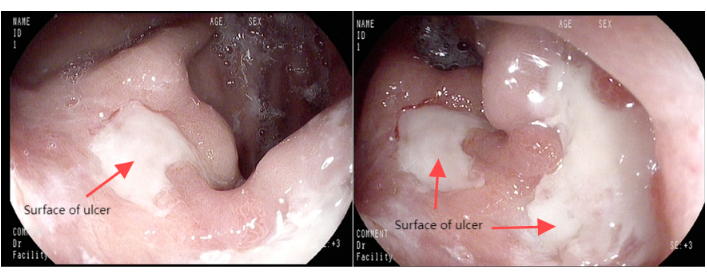
Figure 1: Gastroscopic images. Please click here to view a larger version of this figure.

Figure 2: The findings from the gastroscopic biopsy. The gastroscopic biopsy revealed a moderately differentiated adenocarcinoma. Scale bar: 50 µm; magnification: 200x. Please click here to view a larger version of this figure.
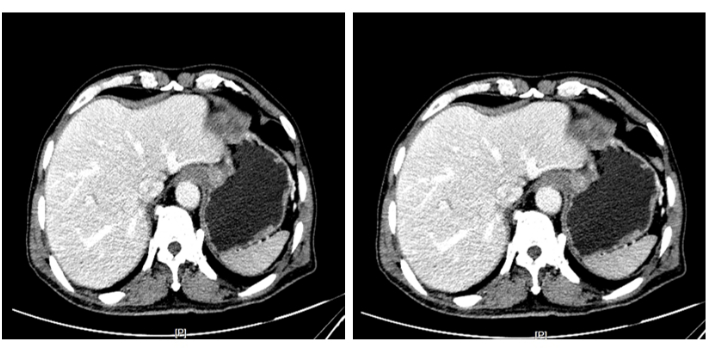
Figure 3: Abdominal enhanced CT scans. Heterogeneous enhancement was seen in the cardia, which was considered as a neoplastic lesion, and the tumor did not invade the muscular layer. Please click here to view a larger version of this figure.

Figure 4: Surgical setup and postoperative wound condition. (A) Four in-built trocars used in the procedure. (B) Double-tract anastomosis performed during surgery. (C) Postoperative wound condition shown after the procedure. Please click here to view a larger version of this figure.

Figure 5: Surgical procedure details. (A,B) The process of cleansing the lymph nodes during the surgery. (C) Transection of the esophagus and opening of the lower esophageal end. (D) Side-to-side esophagojejunostomy performed as part of the anastomosis. (E) Closure of the common opening at the esophagojejunal anastomosis site. (F) Remnant gastrojejunostomy completed. (G) Side-to-side entero-intestinal anastomosis performed through the umbilical incision. (H) Position of the drainage tube. Please click here to view a larger version of this figure.

Figure 6: Upper gastrointestinal radiography. The upper gastrointestinal radiography showed that the anastomosis was open and the remaining stomach was clearly visible. Please click here to view a larger version of this figure.
| Items | Result |
| Gender | Male |
| Year | 63 |
| BMI (kg/m2) | 23.5 |
| Anesthesia grade | III |
| Preoperative TNM-staging | cT1N0M0 |
| Operation time (min) | 150 |
| Incision length (cm) | 2.8 |
| Intraoperative bleeding volume (mL) | 5 |
| Pathology | moderately differentiated adenocarcinoma |
| The distance of the proximal margin (cm) | 3.4 |
| The distance of the distal margin (cm) | 5.5 |
| Tumor size (cm) | 1.5*2*1.2 |
| The number of retrieved lymph nodes | 24 |
| TNM-staging | pT2N0M0 |
| The duration of gastric tube removal after surgery (d) | 4 |
| The duration until the initial meal | 3 |
| The duration of bed activity | 2 |
| The duration to flatus (h) | 70 |
| The time for bowel movement (d) | 6 |
| The duration of the drainage tube (d) | 7 |
| Pain score on the first day after surgery | 2 |
| Postoperative hospital stay (day) | 8 |
| Complications | None |
Table 1: Perioperative data of the patient. Details regarding the perioperative data for the patient, including key measurements and outcomes.
Discussion
Single-port and reduced-port laparoscopic radical gastrectomy have become innovative approaches for treating gastric cancer and are steadily gaining acceptance. These techniques are receiving increased attention for their advantages, including improved cosmetic outcomes, reduced postoperative pain, a lower risk of surgical site infections, and faster recovery times.
The results of 12 studies involving 343 cases showed that single-port and reduced-port laparoscopic surgery was effective in treating distal gastric cancer, accounting for the majority of cases3,4,12,13,14,15,16,17,18,19,20,21. However, only four studies focused on total gastric resection22,23,24,25. These findings suggest that the clinical research and application of single-port gastric cancer surgery, particularly total gastrectomy, are limited due to the high surgical difficulty, the extensive dissection and lymph node removal required, and the complex technique of endoscopic digestive tract reconstruction.
We successfully performed the first laparoscopic proximal gastrectomy with double-tract anastomosis using a single incision plus one port for the treatment of proximal gastric cancer. Compared with traditional surgical methods, the single-incision plus one-port surgery is more minimally invasive. Relative to the single-port technique, the addition of the left upper abdominal port enhances convenience during the operation and allows for the rational placement of a drainage tube through an incision in the upper left abdomen.
Lee et al.26 reported the first case of single-port laparoscopic proximal gastrectomy with double-tract reconstruction for early gastric cancer in 2016. Compared to SILS, the single-incision plus one-port surgery includes an additional left upper abdominal port, creating a triangular structure composed of the umbilical region, left upper abdomen, and the surgical area. This innovative approach effectively addresses the limitations of pure single-incision surgery, such as inadequate anti-traction and linear visualization. Additionally, it enhances the flexibility of the surgeon's right-hand instrument, leading to significant improvements in operative efficiency and reduced complexity during each anastomosis under total laparoscopy.
Moreover, several strategies can enhance operational efficiency and reduce procedure duration. The surgeon may consider altering their positioning during lymph node dissection and digestive tract reconstruction, such as positioning themselves on the left side of the patient or between the patient's legs, to optimize exposure of the surgical area. For procedures like esophagojejunostomy and gastrojejunostomy, it is recommended that one assistant or the chief surgeon maintains a stable position while another performs docking, thereby improving anastomosis efficiency and minimizing the risk of tissue avulsion. Additionally, employing integrated laparoscopic instruments is advised to minimize interference between optical fibers and other instruments.
In summary, single-incision plus one-port laparoscopic proximal gastrectomy with double-channel anastomosis is feasible for treating proximal gastric cancer. In this case, the patient experienced a successful recovery. The operation is minimally invasive, and recovery is faster. However, the limitations of this protocol include the need for early-stage gastric cancer or benign gastric tumors, with the patient's BMI not being excessively high. The application of this protocol is not recommended for patients with locally advanced disease or high BMI due to the potential risk of positive tumor margins and increased surgical complexity. This protocol is still in the stage of technical exploration, with no established guidelines and insufficient clinical data to fully validate its long-term efficacy. The development of this protocol requires ethical approval from medical institutions and strict adherence to surgical indications. Further clinical research and exploration are necessary to determine the clinical applicability of the SILT-DT technique.
Disclosures
The authors have no conflicts of interest or financial ties to disclose.
Acknowledgements
This work was supported by grants from the Scientific Research Project of the Health Commission of Hubei Province and the Xiangyang Key Project of Science and Technology in the medical and health field (2021YL15).
Materials
| Name | Company | Catalog Number | Comments |
|---|---|---|---|
| 3D laparoscope | KARL STORZ SE & Co. KG | 26605BA | |
| Absorbability surgical sutures | Johnson & Johnson | TLBJXZ | |
| Absorbable ligature clip | Hangzhou KANGJI Medical Instrument co., LTD | KJ-JZJ02ML | |
| Disposable puncture device | Hangzhou KANGJI Medical Instrument co., LTD | Type IV sets F | |
| Disposable step type endoscopic cutting stapler and nail bin | Nanjing Maidixin Medical Device Co.,Ltd | MLCR-Mb,MLCNC-60b-purple, MLCNC-45b-white | |
| laparoscopic instruments | Hangzhou KANGJI Medical Instrument co., LTD | ||
| Ultrasound knife | INNOLCON, Medical Science and Technology (suzhou) co., LTD |
References
- Bray, F., et al. Global cancer statistics 2018: Globocan estimates of incidence and mortality worldwide for 36 cancers in 185 countries. CA Cancer J Clin. 68 (6), 394-424 (2018).
- Chevallay, M., et al. Cancer of the gastroesophageal junction: A diagnosis, classification, and management review. Ann N Y Acad Sci. 1434 (1), 132-138 (2018).
- Omori, T., et al. A randomized controlled trial of single-port versus multi-port laparoscopic distal gastrectomy for gastric cancer. Surg Endosc. 35 (8), 4485-4493 (2021).
- Kang, S. H., et al. Postoperative pain and quality of life after single-incision distal gastrectomy versus multiport laparoscopic distal gastrectomy for early gastric cancer - a randomized controlled trial. Surg Endosc. 37 (3), 2095-2103 (2023).
- Teng, W., et al. Short-term outcomes of reduced-port laparoscopic surgery versus conventional laparoscopic surgery for total gastrectomy: A single-institute experience. BMC Surg. 23 (1), 75(2023).
- Podda, M., Saba, A., Porru, F., Pisanu, A. Systematic review with meta-analysis of studies comparing single-incision laparoscopic colectomy and multiport laparoscopic colectomy. Surg Endosc. 30 (11), 4697-4720 (2016).
- Omori, T., et al. Transumbilical single-incision laparoscopic distal gastrectomy for early gastric cancer. Surg Endosc. 25 (7), 2400-2404 (2011).
- Teng, W., et al. Comparison of short-term outcomes between single-incision plus one-port laparoscopic surgery and conventional laparoscopic surgery for distal gastric cancer: A randomized controlled trial. Transl Cancer Res. 11 (2), 358-366 (2022).
- Du, G. S., et al. Single-incision plus one-port laparoscopic gastrectomy versus conventional multi-port laparoscopy-assisted gastrectomy for gastric cancer: A retrospective study. Surg Endosc. 36 (5), 3298-3307 (2022).
- Chinese Society of Laparoscopic and Endoscopic Surgery, C. S. S., Chinese Medical Association, Association, R. a. L. S. C. O. C. R. H., Endoscopic and Robotic Surgical Society, C. a.-C. A., Endoscopy and Minimally Invasive Technology Society, C. a. O. M. E. Guideline for laparoscopic gastrectomy for gastric cancer (2023 edition). Chinese J Digest Surg. 22 (4), 425-436 (2023).
- Hjermstad, M. J., et al. Studies comparing numerical rating scales, verbal rating scales, and visual analogue scales for assessment of pain intensity in adults: A systematic literature review. J Pain Symptom Manage. 41 (6), 1073-1093 (2011).
- Park, D. J., Lee, J. H., Ahn, S. H., Eng, A. K., Kim, H. H. Single-port laparoscopic distal gastrectomy with d1+β lymph node dissection for gastric cancers: Report of 2 cases. Surg Laparosc Endosc Percutan Tech. 22 (4), e214-e216 (2012).
- Ahn, S. H., Jung, D. H., Son, S. Y., Park, D. J., Kim, H. H. Pure single-incision laparoscopic d2 lymphadenectomy for gastric cancer: A novel approach to 11p lymph node dissection (midpancreas mobilization). Ann Surg Treat Res. 87 (5), 279-283 (2014).
- Ahn, S. H., Son, S. Y., Jung, D. H., Park, D. J., Kim, H. H. Pure single-port laparoscopic distal gastrectomy for early gastric cancer: Comparative study with multi-port laparoscopic distal gastrectomy. J Am Coll Surg. 219 (5), 933-943 (2014).
- Kim, S. M., et al. Techniques of the single-port totally laparoscopic distal gastrectomy. Ann Surg Oncol. 22 (Suppl 3), S341(2015).
- Jeong, O., Park, Y. K., Ryu, S. Y. Early experience of duet laparoscopic distal gastrectomy (duet-ldg) using three abdominal ports for gastric carcinoma: Surgical technique and comparison with conventional laparoscopic distal gastrectomy. Surg Endosc. 30 (8), 3559-3566 (2016).
- Kim, S. M., et al. Comparison of single-port and reduced-port totally laparoscopic distal gastrectomy for patients with early gastric cancer. Surg Endosc. 30 (9), 3950-3957 (2016).
- Lee, B., et al. Learning curve of pure single-port laparoscopic distal gastrectomy for gastric cancer. J Gastric Cancer. 18 (2), 182-188 (2018).
- Omori, T., et al. The safety and feasibility of single-port laparoscopic gastrectomy for advanced gastric cancer. J Gastrointest Surg. 23 (7), 1329-1339 (2019).
- Kang, S. H., et al. Long-term outcomes of single-incision distal gastrectomy compared with conventional laparoscopic distal gastrectomy: A propensity score-matched analysis. J Am Coll Surg. 234 (3), 340-351 (2022).
- Lee, S., et al. Intracorporeal modified delta-shaped gastroduodenostomy during 2-port distal gastrectomy: Technical aspects and short-term outcomes. Ann Surg Treat Res. 105 (3), 172-177 (2023).
- Ahn, S. H., Park, D. J., Son, S. Y., Lee, C. M., Kim, H. H. Single-incision laparoscopic total gastrectomy with d1+beta lymph node dissection for proximal early gastric cancer. Gastric Cancer. 17 (2), 392-396 (2014).
- Ertem, M., Ozveri, E., Gok, H., Ozben, V. Single incision laparoscopic total gastrectomy and d2 lymph node dissection for gastric cancer using a four-access single port: The first experience. Case Rep Surg. 2013, 504549(2013).
- Lee, I. Y., Lee, D., Lee, C. M. Case report: Single-port laparoscopic total gastrectomy for gastric cancer in patient with situs inversus totalis. Front Oncol. 13, 1094053(2023).
- Luo, Y., et al. A novel single-port robot for total gastrectomy to treat gastric cancer: A case report (with video). Asian J Endosc Surg. 17 (2), e13292(2024).
- Lee, C. M., et al. Single-port laparoscopic proximal gastrectomy with double tract reconstruction for early gastric cancer: Report of a case. J Gastric Cancer. 16 (3), 200-206 (2016).
Reprints and Permissions
