The Minibioreactor Array (MBRA) is a high-throughput, customizable, continuous-flow culture system that enables the cultivation of complex microbial communities, supporting parallel experiments to study microbiome dynamics, therapeutic interactions, and microbial responses to environmental factors.
Method Article
Updated Protocol for the Assembly and Use of the Minibioreactor Array (MBRA)
In This Article
Summary
Abstract
The human microbiome comprises diverse and dynamic microbial communities that play essential roles in host health. Understanding these communities and their responses to environmental factors is critical for advancing microbiome-based therapeutics. Traditional in vitro models for cultivating human-derived microbiota often lack scalability and require extensive technical expertise, limiting their accessibility and throughput. To address these limitations, we developed the Minibioreactor Array (MBRA) system -- a modular, single-stage, continuous-flow platform for high-throughput cultivation of microbial communities. This system enables parallel cultivation of up to 48 distinct microbial communities, supporting experimental flexibility while maintaining the stable growth of complex ecosystems. This protocol provides detailed guidance on MBRA fabrication, assembly, sterilization, and operation. The system's modular design allows for easy integration into anaerobic chambers and supports customization for a wide range of experimental applications. It has been used to study microbial responses to antibiotics, dietary compounds, and pathogen invasion, and to screen for pathogen-resistant communities. With its accessibility, scalability, and reproducibility, the MBRA represents a powerful model system for investigating microbial interactions and advancing microbiome research.
Introduction
The human microbiome is a complex ecosystem of microorganisms that plays a critical role in numerous physiological processes and profoundly impacts human health. The human microbiome spans many anatomical sites throughout our body, each containing dynamic microbial communities actively interacting in ways we are yet to fully understand1. Expanding our knowledge on the involvement of microbial communities in health and disease is dependent on our understanding of the microbial interactions happening within these environments1. To effectively study and manipulate these intricate systems for therapeutic purposes, a reductionist approach is necessary. Exploring individual microbial interactions using simplified model systems facilitates a better understanding of the full complexity of the microbiome2.
A wide variety of model systems are available to grow human-derived microbial communities. These systems have advanced our understanding of human-associated microbial communities and range from single-stage batch culture to more complex multi-stage continuous-flow systems. Model systems, such as the Simulator of Human Intestinal Microbial Ecosystem3, the Twin-Vessel Single-Stage Chemostat system4 and the Environment Control System for Intestinal Microbiota5 replicate the physiological conditions of specific anatomical sites and provide close in vitro approximations of microbial environments. However, their adoption by microbiologists is limited because they are costly, require high-level technical expertise to run and maintain, and have limited throughput.
To address these challenges, we developed the Minibioreactor Array (MBRA) system-a continuous-flow, single-stage culture system designed to facilitate the stable growth of microbial communities from diverse sources in a controlled environment6,7,8. The MBRA system stands out from other gut models with its simplicity of assembly and operation, combined with high-throughput capabilities that allow for the simultaneous cultivation of multiple microbial communities, boosting experimental efficiency. Furthermore, the simple and compact nature of this system allows for its operation within anaerobic and microoxic chambers to facilitate the growth of bacteria from anaerobic and hypoxic sites, such as the gastrointestinal and vaginal tract. The versatile nature of this system has been leveraged for the screening of Clostridioides difficile-resistant gastrointestinal communities9, as well as testing the effects of antibiotics10,11 and dietary substrates12 on microbial communities.
MBRAs are fabricated by 3D printing or additive manufacturing, prioritizing clarity and water resistance in our material choice (see Table of Materials for polymer information). Each array contains six individual chambers, all equipped with ports for media import, waste export, and sample collection. Fresh media is continuously supplied into the system while waste is concurrently extracted, with flow rates precisely controlled by two peristaltic pumps. The contents in the system are constantly agitated using stir bars and a 60-spot stir plate to facilitate homogeneous cultures. The protocol described here is optimized for a 15 mL working volume per chamber, though each bioreactor can accommodate a range of 1-20 mL depending on experimental requirements. The peristaltic pump and pump tubing can accommodate flow rates ranging from 0.016 to 2.9 mL/min, corresponding to turnover rates of approximately 15.63 to 0.09 h, respectively. While the system is compatible with a wide range of media formulations and dietary or nutritional additions, some practical considerations must be accounted for: highly viscous media may require recalibration of flow rates, and the presence of undissolved particles or insoluble components can clog the pump tubing or narrow connectors, particularly at lower flow rates. The modularity of the system allows for rapid and easy tailoring of experiments by adjusting media choice, sample collection, flow rates, and working volume. In conjunction with four 24-channel peristaltic pumps and two 60-spot stir plates, the system can run 48 separate chambers per experiment in a single anaerobic chamber, supporting high-throughput anaerobic screening.
This protocol serves as a visual guide and updated version of a previously published MBRA assembly and operation method developed by our laboratory4. Several key improvements have been incorporated to enhance reproducibility, streamline workflow, and minimize contamination. First, the PTFE straws are now chemically etched to prevent them from detaching and falling into the bioreactor chambers. Second, a media straw has been added to the feed lines to direct media flow into the bottom of the chambers, preventing media from dripping down the chamber walls. This was a known source of biofilm formation. Third, C-flex tubing lengths have been standardized and shortened, and a 3D printed tube holder has been designed to create a more compact, organized setup. Finally, bioreactors are no longer fully disassembled between each use, significantly reducing the time and material costs associated with repeated experiments. These and other incremental refinements reflect iterative optimization based on extensive use of the system across multiple projects in our laboratory.
Protocol
NOTE: This protocol is for the preparation and assembly of a single MBRA strip (Figure 1). Each MBRA consists of a 3D-printed bioreactor, tubing to facilitate the influx of a growth medium, and tubing to facilitate the efflux of waste from the bioreactor chambers. A complete list of the parts comprising a single MBRA, including images, can be found in Table 1. Additional equipment required includes two peristaltic pumps and a stir plate (see Table of Materials for device specifics).
1. Preassembly preparation
- Polytetrafluoroethylene (PTFE) etching
NOTE: While the chemical properties of PTFE make it ideal for use in this MBRA system, its lubricity makes it impossible to bond to other bioreactor parts using epoxy alone. To secure the PTFE tubing into the threaded male luers, it must first be chemically etched to allow for the bonding of epoxy. A fluorocarbon etchant is used (see Table of Materials). Figure 2A serves as a visual guide to taping the PTFE tubing to facilitate this etching process.- Cut twelve 25 mm lengths of PTFE tubing. Six of these will be cut in half after etching to serve as the straws for the feed lines ("media straw").
NOTE: Only the section being bonded should be etched. To prevent etching of the inner surface and unwanted areas, the tubing must be taped and sealed at both ends. - Using General Purpose Laboratory Labeling Tape (19 mm width), wrap tape completely around the top, covering ~5 mm of the PTFE tubing (Figure 2A). Apply another section of tape around the bottom, covering ~10 mm of the PTFE tubing (Figure 2A).
- Firmly pinch the ends of the tape to avoid the etching solution from reaching the interior of the PTFE (Figure 2A). This should leave ~10 mm of PTFE tubing exposed for etching.
- Prepare four solutions: The fluorocarbon etchant solution heated to 55 °C (see Table of Materials for the details of the fluorocarbon etchant solution), 100% ethanol (EtOH), Distilled H2O heated to 70 °C, and Distilled H2O + 2-5% acetic acid heated to 70 °C.
CAUTION: The fluorocarbon etchant solution is highly corrosive. Perform all steps in a fume hood with PPE. Dispose of chemicals per institutional guidelines. - Heat all solutions to the temperatures indicated in step 1.1.4. The fluorocarbon etchant solution should be heated in a water bath, the other solutions can be heated on a hot plate. Pour solutions into 4 separate glass containers deep enough to submerge the taped tubing completely.
- Submerge all of the PTFE tubing in the fluorocarbon etchant solution. Swirl to ensure uniform surface exposure. Soak for 1 min, until the etched surface turns brown.
NOTE: A metal skimmer strainer spoon can be used to transfer PTFE tubing between solutions. - Transfer tubing to the EtOH bath for 5-20 s.
- Transfer tubing to the 70 °C H20 bath for 15-30 s.
- Transfer tubing to the 70 °C H20 + 2-5% acetic acid bath for 1 min.
- Remove tubing and place on an absorbent pad inside the fume hood. Allow the etched tubing to dry overnight (at least 16 h). After drying, remove the tape from the etched tubing.
- The etched PTFE is ready for bonding and will remain bondable for several months if stored at room temperature. Once the brown coloring on the etching surfaces fades, it is no longer bondable.
NOTE: Do not expose the etched PTFE to UV light, as it will degrade the etching. - Cut 6 of the etched PTFE tubes in half to serve as the straws for the feed lines (Figure 2A).
- Cut twelve 25 mm lengths of PTFE tubing. Six of these will be cut in half after etching to serve as the straws for the feed lines ("media straw").
- Epoxy waste and media straws
- Insert each of the 6 etched PTFE waste straws and 6 etched PTFE media straws into their respective threaded male luer. Make sure etched surfaces align with the bottom of the male luer (Figure 2).
- Mix epoxy resin and hardener at a 1:1 ratio in a weigh boat or Petri dish. Using a 1 mL pipette tip, apply epoxy around the base of the threaded male luer where it meets the PTFE tubing.
- Position each piece vertically and allow the epoxy to set for 24 h.
NOTE: An empty pipette 1 mL tip box works well to hold them upright.
2. MBRA assembly
- MBRA and parts preparation
- Ensure that the Minibioreactor array strips are 3D-printed (see Supplementary File 1) and contain 6 independent bioreactor chambers. Each chamber contains three ¼ inch ports, which must be threaded to insert fittings. Do the threading with a ¼ inch-28NF fraction tap with a T-handle tap wrench.
NOTE: Use of a tap guide is recommended when threading the ports to ensure a plumb thread. - Once threaded, wash out each bioreactor chamber with water to remove any plastic residue. Add a 10 x 3 mm magnetic stir bar and 1 mL of distilled water to each chamber. The water will help the sterilization process during autoclaving.
- Position a rubber washer on top of each port of the bioreactor. For each chamber, screw in 1 waste straw-threaded male luer, 1 media straw-threaded male luer, and 1 empty threaded male luer into each of the ports as indicated in Figure 2B.
- Insert 6 rubber septa onto 3/32 inch female luer barbs. Fold the upper sleeve of the septa down to cover the neck. Attach these to the ports of each chamber indicated in Figure 2B.
- Cut C-flex tubing strips of the following length: 2 3/8 inch, 3 11/16 inch, 5 1/4 inch, 6 1/2 inch, 7 13/16 inch, and 9 inch (two of each length will be needed for both the waste lines and the feed lines). Once cut, attach a 1/8 inch female luer barb to one end and a male luer lock connector to the opposite end of each length of tubing.
NOTE: The lengths used here are optimized to reduce clutter and for pumps placed ~1 inch away from the stir plate. Depending upon the desired setup, longer lengths may be required. - Insert a 1/16 inch female luer barb into each end of the red 2-stop E-lab tubing (1.14 mm ID) and the orange 2-stop E-lab tubing (0.89 mm ID). Repeat this process six times for each MBRA strip.
NOTE: For easier insertion of the 1/16 inch female luer barb, briefly submerge the ends of the E-lab tubing in near-boiling water to soften the plastic. - Connect the E-lab tubing to the C-flex tubing prepared in step 2.1.5. Each of the 6 lengths of C-flex tubing should be connected to one red and one orange E-lab line via female luers.
- Cut twenty-one 1 inch pieces, one 2 inch piece, three 3 inch pieces, and one 12 inch piece of C-flex tubing. Attach a 1/8 inch female luer barb and a male luer lock connector to the ends of one 3 inch piece and the 12 inch piece of tubing. To the remaining tubing, attach male luer lock connectors to both ends. These pieces will comprise the waste line and feed line tree assemblies.
- Ensure that the Minibioreactor array strips are 3D-printed (see Supplementary File 1) and contain 6 independent bioreactor chambers. Each chamber contains three ¼ inch ports, which must be threaded to insert fittings. Do the threading with a ¼ inch-28NF fraction tap with a T-handle tap wrench.
- Waste line tree assembly
- Follow the 3D diagram shown in Figure 3B to assemble the waste line tree.
- Attach the exposed ends of the red 2-stop E-lab tubing (1.14 mm ID) to the terminal male luer locks on the assembled waste line tree. Attach these in ascending order based on the length of C-flex tubing attached to the 2-stop E-lab tubing. Attach the 3 inch C-flex tubing with the 1/8 inch female luer barb and male luer lock connector to the top of the waste line tree.
- Feed line tree assembly
- Follow the 3D diagram shown in Figure 3A to assemble the feed line tree.
NOTE: The feed line trees do not incorporate the male-to-male luer connectors used in the waste line tree. In our experience, these connectors are prone to leaking and can easily loosen, increasing the risk of contamination in both the bioreactor chambers and the media bottles. To mitigate this, the feed line tree is constructed without these components. - Attach the exposed ends of the orange 2-stop E-lab tubing (0.89 mm ID) to the terminal male luer locks on the assembled feed line tree. Attach these in ascending order based on the length of the C-flex tubing attached to the 2-stop E-lab tubing. Attach the 12 inch C-flex tubing to the top of the feed line tree.
- Follow the 3D diagram shown in Figure 3A to assemble the feed line tree.
- Complete assembly: Combine the prepared components into the MBRA culture system.
- Attach the variable-length C-flex tubing at the end of the feed line tree to the bioreactor, in ascending order, with the shortest line on the left side of the bioreactor strip and the longest on the right.
- Attach the variable-length C-flex tubing at the end of the waste line tree to the bioreactor strip in descending order, with the longest line on the left and the shortest on the right. The shortest waste line is located on the right side of the bioreactor strip because it is closest to the waste pump. In contrast, the longest feed line is on the right side because the feed pump is located on the left (Figure 1).
- Sterilization of assembled arrays: Prepare the assembled system for sterilization.
- Bundle all the C-flex feed lines together on the left side of the MBRA and secure with a twist tie. Do the same for the waste lines on the right side of the strip.
- Form a loop with the orange 2-stop E-lab tubing between the C-flex lines. Secure the loop using autoclave tape. Do the same for the red 2-stop E-lab tubing on the waste side of the bioreactor strip. This will save space during autoclaving.
- Cover the female luer on the end of the waste line and feed line tree with a piece of foil to prevent contamination after removing from the autoclave. Loosen the male threaded luers with the septa on each bioreactor chamber to allow steam to escape during the autoclaving.
NOTE: This step is critical to ensure steam is allowed to escape the bioreactor during autoclaving. If not properly vented, cracking of the bioreactor chambers may occur. - Place the MBRA into an autoclave bin and stretch out the feed line and waste line trees into separate bins adjacent to the bin containing the MBRAs. If the E-lab tubing near the 1/16 inch female luer barb or any sections of the C-flex tubing are kinked during autoclaving, the tubing may clog, impeding media or waste flow.
- Autoclave at 121 °C, ≥ 15 psi for 25 min. Use a slow exhaust program typical of liquid cycles. Allow the bioreactor to cool at room temperature following the autoclave cycle. After the MBRA has cooled sufficiently, retighten the threaded male luers with the septa.
NOTE: Autoclaved bioreactor strips become malleable and prone to cracking if compressed. Allow sufficient time to cool before tightening the fittings.
NOTE: The orange 2-stop E-lab tubing is prone to cracking during the autoclave process and may separate from the 1/16 inch female luer barb. If cracking occurs, spray both ends with 70% ethanol, then cut the cracked end with a sterile razor and reattach the tubing to the luer barb. Alternatively, additional E-lab tubing with 1/16 inch female luers attached can be sterilized separately in an autoclave bag, and the entire tubing can be swapped out.
3. Media and waste bottle assembly
- Media bottle assembly
NOTE: In the present example, the entire system is fed with a single 2L bottle. Refer to Figure 4A for an image of the media bottle cap assembly.- Screw Dibafit Adapters (bottle cap adapters) into the two threaded ports on top of the Q-series bottle cap. Add a 3 inch section of C-flex tubing to one of the adapters and a 12 inch section of C-flex tubing to the other. To the end of each tubing section, add a male luer lock connector.
NOTE: The length of tubing required to reach the feed line tree of the MBRA may vary and can be adjusted accordingly. - Cut a 12 inch piece of PTFE tubing to serve as the straw from which to draw media. Cut the end on a 45° angle using a razor blade to prevent clogging on the sidewall of the bottle. Insert the PTFE into the small hole on the bottom of the bottle cap connected to the 12 inch section of C-flex tubing.
- Cut a 2 inch piece of C-flex tubing and attach a female luer barb to one end and a male luer lock connector to the other. Attach this tubing to the 12 inch section of tubing that will eventually connect to the feed line tree. Secure the 2 inch piece with a Pinchcock. Place the loop of the Pinchcock around the 3 inch tubing of the bottle cap. This will serve as a temporary stopper to prevent media leaking during and after autoclaving.
- Prepare the desired media. Install the fully assembled bottle cap on the media bottle. Wrap the 12 inch C-flex tubing around the bottle and secure the end with the Pinchcock on the 2 inch tubing, as described above. Do not screw the cap on tightly, but rather loosen it slightly to prevent pressure buildup during autoclaving.
- Use foil to cover the end of the 3 inch tubing stemming from the bottle cap. Autoclave for a time appropriate to the media's protocol. After sterilization, remove the foil from the 3 inch tubing and screw a 0.22 µm syringe filter into the male luer lock connector. This will allow airflow into the media bottle while pumping, but will prevent contamination.
NOTE: Before use, ensure that the Q-series bottle caps are tightly sealed onto the bottles, as an improper seal may prevent proper flow.
- Screw Dibafit Adapters (bottle cap adapters) into the two threaded ports on top of the Q-series bottle cap. Add a 3 inch section of C-flex tubing to one of the adapters and a 12 inch section of C-flex tubing to the other. To the end of each tubing section, add a male luer lock connector.
- Waste bottle assembly: To avoid changing waste bottles every day, the lab has created a tiered waste collection system (Figure 4B) that allows for multiple 2L bottles to be filled with waste during the experiment. The setup of this tiered waste system is as follows:
- Screw the bottle cap adapters into the two threaded ports on top of a Q-series bottle cap. Repeat for 2-4 bottle caps, depending on the number of waste storage bottles required.
- Cut a 2 inch piece of PTFE for every bottle cap. Insert this piece inside the bottle cap in the hole designated for removing waste to the next bottle in the system.
- Cut a length of C-flex tubing long enough to stretch between the waste line tree stemming from the pump to the location of the waste bottle system. Fit a male luer lock connector to the end adjacent to the waste line tree and connect the other end to the bottle cap adapter without the PTFE tubing on the bottle cap.
- Cut a second length of C-flex tubing to connect the bottle caps on the first and second waste bottles. Attach the tubing on the bottle cap adapter with the PTFE straw on the first bottle and on the bottle cap adapter without the PTFE straw on the second bottle.
NOTE: Each bottle in the tiered waste bottle cascade must be positioned above the first to allow gravity to assist the flow from one bottle to the next (Figure 4B). It is recommended to place all bottles in a secondary container (e.g., an open plastic storage bin) and arranging them in descending order using risers, such as inverted sharps containers. - Continue this chain for as many bottles as desired. On the final bottle, attach a 3 inch C-flex tubing segment with a male luer lock connector to the free bottle cap adapter. Then connect a 20 mL syringe to apply a vacuum and facilitate the waste cascade.
4. MBRA connection, operation, and disassembly
- Attaching to pumps
- Remove the autoclave tape holding the E-lab tubing together for both the waste and feed lines. Untie the bundles of C-flex tubing.
- Position the MBRA between the two pumps on top of the stir plate. It can be clamped down onto the plate using the 3D-printed holders (see Supplementary File 2). Ensure it is aligned with the indicated stirring positions on the stir plate.
- Attach the feed line E-lab tubing to the peristaltic pump cartridges. Position the stops of the E-lab tubing into the slots on the cartridges. Do the same for the waste line E-lab tubing on the pump to the right of the stir plate.
- Lock the peristaltic pump cartridges into the pump. Ensure the cartridges are fully seated against the pump and the tubing is inside the channel of the cartridges.
NOTE: Only lock the cartridges in place on the pumps if intending to start the flow within 24 h. If left clamped without media flow for longer than 24 h, the tubes may become compressed and clogged. If this happens simply remove the clamp and gently massage the tubing at the point of compression. - Tidy up the C-flex tubing using the 3D-printed tube holders (Supplementary File 3).
- Attach the end of the waste line tree to the tubing leading to the waste bottles.
NOTE: When running multiple MBRAs, the waste line trees will need to be forked together before attaching to the tubing leading to the waste bottles. This can be done by creating a simple branching tree for each additional MBRA. - Attach the female luer on the feed line entry tubing to the male connector on the 12 inch tube from the media bottle cap.
NOTE: Both ends should be sterile at this point. Avoid touching them with any potential source of contamination. If contamination is suspected, soak each end in 10% bleach for 10 min before connecting. - Turn on both pumps to begin the flow of media. Make sure the pumps are flowing in the correct direction (both set to clockwise ("CW") if waste is to the right of the pumps).
- Observe the size and cadence of the media droplets falling into each bioreactor chamber; any large differences in this may indicate flow rate variability. If variability is observed, it is recommended to change out any orange 2-stop E-lab feed tubing connected to the offending bioreactor chamber. This will help limit flow rate variability in the experimental run.
NOTE: This is the time to diagnose and fix any leaks in the system, so monitor the initial filling process closely. - Once the bioreactor chambers reach capacity, shut off both pumps and allow the bioreactors to sit for 24-48 h. This step is essential to check for any potential contamination in the chambers before the experiment starts.
- MBRA inoculation
NOTE: Here we describe the basic protocol for sterilizing the septa and injecting an inoculum.- Prepare the inoculum according to the desired specifications.
- Apply a freshly made 10% bleach solution to the top of the septa on each bioreactor chamber using a plastic dropper. Deposit enough bleach to completely coat the top of the septa. Let it sit for 10 min. Dry the septa using a sterile lab wipe.
- Using a 3 inch long 22 G needle and a syringe containing the sample, pierce the center of the septa. Ensure the needle touches the media inside the chamber, then inject the inoculum into the bioreactor chamber. Flush the syringe by removing media and reinjecting it back into the chamber. Remove the needles from the septa and dispose of them in a sharps container.
- Allow the inoculum to grow for an appropriate period, based on the experimental design, before starting the flow. For instance, fecal bacterial communities require an initial batch growth of 4-16 h to increase sufficient biomass8.
- Turn on both pumps to the desired flow rate, depending upon the required turnover time. See the peristaltic pump manual for more information on flow rates.
NOTE: Regardless of the desired flow rate, the waste pump should always be run at a higher speed than the media pump to ensure that the bioreactor chambers do not overflow. For our gastrointestinal bacterial community cultivation, we use a 1.92 mL/h turnover rate, achieved by setting the media pump to 1.0 rpm and the waste pump to 2.0 rpm. - Again, observe the size and cadence of the media droplets falling into each bioreactor chamber, any large differences in this may indicate flow rate variability. If variability is observed it is recommended to change out any orange 2-stop E-lab feed tubing connected to the offending bioreactor chamber. This will help limit flow rate variability in experimental runs.
- MBRA sampling
- Apply a 10% bleach solution to the top of the septa on each bioreactor chamber, enough to completely coat the surface. Let it sit for 10 min. After 10 min, dry the septa using a sterile lab wipe.
- Using a 3 inch long 22-gauge needle and syringe, pierce the center of the septa and insert the needle fully into the bioreactor chamber. While holding the syringe, pull back on the plunger to remove the sample from the chamber.
NOTE: Avoid removing more than 20% of the total volume of the bioreactor chamber at one time. Removing more than this may disrupt the microbial community, as waste efflux is interrupted until fresh media refills the chamber to the PTFE waste straw level. - Remove the needle and dispense the sample into an appropriate container. Dispose of the needle in a sharps container.
- MBRA disassembly and refurbishment
NOTE: After experiments, the MBRA will need to be sterilized and prepared for future experiments.- Switch the media input with 1 L of 10% bleach in deionized (DI) water. Increase the flow rate on both pumps to maximum to displace the contents of the bioreactor chambers with the bleach solution.
- Once the chambers become clear (all media has been replaced with bleach), invert the MBRA to disinfect above the fill line for 5 min. After 5 min, right the strip and wait an additional 5 min for sterilization.
NOTE: Do not allow bleach to sit beyond the 10 min as described above, as this will cause discoloration of the plastic and weakening of the media and waste tubing. - Replace the 10% bleach solution with 1 L of DI water. Flush the system with DI water until all the water has passed through. Disconnect the bioreactor E-lab tubing from the pumps and remove the MBRAs.
- To refurbish, remove the used septa and all but 1mL of water from each chamber.
- Replace the septa and the orange 2-stop E-lab tubing and follow the previous steps to prepare for autoclaving (steps 2.5.1 to 2.5.5) up to 3 times. After the third reuse, the MBRA should be completely disassembled, the C-flex tubing replaced, and each individual part sterilized with 70% EtOH or replaced if broken. The epoxy holding the waste and feed PTFE will become brittle after several autoclave cycles and will need to be reapplied.
NOTE: The orange 2-stop E-lab tubing is replaced between each run to limit the flow rate variability caused by wear and repeated autoclave cycles.
Results
To facilitate the growth of anaerobic bacteria, such as those found in the gastrointestinal tract, the MBRA can be set up and operated inside anaerobic chambers. To demonstrate the ability to grow complex bacterial communities directly from relevant sites in the human body, a human fecal sample was prepared and grown in this system. All work was carried out in an anaerobic chamber set to 37°C, and cultures were grown in our bioreactor media, BRM37.
Fecal slurry was prepared by thawing human stool anaerobically and then mixing with phosphate-buffered saline (PBS) to a final concentration of 25% w/v. After confirming sterility, nine bioreactor chambers were inoculated each with 3 mL of the same fecal slurry. Microbial communities were grown overnight without media input or waste removal, resulting in separate batch cultures over a 16 h period. Then, the feed pumps were turned on and set to a flow rate of 1.92 mL per h. After four days of continuous flow, samples were collected from the bioreactors and analyzed for microbial community composition using 16S rRNA gene sequencing followed by denoising with Deblur and taxonomic classification with the SILVA 138 SSU database in QIIME 213. A total of 65 genera were detected across all nine replicates, but bioreactors were dominated by only 18 genera, each comprising at least 2% abundance in any of the nine replicates (Figure 5). The bioreactors showed high reproducibility such that 22 of the 65 genera were detected in all nine replicates, and an additional 17 genera were detected in at least half of the replicates. The majority of genera absent from at least one reactor (37 out of 43 genera) were rare species, each with relative abundance below 2% in bioreactors. In summary, the continuous-flow MBRA cultures supported complex, reproducible microbial communities derived from the same stool sample, even after separate batch cultures for 16 h within each bioreactor chamber.
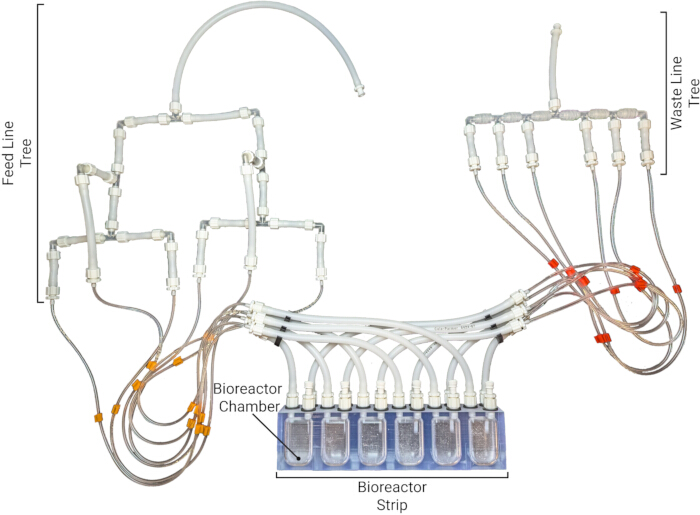
Figure 1: The Minibioreactor Array (MBRA). Fully assembled MBRA, including labels for the feed and waste line tubing tree, the bioreactor chambers and the bioreactor strip. Please click here to view a larger version of this figure.
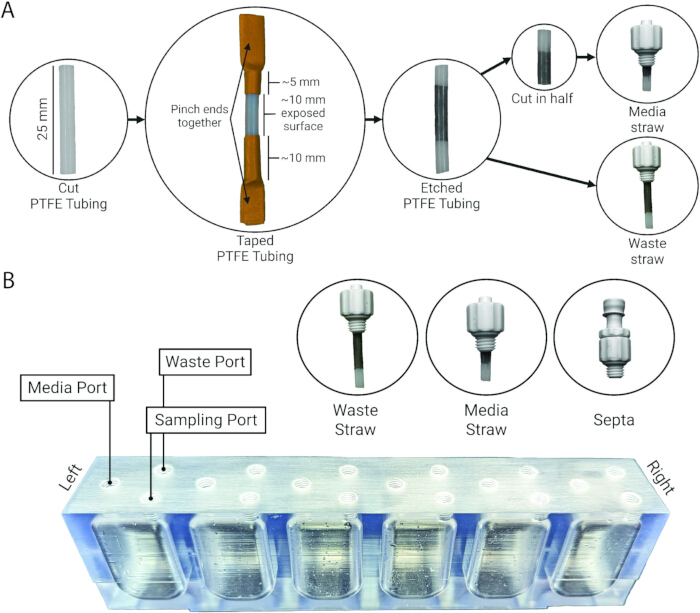
Figure 2: PTFE etching guide and MBRA port layout. (A) Flowchart to follow for the etching of the media and waste PTFE straws. (B) Each bioreactor chamber contains a port for a media straw + threaded male luer, a waste straw + threaded male luer, and a septum + threaded male luer. Please click here to view a larger version of this figure.
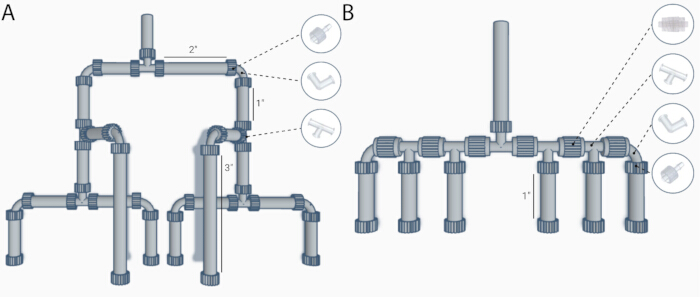
Figure 3: MBRA feed and waste line trees. Representative images to follow in the assembly of (A) feed line tree and (B) waste line tree. Please click here to view a larger version of this figure.
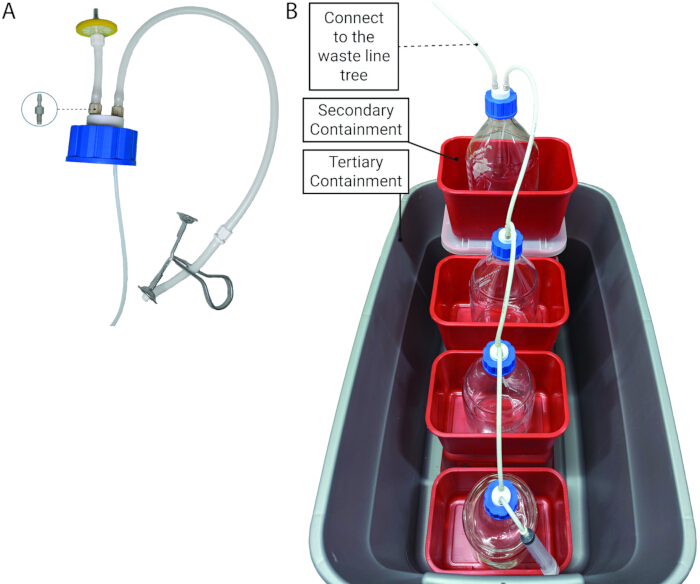
Figure 4: Media bottle cap and waste tier system. (A) An example of an assembled Q-series bottle cap used to pull media into the MBRAs. (B) An image of the tiered waste collection system. Please click here to view a larger version of this figure.
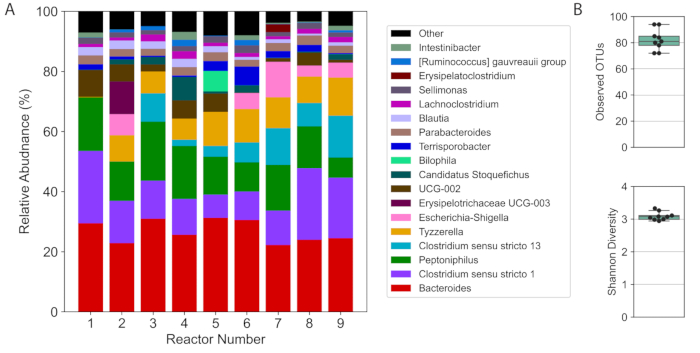
Figure 5: Relative abundance of bacterial genera. (A) Stacked bar graph shows the relative abundance of all genera that comprise at least 2% abundance in any of the samples displayed. (B) Alpha diversity metrics of Observed OTUs and Shannon Diversity between all nine bioreactor chambers. All nine bioreactor chambers were inoculated with the same fecal slurry prepared from human stool. Please click here to view a larger version of this figure.
Table 1: MBRA components. Images and descriptions of all individual parts required to fully assemble the MBRA, along with the quantity needed for each component. Please click here to download this Table.
Table 2: Troubleshooting guide. Common issues encountered with running the MBRA, along with their potential causes and recommended solutions. Please click here to download this Table.
Supplementary File 1: Stl file for 3D-printing the Minibioreactor Array strips. Please click here to download this File.
Supplementary File 2: Stl file for 3D-printing the bioreactor holders used to anchor the bioreactors to the stir plates. Please click here to download this File.
Supplementary File 3.: Stl file for 3D-printing the tube holders used to organize the C-flex waste and feed tubing extending from the MBRAs. Please click here to download this File.
Discussion
This protocol describes the complete assembly and basic operation of a Minibioreactor Array (MBRA) for the high-throughput cultivation of bacterial communities, incorporating several key refinements to the previously published method. The MBRA system remains a versatile and cost-effective tool that allows researchers to cultivate complex microbial ecosystems while supporting numerous experimental replicates in parallel. In this updated version, we introduce improvements that enhance reproducibility, streamline workflow, and reduce contamination risk. These include chemically etched PTFE straws (Figure 2) to prevent detachment, a feed straw on the media line (Figure 2) to minimize biofilm formation, standardized tubing lengths with an accompanying 3D-printed tubing holder (Supplementary File 3) for a more compact and organized setup, and an optimized reuse protocol that eliminates the need for full disassembly between experiments. Together, these refinements represent iterative improvements developed through extensive use of the MBRA system across diverse experimental applications in our laboratory. By addressing both critical assembly steps and practical enhancements, this discussion underscores the utility of the MBRA as a continuously evolving model system for microbiome research.
The success of the MBRA system relies heavily on the precise assembly and sterilization of components to ensure contamination-free operation. Key steps include the proper fitting of Q-series caps, tubing, and connectors, which facilitate modular assembly and enable media input and waste collection. Ensuring a tight seal between media bottles, waste reservoirs, and bioreactor chambers is essential for preventing leaks and maintaining sterile conditions. Another critical step is the verification of peristaltic pump flow rates prior to experimentation, as inconsistencies can lead to uneven media delivery and may affect microbial growth dynamics. Most multichannel peristaltic pumps that utilize cassettes include an occlusion adjustment mechanism, which should be used to fine-tune the flow rate of each channel. Even with proper calibration, the E-lab tubing remains a primary source of variability. To mitigate this, it is important to visually monitor the frequency and size of media droplets entering each bioreactor chamber during both the initial fill and during the start of experiments. These visual checks allow for early detection of flow rate inconsistencies that may otherwise compromise experimental reproducibility. Table 2 provides troubleshooting strategies for common issues encountered during the assembly and use of MBRAs. These troubleshooting steps ensure reproducibility across experiments and prevent disruptions during long-term cultivation.
Despite its strengths, the MBRA system has certain limitations that must be considered when designing experiments. Unlike more advanced systems, the MBRA lacks active monitoring capabilities, such as real-time optical density (OD) measurements, pH control, and temperature regulation. This absence of active measurement restricts the system's ability to monitor dynamic changes in microbial growth and metabolic activity in real-time. Furthermore, while the system supports anaerobic cultivation within chambers, it does not include integrated gas control, which may limit applications requiring precise microaerophilic or CO2-enriched environments. For studies requiring such control, alternative systems with built-in gas regulation may be more suitable.
The MBRA system offers key advantages over existing bioreactor models, including high throughput, scalability, and cost-effectiveness, while retaining the ability to cultivate complex bacterial communities under continuous flow to mimic dynamic environments like the human gastrointestinal tract6,8,10. Its compact, modular design allows for simultaneous operation of multiple bioreactors, making it ideal for high-throughput studies such as screening fecal-derived communities for resistance to pathogen invasion9. This modular design provides extensive experimental flexibility: each strip can be supplied by a single media bottle, as demonstrated in this protocol, or by up to six distinct media sources, one for each bioreactor chamber. Working volume is governed by the length of a slim PTFE waste straw inserted into the waste port of each chamber, which sets the liquid height; in this protocol, 25 mm straws maintain a 15 mL working volume, but volumes between 1-20 mL can be achieved by trimming or extending the straw. Additionally, shorter feed straws are inserted into the media inlet to direct inflow toward the chamber base, preventing media from dripping down the chamber walls and reducing biofilm formation above the fill line. Pump speeds or pump tubing diameter can also be adjusted to alter the system's turnover rate. To date, the MBRA system has been widely used to study the functional and compositional changes of microbial communities in response to a variety of factors, including antibiotics10, cancer medication14, and various dietary compounds12,15,16,17 . The simple, modular design makes it ideal for adaptation to various experimental needs. For example, the MBRA has been modified to study biofilms under chemostat-like conditions18, demonstrating its versatility for microbial ecology studies beyond planktonic cultures.
Future iterations of the MBRA system could benefit from additional engineering upgrades that expand its functionality, precision, and throughput potential. One such enhancement is the incorporation of additional ports into each bioreactor chamber. These ports could be used to support active monitoring of environmental parameters such as pH, temperature, gas, or optical density. This would address one of the model's most significant limitations by allowing real-time feedback and monitoring. Improvements to the chamber or port geometry could facilitate more thorough and accessible cleaning, reducing residue buildup and discoloration and improving long-term reusability. Integration of additional peristaltic pumps with programmable timers would allow for pulsed or diurnal media inputs, better simulating host-associated environments such as feeding cycles in the human gut. Finally, 3D printing with alternative materials, such as chemically resistant, autoclavable polymers, may allow for greater durability and compatibility with a wider range of reagents. Together, these improvements could significantly expand the experimental scope and fidelity of the MBRA platform.
In conclusion, the MBRA provides a powerful, high-throughput platform for cultivating and studying microbial communities under controlled conditions. While it has limitations in active monitoring and pH control, its flexibility, scalability, and cost-efficiency make it an invaluable tool for a wide range of microbiological studies, particularly those requiring high replicability and experimental throughput. Importantly, the system's modular design and fabrication approach make it inherently adaptable; researchers have and can continue to tailor the MBRA to suit a wide array of experimental objectives. This adaptability ensures that the MBRA can continue to evolve alongside emerging scientific questions and technologies, maintaining its relevance as a versatile platform for microbiome research.
Disclosures
The authors declare no conflicts of interest
Acknowledgements
This work was supported by the NIH T32 Molecular Basis of Infectious Disease Predoctoral Fellowship, NIH T32DK007664, and NIH U19AI157981 Microbiome Discovery and Mechanisms to Combat Antibiotic Resistance at Mucosal Surfaces.
The authors thank Hayden Curnyn for his contributions to the design and fabrication of the bioreactor holders and tubing holders used in this system.
Figure 2 and Figure 3 were partially created in https://BioRender.com
Materials
| Name | Company | Catalog Number | Comments |
|---|---|---|---|
| V-Tap Guide, Standard Sizes 0-80 to 5/8" | Big Gator Tools | STD500NP | |
| 0.22 μm syringe filter | Fisher | SLGVR33RS | |
| 2mag MIXdrive 60 Stirring Drive (drive only) | 2MAG | MF 41060 | |
| Air-tite Hypodermic Needles, 22G x3" | VWR | 89219-274 | |
| BD 1mL Slip Tip Sterile Syringes Sterile | Fisher | 14-823-434 | |
| Bioreactor | Proto-Labs | NA | 3D printed out of DMS Somos Watershed Plastic. See supplementary file 1 for template |
| Bioreactor Holders | Proto-Labs | NA | 3D printed out of PA 12 Black. See supplementary file 2 for template. |
| Diba Omnifit Q-Series Solvent Bottle Cap, GL38/38-430 (glass), 2 UNF(F) Ports w/o Valves, Blue | Cole Parmer | EW-21942-86 | |
| Diba Omnifit Tubing, PTFE, 1/8" (3.2 mm) OD x 1.5 mm ID | Cole Parmer | EW-21942-76 | |
| Dibafit Adapter, 1/4"-28 UNF(M) flat bottom to 3.2 mm ID, PEEK | Cole Parmer | EW-21941-49 | |
| IRWIN 12001ZR Tap Wrench #0-1/4" T-Handle | Amazon | B00004YOB0 | |
| Irwin Hanson High Carbon Steel SAE Fraction Tap 1/4 in. 1 pc | Zoro | G7695682 | |
| Loctite Heavy Duty Epoxy Quick Set 8-Fluid Ounce Bottle | Amazon | B0044F59N0 | |
| Male to Male Luer Lock Connector | Darwin Microfluidics | DM-MM-LUER-PP | Alternative: Strategic Applications Inc Male to Male Luer Connector - 10/pk - Fisher - NC9876577 |
| Masterflex Adapter Fittings, Luer to Luer, Nylon, Avantor | VWR | MFLX45502-56 | |
| Masterflex Fitting, Nylon, Straight, Female Luer to Hose Barb Adapter, 1/16" ID | VWR | MFLX45502-00 | |
| Masterflex Fitting, Nylon, Straight, Female Luer to Hose Barb Adapter, 3/32" ID | VWR | MFLX45502-02 | |
| Masterflex Fitting, Nylon, Straight, Female Luer to Hose Barb Adapters, 1/8" | VWR | MFLX45502-04 | |
| Masterflex Fitting, Nylon, Straight, Male Luer Lock to Hose Barb Adapter, 1/8 | VWR | MFLX45505-04 | |
| Masterflex Fitting, Nylon, Straight, Male Luer x 1/4-28 UNF | VWR | MFLX45505-82 | |
| Masterflex Fitting, Polypropylene, Elbow, Female Luer to Female Luer Adapter | VWR | MFLX45508-26 | |
| Masterflex Ismatec Pump Tubing, 2-Stop, Tygon S3 E-Lab, 0.89 mm ID | VWR | MFLX96460-26 | |
| Masterflex Ismatec Pump Tubing, 2-Stop, Tygon S3 E-Lab, 1.14 mm ID | VWR | MFLX96460-30 | |
| Masterflex® Transfer Tubing, C-Flex, Opaque White, 1/8" ID x 1/4" OD; 25 Ft | VWR | MFLX06424-67 | |
| Mohr’s Pinchcock for Tubing | VWR | 470201-374 | |
| Neoprene Rubber Fender Washers ½” OD x ¼” ID x 1/16” Thickness | Amazon | B01A29F1R0 | |
| Precision Seal Rubber Septa | Sigma Aldrich | Z553905 | |
| Spinbar Micro Stir Bars | VWR | 58948-375 | |
| Tetra-Etch | R.S. Hughest Company | TE-500 | |
| Tubing Holder | Proto-Labs | NA | 3D printed out of PA 12 Black. See supplementary file 3 for template. |
| Watson-Marlow 205S Multichannel Cartridge Pump | Watson-Marlow | 020.3724.00A | Discountined, alternative: Ismatec IPC Digital Peristaltic Pumps MFLX7800142 - FISHER - 113-200-014 or Masterflex Ismatec IPC Peristaltic Pump, 0.1 to 11.25 rpm, 24-Channel, 115/230 VAC, Avantor, VWR, MFLX78006-48-CH |
References
- Gilbert, J. A., et al. Current understanding of the human microbiome. Nat Med. 24 (4), 392-400 (2018).
- Sarkar, S., et al. Perspective: simple state communities to study microbial interactions: examples and future directions. Front Microbiol. 13, 801864(2022).
- Van de Wiele, T., Van den Abbeele, P., Ossieur, W., Possemiers, S., Marzorati, M. The impact of food bioactives on health: in vitro and ex vivo models. , Springer. Cham. (2015).
- McDonald, J. A. K., et al. Evaluation of microbial community reproducibility, stability and composition in a human distal gut chemostat model. J Microbiol Methods. 95 (2), 167-174 (2013).
- Feria-Gervasio, D., Denis, S., Alric, M., Brugère, J. F. In vitro maintenance of a human proximal colon microbiota using the continuous fermentation system P-ECSIM. Appl Microbiol Biotechnol. 91 (5), 1425-1433 (2011).
- Auchtung, J. M., Robinson, C. D., Farrell, K., Britton, R. A. MiniBioReactor arrays (MBRAs) as a tool for studying C. difficile physiology in the presence of a complex community. Methods Mol Biol. 1476, 235-258 (2016).
- Robinson, C. D., Auchtung, J. M., Collins, J., Britton, R. A. Epidemic Clostridium difficile strains demonstrate increased competitive fitness compared to nonepidemic isolates. Infect Immun. 82 (7), 2815-2825 (2014).
- Auchtung, J. M., Robinson, C. D., Britton, R. A. Cultivation of stable, reproducible microbial communities from different fecal donors using minibioreactor arrays (MBRAs). Microbiome. 3 (1), 42(2015).
- Auchtung, J. M., et al. Identification of simplified microbial communities that inhibit Clostridioides difficile infection through dilution/extinction. mSphere. 5 (4), e00387-e00320 (2020).
- Hobson, C. A., et al. MiniBioReactor array (MBRA) in vitro gut model: A reliable system to study microbiota-dependent response to antibiotic treatment. JAC Antimicrob Resist. 4 (4), dlac077(2022).
- Auchtung, T. A., Lerma, A. I., Schuchart, K., Auchtung, J. M. Evaluating effects of antibiotics across preclinical models of the human gastrointestinal microbiota. Microbiologyopen. 14 (4), e70030(2025).
- Naimi, S., Viennois, E., Gewirtz, A. T., Chassaing, B. Direct impact of commonly used dietary emulsifiers on human gut microbiota. Microbiome. 9 (1), 66(2021).
- Bolyen, E., et al. interactive, scalable and extensible microbiome data science using QIIME 2. Nat Biotechnol. 37 (8), 852-857 (2019).
- Hobson, C. A., et al. A microbiota-dependent response to anticancer treatment in an in vitro human microbiota model: a pilot study with hydroxycarbamide and daunorubicin. Front Cell Infect Microbiol. 12, 886447(2022).
- Jensen, N., et al. Dietary fiber monosaccharide content alters gut microbiome composition and fermentation. Appl Environ Microbiol. 90 (8), e00964-e01024 (2024).
- Ghimire, S., et al. Positive synergistic effects of quercetin and rice bran on human gut microbiota reduces Enterobacteriaceae family abundance and elevates propionate in a bioreactor model. Front Microbiol. 12, 751225(2021).
- Hu, W., et al. Minibioreactor arrays to model microbiome response to alcohol and tryptophan in the context of alcohol-associated liver disease. NPJ Biofilms Microbiomes. 10 (1), 132(2024).
- Jens, J. N., et al. MBRA-2: A modified chemostat system to culture biofilms. Microbiol Spectr. 11 (1), e02928-e03022 (2023).
Reprints and Permissions
