This study proposed an experimental paradigm that applies High-Definition Transcranial Direct Current Stimulation (HD-tDCS) to improve human metacognition in human-AI delegation tasks. The results demonstrated the effectiveness of HD-tDCS in enhancing metacognitive sensitivity.
A subscription to JoVE is required to view this content. Sign in or start your free trial.
Method Article
High-definition Transcranial Direct Current Stimulation over Right Dorsolateral Prefrontal Cortex to Enhance Metacognitive Sensitivity
In This Article
Summary
Abstract
In human-AI collaboration, task delegation is a critical component. Ideally, if a person believes they are capable of completing a task, they should do so themselves; otherwise, the task should be delegated to the other party. Such delegation decisions are influenced by individuals' assessments of their own abilities, which are shaped by metacognition-the capacity to evaluate one's own capacities. High-Definition Transcranial Direct Current Stimulation (HD-tDCS) is a non-invasive brain stimulation technology that can regulate the excitability of the cerebral cortex to improve human performance. This protocol presents a method that employs HD-tDCS to investigate its effects on human metacognition during human-AI delegation tasks, detailing the procedure for applying anodal, cathodal, or sham stimulation to the dorsolateral prefrontal cortex (DLPFC). Stimulation was performed using a portable HD-tDCS device, using a circumferential arrangement of five electrodes, including one target electrode and four return electrodes. The stimulation lasted for a total of 21 min, and the current intensity was 2 mA. This method is expected to provide a new research path for further in-depth exploration of the neural mechanisms and behavioral regulation of humans in the process of human-AI collaborative task delegation and provide a solid theoretical basis for further optimizing human-AI collaborative tasks.
Introduction
Artificial intelligence (AI) is becoming increasingly intertwined with both our everyday lives and the workplace. However, in many real-world contexts, AI is not yet capable of fully automating decision-making processes1. Certain tasks remain particularly challenging for AI due to current technological limitations, as well as ethical and legal considerations. As a result, granting full autonomy to AI in specific domains is often impractical or inadvisable2,3. Humans, therefore, continue to play an indispensable role in the workplace, and human-AI collaboration is expected to become a dominant mode of production and service delivery in the future. Research in areas such as healthcare, hospitality, and human resources has shown that collaborative efforts between humans and AI can reduce costs and, in some cases, enhance efficiency4,5,6.
In human-AI collaboration, each party is expected to undertake tasks that align with its respective strengths, while delegating less suitable tasks to the other. Therefore, effective task delegation is essential for successful collaboration and optimal performance outcomes. Adam et al. found that when the delegation process is fully automated and handled solely by AI without human involvement, humans tend to experience heightened perceptions of self-threat7. Fuegener et al. further reported that during the process of delegating tasks to AI, people often struggle to accurately assess their own capabilities or evaluate task difficulty, reflecting a low level of metacognition8. These findings highlight the importance of enhancing metacognition in human-AI delegation scenarios to improve the efficiency and quality of collaboration.
Metacognition refers to an individual's ability to evaluate their own capabilities9. In the context of mutual delegation between humans and AI, it is essential not only to form an accurate understanding of the other party's capabilities but also to evaluate one's own abilities to determine when delegation is appropriate. Jussupow et al. found that human-AI collaboration is most effective when humans demonstrate high levels of metacognition-that is, when they can accurately assess both their own abilities and those of the AI10. Similarly, Atchley et al. found that fostering metacognition in educational settings can promote deeper and more effective collaboration between humans and AI systems11. Previous studies on human-AI collaboration have often assessed metacognition through self-report questionnaires or by using human confidence ratings as indirect measures. However, in psychological research, a more established and rigorous measure of metacognition is metacognitive sensitivity (meta-d')12. In the present study, we use meta-d', following the approach described by Maniscalco et al. to assess metacognitive sensitivity13.
Transcranial direct current stimulation (tDCS) has been widely used in research aimed at enhancing metacognition14. Core aspects of metacognition are closely associated with the prefrontal cortex. tDCS delivers a weak direct current to specific brain regions, modulating neuronal excitability and synaptic plasticity in a non-invasive and non-intrusive manner, thereby allowing researchers to improve various cognitive functions15. Harty et al. found that anodal stimulation over the right dorsolateral prefrontal cortex (DLPFC) enhanced participants' error detection performance in an error awareness task, thereby improving their metacognitive monitoring of cognitive performance16. Bona and Silvanto reported that anodal tDCS affected metacognitive bias in a working memory task17. Mattes et al. showed that while tDCS influenced participants' confidence ratings in both metacognition and mentalizing tasks, it did not alter their metacognitive sensitivity18. Temporary disruption or damage to the prefrontal cortex-specifically Brodmann areas 46 and 10-in both humans and monkeys has been shown to induce changes in metacognitive processes14. In addition, previous studies have provided causal evidence linking stimulation of the DLPFC to metacognitive abilities19,20. The right DLPFC, in particular, plays a key role within the neural network underlying cognitive control21,22, which is closely related to the demands of our experimental task. Therefore, we selected the right DLPFC as our target site for stimulation. Consistent with established protocols in tDCS studies on metacognition, we applied a 2 mA current for 21 min, including a 1 min ramp-up and ramp-down phase17,23. Currently, the highest current intensity used in tDCS is 4 mA, which has been shown to be tolerable for participants in the study conducted by Workman et al.24.
High-definition transcranial direct current stimulation (HD-tDCS) is a high-precision modification of conventional tDCS, offering more targeted neuromodulation through specialized electrode montages. Compared to conventional tDCS, which uses two large pad electrodes, HD-tDCS allows for more targeted and focal stimulation of specific brain regions, resulting in more sustained effects25,26. In contrast to neurofeedback techniques that also aim to enhance cognitive performance27, HD-tDCS offers several practical advantages, including a shorter activation period, simpler application procedures, and lower implementation costs28. From the perspective of human-AI task delegation, HD-tDCS offers higher spatial precision, ease of operation, and cost-effectiveness. Moreover, it allows participants to engage in sustained tasks involving delegation and reflection within contexts that approximate real-life or workplace scenarios, making it especially suitable for probing metacognition in human-AI delegation. In this study, HD-tDCS was employed to deliver more targeted stimulation to the DLPFC.
Experimental design
The experimental materials were sourced from the ImageNet Large Scale Visual Recognition Challenge (ILSVRC)29. The AI model was GoogLeNet Inception v3, one of the top-performing models in image classification tasks30.
The experimental task was a human-AI delegation task, specifically an image classification task. Image classification involves assigning a target image to a category, and it is a general task that does not require any domain-specific training or prior expertise. Tasks based on specific situational backgrounds may compromise generalizability. For example, in high-stakes scenarios involving potential loss, people tend to delegate decisions to AI31, effectively making it the team's scapegoat32. The task used in this study was adapted from the human-AI collaborative classification paradigm developed by Fuegener et al. and by Gass et al.8,33.
A preliminary experiment was conducted to assess the difficulty level of the image. Image difficulty is the average accuracy of the corresponding image in the human alone condition. As shown in Figure 1, each trial consisted of a target image and five sets of image options. Participants were asked to choose the option set that best matched the target image. A total of 217 participants completed the preliminary study. All participants in the preliminary study were excluded from recruitment for the main experiment.
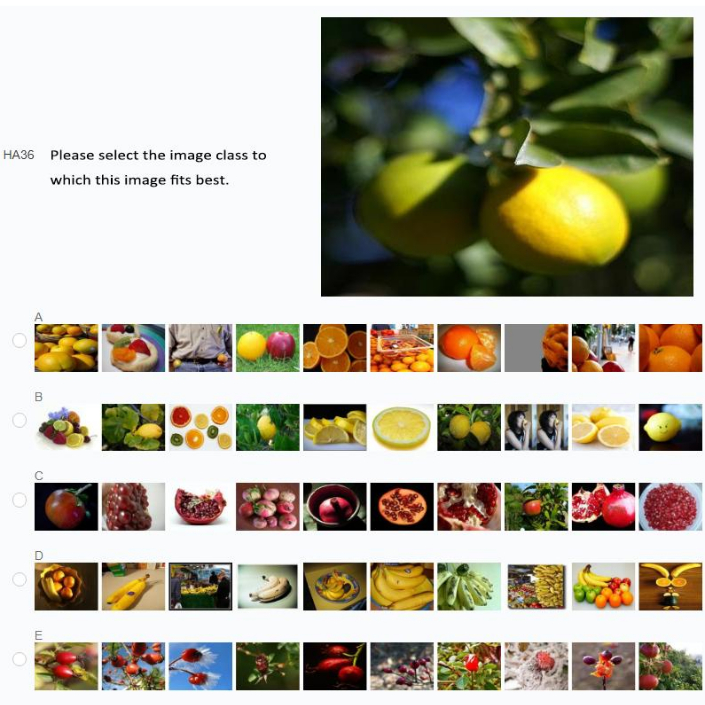
Figure 1: Preliminary experiment Interface. Interface shown to participants in the preliminary experiment, where they selected one response from five options. Please click here to view a larger version of this figure.
In the formal experiment interface (see Figure 2), a target image is displayed at the top of the screen. Additionally, five image group options and one delegation option (located at the top right of the screen) are presented. Participants need to decide between delegating the task to the AI and completing it themselves. In the latter case, they select one of the five image category options that best matches the target image. After each decision, the interface advances to the next page, where participants are asked to rate their confidence in their delegation decision on a scale from 1 to 4. Before the formal experiment began, participants were informed that the AI system had an average accuracy of 76%.
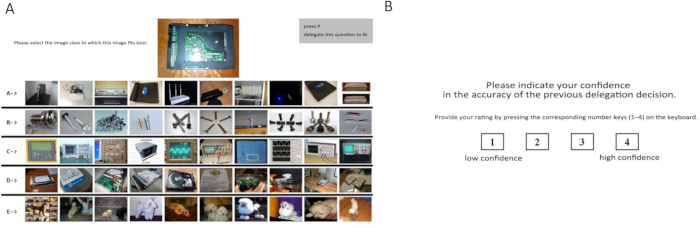
Figure 2: Formal experiment Interface. Main interface shown to participants during the task. (A) The task interface; (B) the confidence rating interface. Please click here to view a larger version of this figure.
A total of 62 right-handed participants were recruited for the main experiment. All participants were graduate students who had no prior experience with similar experimental tasks. The exclusion criteria were as follows: participants must not have taken any sedative-hypnotic drugs or psychoactive substances within 24 h prior to the experiment, must have no cranial defects (e.g., holes or fractures), and must not have any metal implants in the skull (e.g., metal plates). Two participants were excluded: one due to dermatological inflammation that prevented HD-tDCS stimulation, and one for ingesting a caffeinated beverage prior to the experiment. The remaining 60 participants (mean age = 22.68 ± 0.91 years) completed the experiment. They were randomly assigned to one of three stimulation conditions-anodal, cathodal, or sham-each with 20 participants. The electric field simulations are shown in Figure 3. Each participant performed the image classification task once before and once after stimulation, yielding 120 data sets for analysis. The HD-tDCS procedure is illustrated in Figure 4, and the experimental workflow is summarized in Figure 5. We conducted an a priori power analysis using G*Power 3.134, assuming a power of 90% (1 - β = 0.90), an effect size of f = 0.25, and an alpha level of 0.05. The analysis indicated that a minimum of 18 participants per group would be required. Our final sample size met this requirement.

Figure 3: Electric field simulation. Lateral view of the electric field distribution (right side). (A) Anodal stimulation condition. (B) Cathodal stimulation condition. Please click here to view a larger version of this figure.
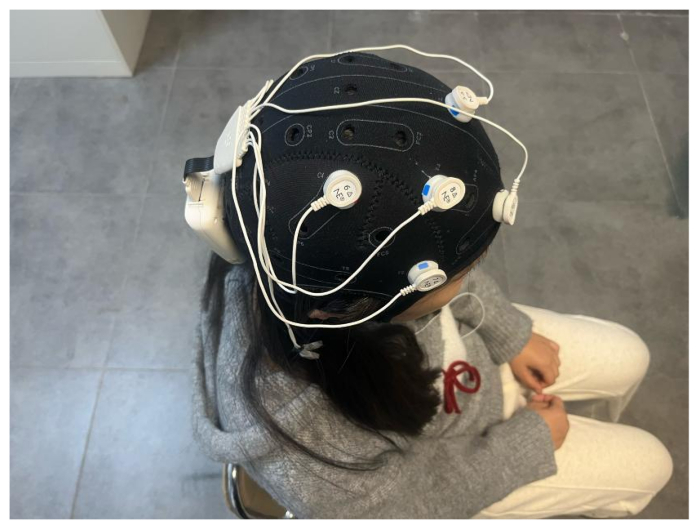
Figure 4: HD-tDCS experimental setup. Photograph of the HD-tDCS experimental setup, illustrating the electrode placement and device position during stimulation. Please click here to view a larger version of this figure.
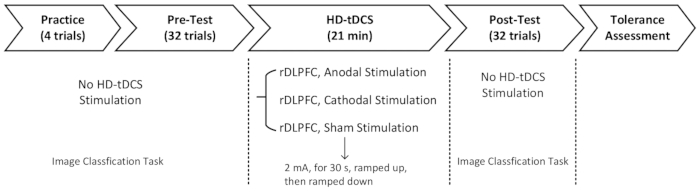
Figure 5: Experimental flowchart. The experiment comprised three phases, including image classification tasks conducted before and after the stimulation. Abbreviations: HD-tDCS = high-definition transcranial direct current stimulation; rDLPFC = right dorsolateral prefrontal cortex. Please click here to view a larger version of this figure.
Access restricted. Please log in or start a trial to view this content.
Protocol
This study was conducted in accordance with the principles of the Declaration of Helsinki and was approved by the Institutional Review Board of Jiangsu University of Science and Technology. We obtained the informed consent of the participants to use and release their data.
1. Preparation
- Prepare for the experiment task.
- Download image data from the ImageNet website (https://image-net.org/).
NOTE: The downloaded images are categorized, and each category contains multiple images. - Run the Python code related to the GoogLeNet Inception v3 model to classify images (see Supplemental File 1). Save the top five predicted categories for each image, along with the Top-1 classification accuracy.
NOTE: This Python code performs image classification by loading the Inception V3 model. For each target image, it outputs the top five predicted categories. The image sets corresponding to these five predicted categories are presented to participants as response options in the experiment. If the correct category is not among the top five predictions, one of the predicted categories is replaced with the correct one to ensure its inclusion among the options. - Use Python or any random sampling program to select target image from the images classified by the model.
- For each target image, extract 10 images for each of the five categories to serve as response options. Resize all images to ensure uniform dimensions.
- Conduct a preliminary study and invite participants to take part in the experiment.
NOTE: The preliminary study was similar to the formal experiment, except that participants were required to complete all trials themselves, without the option to delegate and without a confidence rating process. - Record each participant's accuracy in responding to each image and calculate the accuracy rate for each image. Use the accuracy scores as an index of image difficulty to classify the images accordingly.
NOTE: All images are sorted by accuracy, with higher accuracy indicating lower difficulty. For example, when 10% of participants correctly respond to an image, the difficulty of that image is set at 90%. - Divide the images into two sets of comparable difficulty based on their difficulty scores. Use the two sets of images as experimental materials to create the formal experimental program through the E-prime 3 (see Supplemental File 1).
NOTE: This experimental program was designed to present the image classification task.
- Download image data from the ImageNet website (https://image-net.org/).
- Ensure that the participant has no contraindications to HD-tDCS and does not meet any exclusion criteria. Introduce the experimental procedure to participants and obtain written informed consent after confirming their understanding of the study.
NOTE: Ask the participant about their dominant hand and confirm it by observing which hand they use to write. - Measure the participant's head circumference using a measuring tape and select the appropriate HD-tDCS neoprene headcap size (see Table of Materials) accordingly.
- Verify that the HD-tDCS device is fully charged. Ensure that all accessories-including electrodes, electrode gel, syringe provided with the instrument, electrode cables, and the computer used to operate the HD-tDCS system-are ready for use.
- Randomly select one of the two experimental tasks as the pretest condition. Instruct the participant to complete the image classification task.
NOTE: A random number generator can be used to randomly assign experimental conditions.- Open the program.
- Click on RUN, enter the subject number and session number, confirm the information, and click YES to start the experimental task.
2. HD-tDCS stimulation
- Insert the bottom parts of the five electrodes into the corresponding positions on the neoprene headcap. These five positions serve as the stimulation sites.
NOTE: To target the right DLPFC, use the following five electrode positions: F4, Fp2, Fz, C4, and F8. - Instruct the participant to sit comfortably in a chair. Position the front edge of the neoprene headcap approximately 1-2 cm above the eyebrows. Ensure that Cz is aligned with the midpoint between the two preauricular points. Fit the cap securely on the participant's head, ensuring proper alignment.
NOTE: When fitting the headcap, be sure to locate Cz, the inion, nasion, and left and right preauricular points according to the international 10-20 EEG system. - Apply electrode gel (see Table of Materials) to each stimulation site using the syringe provided with the instrument to reduce impedance between the electrodes and the scalp.
NOTE: The electrode gel is a highly conductive and water-soluble gel.- Fill the syringe with electrode gel.
- For each electrode, part the hair with the syringe to expose the scalp.
- Inject a sufficient amount of electrode gel onto the exposed scalp inside the bottom parts of all the electrodes.
- Screw together the top and bottom parts of all the electrodes.
- Connect the HD-tDCS device.
- Turn on the HD-tDCS device and launch the corresponding control software (see Table of Materials).
NOTE: The computer running the control software must meet at least the following requirements: Processor: 1.6 GHz; RAM: 2 GB; Interface: USB or WiFi; Screen resolution: 1,280 x 768. - Enable Bluetooth on the computer. In the control software, select USE Wi-Fi Devices to begin the connection process.
- Wait for the device's MAC address to appear in the list. Once it appears, select the device.
- In the Line Noise Filter setting, select 50 Hz to eliminate electrical interference.
NOTE: The selected frequency should match the AC power frequency used in the country where the experiment is conducted. - At the bottom of the settings panel, click on the Use This Device button. The software will then establish a connection with the device.
- Turn on the HD-tDCS device and launch the corresponding control software (see Table of Materials).
- Configure the HD-tDCS stimulation protocol.
- Click the head-shaped icon on the left panel of the control software. Then, click ADD NEW PROTOCOL to create a new stimulation protocol.
- Set the protocol duration to 21 min, with a 30 s ramp-up and 30 s ramp-down period for current delivery.
NOTE: If the protocol is a sham stimulation, enable the Sham option. - Drag the F4 electrode into the Stimulation column on the right. Set the channel to stimulation mode, enter a current intensity of 2,000 µA35, select anodal stimulation.
NOTE: The designation of anode and cathode depends on the intended stimulation type. - Drag electrodes Fp2, Fz, C4, and F8 into the Stimulation column. Set each channel to return mode, assigning 25% of the total current to each. Save the protocol.
- Select the configured stimulation protocol. Attach the HD-tDCS device to the Velcro strap at the back of the headcap. Use the electrode cables to connect the device to the electrode hardware.
NOTE: Ensure that each cable is connected to the correct electrode position, matching the configuration in the software. - Confirm that all cables are properly connected. Click the LOAD PROTOCOL button in the bottom right corner.
- Click the CHECK IMPEDANCE button to perform an impedance check.
NOTE: Ensure that the connection status indicators for all selected electrodes are green (0-10 kΩ) or orange (10-15 kΩ). If any indicator appears red (>15 kΩ), reapply the electrode gel or adjust the hair to expose more scalp to reduce impedance. - Click the start button (right-pointing triangle icon) to start the stimulation.
- Instruct the participants to report their sensations at multiple time points during the stimulation session.
NOTE: If a participant reports discomfort beyond normal sensations, immediately click the STOP button in the software, remove the device from the participant, and check the condition of their scalp.
3. Post stimulation
- Turn off the control software. Disconnect the cables from the electrodes and carefully remove the HD-tDCS device.
- Remove the headcap from the participant's head and detach all electrodes.
- Select the other experimental program that has not yet been completed. Instruct the participant to complete the image classification task as the post-test.
- Provide the participant with supplies to clean their hair.
- Instruct participants to complete a sensation questionnaire after the HD-tDCS session36. Use the questionnaire to assess participants' tolerance and subjective experience of the HD-tDCS stimulation.
- Clean the headcap and electrodes.
- Rinse the headcap thoroughly with water. Hang the headcap to air dry.
- Use tap water to gently rinse the gel from the electrodes.
NOTE: Use warm water to dissolve the gel more quickly. - Leave the electrodes to air dry on a paper towel or cloth away from direct sunlight. Once dry, place them in their packaging for long-term storage.
Access restricted. Please log in or start a trial to view this content.
Results
The key result of this study includes the measurement of metacognitive sensitivity using the meta-d'. A normality test was conducted on the metacognitive sensitivity scores of participants across different stimulation types, and the results showed that normality was met under all conditions. A repeated measures ANOVA was performed to compare metacognitive sensitivity across different stimulation types, with the results shown in Table 1. Although the main effects of time a...
Access restricted. Please log in or start a trial to view this content.
Discussion
To ensure the reliability of the experimental results, several factors must be considered during the procedure. First, when connecting the cables to the HD-tDCS electrode hardware, it is crucial to verify that each cable corresponds precisely to the designated electrode position, as incorrect connections may cause unintended physiological effects. Second, since this is a single-blind study involving a sham stimulation condition, participants must not be able to view the operation interface during the HD-tDCS procedure. T...
Access restricted. Please log in or start a trial to view this content.
Disclosures
The authors have nothing to disclose.
Acknowledgements
This study was supported by the Postgraduate Research & Practice Innovation Program of Jiangsu Province (KYCX25_4311), National Natural Science Foundation of China (72374088, 72471105, 72472094, 72001096), 2024 Key Project of Higher Education Science Research Planning of China Association of Higher Education (24XX0205, Mechanisms of Human-AI Collaboration Strategies in Enhancing Learning Outcomes), 2024 Key Project of Education Science Planning in Jiangsu Province (B-b/2024/01/162, Model Construction and Empirical Research on Multimodal Learning from the Perspective of Educational Neuroscience), Jiangsu Government Scholarship for Overseas Studies (JS-2024-69) and the Humanities and Social Science Fund of Ministry of Education of China (24YJCZH445).
Access restricted. Please log in or start a trial to view this content.
Materials
| Name | Company | Catalog Number | Comments |
|---|---|---|---|
| Electrode cables | Neuroelectrics | 10 electrode cable | The electrode cable has 10 electrode medical sockets. |
| Electrode gel | Parker Laboratories | Signagel 250g NE016b | It is used to decrease the impedance and improve the signal quality. |
| Electrodes | Neuroelectrics | NG PISTIM NE029 | The NG Pistim consists of two pieces: the fastener (top part) and the threaded washer (bottom part). |
| Experimental software | PSYCHOLOGY SOFTWARE TOOLS | E-prime3.0 Build 3.0.3.31 | This is the software used to make the experimental program. |
| HD-tDCS device | Neuroelectrics | Starstim 8 | This is the device used to deliver HD-tDCS stimulation. |
| HD-tDCS software | Neuroelectrics | NIC2 V2.1.3.6 | It is the application that allows a computer to interact with the HD-tDCS device. |
| Laptop | Dell | G5 5500 | This computer runs the software used in the experiment. |
| Neoprene headcap | Neuroelectrics | M | It is a headcap to precisely place the electrodes on the scalp.Sizes:S (49 cm), M (54 cm), L (57 cm), XL (60 cm) |
| Statistical tool | IBM | SPSS V26 | It is used for data analysis. |
| Syringe | - | NE014 | It is used to inject electrode gel. |
References
- Brynjolfsson, E., Mitchell, T., Rock, D. What can machines learn, and what does it mean for occupations and the economy? AEA Pap. Proc. 108. , 43-47 (2018).
- Gleasure Pieper, M., R, How AI helps to compile human intelligence: An empirical study of emerging augmented intelligence for medical image scanning. Inf Syst J. 35 (5), 1399-1421 (2025).
- Ling, B., Dong, B. W., Cai, F. Applicants' fairness perception of human and ai collaboration in resume screening. Int J Hum Comput Interact. 10, (2024).
- Ahsen, M. E., Ayvaci, M. U. S., Mookerjee, R., Stolovitzky, G. Economics of AI and human task sharing for decision making in screening mammography. Nat Commun. 16 (1), 2289(2025).
- Webster Ivanov, S., C, Automated decision-making: Hoteliers' perceptions. Technol Soc. 76, (2024).
- Radonjic, A., Duarte, H., Pereira, N. Artificial intelligence and HRM: HR managers' perspective on decisiveness and challenges. Eur Manag J. 42 (1), 57-66 (2024).
- Adam, M., Diebel, C., Goutier, M., Benlian, A. Navigating autonomy and control in human-ai delegation: User responses to technology- versus user-invoked task allocation. Decis Support Syst. 180, 114193(2024).
- Fuegener, A., Grahl, J., Gupta, A., Ketter, W. Cognitive challenges in human-artificial intelligence collaboration: Investigating the path toward productive delegation. Inf Syst Res. 33 (2), 678-696 (2022).
- Evans, J. A., Foster, J. G. Metaknowledge. Science. 331 (6018), 721-725 (2011).
- Jussupow, E., Spohrer, K., Heinzl, A., Gawlitza, J. Augmenting medical diagnosis decisions? An investigation into physicians' decision-making process with artificial intelligence. Inf Syst Res. 32 (3), 713-735 (2021).
- Atchley, P., Pannell, H., Wofford, K., Hopkins, M., Atchley, R. A. Human and AI collaboration in the higher education environment: Opportunities and concerns. Cogn Res Princ Implic. 9 (1), (2024).
- Lau Fleming, S. M., C, H. How to measure metacognition. Front Hum Neurosci. 8, (2014).
- Lau Maniscalco, B., H, A signal detection theoretic approach for estimating metacognitive sensitivity from confidence ratings. Conscious Cogn. 21 (1), 422-430 (2012).
- Fleming, S. M. Metacognition and confidence: A review and synthesis. Annu Rev Psychol. 75, 241-268 (2024).
- Kadosh Reed, T., C, R. Transcranial electrical stimulation (TES) mechanisms and its effects on cortical excitability and connectivity. J Inherit Metab Dis. 41 (6), 1123-1130 (2018).
- Harty, S., et al. Transcranial direct current stimulation over right dorsolateral prefrontal cortex enhances error awareness in older age. J Neurosci. 34 (10), 3646-3652 (2014).
- Silvanto Bona, S., J, Accuracy and confidence of visual short-term memory do not go hand-in-hand: Behavioral and neural dissociations. PLoS One. 9 (3), (2014).
- Soutschek Mattes, R. S., A, Brain stimulation over dorsomedial prefrontal cortex causally affects metacognitive bias but not mentalising. Cogn Affect Behav Neurosci. , (2025).
- Rahnev Shekhar, M., D, Distinguishing the roles of dorsolateral and anterior PFC in visual metacognition. J Neurosci. 38 (22), 5078-5087 (2018).
- Soutschek, A., Moisa, M., Ruff, C. C., Tobler, P. N. Frontopolar theta oscillations link metacognition with prospective decision making. Nat Commun. 12 (1), 3943(2021).
- Cho, S. S., et al. Effect of continuous theta burst stimulation of the right dorsolateral prefrontal cortex on cerebral blood flow changes during decision making. Brain Stimul. 5 (2), 116-123 (2012).
- Wout, V. an't, Kahn, M., S, R., Sanfey, A. G., Aleman, A. Repetitive transcranial magnetic stimulation over the right dorsolateral prefrontal cortex affects strategic decision-making. Neuroreport. 16 (16), 1849-1852 (2005).
- Han, L. T., et al. Establishing a causal role for left ventrolateral prefrontal cortex in value-directed memory encoding with high-definition transcranial direct current stimulation. Neuropsychologia. (181), e108489(2023).
- Workman, C. D., Kamholz, J., Rudroff, T. The tolerability and efficacy of 4 mA transcranial direct current stimulation on leg muscle fatigability. Brain Sci. 10 (1), (2020).
- Kuo, H. -I., et al. Comparing cortical plasticity induced by conventional and high-definition 4 x 1 ring tDCS: A neurophysiological study. Brain Stimul. 6 (4), 644-648 (2013).
- Parlikar, R., et al. High definition transcranial direct current stimulation (HD-tDCS): A systematic review on the treatment of neuropsychiatric disorders. Asian J Psychiatr. 56, 102542(2021).
- Enriquez-Geppert, S., Huster, R. J., Herrmann, C. S. Boosting brain functions: Improving executive functions with behavioral training, neurostimulation, and neurofeedback. Int J Psychophysiol. 88 (1), 1-16 (2013).
- Bjekic, J., Zivanovic, M., Filipovic, S. R. Transcranial direct current stimulation (tDCS) for memory enhancement. J Vis Exp. 175 (175), 62681(2021).
- Russakovsky, O., et al. Imagenet large scale visual recognition challenge. Int J Comput Vis. 115 (3), 211-252 (2015).
- Szegedy, C., Vanhoucke, V., Ioffe, S., Shlens, J., Wojna, Z. Rethinking the Inception Architecture for Computer Vision. IEEE Trans Vis Comput Graph. , IEEE. 2818-2826 (2016).
- Scherer Candrian, C., A, Rise of the machines: Delegating decisions to autonomous AI. Comput Human Behav. 134, 107308(2022).
- Parlangeli, O., Curro, F., Palmitesta, P., Guidi, S. Moral judgements of errors by AI systems and humans in civil and criminal law. Behav Inf Technol. 43 (9), 1718-1728 (2024).
- Gass, D. F. Exploring personality-based heterogeneity in metaknowledge and human-AI collaboration. in International Conference on Information Systems, ICIS. , (2023).
- Faul, F., Erdfelder, E., Lang, A. -G., Buchner, A. G*power 3: A flexible statistical power analysis program for the social, behavioral, and biomedical sciences. Behav Res Methods. 39 (2), 175-191 (2007).
- Reckow, J., et al. Tolerability and blinding of 4x1 high-definition transcranial direct current stimulation (HD-tDCS) at two and three milliamps. Brain Stimul. 11 (5), 991-997 (2018).
- Chen, W., Chen, R., He, Q. Stimulation location determination using a 3d digitizer with high-definition transcranial direct current stimulation. J Vis Exp. (154), e60263(2019).
- El Jamal, C., et al. Tolerability and blinding of high-definition transcranial direct current stimulation among older adults at intensities of up to 4 mA per electrode. Brain Stimul. 16 (5), 1328-1335 (2023).
- Mcintire, L. K., Mckinley, R. A., Goodyear, C., Nelson, J. A comparison of the effects of transcranial direct current stimulation and caffeine on vigilance and cognitive performance during extended wakefulness. Brain Stimul. 7 (4), 499-507 (2014).
- Meunier-Duperray, L., et al. Does age affect metacognition? A cross-domain investigation using a hierarchical Bayesian framework. Cognition. 258, 106089(2025).
- Filippi, R., Ceccolini, A., Periche-Tomas, E., Bright, P. Developmental trajectories of metacognitive processing and executive function from childhood to older age. Q J Exp Psychol. 73 (11), 1757-1773 (2020).
- Workman, C. D., Fietsam, A. C., Rudroff, T. Different effects of 2 mA and 4 mA transcranial direct current stimulation on muscle activity and torque in a maximal isokinetic fatigue task. Front Hum Neurosci. 14, (2020).
- Gnewuch, U., Morana, S., Hinz, O., Kellner, R., Maedche, A. More than a bot? The impact of disclosing human involvement on customer interactions with hybrid service agents. Inf Syst Res. 35 (3), 936-955 (2024).
- Shrestha, Y. R., Ben-Menahem, S. M., Von Krogh, G. Organizational decision-making structures in the age of artificial intelligence. Calif Manage Rev. 61 (4), 66-83 (2019).
- Gomez, C., Cho, S. M., Ke, S., Huang, C. M., Unberath, M. Human-ai collaboration is not very collaborative yet: A taxonomy of interaction patterns in AI-assisted decision making from a systematic review. Front Comput Sci. 6, 1521066(2024).
- Pinski, M., Haas, M. J., Benlian, A. AI literacy - towards measuring human competency in artificial intelligence. in Proc Annu Hawaii Int Conf Syst Sci. , 5164-5173 (2024).
- Mattioli, F., Maglianella, V., D'antonio, S., Trimarco, E., Caligiore, D. Non-invasive brain stimulation for patients and healthy subjects: Current challenges and future perspectives. J Neurol Sci. 456, 122825(2024).
- Rudroff, T., Rainio, O., Klen, R. Leveraging artificial intelligence to optimize transcranial direct current stimulation for long covid management: A forward-looking perspective. Brain Sci. 14 (8), (2024).
Access restricted. Please log in or start a trial to view this content.
Reprints and Permissions
