This study describes a supercritical carbon dioxide foaming method for the preparation of carbon fiber and bamboo fiber reinforced poly (butylene adipate-co-terephthalate) foams.
A subscription to JoVE is required to view this content. Sign in or start your free trial.
Method Article
Preparation of Carbon Fiber and Bamboo Fiber Reinforced Poly (butylene Adipate-co-terephthalate) Foams by Supercritical Carbon Dioxide Foaming
In This Article
Summary
Abstract
Fiber-reinforced polymer foams have found extensive applications across numerous fields. Particularly, poly (butylene adipate-co-terephthalate) (PBAT) has garnered significant attention in the field of biodegradable materials due to its exceptional processing properties, mechanical performance, and biocompatibility. However, the high shrinkage rate of pure PBAT foam limits its application. Among the various materials capable of enhancing foam performance, carbon fiber (CF) and bamboo fiber (BF) exhibit unique advantages. This study employed supercritical carbon dioxide (scCO2) foaming technology to successfully prepare PBAT/CF/BF foams. The results demonstrate that the synergistic effect of CF and BF significantly improves the anti-shrinkage properties of PBAT foam. Compared to pure PBAT foam, the shrinkage rate of PBAT/15CF/5BF foam decreased from 55.63% to 6.92%, a reduction of 87.56%. PBAT/10CF/10BF foam achieved the lowest density of 0.13 g/cm3, representing a 31.58% decrease. PBAT/10CF/10BF foam exhibited the highest expansion ratio of 9.43, an increase of 51.36%. Compression resilience tests revealed that all PBAT/CF/BF foams displayed favorable compression resilience, with PBAT/15CF/5BF foam demonstrating the highest compressive strength of 0.26 MPa. This research provides an effective solution for fabricating fiber-reinforced biodegradable polyester foams. Those foams have anti-shrinkage properties, lightweight characteristics, and excellent resilience.
Introduction
Fiber-reinforced polymer foams have been widely applied in various fields, including aerospace1, transportation2, construction3, and environmental protection4, due to their high strength-to-weight ratio, excellent thermal stability, and versatile composability. Driven by global "dual-carbon" goals and plastic pollution control initiatives, biodegradable polymer foams are becoming a research hotspot5,6,7. PBAT, as a typical bio-based biodegradable polyester, is considered an ideal alternative to traditional petroleum-based foam materials due to its outstanding processing performance and environmental friendliness8,9,10,11. However, the significant shrinkage exhibited by pure PBAT foams limits their application12.
Among various modification techniques, research has found that employing fiber reinforcement technology can significantly enhance the performance of PBAT foam13. CF, renowned for its high strength, high modulus, and low density, is frequently utilized to reinforce polymers, thereby enhancing their mechanical properties14. The inclusion of CF not only offers stronger mechanical support for foams but may also modify their microstructure, thus improving their overall performance15,16. Yimu Qiao et al.17 prepared a sandwich structure composed of PBAT/CF foam and continuous CF reinforced polypropylene (PP) prepregs. The study found that the foam cells with prepregs were more uniform and dense. In contrast, BF presents unique advantages in reinforcement materials due to its exceptional biocompatibility and renewability18. Its unique internal microstructure bestows certain toughness and cushioning properties on the material19. Wei Guo et al.20 prepared alkali-modified BF reinforced polypropylene BF/PP foams. The research shows that the addition of BF improves the cellular structure and significantly enhances the mechanical properties of BF/PP foams. Consequently, the judicious combination of CF and BF in the fabrication of PBAT foam is anticipated to maximize the benefits of both materials, mitigate the significant shrinkage issue of pure PBAT foam, and further broaden its application potential across various fields.
Although scCO2 foaming technology has made the aforementioned progress, there are still significant shortcomings in the field of fiber-reinforced biodegradable polyester foam. First, existing research mostly uses single fiber reinforcement (such as pure CF or pure BF), failing to fully leverage the synergistic effects of different fibers, such as the combination of CF's rigidity enhancement and BF's interface control advantages. Second, avoiding foaming defects caused by decreased melt flowability at high fiber content remains a challenge. The innovation of this paper lies in addressing the above issues. On the one hand, it constructs a scCO2 foaming system for CF/BF dual-fiber synergistic reinforcement of PBAT, which compensates for the shortcomings of single-fiber systems in nucleation efficiency and interface bonding. At the same time, optimising the CF/BF ratio improves the mechanical properties of the foam while ensuring foaming, providing a new design concept for the high-performance of biodegradable foam.
ScCO2 foaming technology has opened new avenues for producing high-performance microcellular foam materials, leveraging its environmental benefits, tunable micron-scale pore size, and flexible process parameter adjustability21. Through scCO2 foaming, CO2 dissolves uniformly within the composite material system. Upon sudden pressure release, the carbon dioxide rapidly escapes, forming numerous uniformly distributed bubble nuclei that subsequently grow into pores22. This process not only enables precise control over pore size and density but also enhances the material's thermal insulation, soundproofing, and cushioning properties while maintaining its original performance23.
This study investigates a scCO2 foaming system for PBAT composites reinforced with varying ratios of CF and BF, both at a total content of 20 %. To prepare PBAT/CF/BF foam, the CF/BF ratio was selected as 3:1, 1:1, and 1:3. The foaming temperature was 100 °C, the foaming pressure was 10 MPa, and the foaming time was 60 min. Initially, foams were produced, and their density, expansion ratio, and shrinkage rate were measured to visually illustrate the differences in the fundamental physical properties of the foams with different fiber ratios. Subsequently, scanning electron microscopy (SEM) was utilized to characterize the cellular structure, with cell diameters measured to disclose, at the microscopic level, the impact of varying fiber ratios on cell morphology, size, and uniformity. Lastly, compression cycle tests were performed to assess the compression performance, indicating the mechanical load-bearing capacity conferred to the foams by different fiber reinforcement combinations. The results of this study will offer theoretical bases and technical insights for the development of bio-based, biodegradable foam materials with superior physical properties, microstructure, and mechanical strength, thus promoting their sustainable use in areas such as packaging and construction.
Access restricted. Please log in or start a trial to view this content.
Protocol
The reagents and the equipment used in this study are listed in the Table of Materials.
1. Raw material pretreatment
- Put the PBAT, CF, and BF in an oven at 80 °C for 8 h (Figure 1A).
2. Weighing and pre-mixing
- Taking a total mass of 200 g as an example, use an electronic balance to proportionally weigh PBAT and CF (for instance, PBAT/20CF: 180 g PBAT and 20 g CF).
- Pour the weighed PBAT and CF into a polyethylene bag, mix for 5 min to ensure preliminary uniform dispersion of CF.
3. Melt extrusion
- Turn on the power switch of the twin-screw extruder (Figure 1B).
- Set the temperature of each zone to 135 °C, 145 °C, 155 °C, 165 °C, and 160 °C respectively.
- Initiate the heating program and maintain for 30 min after the temperature in each zone reaches the set value.
- Set the host speed to 5 rpm.
- Set the feeder rotation speed to 3 rpm.
- Add pure PBAT pellets into the extruder and run for 10 min to clean the screw.
- Switch to PBAT/20CF premix and extrude continuously.
- Prepare samples with PBAT/15CF/5BF, PBAT/10CF/10BF, PBAT/5CF/15BF, PBAT/20BF, content respectively according to the above steps. Clean the screw with pure PBAT before each raw material change.
- Collect the extruded mass and crush it using a powder granulator (Figure 1C).
- Seal and store the crushed samples in polyethylene bags, labeling them with the formulation ratio and date.
4. Compression molding
- Turn on the power switch of the flat vulcanizing machine (Figure 1D).
- Set the temperature of the upper and lower plates to 165 °C.
- Initiate the heating program and maintain for 10 min after reaching the target temperature.
- Based on the mold dimensions of 100 mm × 100 mm × 4 mm, the calculated required material mass is 60 g.
- Lay a polytetrafluoroethylene film over the flat gasket, followed immediately by placing the mold.
- Evenly distribute the material into the mold.
- Lay a polytetrafluoroethylene film over the mold for material placement, then cover with a flat gasket.
- Place the laid material in the center of the heating plate of the flat vulcanizing machine.
- Initiate the mold closing procedure, apply 1 MPa pressure, maintain pressure for 3 min, and expel air from the material to avoid bubble formation.
- Continue the mold closing procedure, increase the pressure to 10 MPa, and maintain for 10 min to ensure the material is melted and uniformly fills the mold.
- Turn off the heating, activate the cooling system, and wait until the temperature drops below 40 °C before depressurizing and removing the mold.
5. ScCO2 foaming process
- Use a blade to cut the molded sheet into dimensions of 10 mm × 10 mm × 4 mm (Figure 1E).
- Place the cut panels into the reaction vessel.
- Tighten the bolts of the reactor using a wrench tool and close the reactor.
- Close the exhaust valve of the reaction kettle.
- Open the valve of the CO2 cylinder vent.
- Open the intake valve of the booster pump.
- Open the inlet valve of the reactor and inject CO2 gas into the reactor.
- Close the inlet valve of the reactor and maintain for 3 min.
- Open the exhaust valve of the reactor to discharge the air inside the reactor.
- Turn on the power switches of the two oil baths, and set the temperatures to 165 °C and 100 °C, respectively.
- Place the reaction vessel containing the sample in an oil bath at 165 °C for 10 min.
- Open the inlet valve of the reactor to pressurize the reactor and introduce CO2, with the pressure controlled at 10 MPa, and maintain the temperature for 10 min.
- Close the ventilation valve of the CO2 cylinder.
- Close the intake valve of the booster pump.
- Close the inlet valve of the reaction kettle.
- Transfer the reaction vessel containing the sample to an oil bath at 100 °C, maintaining the temperature and pressure for 60 min.
- Open the exhaust valve of the reactor and rapidly release pressure within 3 s to obtain the foam material.
6. Foam characterization
NOTE: The density of the specimen is directly measured using a densitometer. Taking pure PBAT as an example.
- Switch the power on. The display will change from 8888888 to 0.00 g.
- Press the 0 key to reset it to zero.
- Place the sample on the measurement platform.
- Press the ENTER key after stabilization.
- Remove the sample and wipe it dry.
- Place the sample on the submerged hanging platform in water.
- After stabilization, press the ENTER key. The reading value is 1.223 g/cm3.
- Press the SET button to exit and return to the weighing mode, then proceed to measure other products.
NOTE: The density of the specimen is directly measured using a densitometer. - Calculate the initial foaming ratio of the foam (φ1) using the following formula24.
 (1)
(1)
NOTE: ρ0 is the solid density of the specimen, and ρ1 is the initial foaming density of the foam. - Calculate the foaming expansion ratio after foam stabilization (φ2) using the following formula24.
 (2)
(2)
NOTE: ρ2 is the foaming density after foam stabilization. - Calculate the shrinkage ratio (S) using the following equation24.
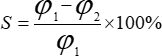 (3)
(3)
7. SEM characterization
- Place the foam cutting sample on the SEM specimen stage.
- Apply gold spray treatment to the foam.
- Obtain SEM images by setting the acceleration voltage to 5 kV.
- Open the SEM image using Image J and use the Straight Line tool to match the scale bar of the image.
- Click on Analyze > Set Scale, set the Known Distance to the scale bar of the SEM image, then click on Global > OK.
- Click on Analyze > Tools > ROI Management to measure the cell size of the foam, then click on Add it. Measure the required number of samples as specified.
- Click on Measure to obtain quantitative data of the figure for further calculations.
- Calculate the average cell diameter of the foam using the following formula24.
 (4)
(4)
NOTE: ni refers to the number of cells with a diameter of Di in the SEM image. - Calculate the nucleation density (N0) of foam using the following formula24.
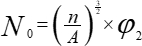 (5)
(5)
NOTE : n is the total number of cells in SEM, and A is the area of SEM.
8. Detemination of compressive properties
- According to the GB/T 1041-2008 testing standard, cut 6 sets of specimens measuring 10 mm × 10 mm × 8 mm from each type of foam.
NOTE: Conduct a visual inspection of the specimen to ensure the surface is flat and free from obvious defects such as cracks, material shortages, etc. - Measure the specimen dimensions.
- Open the software.
- Turn on the testing machine and connect it to the software.
- Install the compression fixture, ensuring its parallelism and perpendicularity meet the requirements.
- Place the foam specimen at the center of the compression fixture, ensuring good contact between the specimen and the fixture.
- Set the test parameters of the testing machine. The loading speed is 5 mm/min, with 10 cycles and a compressive strain of 50%.
- Conduct the operational test, commence applying compressive force to the foam specimen while simultaneously recording data.
- After the test is completed, remove the foam sample.
NOTE: During the experiment, observe the deformation of the foam specimen, such as whether local deformation, cracking, or collapse occurs, and keep detailed records. - Repeat the above steps for all foam samples to verify and ensure the reproducibility of the results.
- After the experiment, calculate the compressive strength of the foam sample.
Access restricted. Please log in or start a trial to view this content.
Results
The physical image and physical properties of PBAT foams reinforced with varying ratios of CF and BF prepared according to the aforementioned protocol are shown in Figure 2. It can be observed that increasing the proportions of CF and BF effectively resists the shrinkage of PBAT foams. Through measurements, the density of pure PBAT foam was found to be 0.19 g/cm3 (Figure 2B), with a foaming ratio of 6.23 (Figure 2C) and a...
Access restricted. Please log in or start a trial to view this content.
Discussion
Drying treatment is a critical step preceding melt extrusion. Its primary objective is to remove moisture from the material to prevent hydrolysis, vaporization, and interfacial defects under high-temperature conditions. This ensures the mechanical properties, processing stability, and appearance quality of PBAT composites8. In this study, the specific procedure involved placing PBAT, CF, and BF in an oven for 8 h of drying treatment at a temperature of 80 °C.
By me...
Access restricted. Please log in or start a trial to view this content.
Disclosures
The authors have nothing to disclose.
Acknowledgements
We thank the funding of Key Laboratory of National Forestry and Grassland Administration on Highly-Efficient Utilization of Forestry Biomass Resources in Southwest China, Southwest Forestry University (2023KF10). Natural Science Foundation of Heilongjiang Province (LH2024C044), the Collaborative Innovation Project of First-Class Disciplines in Heilongjiang Province (LJGXCG2024-F11), Young Elite Scientist Sponsorship Program by Heilongjiang Province (2024QNTG006), Heilongjiang Postdoctoral Fund (LBH-Z24041), and 2023 Outstanding Master's and Doctoral Theses of Heilongjiang in the New Era Funding Project.
Access restricted. Please log in or start a trial to view this content.
Materials
| Name | Company | Catalog Number | Comments |
|---|---|---|---|
| Bamboo fiber | Sichuan Lvzhu Plant Fiber Co.,Ltd., China | 1000 mesh | Raw material supplied for the experimental work |
| Booster pump | Dongguan Suncenter Fuild Control Equipment Co.,Ltd., China | DGA15C | Used to Controlle Pressure |
| Carbon dioxide | Harbin Qinghua Industrial gases Co. Ltd., China | 99.9% purity | Used as the foaming agent |
| Carbon fiber | Toray Industries Incorporated, Japan | 1000 mesh | Raw material supplied for the experimental work |
| Ceactor | Zhengzhou Zechen Instrument Equipment Co., Ltd., China | 0.5 L | Used as a foaming container |
| Compactor | Zhejiang Kaishan Compressor Co., Ltd., China | XK06-010-00487 | pressurized |
| Digital oil bath | Boho Temptech Co.,Ltd., China | HH-5-12L | Used to heat |
| Drying oven | Shanghai Yiheng Scientific Instrument Co., Ltd., China | DGG-9070 | Used to dry raw materials |
| Electronic balance | Mettler Toledo (Changzhou) Weighing Equipment System Co., Ltd | SPN501F | Used to weigh of raw materials |
| Flat plate sulphurisation instrument | Bolon Precision Testing Machines Co.,Ltd., China | BL-6170-A | For hot compression moulding of composites |
| High-precision solid density meter | Yuemang Intelligent Equipment Co., Ltd., China | JHY-120Y | Device used to determine density |
| Image analysis softwareNational Institutes of Health | National Institutes of Health | ImageJ | Software used for determining the morphological characteristics of foam |
| Poly(butylene adipate-co-terephthalate) | Xinjiang Blue Ridge Tunhe Sci.& Tech. Co.,Ltd., China | TH801T | Raw material supplied for the experimental work |
| Polytetrafluoroethylene film | Luo Huixing Plastic Materials Trading Company, China | 0.5 mm | Used to demould |
| Pulveriser | Shenzhen Chengzhongsheng Electromechanical Technology Co., Ltd.,China | 380 w, 50 Hz | Used to Crush and granulate |
| Scanner | FEI Inc., USA | QUANTA 220 | Scanner used for taking an image of foams |
| Twin-screw extruder | Nanjing Jiente Machine Point Co. Ltd., China | SHJ-20 | Melt Mixing |
| Universal mechanical testing machine | Wance Technologies Ltd., China | TestPilot X10A | Used to smeasure compression performance |
References
- Xu, X., et al. Material performance, manufacturing methods, and engineering applications in aviation of carbon fiber reinforced polymers: A comprehensive review. Thin Wall Struct. 209, 112899(2025).
- Wang, Z., et al. Fabrication of biodegradable poly(butylene adipate-co-butylene terephthalate) bead foams through solid utilization of chitin and controllable incorporation of porous structure. Colloids Surf A Physicochem Eng Asp. 693, 134105(2024).
- Wang, J., et al. Strong and thermally insulating polylactic acid/glass fiber composite foam fabricated by supercritical carbon dioxide foaming. Int J Biol Macromol. 138, 144-155 (2019).
- Li, J., et al. Environmentally-friendly, sustainable ScCO2-assisted fabrication of poly(lactic acid)/ramie fiber composite foams. J Clean Prod. 425, 138952(2023).
- Li, S., et al. Research progress on the improvement strategy of foaming behavior for biodegradable polymer foams and their functional applications. Sustain Mater Technol. 44, e01354(2025).
- Wang, Z., Wang, G., Xu, Z., Zhang, A., Li, S. A novel "reinforcing-foaming-recovering" strategy for achieving thermally insulating green foams with ultrafast degradation. J Clean Prod. 481, 144161(2024).
- Wang, Z., Wang, G., Xu, Z., Chai, J., Zhao, G. Innovative crosslinking and foaming strategies for advancing biodegradable composite foams: Enhancing foamability, flexibility, and thermal insulation. Mater Des. 253, 113895(2025).
- Jian, J., Xiangbin, Z., Xianbo, H. An overview on synthesis, properties and applications of poly(butylene-adipate-co-terephthalate)-PBAT. Adv Ind Eng Polym Res. 3 (1), 19-26 (2020).
- Wang, Z., Wang, G., Xu, Z., Ma, C., Zhao, G. Pore-gradient, flexible, and fully-degradable foam with outstanding noise absorption and thermal insulation. Adv Funct Mater. , (2025).
- Wang, Z., Wang, G., Xu, Z., Yang, C., Zhao, G. Structure-tunable poly(butylene adipate-CO-terephthalate) foams with enhanced mechanical performance derived by microcellular foaming with carbon dioxide as blowing agents. J CO2 Util. 72, 102495(2023).
- Wang, Z., et al. low-shrinkage and high elastic poly(butylene adipate-co-terephthalate) foams achieved by microcellular foaming using N2 & CO2 as co-blowing agents. J CO2 Util. 64, 102149(2022).
- Ding, Y., Yang, Q., Wang, X., Li, S. The compressive resilience and shrinkage resistance properties of poly(butylene adipate-co-terephthalate) microcellular composite foams reinforced by functionalized microcrystalline cellulose. Int J Biol Macromol. 306, 141466(2025).
- Pereira Da Silva, J. S., Farias Da Silva, J. M., Soares, B. G., Livi, S. Fully biodegradable composites based on poly(butylene adipate-co-terephthalate)/peach palm trees fiber. Compos B Eng. 129, 117-123 (2017).
- Liu, H., et al. High strength microcellular thermoplastic polyimide/carbon fiber composite foams containing flexible ether amine, rigid diaminodiphenyl ether, and triaminopyrimidine moieties: Synthesis and fabrication. Chem Eng J. 496, 154384(2024).
- Li, W., et al. Real-microcellular poly(ether-block-amide)/carbon fiber foams with improved mechanical property and surface quality for high-performance electromagnetic interference shielding applications. J Mater Res Technol. 26, 6508-6519 (2023).
- Liu, Y., et al. Supercritical N2 induced sandwich type lightweight and strong PP/CF foams with excellent electromagnetic shielding properties. Chem Eng J. 501, 157532(2024).
- Qiao, Y., Hou, J., Tian, D., He, Y., Chen, J. Poly(butylene adipate-co-terephthalate)/carbon fiber foam bonded with continuous carbon fiber reinforced polypropylene prepregs for electromagnetic interference shielding. Compos Commun. 53, 102217(2025).
- Tang, Q., Fang, L., Guo, W. Effects of bamboo fiber length and loading on mechanical, thermal and pulverization properties of phenolic foam composites. J Bioresour Bioprod. 4 (1), 51-59 (2019).
- Li, X., Zhong, T., Xiao, Y., Cheng, H., Chen, H. Mechanically robust, thermal insulating sustainable foams fully derived from bamboo fibers through high temperature drying. Carbohydr Polym. 333, 121966(2024).
- Guo, W., Zhao, J., Zhao, F., Feng, T., Liu, L. Assessment of properties of bamboo fiber and EPDM reinforced polypropylene microcellular foam composites. Polymer (Guildf). 304, 127142(2024).
- Liu, H., et al. Green strategy based on supercritical-fluid foaming for fabricating rigid microcellular thermoplastic polyimide foams with ultrahigh compressive strength. Compos B Eng. 273, 111204(2024).
- Sarver, J. A., Kiran, E. Foaming of polymers with carbon dioxide - The year-in-review 2019. J Supercrit Fluids. 173, 105166(2021).
- Dong, M., et al. An overview of polymer foaming assisted by supercritical fluid. Adv Compos Hybrid Mater. 6 (6), 207(2023).
- Zhang, X., et al. Green preparation of lightweight and elastic poly(butylene adipate-co-terephthalate)/thermoplastic polyamide elastomer composite foams. J Supercrit Fluids. 223, 106635(2025).
- Pang, Y., Cao, Y., Zheng, W., Park, C. B. A comprehensive review of cell structure variation and general rules for polymer microcellular foams. Chem Eng J. 430, 132662(2022).
Access restricted. Please log in or start a trial to view this content.
Reprints and Permissions
