This report describes the construction and use of a low-cost, easy-to-assemble, portable warming pad to use for anesthetized small mammals.
Research Article
Battery-Powered Homeothermic Warming Pad for Maintaining Core Temperature in Mice and Rats
In This Article
Summary
Abstract
Anesthesia decreases core body temperature and this seriously compromises the physiological status of an experimental animal. Importantly, hypothermia alters many aspects of neural function. When recording nervous system activity in anesthetized animals, the core temperature of the animal must be stabilized. Although commercial heating pads for small animals are readily available, they typically are expensive, somewhat bulky, and require power cords and a 120/240V source. Consequently, transporting an anesthetized animal from one location (e.g., surgical suite) to another (e.g., imaging rig) involves moving power cords. Moreover, commercial devices are not always compatible with custom stereotaxic frames, microscope stages, or holding boxes. This report describes a low-cost, battery-powered, temperature-controlled warming pad for mice and rats and documents its validity and utility. The device monitors an animal's core temperature continuously and automatically adjusts the heating pad to maintain normothermia. It can be constructed in under 30 min, the components are readily available, and the cost is less than $100. The device is portable, making it convenient for researchers who conduct procedures such as surgical preparations in one location and transport the anesthetized animal to another location for experimental recordings. The device can keep an anesthetized mouse normothermic ±0.7° for over 6 h without supplemental warmth (e.g., heat lamp), despite >15° differential between ambient room temperature and core body temperature. This report demonstrates how the warming pad can be used for in vivo imaging of neuronal activity for a prolonged period in mice.
Introduction
Present-day methods to investigate neural activity in vivo in the brains of mice and rats utilize sophisticated functional imaging techniques and/or multielectrode arrays1,2,3,4. In many such studies, the experimental animal is deeply sedated or in a surgical plane of anesthesia. Yet, it is well recognized that anesthesia incapacitates thermoregulation in animals; the core temperature of an anesthetized animal rapidly drops. For example, in rats and mice, intraperitoneal injection of a commonly used anesthetic, Ketamine, quickly leads to hypothermia5,6,7. Indeed, hypothermia complicates general anesthesia in humans and rodents alike8,9,10,11. Consequently, a device to maintain an animal's core body temperature is required for a wide range of experimentation on anesthetized animals12,13,14,15,16,17,18.
Hypothermia is a particular problem in neuroscience. Low temperature affects the brain and neuronal function in several ways. Mild hypothermia during anesthesia strengthens the blood-brain barrier against experimental insults such as perfusion with hyperosmolar solutions19; more severe hypothermia disrupts the blood-brain barrier20. Hypothermia reduces nerve conduction velocity in the central21 and peripheral22 nerves and alters many aspects of synaptic transmission23,24 (cf. in cold-blooded animals25). Clearly, maintaining the core body temperature of an experimental animal is critical when studying neuronal activity, emphasizing the importance of some form of warming device, especially for anesthetized animals.
There are several commercially available warming pads for small animals, many of which include controllers with temperature probe feedback to maintain the animal at a constant core temperature26,27,28,29,30,31,32. These commercial devices are dependable and stable, yet often bulky and costly. Other, more specialized homeothermic heating units for rodents have been described but have limited applicability for general use33,34,35,36,37. Moreover, commonly available homeothermic heating devices have power supplies that must be plugged into a 120 V or 240 V outlet. These factors can be limiting. The requirement for a 120/240 V power can be especially vexing if an animal is surgically prepared for experimentation at a different location from where the actual recording takes place. Transporting the preparation, even a short distance, requires moving a controller/power supply and power cord. Furthermore, power supplies/controllers for warming pads can introduce noise in electrophysiological recordings.
In studies using in vivo functional imaging of sensory neuron activity in mice, these aggravations have been overcome by designing an extremely inexpensive, easy-to-construct, and supremely portable homeothermic warming pad. This warming pad is powered by a small lithium polymer (LiPo) battery, such as those used to power drones. This device requires minimal skills to construct. All parts are off-the-shelf items, readily available by online order. The only tools needed are a small screwdriver, a soldering iron, and a wire-cutter/stripper. The total cost is well below $100, and the entire construction takes less than 30 min. The small size and flexible arrangement of its components make the homeothermic warming pad readily adaptable to a custom stereotaxic frame, recording platforms, observation cages, or, as in this report, the stage of an upright confocal microscope.
Although this homeothermic warming pad has been extensively used for in vivo calcium imaging of neuronal activity in surgically exposed cranial sensory ganglia38,39, any studies using sedated or anesthetized small rodents would benefit from this device. Experience has shown that, when powered by fully charged LiPo batteries, the heating pad maintains the core body temperature of an anesthetized mouse stable for more than 6 h.
Protocol
All items needed for constructing the heating pad are commercially available. Use of mice and all animal procedures described to validate this protocol were approved by the University of Miami Institutional Animal Care and Use Committee (IACUC), IPROTO202200000139. Animals used to test and validate this device were C57BL/6 mice, 18-30 g of both sexes. Mice specifically for calcium imaging were transgenic mice that express GCaMP6s in sensory neurons. The reagents and the equipment used are listed in the Table of Materials.
1. Tools for Assembly
The tools that were required consisted of a small, slotted screwdriver (e.g., 2 mm head), a soldering iron, and a wire cutter/stripper.
2. Assembly of the heating pad
The items needed for construction were laid out (Figure 1). These included (A) a 12V 15W 50 mm x 100 mm silicone heating pad (50 mm x 100 mm was a convenient size for mice, while larger silicone rubber heating pads are more appropriate for rats); (B) bead thermistor; (C) JST-XH 2 pin balance plug lead socket male connector; (D) JST plug connector 2 pin male with 20 AWG leads; (E) 7.4V 1200 mAh LiPo Battery; (F) temperature controller circuit; and (G) a short length of 20 AWG hookup wire.
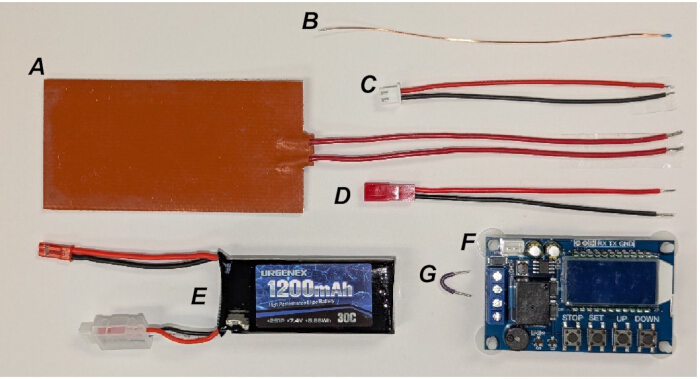
Figure 1: Layout of parts for homeothermic heating pad construction. These included (A) a 12V 15W 50 mm x 100 mm silicone heating pad (50 mm x 100 mm was a convenient size for mice, while larger silicone rubber heating pads are more appropriate for rats); (B) bead thermistor; (C) JST-XH 2 pin balance plug lead socket male connector; (D) JST plug connector 2 pin male with 20 AWG leads; (E) 7.4V 1200 mAh LiPo Battery; (F) temperature controller circuit; and (G) a short length of 20 AWG hookup wire. Please click here to view a larger version of this figure.
The two leads from the silicone heating pad were inserted into terminals #2 and #4 of the temperature control circuit, and the terminal screws were tightened as shown in Figure 2. The leads were tinned before attaching to the control board terminal.
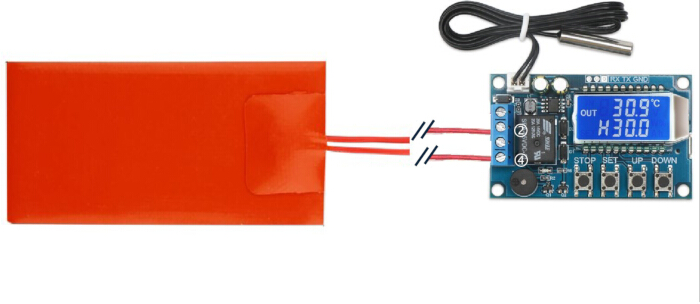
Figure 2: The silicone heating pad is attached to the temperature control circuit. The thermistor probe that comes with the temperature control circuit is shown here. Please click here to view a larger version of this figure.
The leads from the 2-pin male JST plug were then attached to the temperature control circuit as shown in Figure 3. The red (positive) lead was connected to terminal #1 and the black (negative) lead to terminal #2. A short 20 Ga hookup wire jumper was added between terminals #1 and #3 (Figure 3). A short piece of hookup wire was salvaged from the heating pad leads. As above, the leads were tinned before being clamped into the control board terminal.
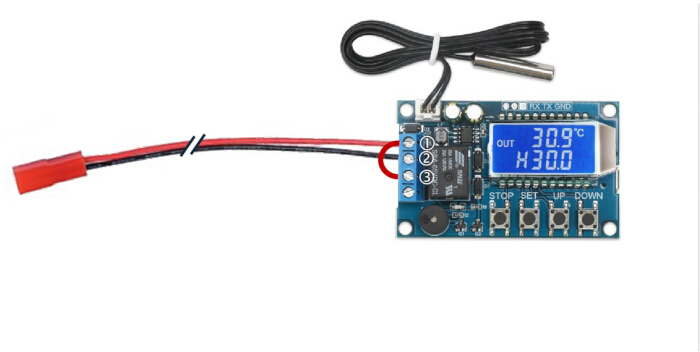
Figure 3: Leads from the JST plug are attached to terminals 1 and 2 of the temperature control circuit. The red lead (positive) must be connected to terminal 1 and the black lead (negative) to terminal 2. Terminals 1 and 3 are connected with a short hookup wire. For clarity, silicone heating pad connections (Figure 2) are not shown. Please click here to view a larger version of this figure.
3. Thermistor and probe setup
The leads from the JST-XH plug were soldered to the bead thermistor. Importantly, the thermistor leads and solder joints were carefully insulated with shrink tubing to avoid short-circuiting the thermistor. The thermistor probe shipped with the temperature controller was unplugged, removed, and replaced with the bead thermistor probe, as shown in Figure 4. The bead thermistor served as a rectal thermal probe to monitor the core temperature of the mouse or rat.
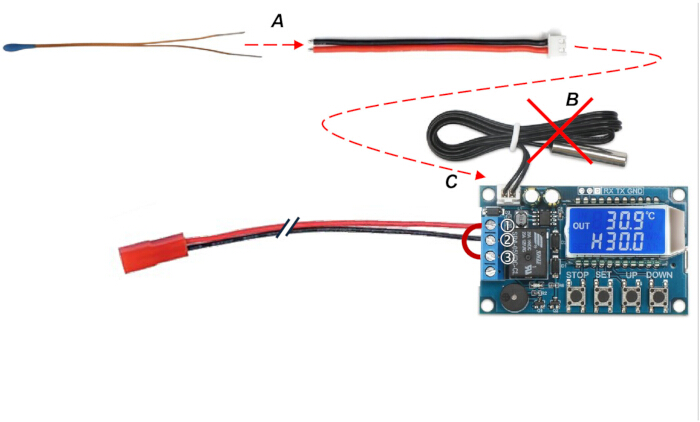
Figure 4: Preparing the rectal thermal probe. (A) The JST-HX plug is soldered to the bead thermistor. (B) The thermistor probe that comes with the temperature controller is removed. (C) The bead thermistor lead is plugged into the controller. Please click here to view a larger version of this figure.
4. Final integration and mounting
The construction was completed ( Figure 5). The device was ready to use and could be mounted on an appropriate platform for experimentation. The LiPo battery was plugged into the JST plug to provide power to the controller. An example of the fully operational unit is shown in Figure 5. In some cases, the temperature controller circuit was mounted on tall spacers (e.g., 1" #6 nylon screws) attached at its four corners. In this manner, the 7.4 V LiPo battery fits neatly and conveniently under the temperature controller circuit.
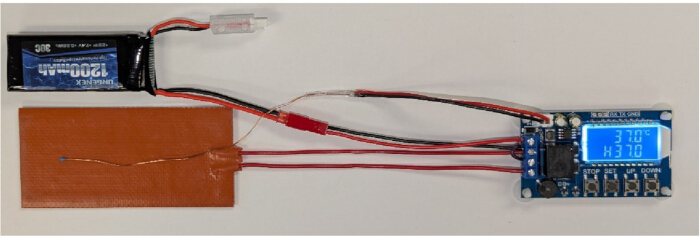
Figure 5: A fully completed homeothermic warming pad device, operating in a room with an ambient temperature of 22 °C. Please click here to view a larger version of this figure.
5. Device operation and use
To operate the homeothermic heating pad, a small amount of petroleum jelly was placed on the bead thermistor, which was then gently inserted into the rectum of an anesthetized or sedated mouse. For this report, 18-30 g mice were anesthetized with Ketamine/Xylazine (80 mg/kg Ketamine and 10 mg/kg Xylazine) with subsequent booster doses of Ketamine to maintain a surgical plane of anaesthesia. The leads of the thermistor were taped to the animal's tail to prevent the probe from becoming dislodged. The animal was placed prone onto the silicone heating pad. The device was powered by plugging in the 7.4 V LiPo battery. The Set button on the thermostat controller was pressed. "H" (heating) appeared next to the set temperature. The Set button was pressed once more to activate the temperature setting. The Up or Down button was pressed to change the set temperature to the desired specification. For example, a set temperature of 37° was used. The Set button was held for 3 s (or no button was pressed for 6 s), and the device then became fully operational. Instructions for setting the temperature were also included on the specification sheet that comes with the temperature controller circuit.
When the animal's core temperature was lower than the set temperature (e.g., 37°), the relay powering the silicone heating pad closed. Current was delivered to the silicone heating pad, the red light came on, and the silicone pad began to warm up until the rectal probe exceeded the set temperature by a set amount ("hysteresis"; factory setting was 0.5°). When the rectal probe exceeded the set temperature plus hysteresis (in this example, 37.5°), the relay opened, the red light went off, power was cut from the silicone heating pad, and the heating pad and the animal began to cool (assuming an ambient room temperature < 37.5°). When the rectal probe dropped to the set temperature minus hysteresis (e.g., 36.5°), the relay closed, and power was once again delivered to the silicone heating pad to warm the animal. Hysteresis could be set by pressing the Set button three times and using the Up or Down buttons. More detailed instructions for operating the temperature controller were provided with the device, including a serial interface control, if of interest to the users.
6. Follow-up procedures
At the termination of the experiments described in this report, mice were humanely euthanized with a Ketamine overdose, CO2, and cervical dislocation. Specifically, animals were injected with 2x Ketamine dose, followed by CO2 from a pressurized cylinder delivered at 10 SCFH (Standard Cubic Feet per Hour), and finally, cervical dislocation.
Results
Two methods have been evaluated and validated the homeothermic heating pad.
First, in a critical analytical test of the device, a small (18.5 g) male mouse was maintained under deep anesthesia for 6 h on the warming pad in a relatively cool environment. Specifically, the mouse was injected with a mixture of Ketamine/Xylazine (80 mg/kg Ketamine and 10 mg/kg Xylazine) and kept on the heating pad in the open, without cover, in an air-conditioned room (ambient temperature, 20.3°). Booster injections of Ketamine were given as necessary to maintain the mouse in a surgical plane of anesthesia. The mouse sustained a normal respiration rate for the entire 6 h, varying from an estimated low of 110/min to a high of 215/min, depending on time elapsed after Ketamine booster injection (consistent with Ketamine's known effect on respiration). The animal's core temperature was monitored with the device's bead thermistor probe and, independently, with a commercial RET-4 rectal probe (Physitemp) inserted in parallel with the bead thermistor probe. Further, a record of the surface temperature of the silicone rubber heating pad directly under the anesthetized mouse was kept. The controller was set for 35°. The data indicate that the core temperature of the mouse varied less than 1.3° over the 6 h, despite the 15° differential between ambient room temperature (20°) versus the set core temperature (35°) (Figure 6). Importantly, the core temperature of the mouse remained at 35±0.6° without any supplemental warming device (heat lamp, blanket, etc.). The LiPo battery was changed once over the 6 h period.
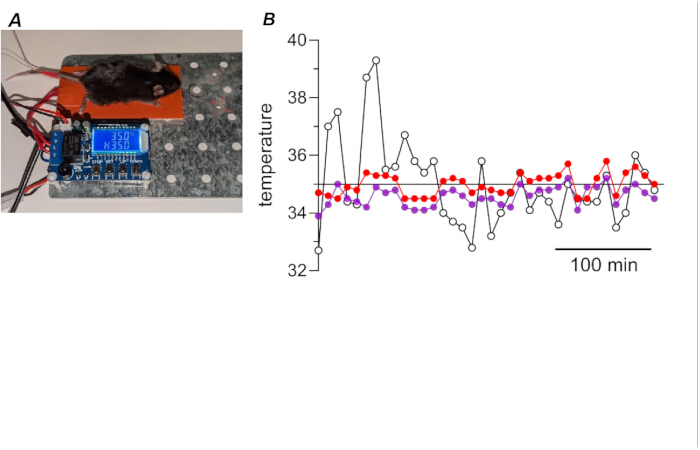
Figure 6: Validation of homeothermic heating pad. An anesthetized mouse was kept on a platform in an open room (ambient temperature, 20 °C) without any other source of heat for 6 h. The device was set to maintain the core temperature of the mouse at 35 °C. (A) The experimental setup. (B) Temperatures recorded by device's rectal bead thermistor probe (represented by red dots); by an independent RET-4 (Physitemp) rectal probe (represented by purple dots); and by a separate temperature probe placed on the silicone heating pad under the mouse (represented by black-bodered circles dots). Please click here to view a larger version of this figure.
Second, the battery-powered warming pad is extensively used for in vivo scanning confocal calcium imaging of sensory ganglion activity in transgenic mice that express GCaMP6s in sensory neurons38,39. The experiments typically last 6 h or more, with the mouse remaining in a surgical plane of anesthesia for the duration. Experience has shown that maintaining the core temperature of the mouse at 31.5 °C during surgical preparation and imaging is optimal. The surgical preparation consists of unilaterally exposing the trigeminal and/or geniculate ganglia in deeply anesthetized mice. This surgery is carried out in a separate room from where the imaging takes place, requiring transport of the anesthetized mouse fixed on a custom-built stereotaxic device with the warming pad attached for a distance of about 40 m. Ambient room temperatures vary from 20-24 °C. The core temperature of the mouse, as measured by the device's rectal temperature probe (bead thermistor), has consistently remained constant and the animal kept in stable physiological condition throughout the entire 6+ h without any auxiliary heating. Neural activity has remained robust (Figure 7), validating the reliability of the battery-powered warming pad to keep the animal normothermic.
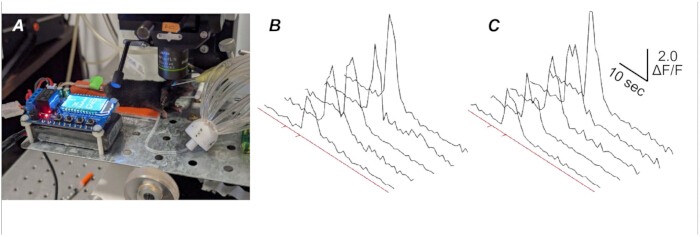
Figure 7: Warming pad in use during in vivo imaging of neuronal activity. The warming pad keeps the core temperature of an anesthetized mouse stable and supports robust, reliable recordings of neuronal activity for several hours. (A) View showing the mouse placed on the warming pad, its head stabilized with a custom-made holder under the 20x long-distance objective of a confocal microscope. As shown here, the mouse core temperature is kept at 31.5 °C for imaging. A scanning laser (488 nm) illuminates the surgically exposed geniculate ganglion and images taste-evoked activity in gustatory sensory neurons that express the calcium-sensitive reporter, GCaMP6s. The large white manifold (lower right) guides taste stimuli into the oral cavity. (B) Representative examples from 5 geniculate ganglion neurons showing taste-evoked responses (change in GCaMP6s fluorescence, ΔF/F) following a 5 s presentation of 300 mM sucrose solution into the oral cavity. These responses were imaged at the beginning of the experiment. Ticks on the red line indicate stimulus delivery. (C) Examples of responses from 5 different ganglion neurons recorded 6 h later. The mouse had been maintained on the warming pad in a surgical plane of anesthesia for the entire time. The amplitudes, durations, and latencies of the taste-evoked responses are remarkably similar to those recorded several hours earlier. Please click here to view a larger version of this figure.
These tests validate the homeothermic controller and firmly establish the ability of the heating pad device to maintain an anesthetized rodent at a constant core temperature for long durations.
DATA AVAILABILITY:
Complete data tables for Figure 6 and Figure 7 are included in Supplementary File 1.
Supplementary File 1: Data tables for Figure 6 and Figure 7. Please click here to download this file.
Discussion
This report described a small, portable, battery-powered homeothermic heating pad for maintaining normothermia in anesthetized mice and rats. This device has kept the core body temperature of deeply anesthetized mice stable for several hours without any supplemental heating source, despite a large differential between room temperature and core body temperature. The utility of this heating pad for confocal in vivo imaging of cranial ganglion activity in mice was illustrated.
All the components for the device are available online. The total cost for all components is less than $100. Commonly available tools are used to construct the unit. No specialized skills, apart from rudimentary soldering, are required to build the device. The warming pad is powered by a high-capacity LiPo battery, commonly used for drones. Finally, the entire device can be assembled in less than 30 min when the parts are laid out as described. This small battery-powered homeothermic heating pad is especially useful for experimental situations where anesthetized animals are prepared at one site (such as a surgical suite) and transported to another (such as an imaging rig) for experimental procedures. Because the device is battery-powered, there are no power cables to disconnect and no separate thermocontroller unit to move. Moreover, being battery-powered, it does not generate electrical noise for electrophysiological recordings, a nagging problem with commercial devices powered by 120/240 V. Finally, the heating pad can be readily adapted to custom-built stereotaxic frames, holding boxes, animal cages, or other situations.
The main limitation of the thermal heating pad is that the LiPo battery charge may not last the duration of an experiment. Typically, a fully charged 1200 mAh battery powers the unit for 4-6 h, depending on the temperature differential between the animal and the room. A simple solution is to have a backup battery at the ready, and/or to use a larger capacity 2200 mAh LiPo battery.
Despite its ease of construction and convenience, there are pitfalls surrounding this device. LiPo batteries such as those used to power the heating pad can be dangerous40,41. Even though they are commonly used to power drones and toys, LiPo batteries have certain risks. Notably, overcharging LiPo batteries is a serious fire risk42. Users are cautioned not to leave the LiPo battery charging overnight or longer. Another concern is the possibility of accidentally short-circuiting the battery during construction by inadvertently connecting terminals 1 and 2 with the short hookup wire (Figure 3). Also, it is critical to maintain the correct polarity on the battery connector leads such that the red (positive) wire is attached to terminal 1 and the black (negative) wire is attached to terminal 2 (Figure 3) of the temperature control circuit. Reversing the polarity may destroy the electrical circuit. Finally, users are urged to tin the wire leads before inserting them into the temperature control circuit. This will help keep the wires from accidentally pulling out during use.
In summary, the homeothermic battery-powered heating pad described here will greatly benefit studies that use anesthetized mice or rats.
Acknowledgements
This work was supported by the National Institutes of Health Grant numbers DC018733 and DC017303
Materials
References
- Ye, Z., et al. Ultra-high density electrodes improve detection, yield, and cell type identification in neuronal recordings. bioRxiv. , (2024).
- Jun, J. J., et al. Fully integrated silicon probes for high-density recording of neural activity. Nature. 551 (7679), 232-236 (2017).
- Grienberger, C., Giovannucci, A., Zeiger, W., Portera-Cailliau, C. Two-photon calcium imaging of neuronal activity. Nat Re. Methods Primers. 2 (1), 1-67 (2022).
- Yamada, S., Wang, Y., Monai, H. Transcranial cortex-wide Ca2+ imaging for the functional mapping of cortical dynamics. Front Neurosci. 17, 1-10 (2023).
- Lin, M. T., Chen, C. F., Pang, I. H. Effect of Ketamine on thermoregulation in rats. Can J Physiol Pharmacol. 56 (6), 963-967 (1978).
- Fahim, I., Ismail, M., Osman, O. H. Role of 5-hydroxytryptamine in ketamine-induced hypothermia in the rat. Br J Pharmacol. 48 (4), 570-576 (1973).
- Murphy, T. J., Murnane, K. S. The serotonin 2c receptor agonist WAY-163909 attenuates ketamine-induced hypothermia in mice. Eur J Pharmacol. 842, 255-261 (2019).
- Wu, J., et al. Central neural circuits orchestrating thermogenesis, sleep-wakefulness states and general anesthesia states. Curr Neuropharmacol. 20 (1), 223-253 (2022).
- Simegn, G. D., Bayable, S. D., Fetene, M. B. Prevention and management of perioperative hypothermia in adult elective surgical patients: a systematic review. Ann Med Surg (Lond.). 72, 1-7 (2021).
- Lenhardt, R. Body temperature regulation and anesthesia. Handb Clin Neurol. 157, 635-644 (2018).
- Gargiulo, S., et al. Mice anesthesia, analgesia, and care, part I: Anesthetic considerations in preclinical research. ILAR J. 53 (1), E55-E69 (2012).
- Lu, J., Wang, W., Liu, H., Liu, H., Wu, H. Cisplatin induces calcium ion accumulation and hearing loss by causing functional alterations in calcium channels and exocytosis. Am J Transl Res. 11 (11), 6877-6889 (2019).
- De Diego-Garcia, L., Sebastian-Serrano, A., Bianchi, C., Di Lauro, C., Diaz-Hernandez, M. ATP measurement in cerebrospinal fluid using a microplate reader. Methods Mol Biol. 2041, 233-241 (2020).
- Lavon, H., et al. Dexmedetomidine promotes metastasis in rodent models of breast, lung, and colon cancers. Br J Anaesth. 120 (1), 188-196 (2018).
- Zhang, E. Q., Knight, C. G., Pang, D. S. Heating pad performance and efficacy of 2 durations of warming after isoflurane anesthesia of Sprague-Dawley rats (Rattus norvegicus). J Am Assoc Lab Anim Sci. 56 (6), 786-791 (2017).
- Poorman, M. E., et al. Open-source, small-animal magnetic resonance-guided focused ultrasound system. J. Ther Ultrasound. 4 (1), 22-28 (2016).
- Roehl, A. B., et al. Accidental renal injury by an external heating device during surgery in rats. Lab Anim. 45 (1), 45-49 (2011).
- Taylor, D. K. Study of two devices used to maintain normothermia in rats and mice during general anesthesia. J Am Assoc Lab Anim Sci. 46 (5), 37-41 (2007).
- Chi, O. Z., Liu, X., Weiss, H. R. Effects of mild hypothermia on blood-brain barrier disruption during isoflurane or pentobarbital anesthesia. Anesthesiology. 95 (4), 933-938 (2001).
- Kiyatkin, E. A., Sharma, H. S. Permeability of the blood-brain barrier depends on brain temperature. Neuroscience. 161 (3), 926-939 (2009).
- Dibaj, P., Schomburg, E. D. In vivo recording of nerve conduction velocity of spinal CNS fibers in the mouse. Physiol Res. 66 (3), 545-548 (2017).
- Stecker, M. M., Baylor, K. Peripheral nerve at extreme low temperatures 1: effects of temperature on the action potential. Cryobiology. 59 (1), 1-11 (2009).
- Kochs, E. Electrophysiological monitoring and mild hypothermia. J Neurosurg Anesthesiol. 7 (3), 222-228 (1995).
- Urits, I., et al. A comprehensive update of current anesthesia perspectives on therapeutic hypothermia. Adv Ther. 36 (9), 2223-2232 (2019).
- Montgomery, J. C., Macdonald, J. A. Effects of temperature on nervous system: implications for behavioral performance. Am J Physiol. 259 (2 Pt 2), R191-R196 (1990).
- Homeothermic monitoring system - temperature controller thermostar. , Conductscience. Available at: https://conductscience.com/lab/homeothermic-monitoring-system-temperature-controller-thermostar/ (2025).
- Small animal heating pads & warming systems. , Kentscientific. Available at: https://www.kentscientific.com/products/warming/ (2025).
- Heating devices. , E-Zsystems. Available at: https://www.ezsystemsinc.com/product-category/heating-devices/ (2005).
- Rodent warmer x1. , Braintreescientific. Available at: https://www.braintreesci.com/temperature-measurement-control/rodent-warmer/rodent-warmer-x1/ (2025).
- Thermostar homeothermic monitoring system. , Bioseblab. Available at: https://www.bioseblab.com/en/bioseblab-equipment/883-1931-thermostar-homeothermic-monitoring-system.html#/664-size-s_7cm_x_10cm (2025).
- Stoelting warming systems. , Stoelting. Available from: https://stoeltingco.com/Neuroscience/Stoelting-Warming-Systems~10631 (2025).
- Animal temperature heating pad w/pid controller. , Medilumine. Available at: https://medilumine.com/product/animal-temperature-heating-pad-w-pid-controller (2025).
- Gilchrist, S., et al. An MRI-compatible high frequency AC resistive heating system for homeothermic maintenance in small animals. PLoS One. 11 (11), e0164920(2016).
- Beale, C. N., et al. Use of air-activated thermal devices during recovery after surgery in mice. J Am Assoc Lab Anim Sci. 57 (4), 392-400 (2018).
- Zarndt, B. S., et al. Use of a far-infrared active warming device in guinea pigs (Cavia porcellus). J Am Assoc Lab Anim Sci. 54 (6), 779-782 (2015).
- Chan, C. E., Hare, M. T., Martin, G. W., Gordon, C. J., Swoap, S. J. The heat is on: A device that reduces cold stress-induced tachycardia in laboratory mice. J Therm Biol. 79, 149-154 (2019).
- Kersemans, V., et al. A carbon-fiber sheet resistor for MR-, CT-, SPECT-, and PET-compatible temperature maintenance in small animals. Tomography. 5 (2), 274-281 (2019).
- Leijon, S., et al. Oral thermosensing by murine trigeminal neurons: Modulation by capsaicin, menthol and mustard oil. J Physiol. 597 (7), 2045-2061 (2019).
- Asencor, A. I., Dvoryanchikov, G., Makhoul, V., Tsoulfas, P., Chaudhari, N. Selectively imaging cranial sensory ganglion neurons using AAV-PHP.S. eNeuro. 9 (3), 1-14 (2022).
- Safety and robustness. , Anonymous. Available at: https://en.wikipedia.org/wiki/Lithium_polymer_battery#Safety (2025).
- Mikolajczak, C., Kahn, M., White, K., Long, R. T. Lithium-ion batteries hazard and use assessment. , Springer Science & Business Media. (2012).
- Ouyang, D., Liu, J., Chen, M., Wang, J. Investigation into the fire hazards of lithium-ion batteries under overcharging. Appl Sci. 7 (12), 1314(2017).