This protocol describes the assembly and use of a new plant gnotobiotic growth system designed to accommodate cereals and validated in wheat and maize. This plant gnotobiotic system enables controlled plant–microbe experiments by providing sterile growth conditions, irrigation management, and compatibility with diverse soil-based substrates.
Method Article
Assembly and Use of a Plant Gnotobiotic Growth System for Plant–Microbe Interaction Studies in Cereals
In This Article
Summary
Abstract
The development of microbial-based agricultural amendments that work consistently in the field requires an understanding of the molecular mechanisms of plant–microbe interactions. Studying these underlying mechanisms of interaction demands the ability to grow plants under environmentally controlled and gnotobiotic conditions (i.e., all microorganisms interacting with the plant are known, whether that is germ-free, defined microbial communities, or natural communities). The currently available plant gnotobiotic systems are not suitable for studying large plants of agricultural relevance, such as cereals. Moreover, most of these systems lack the ability to manage irrigation. Here, we introduce GNOVA, a new gnotobiotic system designed to accommodate cereal plants with the ability to manage irrigation. This new system is an accessible platform composed of a 3D printed base and commercially available materials. This protocol provides a step-by-step guide to assembling the system and experiment set up. Furthermore, we present a performance comparison of GNOVA to a gnotobiotic bag system. GNOVA extended plant growth from two weeks in the bag system up to 17 weeks for wheat and 4 weeks for maize. The germination rate of both crops also increased within GNOVA from 66% to 100% for wheat and from 75% to 100% for maize. Wheat grown within GNOVA developed tillers, which were absent in plants of the same age within the bag system. The fresh weight of maize grown in the GNOVA was 594% higher than in the bag system. Additionally, the shoot height and root length of maize were 89% and 57% greater within the GNOVA system than in the bags, respectively. The GNOVA system extends the toolbox available to scientists for the exploration of plant–microbiota interactions beyond the seedling stage in cereals by providing increased growth space and irrigation management.
Introduction
Microbe-based agricultural treatments have garnered significant interest over the last few decades due to their potential to improve crop productivity by enhancing plant growth and resilience to environmental stress. At the same time, the molecular mechanisms of action of these biostimulants remain poorly understood, which may contribute to their inconsistent results across soils, locations, and environmental conditions1,2. Promoting improved efficacy of existing microbe-based treatments and the development of new technologies requires a deeper understanding of the molecular mechanisms of plant–microbe interaction3,4. However, dissecting these mechanisms remains challenging due to the complexity of natural microbial communities5,6. To identify the microbial effectors and interactions driving plant benefits, we can reduce the complexity of natural systems by employing synthetic microbial communities (SynComs) within growth systems that allow for the control of the environmental conditions and the microbial community. Gnotobiology, the study of hosts associated with defined microbial communities7, allows researchers to compare germ-free hosts to those colonized with known microbial communities in order to link microbial function to plant phenotype8.
Early gnotobiotic systems were constructed using glass test tubes9,10,11,12 and jars13. Since then, we have seen a rapid expansion of new systems developed to study plants gnotobiotically. The most common systems employed today include the use of petri dishes14, test tubes15,16, glass jars17, magenta boxes18, sealed bags19, hydroponics20, FlowPot and GnotoPot21, microfluidics systems22, and EcoFABs23. Despite this progress, most systems are either optimized for imaging22 or exudate collection17,20 or designed for small model species14,18,21. Many are closed systems that limit irrigation control and experiment duration. These constraints pose challenges for studying larger agricultural crops, such as cereals, which require additional space, airflow, and water management.
Recognizing the need for a system that can accommodate bigger plants and longer studies, the EcoFAB 3.0 was recently developed to expand gnotobiotic cultivation to larger plants24. The EcoFAB 3.0 offers greater root and headspace volume, which supports the growth of Sorghum bicolor up to 4 weeks, and allows for exudate collection and root imaging24. Even though this new system is a promising example of extending gnotobiotic systems to agricultural crops, there remains a need for an accessible and versatile platform that can be readily adopted across laboratories and is compatible with a wide range of experimental workflows. For this reason, we developed GNOVA (GNotobiotic system for Versatile plant Applications), a system designed to accommodate cereal crops under gnotobiotic conditions. Here, we provide a detailed protocol for assembling and operating GNOVA and demonstrate its performance relative to a gnotobiotic bag system routinely used in our lab. With the development of this new system, we have improved the ability to grow wheat and maize under sterile conditions by providing a larger growth space and built-in irrigation compared to earlier closed systems. The performance of GNOVA is comparable to that of the EcoFAB 3.0, thus expanding the repertoire of tools for dissecting plant—microbiome interactions in non-model cereal crops. Moreover, the versatility and adaptability of plant gnotobiotics are enhanced by GNOVA’s simple design, use of commercially available materials, and available 3D object files, which allow researchers to change materials and design to adjust their research and budget needs.
Protocol
NOTE: 3D printing files for the base can be found in the supplemental materials and are publicly available in Dryad (https://doi.org/10.5061/dryad.f7m0cfzbc). For speed and cost efficiency, we recommend printing in bulk at local commercial 3D-printing service providers.
1. Assembly of the gnotobiotic system
- Initiate pot assembly (perform once prior to repeated experimental use).
- Close the pot bottom by placing the stainless-steel wire mesh circle over one end of the polycarbonate tube and securing the circle using the hose clamp (Figure 1A).
- Drill irrigation openings by creating a 1/4 inch (6.35 mm) irrigation opening 1.5 cm away from the top edge of the open end of the polycarbonate tube. Drill two 1/8 inch (3.18 mm) slots 3 cm away from the first opening, with one slot 1 cm from the edge and the other 2 cm from the top slot.
NOTE: If needed, additional tubing lines can be added around the top edge of the pot following the same steps. - Install the irrigation tubing by inserting a short section of silicon tubing through the 1/4 inch opening.
- Secure the tubing by threading the zip tie through the two ⅛ inch slots (Figure 1B). Insert the male luer of fitting 1 into the silicon tubing extending outside the pot (Figure 1C).
NOTE: The hose barb of fitting 1 should be exposed. - Prepare Syringe barrels by filling an empty syringe barrel with glass wool and closing the end with a small piece of aluminum foil (Figure 1C).
- Attach a short piece of silicon tubing to the luer lock end on the syringe barrel (Figure 1C).
- Prepare two identical syringe barrels. Attach one of the prepared syringe barrels to the exposed hose barb of fitting 1 on the tubing extending out of the pot (Figure 1D).
- Pause: Assembled pots can be stored for later experimental use.
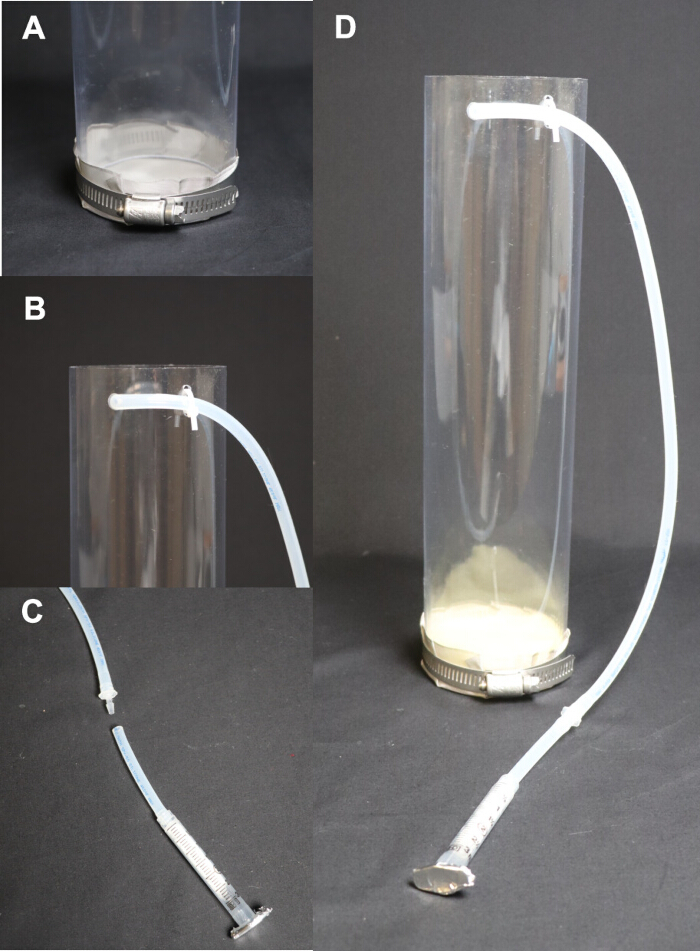
Figure 1: Pot assembly. A) Bottom of pot closed with wire mesh and hose clamp. (B) Irrigation port at the top edge of the pot. (C) Irrigation line ends with exposed hose barb of Fitting 1 with prepared syringe barrel. (D) Assembled pot with closed irrigation line Please click here to view a larger version of this figure.
- Pot preparation for the experiment (perform before each new experiment)
- Line the bottom of the pot with two fiberglass pipe wrap pre-cut circles (Figure 2A).
- Prepare soil substrate by mixing two parts of clay with one part of sand. Add 840 mL of substrate to the pot.
- Cover the pots using a plastic cap and secure using tape (Figure 2B).
- Autoclave filled pots on dry cycle at 121 °C for 30 min. Allow to cool overnight with plastic caps on pots. Re-autoclave on dry cycle at 121 °C for 30 min. Let cool fully. Keep the pots covered with the plastic cap.
NOTE: Other soil substrates can be used, but the amount needed per pot should be optimized in advance. GNOVA has also been tested with 800 mL of 100% clay and 1 L of 100% sand. Other soil substrates might require more autoclave cycles or different settings for full sterilization.
CAUTION: Care must be taken when removing pots from the autoclave, as the material will be hot and the hose clamps might loosen. Ensure the hose clamps are finger-tight once cooled before picking up the pots. - Insert cooled pots into the 3D printed base. Place the soil-filled pot inside the 3D printed base. Hold the pot by the base, not by the opening pillars, as they are the most fragile part.
- Pass the irrigation tubing through one of the lower openings of the 3D printed base (Figure 2C).
NOTE: Do not autoclave the 3D printed support base, as this could melt the piece. Experiments requiring temperatures above 60 °C might need an alternative heat-resistant filament (see Table of Materials). - Keep the pots at room temperature after autoclaving, and do not remove the plastic cap or the prepared syringe until the final experiment setup.
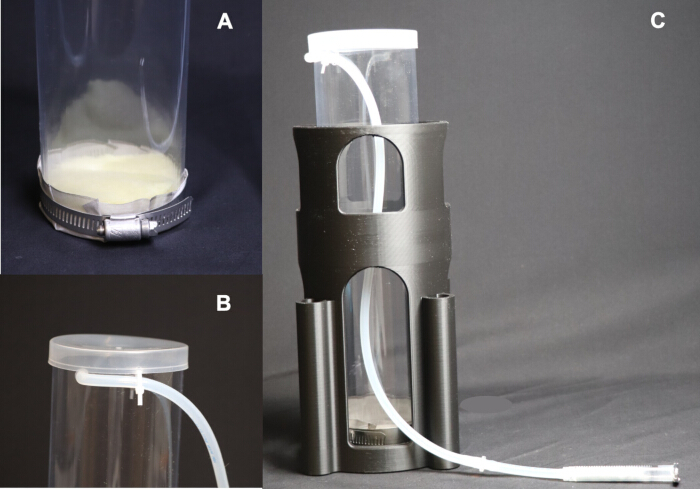
Figure 2: Prepared pot illustration. (A) Bottom of pot lined with fiberglass pipe wrap. (B) Top of pot closed with plastic cap. (C) Empty pot fitted inside the final 3D printed base design. Please click here to view a larger version of this figure.
- Glass cylinder preparation (perform before each new experiment)
- Cover one end of the glass cylinder with a pre-cut DW4 filter and secure it using the vinyl tape (Figure 3A).
- Turn the glass cylinder around to face the other open end and attach a cotton ring inside the tube 14 cm away from the edge. Secure the cotton ring using surgical tape (Figure 3B).
- Close the bottom end of the cylinder with a sterilization wrap using two rubber bands (Figure 3B).
- Autoclave the prepared glass cylinders on a dry cycle at 121 °C for 30 min prior to use. Once autoclaved, store the sterile glass cylinders at room temperature until needed without removing the wrap.
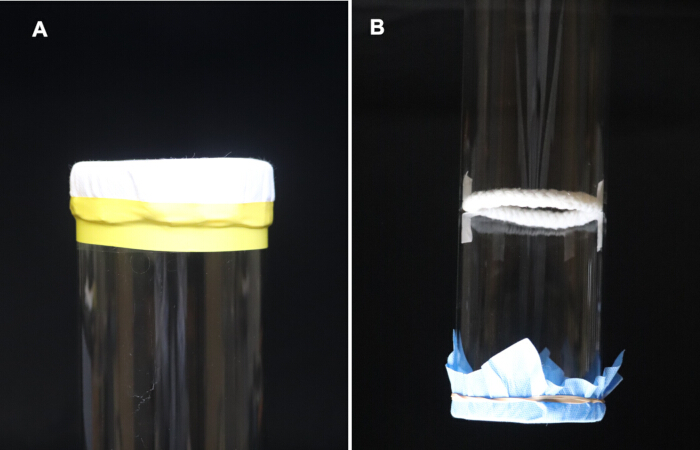
Figure 3: Glass cylinder assembly. (A) Top end of glass cylinder closed with DW4 filter media and vinyl tape. (B) Bottom end of glass cylinder fitted with cotton ring and closed with sterilization wrap and rubber bands. Please click here to view a larger version of this figure.
- Irrigation filter preparation (perform before each watering event, with the exception of steps 1.4.4–1.4.6, which should be done only once)
- Assemble the filter holder by placing the PES filter membrane (Figure 4A.4) between the filter holder (Figure 4A.5) and the filter disk (Figure 4A.3).
- Orient the smooth side of the filter membrane toward the direction of outflow, ensuring it faces the filter holder top (Figure 4A.1).
- Seat the O-ring (Figure 4A.2) into the filter holder top (Figure 4A.1). Attach the filter top to the filter holder. Hand-tighten only.
- Attach connectors. Insert the male slip of fitting 2 to the filter holder’s top port.
- Attach a short piece of silicon tubing to the hose barb end on the filter (Figure 4B). Insert the male luer of a fitting 1 in the end of the other prepared syringe barrel from step 1.1.6 (Figure 4B).
- Connect the filter to the hose barb fitting on the prepared syringe barrel.
- Autoclave the assembled filters on dry cycle at 121 °C for 30 min. Tighten filters once they have cooled and prior to use.
NOTE: It is recommended to prepare all the filters needed and autoclave them in a closed polypropylene box. Once autoclaved, the irrigation filters can be kept sterile at room temperature until use as long as the prepared syringe is not removed.
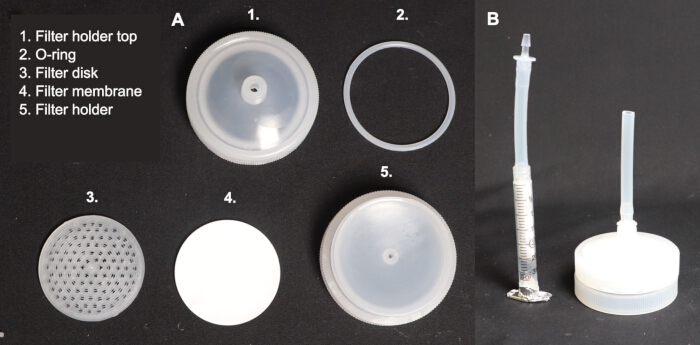
Figure 4: Filter holder assembly. (A) Disassembled filter holder part: 1. Filter holder top, 2. O-ring, 3. Filter disk, 4. Filter membrane, and 5. Filter holder. (B) Assembled filter holder with a corresponding prepared syringe barrel. Please click here to view a larger version of this figure.
2. Experiment set up
- Prepare and sterilize solutions and materials at least one day prior to setting up the experiment.
- Prepare 0.5X Murashige and Skoog plant growth media following the manufacturer's instructions. Autoclave medium on liquid cycle at 121 °C for 30 min.
- Autoclave the disassembled bottle top dispenser on dry cycle at 121 °C for 30 min. Autoclave 1 L of deionized water on liquid cycle at 121 °C for 30 min.
- Autoclave glass petri dish, 500 mL beakers, tea strainers, and tweezers on dry cycle at 121 °C for 30 min a day in advance.
NOTE: Unless stated otherwise, the following steps should be performed in a laminar flow hood using aseptic technique.
- Surface-sterilize seeds.
NOTE: Surface seed sterilization protocol will depend on the plant species to be used. The gnotobiotic system has been tested with both wheat and maize using the following seed sterilization protocols.
CAUTION: Wear a lab coat, gloves, and protective eyewear when handling bleach and sodium hypochlorite, as these chemicals can be irritants or corrosive to skin and eyes. Ethanol is flammable; do not use near open flame.- Wheat seed sterilization25
- Fill two beakers with 150 mL of 95% v/v ethanol, one beaker with 150 mL of undiluted household bleach, and two beakers with 150 mL of water.
- Place wheat seeds in the tea strainer. Gently agitate the tea strainer with seeds in one of the beakers with 95% v/v ethanol for one minute.
- Transfer seeds to a new tea strainer. Gently agitate tea strainers with seeds in bleach for 10 min.
- Transfer seeds to a new tea strainer. Gently agitate the tea strainers with seeds in the other beaker with 95% v/v ethanol.
- Gently agitate tea strainers with seeds in sterile deionized water for 30 s. Gently agitate the tea strainers with seeds in the other beaker with sterile deionized water for 2 min. Place sterile seeds in an empty sterile petri dish.
- Maize seed sterilization26
- Place maize seeds in a 50 mL conical tube. Fill the conical tube with 70% v/v ethanol. Gently invert the conical tube for 3 min.
- Decant 70% ethanol and fill the conical tube with seeds with 2% v/v sodium hypochlorite. Gently invert the conical tube for 3 min.
- Decant 2% sodium hypochlorite and rinse seeds with sterile deionized water. Decant water and rinse the seeds with water four times. Place maize seeds in a sterile petri dish.
- Wheat seed sterilization25
- Add the microbial inoculum to the medium when applicable.
NOTE: No microbial inoculum was applied during optimization and sterility testing of the gnotobiotic system. - Assemble the bottle top dispensers and attach them to the media bottles.
NOTE: Because this is an open system, we recommend you have a container to collect the flow-through media. We found that using a baking tray works well and allows for easy movement, but it requires frequent emptying. - Remove the plastic cap from the pot and dispense 378 mL of medium into the pot.
NOTE: This corresponds to approximately 70% water filled pore space (WFPS), which should be adjusted when using other soil substrates. Use 360 mL for clay and 358 mL for sand.- Sow the sterilized seed to the appropriate depth using sterile tweezers.
- Sow wheat at a depth of ½ inch and maize at a depth of 1 inch. Alternatively, sow sterile pre-germinated seedlings into GNOVA. Use pre-germinated seeds for maize growth testing.
- Replace the plastic cap on top of the pot.
3. Final assembly and experimental operation
- Transfer the pot and glass cylinder to a growth chamber. Hold the glass cylinder with the bottom facing down close to the pot.
- Remove the plastic cap quickly from the pot and the sterilization wrap from the glass cylinder. Lower the glass cylinder onto the top, seating it on the ledge of the 3D printed base.
NOTE: A flame (e.g., portable Bunsen burner) can also be placed next to the pot during the final assembly of the growth system to further decrease the risk of contamination.
CAUTION: Make sure that when working with an open flame, no other flammable materials are in the vicinity. Mind the position of the flame relative to your body to prevent burn injury. - Grow plants between 4 and 17 weeks, depending on plant species, using species-specific growth conditions.
- Grow wheat at day/night temperatures of 22 °C/16 °C and maize at 27 °C/23 °C. The photoperiod for both plants is 12 h under fluorescent lights only.
4. Irrigation
- Attach a long silicon tubing to the bottle top dispenser.
- Maintain sterility during watering using a portable flame. If a portable flame is not an option, perform irrigation using bleach to maintain sterility.
- Irrigation using a portable flame.
CAUTION: Work carefully around open flame to prevent bodily injury and facility damage.- Place flame near the irrigation line. Remove the syringe barrel from the irrigation line and the filter holder. Keep all tubing ends within the flame zone.
- Attach the filter holder to the irrigation line. Connect the two syringe barrels to each other. Connect the other long silicon tubing piece on the bottle top dispenser to the bottom port of the filter holder.
- Dispense 150 mL of 0.5X Murashige and Skoog media. Separate the two syringe barrels.
- Detach the silicon tubing from the filter holder and replace it with one syringe barrel.
- Irrigation using 10% bleach
NOTE: We recommend using this irrigation strategy in large experiments (n > 50) to increase throughput during watering.
CAUTION: Wear a lab coat, gloves, and protective eyewear when handling bleach.- Dispense 10% v/v bleach solution into two small plastic beakers and place them near the irrigation line. Remove the syringe barrel from the irrigation line and the filter holder.
- Submerge all tubing ends in the 10% bleach solution until needed. Shake off the excess bleach solution. Attach the filter holder to the irrigation line of the pot.
- Connect the other long silicon tubing piece of the bottle top dispenser to the bottom port of the filter holder.
- Dispense 150 mL of 0.5X Murashige and Skoog media. Detach the silicon tubing from the filter holder.
NOTE: Irrigation volume is 120 mL for sand and 360 mL for clay. - Replace the filter in the irrigation line with a syringe barrel after shaking off excess bleach.
NOTE: If the irrigation volume changes, account for approximately 20 mL of media to prime the irrigation line.
- Irrigate pots once a week. Adjust irrigation volume and frequency based on the objective of the experiment and the soil substrate used. If 100% sand is used, increase irrigation frequency to twice a week.
5. Harvest
NOTE: This harvest protocol was followed during the testing and optimization of the gnotobiotic system. The harvest protocol should be modified to accommodate specific research goals and the volume of samples being processed.
- Prepare and sterilize all solutions and materials at least one day prior to harvest.
- Autoclave 4 L of deionized water and 500 mL of 0.145 M NaCl, in a liquid cycle at 121 °C for 30 min a day in advance.
- Autoclave scissors and tweezers on dry cycle at 121 °C for 30 min a day in advance.
NOTE: Unless stated otherwise, the following steps should be performed in a laminar flow hood using aseptic technique. If sterility is not necessary for sample collection, all these steps can be performed outside of a laminar flow hood.
- Transfer the gnotobiotic systems from the growth chamber to the lab and set them close to the laminar flow hood.
- Remove the glass cylinder from the pot and quickly place the pot in the laminar flow hood. Take the pot out of the 3D printed base.
- Hold the plant at the base and dump the soil substrate into a container. Gently shake off big clumps of soil substrate from the roots.
NOTE: Soil substrate samples can be collected and processed according to the specific research goal at this step of the harvest. The protocol briefly described here was used for testing the sterility of soils. - Soil harvesting for soil bacterial counting27 using single plate serial dilution spotting28.
- Fill the wells of a 96-well plate with 270 µL of 0.145 M NaCl. Leave the first row empty. Add 1 g of soil substrate to a 15 mL conical tube with 9 mL of 0.145 M NaCl.
- Vortex at maximum speed for 5 min. Transfer 30 µL of the sample to an empty well of the 96-well plate.
- Prepare seven serial dilutions of each sample by pipetting 30 µL of each sample into the well below containing 270 µL of NaCl solution.
- Mix well by pipetting up and down between each transfer.
- Prepare single plate serial dilution spotting of each sample by plating 10 µL of each serial dilution onto a single R2A plate.
- Tilt the plates to spread the drops. Incubate plates at room temperature.
- Count colony-forming units (CFU) and calculate CFU/g of soil.
- Separate shoots from roots using sterile scissors. Record fresh shoot weight.
- Clean roots by gently shaking them in a beaker with deionized water. Blot dry the roots and record fresh weight.
NOTE: Above and below-ground material can be collected at this point and processed according to the methodology most appropriate to the downstream analysis of interest.
Results
We developed GNOVA, a new plant gnotobiotic system, that enables the sterile and controlled environment necessary to examine plant–microbe interactions. This new system offers 24.4 inches (62 cm) of vertical shoot space and a 1.3 L pot compatible with several soil substrates. The fully assembled system is about 3 ft tall (92.4 cm) and 4.57 inches (11.6 cm) wide (Figure 5A–C). Compared to other systems, it has the highest vertical capacity for shoot growth and the second largest root chamber (Supplemental Table 1). GNOVA only requires 0.0135 m2 of surface area in the growth chamber, thus making this system compact and maneuverable. This system can be used in reach-in growth chambers with a vertical clearance of 1.22 m. All components of this system, except for the 3D printed base, are autoclavable and compatible with autoclaves with dimensions of 24 inch × 24 inch × 36 inch (width × length × height; 61 cm × 61 cm × 91 cm). This streamlines the experimental setup by circumventing manual sterilization of individual parts. In addition, most of the components of this system are reusable, which keeps the per-experiment use cost at approximately 6 USD after the initial setup cost of 54 USD per unit (Supplemental Table 2). The environmental conditions within GNOVA were determined by tracking the temperature and relative humidity of the system with a week-old maize plant for three days. The temperature within GNOVA was, on average, +1.3 °C greater than the growth chamber (Supplemental Figure 1). Differences in temperature within the system and chamber were greater during the light cycle (average +2.5 °C) than during the dark cycle (average +0.4 °C). The relative humidity within GNOVA was on average 63%, contrasting to 34% in the growth chamber.
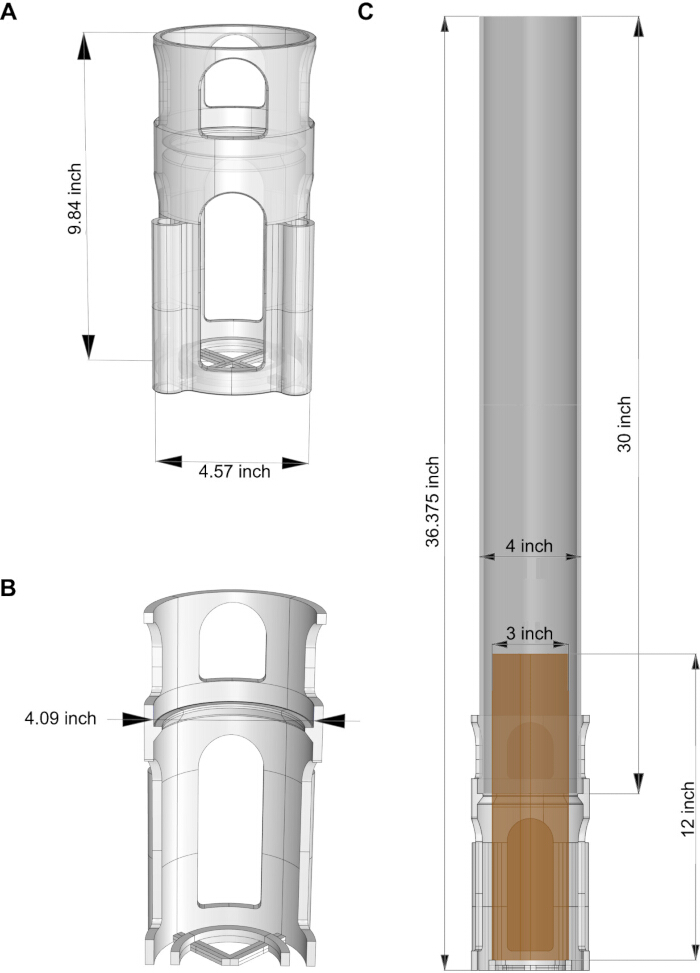
Figure 5: Renderings of the GNOVA system. (A) 3D model of final design of support base (B) Cross section of 3D model of support base (C) Cross section of 3D model of fully assembled GNOVA Please click here to view a larger version of this figure.
To ensure sterility within the system, we ran a four-week trial of non-irrigated and irrigated systems without plants. Contamination on the glass cylinder was determined by sampling above and below the cotton ring through direct swab plating. No detectable microbial growth above three colonies (i.e., a single colony per third of surface area sampled) was observed above the cotton ring for both non-irrigated (n=4) and irrigated samples (n=6) (Supplemental Figure 2A). Below the cotton ring, growth was observed in one non-irrigated replicate, while no growth was detected in irrigated systems (Supplemental Figure 2B). This suggests low contamination potential from the glass cylinder, as microbial growth was only present in limited replicates below the cotton ring, which is not in contact with the plant. Soil contamination was assessed by spotting serial dilutions onto R2A plates (Supplemental Figure 2C). No substantial microbial growth was detected in either condition, aside from a single irrigated replicate with a non-scorable colony-forming unit count from serial dilutions (i.e., < 30 colonies). In addition to the sterility tests, we carried out a performance comparison of wheat and maize grown within GNOVA to our standard gnotobiotic growth protocol of two weeks in a bag system19. To understand the effect of small size and lack of irrigation on plant performance, we extended the growth periods in the bag to match those within GNOVA. Even though the initial soil water content used during the setup of both systems was matched, GNOVA received weekly fertigation, whereas the bags did not. For all the comparisons, we use the bag system as the reference, as this was our lab’s initial gnotobiotic setup. Both wheat and maize reached 100% germination within GNOVA, whereas in the bag system, wheat only achieved 67% (n = 3) and maize 75% (n = 8) (Figure 6).
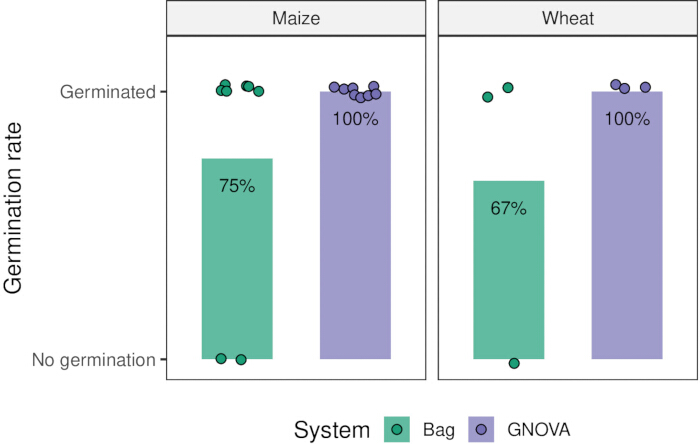
Figure 6: Germination of wheat (n = 3) and maize (n = 8) within GNOVA (purple) and bag system (green). Germination outcome of each replicate is represented by points on the y-axis either as No germination or Germinated for each gnotobiotic system. Bars represent the germination rate (%) of each plant species within different systems. Please click here to view a larger version of this figure.
A growth test for wheat and maize was also performed to determine the maximum viable growth period and plant performance within GNOVA. Even though our standard bag protocol only calls for two weeks of growth, we extended the growth period within the bags beyond two weeks for a better comparison between the two systems. After two weeks, wheat grown within GNOVA (n=3) had already reached Zadock’s growth stage (GS) 13 (Figure 7A), whereas in the bag it remained at GS11. At week five, plants had reached GS21 within the GNOVA systems as indicated by the appearance of tillers (Figure 7B). In contrast, tillers were absent from the bag systems, and plants remained in GS13. This growth stunting and lack of phenological changes within the bag system led to the termination of plants in this system at week six. Wheat plants continued to grow for another five weeks within GNOVA, where an increase in leaf number and biomass was observed (Figure 7C). Even though wheat biomass visually increased after 12 weeks of growth within GNOVA, plants also started to show more chlorotic leaves, and the glass cylinder volume was filled by plant biomass (Figure 7D). Wheat was grown for another two weeks thereafter (Figure 7E,F). However, there was no visual increase in biomass, and so, the growth test was terminated at 17 weeks of growth. The growth of maize was also assessed within GNOVA for four weeks and compared to maize grown in bags (Figure 8A,B). In this experiment, maize seeds were sterilized and pre-germinated prior to sowing within the GNOVA or the bag system. The fresh shoot and root weight of maize were significantly different between the two systems (Two-sample t-test, p-value < 0.05, Supplemental Table 3). Maize grown in GNOVA had fresh shoots and roots weighing on average 11.2 g and 5.7 g, respectively (Figure 8C,D). In contrast, the shoots and roots of maize grown within the bag had fresh weights of 1.29 g and 1.15 g, respectively. Overall, the fresh biomass of maize grown within GNOVA increased by 593% when compared to maize grown in the bag system. Moreover, the shoot and root length were significantly greater within GNOVA than in the bags by 89% and 57%, respectively (Figure 8E,F).
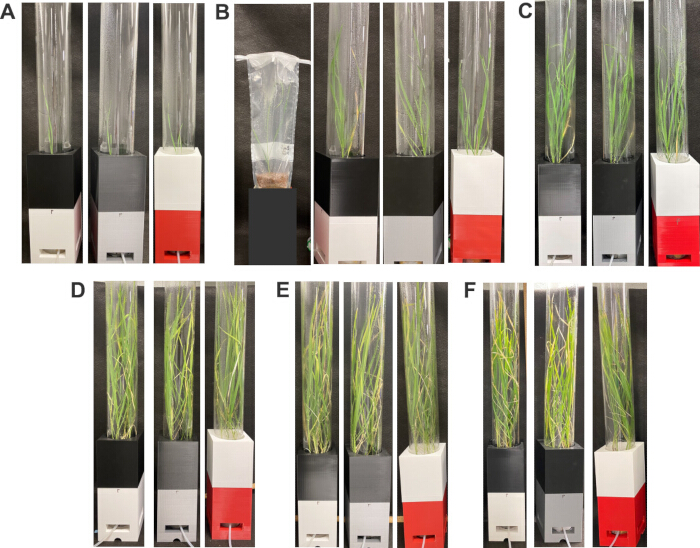
Figure 7: Growth of wheat within the GNOVA prototype. (A) Wheat at two weeks in Zadock’s growth stage (GS) 13. (B) Comparison of wheat after five weeks of growth in a bag and GNOVA. Tillers are present within GNOVA (GS21) and absent in the bag (GS13). (C) Increase of biomass of wheat at 10 weeks of growth. (D) Increase in biomass of wheat at 13 weeks of growth with the appearance of chlorotic leaves. (E) Further increase of biomass of wheat at 15 weeks of growth. F) Wheat biomass occupies most of the growth volume available at 17 weeks of growth. Please click here to view a larger version of this figure.
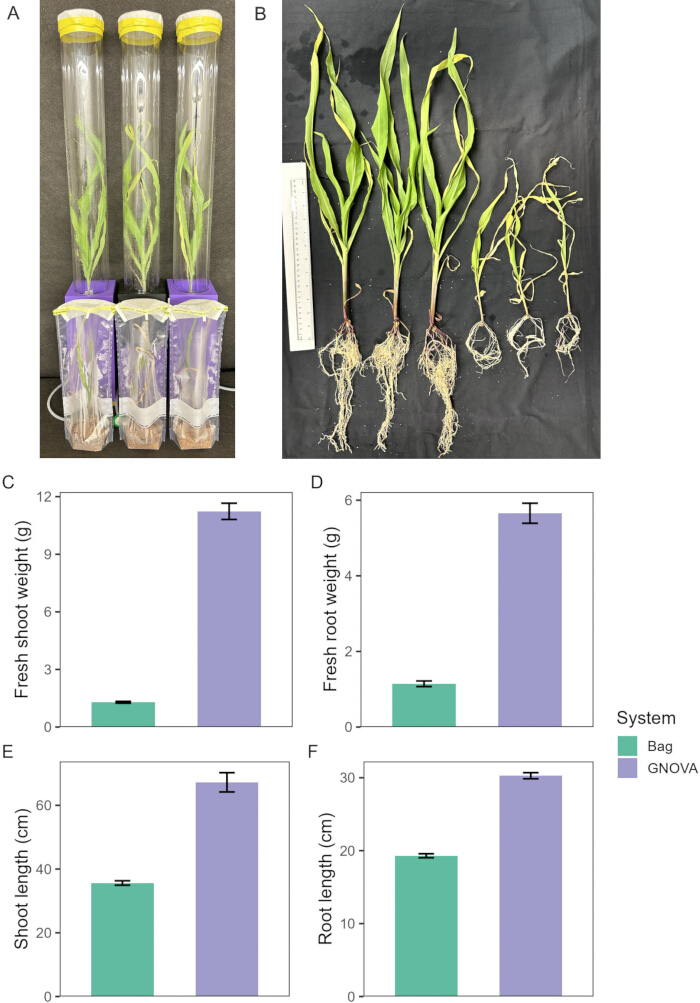
Figure 8: Growth of maize within the GNOVA (purple) prototype compared to the bag system (green). Bars indicate average values ± standard error (n=4) (A) Maize grown for four weeks in GNOVA and bag system. (B) Size comparison of harvested plants grown in GNOVA and bag system. (C) Fresh shoot weight (Mean±SE). (D) Fresh root weight (Mean±SE). (E) Shoot length (Mean±SE). F) Root length (Mean±SE). Please click here to view a larger version of this figure.
Supplemental Figure 1: Temporal dynamics of relative humidity and temperature measured within GNOVA (purple) and the growth chamber (orange). Data was recorded at five-minute intervals for three days. Data within GNOVA was recorded with a seven-week-old maize plant. Areas shaded in light blue correspond to nighttime periods. Please click here to download this file.
Supplemental Figure 2: Microbial growth resulting from sterility testing of the GNOVA without plants receiving no irrigation (Control) and with irrigation (Irrigated). (A) Glass cylinder samples above the cotton ring. (B) Glass cylinder samples below the cotton ring. (C) Single plate serial dilution plating of soil samples. Please click here to download this file.
Supplemental Table 1: Feature comparison of GNOVA with other existing plant gnotobiotic (EcoFAB, magenta boxes, bags, FlowPot, and GnotoPot, and EcoFAB 3.0). Systems are compared across key parameters relevant to experimental design, such as plant height capacity, root volume capacity, and irrigation control. Information was compiled from published literature and available system descriptions; where data were not explicitly reported, estimates are indicated. † Best approximation when not specified in the literature; ‡ System does not need to be taken apart or moved to laminar flow hood to perform task; * Possible with modifications to the system; Cost categories defined as: low (< USD 30 per unit), medium (USD 30-100 per unit), high (> USD 100 per unit)Please click here to download this file.
Supplemental Table 2: Bill of materials (BOM) and estimated costs for assembly and operation of a single GNOVA unit. Materials are categorized as reusable or single-use components, with corresponding unit cost, quantities required per system, and total cost per system. Reusable components contribute to the initial setup cost, and single-use materials represent consumable cost per experiment. * calculated from negotiated bulk prices for cost-efficient rates; ** amount needed varies with length of experiment, soil substrate used, and research goal. Value for a four-week-long experiment with a weekly irrigation schedule using the clay and sand mix; † Approximate cost of the amount of material needed per system; ‡ Does not include price for nutrient solution nor soil substrate as this will vary depending on experimental goalPlease click here to download this file.
Supplemental Table 3: Resulting p-values of the two-sample t-test for maize growth measured variables grown within GNOVA and the bag system.Please click here to download this file.
Discussion
The plant gnotobiotic system presented here, GNOVA, provides an accessible and versatile tool for studying plant–microbe interactions in cereal crops. Its key features include increased growth capacity and built-in irrigation, extending the growth of cereals beyond the seedling stage under sterile conditions. The performance of this system is comparable to the EcoFAB 3.0 and provides an accessible alternative plant gnotobiotic system. The system is constructed from commercially available components selected for cost, simplicity, and compatibility with medium-size autoclaves, facilitating adoption across laboratories. Assembly and operation are straightforward and do not require specialized equipment, thus reducing barriers to implementation. GNOVA can be adapted to serve different research goals due to its compatibility with a wide range of soil substrates, seed sterilization protocols, microbial inoculants (germ-free, SynCom, or natural community), and diverse downstream analyses.
Minimal contamination is essential in plant gnotobiotic experiments to ensure that the effects observed can be attributed to microbes of interest and not contaminants. GNOVA’s simple operation reduces contamination risk. Strict adherence to aseptic technique and the following key recommendations will ensure sterility is maintained. During the experiment setup, we recommend disinfection of the laminar flow hood between microbial inoculants to minimize cross-contamination of treatments. The order in which treatments are applied can also decrease cross-contamination. Applying germ-free treatments prior to any live microbial treatments is ideal. Foreign microbes may also be introduced through seeds. Surface seed sterilization protocols should therefore be optimized for each plant species or seed source to balance sterility and germination26. Sterilization protocols for non-model cereals, such as sorghum24, barley29, switchgrass and oats23 can be readily implemented in GNOVA. If sterilization negatively impacts germination, pre-germinated seeds may be used instead. Irrigation represents a major source of contamination in gnotobiotic systems. The most critical point during this process is the attachment of the filters to the irrigation lines. The tubing ends of the irrigation lines and filters must remain sterile through this process. Flame sterilization requires dexterity and can be labor-intensive, particularly in large experiments (n >50). Therefore, the alternative bleach-based method is recommended for large experiments or when flame sterilization is not practical. Maintaining additional sterile filters and having bleach or ethanol available during watering is also recommended in case of contamination during handling system materials. In addition, the inclusion of contamination control units (i.e., no plant, no microbe treatment, and receiving irrigation) is strongly recommended to monitor sterility and identify contaminants.
To overcome the risk of irrigation contamination, the earliest plant gnotobiotic systems were fully closed and lacked irrigation ability, which limited the duration of experiments. Maize was grown gnotobiotically in bags19,30, glass tubes, and petri dishes15 between two to four weeks. In order to replenish water and nutrients during plant growth, alternative systems such as the EcoFAB23, FlowPot, and GnotoPot21 enabled irrigation by partial disassembly within laminar flow hoods. This limited their size and compatibility with larger plants. Because irrigation lines are easily accessible outside of GNOVA, disassembly is not required, and the system is not constrained to the laminar flow hood sizes. This not only enables a continuous supply of nutrients and water, but it also increases the available growth space. Reduced shoot space can diminish photosynthetic capacity and contribute to stunting24, and root volume restriction can lead to root binding and reduce water and nutrient uptake31. The combination of small growth space and lack of irrigation in the bag system could explain the decreased biomass and lack of phenological progression of maize and wheat when compared to the GNOVA system. This new system allowed gnotobiotic growth of maize for a duration comparable to that of sorghum in EcoFAB 3.024. Moreover, it exceeds the gnotobiotic growth of wheat for four weeks in a hydroponic system (20) in a more representative soil system. In addition to physical constraints, gnotobiotic systems often rely on restricted airflow to maintain sterility. Limited airflow can lead to increased temperature and humidity, as well as lower gas exchange rates, which could impact plant physiology32. Improved growth has been reported in systems with enhanced airflow, such as magenta boxes fitted with HEPA filters33 that operate similarly to the DW4 filter used in GNOVA. Likewise, EcoFAB 3.0 exhibited increased temperature and relative humidity but was still considered a robust platform for gnotobiotic growth of sorghum24. This suggests that although physical and environmental constraints persist within gnotobiotic systems, the advances in system design presented here still provide improved conditions that more effectively support gnotobiotic growth of cereals.
Ease of modification is another key feature of GNOVA. The modularity of its design allows users to make changes to individual parts to better suit their research needs and budget. This system is compatible with any soil substrate, including natural soils. Modifications to the setup volume, concentration of nutrient solution, and irrigation volume and frequency should be based on the physical-chemical properties of the soil, as they directly influence nutrient and water availability and distribution34. Drought can be induced by monitoring the weight of the entire GNOVA system and determining soil water content gravimetrically35. Root exudates can be collected destructively by incubating harvested plants in ultrapure water36 or through flushing the system to obtain non-sterile leachates37. If sterile exudates are required, GNOVA’s pot and 3D printed support base can be modified to incorporate a built-in exudate collection feature similar to that in the design of EcoFAB 3.024. Scientists interested in understanding priority effects38 on microbial community assembly can install additional irrigation lines around the pot. This allows for subsequent applications of microbial inoculants while maintaining the sterility of the main irrigation line. Environmental conditions could be monitored by placing disinfected wireless temperature and relative humidity sensors within GNOVA. Alternatively, replacing the glass cylinder with a polycarbonate chamber and drilling sampling ports24 would enable measurement of the environment and sampling of gases. This could allow for the quantification of gases and volatile compounds, such as CO2, O2, and ethylene, with the potential to influence plant performance33. Airflow to the system can also be increased by removing the cotton ring in the glass cylinder. However, any of these modifications could increase the risk of contamination and have not been validated or optimized yet within GNOVA.
Despite GNOVA’s advantages and versatility, a few limitations should be considered. It should be noted that this system is best suited for use within controlled growth chambers, as uncontrolled conditions in the greenhouse or field might impact its performance. Although wheat was able to grow within the system for 17 weeks, signs of stress were observed around 12 weeks of growth. Therefore, wheat should not be grown beyond 12 weeks. Moreover, maintenance of sterility was only confirmed through four weekly irrigation events over a four-week growth period; longer experiments carry increased contamination risk. Even though GNOVA has increased root volume capacity, root restriction is still possible, and a temporal assessment of root morphology may help determine optimal growth durations that minimize root binding. In addition, some modifications to the system, such as the replacement of the glass cylinder with a polycarbonate cylinder, can increase the setup cost to over 100 USD per unit. Currently, GNOVA only allows for endpoint destructive sampling, which increases labor and replication requirements for temporal studies of microbial dynamics, exudation patterns, or sterility monitoring. Finally, maintaining sterility during setup, irrigation, and harvest is time-consuming, and even simplified systems such as GNOVA require dedicated effort, which increases overall operation costs. Collectively, these limitations should be considered when adopting this system. Moreover, environmental constraints caused by gnotobiotic growth need to be considered when planning experiments and interpreting results, as they may influence plant physiology and, in turn, its associated microbiome.
GNOVA provides a versatile gnotobiotic platform compatible with cereal crops. The system enables recovery of nearly intact root systems suitable for root-architecture analysis tools such as RhizoVision explorer39 and ARIA40, allowing for the characterization of root morphology in response to diverse microbial inoculants and environmental conditions. When combined with SynComs and multi-omics analyses, GNOVA facilitates the identification of mechanistic links between microbial effectors and plant responses. Larger SynComs (>100 members) paired with metagenomic41,42,43 analysis can be used to examine co-occurrence patterns and identify microbes of ecological relevance under different conditions5,44. In contrast, smaller SynComs (<50 strains) in combination with metatranscriptomic45,46, metaproteomic19,47,48, and metabolomics49,50,51 enable detailed characterization of functional response in both plants and microbes44. Together, these capabilities position GNOVA as a valuable tool for the identification of key microbial traits that can accelerate the development of new bioinoculants that enhance the sustainability of agricultural systems.
Disclosures
All authors declare no conflict of interest.
Acknowledgements
This research was funded by the Novo Nordisk Foundation (INTERACT, Grant number: NNF19SA0059360) and the U.S. Department of Agriculture National Institute of Food and Agriculture under award No. 2022-67013-36672.
Materials
| Name | Company | Catalog Number | Comments |
|---|---|---|---|
| Powerconnect cordless drill & 100-Piece Kit | Black+Decker | BDC120VA100 | 1/4" and 1/8" drill bits needed. |
| Vinyl tape, yellow , 1" wide x 36 yards | 3M | 471 | Consumable material |
| Sterling Rubber bands size #32 (2 rubber bands per system) | Amazon | B001I1QO00 | Consumable material. |
| Wheat seed | Cultivar used in this experiment: Catawba | ||
| Fiberglass pipe wrap insulation, 3 " widex 1/2 " thick (2 pre-cut circles per system) | Lowe's | 28930 | Cut into 2 7/8 " (7.3 cm) diam circles. Consumable material. For high throughput production of circles roll out the wrap insulation and use the open edge of the pot to cut the circle by placing the pot on top of the insulation wrap and applying pressure and twisting. |
| DW4 Filter media, Pre-cut to 15" x 75 yards (1 cut circle per system) | Class Biological Clean, Ltd | NA | Cut into 6.3 " (16.02 cm) diam circles. CBC has other pre-cut or standard roll sizes that can be purchased instead if desired. Consumable material. cut a template of the circle in cardboard and use it to draw circles throughout the area of the DW4 media and cut with scissors. |
| Silicon tubing, Versilon SPX-50 High-strength, 1/8" ID x 1/4" OD x 1/16" wall thickness | Saint-Gobain | ABX00007 | Cut into two long pieces ( 16" // 40.64 cm) and three short pieces (2.5" // 6.35 cm) |
| Sodium hypoclorite 5% available chlorine in aqueous solution | VWR | JT9416-1 | Dilute to 2% v/v and use for maize sterilization protocol |
| Murashige & Skoog medium, micro and macro elements. 25 L | Research Products International | M10200-25.0 | Diluted to 0.5x strength |
| Ethanol, 100%, Deacon Labs | Fisher scientific | 04-355-451 | Diluted to 95% v/v |
| Syringe 3 mL, luer lock unsterile (2 per system) | Fisher scientific | 14-817-117 | Discard plunger and only keep the barrel, fill with glass wool and cap with foil. |
| Glass beakers, 250 mL | VWR | 470191-150 | Five are needed for wheat seed sterilization |
| Maize seed | Genotype used in this experiment: Mexico 21–22 B73XMo17 | ||
| Aluminum baking tray 18" x 26" | Amazon | B01FIK54LQ | Make sure it fits the dimensions of your flow hood |
| Sodium Chloride | Fisher scientific | BP358-1 | Prepare 0.145 M solution. |
| 3D printed base, polylactic acid (PLA) filament used (1 per system) | Protolabs | NA | Printing and editable files can be found in supplemental materials. Files available at Dryad.org DOI https://doi.org/10.5061/dryad.f7m0cfzbc. DO NOT AUTOCLAVE if PLA was used as filament to produce the base. PLA will melt above 150 °C and can get deformed above 60 °C. It is recommended that the integrity of the PLA 3D printed base is tested if it is to be used at temperatures above 40 °C. For higher heat resistance materials such as PETG (Polyethylene Terephthalate Glycol) or PC (polycarbonate) can be used instead; this will increase the cost of the part and might still not be autoclaveable. 3D printing of the base prototypes were accomplished in a personal printer with build volumes of of 256 × 256 × 256 mm (length × width × height). For speed and cost efficiency we recommend printing in bulk at local commercial 3D-printing service providers. |
| Male luer to hose barb fitting 1/8 " ID, animal derivative-free polypropelene (2 per system) | Cole-Parmer | EW-50114-69 | Refered as fitting 1 in the protocol |
| Male slip luer to hose barb fitting 1/8 " ID, animal derivative-free polyproylene (1 per system) | Cole-Parmer | EW-50114-63 | Refered as fitting 2 in the protocol |
| 201 Stainless steel worm gear hose clamps, 1 1/2" -3 1/2" clamping diameter (1 per system) | Grainger | 5CZF2 | Refered as hose clamps in protocol |
| Airstream Gen 3 Laminar flow cabinet with simple switch, dimensions 24 1/4" x 47 " x 28 1/4 " | ESCO Lifesciences | 2120707 | Refered as laminar flow hood in protocol. Any laminar flow hood with similar dimensions works. Modifications might be needed in smaller flow hoods. |
| Play sand, Quikrete Premium. 50 lb | The Home Depot | 1001709466 | Refered as sand in protocol |
| 304 Stainless steel woven wire, 120 mesh (1 per system) | Amazon | B09KRS5F7T | Refered as stainless steel wire mesh in article. Cut into 4.7" (11.9 cm) diameter circles. For high troughput or circle production, cut a template of the circle in cardboard and use it to draw circles throughout the area woven mesh of the woven mesh and cut with scissors. |
| Clay (Montmorillonite), OIL-DRI Loose Sorbent, 50 lb Wt, not scented | Grainger | 44Z111 | Refered in protocol as clay. Consumable material. |
| Clear hurricane candle shade chimney tube without a bottom 4" OD x 30" length (1 per system) | WCG International | HST0430 | Refered in protocol as glass cylinder |
| Clear plastic cap, 3" (7.6 cm) diam (1 per system) | ClearTec Packaging | PCC3.000 | Refered in protocol as plastic cap |
| Clear Polycarbonate tubing, 3" OD x 2 7/8" ID x 1/16' wall thickness x 12" length (1 per system) | ePlastics | PCTUB3.000X2.875 | Refered in protocol as pot. Can request company to cut to other desired lengths. |
| Cleanroom sterlization wrap, 6" x 6" (1 per system) | Fisher scientific | 17-101-102 | Refered in protocol as sterilization wrap. Consumable material. |
| Dissecting forceps, Medium serrated tip 4 1/2" length | VWR | 82027-398 | Refered in protocol as tweezers. |
| Tea strainers | Amazon | B0FRMRZWZY | Three are needed for wheat seed sterilization |
| Clorox bleach with 5.7% available chlorine | The Home Depot | 1005131978 | Use undiluted for wheat sterilization protocol. Dilute to 10 % v/v for irrigation protocol |
| Braided cotton rolls 3/8" diam x 6" length (2 per system) | Richmond Dental and Medical Supplies | 201208 | Using micropore tape attach two braided rolls together and cut to 10 3/4" (27.31 cm) length. Form into a ring and close using micropore tape. Consumable material. |
| 96-well plate, flat bottom, non-treated, sterilized | VWR | 10861-562 | |
| Bottle top dispenser, 5 - 60 mL | VWR | 76319-590 | |
| Falcon conical centrifuge tubes, 15 mL | Fisher scientific | 14-959-70C | |
| Falcon conical centrifuge tubes, 50 mL | Fisher scientific | 14-959-49A | |
| Glass beakers, 600 mL | VWR | 470191-152 | |
| Glass storage bottles, 5 L | VWR | 10754-824 | |
| Glass wool | Fisher scientific | AC386062500 | |
| Heavy-duty aluminum foil | Amazon | B093X4M4QF | |
| Micropore surgical tape, 1" wide | 3M | 1530 | |
| Nylon zip ties, 6" x 0.1" (1 per system) | Amazon | B09H5LHW78 | |
| PES 0.22 um filter membrane, 47 mm membrane, non-sterile (1 per system) | Tisch Scientific | SF15021 | |
| Plastic beakers, 250 mL | VWR | 470332-662 | |
| Polypropylene filter holder for 50 mm membrane (1 per system) | Cole-Parmer | EW-06623-52 | |
| Portable Bunsen burner | VWR | 470343-152 | |
| R2A agar, BD | VWR | 90000-994 | |
| Vortex Genie 2 Digital Mixer, 230/240 V | VWR | 78496-568 |
References
- Batista, B. D., Singh, B. K. Realities and hopes in the application of microbial tools in agriculture. Microbial Biotechnology. , (2021).
- Parnell, J. J., et al. From the Lab to the Farm: An Industrial Perspective of Plant Beneficial Microorganisms. Frontiers in Plant Science. , (2016).
- Busby, P. E., et al. Research priorities for harnessing plant microbiomes in sustainable agriculture. PLOS Biology. , (2017).
- Compant, S., et al. Harnessing the plant microbiome for sustainable crop production. Nature Reviews Microbiology. , (2025).
- Vorholt, J. A., Vogel, C., Carlström, C. I., Müller, D. B. Establishing Causality: Opportunities of Synthetic Communities for Plant Microbiome Research. Cell Host and Microbe. , (2017).
- Liu, Y. X., Qin, Y., Bai, Y. Reductionist synthetic community approaches in root microbiome research. Current Opinion in Microbiology. , (2019).
- Basic, M., Bleich, A. Gnotobiotics: Past, present and future. Laboratory Animals. , (2019).
- Williams, S. C. P. Gnotobiotics. Proceedings of the National Academy of Sciences, , (2014).
- Bennett, R. A., Lynch, J. M. Bacterial Growth and Development in the Rhizosphere of Gnotobiotic Cereal Plants. Microbiology. , (1981).
- Lindberg, T., Granhall, U. Acetylene reduction in gnotobiotic cultures with rhizosphere bacteria and wheat. Plant and Soil. , (1986).
- Maplestone, P. A., Campbell, R. Colonization of roots of wheat seedlings by bacilli proposed as biocontrol agents against take-all. Soil Biology and Biochemistry. , (1989).
- Simons, M. Gnotobiotic System for Studying Rhizosphere Colonization by Plant Growth-Promoting Pseudomonas Bacteria. MPMI. , (1996).
- Walley, F. L., Germida, J. J. Response of spring wheat to interactions between Pseudomonas species and Glomus clarum NT4. Biology and Fertility of Soils. , (1997).
- Ma, K. W., Ordon, J., Schulze-Lefert, P. Gnotobiotic Plant Systems for Reconstitution and Functional Studies of the Root Microbiota. Current Protocols. , (2022).
- Niu, B., Paulson, J. N., Zheng, X., Kolter, R. Simplified and representative bacterial community of maize roots. Proceedings of the National Academy of Sciences, , (2017).
- Hsu, P. C. L., O’Callaghan, M., Condron, L., Hurst, M. R. H. Use of a gnotobiotic plant assay for assessing root colonization and mineral phosphate solubilization. Plant and Soil. , (2018).
- McLaughlin, S., et al. A Versatile Glass Jar System for Semihydroponic Root Exudate Profiling. Journal of Visualized Experiments. , (2023).
- Miebach, M., et al. Litterbox—A gnotobiotic Zeolite-Clay System to Investigate Arabidopsis–Microbe Interactions. Microorganisms. , (2020).
- Salvato, F., et al. Evaluation of Protein Extraction Methods for Metaproteomic Analyses of Root-Associated Microbes. Molecular Plant-Microbe Interactions. , (2022).
- Kawasaki, A., et al. A sterile hydroponic system for characterising root exudates. Plant Methods. , (2018).
- Kremer, J. M., et al. Peat-based gnotobiotic plant growth systems for Arabidopsis microbiome research. Nature Protocols. , (2021).
- Nezhad, A. S. Microfluidic platforms for plant cells studies. Lab on a Chip. , (2014).
- Gao, J., et al. Ecosystem Fabrication protocols for plant-microbe interactions. Journal of Visualized Experiments. , (2018).
- Gupta, K., et al. EcoFAB 3.0: a sterile system for studying sorghum. Frontiers in Plant Science. , (2024).
- Verma, S. K., et al. Exploring Endophytic Communities of Plants. Seed Endophytes: Biology and Biotechnology. , Springer. Cham. (2019).
- Parnell, J. J., et al. Effective Seed Sterilization Methods Require Optimization Across Maize Genotypes. Phytobiomes Journal. , (2024).
- Lee, J., Kim, H. S., Jo, H. Y., Kwon, M. J. Revisiting soil bacterial counting methods. PLOS One. , (2021).
- Thomas, P., et al. Optimization of single plate-serial dilution spotting method. Biotechnology Reports. , (2015).
- Munkager, V., et al. AgNO3 Sterilizes Grains of Barley without Inhibiting Germination. Plants. , (2020).
- Wagner, M. R., et al. Microbe-dependent heterosis in maize. Proceedings of the National Academy of Sciences, , (2021).
- Poorter, H., et al. Pot size matters: effects of rooting volume on plant growth. Functional Plant Biology. , (2012).
- Ferrante, A., Mariani, L. Agronomic management for enhancing plant tolerance to abiotic stresses. Horticulturae. , (2018).
- Vollmer, R., et al. Effect of Gas Exchange Rate and Vessel Type on plant growth. Plants. , (2024).
- Cardoso, E. J. B. N., et al. Soil health: suitable indicators for assessment. Scientia Agricola. , (2013).
- Sinclair, T. R., Ludlow, M. M. Influence of soil water supply on plant water balance. Australian Journal of Plant Physiology. , (1986).
- Döll, S., Koller, H., van Dam, N. M. Protocol for collecting root exudates from soil grown plants. Rhizosphere. , (2024).
- Williams, A., et al. Comparing root exudate collection techniques. Soil Biology and Biochemistry. , (2021).
- Carlström, C. I., et al. Synthetic microbiota reveal priority effects and keystone strains. Nature Ecology and Evolution. , (2019).
- Seethepalli, A., et al. RhizoVision Explorer: software for root image analysis. AoB Plants. , (2021).
- Pace, J., et al. Analysis of maize seedling roots using ARIA. PLOS One. , (2014).
- Jensen, T. B. N., et al. High-throughput DNA extraction and metagenome preparation. PLOS One. , (2024).
- Romero-Salas, E. A., Ibarra-Sánchez, C. L. Isolation of Metagenomic DNA from Plant Roots. Plant Microbiome Engineering. , Springer. New York. (2025).
- Su, P., et al. Recovery of metagenome-assembled genomes from rice phyllosphere. Scientific Data. , (2022).
- Northen, T. R., et al. Community standards for synthetic communities in plant–microbiota research. Nature Microbiology. , (2024).
- Poursalavati, A., Javaran, V. J., Laforest-Lapointe, I., Fall, M. L. Soil Metatranscriptomics: improved RNA extraction method. Phytobiomes Journal. , (2023).
- Vannier, N., et al. Genome-resolved metatranscriptomics reveals conserved root colonization determinants. Nature Communications. , (2023).
- Zheng, L., et al. Extraction of Proteins from Soil. Metaproteomics: Methods and Protocols. , Springer. New York. (2024).
- Zheng, L., et al. Comparative physiological and proteomic response to phosphate deficiency. Journal of Proteomics. , (2023).
- Rieusset, L., et al. Cross-metabolomic approach in wheat–Pseudomonas interaction. Metabolites. , (2021).
- Zhang, Y., et al. Metabolite-mediated responses of phyllosphere microbiota. Microbiology Spectrum. , (2023).
- Swenson, T. L., Northen, T. R. Untargeted Soil Metabolomics. Microbial Metabolomics: Methods and Protocols. , Springer. New York. (2019).
Reprints and Permissions
This article has been published
Video Coming Soon