This study adopted grounded‑theory methodology and conducted semi‑structured interviews with 27 Macao university students. It explored the mechanisms underlying the formation of cognition and behavior related to patriotism and integrity. The results have found that athletes' statements about the nation and integrity in news and short videos can influence students.
Research Article
Impacts of Chinese Olympic Athletes' Visit to Macao on Patriotism and Integrity Behaviors Among University Students Studying in Macao
In This Article
Summary
Abstract
In recent years, sports diplomacy, national identity building, and integrity education have become key trends in national governance in the new era. After major sports events, it has become a unique tradition for Olympic athletes to visit Hong Kong and Macao for exchanges. The principles of integrity, fairness, and self-discipline in sportsmanship are important ways to cultivate Macao's youth's sense of national identity and national spirit. This study, using media reports on the visits of Chinese Olympic athletes to Macao as a backdrop, adopted grounded‑theory methodology and conducted semi‑structured interviews with 27 Macao university students. It explored the formation mechanisms of their cognitions and behaviors related to patriotism and integrity. The study found that students could transform their thinking patterns and behaviors simply by browsing news clips and short videos, without personally participating in the athletes' exchange activities in Macao. Peer interaction on campus reinforced the internalization of values, while cultural compatibility within the context of Sino-Portuguese cultural integration enhanced symbolic identification. This research provides empirical evidence for conducting sports-oriented patriotism and integrity education (or anti-corruption education) for Macao youth under the "One Country, Two Systems" framework.
Introduction
In recent years, sports diplomacy, national identity building, and youth character cultivation have become key trends in national governance in the new era. After major sports events, it has become a unique tradition for Olympic athletes to visit Hong Kong and Macao for exchanges. In 2024, the Chinese Olympic delegation visited Macao. This visit coincided with the 75th anniversary of the founding of the People's Republic of China and the 25th anniversary of Macao's return to China. The Olympic delegation's visit to Macao was not only a cultural and sports event, but also an important platform for governance at this important historical moment. Through interaction with these role models, Macao youth were able to enhance their national identity and cultivate their personal character through sports1. During the visit to Macao, Olympic athletes conducted in‑depth exchanges with Macao youth through various forms such as "Sincere Dialogue between National Olympic Athletes and Macao Youth Athletes"2, "Our Pride" gala3, community visits, and World Heritage site tours4.
These activities allowed Macao youth to experience the athletes' concept of "persisting in training for the honor of the motherland" and "teamwork and national honor above all else", which directly stimulated the emotional resonance and enthusiasm of Macao youth5. Compared to certain events in Hong Kong SAR and Taiwan region (such as the revision of history textbooks in Taiwan6 and the "Occupy Central" movement in Hong Kong7), Macao has always maintained a deep-rooted patriotic tradition. The visit of our Olympic athletes to Macao further strengthens the contemporary value of this tradition. From a practical point of view, this visit to Macao not only promoted the construction of Macao as a “sports city”8, but also, relying on the integrity, fairness, and self‑discipline in the spirit of sports, became an important way to cultivate the national identity and national spirit of Macao youth. As Pettigrew9 said, groups can only achieve this in the right environment. From a theoretical point of view, most of the existing research focuses on the macro patriotic tradition or policy texts of Macao, and lacks analysis of the micro process of how Olympic athletes and others inspire patriotic behavior among young people.
Therefore, exploring the internal logic and practical value of the visit of Chinese Olympic athletes to Macao will help meet the actual needs of Macao youth in terms of moral cultivation and national identity. At the same time, this is also a necessary way to advance sports‑based integrity education and expand avenues for patriotic cultivation under the framework of “one country, two systems”. In such sports‑exchange settings, young people can develop national identification and an understanding of integrity, translating these ideas into real‑world action. Current academic research on the mechanisms of patriotic behavior mainly focuses on policy promotion or macro‑level cultural inheritance, while studies on high‑profile sporting events such as the "Olympic athletes' visit to Macao" are significantly insufficient. Existing literature is relatively limited in discussing how role models such as Olympic athletes inspire patriotic behavior and integrity among young people. Therefore, this study aims to explore how the visits of Chinese Olympic athletes to Macao influence the patriotic behavior and integrity of Macao's youth. This not only fills a theoretical gap in research on sports events, patriotism, and moral behavior, but also provides empirical evidence for optimizing patriotic education strategies for Macao's youth and consolidating the social foundation of "loving the motherland and loving Macao". It carries substantial academic value and practical significance.
Protocol
This study adheres to the ethical guidelines for human research at Guangzhou University. All participants signed an informed consent form before participating, ensuring they fully understood the research objectives, the interview process, the voluntary nature of participation, and their right to withdraw at any time without any consequences. All methods complied with ethical standards for human research, ensuring participant privacy, data anonymization, and data protection. This study follows ethical guidelines for educational research, ensuring participant anonymity and voluntary participation. Informed consent forms were obtained electronically, and clearly explained data use and storage methods. No personally identifiable information was collected. Participants had the right to withdraw at any stage. The ethics review of this study can be waived, according to Measures for the Ethics Review of Life Sciences and Medical Research Involving Humans, released by Chinese authorities, including the National Health Commission (NHC), Ministry of Education, Ministry of Science and Technology, and National Administration of Traditional Chinese Medicine, with its website at https://www.gov.cn/zhengce/zhengceku/2023-02/28/content_5743658.htm. As reported in this document, the need for ethics approval can be waived if the collected data does not cause harm to humans, does not involve sensitive personal information or commercial interests, and is anonymized. Our data collection meets all these criteria, so the ethical review of this paper was waived. In addition, this study followed the Declaration of Helsinki. All the materials used in this study are listed in the Table of Materials.
The impact of sports role models on youth behavior
Existing research has initially established a theoretical framework for analyzing the relationship between sports role models and youth patriotic behavior from a multidisciplinary perspective. Long et al. (2022) explored changes in the patriotic sentiments and behaviors of ethnic minority university students10. Chaeroni et al. (2024) used critical discourse analysis and necropolitics theory to point out that sports role models (such as sports heroes and naturalized athletes) are important symbols of nationalism and patriotism, and their images will be given national narrative significance through sports scenes11; Prots et al. (2021) proposed that sports role models (such as traditional martial arts inheritors) can gradually internalize patriotic cognition into the neuropsychological characteristics of young people through physical and mental synergy training12; Knoester et al. (2022) proposed the theory of "American institutionalized sports nationalism", emphasizing the mediating role of sports role models in conveying values such as "love for the country and respect for the army", and regarded them as the key link between national ideology and young individuals13. These theories gradually deepened and improved the theoretical interpretation of this influence's connotation across the three dimensions of culture, education, and system.
Taking sports role models as the core, their influence on youth patriotic behavior can be unfolded from the macro, meso, and micro levels. At the macro level, sports role models enhance national cohesion and citizens’ political trust through the symbolic meaning they carry. A researcher conducted a study based on China’s participation in the 2012 and 2016 Olympic Games and found that Olympic athletes, as core sports role models, significantly enhance citizens’ political trust through the “reflective glory” effect through their competitive achievements. In particular, when they win gold medals, young people’s recognition of the legitimacy of national governance will show a significant short-term increase14. At the meso level, sports role models strengthen young people’s patriotic consensus through group interaction and cultural memory. Another group conducted a study on volunteers for the Nanjing Youth Olympic Games and found that the volunteers’ individual memories were influenced by both Confucian cultural traditions and education in socialist core values, and thus condensed into collective memories15. This kind of collective memory can effectively promote the patriotic resonance of young people. At the micro level, sports role models directly influence the patriotic cognition and behavioral logic of young people.
A study found that athletes often present themselves through media reports, and this presentation process is also an important opportunity for athletes to show their patriotic feelings16. Their patriotic words and deeds (such as emphasizing "winning glory for the country") can serve as role models and guide young people to integrate patriotic behavior into their daily life practices. Existing research has found that there are three core paths for sports role models to influence the patriotic behavior of young people: educational penetration, media narrative, and event interaction. Major events such as the Olympic Games provide convenient conditions for direct interaction between sports role models and young people, and further strengthen their patriotic influence by enhancing the sense of presence of young people. However, existing research is particularly limited. In the context of the implementation of China's "one country, two systems" policy, research on Macao youth is particularly insufficient. As an important frontier of the practice of "one country, two systems", Macao is a unique region where Chinese and Western cultures meet, and it is also the core carrier of the social tradition of "loving the country and loving Macao". The national identity and patriotic behavior of Macao youth are closely related to the development of "one country, two systems". However, existing research lacks grounded theory research targeting Macao youth and is unable to reveal the "localization mechanism" by which sports role models influence the patriotic behavior of Macao youth. Sports role models embody qualities of fairness, self-discipline, and integrity in competitions. Their positive behavior subtly guides young people to abide by rules, uphold moral principles, and cultivate upright personal values in daily life. These are also very important for strengthening patriotism among young people.
Study design
This study is based on qualitative research and adopts grounded theory as the core research method. It aims to explore the formation mechanism of patriotic behavior of university students studying in Macao, in the background of Olympic athletes visiting Macao, and analyze its transformation logic. This study uses purposive sampling, rather than theoretical sampling. This study requires a strict distinction between sensitive concepts and predefined coded categories. The sensitive concepts refer to broad theoretical viewpoints from existing literature. These concepts are intended only as heuristic perspectives to enhance researchers' theoretical sensitivity, and are not intended to be rigidly applied to fixed analytical templates in original interview transcripts. Qualitative research methods are crucial to revealing complex phenomena such as the perception of Olympic athletes' symbols, the process of patriotic emotion generation, and the behavioral decision-making of college students in natural contexts17,18,19. It can accurately analyze how the role model cognition, emotional resonance and value identification of Olympic athletes by students affect their patriotic attitudes or behavioral tendencies, and provide targeted support for the construction of theoretical framework. Grounded theory is suitable for developing middle-level theories and can deeply explain social behaviors and processes under specific phenomena20.
It extracts concepts from data and has the characteristics of not presetting theoretical frameworks. This study carried out analysis through three levels of coding: open coding, main axis coding, and selective coding, and finally constructed a theoretical framework to provide solid methodological support for the analysis of behavioral mechanisms. This study selected semi-structured in-depth interviews as the core coding material because they can deeply explore the inner thoughts of university students studying in Macao and directly capture their real perceptions, emotional changes, and patriotic behavior decision-making process in the process of following the Olympic athletes' visit to Macao through the media. This face-to-face or online interview method allows researchers to analyze the deep motivations behind behaviors (such as the interpretation of media symbols and the reconstruction of patriotic cognition under the student identity) through interactive questioning (such as "Which report about athletes did you see that made you want to do something for the country?"), which is difficult to fully cover through quantitative forms such as questionnaires20.
Participant recruitment and sampling strategy
Respondents were recruited from students enrolled in various universities in Macao. This sampling strategy prioritized ensuring the diversity of respondents' experiences while maintaining a reproducible interviewee selection process. The sample selection process is divided into two steps. The first step involved recruitment and pre-screening. Recruitment information was released online, clarifying the research topic (media coverage of the Olympic athletes' visit to Macao and the patriotic behavior experienced by Macao university students) and privacy protection measures (e.g., data anonymization and use only for this study). Subsequently, online pre-interviews were conducted to strictly define the target group (aged 18-35, current Macao university students, and those who had followed the Olympic athletes' visit to Macao through media (including campus media, local news platforms, and social media platforms) in the past year). Non-target subjects (e.g., non-university students and those with no media exposure) were simultaneously excluded. The second step involved stratified sampling based on the depth of media exposure (full monitoring of local media coverage and intermittent browsing of social media platforms) and the initial level of patriotic behavior (participation in campus patriotic activities in the past year, occasional participation, or no participation). This ensured that the sample covered university students with varying levels of media exposure and initial awareness. Their diverse media exposure experiences and patriotic behavior responses not only comprehensively addressed the research questions but also provided diverse perspectives for exploring the differentiated pathways of patriotic behavior transformation within this group, further ensuring the suitability of the sample (see Table 1)
| Demographic Variables | Categories | Sample Size | Percentage |
| Gender | Male | 11 | 40.70% |
| Female | 16 | 59.30% | |
| Age | 18–22 years old | 20 | 74.10% |
| 23–25 years old | 6 | 22.20% | |
| 26 years old and above | 1 | 3.70% | |
| Educational Level | Undergraduate | 20 | 74.10% |
| Postgraduate | 6 | 22.20% | |
| PhD | 1 | 3.70% | |
| Method of Exposure to the Olympic Athletes' Macao Visit | Media Attention (Local News/Social Media Platforms) | 27 | 100.00% |
| Participation in Patriotic Activities in the Past Year | Have participated (e.g., campus flag-raising ceremonies, patriotic theme lectures) | 6 | 22.20% |
| Occasionally participate | 9 | 33.30% | |
| Have not participated | 12 | 44.40% |
Table 1: Sample demographics. Demographic characteristics of the 27 participants, including gender, age, educational level, exposure to media coverage of the Olympic athletes’ Macao visit, and participation in patriotic activities during the preceding year.
Interview implementation
The interviews were conducted from October to December 2024 (1–2 months after the Olympic athletes' visit to Macao to ensure students could clearly recall the details of media reports). The interviews were conducted using a combination of online and offline methods. The interview outline was divided into three modules: 1) Initial Patriotic Understanding and Positioning as a Student, e.g., "Before encountering media reports about the Olympic athletes' visit to Macao, how did you, as a Macao university student, understand 'patriotism and love for Macao'?"), 2) Perception and Emotional Changes in the Content of the Reports, e.g., "Which report or photo impressed you most when browsing local news or social media platforms? How did you feel at the time?"), 3) Examples and Motivations of Patriotic Behavior, e.g., "After following the reports about the Olympic athletes' visit to Macao, did you do anything you considered 'patriotic' on campus or in your life? What prompted you to do so?"). First, researchers showed participants media materials related to their trip to Macao (e.g., screenshots of local news reports, short videos of athletes interacting, and excerpts from athletes' speeches) to guide them in recalling their experiences. Next, researchers posed hypothetical scenario questions (e.g., "If there were subsequent media reports about athletes visiting Macao, would you actively share or participate in related discussions?") to help them understand the logic behind their patriotic actions. Finally, researchers posed follow‑up questions to explore the connections between media interpretation, students' emotional resonance, identity construction, and patriotic behavior. The entire interview process revolved around university students’ media engagement and patriotic behavior to ensure data relevance. Each interview lasted an average of 50 minutes and was recorded in its entirety. The two researchers also recorded key nonverbal cues (e.g., emotional fluctuations, body language) to reduce social expectation bias.
This study ultimately identified 27 interviewees, all current University students studying in Macao (20 undergraduates, 6 master's, and 1 doctoral student). All participants had learned about the Olympic athletes' visit to Macao through media exposure (local news/social media platforms). In-depth individual interviews with 21 participants explored their personal experiences with media attention and the pathways through which patriotic behavior was shaped. Focus group interviews were conducted with three groups of university students (2 participants per group) to explore topics such as "the impact of media dissemination on patriotism/integrity behavior" and "the Impact of Student Sharing on patriotic/integrity behavior," supplementing the group-level mechanism analysis. Both interviews were fully audio-recorded and transcribed verbatim, resulting in a raw text of approximately 200,000 words, providing ample and accurate data support for subsequent grounded theory coding and theoretical framework development. Of the 27 participants, 21 participated in one-on-one individual interviews, and the remaining 6 were assigned to three focus group interviews: Group 1 (2 people), Group 2 (2 people), and Group 3 (2 people). There was no overlap between the individual interview samples and the focus group samples, and no respondent participated in both individual interviews and focus groups simultaneously. Therefore, there were no instances of the same respondent producing multiple independent data records. During the coding and analysis phases, individual interview data and focus group data were treated as independent sources of evidence. Individual interviews were used to capture individual subjective experiences, while focus group materials provided a perspective on group interaction; the two sets of data were coded separately and then synthesized and analyzed using a continuous comparative method.
This study adopts a grounded theory analysis procedure20, focusing on interview questions and records related to the “Olympic Athletes’ Visit to Macao”. The data sources include personal interview records of Macao youth, focus group discussions, and participants’ interpretation and feedback on media materials of the visit to Macao20. This multi-source data integration method can significantly improve the validity and reliability of the research results21. Among them, personal interviews can deeply explore the differentiated cognition at the individual level. For example, the differences in the interpretation of the patriotic symbols of Olympic athletes by young people at different educational stages and the unique changes in patriotic feelings after media exposure; focus groups can focus on presenting the common characteristics of the group. For example, the general consensus of Macao youth on the “strengthening national identity” of the visit to Macao and the driving effect of sharing Macao reports among classmates on patriotic behavior. The two complement each other and can fully capture the complexity and completeness of the transformation process of Macao youth’s patriotic behavior.
Data analysis refers to the coding guide of Lim (2025)22. First, all the data were open-coded line by line, and finally a theoretical framework of “the mechanism of the influence of the Olympic athletes’ visit to Macao on the patriotic behavior of Macao youth”23 was formed. Then, the mechanism was analyzed through selective coding24. It should be noted that this study employed purposive maximum variation sampling, rather than theoretical sampling in a strictly grounded theory sense. All respondent recruitment and interview data collection were completed before the formal coding phase; interviews and coding were not conducted concurrently. This study did not adjust respondent recruitment criteria or iteratively revise interview outlines based on the categories emerging from the initial analysis. Therefore, sample selection prioritized diversity of experience based on pre-defined dimensions (media exposure level, past participation in patriotic activities). Although this study did not implement theoretical sampling, maximum variation sampling helped obtain rich, heterogeneous raw data, supporting subsequent open coding, axial coding, selective coding, and category construction.
During the interviews, we used standardized supplemental media materials to help respondents recall their real media experiences related to athletes' visits to Macao. These materials were selected based on three criteria: (1) the materials had been widely disseminated in Macao's local news and mainstream social media after the events; (2) the content was diverse, including news reports, clips of athlete interactions, and excerpts from speeches; and (3) overly emotional or biased clips were avoided. All respondents used the same set of media materials, presented in a completely fixed order. The presentation order was: screenshots of local news, short video clips of athlete interactions, and excerpts from athletes' public speeches.
Given that this study used retrospective interviews, researchers were aware that presenting this material during the interviews could lead to priming effects and response biases. To distinguish between respondents' authentic media experiences before the interviews and their responses to the material during the interviews at the analytical level, coders relied on the temporal narrative cues provided by respondents in their interview transcripts: content that respondents explicitly described as having been seen, felt, or discussed before the interviews was encoded as authentic media exposure experiences. In contrast, immediate reactions that arose immediately after the material was presented were handled with care and were not encoded as authentic experiences afterward.
Given the sensitivity of topics such as national identity, patriotism, and integrity, we implemented several procedural measures before and after data collection to mitigate the impact of societal expectation bias. First, the informed consent form emphasized complete confidentiality and anonymity from the outset; participants were informed that all their answers would not be subject to value judgment and would be used solely for academic research. Second, all interviewers received standardized training, including the use of neutral interview language and non-judgmental listening skills, avoiding leading questions that might induce respondents to give answers conforming to societal expectations. Third, the interview environment (private online video calls or quiet face-to-face interviews) ensured privacy, reduced external pressure, and facilitated respondents expressing their true thoughts.
During the data analysis phase, coders were instructed to prioritize respecting respondents' original narratives rather than introducing their own preconceived notions of patriotism; all interpretations were strictly based on the respondents' original statements. This study was conducted jointly by two researchers. Neither researcher had any personal, social, or institutional affiliation with any of the participants. All participants were recruited through an open recruitment process; there were no existing personal relationships between the researchers and the respondents.
Data analysis procedures
The researchers used an inductive topic analysis approach to analyze these open-ended texts and followed a specific methodology to transform them into coded statements. First, the two researchers repeatedly read and discussed the texts, and then used NVivo 12 software to divide them into 11 coding groups to determine data saturation.
Results
According to the research methods and analysis steps of grounded theory, the in-depth interview data were coded step by step, completing open coding, axial coding, and selective coding. After obtaining the conceptual model, the encoding saturation test was conducted, and finally, the behavioral mechanism was formed and explained22.
Open coding
Open coding is a core step in conceptualizing raw data in grounded theory. This study, drawing on interviews with 27 Macao university students (approximately 200,000 words), tagged each sentence, extracted semantic information, and organized it into categories, transforming fragmented personal experiences into organized analytical units. The study employed a three-step process: First, sentence labels were assigned to original statements related to "Media Interactions During the Olympic Athletes' Visit to Macao—Transformations in Patriotic Behavior" (denoted by "a"). Second, sentence labels were refined based on semantic relevance to form initial concepts reflecting core meanings (denoted by "aa"). Finally, the shared characteristics of these initial concepts were consolidated into overarching categories (denoted by "A"). Duplicate categories were removed, and similar concepts were merged to ensure category independence. After coding, 20 initial concepts were extracted from the interview data, which were further consolidated and refined into 10 initial categories. Examples of the 20 initial concepts and 10 initial categories are shown in Table 2.
| Initial Categories (A) | Initial Concepts (aa) | Original Statements (a) | ||
| A1 Information about Olympic athletes visiting Macao | aa1 Read local news | "I saw a report on the TDM news website about Olympic athletes visiting Macao." (Undergraduate student, 20 years old). (Undergraduate, 20 years old) | ||
| aa2 Browsing social media | "I saw short videos shared by netizens on social media. In the videos, athletes are demonstrating athletic skills." (Undergraduate, 19 years old) | |||
| A2 Interpreting symbols of patriotism and integrity | aa3 Understanding the stories of athletes | " I feel a stronger connection to my country when athletes share their personal experiences of years of arduous training, which is much easier than listening to theoretical lectures in a classroom. And the athletes' adherence to the rules of the game is a quality that is very worthy of emulation. " (Undergraduate, 21 years old) | ||
| aa4 Understanding Athletes' Values | "I was deeply moved when I heard the athletes talk about their own value. I will also strive to become an upright person who is useful to my country." (Postgraduate, 24 years old) | |||
| A3 National Emotional | aa5 national pride | " Seeing the video of the athletes singing the national anthem together filled me with immense pride for my country." (Undergraduate, 22 years old) | ||
| aa6 Recognition of National Achievements | " The report mentioned the number of gold medals won by the Chinese Olympic delegation, and I could feel the strength of my motherland." (Postgraduate, 23 years old) | |||
| A4 Reconstruction of Identity Cognition | aa7 Strengthening of Dual Identity | " I used to think that "Macao youth" and "Chinese citizens" were two different labels, but now I understand that they are not contradictory." (Undergraduate, 20 years old) | ||
| aa8 Connection between national identity and personal integrity | " I am a young person born in Macao, China. I understand that Macao is not just a place of identity, but also a reminder to share the story of Macao with more people in my life, and to be an honest and self-disciplined person." (Undergraduate, 19 years old) | |||
| A5 Enhance cognition through campus interaction | aa9 Content Sharing among Classmates | " I forwarded the news about the athletes visiting Macao to a group of friends, and then my roommates discussed it in the group. Later, we searched for more related reports together." (Postgraduate, 24 years old) | ||
| aa10 Participation in Group Discussions | "We also believe that fair play and personal integrity are extremely important." (Undergraduate, 21 years old) | |||
| A6 Online Behaviors | aa11 Forwarding media content | " I shared the special report on the Olympic athletes' visit to Macao on WeChat Moments. Many friends liked and commented on it. " (Undergraduate, 22 years old) | ||
| aa12 Comment Interaction on Social Media | "Many commenters mentioned learning from athletes' self-discipline and honesty." (Postgraduate, 23 years old) | |||
| A7 Offline Behaviors | aa13 Sign up for campus activities | "I saw on social media that the school was going to hold a lecture on this topic, and I really regret not signing up with my classmates. I will definitely participate in similar activities in the future. Also, seeing the athletes go to places like the Macao World Heritage Site makes me want to go even more." (Undergraduate, 20 years old) | ||
| aa14 Attendance at Commemorative Activities | "Afterwards, I watched the live broadcast of the flag-raising ceremony commemorating the 25th anniversary of Macao's return to China. At that moment, I felt the sincerity of this country, and I hope that Macao can become a place of integrity." (Undergraduate, 21 years old) | |||
| A8 Daily Practices | aa15 Expression through Identity Symbols | "I bought Olympic souvenirs with the word 'China' printed on them." (Postgraduate, 24 years old) | ||
| aa16 Practice integrity | "I bought some things with the word "honesty" printed on them and hung them in my home." (Undergraduate, 19 years old) | |||
Table 2: Open coding example (part). Representative examples of the open-coding process, showing the relationships among original participant statements, initial concepts, and initial categories related to media exposure, patriotic and integrity-related cognition, identity, campus interaction, and behavioral practices.
Axis coding
Axial coding is a key step in grounded theory, following open coding and deepening the logical connections between categories. Its core focus is on the core research question: "How does media engagement with Olympic athletes visiting Macao promote patriotic behavior transformation among Macao university students?" This study analyzed the internal connections (causal, mediating, moderating, and consequential relationships) among the 10 initial categories derived from open coding. By extracting commonalities and merging similar connotations, overarching main categories were formed. The roles of each main category in the process of patriotic behavior transformation (triggering conditions, mediating processes, moderating factors, and consequential outputs) were clarified, laying the framework for the subsequent construction of a comprehensive theoretical model and analysis of the mechanism of action. After repeated comparisons of the semantic core and action paths of the initial categories, four main categories were ultimately integrated. The corresponding relationships between each main category and the initial categories from open coding and their core roles are shown in the following Table 3.
| Main Categories | Initial Categories from Open Coding | Explanation of Core Functions | ||
| Media symbols of Olympic athletes visiting Macao | A1 | Macao university students obtained media materials about athletes' visits to Macao (such as news reports and short videos of athletes' performances) through local news websites and social media. These materials provided original symbolic resources, offering an external starting point for understanding values related to patriotism and integrity. | ||
| Deciphering Cognitive Symbols | A2, A3, A4 | Based on the input of media symbols, respondents interpreted the athletes' life experiences, competitive ethics and value connotations from the perspectives of patriotism and integrity (A2); evoked a sense of national pride and perception of national achievements (A3), reconstructed the dual identity cognition of "Chinese Macao youth", and linked national identity with personal honesty and self-discipline (A4). | ||
| Campus Interaction | A5 | Students share information in group chats and engage in group discussions on fair play and personal integrity. Peer interaction amplifies individual cognition and emotional resonance. | ||
| Patriotism/Integrity Practice | A6, A7, A8 | It includes three categories of individual behaviors: online forwarding and commenting on social media (A6); participation in or willingness to participate in campus-themed activities and commemorative ceremonies (A7); and daily practices such as displaying national identity symbols and practicing integrity in daily life (A8). | ||
Table 3: Main categories formed by axial coding. Axial-coding results integrating the initial categories into four main categories: media symbols of Olympic athletes visiting Macao, decoding of cognitive symbols, campus interaction, and patriotism/integrity practices, with their corresponding core functions.
Selective coding
Selective coding is a critical stage in grounded theory, integrating main categories, refining core categories, and constructing a complete theoretical framework. The core objective is to identify an overarching core category from the four main categories derived from axial coding, clarify the logical connections between the core category, the main categories, and the initial categories, ultimately forming a theoretical framework that explains how media exposure to Olympic athletes visiting Macao promotes patriotic behavior transformation among Macao university students.
Through repeated comparisons of the four main categories (symbolic input from Macao media, symbolic interpretation and cognitive-emotional transformation, campus interaction reinforcement, patriotic behavior generation and practice, and behavioral regulation and sustained motivation) and their ten subordinate initial categories, and through review of interview data, this study found that all main categories revolve around the core question of "how Macao university students achieve patriotic behavior transformation through media exposure to Olympic athletes visiting Macao." Symbolic input from Macao media serves as the "source material" for this transformation; symbolic interpretation and cognitive-emotional transformation serve as the "core mediator"; campus interaction reinforcement serves as the "efficiency amplifier"; patriotic behavior generation and practice serve as the "outward consequences" of this transformation; and behavioral regulation and sustained motivation serve as the "long-term guarantee" for this transformation. Based on this, this study identifies the core category as "Context‑embedded symbolic meaning‑making: Macao‑based university students’ interpretive‑practical responses to externally‑sourced sport‑related national symbols". Based on this, it then analyzes the paradigmatic relationships and core storylines among the main categories. By repeatedly verifying the causal, mediational, and outcome relationships among the main categories, we clarify the paradigmatic relationships among the main categories (see Table 4)
| Paradigmatic Relationship Structure | Interpretation of Relationship Connotation | ||
| Causal conditions | University students in Macao were exposed to media reports about Chinese Olympic athletes visiting Macao. They obtained news clips, short videos, and other relevant information through local news websites and social media platforms. This external media exposure triggered subsequent cognitive-behavioral processes. | ||
| Phenomenon | The process of interpreting cognitive symbols. After receiving media symbolic materials, respondents interpret the patriotism and integrity implied in athletes' stories and competitive ethics. They develop national pride and an awareness of national achievements, and link a sense of national belonging with personal honesty and self-discipline. | ||
| Contextual conditions | The 25th anniversary of Macao's return to China; the campus life environment of university students. These factors influence participants' interpretation of media symbols related to athletes. | ||
| Action‑interaction strategies | Campus Peer Interaction (A5). In the campus environment, students share media content in group chats and engage in group discussions on topics such as fair competition and personal integrity. This peer interaction enhances cognitive-emotional resonance and reduces psychological barriers to behavioral participation. | ||
| Consequences | Driven by prior symbolic cognition, emotional arousal, and peer interaction, respondents produced observable personal outcomes, such as: online media sharing and commentary interactions; willingness or actual participation in offline themed and commemorative events; and daily behaviors, including displaying symbols of national identity and everyday integrity practices. | ||
Table 4: Core categories and paradigmatic relationships formed by selective coding. Selective-coding framework showing the paradigmatic relationships among causal conditions, the central phenomenon, contextual conditions, action–interaction strategies, and consequences in participants’ responses to media exposure concerning Olympic athletes’ visit to Macao.
, revealing the inherent logical chain of patriotic behavior transformation: Based on the exemplary relationship, the core storyline of patriotic behavior transformation was identified:
In the context of Macao universities, students first encounter media symbols related to the Olympic athletes' visit to Macao through local news and social media platforms (media symbol input). They then interpret these symbols through storytelling or value-based interpretations, drawing on their own educational background and cultural understanding. This generates a sense of national pride, strengthens their dual identity, and completes cognitive-emotional transformation (symbolic interpretation and cognitive-emotional transformation). Throughout this process, campus interactions such as content sharing and group discussions among classmates amplify cognitive resonance and lower the threshold for behavior (campus interaction reinforcement). Influenced by psychological motivation and the interactive atmosphere, students further externalize their cognitive emotions into patriotic behaviors such as online dissemination, offline participation, and daily practice (patriotic behavior generation and practice) (see Figure 1).
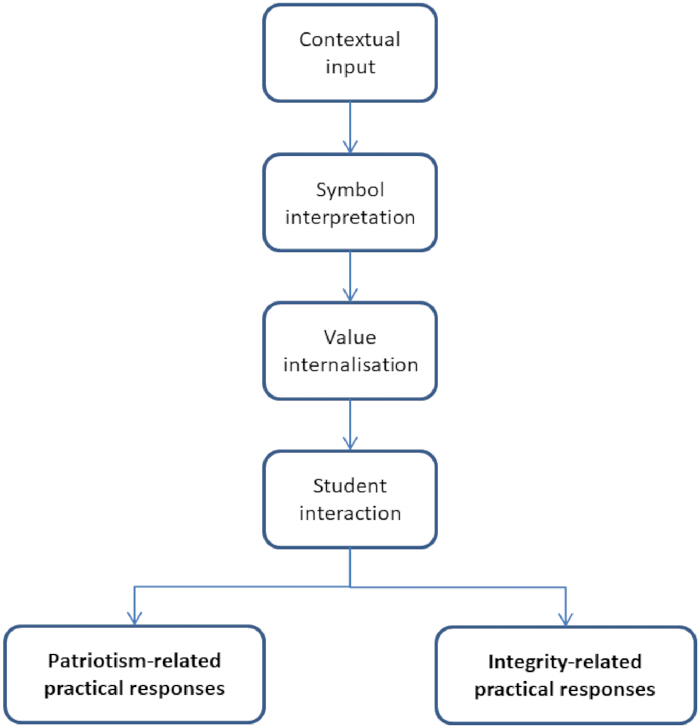
Figure 1: Flowchart. Impacts of Chinese Olympic athletes’ visit to Macao on patriotism and integrity behaviors among university students studying in Macao. Please click here to view a larger version of this figure.
Saturation test
To verify the completeness and adaptability of the theoretical framework, this study retained five of the 27 interview transcripts (including two individual undergraduate interviews and three focus group discussion transcripts) for supplemental coding. The results showed that the supplemental coding revealed no new initial categories, main categories, or paradigmatic relationships. No new media symbol types were added (e.g., no "symbolic carriers outside campus media"), and no behaviors were uncovered (e.g., no behavioral dimensions beyond the "online-offline-daily" category). Furthermore, the logical relationships between the main categories are fully aligned with the original framework. Therefore, the theoretical model "Dynamic Transformation Mechanism of Patriotic Behavior of Macao University Students Based on Media Exposure to Olympic Athletes Visiting Macao" has reached encoding saturation and can effectively explain the transformation logic of patriotic behavior among Macao university students.
DATA AVAILABILITY:
The original raw data, including de-identified interview transcripts, will be made available by the authors upon reasonable request.
Discussion
Existing research focuses on the role model effect in large-scale sports events25. This study found that even if Macao university students did not have direct contact with Olympic athletes, simply browsing news clips and short videos of athletes visiting Macao online could alter their patriotism and moral values. The entire psychological and behavioral shift, from understanding the content to being moved, can be achieved through fragmented online information. This expands the contextual boundaries of the “sports symbol national narrative” theory26,27,28. An athlete's patriotism and integrity don't necessarily require firsthand experience to understand. They can be conveyed through online news videos, and they can have a profound impact on young people. However, different young people interpret the same news video from different angles. Some are more easily moved by the athletes' inspirational stories, while others use these materials to reflect deeply on patriotism, as well as integrity and moral principles such as fairness and adherence to rules. This difference supplements the theory of “education shaping values”29. In addition to individual values, differences in cognitive depth brought about by educational stages will also affect the path of symbol interpretation, which is a detail not covered by previous studies focusing on a single group12.
This study found that the Sino-Portuguese cultural exchange background in Macao did not weaken the persuasiveness of sports symbols. On the contrary, the culture perceived by individuals could strengthen the influence of patriotism and integrity values. For example, respondents viewed media reports of athletes visiting Macao's World Heritage sites as a sign of national respect for Macao's local culture. Thus, they were more willing to accept the patriotic connotations and moral significance of integrity embodied in sports symbols. This finding strengthens the discussion of sports role models within Macao's unique social context. Faced with the dual realities of national sovereignty and local cultural autonomy, sports media symbols need to reconcile national narratives with local cultural characteristics. This study fills a gap in research on the mechanisms of sports role models in regions where Chinese and Western cultures are integrated. This is consistent with the conclusion that “collective memory promotes patriotic resonance”15, but further clarified that “social platforms” are the key scene for the formation of collective memory, providing a specific sample for patriotic education in Macao universities.
This study found that students don't need to physically visit Olympic venues to watch athletes; simply browsing news and short videos can change their mindset and behavior. First, receiving media materials and watching various online content about athletes visiting Macao SAR is the starting point for this change. Second, understanding the qualities of patriotism, honesty, integrity, and discipline conveyed in news videos fosters pride and admiration, leading to a psychological shift. Third, sharing and discussing this content with classmates amplifies and strengthens these feelings of patriotism, honesty, integrity, and discipline through peer interaction. Fourth, these thoughts and feelings translate into concrete actions. For example, they share related news on social media (such as WeChat). In their daily lives, they also practice honesty and integrity and actively participate in related discussions. By watching newsreels about athletes visiting Macao, university students can cultivate patriotism, integrity, and self-discipline. The fair play, rule-following, and integrity they learn from the athletes can also help them become upright individuals. Their experiences browsing online news and interacting with classmates during their student years help them better understand young people's habits of watching short videos and using social media, thus enabling them to communicate more effectively with young people.
The findings align with broader academic discussions on sports as a vehicle for constructing nationalism and identity30,31. In the case of Macao, the Olympic athletes' visit to the city can be seen as a contemporary extension of this strategy, with sports being used as a political technology to promote cultural belonging and national identity32. Furthermore, the localized nature of Macao's patriotic expressions reflects the complex interplay between national identity and cultural compatibility, a theme that echoes research on the naturalization and identity of Chinese football33. Future research requires expanding research perspectives and methodologies to provide more comprehensive theoretical and practical support for the sustainable development of sports patriotism education within the "one country, two systems" framework. This includes further exploration of how different media frames, educational environments, and cultural contexts influence the reception and internalization of patriotic narratives in postcolonial societies such as Macao.
This study has limitations. First, this study relies on semi-structured interview data. Participants recalled their past media exposure experiences and their psychological state after the events, which may lead to recall bias. Second, societal expectation bias is a significant risk to this study. Given the sensitive topics involved, such as national identity, patriotism, and integrity, even with anonymization, neutral questioning techniques, and non-judgmental interviewing techniques to mitigate this risk, respondents may still tend to provide answers that conform to mainstream societal expectations rather than fully expressing their true thoughts. Third, presenting standardized media stimuli in the interviews may have a priming effect, interfering with participants' recall of real-life experiences. Fourth, focus group interviews may create conformity pressure among participants, thus limiting the expression of different personal viewpoints. Fifth, the sample only includes university students studying in Macao; the results cannot be generalized to all Macao residents or a broader youth population. Furthermore, the unequal subgroup sizes across educational levels limit effective comparisons of interpretive patterns between undergraduate and graduate students. This study did not employ theoretical sampling and longitudinal tracking; therefore, it cannot verify long-term behavioral changes. Although we used maximum variation sampling to enrich the diversity of experience, self-selection bias may still exist, as participants who voluntarily participated in the interviews may have already shown a high level of interest in the relevant patriotic themes.
Disclosures
All authors declare no conflicts of interest.
Acknowledgements
The author received no funding for this work.
Materials
| Name | Company | Catalog Number | Comments |
|---|---|---|---|
| Name of Material/Software/Database | Company/Source | Catalog No./Version/Identifier/URL | |
| “A heartfelt dialogue between national Olympic athletes and Macao youth athletes” | Macao Information Bureau | https://www.gcs.gov.mo/detail/zh-hans/G24HZfDVQl | |
| “Our Pride” gala media report | Xinhuanet | http://www.xinhuanet.com/20240902/93dc3027513a4488bb2f36167cb5a927/c.html | |
| Excerpts from Olympic athletes' public speeches | Publicly available media materials | Not specified | |
| Media report on national athletes' visit to Macao | TDM | https://apps.tdm.com.mo/en/news-detail/1004346 | |
| Media report on national Olympic athletes' community visit | Macao Information Bureau | https://www.gov.mo/zh-hant/news/1088734/ | |
| News reports on Chinese Olympic athletes' visit to Macao | Xinhuanet | http://www.xinhuanet.com/20240902/091704972edc4e6fbb6d00128778f436/c.html | |
| NVivo | QSR International | Version 12 | |
| Raw interview dataset | Generated in this study | Rawdata.rar | |
| Semi-structured interview recordings and transcripts | Generated in this study | 27 participants; approximately 200,000 words | |
| Short video clips of athlete interactions | Local news/mainstream social media platforms | Not specified | |
| Standardized local news screenshots | Local Macao news sources | Not specified | |
| Tencent | Used as an example of a social media platform; version not specified |
References
- Xinhuanet. The Liaison Office of the Central People's Government in the Macao SAR welcomes the mainland Olympic athletes' delegation. 2024. Available from: http://www.xinhuanet.com/20240902/091704972edc4e6fbb6d00128778f436/c.html
- Macao Information Bureau. A heartfelt dialogue between national Olympic athletes and Macao youth athletes. 2024. Available from: https://www.gcs.gov.mo/detail/zh-hans/G24HZfDVQl
- Xinhuanet. Olympic athletes' "Our Pride" gala was held in Macao. 2024. Available from: http://www.xinhuanet.com/20240902/93dc3027513a4488bb2f36167cb5a927/c.html
- Macao Information Bureau. National Olympic athletes visit the community to spread warmth. 2024. Available from: https://www.gov.mo/zh-hant/news/1088734/
- TDM. Sports Bureau: National athletes visit Macao to promote the spirit of Chinese sports. 2024. Available from: https://apps.tdm.com.mo/en/news-detail/1004346
- ThinkChina. Taiwan history textbooks makeover: Eliminating country, people, history and culture? 2020. Available from: https://www.thinkchina.sg/society/taiwan-history-textbooks-makeover-eliminating-country-people-history-and-culture
- Reuters. What was Hong Kong's 'Occupy' movement all about? 2019. Available from: https://www.reuters.com/article/world/what-was-hong-kongs-occupy-movement-all-about-idUSKCN1S005M/
- Xinhuanet. The 25th anniversary of Macao's return to the motherland: "The Capital of Performing Arts" and "The City of Sports" help Macao's moderate economic diversification. 2024. Available from: http://www.news.cn/20241206/bc93f4149ab344bbadd1a6625d71470b/c.html
- Pettigrew TF. Intergroup contact theory. Annu Rev Psychol. 1998;49(1):65-85.
- Long C, Yang G. Study on patriotic education and changes of patriotic emotion and behavior of ethnic minority college students. Int J Neuropsychopharmacol. 2022;25(Suppl 1):A74-A75.
- Chaeroni A, et al. Sports as an instrument of nationalism and patriotism: systematic literature review on the role of sports in shaping national identity in various countries. Retos. 2024;61:1038-1049.
- Prots R, et al. Psychophysical training of young people for homeland defense using means of physical culture and sports. BRAIN Broad Res Artif Intell Neurosci. 2021;12(3):149-171.
- Knoester C, Davis EA. Patriotism, competition, nationalism, and respect for the military in US sports: Public recognition of American institutionalized sports nationalism. Int Rev Sociol Sport. 2022;57(7):1021-1043.
- Zhang Y, Wang Y, Yang G. Global games, local trust: The political dividend of Olympic participation in China. Chin Polit Sci Rev. 2025:1-27.
- Wang Y, Derom I, Theeboom M. Volunteers' collective memory of Youth Olympic Games: Macro-level contextual understandings. Sport Soc. 2021;24(12):2077-2095.
- Li B, Scott O, Sharpe S, Stokowski S, Zhong Q. Patriot, expert, or complainer? Exploring how athletes express themselves at Olympic Games' press conferences. Sport Mark Q. 2022;31(3):228-238.
- Chen J, Tang Y, Wang C. Motivation and mechanism of university volunteers' participation in major sport events: a grounded theory study on volunteers for the Hangzhou Asian games. Curr Psychol. 2025:1-28.
- Zhou H, Ap J, Yang H. An exploration of collective memory in the tourism context. J China Tour Res. 2024;20(3):676-707.
- Jin W, Tang J. The event attachment formation process of mega-event volunteers. Curr Issues Tour. 2024:1-17.
- Charmaz K, Thornberg R. The pursuit of quality in grounded theory. Qual Res Psychol. 2021;18(3):305-327.
- Bans-Akutey A, Tiimub BM. Triangulation in research. Acad Lett. 2021;2(3392):1-7.
- Lim WM. What is qualitative research? An overview and guidelines. Australas Mark J. 2025;33(2):199-229.
- Mohajan D, Mohajan H. Exploration of coding in qualitative data analysis: Grounded theory perspective. 2022.
- Rawhani C. Relational coding: Enhancing the transparency and trustworthiness of grounded theory research. Methodol Innov. 2023;16(1):102-120.
- Kim D, Shin SH. Impact of sports role model attributes on the development of learners' self-concept. J Phys Educ Sport. 2023;23(10):2584-2591.
- Bairner A, Han P. Sport, nationalism, and national identities. In: The Oxford handbook of sport and society. 2022. p. 86-103.
- Antunovic D, Bartoluci S. Sport, gender, and national interest during the Olympics: A comparative analysis of media representations in Central and Eastern Europe. Int Rev Sociol Sport. 2023;58(1):167-187.
- Black J. Sport and the 'national Thing': exploring sport's emotive significance. In: Sport and Nationalism. Routledge; 2024.
- Jahrir AS, Adam A, Kamaruddin SA. Values of physical education and sports as character development and strengthening. J RESPECS. 2024;6(2):220-229.
- Arnold R. Nationalism and sport: A review of the field. Natl Pap. 2021;49(1):2-11.
- Shen L. Olympic strategy, nationalism and legitimacy: the role of ideology in the development of Chinese elite sports policy in the first reform decade, 1978-1988. Int J Hist Sport. 2020;37(Suppl 1):26-40.
- Newman JI, Xue H, Chen R, Chen Y, Watanabe NM. Football and cultural citizenship in China: a study in three embodiments. Sport Soc. 2021;24(12):2222-2245.
- Lyu D, Leite Junior E. Naturalización en el fútbol chino: asuntos jurídicos, nacionalismo e identidad. Movimento. 2023;29:e29031.