
Guest Editors

Tak-Wah Wong
Departments of Dermatology, Biochemistry & Molecular Biology, Center of Applied Nanomedicine, National Cheng Kung University Hospital, College of Medicine, National Cheng Kung University, Tainan, Taiwan
Professor Tak-Wah Wong MD, Ph.D. works in the Department of Dermatology, Department of Biochemistry and Molecular Biology, Center of Applied Nanomedicine, at the National Cheng Kung University Medical Center of Taiwan. He is one of the founding members and sits on the board of directors of the Taiwanese Society of Investigative Dermatology. Dr. Wong dedicates his research to photobiology, oncology, infectious diseases, wound healing, and abnormal scarring. As Taiwan’s pioneer in the use of photodynamic therapy (PDT) to treat skin cancer since 1999, he received a five-year physician-scientist grant in 2000 from Taiwan’s National Health Research Institute and spent two years as a visiting scientist with Professor Thomas Dougherty and Dr. Allan Oseroff’s team at the Roswell Park Cancer Institute PDT Center in New York. Since then, the research of PDT in his lab has been extended from neoplastic diseases to infectious diseases, wound healing, and aesthetic areas, recently discovering that PDT increases drug susceptibility to antibiotics. Working together with scientists in multidisciplinary research fields including medical engineering, nanotechnology, ophthalmology, microbiology, and immunology, Dr. Wong and his team are dedicated to advancing the basic research of PTD and its clinical applications.

Wei-Peng Li
Department of Medicinal and Applied Chemistry, Kaohsiung Medical University, Kaohsiung, Taiwan
Dr. Wei-Peng Li is a Yushan Young Scholar and Assistant Professor at the Department of Medicinal and Applied Chemistry in Kaohsiung Medical University (KMU). His research expertise is developing novel nanomaterials and microbial electrochemistry to overcome clinical challenges. Dr. Li has earned various academic awards including the Young Researcher Award from Taiwan Comprehensive University System, Postdoc Academic Publication Award, and Award for Excellent Contributions in Technology Transfer. After receiving his Ph.D. degree in Chemistry under the supervision of Professor Chen-Sheng Yeh at National Cheng Kung University (NCKU) in 2015, he continued his studies in the same lab as a postdoctoral researcher until 2018, focusing on developing novel nanotechnology and its application in oncology, photochemical therapy and wound healing. Dr. Li is the first person to utilize diagnostic ultrasound to facilitate deep tissue target drug delivery of functional nanomaterials. From 2019-2020, he joined Professor Akihiro Okamoto’s group at the National Institute for Materials Science (NIMS) in Japan where he eventually branched his studies towards microbial electrochemistry. Dr. Li is currently committed to researching nanotechnology as a means to improve the efficacy of photodynamic therapy.
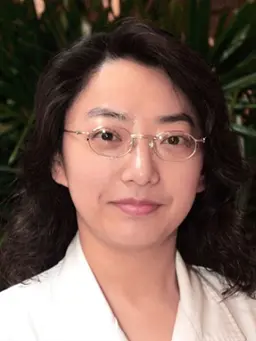
Yuan-Hsin Lo
Department of Dermatology, Fu Jen Catholic University Hospital, Fu Jen Catholic University, Taipei, Taiwan
Dr. Yuan-Hsin Lo MD, Ph.D. is an Assistant Professor at the School of Medicine in Fu Jen Catholic University. After completing her medical education in 1996, Dr. Lo became a board-certificated dermatologist four years later. In 2009 she served as a visiting scholar on phototherapy at the Department of Dermatology of Nagoya City University in Japan. Dr. Lo obtained her Ph.D. degree in 2020 at the Institute of Immunology at National Taiwan University studying the roles of galectins in keratinocytes. Today, she is one of the experts on photodynamic therapy in Northern Taiwan.
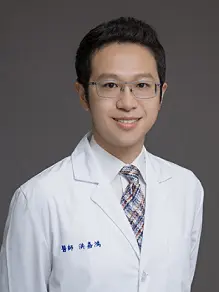
Jia-Horung Hung
Department of Ophthalmology, National Cheng Kung University Hospital, College of Medicine, National Cheng Kung University, Tainan, Taiwan
Dr. Jia-Horung Hung is an ophthalmologist and a retina and glaucoma specialist at National Cheng Kung University Medical Center, Taiwan. His research is dedicated to developing innovative treatments of ocular diseases. Dr. Hung is an active member of The Ophthalmological Society of Taiwan, the American Academy of Ophthalmology, the Taiwan Retinal Society, and the Taiwan Ocular Inflammation Society (TOIS) where he also serves as the Secretary-General. He received board certification in Ophthalmology in 2015. After becoming a lecturer at National Cheng Kung University in 2018, he has received a myriad of awards including Best Presentations in different academic meetings; Best Teaching Faculty in the University; Gold Medal, and Best Hardware of the 2020 International Genetically Engineered Machine (iGEM) competition. Dr. Hung’s current research includes antimicrobial photodynamic therapy on eye infections.
Collection Overview
Photodynamic therapy (PDT) is a treatment that uses a photosensitizer and light to destroy cancer cells or microorganisms. A lower light dose is used to enhance wound healing and rejuvenation of aging skin. However, the absorption spectrum of a photosensitizer is usually within the visible to near-infrared that prevents light penetration to deeper tissue and limits PDT to treat superficial lesions. With the collaboration of scientists from nanotechnology, pharmacology, immunology, and medical doctors, PDT has extended to treat large and deep-seated or metastatic tumors with encouraging results.
Although laboratory techniques in nanomedicine, immunology, and PDT have advanced greatly over the last decade, such information normally falls in different locations and is often too simplified and not easy to access. The opportunity for a visual, methodological approach is critical for every scientist and beginner.
The objective of this collection is to share standardized protocols for PDT in the detection and treatment of cancer cells or pathogens, treating them either in vitro or in vivo, update methodologies in new photosensitizers with or without nanotechnology, combine PDT with immunotherapy, promote global access to existing methods, and ultimately create a collaboration for an evidence-based approach for additional knowledge on PDT.
We believe this collection is educational to our young scientists who begin in PDT and senior scientists who participate in this global endeavor to fight against cancer and pathogens, especially in the era of the COVID-19 pandemic. This is the time and great opportunity to work together to boost human health with PDT.
Articles


Rose Bengal-Mediated Photodynamic Therapy to Inhibit Candida albicans
0 Views
•
Cited by 7
•
2022
•
Jia-Horung Hung*1,2, Zhao-Xiang Wang*3,4, Yuan-Hsin Lo5, Chaw-Ning Lee3,6, Yun Chang7, Rita Yuchiao Chang7, Chien-Chun Huang3, Tak-Wah Wong3,8,9
1Institute of Clinical Medicine, College of Medicine, National Cheng Kung University, 2Department of Ophthalmology, National Cheng Kung University Hospital, College of Medicine, National Cheng Kung University, 3Department of Dermatology, National Cheng Kung University Hospital, College of Medicine, National Cheng Kung University, 4Department of Microbiology and Immunology, College of Medicine, National Cheng Kung University, 5Department of Dermatology, Fu Jen Catholic University Hospital, Fu Jen Catholic University, 6Institute of Clinical Pharmacy and Pharmaceutical Sciences, College of Medicine, National Cheng Kung University, 7School of Medicine, National Cheng Kung University, 8Department of Biochemistry and Molecular Biology, College of Medicine, National Cheng Kung University, 9Center of Applied Nanomedicine, National Cheng Kung University


Induction of Petite Colonies in Candida glabrate via Rose Bengal-Mediated Photodynamic Therapy
0 Views
•
Cited by 1
•
2024
•
Cai-Ying Yang*1,2, Jia-Horung Hung*3, Chi-Jung Wu4,5, Zhao-Xiang Wang1,2, Shih-Han Wang6, Hao-Chun Liaw2, I-Huang Lin3, Chun-Keung Yu1,6, Tak-Wah Wong2,7,8
1Department of Microbiology and Immunology, College of Medicine, National Cheng Kung University, 2Department of Dermatology, National Cheng Kung University Hospital, College of Medicine, National Cheng Kung University, 3Department of Ophthalmology, National Cheng Kung University Hospital, College of Medicine, National Cheng Kung University, 4National Institute of Infectious Diseases and Vaccinology, National Health Research Institutes, 5Department of Internal Medicine, National Cheng Kung University Hospital, College of Medicine, National Cheng Kung University, 6Insititute of Basic Medical Sciences, College of Medicine, National Cheng Kung University, 7Department of Biochemistry and Molecular Biology, College of Medicine, National Cheng Kung University, 8Center of Applied Nanomedicine, National Cheng Kung University

Light- and X-ray-Activated Liposomes for Controlled Gene Editing and Drug Delivery
0 Views
•
2026
•
1EosGene Therapeutics Pty Ltd, 2School of Biomedical Engineering, University of New South Wales, 3Biomedical AI Centre, Centenary Institute and Faculty of Medicine and Health, The University of Sydney, 4Centre for Vision Research, Department of Ophthalmology, and Westmead Institute for Medical Research, The University of Sydney, 5Department of Ophthalmology, Westmead Hospital, 6School of Biomedical Engineering, Faculty of Engineering and Information Technology (FEIT), University of Technology Sydney
Abstracts
Curcumin Combined with Blue Light Inhibits Cutibacterium Acnes Biofilm-induced Inflammatory Response in Keratinocytes
Rong Zeng*1
1Institute of Dermatology, Chinese Academy of Medical Science and Peking Union Medical College
Photodynamic inactivation of biofilms in and around the oral cavity: An integrative review on non-animal models to advance clinical translation
Tiziano Schweizer *1
1University Hospital Zurich