Guest Editor

Collection Overview
Protein homeostasis and quality control are imperative for maintaining cellular health. Indeed, loss of proteostasis is one of the key hallmarks of aging and age-related neurodegenerative diseases. With age, cellular proteins accumulate molecular damage that can impair their function and lead to aggregation. To combat this, the majority of cellular proteins go through rapid turnover, a process that is particularly critical in post-mitotic cells like neurons and muscle fibers as they cannot undergo cell division to dilute the damaged proteins.
Interestingly, studies have shown that certain proteins in the rat brain are extremely long-lived and can persist for months or even years. These long-lived proteins (LLPs) were originally identified in the nucleus where they are components of protein complexes (eg: histones and the nuclear pore complex) and the extracellular matrix/plasma membrane where they tend to be structural proteins (eg: collagen and crystallin). Intriguingly, recently it has been shown that mitochondria also contain LLPs that are core components of the complexes and supercomplexes in the respiratory chain. Moreover, the longevity of LLPs was critical to preserving mitochondrial respiration despite the transcriptional decline. Therefore, LLPs may serve to maintain the structural and functional integrity of protein complexes to ensure optimal organelle function and cellular health. Furthermore, aged neurons show increased oxidative damage in nuclear LLPs and impaired nuclear transport, providing a link between LLPs and age-related diseases.
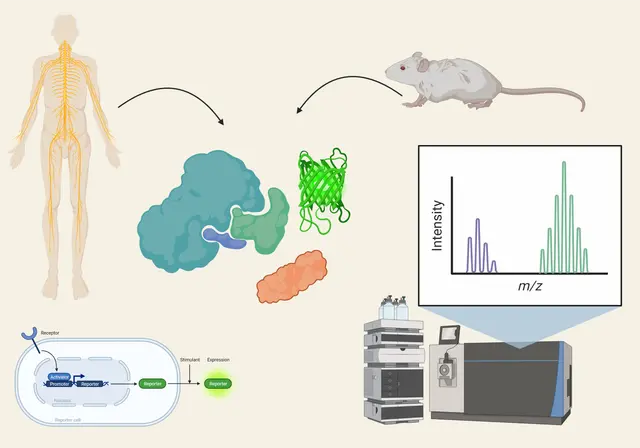
This collection aims to highlight the novel methods in the field of long-lived protein biology and their role in aging. The field uses cutting-edge techniques involving metabolic labeling, mass spectrometry-based proteomics, high-resolution imaging, and functional assays in multiple model systems. This collection aims to gather visualized protocols for this newly emerging area of research.
Articles

Abstracts
Determining protein longevity in mitochondrial respiratory chain complexes and supercomplexes of post-mitotic tissues
Jinqiang Liu1,
Martin Hetzer*1,
Shefali Krishna1,
Juliana Capitanio1,
Antonio F. M. Pinto2,
Jolene K. Diedrich2
1Molecular and Cell Biology Laboratory (MCBL), Salk Institute for Biological Studies, La Jolla, CA 92037, USA,
2Mass Spectrometry Core, Salk Institute for Biological Studies, La Jolla, CA 92037, USA