Compound Administration IV

All animal procedures described here must be conducted in accordance with institutional animal ethics guidelines and approved by IACUC. All procedures must follow the principles of the 3Rs—Replacement, Reduction, and Refinement—and must be performed by trained personnel.
1. Footpad Injection
- For restraint, place the animal in a restraint tube with one hind foot isolated, and extend by grasping the skin above the stifle.
- Wipe the foot with water or alcohol to remove debris prior to injecting.
- Inject subcutaneously into the center of the hind foot forming a small bleb at the injection site. To avoid the blood vessel that runs the length of the foot, inject just off the midline parallel to the vessel.
- Alternatively, hock injections administered in the tarsal region are often preferred, as they target the popliteal lymph nodes while minimizing pain and preserving mobility compared with footpad injections.
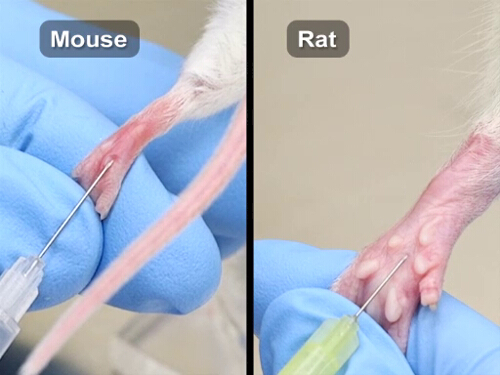
Figure 1. Footpad injection in mice and rats.
Key Terms and Definitions
Footpad injections should be scientifically justified, as they involve a weight-bearing surface and may impact mobility. Alternatively, hock injections administered in the tarsal region are often preferred because they target the popliteal lymph nodes while minimizing pain and preserving mobility compared with footpad injections. Despite the controversy, the use of the foot pad as an injection site is still required for some studies. It has been demonstrated that when injected via the foot pad, the antibody response in some mouse strains was significantly stronger than when injected into the hock. All animals must be closely monitored for signs of pain, level of food consumption, and for normal ambulation. Self-mutilation of the foot can occur to the extent that the foot is destroyed. This is a sign of chronic pain. Any animal demonstrating self-mutilation should be brought to the attention of the veterinary staff immediately.
Footpad measurements should be done daily as soon as obvious swelling has occurred. Endpoints must be in place according to IACUC guidelines. Generally, the animal must be euthanized when the lesion or tumor interferes with the animal's ability to ambulate or reach food and water. The maximum volume that can be injected into a footpad is 50 µL. A 29-30 gauge needle is recommended for the injection.
Questions that this video will help you answer
The administration of compounds into animals can have a significant effect on both the well-being of the animal and the outcome of the experimental data and scientific value. The proper method of delivery is essential to the success of the experiment. Many factors must be considered to determine the best route, including the scientific aim of the study, the pH of the substance, the required dosage volume, the viscosity of the substance, and the well-being of the animals. Technical expertise is also a requirement for all injection methods.
Source: Kay Stewart, RVT, RLATG, CMAR; Valerie A. Schroeder, RVT, RLATG. University of Notre Dame, IN
There are many commonly used routes for compound…
Chapters in this video
0:00
Overview
0:44
Considerations for the Specialized Injections
2:16
Footpad Injection
3:42
Application
4:16
Summary
Copyright © 2026 MyJoVE Corporation. All rights reserved.