Compound Administration III

All animal procedures described here must be conducted in accordance with institutional animal ethics guidelines and approved by IACUC. All procedures must follow the principles of the 3Rs—Replacement, Reduction, and Refinement—and must be performed by trained personnel.
1. Intradermal administration
- Most intradermal injections are aqueous-based compounds. The solutions must be physiologically buffered to have a neutral pH, in order to avoid tissue necrosis at the injection site.
- The needle size range is 25-27 gauge, the smallest possible.
- The dose range per injection site is 50-100 µL. Injecting excessive volumes can result in necrosis at the injection site or leakage of the compound out of the site due to pressure.
- For accurate placement of the needle into the intradermal space, it is necessary to anesthetize both mice and rats. Inhalation anesthesia allows for a rapid induction and recovery; however, injectable anesthesia has the advantage of providing ample time for preparation of the area and performing the injection.
- Remove the hair at the injection site through the use of a depilatory cream or by shaving the area.
- Thoroughly remove any residual depilatory cream or hair debris.
- Apply a topical antiseptic, such as an iodine solution, chlorhexidine solution, or alcohol.
- Administration procedures
- Stretch the skin taut between the thumb and index finger. This provides stability to the skin when positioning the needle.
- Place the needle bevel up on the skin.
- Gently insert the needle into the skin between the epidermis and the dermis. Advance the needle just beyond the bevel.
- Inject the substance slowly. Injection of the compound will create a bleb, or small blister, in the skin.
- Pause after the injection to allow the skin to stretch and adjust before withdrawing the needle.
- Precautions
- Pulling back on the plunger is not necessary.
- If the needle is inserted into the subcutaneous space, no bleb is formed. Injecting too deeply results in a subcutaneous injection.
- Avoid blotting or wiping the area, as that can cause the compound to leak from the injection site.
- When performing multiple injections, space them so that the blebs do not overlap.
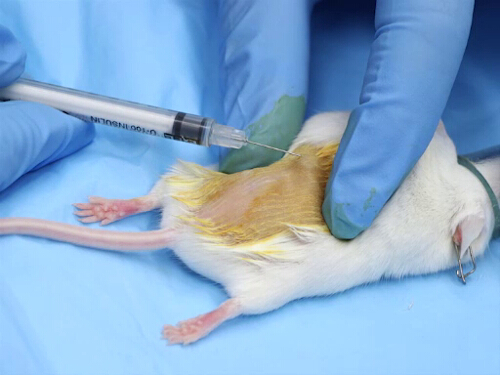
Figure 1. Intradermal injection in mice.
2. Intranasal administration
- Equipment
- Use a micropipetting unit pipette that can be calibrated to deliver an accurate volume.
- Disposable pipette tips should be used to avoid cross-contamination. TB syringes, blunt needles, and flexible tubing can also be used for dosing.
- Total injection volumes for rats should not exceed 50 µL. For mice, the maximum total volume is less than 20 µL.
- Administration in conscious animals
- Manual restraint in conscious animals requires that the head be relatively immobile so that the pipette tip or blunt needle can be placed close enough to the nares to deliver the compound, but not so close as to poke or lacerate the nasal tissue.
- Restrain the animal and hold it in a vertical position.
- Place a small drop of a liquid compound at the nasal opening. The animal should inhale the droplet.
- Administer an additional volume, alternating nares until the entire volume has been given.
- When administering larger volumes, it is important to not constrict the chest during restraint. Chest compression impedes the ability of the animal to take sufficiently deep breaths to draw the liquid into the bronchi and lungs.
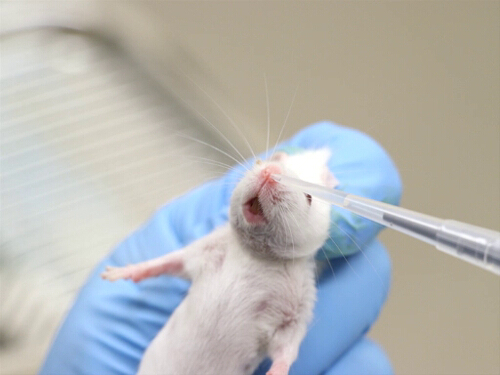
Figure 2. Intranasal administration in conscious mice.
- Administration in unconscious animals
- Anesthetize the animal using the appropriate protocol for this procedure, as inhalant anesthesia requires precise timing and may need adjustment during delivery. Using inhalation anesthetics allows for an immobilized animal during the approach and delivery of the compound. This eliminates the possibility of the animal biting the dosing equipment, the loss of the compound due to jerking of the head, and injury to the animal's nasal tissue, eyes, or facial skin. The animal is also less likely to snort and spray the compound from the nares upon administration.
- Place the animal in the supine position. The position of the head influences the placement of the solution in the nares. It has been demonstrated that the ideal position for CNS delivery is with the animal supine; this allows for better absorption.
- Administer half of the compound directly into one side of the nasal opening, timing it with inhalation. Then, turn the animal over.
- As above, administer the other half of the volume into the other nasal opening.
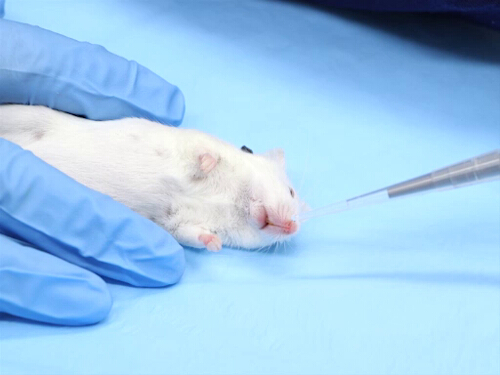
Figure 3. Intranasal administration in unconscious mice.
3. Intracranial administration in neonatal mice and rats
- Mice or rats must be anesthetized for intracranial injections.
- Equipment
- Determine the correct needle gauge and maximum volume of administration as per institutional guidelines.
- Prepare a needle guard prior to anesthetizing the animal.
NOTE: The injection depth of the needle is controlled through the use of a guard that is created with the needle cap.- To create the guard, a needle is measured against the needle cap, and a mark is placed on the cap to indicate where to cut. The cut should be made so that 2 to 5 mm of the needle is exposed when the cap is replaced on the needle.
- The length of the exposed needle must be long enough to penetrate the skin and skull, and reach the desired depth in the brain.
- The needle lengths needed for mice and rats need to be used as per institutional guidelines.
- A heating source is required to prevent hypothermia in the pups. There are several types: an electric heating pad set on low, a circulating water blanket, or a reusable chemical reaction heat pouch.
- Restraint
- Mouse and rat pups 10 days of age or younger do not require anesthesia for this procedure. Restrain them manually by holding them just behind the head and pulling the skin caudally to put slight pressure over the shoulders.
- Anesthetize pups over 10 days of age with isoflurane inhalation. Attach an induction chamber to a precision vaporizer with controlled delivery of isoflurane. Once the pup is immobilized, the anesthesia is effective for about 40 seconds, which provides ample time for the injection.
- Injection technique
- Draw the substance into the syringe and place the cap/needle guide over the needle.
- The injection volume recommended must be species-, age-, and target-specific and must match the approved protocol.
- As the maximum volume per mouse (for a 25g mouse) or rat (for a 200g rat) is 1 and 2 µL/per injection site.
- To inject into the cerebral cortex of neonates, insert the needle 5 mm behind the eye, approximately 3 mm off the midline of the skull.
- The weanling mouse injection site is approximately halfway between the eye and ear, and just off the midline.
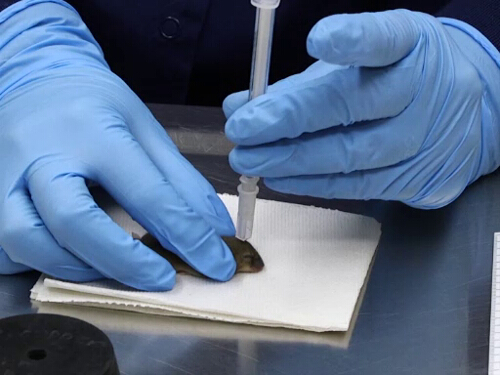
Figure 4. Intracranial administration in a mouse pup.
Key Terms and Definitions
Intradermal injections are delivered into the outer layers of the dermis, underneath the upper skin layer (the epidermis). This injection route is usually reserved for the assessment of inflammation, cutaneous blood flow diagnostics, or allergenic reactions to an antigen.
Although often used for local delivery of vaccinations or decongestant spray, intranasal administration can also be used for systemic and central nervous system (CNS) delivery. The mucosa that lines the nasal cavity has a rich supply of blood vessels and nerves that allow for rapid systemic absorption and direct targeting to the CNS. Substances comprised of small lipophilic molecules have a far greater absorption rate than those containing larger molecules.
Although anesthesia is not required for this procedure, it can facilitate proper placement of the compound at the nares, ensuring accurate dosing. It has been demonstrated that anesthetized animals have fivefold greater delivery of a drug to the brain compared to a conscious animal. Unanesthetized rats are very resistant to intranasal administration. However, there is a study that demonstrated effective delivery techniques for intranasal administration in freely moving rats. Additionally, alert animals may try to bite at the pipette tip or needle, making delivery of the substance difficult.
Advantages of intranasal administration are that this technique requires minimal training and skill, and it is noninvasive to the animal. However, due to the possibility of aerosolization, the use of a biosafety cabinet and eye protection is advised, especially when working with a conscious animal. Furthermore, to prevent aspiration or respiratory distress associated with excessive intranasal administration, the smallest effective volume should be used. If at any time during this procedure cyanosis, mouth breathing, or other signs of distress are seen in the animal, the procedure should be aborted immediately.
Intracranial injections in adult mice and rats employ the use of stereotaxic equipment to ensure the proper positioning and depth of the injection. In neonatal rodents, the skull is sufficiently thin to allow direct intracranial injection without stereotaxic support. However, the approach should be selected based on species, age, and protocol-specific considerations. The mouse or rat pups should be left with the mother until the procedure, and they should be returned to her as soon as possible once the procedure is completed. Postinjection care includes continuous monitoring of the heat source until normal movement and behaviors, including nursing, are observed. The primary reason to use this technique is to provide pharmacologic agents to the central nervous system that require the blood-brain barrier to be crossed, or to avoid the effects involved in the systemic route.
Questions that this video will help you answer
The administration of compounds into animals can have a significant effect on both the well-being of the animal and the outcome of the experimental data and scientific value. The proper method of delivery is essential to the success of the experiment. Many factors must be considered to determine the best route, including the scientific aim of the study, the pH of the substance, the required dosage volume, the viscosity of the substance, and the well-being of the animals. Technical expertise is also a requirement for all injection methods.
Source: Kay Stewart, RVT, RLATG, CMAR; Valerie A. Schroeder, RVT, RLATG. University of Notre Dame, IN
There are many commonly used routes for compound…
Chapters in this video
0:00
Overview
1:12
Considerations for the Specialized Injections
4:55
Intradermal Administration
6:45
Intranasal Administration
8:40
Intracranial Administration in Neonatal Rodents
11:24
Applications
12:49
Summary
Copyright © 2026 MyJoVE Corporation. All rights reserved.