A unique surgical model for grafting brown adipose tissue onto the heart surface in mice was developed. This model may enhance the understanding of the effects of epicardial adipose tissue (EAT) on heart diseases and the cardioprotective role of EAT browning.
Method Article
A Surgical Model for Graft of Brown Adipose Tissue on the Heart Surface in Mice
Zhi-Ang Zhou1 , Qin Fu1 , Zi-Han Liu1 , Lei Wang1 , Feng Xu2 , Xiao Lin3 , Ling-Qing Yuan2 , Zhi-Yuan Zhang1 , Xiao-Bo Liao1
1Department of Cardiovascular Surgery, The Second Xiangya Hospital of Central South University, 2National Clinical Research Center for Metabolic Diseases, Hunan Provincial Key Laboratory of Metabolic Bone Diseases, and Department of Metabolism and Endocrinology, The Second Xiangya Hospital of Central South University, 3Department of Radiology, the Second Xiangya Hospital, Central South University
Opens in a new tab
In This Article
Summary
Loading...
$$\rightleftharpoonup{xx}$$
$$\longleftharp{xx}$$,
$$\longrightharp{xx}$$,
Abstract
Loading...
$$\rightleftharpoonup{xx}$$
$$\longleftharp{xx}$$,
$$\longrightharp{xx}$$,
A mouse model for investigating the paracrine effects of browning epicardial adipose tissue (EAT) on coronary arteries and the myocardium should be developed. Due to its special anatomical location and direct connection to the heart surface, EAT is considered not only an energy storage organ but also an essential paracrine regulator involved in multiple cardiovascular diseases. Several studies have indicated that EAT browning holds promising therapeutic potential for cardiovascular diseases through anti-inflammatory phenotype transition, the release of cardioprotective factors, and extracellular vesicles, among other mechanisms. The congenital deficiency of EAT in rodent models limits experimental research on its function in cardiovascular diseases. Previous studies have utilized adipose tissue transplantation to investigate the endocrine and paracrine crosstalk between adipose tissue and other organs. This highlights the need to develop a surgical model for transplanting brown adipose tissue (BAT) onto the mouse heart surface to study its paracrine effects on cardiovascular diseases and explore the potential protective benefits of EAT browning. Herein, this study establishes a unique surgical procedure for grafting brown adipose tissue onto the heart surface in mice and evaluates graft survival and recipient viability four weeks after the operation. This model can be applied in future experiments to investigate EAT browning.
Introduction
Loading...
$$\rightleftharpoonup{xx}$$
$$\longleftharp{xx}$$,
$$\longrightharp{xx}$$,
Epicardial adipose tissue (EAT) is a heterogeneous and multifunctional fat depot located on the surface of the heart, directly attaching to the myocardium and surrounding the main coronary arteries without connective tissue between them1. Due to its anatomical proximity to the myocardium and coronary arteries, EAT can actively secrete abundant and diverse bio-factors in a paracrine-dependent manner to regulate cardiovascular diseases, such as atrial fibrillation, atherosclerosis, and heart failure2,3,4. EAT might be a risk factor for cardiovascular diseases, and it is believed that EAT may become a novel therapeutic target for cardiometabolic medications5.
Unlike humans, however, there is almost no noticeable EAT on the mouse heart surface. Indeed, most experiments on EAT have been conducted in vitro due to the lack of an experimental animal model to observe the function of EAT in vivo6. Thus, scientists can only purify and analyze EAT secretomes in vitro, and there is no applicable experimental model to fully observe the real functions of EAT in vivo. Establishing a mouse model with EAT will, therefore, be beneficial in elucidating how EAT exerts its unique effects on the proximal myocardium and coronary arteries.
Brown adipose tissue (BAT) possesses inherent thermogenic capacity and improves glucose metabolism7. Recently, researchers have found that BAT may function as a cardioprotective tissue for heart diseases. Small extracellular vesicles secreted by BAT are involved in exercise-induced cardioprotection by delivering cardioprotective miRNAs to the heart8. BAT can release 12,13-diHOME and NOS1 to enhance cardiac function through the regulation of calcium cycling9. Brown adipose tissue-derived FGF21 attenuates hypertensive cardiac remodeling by activating the A2A receptor10. Moreover, BAT can release BMP3b, which decreases myocardial damage in ischemia-reperfusion (I/R) injury11.
These studies indicate that BAT plays a cardioprotective role in cardiovascular diseases through endocrine mechanisms. There is also evidence suggesting that successful BAT transplantation models, in which BAT from a normal mouse is transplanted into the interscapular region of a high-fat diet mouse, have been observed to enhance glucose metabolism and insulin sensitivity, reduce fat mass, and ameliorate adiposity in the recipient mouse. BAT transplantation may exert its beneficial effects through various mechanisms, including the endocrine release of BAT-associated cytokines, activation of the sympathetic nervous system, increased BAT uptake of triglycerides, and improved glucose tolerance and insulin resistance in obese mice12,13. BAT transplantation may, therefore, serve as a potential therapeutic approach for heart diseases.
However, due to interspecies differences, mice lack EAT on the heart, making the paracrine effects of BAT on the heart unclear. Additionally, whether in situ transplantation of BAT onto the heart surface provides superior benefits compared to other strategies remains unknown.
To evaluate the function of BAT on the heart and elucidate its paracrine effects on cardiomyocytes and coronary arteries, our team aims to describe a step-by-step procedure for establishing a microsurgical model for in situ BAT grafting onto the mouse heart. Unlike subcutaneous transplantation, which can only simulate the endocrine influences of BAT, this approach allows for the study of direct paracrine interactions. Routine post-operative observational indicators will be employed to confirm the successful colonization and survival of BAT grafts through the establishment of a blood supply from the mouse heart surface.
Protocol
Loading...
$$\rightleftharpoonup{xx}$$
$$\longleftharp{xx}$$,
$$\longrightharp{xx}$$,
Experimental protocols for obtaining adipose tissue were reviewed and approved by the Central South University Institutional Review Board. The animal use protocol listed below was reviewed and approved by the Institutional Animal Care and Use Committee (Approval No. 20230188) at The Second Xiangya Hospital, Central South University, China, under Protocol No. 2024054. All experiments were conducted in strict adherence to animal safety and humane care guidelines. Three- to eight-week-old C57/BL6 wild-type male mice, weighing 12-25 g, were used for this study. Recipient animals received preemptive anesthesia with buprenorphine at 0.1 mg/kg subcutaneously 1 h prior to surgery. In recipient animals, buprenorphine was re-administered at the same dose after transplantation and re-dosed as needed within the first 48 h post-surgery. Details of the reagents and equipment used are listed in the Table of Materials.
1. Donor Brown Adipose Tissue (BAT) harvesting
- Anesthetize the donor 3- to 8-week-old mouse by placing it in an induction chamber filled with 2% isoflurane mixed with 0.5-1.0 L/min of 100% O2. To verify the proper depth of anesthesia, apply pressure to the mouse's nail bed or perform a toe-pinch reflex test.
- Place the mouse in a prone position on a heating pad and secure its limbs with adhesive tape.
- Identify the scapular fossa by moving approximately 1 cm downward along the midline from the neck skin to locate a depression.
- Shave the hair at this location and disinfect the skin with povidone-iodine three times.
- Make a longitudinal incision of approximately 1 cm to expose the adipose tissue within the scapular fossa. Carefully separate the superficial white adipose tissue and muscular layer to expose the underlying BAT, which appears brownish-red on one side. Collect 30 mg of BAT for transplantation.
- Wash the BAT to remove blood and debris using a sterile saline solution.
- Use ophthalmic scissors to cut the BAT into small pieces (5 × 5 mm, approximately 20 mg) and maintain them in a complete medium for tissue culture at 37 °C while preparing the recipient mouse.
2. Preparation for the transplantation
- Sterilize the microsurgical instruments using an autoclave sterilizer and wear sterile gloves.
NOTE: The following surgical instruments are required: blunt scissors, micro-scissors, micro-forceps, coarse curved forceps (×2), fine 45° angled forceps (×2), angled spring scissors, chest retractor, 2-0 absorbable sutures, 7/0 prolene sutures, and a needle holder. - Disinfect the operating field with 75% isopropyl alcohol.
- Maintain normal body temperature and a stable heart rate during surgery using a heating pad set to 37 °C ± 1 °C.
- Prepare cotton applicators for use in case of bleeding.
3. Preparation and intubation of the mouse
- Remove the fur from the neckline to the mid-chest level of the recipient mouse using hair removal cream.
- Anesthetize the mouse by placing it in an induction chamber filled with 2% isoflurane mixed with 0.5-1.0 L/min of 100% O2. Once adequately sedated, maintain anesthesia with 1.7% isoflurane mixed with 0.7 L/min of 100% O2.
- Place the mouse in a supine position on a heating pad and secure its limbs with adhesive tape.
- Disinfect the surgical field with complex iodine solution, followed by 70% alcohol. Repeat this process three times.
- Cover the mouse with a sterile drape, exposing only the surgical field to prevent contamination.
- Use a new set of sterile gloves for each individual mouse.
- Place a rubber band over the front teeth to stretch the neck. Using curved forceps in one hand, gently manipulate the tongue to the side while using the other hand to insert a PE-90 endotracheal tube. Ensure that the mouse's head is level with the tube for proper placement.
- Confirm that the tube is inserted into the trachea rather than the esophagus. Make a longitudinal incision (~6-7 mm) in the cervical skin to expose the trachea if necessary for verification.
- Connect the endotracheal tube to a volume-cycled rodent ventilator, setting the parameters to 140 breaths/min and a tidal volume of 0.2 mL. Secure the tube with adhesive tape.
NOTE: Indicators of successful mechanical ventilation - The thoracic movements of the mouse should be regular and synchronized with the ventilator's respiratory rate.
4. EAT grafting
- Perform a midline sternal incision starting from the suprasternal notch. Make a 1 cm incision along the midline of the sternum (a white line on the anterior chest wall of the mouse) to expose the anterior wall of the heart. Retract the sternum using a chest retractor under a surgical microscope. Avoid injuring the lungs and internal thoracic artery during the procedure.
- Use fine-tip 45° angled forceps to gently separate and excise the epicardial mucosa around the heart.
- Open the pericardium at the anterior wall of the left ventricle. Place a clean, small piece of BAT rich in blood vessels on the surface of the heart. Use a 7/0 prolene suture with two surgical knots to attach the BAT to the surface of the left ventricle mechanically. Avoid piercing the heart wall.
- Remove the chest retractor and pinch off the ventilator outflow for 2 s to re-inflate the lungs.
- Use a 2-0 absorbable suture with an interrupted suture pattern to close the rib cage.
- Use a 2-0 absorbable suture with a continuous suture pattern to close the skin layer.
5. Post-operative care
- Administer 0.3 mL of normal saline intraperitoneally after the operation for fluid replacement.
- Administer buprenorphine (0.1 mg/kg) subcutaneously to ease incision pain and enrofloxacin (5 mg/kg) to prevent infection.
- Place the mouse under a heat lamp until it awakens from anesthesia and returns to sternal recumbency, allowing free movement. Then, transfer the mouse to a separate cage with food and water. Provide a gelatin food source on the floor of the cage for easy access due to the temporary minor restrictive motion of the thorax.
- Observe the recipient mouse for 1 h post-operatively before returning it to the cage facility. Inspect the mouse three times a day for the first 24 h to monitor activity and nutritional intake. Monitor for signs of pain and distress for the first 72 h. Check the animal's condition daily and weigh it weekly.
- Consult a veterinary staff member if any mice display signs of pain, distress, or decreased feed intake.
NOTE: Consider early euthanasia if necessary. The euthanasia technique involves CO2 overdose for 7 min, followed by cervical dislocation (following institutionally approved protocols). Necrosis, absorption, or rejection of the BAT autograft is defined as a specific endpoint prompting euthanasia.
Results
Loading...
$$\rightleftharpoonup{xx}$$
$$\longleftharp{xx}$$,
$$\longrightharp{xx}$$,
Based on observations of preoperative, perioperative, and post-operative outcomes, this mouse model for grafting brown adipose tissue (BAT) onto the heart surface was successfully established. BAT was collected from the scapular region of the donor mouse, with each BAT graft weighing approximately 0.1 g.
Hematoxylin-eosin staining confirmed the composition and structure of the graft as BAT. At low magnification, a large number of brown adipocytes were observed forming lobular structures within loose connective tissue, which was rich in capillaries. The cytoplasm of brown adipocytes contained numerous small vacuoles, and their nuclei were round and centrally located. At high magnification, brown adipocytes displayed morphological similarities to white adipocytes but were smaller in diameter. The nuclei of brown adipocytes were round or oval and located either centrally or eccentrically within the cell. The cytoplasm was eosinophilic and contained multiple lipid droplets of varying sizes, which were distributed throughout the cytoplasm. Capillaries and nerves were also visible between the brown adipocytes. The transplanted adipose tissue was further confirmed to be brown adipose tissue through immunohistochemical staining for UCP1 expression (Figure 1). The BAT graft was successfully fixed onto the anterior wall of the left ventricle (Figure 2).
Four weeks after BAT transplantation, there were no significant changes in diet, activity, or body weight in the recipient mouse. The chest incision healed well and was fully covered with normal hair. The recipient mouse was sacrificed (following ethical guidelines), and the heart, along with the epicardial BAT graft, was removed for histological examination. Hematoxylin-eosin staining demonstrated that the BAT graft remained viable, exhibiting typical BAT histological features and establishing microcirculation with the adjacent myocardium. There were no signs of significant inflammatory cell infiltration or fat liquefaction. Masson's trichrome staining revealed the formation of fibrous connective tissue surrounding the sutures used to fix the transplanted tissue within the myocardium. Fibrous connective tissue was observed both around and within the graft, but there was no apparent compartmentalization or structural disruption of the adipose tissue. Immunohistochemical staining for CD31 and UCP1 further indicated the formation of neo-microvessels within the transplanted BAT and confirmed the survival of a portion of the brown adipocytes within the graft (Figure 3).
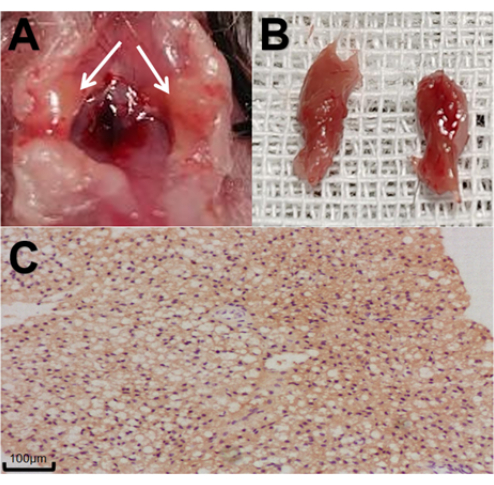
Figure 1: Isolation and identification of brown adipose tissue from donor mice. (A,B) Brown adipose tissue (BAT) (indicated by white arrows) collected from a donor mouse for transplantation. (C) Representative immunohistochemistry staining of UCP1 expression in brown adipose tissue (scale bar = 100 µm). Please click here to view a larger version of this figure.
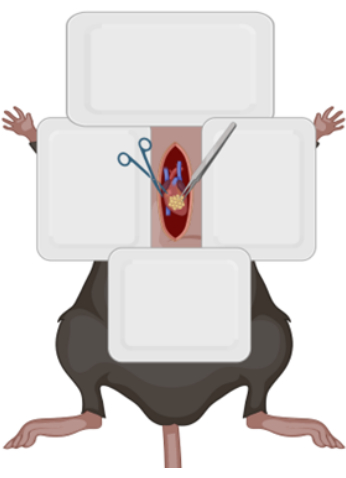
Figure 2: Animal model establishment. This figure illustrates the procedure for establishing the animal model. A median thoracotomy is performed to expose the anterior wall of the heart using a sternal spreader. The brown adipose tissue (BAT) graft is fixed onto the surface of the heart. The incision is then closed using intermittent sutures for the muscle and skin layers. Please click here to view a larger version of this figure.
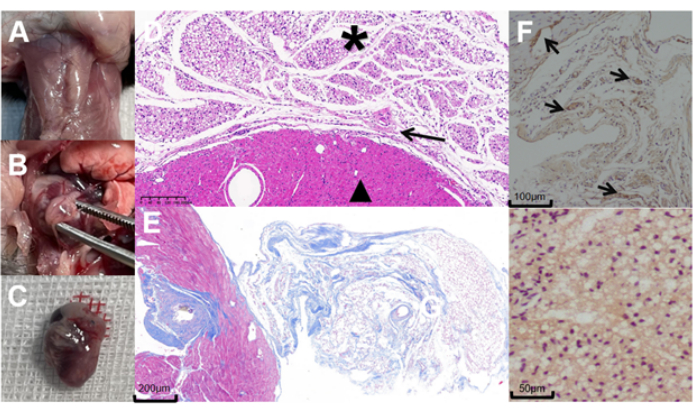
Figure 3: Assessment of brown adipose tissue engraftment on the mouse heart at four weeks post-transplantation. (A) Scar of the median anterior thoracic incision (white arrow). (B,C) Brown adipose tissue (BAT) graft fixed on the apex of the heart (white arrow). (D) Representative hematoxylin and eosin (H&E) staining images of the BAT allograft and myocardium at four weeks post-transplantation (scale bar = 100 µm). The solid black triangle indicates the myocardium, * indicates the BAT graft, and black arrows indicate capillaries. (E) Representative Masson's trichrome staining images of the BAT allograft and myocardium at four weeks post-transplantation (scale bar = 200 µm). (F) Immunohistochemistry staining of CD31 expression in the BAT allograft and myocardium at four weeks post-transplantation. Black arrows indicate positive CD31 expression in the allograft (scale bar = 100 µm). (G) Immunohistochemistry staining of UCP1 expression in the BAT allograft and myocardium at four weeks post-transplantation (scale bar = 50 µm). Please click here to view a larger version of this figure.
Discussion
Loading...
$$\rightleftharpoonup{xx}$$
$$\longleftharp{xx}$$,
$$\longrightharp{xx}$$,
In this study, a surgical model for transplanting brown adipose tissue (BAT) onto the myocardium surface was successfully established. Epicardial adipose tissue (EAT) is a unique fat depot that directly connects to the myocardium and coronary arteries, sharing a common microcirculation and facilitating close crosstalk between them. Previous studies have indicated that EAT is associated with multiple heart diseases, including coronary artery disease, atrial fibrillation, and myocardial hypertrophy. However, while these studies demonstrated that EAT volume correlates with the extent and severity of heart disease, the mechanisms by which EAT influences cardiac pathology remain to be elucidated1,2,3,4,5,14,15,16.
On the other hand, BAT is believed to play a natural role in protecting mammals from hypothermia. Its cytoplasm contains multiple small, multilocular lipid droplets and is enriched with mitochondria. BAT is a thermogenic adipose tissue that regulates energy expenditure and maintains glucose and lipid homeostasis, making it a potential therapeutic target for metabolic and cardiovascular diseases17,18,19. Some clinical studies have indicated that BAT volume is negatively correlated with cardiovascular diseases. Individuals with higher BAT volume have lower prevalence rates of type 2 diabetes, coronary artery disease, dyslipidemia, congestive heart failure, cerebrovascular disease, and hypertension7,20,21.
A previous study demonstrated that BAT-derived small extracellular vesicles (sEVs) are taken up by cardiomyocytes, suppressing the activation of the myocardial ischemia/reperfusion (MI/R)-related MAPK pathway8. Another study found that BAT releases sEVs containing cardioprotective microRNAs, which contribute to exercise-related cardioprotection22. These findings illustrate the mechanisms underlying BAT-cardiomyocyte crosstalk and highlight BAT sEVs and their microRNA content as potential candidates for exercise-induced cardioprotection. Additionally, BAT-derived neuregulin 4 (Nrg4) has been shown to mitigate endothelial inflammation and atherosclerosis in male mice23, further demonstrating BAT's protective endocrine functions in cardiovascular health.
Moreover, transcriptional analyses have revealed that human EAT highly expresses BAT markers such as UCP-1, PRDM16, and PGC-1α, at levels higher than those found in other fat depots5,6,24,25. This suggests that EAT may partially function as BAT. These findings support the hypothesis that browning EAT could protect the myocardium and coronary arteries from hypothermia and serve as a defense mechanism against ischemia or hypoxia. Collectively, these studies indicate that BAT releases multiple bioactive factors and exerts beneficial and protective effects on the cardiovascular system6.
In previous studies, BAT transplantation models have been applied to various disease models to elucidate the impact of BAT on disease occurrence and progression. These include studies on the influence of BAT transplantation in polycystic ovary syndrome (PCOS)26, its regulatory role in ovarian aging27, and its effects on whole-body metabolism28,29. However, the pathophysiological effects of BAT transplantation on the heart have not yet been investigated.
As an organ capable of secreting numerous signaling molecules, BAT primarily influences cardiovascular pathophysiology in a normal organism through endocrine pathways, delivering these molecules to the heart or blood vessels11. However, whether BAT can directly regulate cardiac pathophysiology through paracrine pathways remains unclear. Establishing a suitable and reliable model for BAT transplantation on the cardiac surface would facilitate the investigation of direct interactions between BAT and the heart.
Given that BAT is anatomically located in the interscapular region of mice, its crosstalk with other organs primarily relies on systemic circulation via endocrine signaling. Moreover, some studies have suggested that epicardial adipose tissue (EAT) has the potential to undergo a browning transition. Various dietary, environmental, and pharmacological interventions have shown promise in inducing EAT browning in obese and/or coronary artery disease (CAD) patients. This transition may help mitigate the hypoxic and inflammatory microenvironment that aggravates vascular damage and accelerates coronary atherosclerosis4,24,30. However, further research is needed to identify the specific factors and pathways involved in EAT browning. Additionally, experimental animal models are required to explore the relationship between EAT phenotype and the cardiovascular outcomes associated with its imbalanced inflammatory profile.
One of the major limitations in studying EAT is that rodents have almost no noticeable EAT. In humans, studying fresh EAT is also challenging due to the difficulty in obtaining samples, as this requires thoracotomy. Previous studies have used a model in which adipose tissue derived from high-fat diet mice was transplanted into the abdominal cavity of myocardial infarction mice to demonstrate that diabetic adipose tissue can aggravate ischemia-reperfusion injury31. The application of adipose tissue transplantation models makes it possible to explore the effects of BAT on the heart via paracrine signaling.
The primary objective of developing this model is to investigate the potential therapeutic effects of BAT as an EAT-like paracrine organ for the myocardium and coronary arteries. In the future, this model could be utilized to study the cardioprotective effects of BAT in inhibiting atherosclerotic plaque progression, ameliorating myocardial ischemic injury, and alleviating atrial fibrillation. Additionally, it may provide circumstantial evidence supporting the benefits of promoting EAT browning.
In 2013, a research team from Harvard Medical School transplanted BAT into the visceral cavity of recipient mice by connecting the tissue to the epididymal fat pad to assess improvements in metabolic homeostasis via increased BAT mass32. In an earlier study from the 1960s, researchers isolated BAT from the donor's interscapular region and transplanted it under the recipient's kidney capsule for a period of 1-2 weeks. Furthermore, in another study, BAT was transplanted into the anterior eye chamber of hamsters, and histological analysis was used to assess whether the transplanted BAT survived12. However, the feasibility and survival of BAT transplantation onto the epicardial region of rodents remain unknown.
Epicardial surgery in mice is now a routine procedure for inducing myocardial infarction models. Interestingly, a research team has successfully delivered pharmacological agents within the pericardial space/fluid in a swine model, which has been utilized to investigate atrial fibrillation, relative refractory periods, and ischemic cardiomyopathy. Based on these studies, developing a rodent model for epicardial BAT transplantation through surgical procedures is warranted.
Based on the experimental results, two pieces of BAT were separated from the interscapular space of the donor mouse. The BAT was covered by subcutaneous adipose tissue (SAT) and exhibited a darker color than SAT, with a rich blood supply. Hematoxylin and eosin (H&E) staining of BAT revealed that brown adipocytes contained smaller multilocular lipid droplets and were highly vascularized, with red blood cells present in the capillary lumen. Each BAT segment collected weighed approximately 30-40 mg. However, the transplanted BAT graft was limited to around 20 mg, as further enlargement of the graft led to mouse mortality within 1-2 days post-surgery. A possible cause of this outcome is the restricted space between the thoracic cavity and the anterior wall of the heart. A relatively large graft may exert excessive pressure, potentially resulting in cardiac tamponade.
Anesthesia was maintained via tracheal intubation, and the depth of anesthesia was monitored by observing the amplitude and rhythm of thoracic fluctuations in the mouse. A median thoracotomy was selected to expose the anterior wall of the heart, facilitating BAT transplantation. Given that EAT is directly connected to the myocardium and coronary arteries without connective tissue separating them, the protocol involved opening the pericardium, inserting the BAT onto the heart's surface, and then suturing the pericardium.
Four weeks after transplantation, the recipient mice were euthanized (following ethical guidelines), and the thoracic cavities were opened to assess BAT integration and survival. These findings confirm that the BAT allograft successfully survived.
In conclusion, a surgical model for grafting BAT onto the heart surface in mice was successfully developed. This model may enhance the understanding of EAT's effects on heart diseases and the cardioprotective potential of EAT browning.
Disclosures
Loading...
$$\rightleftharpoonup{xx}$$
$$\longleftharp{xx}$$,
$$\longrightharp{xx}$$,
The authors declare no competing interests.
Acknowledgements
Loading...
$$\rightleftharpoonup{xx}$$
$$\longleftharp{xx}$$,
$$\longrightharp{xx}$$,
This work was supported by the National Natural Science Foundation of China (No. 81870623, 81770881, 81900286, 82100494, 82100944 and 82070910), Key R&D Plan of Hunan Province (2020SK2078) and Natural Science Foundation of Hunan Province (2022JJ70055, 2021JJ40842 and 2022JJ40721)
Materials
| Name | Company | Catalog Number | Comments |
|---|---|---|---|
| 1% penicillin/streptomycin | Gibco, Invitrogen, New York, USA | 03-031-1BCS | Tissue preservation for graft |
| 10% Fetal bovine serum (FBS) | Bovogen, New Zealand, Australia | 1907B | Tissue preservation for graft |
| 2-0 Absorbable sutures | Shanghai Pudong Jinhuan Medical Products Company | 17Y1204J | Skin closure |
| 6- to 8-week-old male C57BL/6J mice | SJA Laboratory Animal Co., Ltd (Hunan, China) | ||
| 7/0 Prolene sutures | Shanghai Pudong Jinhuan Medical Products Company | R731 | Fixing the brown adipose tissue onto the heart |
| Alizarin Red staining solution | Servicebio, Wuhan, China | CR2203058 | Alizarin Red staining for graft |
| Angled spring scissors | Jinzhong surgical instrument Company | Y3C040 | Tissue dissection and separation |
| Blunt scissors | Jinzhong surgical instrument Company | J22010 | Tissue dissection and separation |
| Chest retractor | TIGERGENE Company | TG-CK-07PK | Retracting and fixing chest |
| Course curved forceps | Jinzhong surgical instrument Company | JD1060 | Tissue dissection and separation |
| DMEM: F12 (1:1) medium | Gibco, Invitrogen, New York, USA | C11330500BT | Tissue preservation for graft |
| Fine 45°angled forceps | Jinzhong surgical instrument Company | Y4E040 | Tissue dissection and separation |
| Isoflurane | Shenzhen RuiWoDe Life Technology Co., LTD | R510-22 | Mouse gas anesthesia |
| Micro-forceps | Jinzhong surgical instrument Company | JD1050 | Tissue dissection and separation |
| Micro-scissors | Jinzhong surgical instrument Company | Y00030 | Tissue dissection and separation |
| Needle holder | Jinzhong surgical instrument Company | Y3G150 | Holding needle for closure |
| Ophthalmic scissors | Jinzhong surgical instrument Company | Y3C060 | Tissue dissection and separation |
| Surgical microscope | Murzider Company | MSD203 | For surgical transplantation of brown adipose tissue graft |
| Volume-cycled rodent ventilator | Nanjing KEWBASIS Biotechnology Co.LTD | KW-MZJ-Z | Mouse gas anesthesia |
References
Loading...
$$\rightleftharpoonup{xx}$$
$$\longleftharp{xx}$$,
$$\longrightharp{xx}$$,
- Iacobellis, G. Epicardial adipose tissue in contemporary cardiology. Nat Rev Cardiol. 19 (9), 593-606 (2022).
- Zobel, E. H., et al. Relation of cardiac adipose tissue to coronary calcification and myocardial microvascular function in type 1 and type 2 diabetes. Cardiovasc Diabetol. 19 (1), 16(2020).
- Packer, M. Epicardial adipose tissue may mediate deleterious effects of obesity and inflammation on the myocardium. J Am Coll Cardiol. 71 (20), 2360-2372 (2018).
- Napoli, G., et al. Epicardial and pericoronary adipose tissue, coronary inflammation, and acute coronary syndromes. J Clin Med. 12 (23), jcm12237212(2023).
- Villasante Fricke, A. C., Iacobellis, G. Epicardial adipose tissue: Clinical biomarker of cardio-metabolic risk. Int J Mol Sci. 20 (23), ijms20235989(2019).
- Doukbi, E., et al. Browning epicardial adipose tissue: Friend or foe. Cells. 11 (6), 11060991(2022).
- Becher, T., et al. Brown adipose tissue is associated with cardiometabolic health. Nat Med. 27 (1), 58-65 (2021).
- Zhao, H., et al. Small extracellular vesicles from brown adipose tissue mediate exercise cardioprotection. Circ Res. 130 (10), 1490-1506 (2022).
- Pinckard, K. M., et al. A novel endocrine role for the BAT-released Lipokine 12,13-diHOME to mediate cardiac function. Circulation. 143 (2), 145-159 (2021).
- Ruan, C. C., et al. A(2A) receptor activation attenuates hypertensive cardiac remodeling via promoting brown adipose tissue-derived FGF21. Cell Metab. 28 (3), 476-489.e5 (2018).
- Martí-Pàmies, Íal, et al. Brown adipose tissue and BMP3b decrease injury in cardiac ischemia-reperfusion. Circ Res. 133 (4), 353-365 (2023).
- White, J. D., Dewal, R. S., Stanford, K. I. The beneficial effects of brown adipose tissue transplantation. Mol Aspects Med. 68, 74-81 (2019).
- Bartelt, A., et al. Brown adipose tissue activity controls triglyceride clearance. Nat Med. 17 (2), 200-205 (2011).
- Rosito, G. A., et al. Pericardial fat, visceral abdominal fat, cardiovascular disease risk factors, and vascular calcification in a community-based sample: the Framingham heart study. Circulation. 117 (5), 605-613 (2008).
- Piché, M. E., Poirier, P., Lemieux, I., Després, J. P. Overview of epidemiology and contribution of obesity and body fat distribution to cardiovascular disease: An update. Prog Cardiovasc Dis. 61 (2), 103-113 (2018).
- Shaihov-Teper, O., et al. Extracellular vesicles from epicardial fat facilitate atrial fibrillation. Circulation. 143 (25), 2475-2493 (2021).
- Cypess, A. M., et al. Identification and importance of brown adipose tissue in adult humans. N Engl J Med. 360 (15), 1509-1517 (2009).
- Maliszewska, K., Kretowski, A. Brown adipose tissue and its role in insulin and glucose homeostasis. Int J Mol Sci. 22 (4), ijms22041530(2021).
- Fernández-Verdejo, R., Marlatt, K. L., Ravussin, E., Galgani, J. E. Contribution of brown adipose tissue to human energy metabolism. Mol Aspects Med. 68, 82-89 (2019).
- Takx, R. A., et al. Supraclavicular brown adipose tissue 18F-FDG uptake and cardiovascular disease. J Nucl Med. 57 (8), 1221-1225 (2016).
- Chen, H. J., Meng, T., Gao, P. J., Ruan, C. C. The role of brown adipose tissue dysfunction in the development of cardiovascular disease. Front Endocrinol (Lausanne). 12, 652246(2021).
- Icli, B., Feinberg, M. W. MicroRNAs in dysfunctional adipose tissue: Cardiovascular implications. Cardiovasc Res. 113 (9), 1024-1034 (2017).
- Shi, L., et al. Brown adipose tissue-derived Nrg4 alleviates endothelial inflammation and atherosclerosis in male mice. Nat Metab. 4 (11), 1573-1590 (2022).
- González, N., Moreno-Villegas, Z., González-Bris, A., Egido, J., Lorenzo, Ó Regulation of visceral and epicardial adipose tissue for preventing cardiovascular injuries associated to obesity and diabetes. Cardiovasc Diabetol. 16 (1), 44(2017).
- Rossi, V. A., Gruebler, M., Monzo, L., Galluzzo, A., Beltrami, M. The different pathways of epicardial adipose tissue across the heart failure phenotypes: From pathophysiology to therapeutic target. Int J Mol Sci. 24 (7), ijms24076838(2023).
- Fang, Y. Q., Zhang, H. K., Wei, Q. Q., Li, Y. H. Brown adipose tissue-derived exosomes improve polycystic ovary syndrome in mice via STAT3/GPX4 signaling pathway. Faseb J. 38 (18), e70062(2024).
- Chen, L. J., et al. Single xenotransplant of rat brown adipose tissue prolonged the ovarian lifespan of aging mice by improving follicle survival. Aging Cell. 18 (6), e13024(2019).
- Quan, Y., Lu, F., Zhang, Y. Use of brown adipose tissue transplantation and engineering as a thermogenic therapy in obesity and metabolic disease. Obes Rev. 25 (3), e13677(2024).
- Dewal, R. S., et al. Transplantation of committed pre-adipocytes from brown adipose tissue improves whole-body glucose homeostasis. iScience. 27 (2), 108927(2024).
- Horckmans, M., et al. Pericardial adipose tissue regulates granulopoiesis, fibrosis, and cardiac function after myocardial infarction. Circulation. 137 (9), 948-960 (2018).
- Gan, L., et al. Small extracellular microvesicles mediated pathological communications between dysfunctional adipocytes and cardiomyocytes as a novel mechanism exacerbating ischemia/reperfusion injury in diabetic mice. Circulation. 141 (12), 968-983 (2020).
- Stanford, K. I., et al. Brown adipose tissue regulates glucose homeostasis and insulin sensitivity. J Clin Invest. 123 (1), 215-223 (2013).
Reprints and Permissions
Request permission to reuse the text or figures of this JoVE article
Request Permission