This study evaluated the hepatoprotective effects of blue fox bile on alcohol-induced liver injury in mice. Blue fox bile, containing TUDCA, UDCA, bilirubin, and TCDCA, reduced liver damage markers and acted via the AGE-RAGE pathway, AKT1, and PPARG, demonstrating anti-inflammatory and antioxidant properties.
Research Article
Effect and Mechanism of Tauroursodeoxycholic Acid in Blue Fox Bile on Acute Alcohol-Associated Liver Injury in Mice
Corresponding Authors: Changhong Ding <598808726@qq.com>
* These authors contributed equally
Opens in a new tab
In This Article
Summary
Loading...
$$\rightleftharpoonup{xx}$$
$$\longleftharp{xx}$$,
$$\longrightharp{xx}$$,
Abstract
Loading...
$$\rightleftharpoonup{xx}$$
$$\longleftharp{xx}$$,
$$\longrightharp{xx}$$,
Animal bile, such as bear bile, have long been used in traditional medicine for its therapeutic benefits. Blue fox bile, similar to bear bile, is believed in certain traditional practices to possess hepatoprotective properties. This study examined the components and effects of blue fox bile on alcohol-associated liver injury in mice. Bile was collected from 30 blue foxes and processed into dried powder. The chemical composition of blue fox bile was analyzed using high-performance liquid chromatography and ultra-performance liquid chromatography coupled with quadrupole time-of-flight mass spectrometry. Network pharmacology was employed to identify potential bioactive compounds, targets, and pathways associated with alcohol-associated liver injury. A mouse model of alcohol-associated liver injury was established using Kunming mice, which were administered blue fox bile powder at low and high doses. Serum alanine aminotransferase, aspartate aminotransferase, and total cholesterol levels were measured. Liver tissues were assessed by hematoxylin and eosin staining and malondialdehyde assay. Molecular docking was performed to predict the binding affinity between active compounds and core targets. Blue fox bile was found to contain tauroursodeoxycholic acid (TUDCA), ursodeoxycholic acid, bilirubin, and taurochenodeoxycholic acid. Histopathological analysis revealed no significant abnormalities or toxic effects in major organs following oral administration of blue fox bile powder. The core targets of blue fox bile included protein AKT1, PPARG, IGF1, MMP9, andCASP3. Blue fox bile treatment decreased serum ALT, AST, cholesterol, and MDA levels in mouse models of alcohol-related liver injury. Network pharmacology and molecular docking suggest that the hepatoprotective effects of blue fox bile may be related to the advanced glycation end product-receptor for advanced glycation end product signaling pathway. Overall, blue fox bile, with its TUDCA content similar to that of bear bile, targets proteins such as AKT1 and PPARG, demonstrating potential anti-inflammatory and antioxidant effects in the management of alcohol-associated liver injury.
Introduction
Loading...
$$\rightleftharpoonup{xx}$$
$$\longleftharp{xx}$$,
$$\longrightharp{xx}$$,
Alcohol-associated liver disease (ALD) encompasses a spectrum of liver injuries ranging from asymptomatic laboratory abnormalities to advanced liver disease with cirrhosis and, in its most severe form, life-threatening end-stage liver disease accompanied by multi-organ failure1. The prevalence of ALD, including alcohol-associated fatty liver disease, represents a relatively mild and potentially reversible form of ALD1. Alcohol-associated hepatitis is characterized by inflammation, with clinical presentations ranging from asymptomatic steatohepatitis to acute alcoholic hepatitis, which presents with acute jaundice and can progress to liver failure with high short-term mortality1. Alcohol and its metabolites alter lipid metabolism and promote lipid accumulation (steatosis) through several mechanism, including the inhibition of mitochondrial fatty acid β-oxidation and the stimulation of lipogenesis2. Ethanol upregulates the expression of transferrin receptor 1, thereby increasing hepatic iron uptake2. Both alcohol and acetaldehyde can directly injure hepatocytes, leading to increased oxidative stress, inhibition of s-adenosylmethionine regeneration, release of damage-associated molecular patterns (DAMPS), exposure to bacterial endotoxins in the portal circulation, and formation of protein adducts2. The management of ALD remains challenging due to the numerous pathogenic pathways involved3. Future strategies under investigation include empirical probiotics, growth factors, antioxidants, monoclonal antibodies targeting inflammation-related factors, and technology-enhanced behavioral interventions. However, additional comprehensive therapeutic strategies remain to be explored.
Emerging evidence suggests that animal bile may have therapeutic potential in managing alcohol-associated liver disease (ALD) due to its anti-inflammatory and antioxidant properties4,5. Animal bile is an important component of traditional Chinese medicine (TCM)6. In TCM, animal bile is used to strengthen liver and gallbladder function and relieve pain, fever, cough, and inflammation. It has been employed in the management of liver diseases, including cirrhosis6. Animal bile possesses anti-inflammatory and antioxidant properties6, and inflammation and oxidative stress play central roles in the pathogenesis of ALD7. Bile acid supplementation has also been reported to improve hepatic steatosis8. Currently, bear bile is the most widely used bile-derived medicine, with ursodeoxycholic acid (UDCA) and taurocholic acid (TUDCA) as its main active components6,9. Notably, TUDCA is absent from the bile of other animals, such as sheep, cows, chickens, and snakes6. TUDCA has demonstrated therapeutic potential in treating acute liver injury10. At present, TUDCA is obtained through bear bile drainage (which raises animal welfare concerns), chemical synthesis (which is costly), or biotransformation of chicken gall powder into a bear bile equivalent (which remains non-equivalent to authentic bear bile)11,12. The blue fox (Alopex lagopus), also known as the Arctic fox, is raised in captivity primarily for its fur. China is one of the three largest exporters of fur clothing globally, and the internal organs of harvested blue foxes are typically discarded13. This presents an opportunity to valorize the gallbladder as a potential medical resource. Blue foxes and bears are both carnivores, sharing similarities in digestive physiology, metabolism, and diet, suggesting that their bile composition and effects might also be similar. However, this possibility has not yet been explored.
Therefore, this study aimed to examine the pharmacological actions and underlying mechanisms of blue fox bile in models of ALD. The findings may provide new research avenues for developing bear bile substitutes, establish a scientific basis for utilizing blue fox gallbladder as a medical resource, transform industrial waste into valuable products, and inform future therapeutic development.
Protocol
Loading...
$$\rightleftharpoonup{xx}$$
$$\longleftharp{xx}$$,
$$\longrightharp{xx}$$,
The study protocol was reviewed and approved by the Ethics Committee for Animal Experiments of Heilongjiang University of Chinese Medicine (approval #2023021101). All animal experiments were conducted in accordance with the ARRIVE guidelines (Animal Research: Reporting of In Vivo Experiments) guidelines and relevant national and institutional guidelines for the care and use of laboratory animals. As this study involved animal experiments, informed consent was not applicable. All animal breeding and fur harvesting procedures strictly adhered to the Chinese Technical Regulations for the Management of Wild Animal Breeding. The study was approved by the Ethics Committee for Animal Experiments of Heilongjiang University of Chinese Medicine, China (approval #2023021101).
Blue fox bile sample preparation
The resource of blue fox bile is provided in the Table of Materials. A total of 30 blue foxes (Vulpes lagopus) were euthanized by electric shock, followed by fur harvesting and gallbladder collection. The blue fox gallbladder is oval in shape, with a narrow upper section and a swollen lower section. Its outer surface is dark brown with visible folds, and the capsule membrane is thin. Bile was immediately aspirated using a 1 mL sterile disposable syringe and appeared dark black or dark green in color. The gallbladders were then dried at 37 °C for 48 h to obtain dried blue fox bile powder (Figure 1). The resulting bile powder exhibited a yellow-brown hue with a shiny, friable texture. The average yield of dried bile powder per gallbladder was approximately 0.82 ± 0.30 g. For sample preparation, 250 mg of dried bile powder from either blue fox (as described above) or bear (see Table of Materials) was dissolved in 1 mL of 70% chromatography-grade methanol. The solution was sonicated ultrasonically (40 kHz, 300 W), filtered through a 0.22 µm membrane, diluted to a final volume of 50 mL (i.e., to 5 mg/mL), and further diluted to a working concentration of 0.5 mg/mL for subsequent analysis. The overall experimental workflow is summarized in Supplementary Figure 1.
In this study, the dosage range of blue fox bile powder used for animal experiments was 5-10 g/kg based on previous toxicity evaluations and pharmacological studies, with no significant adverse effects observed at these concentrations14,15. During bile powder preparation, gallbladders were dried at 37 °C for 48 h; however, drying time may vary depending on local humidity and sample volume, thus moisture content should be checked to ensure complete dehydration. For dissolution, a concentration of 5 mg/mL in chromatography-grade methanol was optimal for HPLC and UPLC-Q-TOF-MS analyses; incomplete dissolution or particulate residue may affect analytical accuracy, requiring additional sonication or filtration. A known limitation is the variability in bile composition due to seasonal, dietary, and individual physiological differences among blue foxes, which could affect the relative abundance of active compounds such as TUDCA and UDCA16. Therefore, batch validation by chromatographic profiling is recommended before pharmacological use to ensure consistent component profiles.
Network pharmacological analysis
The chemical composition of blue fox bile was analyzed using high-performance liquid chromatography (see Table of Materials) and ultra-high performance liquid chromatography coupled with quadrupole time-of-flight mass spectrometry (UPLC-Q-TOF-MS). HPLC was performed using an SB-C18 column (4.6 mm x 150 mm, 5 µm) with a mobile phase consisting of 0.03 M sodium dihydrogen phosphate (pH adjusted to 4.4 using phosphoric acid) as phase A and methanol (see Table of Materials) as phase B (Table 1). The detection wavelength was set at 210 nm, with a mobile phase flow rate of 1.0 mL/min, and the column temperature was 40 °C. The injection volume was 10 µL. UPLC-Q-TOF/MS analysis was conducted using a UPLCTM HSS T3 column (see Table of Materials). The mobile phase consisted of acetonitrile (A)-0.1% formic acid aqueous solution (B; see Table of Materials). The gradient elution program was as follows: 0-25.0 min, 98%-2% A, and 25.0-28.0 min, 2%-2% A at a flow rate of 4 mL/min. The column temperature was maintained at 35 °C. Mass spectrometry was performed using an electrospray ionization source (ESI) source with the following parameters: solvent gas flow rate of 650 L/h, solvent gas temperature of 350 °C, cone gas flow rate of 50 L/h, ion source temperature of 120 °C, capillary voltage of 2.8 kV (positive ion mode) and 2.0 kV (negative ion mode), cone voltage of 25 V, and collision energy of 6 eV. Spectra were collected every 0.2 s with an interval of 0.02 s. Leucine-enkephalin (see Table of Materials; [M+H]+=556.2771) was used as the reference calibration solution at a concentration of 40 fmol/µL and a flow rate of 15 µL/min17.
Chemical composition analysis and target prediction
The active components of blue fox bile were identified using HPLC and UPLC-Q-TOF/MS, with aurocholic acid and sodium tauroursodeoxycholate (see Table of Materials) as internal standards18. Structural formulae of the identified compounds were retrieved from the PubChem database (https://pubchem.ncbi.nlm.nih.gov/). To explore potential bioactive targets, the active components of blue fox bile were queried in the PharmMapper database (http://www.lilab-ecust.cn/pharmmapper/) to identify associated gene targets.
Using alcoholic liver injury and alcohol-induced liver injury as keywords, disease-related genes were obtained from the GeneCards (https://www.genecards.org/) and OMIM (https://omim.org/) databases. In the GeneCards database, targets were screened according to the relevance score, with a threshold set at ≥ 20. This commonly used empirical cutoff ensures a balance between sensitivity and specificity, retaining most potentially relevant genes (high recall) while filtering out weakly related or noisy genes (high precision). In contrast, no additional filtering was applied in the OMIM database, as it captures targets with strong genetic evidence, thereby complementing the computational relevance scores of GeneCards. The obtained target data were merged and duplicated to identify targets related to ALD. The active ingredient targets and disease targets were compared using Venny 2.1.0 (https://bioinfogp.cnb.csic.es/tools/venny/index.html) for visualization. The intersections were identified as potential targets of blue fox bile against ALD and were imported into the STRING database (http://version10.string-db.org/). In the STRING database, the interaction network was constructed with the default parameters (medium confidence score ≥ 0.4), and free nodes were hidden to improve visualization clarity. Free nodes were hidden to generate the protein-protein interaction (PPI) network diagram, which was visualized using the Cytoscape software (version 3.9.1). The topological analysis was performed to calculate degree values, and the six targets with the highest degree values were identified using the Database for Annotation, Visualization, and Integrated Discovery (DAVID, https://david.ncifcrf.gov/) with a significance threshold of p < 0.05. The Kyoto Encyclopedia of Genes and Genomes (KEGG) database was used for pathway enrichment analysis.
Molecular docking
Molecular docking was performed to assess the interactions between the core target proteins and the bioactive components of blue fox bile. The three-dimensional structures of the core target proteins were retrieved from the Research Collaboratory for Structural Bioinformatics (RCSB) Protein Data Bank (https://www.rcsb.org/), and the structures of the bile components were obtained from the PubChem database (https://pubchem.ncbi.nlm.nih.gov/). Docking simulations were conducted using Molecular Operating Environment (MOE) software (version 2022.02). For AKT1, the crystal structure (PDB ID: 4EKL) was downloaded, and preprocessing in MOE included removal of water molecules and original ligands, hydrogen addition with protonation at physiological pH (7.0), and energy minimization. Ligand structures (TUDCA, UDCA, TCDCA, TCA, and bilirubin) were retrieved from PubChem and energy minimized before docking. During the docking process, multiple ligand conformations were generated, and each conformation was placed into the receptor’s binding pocket in various spatial orientations. Docking was performed using the Induced Fit protocol, with London dG for initial placement and Affinity dG as the scoring function. Thirty conformations were generated for each ligand, and final poses were refined by force field optimization. All other parameters were set to MOE defaults without further fine-tuning. The affinity between each ligand conformation and the receptor was evaluated using the software’s scoring function. Docking results were evaluated by binding free energy, with the most negative-energy conformation in the largest cluster chosen as the representative binding mode. The binding mode with the strongest affinity and optimal conformation was selected for visualization. Affinity values below −4.25 kcal/mol indicate ligand-target binding, values below −5.0 kcal/mol indicate moderate binding, and values below −7.0 kcal/mol indicate strong binding affinity 19.
Mouse models of ALD
For this study, 30 specific pathogen-free (SPF) Kunming mice (18-22 g, 6-8 weeks old, 15 males, 15 females) were purchased. The animals were housed under controlled conditions at 25 ± 2 °C with a relative humidity of 60% ± 10%, with ad libitum access to food and water. Prior to the experiment, the mice were acclimated for 1 week.
The ALD model was established as follows. A 70% v/v ethanol solution was prepared by measuring 70.21 mL of anhydrous ethanol into a volumetric flask and adding ultrapure water to a final volume of 100 mL. The solution was stirred with a magnetic stirrer for 1 min and allowed to stand for 5 min until no phase separation was observed. The gavage dose was 2 mL/kg body weight, administered once daily for 7 consecutive days. On the morning of day 7, 4 h after the final gavage, blood samples and liver tissues were collected for further analysis. Model establishment was confirmed by evaluating typical indicators of liver injury. Serum levels of alanine aminotransferase (ALT), aspartate aminotransferase (AST), total cholesterol (T-CHO), and malondialdehyde (MDA) were measured. Additionally, liver tissues were subjected to histopathological examination using hematoxylin and eosin (H&E) staining to assess hepatocyte morphology, cytoplasmic vacuolization, necrosis, and inflammatory cell infiltration. The mice were randomly assigned to five groups (n=6 per group): Blank control group received 2 mL/kg distilled water; model group received 2 mL/kg 70% ethanol without treatment; positive control group was administered hepatoprotective tablets at 0.4 g/kg (see Table of Materials); high-dose blue fox bile powder group was administered 10 g/kg blue fox bile powder; low-dose blue fox bile powder group was administered 5 g/kg blue fox bile powder. All groups except the blank control were orally administered 70% ethanol (2 mL/kg) once daily for 7 consecutive days to induce alcoholic liver injury. On day 7, 4 h after ethanol administration, the respective treatments (hepatoprotective tablets or blue fox bile powder) were given, and subsequent experiments were conducted. The blank control group received distilled water throughout the experiment.
Measurement of serum transaminases (ALT and AST) and total cholesterol kit (T-CHO)
Blood samples were centrifuged at 1,000 x g for 15 min at 4 °C to obtain serum. The samples were stored at -20 °C until analysis. Commercial kits were used to measure ALT, AST, and T-CHO levels (see Table of Materials) according to the manufacturer's instructions.
Body weight monitoring
After 7 consecutive days of ethanol administration, treatments were given on day 7, and experiments were conducted 4 hours after morning dosing. Body weight was recorded 2x daily during the observation period. Non-fasted body weight was measured using an electronic analytical balance on days 1, 2, 3, 5, 7, 10, and 14 post-administration.
Tissue sample processing
On day 14 post-administration, body weight and remaining food intake were recorded. Animals were then fasted in the afternoon with free access to water. The following day (after a fasting period of 12-16 h), fasting body weight was measured before euthanasia by cervical dislocation. Macroscopic pathological examinations were performed to assess morphological changes in major organs, including but not limited to the heart, liver, spleen, lungs, kidneys, adrenal glands, brain, stomach, intestines, testes, prostate, ovaries, and uterus. Tissue samples from the heart, liver, spleen, lungs, kidneys, stomach, and intestines were randomly collected from the blank control group (CN) and the low-dose blue fox bile group (LH), fixed in 4% paraformaldehyde, embedded in paraffin, sectioned, and stained with hematoxylin and eosin (H&E) for histopathological evaluation. Tissue sections were examined and imaged under a microscope.
H&E staining
Liver specimens were fixed with 4% paraformaldehyde in phosphate-buffered saline (PBS), embedded in paraffin, and sectioned. Sections were deparaffinized in xylene I and II, rehydrated in descending ethanol concentrations (100%, 95%, 85%, and 75%), and washed with water, differentiated, washed again, and blued using bluing solution. After rinsing, sections were dehydrated in 85% and 95% ethanol for 5 min each, stained with eosin for 5 min, and dehydrated in anhydrous ethanol I, II, and III (5 min each). Finally, sections were cleared in xylene I and II (5 min each) and mounted with neutral gum. Images were acquired using a light microscope (100x).
Determination of malondialdehyde (MDA) in liver tissues
Liver specimens were homogenized in 9 volumes of physiological saline using a tissue grinder. The homogenate was centrifuged at 700 x g for 10 min at 4 °C. The MDA assay was performed on the supernatant using a commercial kit (see Table of Materials) according to the manufacturer's instructions.
Statistical analysis
Data are presented as means ± standard deviations (SDs). Group comparisons were performed using analysis of variance (ANOVA) followed by the least significant difference (LSD) post hoc test. Two-sided p-values <0.05 were considered statistically significant.
Results
Loading...
$$\rightleftharpoonup{xx}$$
$$\longleftharp{xx}$$,
$$\longrightharp{xx}$$,
Identification of the active compounds in blue fox bile
Blue foxes and bears are both carnivores, sharing similar digestive physiology and metabolism20. Therefore, their bile may have comparable compositions. Using the chromatographic conditions described above, each compound was well separated (Figure 2). In this experiment, the retention time of the TUDCA standard21 was used to identify TUDCA in the blue fox bile (Figure 2). Peaks at retention times of approximately 10 min, 12 min, and 21 min were identified as TUDCA, exhibiting consistent retention times (Table 2), supporting the presence of TUDCA in blue fox bile. Blue fox bile and bear bile shared 10 peaks with consistent retention times (relative standard deviation (RSD) <2%), and similar component proportions.
Blue fox bile was further analyzed in positive ion mode using UPLC-Q-TOF/MS, revealing 41 mass spectral peaks (Figure 3). Among these, four peaks were identified (Table 3). Peak #1 had a retention time of 29.795 min, with an [M+H]+ ion peak indicating a molecular weight of 393.3002 Da and a molecular formula of C24H40O4, identified as UDCA (Figure 3). Peak #2 had a retention time of 25.940 min, with an [M+H]+ ion peak indicating a molecular weight of 500.3041 Da and a molecular formula of C26H46NO6S, identified as TUDCA (Figure 3). Peak #3 had a retention time of 8.106 min, with an [M+H]+ ion peak indicating a molecular weight of 585.2710 Da and a molecular formula of C33H37N4O6, identified as bilirubin. Peak #4 had a retention time of 18.887 min, with an [M+H]+ ion peak indicating a molecular weight of 500.3043 Da and a molecular formula of C26H46NO6S, identified as TCDCA.
Assessment of organ safety following Blue fox bile treatment
Histopathological examination revealed no significant abnormalities in the heart, liver, spleen, lung, kidney, stomach, or intestine tissues of mice in the CN and LH groups (Figure 4). To further validate these findings, a semi-quantitative histopathological scoring system was applied. All organs examined, including the heart, liver, spleen, kidney, stomach, and intestine, were consistently scored as 0, corresponding to None (−) in the grading criteria, indicating the absence of detectable pathological alterations in all animals (Supplementary Table 1). Cardiac tissue showed intact epicardium, normal myocardial fiber arrangement, and no hypertrophy, atrophy, degeneration, or inflammatory infiltration. Endocardial endothelial cells remained structurally intact. As seen in Figure 4, liver histology displayed a well-preserved capsule, organized hepatocyte cords, and intact hepatic sinusoids without degeneration, necrosis, congestion, or fibrosis. Portal triads maintained normal structures without inflammatory infiltration. The spleen displayed a clear distinction between white and red pulp, with no reactive hyperplasia, atrophy, or abnormal cellular changes (Figure 4). Renal histology revealed intact capsules, clear corticomedullary boundaries, and structurally normal renal corpuscles and tubules without basement membrane thickening, mesangial proliferation, epithelial degeneration, necrosis, or inflammatory cell infiltration. Gastric tissue exhibited intact mucosal, submucosal, muscular, and serosal layers. The forestomach epithelium retained a normal keratinized stratified squamous structure, while the glandular stomach displayed orderly gastric glands with normal parietal and chief cell distribution. No hyperplasia or inflammatory infiltration was observed (Figure 4). Intestinal histology showed well-preserved mucosal, submucosal, muscular, and serosal layers, with regularly arranged villi and tubular glands and no structural abnormalities, hyperplasia, or significant inflammation. Overall, oral administration of blue fox bile powder did not induce significant toxic effects or pathological changes in major organs.
Throughout the experiment, both female and male mice in the LH group exhibited slight decreases in body weight compared to the CN group, with the percentage changes ranging from 0.38% to 3.65% in females and 0.32% to 3.67% in males (Table 4). These minor reductions were not statistically significant, suggesting that oral administration of blue fox bile powder at the tested dose had no substantial impact on body weight regulation in either sex.
Prediction of the potential targets of blue fox bile against ALD
Active compounds identified were analyzed using the PharmMapper database, yielding 373 predicted targets. Disease-related targets were retrieved using the GeneCards and Online Mendelian Inheritance in Man (OMIM) databases with the keywords alcoholic liver injury and alcohol-induced liver injury, resulting in 351 disease targets. The targets were standardized using the UniProt database. Venn analysis identified 39 overlapped targets for blue fox bile in treating ALD (Figure 5A).
In the PPI map, nodes represent targets and connecting lines indicate interactions, with larger and darker nodes indicating higher degree values and stronger interactions in the network (Figure 5B). Topological analysis identified serine/threonine kinase (AKT1), peroxisome proliferator-activated receptor γ (PPARG), insulin-like growth factor (IGF1), matrix metalloproteinase (MMP9), and cysteine protease (CASP3) as core targets.
GO enrichment analysis using the DAVID database identified the top 20 enriched biological processes (Figure 5C), involving ATP binding, calmodulin binding, tetrahydrobiopterin binding, protein kinase activity, macromolecular complex binding, nitric-oxide synthase activity, sequence-specific DNA binding, transmembrane receptor protein tyrosine kinase activity, enterobactin binding, protein tyrosine kinase activity, oxidase activity, protein phosphatase binding, retinoid X receptor binding, protein serine/threonine/tyrosine kinase activity (protein serine/tyrosine kinase), NADP binding, zinc ion binding, heme binding, enzyme binding, RNA polymerase II transcription factor activity, ligand-activated sequence-specific DNA binding (RNA polymerase II transcription factor activity), identical protein binding. KEGG pathway analysis identified 110 signal pathways, with the top 20 shown in Figure 5D. The AGE-RAGE signaling pathway in diabetic complications emerged as a key mechanism in blue fox bile's therapeutic effects against ALD.
Protective effect of blue fox bile on ALD
As shown in Figure 6A and Supplementary Table 2, mice exposed to alcohol exhibited significantly elevated serum levels of AST, ALT, T-CHO, and MDA compared to the blank group (all p <0.05), indicating liver injury. Treatment with hepatoprotective tablets significantly reduced these markers compared to the model group (all p <0.05). Both high- and low-dose blue fox bile groups showed decreased AST, ALT, T-CHO, and MDA levels compared to the model group (all p <0.05). No significant differences in MDA levels were observed between the blank and high-dose blue fox bile groups (p >0.05).
Histological examination showed normal liver architecture in the blank control group, with polygonal hepatocytes, intact morphology, well-defined central veins, abundant cytoplasm, normal nuclei, and clear hepatic sinusoids without inflammatory infiltration. The model group displayed significant pathological alterations, including hepatocyte enlargement, congestion, thickened liver edges, irregular morphology, extensive cytoplasmic vacuolization, ballooning degeneration, focal necrosis, inflammatory cell infiltration, and sinusoidal fibrosis, indicating severe liver damage. The positive control group maintained largely preserved architecture, with only mild hepatocellular edema. The high-dose blue fox bile powder group exhibited slight hepatocyte cloudiness without inflammatory infiltration, while the low-dose group displayed pronounced hepatocellular edema, steatosis, with occasional focal necrosis.
Molecular docking verification
AKT1, having the highest degree value among the core targets, was selected for molecular docking analysis. Docking simulations demonstrated effective binding between bile components and AKT1. The docking results for AKT1 and blue fox bile components are presented in Figure 7. As shown in Table 5, all four active components of Arctic fox bile powder exhibited binding affinity to AKT1 in molecular docking analysis. Among them, TUDCA showed the lowest binding energy (-10.2 kcal/mol), indicating the strongest predicted affinity for AKT1. UDCA and TCDCA also demonstrated relatively strong binding energies of -9.3 kcal/mol and -9.8 kcal/mol, respectively. In contrast, bilirubin had the highest binding energy (-8.4 kcal/mol), suggesting the weakest binding affinity among the four compounds. These findings suggest that TUDCA may be the principal component in Arctic fox bile powder responsible for modulating AKT1 activity.
Data availability:
All data generated or analyzed during this study are included in this published article and its supplementary information files.
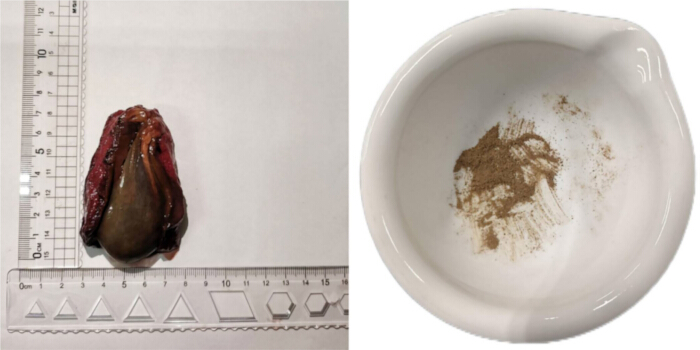
Figure 1: Blue fox gallbladder and dried blue fox bile powder. Abbreviations: BF = blue fox. Please click here to view a larger version of this figure.
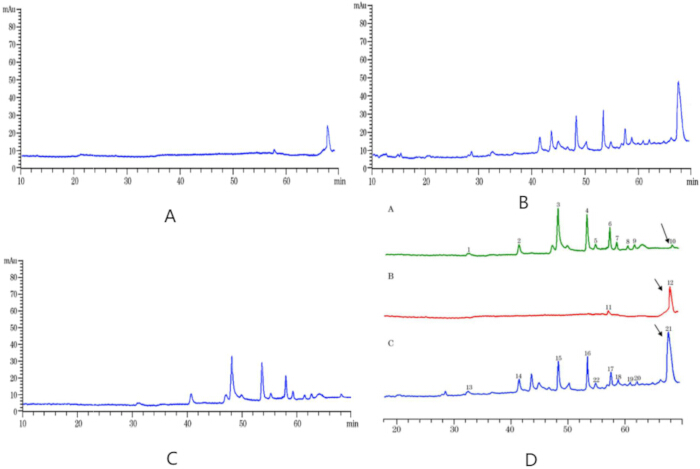
Figure 2: Identification of the active compounds of blue fox bile by high-performance liquid chromatography. (A) High-performance liquid phase pattern of the bear bile powder standard. (B) High-performance liquid phase map of the tauroursodeoxycholic acid (TUDCA) standards. (C) High-performance liquid phase map of blue fox bile powder. (D) High-performance liquid chromatography pattern. A=blue fox bile powder; B=TUDCA standard product; C=bear bile standard. Abbreviations: HPLC = high-performance liquid chromatography; TUDCA = tauroursodeoxycholic acid. Please click here to view a larger version of this figure.
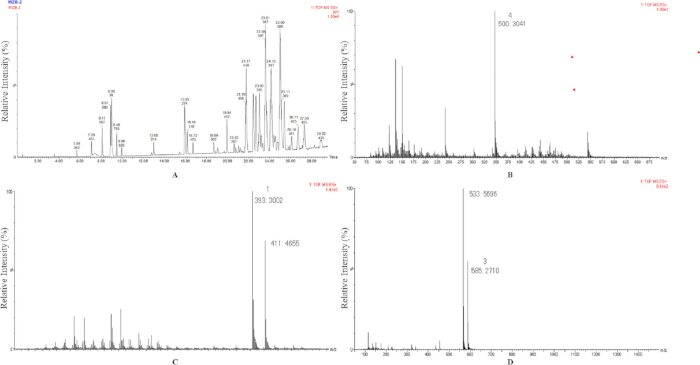
Figure 3: Mass spectrum results for the identification of the active compounds of blue fox bile. (A) Total ion flow pattern of standards in positive ion mode. (B) Peak #1 (ursodeoxycholic acid) mass spectra. (C) Peak #2 (tauroursodeoxycholic acid) mass spectra. (D) Peak #3 mass spectrum. Abbreviations: MS = mass spectrometry; UDCA = ursodeoxycholic acid; TUDCA = tauroursodeoxycholic acid. Please click here to view a larger version of this figure.
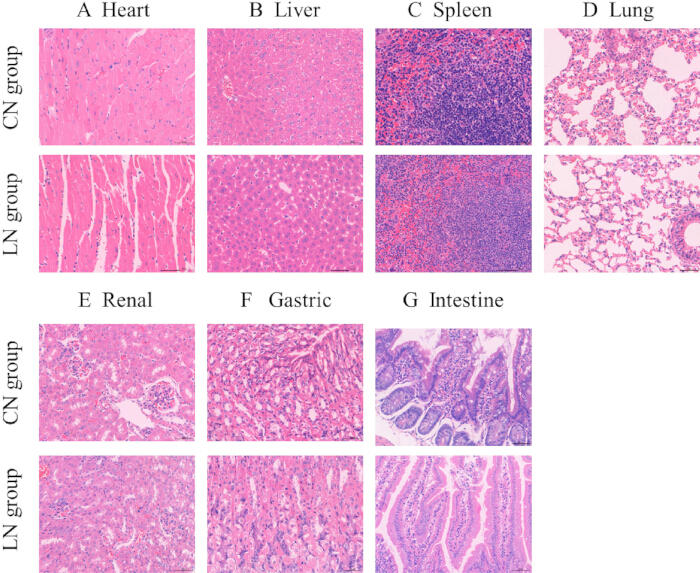
Figure 4: Histopathological analysis of major organs in CN and LH groups. Representative H&E-stained images of (A) heart, (B) liver, (C) spleen, (D) kidney, (E) lung, (F) stomach, and (G) intestine from mice in the CN and LH groups. Scale bar = 50 µm. Abbreviations: CN = control group; LH = low-dose blue fox bile group; H&E = hematoxylin and eosin. Please click here to view a larger version of this figure.
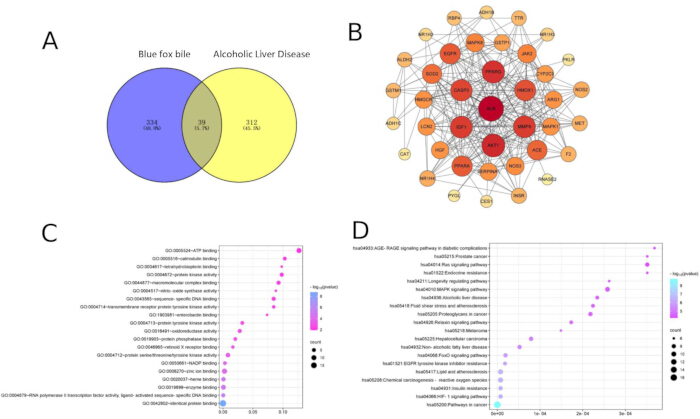
Figure 5: Prediction of the potential targets of blue fox bile against alcohol liver injury. (A) Potential targets of blue fox bile anti-alcoholic liver injury. (B) Protein-protein interaction network with intersection targets. (C) Gene Ontology function analysis of blue fox bile in the treatment of alcohol-related liver injury. (D) Kyoto Encyclopedia of Genes and Genomes pathway analysis of blue fox bile in the treatment of alcohol-related liver injury. Abbreviations: PPI = protein-protein interaction; GO = Gene Ontology; KEGG = Kyoto Encyclopedia of Genes and Genomes. Please click here to view a larger version of this figure.
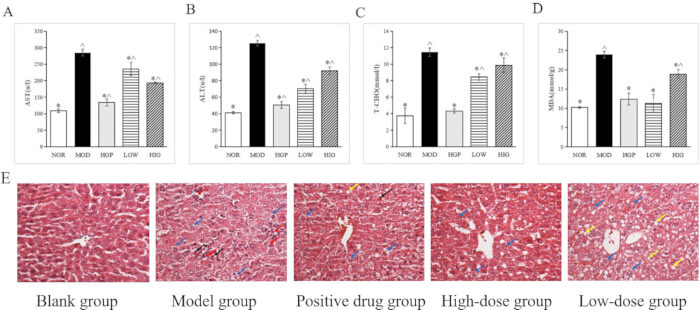
Figure 6: Blue fox gallbladder improves liver injury in mice with alcoholic hepatitis. (Top) Blue fox bile powder on alcohol-related liver injury. (A) Aspartate aminotransferase (AST). (B) Alanine aminotransferase (ALT). (C) Total cholesterol (T-CHO). (D) Malondialdehyde (MDA). *p <0.05 versus the model group. ^p <0.05 versus the blank group. Data are shown as mean ± SD. Statistical significance was assessed by one-way ANOVA with LSD post hoc test. (E) Pathological section of the alcohol-related liver injury mouse models (100x), N=6. Abbreviations: AST = aspartate aminotransferase; ALT = alanine aminotransferase; T-CHO = total cholesterol; MDA = malondialdehyde. Please click here to view a larger version of this figure.
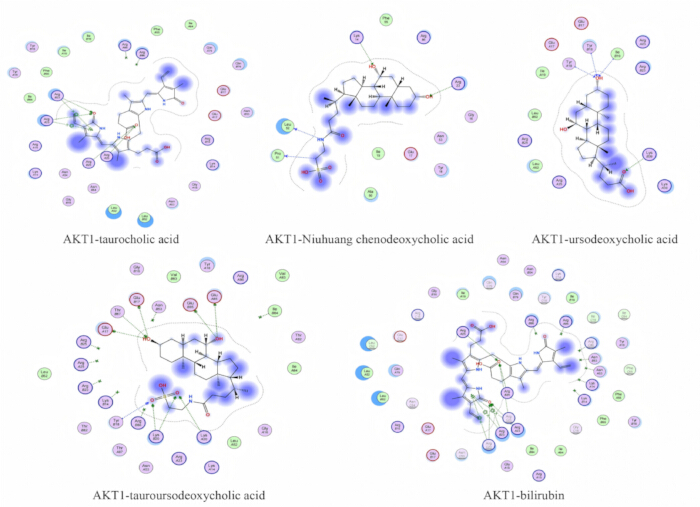
Figure 7: Docking mode diagram of AKT1 and blue fox bile compounds. The 2D interaction diagrams illustrate the binding modes of aurocholic acid, Niuhuang chenodeoxycholic acid, ursodeoxycholic acid (UDCA), tauroursodeoxycholic acid (TUDCA), and bilirubin with the AKT1 protein. Amino acid residues are shown around the ligand molecules. Purple shaded areas indicate hydrophobic interaction regions, while green circles denote hydrogen bond interactions. Blue labels represent polar residues, red labels indicate negatively charged residues, and light green labels represent hydrophobic residues. Solid green lines correspond to conventional hydrogen bonds, whereas dashed lines indicate hydrophobic or π-π interactions. These diagrams demonstrate multiple non-covalent interactions stabilizing the ligand-protein complexes, suggesting effective binding of bile components to AKT1. Abbreviations: AKT1 = RAC-alpha serine/threonine-protein kinase. Please click here to view a larger version of this figure.
Supplementary Figure 1: Schematic overview of the study design. Please click here to download this File.
| Time (min) | A% | B% |
| 0 | 90 | 10 |
| 70 | 40 | 60 |
| 75 | 1 | 99 |
| 80 | 1 | 99 |
Table 1: Gradient elution table. Abbreviations: A% = mobile phase A (0.03 M sodium dihydrogen phosphate, pH 4.4); B% = mobile phase B (methanol); HPLC = high-performance liquid chromatography.
| Sample | Peak | Retention time min | Peak width min | Peak area mAU*s | Peak height mAU |
| Blue fox bile | 10 | 68.44 | 0.72 | 79.19 | 1.85 |
| TUDCA standards | 12 | 67.95 | 0.45 | 474.03 | 17.61 |
| Bear bile standards | 21 | 67.59 | 0.53 | 1419.4 | 36.24 |
Table 2: Comparison of HPLC analysis data of TUDCA. Abbreviations: TUDCA = tauroursodeoxycholic acid; HPLC = high-performance liquid chromatography; mAUs = milli-absorbance units x s; mAU = milli-absorbance units.
| Peak | Retention time | MS[M+H]+ | Molecular formula |
| 1 | 29.795 | 393.3002 | C24H40O4 |
| 2 | 25.94 | 500.3041 | C26H46NO6S |
| 3 | 8.106 | 585.271 | C33H37N4O6 |
| 4 | 18.887 | 500.3043 | C26H46NO6S |
Table 3: Structural identification results of blue fox bile compounds. Abbreviations: MS[M+H]+ = mass spectrometry ion with protonation; MS = mass spectrometry.
| Gender | Day | CN | LH | CN | LH |
| Mean±SD | Mean±SD | Variation% (CV%) | Variation% (CV%) | ||
| Male | 1 | 20.93±1.36 | 20.85±1.52 | 0 (6.50) | −0.38 (7.29) |
| 2 | 22.07±1.39 | 21.70±1.57 | 0 (6.30) | −1.68 (7.24) | |
| 3 | 22.89±2.58 | 22.20±2.52 | 0 (11.27) | −3.01 (11.35) | |
| 5 | 24.39±1.42 | 23.97±1.89 | 0 (5.82) | −1.72 (7.88) | |
| 7 | 26.31±2.76 | 25.50±2.19 | 0 (10.49) | −3.08 (8.59) | |
| 10 | 28.89±1.97 | 28.08±2.46 | 0 (6.82) | −2.80 (8.76) | |
| 14 | 32.33±2.28 | 31.15±2.04 | 0 (7.05) | −3.65 (6.55) | |
| Female | 1 | 21.65±1.45 | 21.58±1.44 | 0 (6.70) | −0.32 (6.67) |
| 2 | 22.74±1.42 | 22.48±1.47 | 0 (6.24) | −1.14 (6.54) | |
| 3 | 23.68±1.97 | 23.05±2.44 | 0 (8.32) | −2.66 (10.59) | |
| 5 | 25.97±1.45 | 25.58±2.35 | 0 (5.58) | −1.50 (9.19) | |
| 7 | 28.68±2.22 | 27.81±2.06 | 0 (7.74) | −3.03 (7.41) | |
| 10 | 32.07±3.06 | 31.22±1.92 | 0 (9.54) | −2.65 (6.15) | |
| 14 | 36.78±2.45 | 35.43±1.77 | 0 (6.66) | −3.67 (5.00) |
Table 4: Effects of oral administration of blue fox bile powder.Effect on body weight (g, mean ± SD) and body weight changes (%, Change Ratio) in mice during acute toxicity testing. Abbreviations: CN = control group; LH = low-dose blue fox bile group; SD = standard deviation; CV% = coefficient of variation.
| Compound | TUDCA | UDCA | Bilirubin | TCA | TCDCA |
| Binding Energy (kcal/mol) | -39.135 | -21.359 | -6.8647 | -89.436 | -6.048 |
Table 5: Molecular docking scores of major compounds identified in blue fox bile.
Supplementary Table 1: Summary of organ pathology scores. Please click here to download this File.
Supplementary Table 2: Histopathological scores of liver tissues in different experimental groups. Please click here to download this File.
Discussion
Loading...
$$\rightleftharpoonup{xx}$$
$$\longleftharp{xx}$$,
$$\longrightharp{xx}$$,
According to the 2018 World Health Organization (WHO) Global Status Report on Alcohol and Health, the per-capita alcohol consumption in China increased from 4.1 L in 2005 to 7.2 L in 2016, representing a 76% rise. ALD caused by chronic alcohol consumption remains a major etiology of liver-related morbidity and mortality22. Bo et al. established a carbon tetrachloride (CCl4)-induced liver injury model in mice and observed that blue fox bile significantly reduced AST, ALT, T-CHO, and MDA levels23. Consistently, the pharmacological experiments in the current study demonstrated that blue fox bile exerts therapeutic effects against ALD in mice.
In this study, an acute toxicity assessment of blue fox bile powder at a concentration of 27.4% and a dosage of 40 mL/kg administered 2x daily for 14 days revealed a favorable safety profile. No significant mortality, severe toxicity, or long-term organ damage was observed. Mild, transient symptoms such as prone positioning and loose stools were noted, likely attributable to the bitter and cold nature of bile substances, but these effects were resolved quickly without lasting consequences. Body weight remained stable in the LH group, with no significant differences compared to the CN group. Gross and histopathological examinations revealed no abnormalities in major organs. Given that no severe toxic effects, abnormal behavioral patterns, or organ damage were noted in the acute toxicity study, it can be concluded that blue fox bile powder, when administered at the tested concentrations and dosages, is relatively safe for short-term oral use in mice. Although these results suggest minimal acute toxicity, further studies are warranted to evaluate safety under chronic exposure conditions or across different animal models, as well as to investigate potential long-term effects. In summary, blue fox bile powder demonstrated a favorable acute safety profile at the tested doses, suggesting its potential safety for short-term oral use, though additional studies are necessary to comprehensively assess its long-term safety.
In traditional Chinese medicine (TCM), bear bile has long been used for the management of fever, toxins, inflammation, swelling, and pain, as well as liver diseases, including fibrosis, biliary cirrhosis, and liver cancer9,24,18. Its pharmacological effects, including hepatoprotective, antibacterial, antiviral, anti-inflammatory, anti-gallstone, and hypolipidemic activities, have been well documented18. Specifically, bear bile and its active components, tauroursodeoxycholic acid (TUDCA) and ursodeoxycholic acid (UDCA), protect hepatocytes against alcohol-induced oxidative damage and inhibit the immunosuppressive activity of hepatic stellate cells25, which plays a central role in liver fibrosis25. Black bear bile has been reported to attenuate liver fibrosis induced by CCl4, bile duct ligation, or alcohol exposure26. Its active components, such as TUDCA and UDCA, exert protective effects by preventing hepatocyte apoptosis, reducing liver fibrosis, and improving glucose metabolism and insulin sensitivity27. In the context of our study, the relevance of this description is that blue fox bile was found to contain UDCA and TUDCA, as detected by UPLC-Q-TOF/MS. This suggests that blue fox bile could mimic the hepatoprotective effects of bear bile, providing a mechanistic rationale for its potential efficacy against ALD. Therefore, discussing bear bile's known pharmacological properties allows readers to understand the basis for investigating blue fox bile as a possible substitute and highlights its potential role in liver protection.
Apart from being mentioned as a potential substitute for wildlife-origin materials in TCM28 and a prior study by Bo et al.23 indicating its protective effects against CCl4-induced liver injury, there is limited systematic research on blue fox bile, particularly regarding ALD. In this study, UDCA and TUDCA were detected in blue fox bile using UPLC-Q-TOF/MS, indicating that blue fox bile could serve as a substitute for bear bile. Moreover, blue fox bile alleviated ALD in mouse models. Given that blue foxes are raised for their fur in China and gallbladders are typically discarded post-harvest, utilizing blue fox bile may add economic value to fox farming, while supporting the development of TCM alternatives that do not use endangered wildlife resources. Compared to bear bile, blue fox bile offers a potential advantage in animal welfare, as they utilized by-products from farmed blue foxes already harvested for fur, whereas bear bile extraction involves invasive procedures that raise ethical concerns29. Compared to chemical synthesis, blue fox bile provides a natural source of TUDCA and UDCA without the high production costs and environmental hazards associated with chemical manufacturing processes18. Furthermore, unlike biotransformation approaches using chicken bile to produce bear bile equivalents -- which remain pharmacologically non-equivalent and require additional bioprocessing steps30 -- blue fox bile naturally contains both TUDCA and UDCA, making it a potentially closer substitute to bear bile for therapeutic applications.
Despite these promising findings, the underlying mechanisms remained incompletely elucidated23. Based on animal experiments, network pharmacology, and molecular docking predictions, the study explored the active components, potential targets, and potential pathways of blue fox bile in treating ALD, laying a theoretical foundation for further mechanistic studies. Excessive alcohol intake generates reactive oxygen and nitrogen species during hepatic metabolism, leading to lipid peroxidation and tissue damage31. AST is predominantly distributed in the myocardium, liver, bone, and kidneys, and elevated serum AST indicates hepatocellular injury32. MDA, an active aldehyde produced by lipid peroxidation, can disrupt protein structure and function, while T-CHO levels reflect lipid metabolism status33. The present study showed that blue fox bile treatment reduced ALT, AST, T-CHO, and MDA levels in ethanol-exposed mice, supporting its hepatoprotective effects. A previous study23 demonstrated that TUDCA enhances hepatic antioxidant capacity and alleviates acute liver injury by inhibiting endoplasmic reticulum stress and IRE1 pathway activation34, UDCA protects against liver injury by inhibiting farnesoid X receptor (FXR) reduction and hepatocyte apoptosis in hemorrhagic shock models35.
PPI network analysis identified five core targets (AKT1, PPARG, IGF1, MMP9, and CASP3). AKT1 inhibits hepatocytes and hepatic stellate cells' fibrogenesis, preventing hepatic fibrosis36. PPARG suppresses hepatic stellate cell activation by increasing aquaporin 3 and decreasing activator protein-1 levels, thus inhibiting fibrosis progression37. IGF1 regulates cellular senescence and activation38, mediating liver fibrosis in nonalcoholic steatohepatitis39. MMP9, produced by Kupffer's cells, is closely associated with liver fibrosis development40. CASP3 is a key apoptosis effector, and its inhibition may attenuate ALD41. Molecular docking showed effective binding between these core targets and blue fox bile components, suggesting their involvement in therapeutic effects against ALD. KEGG enrichment analysis indicated that blue fox bile modulates multiple pathways implicated in liver injury, including the advanced glycation end product (AGE-RAGE) signaling pathway in diabetic complications, alcoholic liver disease, fluid shear stress and atherosclerosis, hepatocellular carcinoma, and nonalcoholic fatty liver disease42. The AGE-RAGE pathway, in particular, mediates oxidative stress, cellular dysfunction, and inflammation, accelerating the pathogenesis of diabetes and its complications, including liver injury43. Enrichment analysis showed that the key targets of blue fox bile were distributed across different pathways, suggesting coordinated multi-pathway modulation in its hepatoprotective effects.
The present study has several limitations. It was conducted in mice, and translational relevance to humans remains to be established. The study design did not include direct statistical comparisons among the positive control, high-dose, and low-dose groups regarding liver indices, and a bear bile treatment group was not included as a direct comparator, limiting the evaluation of equivalency or substitutive potential. In addition to the current mouse model, alternative approaches could be utilized in future studies to comprehensively investigate the effects of blue fox bile on liver injury44. For example, in vitro hepatic cell culture models, including primary hepatocytes or hepatocyte-derived cell lines such as HepG2 and AML12, could be used for mechanistic exploration at cellular and molecular levels. Furthermore, advanced organoid systems or liver-on-a-chip platforms may better recapitulate the complex microenvironment and architecture of human liver tissue45. Zebrafish models also provide a rapid and cost-effective in vivo system for screening hepatoprotective or hepatotoxic effects and could complement rodent studies in pre-clinical evaluation46. Future studies incorporating direct efficacy comparisons are warranted. Additionally, mechanistic findings derived from network pharmacology require experimental validation, as such in silico analysis cannot elucidate dose-effect relationships or interaction types.
In conclusion, the composition of blue fox bile is similar to bear bile, containing TUDCA, UDCA, bilirubin, and TCDCA. Its hepatoprotective effects may involve modulation of the AGE-RAGE signaling pathway by regulating AKT1, PPARG, IGF1, MMP9, and CASP3, potentially mitigating the inflammation and oxidative stress characteristic of ALD. These findings suggest that blue fox bile may possess hepatoprotective effects in ALD, indicating the need for further research to clarify its underlying mechanisms and potential clinical applications.
Disclosures
Loading...
$$\rightleftharpoonup{xx}$$
$$\longleftharp{xx}$$,
$$\longrightharp{xx}$$,
Authors declare no conflicts of interest.
Acknowledgements
Loading...
$$\rightleftharpoonup{xx}$$
$$\longleftharp{xx}$$,
$$\longrightharp{xx}$$,
This work was supported by the National Natural Science Foundation of China Youth Science Foundation (NO.82204562).
Materials
| Name | Company | Catalog Number | Comments |
|---|---|---|---|
| 0.03M Sodium dihydrogen phosphate | N/A | N/A | HPLC mobile phase A |
| 0.1% Formic acid in water | Fisher Scientific, USA | N/A | Mobile phase for UPLC |
| 0.22 μm membrane filter | N/A | N/A | Sample filtration |
| 4% Paraformaldehyde | N/A | N/A | Tissue fixation |
| Acetonitrile, Chromatography Grade | Fisher Scientific, USA | N/A | Mobile phase for UPLC |
| ALT, AST, T-CHO kits | Shanghai Yuanye Biotechnology Co., Ltd., China | N/A | Serum biochemical analysis |
| Analytical balance | N/A | N/A | Animal weight measurement |
| Aurocholic acid | China Institute for Food and Drug Control | N/A | Internal standard for HPLC/MS |
| Bear bile powder | China Institute for Food and Drug Control, Beijing | N/A | Reference material |
| Bilirubin | Not specified | N/A | Identified active compound in bile |
| Blue fox | Suihua Fox Farm, Heilongjiang, China | N/A | Source of bile |
| Blue fox bile powder | In-house preparation | N/A | Sample for component analysis |
| C18 HPLC column | Agilent Technologies, USA | ZORBAX SB-C18 (4.6×150 mm, 5 μm) | HPLC separation |
| Cytoscape | https://cytoscape.org/ | Version 3.9.1 | Network visualization and topological analysis |
| DAVID | NIH | https://david.ncifcrf.gov/ | GO/KEGG enrichment analysis |
| GeneCards | Weizmann Institute | https://www.genecards.org/ | Disease-related gene retrieval |
| Hematoxylin and Eosin (H&E) | N/A | N/A | Histological staining |
| HPLC system | Agilent Technologies, USA | 1200 Infinity | Composition analysis of bile |
| Kunming mice (SPF, 18–22g) | Liaoning Changsheng Biotechnology Co., Ltd. | SCXK (Liao) 2020-0010 | Alcoholic liver injury model |
| Leucine-enkephalin | Sigma, USA | N/A | MS calibration standard (40 fmol/μL) |
| MDA detection kit | Shanghai Yuanye Biotechnology Co., Ltd., China | N/A | Liver oxidative stress measurement |
| Methanol, Chromatography Grade | Fisher Scientific, USA | N/A | Solvent for sample preparation |
| MOE | Chemical Computing Group | MOE 2022.02 | Molecular docking analysis |
| OMIM | NIH | https://omim.org/ | Disease-related gene retrieval |
| Optical microscope | N/A | N/A | Histological observation |
| PharmMapper | ECUST | http://www.lilab-ecust.cn/pharmmapper/ | Prediction of active compound targets |
| Phosphoric acid | N/A | N/A | pH adjustment of mobile phase |
| PubChem | NCBI | https://pubchem.ncbi.nlm.nih.gov/ | Compound structure retrieval |
| RCSB Protein Data Bank | https://www.pdbus.org/ | N/A | Protein 3D structure source |
| Refrigerated centrifuge | N/A | N/A | Serum and tissue separation |
| Sodium tauroursodeoxycholate (TUDCA) | China Institute for Food and Drug Control | N/A | Internal standard for HPLC/MS |
| STRING | EMBL | http://version10.string-db.org/ | Protein-protein interaction analysis |
| UniProt | EMBL-EBI | https://www.uniprot.org/ | Target standardization |
| UPLC-Q-TOF-MS system | Waters, USA | UPLC HSS T3 (100×2.1 mm, 1.8 μm) | Component identification |
| Venny | CSIC | https://bioinfogp.cnb.csic.es/tools/venny/index.html | Target intersection visualization |
References
Loading...
$$\rightleftharpoonup{xx}$$
$$\longleftharp{xx}$$,
$$\longrightharp{xx}$$,
- EASL Clinical Practice Guidelines: Management of alcohol-related liver disease. J Hepatol. 69 (1), 154-181 (2018).">Thursz, M., et al. EASL Clinical Practice Guidelines: Management of alcohol-related liver disease. J Hepatol. 69 (1), 154-181 (2018).
- Pathogenesis of alcoholic liver disease. Hepatol Res. 47 (1), 70-79 (2017).">Sugimoto, K., Takei, Y. Pathogenesis of alcoholic liver disease. Hepatol Res. 47 (1), 70-79 (2017).
- Therapeutic targets in alcohol-associated liver disease: progress and challenges. Therap Adv Gastroenterol. 16, 17562848231170946(2023).">Adekunle, A. D., Adejumo, A., Singal, A. K. Therapeutic targets in alcohol-associated liver disease: progress and challenges. Therap Adv Gastroenterol. 16, 17562848231170946(2023).
- bile powder prevents drunkenness and alcohol-induced liver injury in mice via the gut microbiota and metabolic modulation. Chin Med. 19 (1), 39(2024).">Wang, Y., et al. bile powder prevents drunkenness and alcohol-induced liver injury in mice via the gut microbiota and metabolic modulation. Chin Med. 19 (1), 39(2024).
- Taurochenodeoxycholic Acid Inhibited AP-1 Activation via Stimulating Glucocorticoid Receptor. Molecules. 24 (24), 4513(2019).">Li, L., Liu, C., Mao, W., Tumen, B., Li, P. Taurochenodeoxycholic Acid Inhibited AP-1 Activation via Stimulating Glucocorticoid Receptor. Molecules. 24 (24), 4513(2019).
- Therapeutic uses of animal biles in traditional Chinese medicine: an ethnopharmacological, biophysical chemical and medicinal review. World J Gastroenterol. 20 (29), 9952-9975 (2014).">Wang, D. Q., Carey, M. C. Therapeutic uses of animal biles in traditional Chinese medicine: an ethnopharmacological, biophysical chemical and medicinal review. World J Gastroenterol. 20 (29), 9952-9975 (2014).
- Crosstalk between Oxidative Stress and Inflammatory Liver Injury in the Pathogenesis of Alcoholic Liver Disease. Int J Mol Sci. 23 (2), 774(2022).">Yang, Y. M., Cho, Y. E., Hwang, S. Crosstalk between Oxidative Stress and Inflammatory Liver Injury in the Pathogenesis of Alcoholic Liver Disease. Int J Mol Sci. 23 (2), 774(2022).
- Bile acid supplementation improves established liver steatosis in obese mice independently of glucagon-like peptide-1 secretion. J Physiol Biochem. 70 (3), 667-674 (2014).">Quintero, P., et al. Bile acid supplementation improves established liver steatosis in obese mice independently of glucagon-like peptide-1 secretion. J Physiol Biochem. 70 (3), 667-674 (2014).
- Bear bile: dilemma of traditional medicinal use and animal protection. J Ethnobiol Ethnomed. 5, 2(2009).">Feng, Y., et al. Bear bile: dilemma of traditional medicinal use and animal protection. J Ethnobiol Ethnomed. 5, 2(2009).
- Potential therapeutic action of tauroursodeoxycholic acid against cholestatic liver injury via hepatic Fxr/Nrf2 and CHOP-DR5-caspase-8 pathway. Clin Sci (Lond). 137 (7), 561-577 (2023).">Song, G., et al. Potential therapeutic action of tauroursodeoxycholic acid against cholestatic liver injury via hepatic Fxr/Nrf2 and CHOP-DR5-caspase-8 pathway. Clin Sci (Lond). 137 (7), 561-577 (2023).
- Pharmacological studies on the comparison between the drainage and certified Fel Ursi. Zhongguo Zhong Yao Za Zhi. 16 (12), 749-763 (1991).">Li, J., et al. Pharmacological studies on the comparison between the drainage and certified Fel Ursi. Zhongguo Zhong Yao Za Zhi. 16 (12), 749-763 (1991).
- Respect, Inherent Value, Subjects-of-a-Life Some. Reflections on the Key Concepts of Tom Regan's Animal Ethics. Relations Beyond Anthropocentrism. 7, 1-2 (2020).">Allegri, F. Respect, Inherent Value, Subjects-of-a-Life Some. Reflections on the Key Concepts of Tom Regan's Animal Ethics. Relations Beyond Anthropocentrism. 7, 1-2 (2020).
- Photoperiod and fur lengths in the arctic fox (Alopex lagopus L). Int J Biometeorol. 24 (1), 39-48 (1980).">Underwood, L. S., Reynolds, P. Photoperiod and fur lengths in the arctic fox (Alopex lagopus L). Int J Biometeorol. 24 (1), 39-48 (1980).
- Toxicological evaluation of porcine bile powder in Kunming mice and Sprague-Dawley rats. Front Pharmacol. 15, 1424940(2024).">Wu, L., et al. Toxicological evaluation of porcine bile powder in Kunming mice and Sprague-Dawley rats. Front Pharmacol. 15, 1424940(2024).
- Therapeutic Effects of Different Animal Bile Powders on Lipid Metabolism Disorders and Their Composition Analysis. Chin J Integr Med. 28 (10), 918-923 (2022).">Chen, D. X., et al. Therapeutic Effects of Different Animal Bile Powders on Lipid Metabolism Disorders and Their Composition Analysis. Chin J Integr Med. 28 (10), 918-923 (2022).
- Effect of Dietary Supplementation with Calcium, Phosphorus and Vitamin D(3) on Growth Performance, Nutrient Digestibility, and Serum Biochemical Parameters of Growing Blue Foxes. Animals (Basel). 12 (14), 1814(2022).">Liu, J., et al. Effect of Dietary Supplementation with Calcium, Phosphorus and Vitamin D(3) on Growth Performance, Nutrient Digestibility, and Serum Biochemical Parameters of Growing Blue Foxes. Animals (Basel). 12 (14), 1814(2022).
- The Measurement of Leucine Enkephalin at the Femtomole Level by Fast Atom Bombardment Mass Spectrometry/Mass Spectrometry Methods. Anal Lett. 19 (19-20), 1963-1971 (1986).">Desiderio, D. M., Dass, C. The Measurement of Leucine Enkephalin at the Femtomole Level by Fast Atom Bombardment Mass Spectrometry/Mass Spectrometry Methods. Anal Lett. 19 (19-20), 1963-1971 (1986).
- Substitutes for Bear Bile for the Treatment of Liver Diseases: Research Progress and Future Perspective. Evid Based Complement Alternat Med. 2016, 4305074(2016).">Li, S., et al. Substitutes for Bear Bile for the Treatment of Liver Diseases: Research Progress and Future Perspective. Evid Based Complement Alternat Med. 2016, 4305074(2016).
- Identification of bioactive compounds and potential mechanisms of Scutellariae Radix-Coptidis Rhizoma in the treatment of atherosclerosis by integrating network pharmacology and experimental validation. Biomed Pharmacother. 165, 115210(2023).">Ji, L., et al. Identification of bioactive compounds and potential mechanisms of Scutellariae Radix-Coptidis Rhizoma in the treatment of atherosclerosis by integrating network pharmacology and experimental validation. Biomed Pharmacother. 165, 115210(2023).
- Study on the Chemical Components of Blue Fox Gall Powder. J Trad Chinese Med Herald. 31 (03), 83-88 (2025).">Shi, J., Zhou, B., Ding, C. Study on the Chemical Components of Blue Fox Gall Powder. J Trad Chinese Med Herald. 31 (03), 83-88 (2025).
- Development and Validation of a Highly Sensitive LC-MS/MS Method for the Analysis of Bile Acids in Serum, Plasma, and Liver Tissue. Metabolites. 10 (7), 282(2020).">Gómez, C., Stücheli, S., Kratschmar, D. V., Bouitbir, J., Odermatt, A. Development and Validation of a Highly Sensitive LC-MS/MS Method for the Analysis of Bile Acids in Serum, Plasma, and Liver Tissue. Metabolites. 10 (7), 282(2020).
- Estimated projection of incidence and mortality of alcohol-related liver disease in China from 2022 to 2040: a modeling study. BMC Med. 21 (1), 277(2023).">Wu, M., et al. Estimated projection of incidence and mortality of alcohol-related liver disease in China from 2022 to 2040: a modeling study. BMC Med. 21 (1), 277(2023).
- Arctic fox bile can alleviate carbon tetrachloride-induced acute liver injury. Intl J Clin Exp Med. 9 (2), 5050-5055 (2016).">Bo, Z., Rui, W., Jingbo, J. Arctic fox bile can alleviate carbon tetrachloride-induced acute liver injury. Intl J Clin Exp Med. 9 (2), 5050-5055 (2016).
- Advances in studies on bear bile powder. Zhongguo Zhong Yao Za Zhi. 40 (7), 1252-1258 (2015).">Zhou, C. F., Gao, G. J., Liu, Y. Advances in studies on bear bile powder. Zhongguo Zhong Yao Za Zhi. 40 (7), 1252-1258 (2015).
- Bear bile affects immunologic feature of hepatic stellate cells. J Hepatol Surg. 20 (3), 204-208 (2012).">Zhou, C. S., Yin, Z. Y., Zhao, W. X. Bear bile affects immunologic feature of hepatic stellate cells. J Hepatol Surg. 20 (3), 204-208 (2012).
- A comparative study on the hepatoprotective action of bear bile and Coptidis Rhizoma aqueous extract on experimental liver fibrosis in rats. BMC Complement Altern Med. 12, 239(2012).">Wang, N., et al. A comparative study on the hepatoprotective action of bear bile and Coptidis Rhizoma aqueous extract on experimental liver fibrosis in rats. BMC Complement Altern Med. 12, 239(2012).
- A randomized controlled trial of high-dose ursodesoxycholic acid for nonalcoholic steatohepatitis. J Hepatol. 54 (5), 1011-1019 (2011).">Ratziu, V., et al. A randomized controlled trial of high-dose ursodesoxycholic acid for nonalcoholic steatohepatitis. J Hepatol. 54 (5), 1011-1019 (2011).
- Substitutes for wildlife-origin materials as described in China's "TCM" research literature. Global Ecol Conservation. 34 (April), e02042(2022).">Moorhouse, T. P., et al. Substitutes for wildlife-origin materials as described in China's "TCM" research literature. Global Ecol Conservation. 34 (April), e02042(2022).
- Evidence for a photoprotective function of low-temperature-induced anthocyanin accumulation in apple and pear peel. Physiol Plant. 136 (4), 461-472 (2009).">Steyn, W. J., Wand, S. J., Jacobs, G., Rosecrance, R. C., Roberts, S. C. Evidence for a photoprotective function of low-temperature-induced anthocyanin accumulation in apple and pear peel. Physiol Plant. 136 (4), 461-472 (2009).
- Discovery of a Highly Selective Sigma-2 Receptor Ligand, 1-(4-(6,7-Dimethoxy-3,4-dihydroisoquinolin-2(1H)-yl)butyl)-3-methyl-1H-benzo[d]imidazol-2(3H)-one (CM398), with Drug-Like Properties and Antinociceptive Effects In Vivo. AAPS J. 22 (5), 94(2020).">Intagliata, S., et al. Discovery of a Highly Selective Sigma-2 Receptor Ligand, 1-(4-(6,7-Dimethoxy-3,4-dihydroisoquinolin-2(1H)-yl)butyl)-3-methyl-1H-benzo[d]imidazol-2(3H)-one (CM398), with Drug-Like Properties and Antinociceptive Effects In Vivo. AAPS J. 22 (5), 94(2020).
- Ethanol Metabolism in the Liver, the Induction of Oxidant Stress, and the Antioxidant Defense System. Antioxidants (Basel). 11 (7), 1258(2022).">Contreras-Zentella, M. L., Villalobos-Garcia, D., Hernandez-Munoz, R. Ethanol Metabolism in the Liver, the Induction of Oxidant Stress, and the Antioxidant Defense System. Antioxidants (Basel). 11 (7), 1258(2022).
- Liver Function Tests. , StatPearls Publishing. Treasure Island, FL. (2023).">Lala, V., Zubair, M., Minter, D. A. Liver Function Tests. , StatPearls Publishing. Treasure Island, FL. (2023).
- Reactive oxygen species-induced changes in glucose and lipid metabolism contribute to the accumulation of cholesterol in the liver during aging. Aging Cell. 18 (2), e12895(2019).">Seo, E., Kang, H., Choi, H., Choi, W., Jun, H. S. Reactive oxygen species-induced changes in glucose and lipid metabolism contribute to the accumulation of cholesterol in the liver during aging. Aging Cell. 18 (2), e12895(2019).
- Insights by which TUDCA is a potential therapy against adiposity. Front Endocrinol (Lausanne). 14, 1090039(2023).">Freitas, I. N., et al. Insights by which TUDCA is a potential therapy against adiposity. Front Endocrinol (Lausanne). 14, 1090039(2023).
- Ursodeoxycholic acid (UDCA) reduces hepatocyte apoptosis by inhibiting farnesoid X receptor (FXR) in hemorrhagic shock (HS). Curr Mol Med. 23 (6), 550-558 (2022).">Lu, W., Xi, R., Huaiwu, H. Ursodeoxycholic acid (UDCA) reduces hepatocyte apoptosis by inhibiting farnesoid X receptor (FXR) in hemorrhagic shock (HS). Curr Mol Med. 23 (6), 550-558 (2022).
- Akt1 and Akt2 Isoforms Play Distinct Roles in Regulating the Development of Inflammation and Fibrosis Associated with Alcoholic Liver Disease. Cells. 8 (11), 1337(2019).">Reyes-Gordillo, K., et al. Akt1 and Akt2 Isoforms Play Distinct Roles in Regulating the Development of Inflammation and Fibrosis Associated with Alcoholic Liver Disease. Cells. 8 (11), 1337(2019).
- The Agonists of Peroxisome Proliferator-Activated Receptor-gamma for Liver Fibrosis. Drug Des Devel Ther. 15, 2619-2628 (2021).">Li, J., Guo, C., Wu, J. The Agonists of Peroxisome Proliferator-Activated Receptor-gamma for Liver Fibrosis. Drug Des Devel Ther. 15, 2619-2628 (2021).
- Growth Hormone and Insulin-Like Growth Factor 1 Regulation of Nonalcoholic Fatty Liver Disease. J Clin Endocrinol Metab. 107 (7), 1812-1824 (2022).">Dichtel, L. E., Cordoba-Chacon, J., Kineman, R. D. Growth Hormone and Insulin-Like Growth Factor 1 Regulation of Nonalcoholic Fatty Liver Disease. J Clin Endocrinol Metab. 107 (7), 1812-1824 (2022).
- The Role of Growth Hormone and Insulin-Like Growth Factor-I in the Liver. Int J Mol Sci. 18 (7), 1447(2017).">Takahashi, Y. The Role of Growth Hormone and Insulin-Like Growth Factor-I in the Liver. Int J Mol Sci. 18 (7), 1447(2017).
- Kupffer-derived matrix metalloproteinase-9 contributes to liver fibrosis resolution. Int J Biol Sci. 14 (9), 1033-1040 (2018).">Feng, M., et al. Kupffer-derived matrix metalloproteinase-9 contributes to liver fibrosis resolution. Int J Biol Sci. 14 (9), 1033-1040 (2018).
- Ursolic acid reduces hepatocellular apoptosis and alleviates alcohol-induced liver injury via irreversible inhibition of CASP3 in vivo. Acta Pharmacol. 42 (7), 1101-1110 (2021).">Ma, X. Y., et al. Ursolic acid reduces hepatocellular apoptosis and alleviates alcohol-induced liver injury via irreversible inhibition of CASP3 in vivo. Acta Pharmacol. 42 (7), 1101-1110 (2021).
- RAGE signaling regulates the progression of diabetic complications. Front Pharmacol. 14, 1128872(2023).">Taguchi, K., Fukami, K. RAGE signaling regulates the progression of diabetic complications. Front Pharmacol. 14, 1128872(2023).
- Aerobic Exercise Training Improves Microvascular Function and Oxidative Stress Parameters in Diet-Induced Type 2 Diabetic Mice. Diabetes Metab Syndr Obes. 15, 2991-3005 (2022).">Lino Rodrigues, K., et al. Aerobic Exercise Training Improves Microvascular Function and Oxidative Stress Parameters in Diet-Induced Type 2 Diabetic Mice. Diabetes Metab Syndr Obes. 15, 2991-3005 (2022).
- Comparison of primary human hepatocytes and hepatoma cell line Hepg2 with regard to their biotransformation properties. Drug Metab Dispos. 31 (8), 1035-1042 (2003).">Wilkening, S., Stahl, F., Bader, A. Comparison of primary human hepatocytes and hepatoma cell line Hepg2 with regard to their biotransformation properties. Drug Metab Dispos. 31 (8), 1035-1042 (2003).
- Vascularized and functional human liver from an iPSC-derived organ bud transplant. Nature. 499 (7459), 481-484 (2013).">Takebe, T., et al. Vascularized and functional human liver from an iPSC-derived organ bud transplant. Nature. 499 (7459), 481-484 (2013).
- Zebrafish: an important tool for liver disease research. Gastroenterology. 149 (6), 1361-1377 (2015).">Goessling, W., Sadler, K. C. Zebrafish: an important tool for liver disease research. Gastroenterology. 149 (6), 1361-1377 (2015).
Reprints and Permissions
Request permission to reuse the text or figures of this JoVE article
Request Permission