In this study, LINC01614 was delivered via exosomes to investigate its mechanism in regulating Treg differentiation and M2 macrophage polarization, thereby remodeling the immune microenvironment in gastric cancer.
Method Article
Exosomal LINC01614 from Gastric Cancer Cells Drives Treg Differentiation
Opens in a new tab
In This Article
Summary
Loading...
$$\rightleftharpoonup{xx}$$
$$\longleftharp{xx}$$,
$$\longrightharp{xx}$$,
Abstract
Loading...
$$\rightleftharpoonup{xx}$$
$$\longleftharp{xx}$$,
$$\longrightharp{xx}$$,
This study aimed to investigate the potential mechanism by which LINC01614, a long non-coding RNA (lncRNA), regulates the immune microenvironment of gastric cancer through exosomes. Methodologically, exosomes were isolated by ultracentrifugation (100,000 × g, 70 min) using a transwell co-culture system (human gastric cancer cell lines BGC823 and NCI-N87 were co-cultured with peripheral blood CD4 T cells for 24 h) and identified by transmission electron microscopy (80 kV) and immunoblotting (CD63, CD81, TSG101). Flow cytometry (Foxp3, CD25 antibodies) showed that gastric cancer exosomes induced the differentiation of CD4 T cells into regulatory T cells (Tregs). LINC01614 was identified as a key molecule by integrating GEO (GSE95667), TCGA, and exoRBase2.0 databases (screening criteria: logFC > 1), and its high expression in gastric cancer cells and exosomes was confirmed by qRT-PCR (internal reference GAPDH, 2-ΔΔCq method). Functional experiments were performed using lentivirus-mediated overexpression/silencing of LINC01614 to treat BGC823 cells. ELISA revealed that LINC01614 overexpression of exosomes promoted IL-4 secretion by Tregs (p < 0.05), and drove THP-1-derived macrophages to M2 phenotype polarization and enhanced TGF-β release through the JAK-STAT3 pathway (immunoblotting antibodies p-JAK, p-STAT3). CCK-8 and colony formation assay showed that this process together promoted gastric cancer cell proliferation (p < 0.05). At the mechanistic level, the RIP assay (anti-IL-4 antibody pull-down) suggests that LINC01614 may directly interact with IL-4. In summary, this study preliminarily reveals the mechanism by which LINC01614 promotes Treg differentiation and M2 polarization through the exosome pathway to regulate the immune microenvironment of gastric cancer, providing a theoretical basis for targeting LINC01614 to enhance immunotherapy.
Introduction
Loading...
$$\rightleftharpoonup{xx}$$
$$\longleftharp{xx}$$,
$$\longrightharp{xx}$$,
Gastric cancer (GC) remains a significant global health challenge, with over 1 million new cases and approximately 769,000 deaths reported in 2020, ranking fifth in global incidence and fourth in mortality1. Due to the asymptomatic nature of early-stage GC, the 5-year survival rate for most GC patients is between 20-40%. Approximately 40% of GC patients develop metastasis, and their 5-year survival rate drops to a mere 5%2. Surgery and chemotherapy continue to be the primary treatments for GC. Studies have shown that systemic chemotherapy can improve survival rates in GC patients with peritoneal metastasis, but the median survival remains only 4 months3. Immunotherapy has shown promising results in many cancers4, but in GC, the objective response rate is less than 15%5,6. Previous research suggests that the heterogeneity of tumor cells and the tumor microenvironment may diminish the efficacy of immunotherapy7.Thus, understanding the mechanisms through which GC cells influence the tumor microenvironment is clinically important.
Tumor cells can exchange non-coding RNAs, proteins, and other molecules via exosomes, facilitating tumorigenesis and progression8. While exosomes play roles in organ-specific metastasis and angiogenesis9, most studies have focused on their generic functions. In contrast, our understanding of how specific exosomal lncRNAs regulate immune polarization remains limited, highlighting a critical knowledge gap. For instance, in GC, epithelial-mesenchymal transition (EMT) is a key prognostic factor, with SNAI2 repressing ELF3 and ELF3-AS1 to form a feedback loop driving progression10. Similarly, lncRNA NR2F1-AS1 promotes metastasis via miR-29a sponging11. Beyond intracellular roles, non-coding RNAs in exosomes regulate tumor immunity: M2 macrophage-derived lncRNA CRNDE and miR-487a induce cisplatin resistance in GC12,13, while breast cancer exosomal SNHG16 promotes Treg differentiation via miR-16-5p/SMAD514. However, these findings often emphasize isolated pathways without integrating multi-cell interactions. Notably, the lncRNA/miR-29c axis promotes M2 polarization and immune escape in GC15, but mechanisms linking exosomal lncRNAs to Treg-driven immunosuppression are underexplored. LINC01614 is a lncRNA associated with progression in osteosarcoma 16 and papillary thyroid carcinoma17. In GC, high LINC01614 expression correlates with poor prognosis and serves as an independent prognostic biomarker, promoting proliferation, migration, and metastasis18,19,20. However, the potential involvement of LINC01614 in exosome-mediated immune regulation has not yet been fully elucidated, and our study aims to contribute to this emerging area of research.
Treg cells, a CD4+ subpopulation defined by Foxp3, are crucial for suppressing antitumor immunity and promoting immune escape21,22. In GC, tumor cells recruit Tregs to inhibit immune responses, with high FOXP3+ Treg infiltration predicting poor prognosis23,24. Macrophages also influence Treg activation via protein secretion. An elevated M2/Treg ratio in the tumor microenvironment often correlates with immunosuppression and poor outcomes, but the mechanistic drivers of this crosstalk are poorly defined. Most studies describe generic immune cell interactions without elucidating how exosomal lncRNAs directly orchestrate these processes.
In this study, we found that GC cells promote the transformation of CD4+ T cells to Treg cells via exosomal LINC01614. Additionally, the transformed Treg cells promote macrophage polarization toward the M2 type by secreting IL-4, thereby enhancing GC cell proliferation. These findings elucidate the specific mechanism by which LINC01614 facilitates immune escape in GC cells through a coordinated exosome-mediated Treg-macrophage axis, providing a novel integrated perspective beyond existing research. Based on cell line models, our work demonstrates potential applicability for understanding GC immunosuppression; however, limitations include the lack of patient-derived validation, which warrants further investigation to confirm clinical relevance.
Protocol
Loading...
$$\rightleftharpoonup{xx}$$
$$\longleftharp{xx}$$,
$$\longrightharp{xx}$$,
This study utilized established human cell lines for in vitro experiments only, with no animal subjects involved. Therefore, Institutional Animal Care and Use Committee (IACUC) approval is not required. All cell culture procedures complied with the biosafety regulations of Zunyi Medical University and were conducted in BSL-2 laboratories.
1. Cell culture
- Culture the gastric cancer cell lines (MGC803, BGC823, SGC7901, AGS, NCI-N87) and THP-1 cells in RPMI-1640 medium supplemented with 10% fetal bovine serum (FBS) and 1% penicillin/streptomycin (P/S). Culture CD4+ T cells in RPMI-1640 medium with 10% FBS, 1% P/S, 50 mM β-mercaptoethanol, and 100 U/mL interleukin-2 (IL-2).
- To induce differentiation into macrophages (M0), stimulate THP-1 cells with 50 ng/mL phorbol 12-myristate 13-acetate (PMA) for 48 h.
2. Cell co-culture system
- Set up a Transwell co-culture system using 6-well plates with 0.4 µM pore size inserts. Seed gastric cancer cells (BGC823 or NCI-N87) into the upper chamber at a density of 1 × 10⁵ cells per well. Seed peripheral blood-derived CD4⁺ T cells into the lower chamber at a density of 5 × 10⁵ cells per well, resulting in a GC cell to CD4⁺ T cell ratio of 1:5.
- Establish the following experimental groups in the lower chamber: (1) CD4⁺ T cells alone; (2) GC cells co-cultured with CD4⁺ T cells; (3) GC cells co-cultured with CD4⁺ T cells in the presence of GW4869; and (4) CD4⁺ T cells treated with GC cell-derived exosomes. For GW4869 treatment, add GW4869 (20 µM) to the upper chamber containing GC cells. For exosome treatment, add 50 µg of GC cell-derived exosomes directly to the lower chamber containing CD4⁺ T cells.
- Maintain the co-culture system at 37 °C in a humidified incubator with 5% CO₂ for 24 h. Collect CD4⁺ T cells and culture supernatants from the lower chamber for subsequent analyses.
3. Bioinformatics analysis
- Perform a comprehensive bioinformatics analysis to identify differentially expressed long non-coding RNAs (lncRNAs) in gastric cancer (GC) using publicly available datasets. Obtain gene expression data from the Gene Expression Omnibus (GEO; GSE95667), The Cancer Genome Atlas (TCGA, accessed via the GDC Data Portal), and ExoRBase2.0 (http://www.exorbase.org/exoRBaseV2/download/toIndex).
- Conduct differential expression analysis for the GEO dataset using the GEO2R online analysis tool. Download TCGA transcriptome profiling data and corresponding clinical information from the GDC Data Portal. Retrieve exosomal lncRNA expression data from ExoRBase2.0 using the lncRNA browsing and download functions.
- Exclude lncRNA entries from ExoRBase2.0 that show tissue-specific expression only, incomplete annotation, or missing expression values. Retain only lncRNAs with a log fold change (logFC) greater than 1 from the GEO and TCGA datasets. Process the filtered expression matrices in R to generate a candidate lncRNA list for downstream analyses.
- Evaluate the expression levels of candidate lncRNAs identified from the TCGA dataset and examine their association with patient survival outcomes. Dichotomize patients into high- and low-expression groups based on median expression levels and assess overall survival using Kaplan-Meier analysis with log-rank testing.
- Predict the potential interaction between LINC01614 and IL-4 using the RPISeq web server (http://pridb.gdcb.iastate.edu/RPISeq/) by inputting the corresponding RNA and protein sequences and applying the default prediction models.
4. Exosome isolation and identification
- Use GES-1 cells as non-malignant controls to evaluate exosome content in gastric cancer cell lines, including MGC803, BGC823, SGC7901, and AGS.
- Culture GES-1, MGC803, BGC823, SGC7901, and AGS cells for 48-72 h. Collect conditioned media and isolate exosomes by differential centrifugation followed by ultracentrifugation.
- Centrifuge the conditioned media at 300 × g for 10 min to remove cells, followed by centrifugation at 2,000 × g for 10 min and 10,000 × g for 30 min to remove cell debris and large vesicles.
- Wash the clarified supernatant with PBS and ultracentrifuge at 100,000 × g for 70 min to pellet exosomes. Resuspend the exosomal pellet in PBS for downstream analyses. Fix a portion of the resuspended exosomes in 2% glutaraldehyde prepared in 0.1 M phosphate buffer (pH 7.4) for transmission electron microscopy (TEM).
- Use the glutaraldehyde-fixed exosome suspensions for TEM analysis. Place fixed exosome samples onto 100-mesh carbon- and formvar-coated nickel grids pretreated with poly-L-lysine for approximately 30 min. Wash the grids three times with drops of PBS.
- Normalize protein input by determining total protein concentrations of exosome preparations and corresponding cell lysates using a BCA protein assay. Adjust sample volumes to ensure equal protein loading for subsequent analyses.
- Perform immunoblotting to detect exosome marker proteins CD63, CD81, and TSG101. Mix exosome proteins with reducing SDS sample buffer and heat to denature proteins.
- Separate proteins by SDS-PAGE and transfer them onto PVDF membranes. Block membranes with 5% non-fat milk in TBST at room temperature for 2 h. Incubate membranes with primary antibodies against CD63, CD81, and TSG101 at 4 °C overnight.
- Wash membranes three times with TBST and incubate with appropriate HRP-conjugated secondary antibodies at room temperature for 2 h. Wash membranes three times with TBST and visualize protein bands using chemiluminescent detection.
- Extract lncRNAs from exosome preparations using a column-based RNA isolation method. Perform reverse transcription to synthesize cDNA, followed by quantitative reverse transcription polymerase chain reaction (qRT-PCR).
- Conduct PCR amplification using the following thermocycling conditions: initial denaturation at 95 °C for 30 s; 40 cycles of denaturation at 95 °C for 5 s and annealing/extension at 60 °C for 30 s.
- Perform melting curve analysis after amplification to confirm product specificity. Normalize lncRNA expression levels to GAPDH and calculate relative expression using the 2−ΔΔCq method. Run all reactions in technical triplicate.
- Using the exosome samples previously fixed in 2% glutaraldehyde in 0.1 M phosphate buffer (pH 7.4), incubate the grids on drops of buffered 1% glutaraldehyde for 5 min. Wash the grids three times with drops of distilled water.
- Negatively stain the grids with filtered aqueous 4% uranyl acetate for 5 min. Remove excess stain using filter paper and allow the grids to air dry at room temperature.
- Examine the grids using a transmission electron microscope operated at an accelerating voltage of 80 kV. Acquire digital images for morphological analysis of exosomes.
5. Visualization of exosomes
- Label exosome preparations with a green lipophilic membrane dye (PKH67) at a final concentration of 2 × 10⁻⁶ M.
- Prepare a 2× dye working solution (4 × 10⁻⁶ M) in the provided diluent and mix equal volumes of the 2× dye solution and a 2× exosome suspension to achieve the final dye concentration; incubate the mixture for 1-5 min at room temperature with gentle mixing to allow dye partitioning into exosomal membranes.
- Quench unincorporated dye by adding an equal volume of 1% bovine serum albumin (or serum) and then remove free dye by washing the labeled exosomes via ultracentrifugation (100,000 × g, 70 min); resuspend the labeled exosome pellet in PBS. Incubate labeled BGC823- or NCI-N87-derived exosomes with CD4⁺ T cells for 2 h before downstream analysis.
- Fix cells after exosome incubation with 4% paraformaldehyde for 30 min at room temperature. Wash fixed cells three times with PBS, stain nuclei with DAPI according to standard practice, and observe exosome uptake by fluorescence microscopy.
6. Flow cytometry
- Harvest cells when confluence reaches 80-90%. Collect 1 × 10⁶ cells per sample into centrifuge tubes and centrifuge to pellet cells. Wash cells twice with staining buffer consisting of 1× PBS, 0.5% bovine serum albumin, and 2 mM EDTA.
- Resuspend cells in staining buffer and incubate with primary antibodies in the dark at 4 °C for 30 min.
- Stain intracellular Foxp3 using a fluorophore-conjugated anti-Foxp3 antibody (PE-labeled, 1 µg per test) without secondary antibody incubation. Stain surface CD25 using a primary anti-CD25 antibody (1:100), followed by incubation with a FITC-conjugated secondary antibody for 30 min at 4 °C in the dark.
- Wash cells three times with cold PBS after each staining step and resuspend cells in PBS for analysis.
- Acquire stained cells by flow cytometry, collecting at least 10,000 events per sample.
- Perform data analysis by first gating on lymphocytes based on forward scatter (FSC) and side scatter (SSC) to exclude debris. Exclude cell doublets using FSC-area versus FSC-height gating.
- Identify CD25-positive cells in the FITC channel and Foxp3-positive cells in the PE channel. Define Tregs as CD25⁺Foxp3⁺ cells within the lymphocyte population.
- Analyze and quantify populations using standard flow cytometry analysis software.
7. Enzyme-linked immunosorbent assay (ELISA)
- Collect the supernatants from both the BGC823/NCI-N87 and CD4+ T cell co-culture systems and the exosome and CD4+ T cell co-culture system. Then, determine the levels of IL-4 and TGF-β using their respective ELISA kits.
8. Western blotting
- Extract total cellular or exosomal proteins using radioimmunoprecipitation assay (RIPA) lysis buffer. Determine protein concentrations by a bicinchoninic acid (BCA) assay and adjust sample volumes so that approximately 10 µg total protein is loaded per lane.
- Prepare samples in reducing SDS sample buffer and denature by heating at 95 °C for 5 min. Separate proteins by SDS-PAGE using standard Tris-glycine-SDS running buffer (25 mM Tris, 192 mM glycine, 0.1% SDS). Run gels at 80 V for 30 min (stacking gel), followed by 120 V for 70 min (separating gel).
- Transfer proteins from the gel to polyvinylidene fluoride (PVDF) membranes by wet transfer in an ice bath at a constant current of 300 mA for 60 min.
- Block membranes with 5% skimmed milk in TBST at room temperature for 2 h.
- Incubate membranes with primary antibodies at 4 °C overnight using the following dilutions: CD63 1:1000, CD81 1:500, TSG101 1:1000, Tubulin 1:5000, p-JAK 1:1000, JAK 1:1000, p-STAT3 1:1000, STAT3 1:1000, and IL-4 1:1000.
- Wash membranes three times with Tris-buffered saline with Tween 20 (TBST). Incubate membranes with appropriate horseradish peroxidase (HRP)-conjugated secondary antibodies at the manufacturer-recommended dilution for 2 h at room temperature. Wash membranes three times with TBST prior to detection.
- Visualize protein bands by chemiluminescent detection and capture images using an appropriate digital imaging system.
9. qRT-PCR
- Extract total RNA from cultured cells using TRIzol reagent.
- Reverse-transcribe lncRNAs using random primers and oligo(dT) primers according to the reverse transcription kit protocol. Perform reverse transcription at 37 °C for 15 min, followed by 85 °C for 5 s.
- Perform quantitative PCR using TB Green-based chemistry on a real-time PCR system. Set the cycling conditions as follows: 95 °C for 30 s, followed by 40 cycles of 95 °C for 5 s and 60 °C for 30 s. Perform melting curve analysis at 95 °C for 10 s and 65 °C for 5 s. Use GAPDH as the internal reference gene. Calculate relative expression levels using the 2−ΔΔCq method. Perform each experiment in triplicate.
- Perform quantitative PCR using TB Green-based chemistry on a real-time PCR system. Set the cycling conditions as follows: 95 °C for 30 s, followed by 40 cycles of 95 °C for 5 s and 60 °C for 30 s. Perform melting curve analysis at 95 °C for 10 s and 65 °C for 5 s. Use GAPDH as the internal reference gene. Calculate relative expression levels using the 2−ΔΔCq method25. Perform each experiment in triplicate.
NOTE: The PCR primers used were as follows: LINC01614-forward 5'-TGACATAATCTGGGTTCTT-3', LINC01614-reverse 5'-CTGGAGGAGTAAGGTTTG-3'1); GAPDH-forward 5'-GGAGCGAGATCCCTCCAAAAT-3', GAPDH-reverse 5'-GGCTGTTGTCATACTTCTCATGG-3'.
10. Plasmid construction and siRNA silencing
- To overexpress LINC01614, clone the sequence construct into a lentiviral vector. Package recombinant lentiviruses by co-transfecting 293T cells with the vector and packaging plasmids (psPAX2 and pMD2.G) using a lipid-based transfection reagent.
- Transduce target gastric cancer cells with the harvested lentivirus supernatant. At 48 h post-transduction, begin selection with 1 mg/mL G418. Maintain selection for 14 d to establish stable polyclonal populations.
- To silence LINC01614, design a short hairpin RNA (shRNA) targeting LINC01614 (target sequence: 5'-GAGGGTTTCTCCTATTAAATT-3'). Clone this shRNA sequence into a commercial shRNA expression vector.
11. RNA immunoprecipitation (RIP) assay
- Transfect CD4+ T cells with LINC01614 overexpression or knockdown vectors for 48 h prior to the assay. Perform the RIP assay using a magnetic bead-based RIP kit.
- For each condition, lyse 1 107 cells in 100 µL of complete RIP lysis buffer containing protease and RNase inhibitors. Incubate 100 µg of cleared lysate with 5 µg of anti-IL-4 antibody or normal IgG-coated magnetic beads overnight at 4 °C with rotation.
- Wash the bead complexes stringently with RIP wash buffer six times. Isolate the co-precipitated RNA according to the manufacturer's instructions. Analyze the enrichment of LINC01614 by qRT-PCR. Normalize results to the input control.
12. CCK-8 assay
- Seed cells in a 96-well plate at a density of 3 × 10³ cells per well. For co-culture groups, seed gastric cancer cells and immune cells at a 1:5 ratio. Apply the corresponding treatments, including exosomes at a concentration of 20 µg/mL and a neutralizing anti-IL-4 antibody at 10 µg/mL.
- Incubate the plates at 37 °C. At 24, 48, and 72 h, add 10 µL of CCK-8 reagent directly to each well. Continue incubation for 2 to 4 h.
- Measure the absorbance at 450 nm using a microplate reader. Calculate cell viability relative to the control group at the zero-hour time point.
13. Colony formation assay
- Seed BGC823, BGC823 + THP-1, BGC823 + M2-type THP-1, THP-1, BGC823 Exo + CD4⁺ T cells, and BGC823 Exo + CD4⁺ T cells + anti-IL4 into well plates at a density of 500 cells per well. Culture the plates for 14 days.
- Fix cells in each well with 4% paraformaldehyde for 30 min at room temperature. Stain wells with 0.2% crystal violet at room temperature for 30 min, then rinse and allow plates to air dry.
- Count colonies containing more than 50 cells and record the colony numbers for each condition.
14. EdU assay
- Seed transfected cells into 6-well plates and add 10 µM EdU to each well.
- Incubate cells at 37 °C for 2 h. Fix cells with 4% paraformaldehyde, wash three times with PBS containing 3% BSA, and permeabilize with PBS containing 0.3% Triton X-100. Wash cells an additional three times with PBS containing 3% BSA.
- Add 500 µL click additive solution and incubate for 30 min at room temperature in the dark.
- Stain cells with DAPI at room temperature in the dark for 10 min. Acquire images using a fluorescence microscope.
15. Statistical analysis
- Perform all experiments with three biological replicates (n = 3) and present data as mean ± SEM.
- Compare differences between two independent groups using an unpaired Student's t-test, and analyze variations among three or more groups using one-way ANOVA. Consider p < 0.05 statistically significant.
NOTE: All statistical analyses were performed using GraphPad Prism 8.0.
Results
Loading...
$$\rightleftharpoonup{xx}$$
$$\longleftharp{xx}$$,
$$\longrightharp{xx}$$,
We followed the above experimental approach and found that exosomes secreted by GC cells promote the transformation of CD4+T cells into Tregs (Figure 1): GC cell (BGC823, NCI-N87) exosomes induced CD4+ T-to-Treg conversion (Foxp3, CD25 upregulated; Figure 1A,C), were taken up by CD4+ T cells (Figure 1B,D), promoted supernatant IL-4 (inhibition reversed; Figure 1E,F), and BGC823-Exo had higher CD63/CD81/TSG101 (Figure 1G,H), regulating tumor immunosuppression. Combined GEO/TCGA/exoRBase2.0 analysis screened 11 co-upregulated LncRNAs (Figure 2A-D); TCGA identified LINC01614 as prognosis-related (Figure 2E,F), which was highly expressed in GC cells/exosomes (Figure 2G,H), and exosome morphology was observed (Figure 2I). LINC01614 overexpression in GC cells enhanced exosome-induced Treg conversion (Figure 3A,C) and IL-4 (Figure 3B,D), while interference reversed this. LINC01614 overexpression/exosome groups promoted macrophage M2 polarization and TGF-β (Figure 4A-H, Figure 5A-H). This is consistent with the conclusion that IL-4 blockade inhibited M2 polarization in related studies26. Further mechanistic studies showed that IL-4 inhibition reduced M2 polarization (Figure 6A-D), and Tregs activated JAK-STAT3 via IL-4 (p-JAK/p-STAT3 up; Figure 6E-G). LINC01614 bound IL-4 (Figure 7A), regulated IL-4 expression (Figure 7B,C), and promoted GC proliferation via Treg/M2 (Figure 7D-I). Overall, this study reveals that gastric cancer cells drive CD4 T cells to differentiate into Treg cells through exosome LINC01614, which in turn mediates macrophage M2 polarization by IL-4 and jointly promotes tumor proliferation; this mechanism provides new ideas for gastric cancer immunotherapy, but specific molecular interactions and in vivo effects need to be further verified by animal experiments.
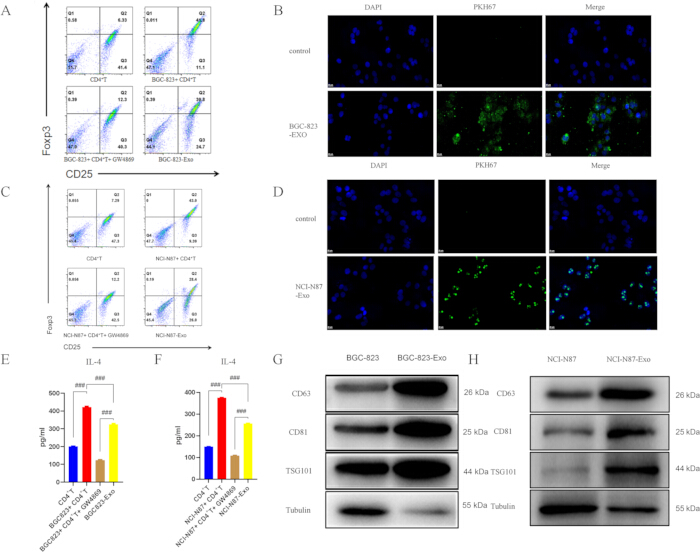
Figure 1: Exosomes secreted by GC cells promote the transformation of CD4+T cells into Tregs. (A,C) Cells were collected from the lower chamber, and the ratio of Tregs was determined using flow cytometry. (B,D) Exosomes were labeled using fluorescence staining, and their uptake in the co-culture system was observed using fluorescence microscopy (scale bar = 20 µm). (E,F) The expression levels of IL-4 were quantified using the ELISA method. (G, H) The expression levels of exosomes were analyzed using Western Blot. ###p < 0.001. Data are presented as mean ± SEM, n = 3. Please click here to view a larger version of this figure.
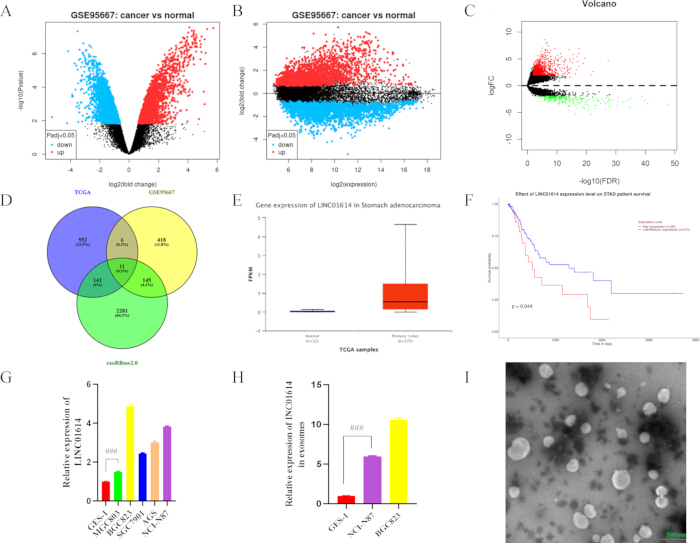
Figure 2: Differential expression of LncRNA in GC. (A,B) Differentially expressed LncRNAs in GCs from the GEO database. (C) LncRNAs with a logFC greater than 1 were selected from the TCGA database for further screening. (D) Data with specific expression and unannotated LncRNA genes were excluded from ExoRBase2.0. (E,F) TCGA database analysis of LINC01614 expression in GC and its correlation with survival. (G,H) RT-qPCR analysis of LINC01614 expression levels in different GC cell lines and their exosomes. (I) Transmission electron microscopy analysis of exosomes (scale bar = 500 nm). ###p < 0.001. Data are presented as mean ± SEM, n = 3. Please click here to view a larger version of this figure.
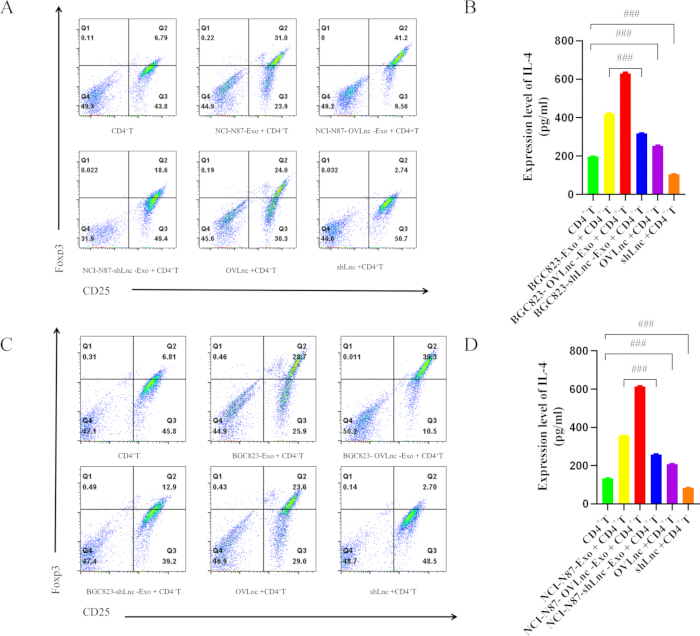
Figure 3: GC cells promote the conversion of CD4+ T cells to Tregs through exosomes carrying LINC01614. (A,C) Detection of Treg transformation levels by flow cytometry. (B,D) Expression levels of IL-4 in the supernatant were measured using the ELISA method. ###p < 0.001. Data are presented as mean ± SEM, n = 3. Please click here to view a larger version of this figure.
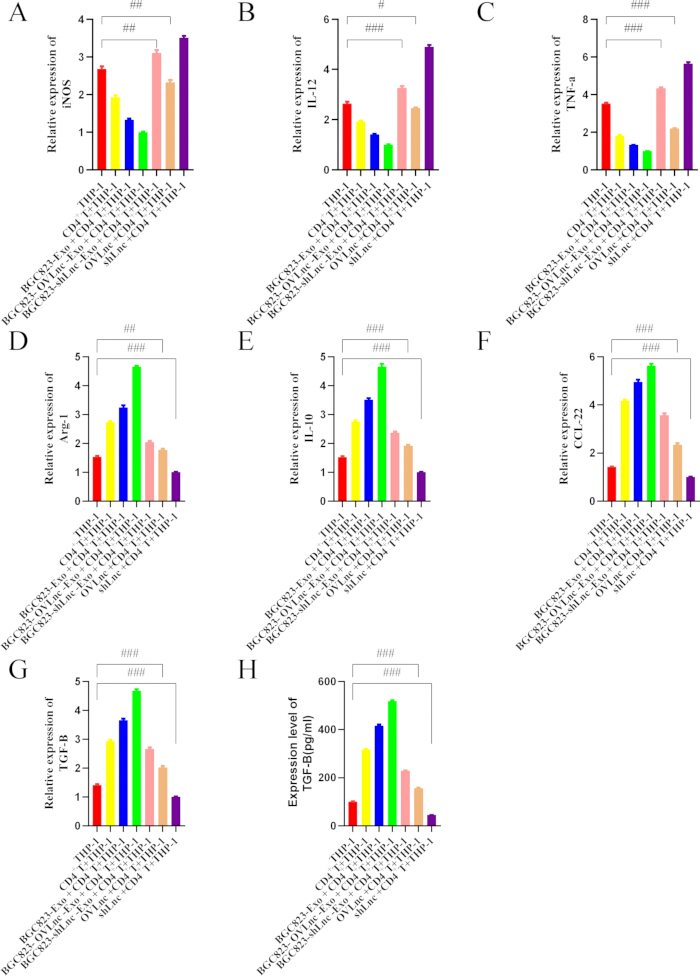
Figure 4: BGC823 cells carrying LINC01614 promote Treg transformation and M2 macrophage polarization. (A-G) RT-qPCR detection of M1 and M2 macrophage markers. (H) ELISA detection of M2 macrophage marker TGF-β levels. ###p < 0.001. Data are presented as mean ± SEM, n=3. Please click here to view a larger version of this figure.
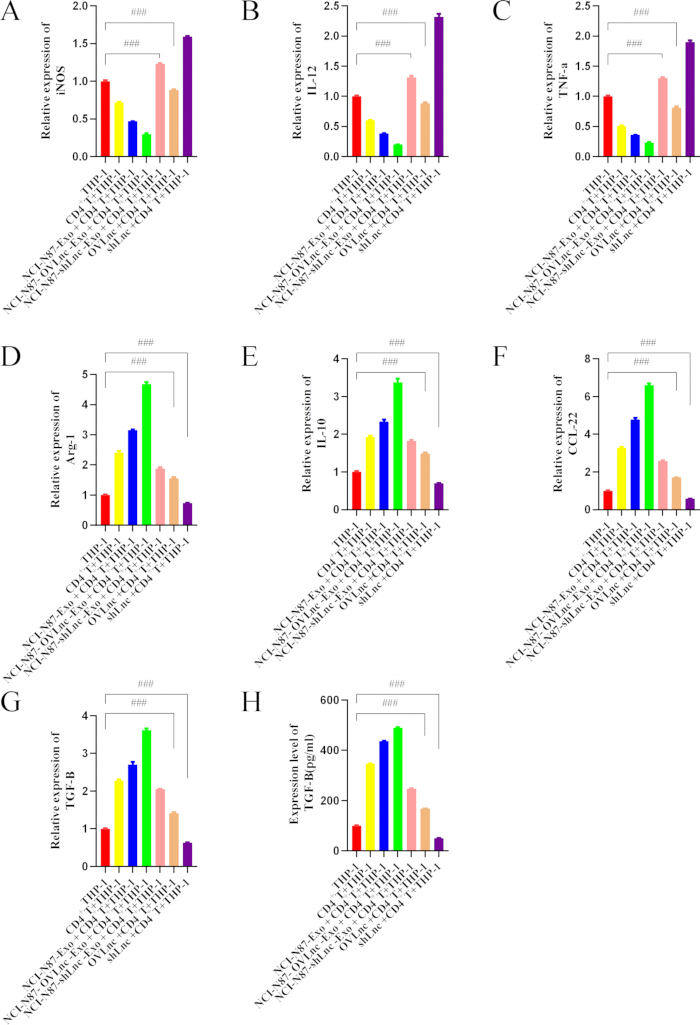
Figure 5: NCI-N87 cells carrying LINC01614 promote Treg transformation and M2 macrophage polarization. (A-G) RT-qPCR detection of M1 and M2 macrophage markers. (H) ELISA detection of M2 macrophage marker TGF-β levels. #p < 0.05, ##p < 0.01, ###p < 0.001. Data are presented as mean ± SEM, n = 3. Please click here to view a larger version of this figure.
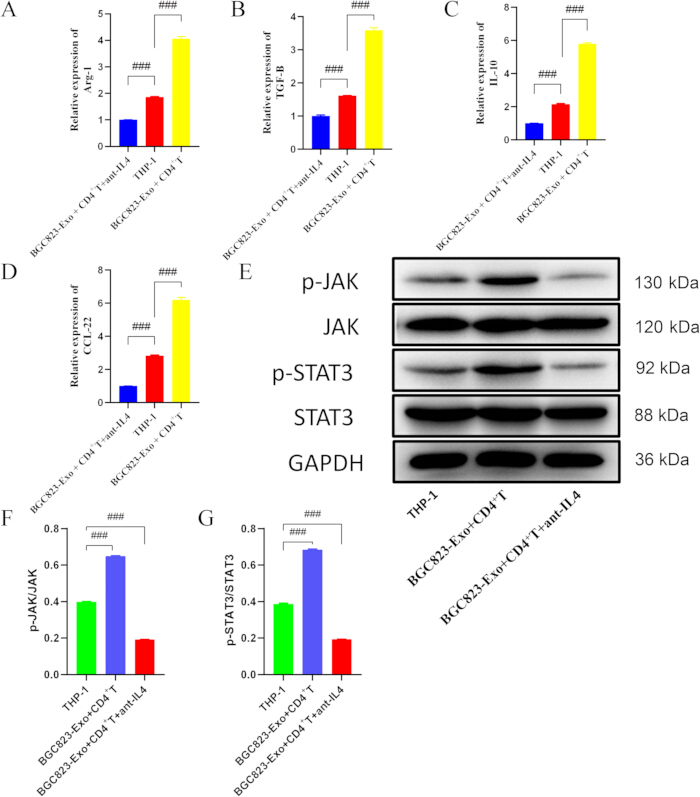
Figure 6: Treg cells secrete IL-4 and promote M2 macrophage polarization through JAK-STAT3 activation. (A-D) RT-qPCR detection of M2 macrophage markers. (E-G) Western blot detection of JAK-STAT3 signaling pathway activation. ###p < 0.001. Data are presented as mean ± SEM, n = 3. Please click here to view a larger version of this figure.

Figure 7: LINC01614 promotes IL-4 secretion and M2 polarization through Treg transformation, enhancing GC cell proliferation. (A) RIP analysis of the interaction between IL-4 and LINC01614. (B,C) Western blot detection of IL-4 expression levels. (D,E) CCK8 detects cell proliferation viability. (F,G) Cell proliferation assessed by EdU assay. (H,I) Cell proliferation assessed by the colony formation assay. ##p < 0.01, ###p < 0.001. Data are displayed as mean ± SEM, n = 3. Please click here to view a larger version of this figure.
Discussion
Loading...
$$\rightleftharpoonup{xx}$$
$$\longleftharp{xx}$$,
$$\longrightharp{xx}$$,
Immunotherapy is a primary therapeutic approach for tumor metastasis, aiming to prevent tumor recurrence by restoring anti-tumor immunity within the tumor microenvironment. Regulatory T cells (Tregs) and M2 macrophage polarization can induce immunosuppressive effects, which are significant factors in tumor progression and recurrence27,28.
In recent years, with the in-depth study of exosomes, increasing attention has been paid to their role in mediating communication within the tumor immune microenvironment. As research focuses more on the pathophysiological regulatory mechanisms of tumorigenesis, the significance of small-molecule-regulated signaling pathways in cellular or intercellular communication, such as binding DNA, RNA, or proteins, has garnered greater interest. Among these, the potential role of non-coding RNAs in bridging tumor immunity has become a hotspot of tumor immunity research29,30. Exosomes, as crucial carriers of non-coding RNAs, are extensively involved in mediating tumor immunomodulation. Exosomes from tumor cells, such as the exosome circRELL1 from gastric cancer (GC) cells, can act as miR-637 sponges to regulate GC progression by modulating autophagy activation31. Additionally, the GC cell exosome lncRNA HCG18 promotes M2 macrophage polarization by decreasing miR-875-3p levels in macrophages, thereby increasing KLF4 expression32. Tang et al. found that GC-derived lncRNA RP11-357H14.17 plays an oncogenic role in GC by activating Treg cells33. Furthermore, GC cells carrying the long non-coding RNA SND1 intron transcript SND1-IT1 induce malignant transformation of gastric mucosal cells by promoting the expression of ubiquitin-specific protease 3 (USP3) through competitive adsorption to miR-1245b-5p34. GC cell exosome miR-92a-3p-mediated PD-L1 expression in lung macrophages promotes GC lung metastasis35. These findings suggest that exosomes regulate communication between tumors and various immune cells by carrying non-coding RNAs, which is an important pathway leading to immune imbalance in the tumor microenvironment of GC. In our study, we found for the first time that GC cells can promote the transformation of CD4+ T cells into Treg cells via exosomes carrying the long-stranded non-coding RNA LINC01614.
Most of the Treg cells expressed in gastric cancer (GC) tissues may be transformed by TGF-β1 induction36. In the presence of interleukin (IL)-6 or IL-21 along with TGF-β, CD4+ T cells differentiate into Th17 cells; in the absence of pro-inflammatory cytokines, TGF-β drives differentiation into Treg cells37. Within the tumor immune microenvironment, tumor-infiltrating Th17 cells can also be differentiated into Treg cells via TCR, and Th17-derived Treg cells do not revert back to Th17 cells even under conditions that favor Th17 differentiation, resulting in a strong immunosuppressive effect38. In acute myeloid leukemia, the proportion of Treg cells in the peripheral circulation of patients is significantly increased, with strong suppression mediated through IL-35, IL-10, TGF-β, and contact-dependent mechanisms39. Conversely, in chronic lymphocytic leukemia, Treg cells are activated through the Galectin-9/Tim3 signaling pathway, which inhibits Th1 effector function and promotes tumor development40. Qiu et al. found that CCL5 promotes the proliferation of Treg cells by binding to CCR5, thereby blocking the tumor-killing function of CD8+ T cells and leading to axillary lymph node metastasis of breast cancer41. Cervical cancer-derived exosomes activate STING signaling in tumor-infiltrating T cells by releasing TGF-β, cyclic GMP-AMP synthase, and 2'-3'-cGAMP, leading to Treg cell amplification and suppression of anti-tumor immunity in CD8+ T cells42. Immunotherapy targeting Treg cells has also shown theoretical promise. For instance, using CD25 monoclonal antibody to clear Treg cells resulted in an increased proportion of CD8+ T cells in mouse tumor tissues and enhanced specific tumor-killing activity43. The combination of nivolumab and ipilimumab (anti-CTLA-4 monoclonal antibody) targeting Treg cells can reduce tumor overgrowth in patients with malignant melanoma44,45. Several studies have found that FOXP3+ T cell infiltration in colorectal cancer indicates a better prognosis46. These phenomena do not conflict with the immunosuppressive role of Treg cells. In the early stages of a tumor, Treg cells control inflammation and inhibit early tumor formation, correlating with a good prognosis. However, in advanced tumors, Treg cells inhibit the tumor-killing effects of effector T cells, exerting a negative effect. Given that Treg cells are classified into many subtypes within the tumor microenvironment, and broad-spectrum Treg markers do not fully identify their specific acting cell types, it is necessary to clarify the specific markers of relevant subtypes to obtain prognostically relevant Treg subpopulations. Meanwhile, our study did not elucidate the specific mechanism by which LINC01614 promotes Treg transformation, which still requires further research.
Recent studies have confirmed the intercellular transfer of molecules between Treg cells and their target cells through endocytosis and the release of exosomes. Treg cells can produce exosomes that inhibit T cell proliferation in a dose-dependent manner. These vesicles also alter the cytokine profile of effector T cells (Teffs), leading to increased production of IL-4 and IL-10, while decreasing levels of IL-6, IL-2, and IFNγ47. Similarly, we found that Treg cells converted by gastric cancer (GC) cells via exosome LINC01614 can secrete large amounts of IL-4, which in turn promotes the polarization of M2 macrophages. Recent studies indicate that IL-4 can also directly modulate the phenotype and suppressive function of regulatory T cells. High IL-4 signaling has been reported to reduce CTLA-4 expression and impair canonical suppressive activity of Tregs, and IL-4/STAT6-dependent signaling can favor a shift toward a Th2-like Treg program in inflammatory settings48,49. These findings suggest that exosome-induced IL-4 secretion may not only promote M2 polarization but also affect Treg stability and functional state within the tumor microenvironment, thereby reshaping the overall immunosuppressive landscape.
From a methodological perspective, accurate interpretation of exosome-mediated immunomodulatory effects depends on rigorous control of critical protocol steps. Key pre-analytical variables include choice and handling of starting material, avoidance of platelet activation in blood-derived samples, and consistent storage conditions, during isolation, parameters such as rotor type, relative centrifugal force (RCF), duration, and wash steps must be standardized, and exosome identity should be confirmed by orthogonal methods (electron microscopy, nanoparticle tracking analysis, and marker detection) to ensure reproducibility50,51.
Practical modifications and troubleshooting can mitigate common technical issues. When ultracentrifugation leads to co-sedimentation or aggregation, incorporating density gradients (e.g., iodixanol) or combining with size-exclusion chromatography (SEC) improves purity, reducing rotor braking; adding wash steps can decrease protein contamination; while careful dye-labeling protocols and removal of unincorporated dye prevent false-positive uptake signals. These adjustments have been recommended in recent methodological studies to preserve vesicle integrity and functional readouts51.
Limitations intrinsic to exosome techniques should be acknowledged. Exosome heterogeneity, potential co-isolation of lipoproteins or protein aggregates, and effects of isolation forces on cargo integrity can confound functional attribution. Additionally, reliance on in vitro cell line models limits direct clinical translation and necessitates validation using patient-derived samples and in vivo models. Careful experimental controls (mock isolations, secretion inhibitors, and orthogonal cargo profiling) are therefore essential when inferring exosome-specific biological effects50.
Significance and future applications. Despite these constraints, standardized and reproducible exosome isolation and characterization frameworks enable robust downstream molecular analyses and translational prospects, including biomarker discovery and engineered exosome therapeutics. Integration of microfluidic and high-throughput isolation platforms may further enhance clinical scalability. Our protocol emphasizes reproducibility and accessibility, making it a useful starting point for mechanistic studies and future clinical validation in gastric cancer.
This positive feedback pathway leads to the continuous deterioration of GC and may be one of the reasons for its negative correlation with the prognosis of GC, providing a new target for the diagnosis and treatment of GC. In the inflammatory response, Treg-derived IL-13 induces macrophages to release IL-10, which affects the guanine nucleotide exchange factor Vav1 and GTPase Rac1 via the autocrine-paracrine pathway, promoting the phagocytosis of apoptotic cells by macrophages52. Similarly, Treg-derived exosomes inhibit the expression of M1 macrophage markers and promote the expression of M2 macrophage markers in cardiomyocytes during myocardial infarction53. Treg cells also affect the function of CD8+ T cells by inhibiting their IFN-γ production. This inhibition blocks macrophage conversion to the M1 phenotype, mitigates the inhibitory effect of IFN-γ on sterol regulatory element-binding protein 1 (SREBP1), and restores fatty acid synthesis54. Melanoma cell-derived exosomes can inhibit CD4+ T cell immune function and promote macrophage M2 polarization by carrying mucin structural domain 3 (TIM-3)55. Currently, there are few studies on the mechanism of Treg action on tumor-associated macrophages, with most research focusing on inflammatory responses and autoimmune diseases. However, the synergistic effect of Treg cells and macrophages in the tumor microenvironment suggests the existence of relevant signaling pathways that promote immune escape from tumors. Further research is needed to elucidate these pathways and their potential as therapeutic targets.
Meanwhile, the role of macrophages targeting Treg cells cannot be ignored. For example, in epithelial ovarian cancer, IL-10 secreted by tumor-associated macrophages (TAMs) increases the ratio of Treg cells and promotes tumor progression by activating Foxp3 during T cell differentiation56. In gastric cancer (GC), tumor-associated macrophages better present H. pylori antigens and promote Tim-3 expression on Treg cells, leading to a poor prognosis in GC57. Yang et al. found that in hepatocellular carcinoma, co-culture of macrophages with hepatocellular carcinoma cells significantly upregulated IL-10 and CCL22, enhancing Treg recruitment and leading to immune escape58. This M2 macrophage-Treg loop contributes to immunosuppression, resulting in a poor tumor prognosis59. In recent years, the role of TAM/M2 polarization in GC has received much attention. For instance, epithelial-mesenchymal transition (EMT)-mediated secretion of tumor-associated fibroblasts in the GC microenvironment by insulin-like growth factor-binding protein (IGFBP7) promotes the infiltration of M2/TAM macrophages through the FGF2/FGFR1/PI3K/AKT axis, contributing to the poor prognosis of GC60. Similarly, the serine protease PRSS23 can promote infiltration of TAMs by regulating FGF2 expression61. The remodeling of tumor immunity through targeted therapy against TAMs and corresponding cytokines has garnered attention. For example, targeting Marco or IL37 receptor (IL37R) repolarizes TAMs, restores the killing activity and anti-tumor capacity of NK and T cells, and downregulates Treg activity62.
In this study, we found that non-coding RNAs delivered by exosomes from GC can promote Treg cell transformation and M2 macrophage polarization, and the specific mechanism remains to be deeply explored, which is consistent with the conclusion that inhibition of exosome-specific molecules can inhibit tumor growth and metastasis in preclinical models63,64. Compared with existing research methods, which often lack standardization, the core contribution of this study is to establish a reproducible and easy-to-use exosomal RNA interaction analysis framework, which provides standardized technical support for similar research. However, there are significant limitations in the study: only cell line models are dependent, patient-derived exosomes (e.g., peripheral blood, tumor tissue sources) are not included for validation, and clinical applicability is limited; and there are potential technical variations in exosome isolation and RNA analysis links, which may affect the stability of the results. Future studies need to preferentially validate the mechanism in patient-derived exosomes and GC animal models (e.g., xenograft models), while relying on this framework to develop exosome diagnostic tools for early gastric cancer screening or efficacy monitoring, and the reproducibility and ease of use of this framework will further assist in the clinical translational application of exosome lncRNAs.
Disclosures
Loading...
$$\rightleftharpoonup{xx}$$
$$\longleftharp{xx}$$,
$$\longrightharp{xx}$$,
The authors declared no potential conflicts of interest with respect to the research, authorship, and/or publication of this article.
Acknowledgements
Loading...
$$\rightleftharpoonup{xx}$$
$$\longleftharp{xx}$$,
$$\longrightharp{xx}$$,
This work was supported in part by the Science and Technology Foundation of Guizhou Province (QKHJC[2020]1Y335).
Materials
| Name | Company | Catalog Number | Comments |
|---|---|---|---|
| 4% paraformaldehyde | Biosharp, Inc | BL105A | |
| A green fluorescent membrane dye | Sigma, USA | PKH67GL | |
| AMT Imaging System | Advanced Microscopy Techniques Corp., Danvers, MA | HT7700 80kv | |
| Anti-CD25 | Invitrogen, USA | 25-0251-82 | |
| Anti-Foxp3 | Invitrogen, USA | 12-5773-82 | |
| Anti-IgG antibody | Service Biotech Ltd | GB111738 | |
| Anti-IL-4 antibody | Protein Technology Group Ltd | 221041AP | |
| BCA Protein Assay Kit | Beyotime, China | P0012S | |
| BeyoExo Exosome Labeling and Tracking Kit (PKH67) | Beyotime, China | C3635S | |
| Bio-Rad 7500 PCR System | Bio-Rad Laboratories, Inc. | CFX96 | |
| CCK8 Cell Proliferation and Cytotoxicity Assay Kit | HYCEZMBIO | HYCCK8-500T | |
| CD63 Antibody | Abcam, UK | ab134045 | |
| CD81 Antibody | Abcam, UK | ab79559 | |
| Clean bench | SuZhou AnTai Air Tech CO.,LTD.,China | SW-CJ-1FD | |
| Click additive solution | Epizyme, Inc | CX002L | |
| ECL Chemiluminescence Imaging System | Hangzhou Shenhua Technology Co., Ltd.,China | SH-523 | |
| Fetal bovine serum (FBS) | GIBCO, USA | 10099-141 | |
| Flow cytometer | Beckmancoulter | cytoFLEX | |
| FlowJo software | Treestar, USA | FlowJo vX | |
| Fluorescence microscopy | Nikon | Nikon DS-Fi3 | |
| HRP-conjugated secondary antibodies | Wuhan Lingjiesi Biotechnology Co., LTD | LJS-S-0001 | |
| IL-4 Antibody | Abcam, UK | ab62351 | |
| IL-4 ELISA kits | WuHan LingSi Biotechnology Co., Ltd., China | LSSW-I-1087 | |
| JAK Antibody | WuHan LingSi Biotechnology Co., Ltd., China | LSSW-K-2354 | |
| JEM 1010 transmission electron microscope | Japan Electron Optics Laboratory Co., Ltd.,Japan | JEM-1010 | |
| LINC01614 overexpressing lentivirus and interfering lentivirus | GenePharma Co., Ltd.,China | ||
| LncRNeasy Mini reagent kit | TIANGEN | FP402 | |
| MGC803, BGC823, SGC7901, AGS, NCI-N87 and THP-1 cell lines | the Typical Cultures Preservation Committee Cell Bank of the Chinese Academy of Sciences,China | ||
| Penicillin/streptomycin (P/S) | WuHan LingSi Biotechnology Co., China | LSSW-Z-2011 | |
| Phorbol 12-myristate 13-acetate (PMA) | Sigmaaldrich, USA | P1585 | |
| p-JAK Antibody | WuHan LingSi Biotechnology Co., Ltd., China | LSSW-K-7856 | |
| p-STAT3 Antibody | WuHan LingSi Biotechnology Co., Ltd., China | LSSW-L-1218 | |
| Reverse Transcription Kit | Takara Bio, Inc. | RR037A | |
| RIPA Lysing Solution | Beyotime, China | P0013B | |
| RNA immunoprecipitation kit | Life Technologies, USA | 20164 | |
| RPMI-1640 | GIBCO, USA | 11875119 | |
| STAT3 Antibody | WuHan LingSi Biotechnology Co., Ltd., China | LSSW-L-2121 | |
| Table-top centrifuge | Thermo Fisher | Pico17 | |
| Tanon 5200 system | Tanon, China | Tanon 5200 | |
| TB Green Premix Ex Taq II | Takara Bio, Inc | RR820A | |
| TGF-β ELISA kits | WuHan LingSi Biotechnology Co., Ltd., China | LSSW-T-2121 | |
| Transwell cell plate | Corning, China | 3460 | |
| TRIzol reagent | Life Technologies, USA | 15596018 | |
| TSG101 Antibody | Abcam, UK | ab125011 | |
| Tubulin Antibody | Proteintech, China | 10068-1-AP |
References
Loading...
$$\rightleftharpoonup{xx}$$
$$\longleftharp{xx}$$,
$$\longrightharp{xx}$$,
- Cancer statistics, 2022. CA Cancer J Clin. 72 (1), 7-33 (2022).">Siegel, R. L., Miller, K. D., Fuchs, H. E., Jemal, A. Cancer statistics, 2022. CA Cancer J Clin. 72 (1), 7-33 (2022).
- Global burden of 5 major types of gastrointestinal cancer. Gastroenterology. 159 (1), 335-349.e15 (2020).">Arnold, M., et al. Global burden of 5 major types of gastrointestinal cancer. Gastroenterology. 159 (1), 335-349.e15 (2020).
- Chemotherapy as palliative treatment for peritoneal carcinomatosis of gastric origin. Acta Oncol. 53 (3), 429-432 (2014).">Thomassen, I., et al. Chemotherapy as palliative treatment for peritoneal carcinomatosis of gastric origin. Acta Oncol. 53 (3), 429-432 (2014).
- The immunotherapy for colorectal cancer, lung cancer and pancreatic cancer. Int J Mol Sci. 22 (23), 12836(2021).">Chen, S. J., Wang, S. C., Chen, Y. C. The immunotherapy for colorectal cancer, lung cancer and pancreatic cancer. Int J Mol Sci. 22 (23), 12836(2021).
- Safety and efficacy of pembrolizumab monotherapy in patients with previously treated advanced gastric and gastroesophageal junction cancer: Phase 2 clinical KEYNOTE-059 trial. JAMA Oncol. 4 (5), e180013(2018).">Fuchs, C. S., et al. Safety and efficacy of pembrolizumab monotherapy in patients with previously treated advanced gastric and gastroesophageal junction cancer: Phase 2 clinical KEYNOTE-059 trial. JAMA Oncol. 4 (5), e180013(2018).
- CheckMate-032 study: Efficacy and safety of nivolumab and nivolumab plus ipilimumab in patients with metastatic esophagogastric cancer. J Clin Oncol. 36 (28), 2836-2844 (2018).">Janjigian, Y. Y., et al. CheckMate-032 study: Efficacy and safety of nivolumab and nivolumab plus ipilimumab in patients with metastatic esophagogastric cancer. J Clin Oncol. 36 (28), 2836-2844 (2018).
- Comparison of global gene expression of gastric cardia and noncardia cancers from a high-risk population in China. PLoS One. 8 (5), e63826(2013).">Wang, G., et al. Comparison of global gene expression of gastric cardia and noncardia cancers from a high-risk population in China. PLoS One. 8 (5), e63826(2013).
- Exosomal miRNAs in tumor microenvironment. J Exp Clin Cancer Res. 39 (1), 67(2020).">Tan, S., et al. Exosomal miRNAs in tumor microenvironment. J Exp Clin Cancer Res. 39 (1), 67(2020).
- Interactions of tumour-derived micro(nano)vesicles with human gastric cancer cells. J Transl Med. 13, 376(2015).">Stec, M., et al. Interactions of tumour-derived micro(nano)vesicles with human gastric cancer cells. J Transl Med. 13, 376(2015).
- LncRNA ELF3-AS1 inhibits gastric cancer by forming a negative feedback loop with SNAI2 and regulates ELF3 mRNA stability via interacting with ILF2/ILF3 complex. J Exp Clin Cancer Res. 41 (1), 332(2022).">Li, D., et al. LncRNA ELF3-AS1 inhibits gastric cancer by forming a negative feedback loop with SNAI2 and regulates ELF3 mRNA stability via interacting with ILF2/ILF3 complex. J Exp Clin Cancer Res. 41 (1), 332(2022).
- The EMT-induced lncRNA NR2F1-AS1 positively modulates NR2F1 expression and drives gastric cancer via miR-29a-3p/VAMP7 axis. Cell Death Dis. 13 (1), 84(2022).">Li, D., et al. The EMT-induced lncRNA NR2F1-AS1 positively modulates NR2F1 expression and drives gastric cancer via miR-29a-3p/VAMP7 axis. Cell Death Dis. 13 (1), 84(2022).
- Transfer of lncRNA CRNDE in TAM-derived exosomes is linked with cisplatin resistance in gastric cancer. EMBO Rep. 22 (12), e52124(2021).">Xin, L., et al. Transfer of lncRNA CRNDE in TAM-derived exosomes is linked with cisplatin resistance in gastric cancer. EMBO Rep. 22 (12), e52124(2021).
- Exosomal microRNA-588 from M2 polarized macrophages contributes to cisplatin resistance of gastric cancer cells. World J Gastroenterol. 27 (36), 6079-6092 (2021).">Cui, H. Y., et al. Exosomal microRNA-588 from M2 polarized macrophages contributes to cisplatin resistance of gastric cancer cells. World J Gastroenterol. 27 (36), 6079-6092 (2021).
- Breast cancer-derived exosomes transmit lncRNA SNHG16 to induce CD73+γδ1 Treg cells. Signal Transduct Target Ther. 5 (1), 41(2020).">Ni, C., et al. Breast cancer-derived exosomes transmit lncRNA SNHG16 to induce CD73+γδ1 Treg cells. Signal Transduct Target Ther. 5 (1), 41(2020).
- lncRNA/miR-29c-mediated high expression of LOX can influence the immune status and chemosensitivity and can forecast the poor prognosis of gastric cancer. Front Cell Dev Biol. 9, 760470(2021).">Nai, A., et al. lncRNA/miR-29c-mediated high expression of LOX can influence the immune status and chemosensitivity and can forecast the poor prognosis of gastric cancer. Front Cell Dev Biol. 9, 760470(2021).
- LINC01614 promotes osteosarcoma progression via miR-520a-3p/SNX3 axis. Cell Signal. 83, 109985(2021).">Cai, Q., et al. LINC01614 promotes osteosarcoma progression via miR-520a-3p/SNX3 axis. Cell Signal. 83, 109985(2021).
- Genomic instability-related lncRNA signature predicts the prognosis and highlights LINC01614 is a tumor microenvironment-related oncogenic lncRNA of papillary thyroid carcinoma. Front Oncol. 11, 737867(2021).">Dong, X., et al. Genomic instability-related lncRNA signature predicts the prognosis and highlights LINC01614 is a tumor microenvironment-related oncogenic lncRNA of papillary thyroid carcinoma. Front Oncol. 11, 737867(2021).
- Survival-related lncRNA landscape analysis identifies LINC01614 as an oncogenic lncRNA in gastric cancer. Front Genet. 12, 698947(2021).">Wu, H., et al. Survival-related lncRNA landscape analysis identifies LINC01614 as an oncogenic lncRNA in gastric cancer. Front Genet. 12, 698947(2021).
- Classifying gastric cancer using FLORA reveals clinically relevant molecular subtypes and highlights LINC01614 as a biomarker for patient prognosis. Oncogene. 40 (16), 2898-2909 (2021).">Chen, Y., et al. Classifying gastric cancer using FLORA reveals clinically relevant molecular subtypes and highlights LINC01614 as a biomarker for patient prognosis. Oncogene. 40 (16), 2898-2909 (2021).
- Revealing the role of lncRNA CCDC144NL-AS1 and LINC01614 in gastric cancer via integrative bioinformatics analysis and experimental validation. Front Oncol. 11, 769563(2021).">Sheng, W., Zhou, W., Cao, Y., Zhong, Y. Revealing the role of lncRNA CCDC144NL-AS1 and LINC01614 in gastric cancer via integrative bioinformatics analysis and experimental validation. Front Oncol. 11, 769563(2021).
- Tumor-derived microvesicles promote regulatory T cell expansion and induce apoptosis in tumor-reactive activated CD8+ T lymphocytes. J Immunol. 183 (6), 3720-3730 (2009).">Wieckowski, E. U., et al. Tumor-derived microvesicles promote regulatory T cell expansion and induce apoptosis in tumor-reactive activated CD8+ T lymphocytes. J Immunol. 183 (6), 3720-3730 (2009).
- Tumor-derived microvesicles induce, expand and upregulate biological activities of human regulatory T cells (Treg). PLoS One. 5 (7), e11469(2010).">Szajnik, M., Czystowska, M., Szczepanski, M. J., Mandapathil, M., Whiteside, T. L. Tumor-derived microvesicles induce, expand and upregulate biological activities of human regulatory T cells (Treg). PLoS One. 5 (7), e11469(2010).
- Higher intratumoral infiltrated Foxp3+ Treg numbers and Foxp3+/CD8+ ratio are associated with adverse prognosis in resectable gastric cancer. J Cancer Res Clin Oncol. 136 (10), 1585-1595 (2010).">Shen, Z., et al. Higher intratumoral infiltrated Foxp3+ Treg numbers and Foxp3+/CD8+ ratio are associated with adverse prognosis in resectable gastric cancer. J Cancer Res Clin Oncol. 136 (10), 1585-1595 (2010).
- Intratumoural FOXP3-positive regulatory T cells are associated with adverse prognosis in radically resected gastric cancer. Eur J Cancer. 44 (13), 1875-1882 (2008).">Perrone, G., et al. Intratumoural FOXP3-positive regulatory T cells are associated with adverse prognosis in radically resected gastric cancer. Eur J Cancer. 44 (13), 1875-1882 (2008).
- Analysis of relative gene expression data using real-time quantitative PCR and the 2(−Delta Delta C(T)) method. Methods. 25 (4), 402-408 (2001).">Livak, K. J., Schmittgen, T. D. Analysis of relative gene expression data using real-time quantitative PCR and the 2(−Delta Delta C(T)) method. Methods. 25 (4), 402-408 (2001).
- Blocking interleukin (IL)4- and IL13-mediated phosphorylation of STAT6 (Tyr641) decreases M2 polarization of macrophages and protects against macrophage-mediated radioresistance of inflammatory breast cancer. Int J Radiat Oncol Biol Phys. 100 (4), 1034-1043 (2018).">Rahal, O. M., et al. Blocking interleukin (IL)4- and IL13-mediated phosphorylation of STAT6 (Tyr641) decreases M2 polarization of macrophages and protects against macrophage-mediated radioresistance of inflammatory breast cancer. Int J Radiat Oncol Biol Phys. 100 (4), 1034-1043 (2018).
- Recent advances in the study of regulatory T cells in gastric cancer. Int Immunopharmacol. 73, 560-567 (2019).">Liu, X., Zhang, Z., Zhao, G. Recent advances in the study of regulatory T cells in gastric cancer. Int Immunopharmacol. 73, 560-567 (2019).
- Non-coding RNA networks in cancer. Nat Rev Cancer. 18 (1), 5-18 (2018).">Anastasiadou, E., Jacob, L. S., Slack, F. J. Non-coding RNA networks in cancer. Nat Rev Cancer. 18 (1), 5-18 (2018).
- Macrophage diversity enhances tumor progression and metastasis. Cell. 141 (1), 39-51 (2010).">Qian, B. Z., Pollard, J. W. Macrophage diversity enhances tumor progression and metastasis. Cell. 141 (1), 39-51 (2010).
- The role of non-coding RNAs in oncology. Cell. 179 (5), 1033-1055 (2019).">Slack, F. J., Chinnaiyan, A. M. The role of non-coding RNAs in oncology. Cell. 179 (5), 1033-1055 (2019).
- Exosomal circRELL1 serves as a miR-637 sponge to modulate gastric cancer progression via regulating autophagy activation. Cell Death Dis. 13 (1), 56(2022).">Sang, H., et al. Exosomal circRELL1 serves as a miR-637 sponge to modulate gastric cancer progression via regulating autophagy activation. Cell Death Dis. 13 (1), 56(2022).
- Exosome-mediated transfer of lncRNA HCG18 promotes M2 macrophage polarization in gastric cancer. Mol Immunol. 140, 196-205 (2021).">Xin, L., et al. Exosome-mediated transfer of lncRNA HCG18 promotes M2 macrophage polarization in gastric cancer. Mol Immunol. 140, 196-205 (2021).
- Long non-coding RNA RP11-357H14.17 plays an oncogene role in gastric cancer by activating ATF2 signaling and enhancing Treg cells. Biomed Res Int. 2021, 6635936(2021).">Xiaoli, T., Wenting, W., Meixiang, Z., Chunlei, Z., Chengxia, H. Long non-coding RNA RP11-357H14.17 plays an oncogene role in gastric cancer by activating ATF2 signaling and enhancing Treg cells. Biomed Res Int. 2021, 6635936(2021).
- Exosome-mediated lncRNA SND1-IT1 from gastric cancer cells enhances malignant transformation of gastric mucosa cells via upregulating SNAIL1. J Transl Med. 20 (1), 284(2022).">Jin, G., et al. Exosome-mediated lncRNA SND1-IT1 from gastric cancer cells enhances malignant transformation of gastric mucosa cells via upregulating SNAIL1. J Transl Med. 20 (1), 284(2022).
- Gastric cancer-derived exosomes facilitate pulmonary metastasis by activating ERK-mediated immunosuppressive macrophage polarization. J Cell Biochem. 124 (4), 557-572 (2023).">Gu, J., et al. Gastric cancer-derived exosomes facilitate pulmonary metastasis by activating ERK-mediated immunosuppressive macrophage polarization. J Cell Biochem. 124 (4), 557-572 (2023).
- Conversion of intratumoral regulatory T cells by human gastric cancer cells is dependent on transforming growth factor-β1. J Surg Oncol. 104 (6), 571-577 (2011).">Lu, X., et al. Conversion of intratumoral regulatory T cells by human gastric cancer cells is dependent on transforming growth factor-β1. J Surg Oncol. 104 (6), 571-577 (2011).
- The balance of Th17 versus Treg cells in autoimmunity. Int J Mol Sci. 19 (3), 730(2018).">Lee, G. R. The balance of Th17 versus Treg cells in autoimmunity. Int J Mol Sci. 19 (3), 730(2018).
- Human tumor-infiltrating Th17 cells have the capacity to differentiate into IFN-γ+ and FOXP3+ T cells with potent suppressive function. Eur J Immunol. 41 (4), 936-951 (2011).">Ye, J., et al. Human tumor-infiltrating Th17 cells have the capacity to differentiate into IFN-γ+ and FOXP3+ T cells with potent suppressive function. Eur J Immunol. 41 (4), 936-951 (2011).
- Aberrant expression of Treg-associated cytokine IL-35 along with IL-10 and TGF-β in acute myeloid leukemia. Oncol Lett. 3 (5), 1119-1123 (2012).">Wu, H., et al. Aberrant expression of Treg-associated cytokine IL-35 along with IL-10 and TGF-β in acute myeloid leukemia. Oncol Lett. 3 (5), 1119-1123 (2012).
- Activated Galectin-9/Tim3 promotes Treg and suppresses Th1 effector function in chronic lymphocytic leukemia. Faseb J. 35 (7), e21556(2021).">Pang, N., et al. Activated Galectin-9/Tim3 promotes Treg and suppresses Th1 effector function in chronic lymphocytic leukemia. Faseb J. 35 (7), e21556(2021).
- CCL5 mediates breast cancer metastasis and prognosis through CCR5/Treg cells. Front Oncol. 12, 972383(2022).">Qiu, J., et al. CCL5 mediates breast cancer metastasis and prognosis through CCR5/Treg cells. Front Oncol. 12, 972383(2022).
- T cell-intrinsic STING signaling promotes regulatory T cell induction and immunosuppression by upregulating FOXP3 transcription in cervical cancer. J Immunother Cancer. 10 (9), e005151(2022).">Ni, H., et al. T cell-intrinsic STING signaling promotes regulatory T cell induction and immunosuppression by upregulating FOXP3 transcription in cervical cancer. J Immunother Cancer. 10 (9), e005151(2022).
- Targeting Treg cells in cancer immunotherapy. Eur J Immunol. 49 (8), 1140-1146 (2019).">Tanaka, A., Sakaguchi, S. Targeting Treg cells in cancer immunotherapy. Eur J Immunol. 49 (8), 1140-1146 (2019).
- Ipilimumab-dependent cell-mediated cytotoxicity of regulatory T cells ex vivo by nonclassical monocytes in melanoma patients. Proc Natl Acad Sci U S A. 112 (19), 6140-6145 (2015).">Romano, E., et al. Ipilimumab-dependent cell-mediated cytotoxicity of regulatory T cells ex vivo by nonclassical monocytes in melanoma patients. Proc Natl Acad Sci U S A. 112 (19), 6140-6145 (2015).
- Fc effector function contributes to the activity of human anti-CTLA-4 antibodies. Cancer Cell. 33 (4), 649-663.e4 (2018).">Arce Vargas, F., et al. Fc effector function contributes to the activity of human anti-CTLA-4 antibodies. Cancer Cell. 33 (4), 649-663.e4 (2018).
- High frequency of tumor-infiltrating FOXP3(+) regulatory T cells predicts improved survival in mismatch repair-proficient colorectal cancer patients. Int J Cancer. 126 (11), 2635-2643 (2010).">Frey, D. M., et al. High frequency of tumor-infiltrating FOXP3(+) regulatory T cells predicts improved survival in mismatch repair-proficient colorectal cancer patients. Int J Cancer. 126 (11), 2635-2643 (2010).
- Regulatory T cell extracellular vesicles modify T-effector cell cytokine production and protect against human skin allograft damage. Front Cell Dev Biol. 8, 317(2020).">Tung, S. L., et al. Regulatory T cell extracellular vesicles modify T-effector cell cytokine production and protect against human skin allograft damage. Front Cell Dev Biol. 8, 317(2020).
- IL-4-induced decrease in both the number and CTLA-4 expression of Treg impairs suppression of Th2 type inflammation in severe atopic dermatitis. J Dermatol Sci. 114 (2), 54-63 (2024).">Wang, B., et al. IL-4-induced decrease in both the number and CTLA-4 expression of Treg impairs suppression of Th2 type inflammation in severe atopic dermatitis. J Dermatol Sci. 114 (2), 54-63 (2024).
- Regulation of Treg cells by cytokine signaling and co-stimulatory molecules. Front Immunol. 15, 1387975(2024).">Zong, Y., Deng, K., Chong, W. P. Regulation of Treg cells by cytokine signaling and co-stimulatory molecules. Front Immunol. 15, 1387975(2024).
- Minimal information for studies of extracellular vesicles (MISEV2023): From basic to advanced approaches. J Extracell Vesicles. 13 (2), e12404(2024).">Welsh, J. A., et al. Minimal information for studies of extracellular vesicles (MISEV2023): From basic to advanced approaches. J Extracell Vesicles. 13 (2), e12404(2024).
- Recent developments in isolating methods for exosomes. Front Bioeng Biotechnol. 10, 1100892(2022).">Gao, J., et al. Recent developments in isolating methods for exosomes. Front Bioeng Biotechnol. 10, 1100892(2022).
- Regulatory T cells promote macrophage efferocytosis during inflammation resolution. Immunity. 49 (4), 666-677.e6 (2018).">Proto, J. D., et al. Regulatory T cells promote macrophage efferocytosis during inflammation resolution. Immunity. 49 (4), 666-677.e6 (2018).
- Exosomes derived from regulatory T cells ameliorate acute myocardial infarction by promoting macrophage M2 polarization. IUBMB Life. 72 (11), 2409-2419 (2020).">Hu, H., Wu, J., Cao, C., Ma, L. Exosomes derived from regulatory T cells ameliorate acute myocardial infarction by promoting macrophage M2 polarization. IUBMB Life. 72 (11), 2409-2419 (2020).
- Treg cells promote the SREBP1-dependent metabolic fitness of tumor-promoting macrophages via repression of CD8(+) T cell-derived interferon-γ. Immunity. 51 (2), 381-397.e6 (2019).">Liu, C., et al. Treg cells promote the SREBP1-dependent metabolic fitness of tumor-promoting macrophages via repression of CD8(+) T cell-derived interferon-γ. Immunity. 51 (2), 381-397.e6 (2019).
- TIM-3 shuttled by MV3 cells-secreted exosomes inhibits CD4(+) T cell immune function and induces macrophage M2 polarization to promote the growth and metastasis of melanoma cells. Transl Oncol. 18, 101334(2022).">Li, X., Liu, Y., Yang, L., Jiang, Y., Qian, Q. TIM-3 shuttled by MV3 cells-secreted exosomes inhibits CD4(+) T cell immune function and induces macrophage M2 polarization to promote the growth and metastasis of melanoma cells. Transl Oncol. 18, 101334(2022).
- Interaction between Treg cells and tumor-associated macrophages in the tumor microenvironment of epithelial ovarian cancer. Oncol Rep. 36 (6), 3472-3478 (2016).">Zhu, Q., Wu, X., Wu, Y., Wang, X. Interaction between Treg cells and tumor-associated macrophages in the tumor microenvironment of epithelial ovarian cancer. Oncol Rep. 36 (6), 3472-3478 (2016).
- Preferential Tim-3 expression on Treg and CD8(+) T cells, supported by tumor-associated macrophages, is associated with worse prognosis in gastric cancer. Am J Transl Res. 8 (8), 3419-3428 (2016).">Shen, P., et al. Preferential Tim-3 expression on Treg and CD8(+) T cells, supported by tumor-associated macrophages, is associated with worse prognosis in gastric cancer. Am J Transl Res. 8 (8), 3419-3428 (2016).
- Hepatocellular carcinoma and macrophage interaction induced tumor immunosuppression via Treg requires TLR4 signaling. World J Gastroenterol. 18 (23), 2938-2947 (2012).">Yang, J., et al. Hepatocellular carcinoma and macrophage interaction induced tumor immunosuppression via Treg requires TLR4 signaling. World J Gastroenterol. 18 (23), 2938-2947 (2012).
- A positive-feedback loop between tumour infiltrating activated Treg cells and type 2-skewed macrophages is essential for progression of laryngeal squamous cell carcinoma. Br J Cancer. 117 (11), 1631-1643 (2017).">Sun, W., et al. A positive-feedback loop between tumour infiltrating activated Treg cells and type 2-skewed macrophages is essential for progression of laryngeal squamous cell carcinoma. Br J Cancer. 117 (11), 1631-1643 (2017).
- Cancer-associated fibroblast-secreted IGFBP7 promotes gastric cancer by enhancing tumor associated macrophage infiltration via FGF2/FGFR1/PI3K/AKT axis. Cell Death Discov. 9 (1), 17(2023).">Li, D., et al. Cancer-associated fibroblast-secreted IGFBP7 promotes gastric cancer by enhancing tumor associated macrophage infiltration via FGF2/FGFR1/PI3K/AKT axis. Cell Death Discov. 9 (1), 17(2023).
- Serine protease PRSS23 drives gastric cancer by enhancing tumor associated macrophage infiltration via FGF2. Front Immunol. 13, 955841(2022).">Qin, S., Wang, Z., Huang, C., Huang, P., Li, D. Serine protease PRSS23 drives gastric cancer by enhancing tumor associated macrophage infiltration via FGF2. Front Immunol. 13, 955841(2022).
- Targeting MARCO and IL37R on immunosuppressive macrophages in lung cancer blocks regulatory T cells and supports cytotoxic lymphocyte function. Cancer Res. 81 (4), 956-967 (2021).">La Fleur, L., et al. Targeting MARCO and IL37R on immunosuppressive macrophages in lung cancer blocks regulatory T cells and supports cytotoxic lymphocyte function. Cancer Res. 81 (4), 956-967 (2021).
- Extracellular vesicles in gastric cancer: Role of exosomal lncRNA and microRNA as diagnostic and therapeutic targets. Front Physiol. 14, 1158839(2023).">Jiang, C., et al. Extracellular vesicles in gastric cancer: Role of exosomal lncRNA and microRNA as diagnostic and therapeutic targets. Front Physiol. 14, 1158839(2023).
- Exosomes in gastric cancer: Roles, mechanisms, and applications. Mol Cancer. 18 (1), 41(2019).">Fu, M., et al. Exosomes in gastric cancer: Roles, mechanisms, and applications. Mol Cancer. 18 (1), 41(2019).
Reprints and Permissions
Request permission to reuse the text or figures of this JoVE article
Request Permission