This paper presents a protocol for culturing moth olfactory receptor neurons, enabling long-term survival and differentiation. This approach offers an alternative to highly challenging in situ recordings by using enzymatic and mechanical dissociation with a hanging column culture technique, enabling functional studies like patch-clamp recordings.
Method Article
Primary Cultures of Moth Olfactory Receptor Neurons
Opens in a new tab
In This Article
Summary
Loading...
$$\rightleftharpoonup{xx}$$
$$\longleftharp{xx}$$,
$$\longrightharp{xx}$$,
Abstract
Loading...
$$\rightleftharpoonup{xx}$$
$$\longleftharp{xx}$$,
$$\longrightharp{xx}$$,
Insects critically depend on their olfaction for many behaviors related to mating, feeding, and social interactions. They have evolved highly sensitive olfactory receptor neurons (ORNs). Although in situ extracellular recordings are commonly used to analyze the response profile, coding properties, and physiology of these cells, a detailed analysis of their signal transduction pathways requires patch-clamp recordings. To facilitate the use of this electrophysiological technique and a good control of the composition of intra- and extracellular ORN solutions, this paper describes a protocol for culturing insect ORNs. As insect ORNs are closely enveloped by accessory cells, preventing any acute dissociation of adult ORNs and direct access to their membranes, this protocol describes the dissection of antennal cells from moth pupae, before the differentiation of ORNs. Developing antennae are enzymatically and mechanically dissociated and then cultured upside down with the 'hanging column technique' in a conditioned medium that supports the differentiation and survival of ORNs for several weeks. ORNs cultured by this method are suitable for functional assays such as patch-clamp recordings.
Introduction
Loading...
$$\rightleftharpoonup{xx}$$
$$\longleftharp{xx}$$,
$$\longrightharp{xx}$$,
Insects rely heavily on olfaction to navigate their environment, locate food sources, identify mates, and avoid predators1,2. Their olfactory system is remarkably efficient and finely tuned, enabling the detection of a wide range of volatile chemical cues with high sensitivity and specificity3. Odorants are primarily detected by olfactory receptor neurons (ORNs), which are housed in sensilla located on the antennae, the principal olfactory organs, as well as on the maxillary palps, which serve as secondary olfactory structures in Diptera such as mosquitoes and Drosophila4.
To investigate the molecular mechanisms underlying olfactory signal transduction, direct electrophysiological access to individual ORNs is essential. Patch-clamp recording, a gold standard technique in neurophysiology, allows for detailed functional characterization of the ion channels, receptors, and signaling pathways. In situ patch-clamp recordings from insect ORNs are possible but technically challenging due to the small size, dense packing within accessory cells, and cuticular encapsulation of these neurons. These difficulties have been overcome by patching extruded outer dendrites from the giant saturnid moth Antheraea polyphemus5 or patching ORNs from semi-intact or antennal-slice preparation in Drosophila6,7. Although in situ recordings enable the recording of normally differentiated neurons, these approaches present substantial technical difficulties, underscoring the need for alternative approaches that provide more accessible experimental conditions.
This article describes a robust protocol for culturing ORNs from moth antennae. The protocol appears to be applicable to a broad range of Lepidoptera, although it has not yet been tested on other insect groups. The method enables the maintenance and growth of ORNs in vitro, thereby offering direct access to these cells for patch-clamp studies8,9,10 as well as pharmacological and imaging studies. This culture system provides a valuable platform for the functional analysis of olfactory transduction pathways and the molecular components involved, bypassing many of the limitations associated with in situ recordings.
Protocol
Loading...
$$\rightleftharpoonup{xx}$$
$$\longleftharp{xx}$$,
$$\longrightharp{xx}$$,
Ethics approval and compliance statements are not required for studies involving insects. Primary cultures of insect ORNs were described on the tobacco hawk moth Manduca sexta (Lepidoptera, Sphingidae)11, the honey bee Apis mellifera12, and the cabbage moth Mamestra brassicae (Lepidoptera, Noctuidae)13. The protocols described show some similarities (dissection from the pupal stage) and differences (culture medium, growth surface). The protocol described here has been successfully used without modification to culture ORNs from several moth species, M. brassicae, Spodoptera littoralis, Bombyx mori, and Agrotis ipsilon. All steps carried out under the laminar flow hood (sections 2 to 8 are to be done aseptically).
1. Insects
- Rear larvae of S. littoralis (Lepidoptera: Noctuidae) on an artificial diet and maintain them at 22-24 °C, 60-70% relative humidity, and under a 16:8 h light:dark cycle as previously described14.
- Separate males and females at the pupal stage. After emergence, keep adult males separately from females in plastic boxes and provide them free access to a 20% sucrose solution.
- Collect new pupae daily and keep them at 22 °C. In these conditions, pupation lasts 14-16 days. Perform experiments with males or females.
2. Preparation of conditioned Grace culture medium
NOTE: The Grace's medium used to culture moth ORNs is conditioned on a Manduca sexta cell line (MRRL-CH115; this cell line is available upon request). Subculture MRRL-CH1 cells every 3 weeks (about an 80% confluency) at 20 °C under normal air. Do not allow the cells to exceed 90% confluency, as this leads to detachment of cells and increased levels of cell death. At each passage, perform the following steps.
- Detach gently adherent cells from the bottom surface of one flask using a 10 mL pipette.
- Spread 1.5 mL of the cell suspension in 4 flasks and add 6.2 mL of Grace's medium supplemented with 10% fetal bovine serum (FBS) in each flask.
- Two days after cell passaging, if there is no contamination in the last prepared flasks, collect the culture medium from the remaining 3 flasks of the previous passage. Filter (0.2 µm) and store the conditioned Grace's medium at 5 °C. Use this for up to 6 months.
3. Preparation of papain
NOTE: Papain must be stored in concentrated aliquots (100 mL at 10 mg/mL) and at -80 °C to minimize the loss of enzymatic activity over time. Therefore, aliquots of papain solvents must be prepared separately. Ethylenediaminetetraacetic acid (EDTA) and L-Cystein are added to active papain16. When mixed with papain, their final concentration is 0.5 mM EDTA, 1 mM Cystein, and 1 mg/mL papain (~10 U/mL).
- Papain aliquots: Dilute papain (25 mg) in 2.5 mL of sterile Hanks Balanced Salt Solution (HBSS) with 20% glycerol. Keep it in 100 µL aliquots at -80 °C.
- Papain solvent aliquots: Pipette 27 mL of mannitol and adjust its osmotic pressure to 380 mOsmol/L with mannitol. Add 5.6 mg of EDTA and 5.3 mg of L-Cystein. Adjust pH to 6.7. Sterilize using 0.2 µm low-binding filters. Keep it in 900 µL aliquots at -20 °C.
4. Preparation of culture media
NOTE: All media are sterile. Sterilizations are done using 0.2 µm sterile filters.
- 3+2 medium:
- Add 3 parts of Leibovitz's medium (16.4 mL), 2 parts of Grace's medium (11 mL), and 2% of penicillin-streptomycin (0.6 mL) in a 30 mL tube. Adjust osmotic pressure to 370 mOsmol/L (about 150 mg of mannitol) and pH to 6.7 (NaOH 1 M).
- From the resulting 28 mL of 3+2 medium, filter and transfer 5 mL to a 7 mL tube. Add a few crystals of phenylthiourea (about 1-2 mg) to the remaining 23 mL of the 3+2 medium and then sterilize and transfer 1.5 mL to a 7 mL tube (tube #1) and to 6 Petri dishes later used to dissect pupae and thus referred below to as 'dissection dishes'.
NOTE: Phenylthiourea inhibits the oxidase activity17,18,19 that would result in a blackening of antennal tissues.
- Conditioned 3+2 medium:
- Add 67 mg of mannitol to a 30 mL tube and 9 mL of Leibovitz's medium and filter (0.2 µm). Then add 2 parts of conditioned Grace's medium.
- Adjust the amount of mannitol according to the osmotic pressure of the Leibovitz's and Grace's media so that the osmotic pressure of the conditioned 3+2 medium is 370 ± 15 mOsmol/L (tube #2).
- HBSS medium: Add 12 mL of HBSS and 0.25 mL of penicillin-streptomycin. Adjust osmotic pressure to 370 mOsmol/L (about 216 mg of mannitol), pH to 6.7 (HCl 1 M), and sterilize (tube #3).
- HBSS-EGTA medium: Add 2 mg of ethylene glycol-bis (β-aminoethyl ether)-N,N,N′,N′-tetraacetic acid (EGTA) and 2 mL of the previously prepared HBSS solution to a 7 mL tube. Adjust pH to 6.7 (NaOH 1 M) and sterilize (tube #4).
5. Dissection of pupae (Figure 1)
NOTE: Clean forceps periodically with 70% ethanol and absorbent paper and then flame them rapidly. Dissection on a black background facilitates visualization of the antenna.
- Rinse 2.5 to 3-day old pupae under tap water and then under distilled water.
- Introduce 20-25 pupae in a Petri dish under the laminar flow hood.
- Under the hood, flame 2 beakers. Fill one with 70% ethanol and the other with sterile (autoclaved) distilled water.
- Take 4 pupae with forceps and dip them for about 10 s in 70% ethanol and then in sterile distilled water and transfer them to the lid of a dissection Petri dish.
- Cut the cuticle around each antenna with flamed forceps and transfer the pair of antennae to a dissection dish filled with 3+2 medium (Figure 1A,B).
- In the 3+2 medium, remove all tissues covering the tubes where the antennal development occurs so that only the antenna and pupal cuticle remain (Figure 1C), and then transfer the antennae (Figure 1D) to a new dish filled with 3+2 medium.
NOTE: Figure 1E-J shows the images of the dissection process. - Open the tube where the antenna develops with fine forceps and gently remove the antenna. Removing each antenna in one single piece makes the following rinses (steps 7.1-7.9) easier, as they are more prone to sinking to the bottom of the tube.
- Using a sterile Pasteur pipette, aspirate some medium from the dish and expel it back into the dish to wet the inner surface of the pipette. This helps reduce the tendency of the antennae to stick to the glass within the pipette. Then, transfer the dissected antennae with the pipette to the 7 mL tube filled with 1.5 mL of 3+2 (tube #1).
- Repeat steps 5.4 -5.8 for 20 pupae and gather 20 pairs of antennae in tube #1.
6. Preparation of Petri dishes
NOTE: Antennal cells are cultured using the hanging column technique20. This requires preparing Petri dishes. It can be done in advance.
- Cut pieces of glass (6-7 mm × 6-7 mm) from a slide. Keep them in ethanol.
- Under the hood, flame the glass pieces, immediately dip them in sterile (autoclaved) petroleum jelly (e.g., Vaseline), and position them in the Petri dishes as shown in Figure 2A.
7. Dissociation and plating of cells
NOTE: For the media replacements described below, it is important to remove as much medium as possible using a sterile Pasteur pipette, without discarding any antennal tissue. The arm of a cold-light source helps to more clearly visualize the antennae floating in the medium. Enzymatic dissociation and mechanical trituration are done sequentially and not simultaneously in order to avoid centrifuging the antennal cells to remove papain.
- Put a papain aliquot and a papain solvent aliquot at room temperature.
- Replace the 3+2 medium in tube #1 with the dissected antenna with 1 mL of HBSS (from tube #3) and wait for 10 min.
- Replace the HBSS medium with 1 mL of HBSS-EGTA (from tube #4) and wait for 5 min.
- Replace the HBSS-EGTA medium with 1 mL of HBSS and wait for 5 min.
- Replace the HBSS medium with 1 mL of HBSS and wait for 5 min.
- Transfer the papain solvent (900 µL) to the papain aliquot (100 µL). Adjust the pH of the resulting papain dilution (0.2-0.5 µL HCl 1M) if its color is not the same as the yellow of the 3+2 solution. Do not measure the pH, as this would contaminate the solution.
- Replace the HBSS medium with 1 mL of the freshly diluted papain solution and incubate for 10-15 min. Carry out enzymatic digestion at room temperature.
- Replace the papain solution with 1 mL of HBSS + 50 µL of FBS and wait for 5 min to inactivate the papain activity.
- Rinse twice with 1 mL of HBSS for 5 min.
- Replace HBSS medium with 1 mL of 3+2 medium.
- Fire-polish the tip of a Pasteur pipette with a Bunsen burner to reduce its opening diameter to 50-100 µm (can be assessed by eye with sufficient practice).
- Dissociate mechanically the antennal cells by pipetting gently back and forth the medium with the fire-polished Pasteur pipette until no cell cluster is visible. The medium must appear hazy.
- Add 2 mL of 3+2 medium and resuspend the cells in the medium with a Pasteur pipette to ensure a homogeneous cell density.
- Split the cell suspension into 20 Petri dishes (about 150 µL per dish) (Figure 2B).
- Let the cells settle down for 45 min.
- Replace the 3+2 medium in each dish with 150 µL of conditioned 3+2 medium supplemented with 5% FBS.
- Add a coverslip (Figure 2C) and seal dishes with Parafilm.
- Invert dishes (Figure 2D) and keep them between two humidified layers of absorbent tissue at 20 °C in an incubator.
8. Change of the culture medium
NOTE: Replace half of the culture medium every 4-7 days.
- Inspect dishes to look for any potential contamination. This usually results in a change of color (from yellow to reddish).
- Open dishes and remove the coverslips gently. With a P100 micropipette, remove 75 µL of medium and replace it with 85 µL of fresh conditioned 3+2 medium supplemented with 5% FBS.
- Put back coverslips, seal dishes with Parafilm, and keep them as before between humidified layers of absorbent tissue at 20 °C in an incubator.
Results
Loading...
$$\rightleftharpoonup{xx}$$
$$\longleftharp{xx}$$,
$$\longrightharp{xx}$$,
This protocol allows insect ORNs to be maintained alive in culture for 3-5 weeks. ORNs are readily identifiable by their morphology, characterized by a small round or almond-shaped cell body and thin processes (neurites), which are clearly visible after just one day in culture (Figure 3A) and continue to extend over several days (Figure 3B-D). Two populations of neurons can be distinguished based on the size of their soma: 5-7 µm for the majority of neurons, and 10-12 µm for the minority (Figure 3D). Most likely, small neurons are ORNs, while large neurons are mechanosensory neurons. Neurons are either monopolar or bipolar and occur singly, in small clusters, or within undissociated antennal explants. The neuronal identity of these cells was confirmed by immunocytochemistry with anti-HRP antibodies13 (Figure 4), a gold-standard tool for labeling neurons in insect neurobiology21. After 2 weeks, non-neuronal cells, most likely glial cells, form a continuous layer on the surface of the dish on which ORNs grow and extend their neurites (Figure 5A,B).
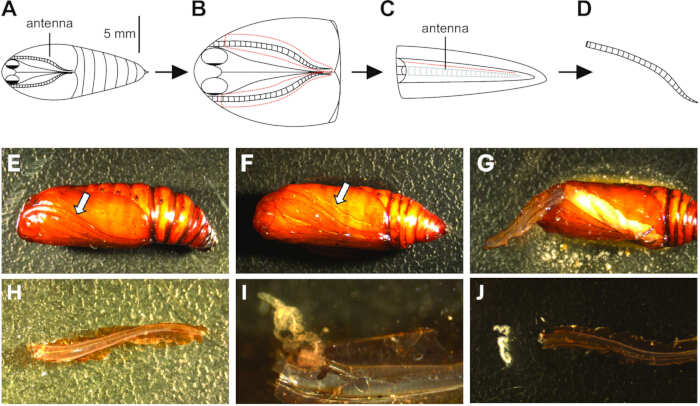
Figure 1: Dissection of pupae. (A) Ventral side of a pupa. (B) The cuticle is cut around both antennae (red dashed line), taking care not to penetrate too deeply into the pupa and to pierce the developing adult tissues. Each antenna is gently removed and transferred to a dish filled with 3+2 medium. (C) All non-antennal tissues that remained attached to the pupal cuticle are removed, and the antenna is transferred to a new dish with clean 3+2 medium. The transparent membrane that covers the developing antenna is carefully cut (red dashed line). (D) The antenna is gently removed. (E) Image showing the equivalent of A. The white arrow points to the antenna. (F) Image showing the equivalent of B. The white arrow points to the incision made in the cuticle. (G) The antenna is gently lifted (H) and then removed. (I) After splitting the membrane in which it develops, the antenna is pushed from its distal end toward its base (J) and then removed. Please click here to view a larger version of this figure.
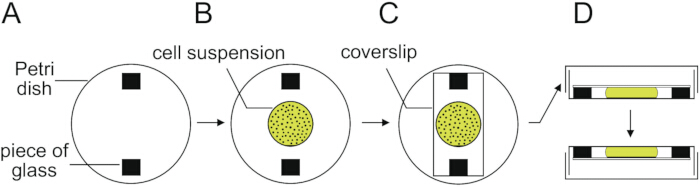
Figure 2: The hanging column technique used to culture antennal cells. (A) Two pieces of glass are glued with sterile Vaseline to the bottom of 35-mm dishes. (B) The cell suspension is gently plated at the center of the dish and allowed to attach to the dish for 45 min. (C) After changing the culture medium, a sterile coverslip is carefully deposited on the pieces of glass, covering and maintaining the cell suspension in position. (D) The Petri dish is finally closed by its lid and sealed with a strip of Parafilm. Please click here to view a larger version of this figure.
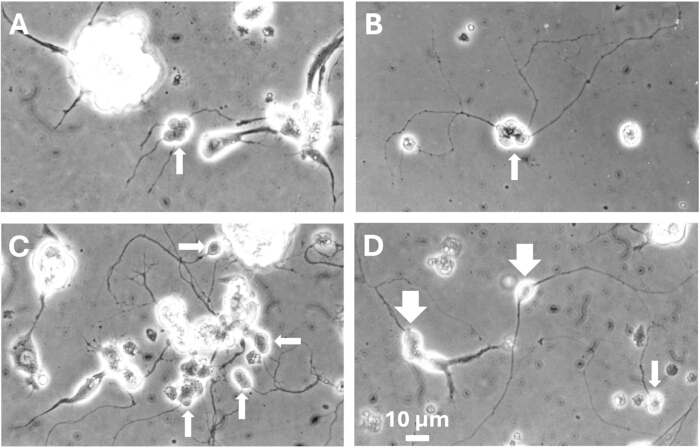
Figure 3: Views of young cultures from M. brassicae antennae. (A) After 1 day, neurites begin to elongate. (B) After 2 days, neurites appear more extended. (C,D) After 5 days, the neurite network becomes denser. ORNs (white arrows) are easily distinguishable by their morphology. They are found either alone or in small clusters. Big cell clusters, such as those visible in (C), are most likely undissociated antennal explants. They can contain neurons, as evidenced by the neurites emerging from them. Small neurons are indicated with small arrows (A-D) and 2 large neurons are indicated with big arrows (D). Scale (10 µm) is the same in A to D. Please click here to view a larger version of this figure.
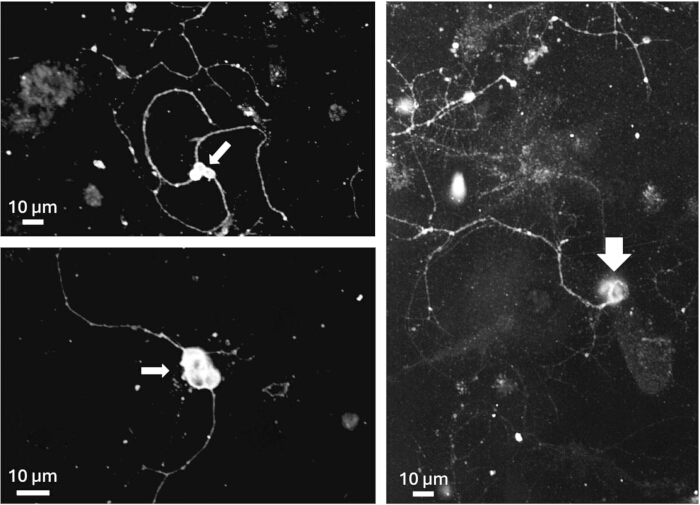
Figure 4: Anti-HRP staining on small (small arrow) and large neurons (big arrow). The experiment was carried out on 5-day-old cultures. Scale bar: 10 µm. For the detailed protocol, see13. Please click here to view a larger version of this figure.
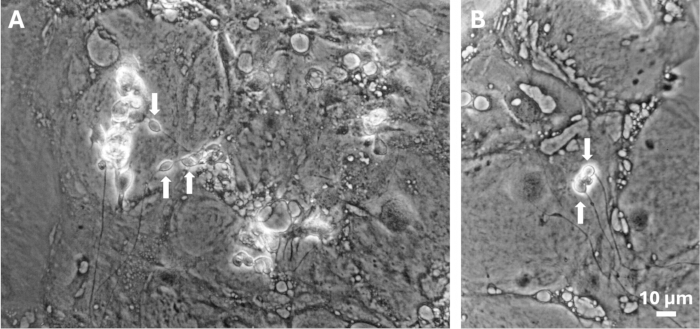
Figure 5: Views of old cultures from M. brassicae antennae. (A,B) After 2 weeks of culture, the surface of the dish is covered by a dense layer of non-neuronal cells. White arrows indicate ORNs. Scale (10 µm) is the same in A and B. Please click here to view a larger version of this figure.
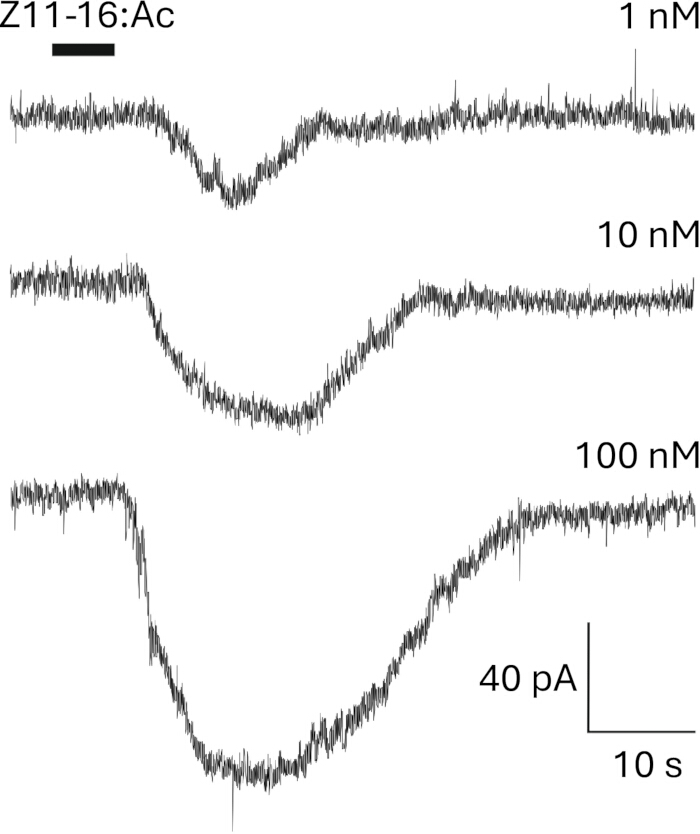
Figure 6: Neurons in culture for at least 2 weeks respond to odor stimuli. Responses to Z11-16:Ac, the main pheromone compound of M. brassicae, can be recorded in the whole-cell configuration of the patch-clamp technique. Z11-16:Ac was dissolved in dimethyl sulfoxide (DMSO) with the final concentration not exceeding 0.1%. Please click here to view a larger version of this figure.
Discussion
Loading...
$$\rightleftharpoonup{xx}$$
$$\longleftharp{xx}$$,
$$\longrightharp{xx}$$,
The key steps of the protocol are as follows: (i) Dissecting pupae at the right developmental stage. When pupae are too young, there is very little antennal tissue, and it is very difficult to collect as it is loose and disperses very fast. When pupae are too old, antennal dissections are much easier, but ORNs do not survive in vitro. In the 3 different species from which we prepared primary cultures of ORNs, we established experimentally that the optimal stage for the dissection of pupae is only half a day long, between 2.5-3 days when pupae are maintained at 20 °C. (ii) Mixing the Grace′s and Leibovitz's L-15 media. Grace′s medium is commonly used to support insect cell growth, and Leibovitz's L-15 medium supports neuron growth. (iii) Removing FBS when plating cells. If supplementation of the medium with FBS is required, the medium used for seeding Petri dishes with the cell suspension must be free of FBS, as its presence inhibits cell attachment and thus cell survival. (iv) Culturing antennal cells at a high density. This is crucial for the survival of ORNs. (v) Using the hanging column technique. It promotes better cell growth and significantly extends the lifespan of cultures.
A potential troubleshooting issue in the protocol is that the incubation time with papain (10-15 min) must be adjusted according to the papain batch and the time elapsed since the 100 µL papain aliquots were prepared, as papain gradually loses activity even when stored at -80 °C. Because the appearance of the antennae does not change noticeably during papain incubation, the incubation time cannot be assessed by visual inspection.
The fundamental question concerns the differentiation of ORNs in vitro. With the described protocol, ORNs can survive for 3-5 weeks. Considering that antennae are collected approximately 10 days before adult emergence, and that ORNs become fully functional 1-2 days prior to emergence -- as measured by EAG and single sensillum recordings (personal observation) -- this survival period theoretically provides sufficient time for their in vitro differentiation. ORNs were found to express a large diversity of ion channels8,9,10,14,22,23,24,25,26. They respond to olfactory stimuli in a dose-dependent manner (Figure 6), indicating that they at least partially follow their normal course of differentiation in vitro.
Insect ORNs are enveloped by three accessory cells27 that delimit the sensillar compartment and control the ionic and protein composition of the sensillar lymph in which the ORN dendrites are bathed. These accessory cells synthesize, in particular, olfactory binding proteins (OBPs). In a previous study, we observed a high expression of OBP in 3-4-week-old cultures, suggesting that accessory cells also differentiate in vitro13. A limitation of the culture is that the dendrite of cultured ORNs is not in the sensillar lymph, a medium with a higher K+ concentration and lower Na+ concentration than the hemolymph28,29, which creates a transepithelial potential between these two compartments30. Conversely, cell culture provides access to accessory cells for electrophysiological characterization, an approach that, to the best of our knowledge, has not previously been undertaken.
Interestingly, preliminary tests carried out on S. littoralis suggest that the protocol is also suitable for culturing moth proboscis cells. Similarly shaped neurons, which are most likely gustatory receptor neurons, were observed, although in small numbers.
Primary cultures provide easy access to insect ORNs for patch-clamp recording. The main drawback is double: cells must be cultured at a high density, meaning that many antennae must be dissected; these are primary cultures, meaning that new cultures must be prepared regularly. It is worth it, however, since despite their small size, patching such neurons is relatively easy, provided the culture is of good quality.
Disclosures
Loading...
$$\rightleftharpoonup{xx}$$
$$\longleftharp{xx}$$,
$$\longrightharp{xx}$$,
The authors have nothing to disclose.
Acknowledgements
Loading...
$$\rightleftharpoonup{xx}$$
$$\longleftharp{xx}$$,
$$\longrightharp{xx}$$,
The authors would like to thank Monika Stengl for the gift of the MRRL-CH1 cell line.
Materials
| Name | Company | Catalog Number | Comments |
|---|---|---|---|
| 10 mL syringes | Avantor | N/A | |
| 2.5 mL syringes | Avantor | N/A | |
| 21 mm x 26 mm coverslips | Avantor | WVR - 631-1335 | |
| 76 mm x 26 mm glass slides | Avantor | WVR - 631-9460 | Thickness: 1 mm ± 0.05 mm |
| Acrodisc Supor PF, 0.8/0.2 μm, 25 mm | Avantor | WVR - 514-4102 | Low binding syringe-filters |
| Autoclave | No specific brand | N/A | |
| Bunsen burner | No specific brand | N/A | It must be operable by a pedal |
| Corning Falcon Easy-Grip tissue culture dishes 35 mm x 10 mm. Corning 353001 | Avantor | WVR - 734-0005 | Sterile Petri dishes for culturing cells |
| D-Mannitol | Sigma-Aldrich | M9546 | Store at room temperature |
| Dumont #5 Forceps | N/A | ||
| EGTA | Sigma-Aldrich | E4378 | Store at room temperature |
| Falcon: 50 mL, 25 cm², plug seal, tissue culture-treated | Avantor | WVR - 734-0009 | Cell culture flasks |
| Fetal Bovine Serum | ThermoFisher Scientific | A3160801 | Store at -20 °C |
| Grace's Insect medium supplemented with lactalbumine hydrolysate and yeastolate (1x)-Gibco | ThermoFisher Scientific | 11605045 | Grace's Insect medium supplemented. Store at 5 °C |
| HBSS without calcium and magnesium-Gibco | ThermoFisher Scientific | 14170138 | Hanks' Balanced Salt Solution (HBSS). Store at 5 °C |
| Individually Wrapped Serological Pipettes, Falcon | Avantor | WVR - 734-0352 | Sterile disposable 10 mL pipettes |
| Individually Wrapped Serological Pipettes, Falcon | Avantor | WVR - 734-0343 | Sterile disposable 25 mL pipettes |
| L15 medium- Gibco | ThermoFisher Scientific | 11415056 | Leibovitz's L-15 medium. Store at 5 °C |
| Laminar tissue culture hood | No specific brand | N/A | |
| N-Phenylthiourea | Sigma-Aldrich | P7629 | Store at room temperature |
| Papain | Sigma-Aldrich | P5306 | Lyophilized powder, aseptically filled. Store aliquots at -80 °C |
| Parafilm | Sigma-Aldrich | P7793 | |
| Pasteur pipettes plugged with cotton wool - 150 mm | No specific brand | To autoclave as is (with cotton plug) and store in a sterilization box under the hood | |
| Penicillin-streptomycin | Sigma-Aldrich | P4333 | Penicillin-streptomycin: 5000 UI/ml + 5000 µg/ml. Store at -20°C in 1 mL sterile aliquots |
| pH meter | No specific brand | ||
| Pipette controler | Avantor | WVR - 612-7179 | A cheap alternative is the use of manual pipette controllers (e.g. Pipette Pump or Bel-Art Pipette Pumps) |
| Refrigerated incubator | PHC Europe | Model MIR-154-PE | A CO2 concentration adjustment system is unnecessary for regulating the pH of insect culture media |
| Stereomicroscope | No specific brand | 10x to 64x magnification equipped with a cold light source and flexible light guides | |
| Sterile Petri dishes for dissecting pupae | Avantor | WVR - 391-0868 | Any sterile dish can be used |
| Sterilin containers with screw cap, 30 mL | Avantor | WVR - 215-0321 | 30 mL sterile tubes |
| Sterilin containers with screw cap, 7 mL | Avantor | WVR - 215-0328 | 7 mL sterile tubes |
| Vaseline | Sigma-Aldrich | Store aseptically at room temperature; Petroleum jelly |
References
Loading...
$$\rightleftharpoonup{xx}$$
$$\longleftharp{xx}$$,
$$\longrightharp{xx}$$,
- Plasticity in insect olfaction: To smell or not to smell. Annu Rev Entomol. 61, 317-333 (2016).">Gadenne, C., Barrozo, R., Anton, S. Plasticity in insect olfaction: To smell or not to smell. Annu Rev Entomol. 61, 317-333 (2016).
- Olfaction in lepidoptera. Experientia. 51, 1003-1027 (1995).">Hansson, B. S. Olfaction in lepidoptera. Experientia. 51, 1003-1027 (1995).
- Odor detection in insects: Volatile codes. J Chem Ecol. 34 (7), 882-897 (2008).">De Bruyne, M., Baker, T. C. Odor detection in insects: Volatile codes. J Chem Ecol. 34 (7), 882-897 (2008).
- Olfactory physiology in the Drosophila antenna and maxillary palp: Acj6 distinguishes two classes of odorant pathways. J Neurobiol. 23 (8), 965-982 (1992).">Ayer, R. K., Carlson, J. Olfactory physiology in the Drosophila antenna and maxillary palp: Acj6 distinguishes two classes of odorant pathways. J Neurobiol. 23 (8), 965-982 (1992).
- Dual activation of a sex pheromone-dependent ion channel from insect olfactory dendrites by protein kinase C activators and cyclic GMP. Proc Natl Acad Sci U S A. 88, 8520-8524 (1991).">Zufall, F., Hatt, H. Dual activation of a sex pheromone-dependent ion channel from insect olfactory dendrites by protein kinase C activators and cyclic GMP. Proc Natl Acad Sci U S A. 88, 8520-8524 (1991).
- Voltage-activated and odor-modulated conductances in olfactory neurons of Drosophila melanogaster. J Neurobiol. 32, 123-137 (1997).">Dubin, A. E., Harris, G. L. Voltage-activated and odor-modulated conductances in olfactory neurons of Drosophila melanogaster. J Neurobiol. 32, 123-137 (1997).
- Distinct signaling of Drosophila chemoreceptors in olfactory sensory neurons. Proc Natl Acad Sci U S A. 113 (7), E902-E911 (2016).">Cao, L. H., et al. Distinct signaling of Drosophila chemoreceptors in olfactory sensory neurons. Proc Natl Acad Sci U S A. 113 (7), E902-E911 (2016).
- A use-dependent sodium current modification induced by type I pyrethroid insecticides in honeybee antennal olfactory receptor neurons. Neurotoxicology. 32 (3), 320-330 (2011).">Kadala, A., Charreton, M., Jakob, I., Le Conte, Y., Collet, C. A use-dependent sodium current modification induced by type I pyrethroid insecticides in honeybee antennal olfactory receptor neurons. Neurotoxicology. 32 (3), 320-330 (2011).
- Voltage- and calcium-activated currents in cultured olfactory receptor neurons of male Mamestra brassicae (lepidoptera). Chem Senses. 27 (7), 599-610 (2002).">Lucas, P., Shimahara, T. Voltage- and calcium-activated currents in cultured olfactory receptor neurons of male Mamestra brassicae (lepidoptera). Chem Senses. 27 (7), 599-610 (2002).
- Intracellular-messenger-mediated cation channels in cultured olfactory receptor neurons. J Exp Biol. 178, 125-147 (1993).">Stengl, M. Intracellular-messenger-mediated cation channels in cultured olfactory receptor neurons. J Exp Biol. 178, 125-147 (1993).
- Insect olfactory neurons in vitro: Morphological and immunocytochemical characterization of male-specific antennal receptor cells from developing antennae of male Manduca sexta. J Neurosci. 10 (3), 837-847 (1990).">Stengl, M., Hildebrand, J. G. Insect olfactory neurons in vitro: Morphological and immunocytochemical characterization of male-specific antennal receptor cells from developing antennae of male Manduca sexta. J Neurosci. 10 (3), 837-847 (1990).
- Morphological analysis of honeybee antennal cells growing in primary cell cultures. Tissue Cell. 26 (4), 551-558 (1994).">Gascuel, J., Masson, C., Bermudez, I., Beadle, D. J. Morphological analysis of honeybee antennal cells growing in primary cell cultures. Tissue Cell. 26 (4), 551-558 (1994).
- Primary culture of antennal cells of Mamestra brassicae: Morphology of cell types and evidence for biosynthesis of pheromone-binding proteins in vitro. Cell Tissue Res. 289 (2), 375-382 (1997).">Lucas, P., Nagnan-Le Meillour, P. Primary culture of antennal cells of Mamestra brassicae: Morphology of cell types and evidence for biosynthesis of pheromone-binding proteins in vitro. Cell Tissue Res. 289 (2), 375-382 (1997).
- Calcium activates a chloride conductance likely involved in olfactory receptor neuron repolarisation in the moth Spodoptera littoralis. J Neurosci. 30 (18), 6323-6333 (2010).">Pézier, A., et al. Calcium activates a chloride conductance likely involved in olfactory receptor neuron repolarisation in the moth Spodoptera littoralis. J Neurosci. 30 (18), 6323-6333 (2010).
- Establishment of two cell lines from embryonic tissue of the tobacco hornworm, Manduca sexta (L). In Vitro. 11 (6), 395-399 (1975).">Eide, P. E., Caldwell, J. M., Marks, E. P. Establishment of two cell lines from embryonic tissue of the tobacco hornworm, Manduca sexta (L). In Vitro. 11 (6), 395-399 (1975).
- Primary culture of identified neurons from the visual cortex of postnatal rats. J Neurosci. 6 (10), 3044-3060 (1986).">Huettner, J. E., Baughman, R. W. Primary culture of identified neurons from the visual cortex of postnatal rats. J Neurosci. 6 (10), 3044-3060 (1986).
- The phenylthiourea is a competitive inhibitor of the enzymatic oxidation of dopa by phenoloxidase. J Enzyme Inhib Med Chem. 27 (1), 78-83 (2012).">Ryazanova, A. D., Alekseev, A. A., Slepneva, I. A. The phenylthiourea is a competitive inhibitor of the enzymatic oxidation of dopa by phenoloxidase. J Enzyme Inhib Med Chem. 27 (1), 78-83 (2012).
- Characterization of phenoloxidases from larval cuticle of Sarcophaga bullata and a comparison with cuticular enzymes from other species. Can J Zool. 65 (11), 2501-2508 (1987).">Hunt, A. J., Sherman, K. D., Weintraub, S. T. Characterization of phenoloxidases from larval cuticle of Sarcophaga bullata and a comparison with cuticular enzymes from other species. Can J Zool. 65 (11), 2501-2508 (1987).
- Phenoloxidase activity in Apis mellifera honey bee pupae, and ecdysteroid-dependent expression of the prophenoloxidase mRNA. Insect Biochem Mol Biol. 34 (12), 1257-1268 (2004).">Zufelato, M. S., Lourenco, A. P., Simoes, Z. L., Jorge, J. A., Bitondi, M. M. Phenoloxidase activity in Apis mellifera honey bee pupae, and ecdysteroid-dependent expression of the prophenoloxidase mRNA. Insect Biochem Mol Biol. 34 (12), 1257-1268 (2004).
- Cell Culture Approaches to Invertebrate Neuroscience. Beadle, D. J., Lees, G., Kater, S. B. , Academic Press. London. 109-147 (1988).">Lees, G., Beadle, D. J. Cell Culture Approaches to Invertebrate Neuroscience. Beadle, D. J., Lees, G., Kater, S. B. , Academic Press. London. 109-147 (1988).
- Antibodies to horseradish peroxidase as specific neuronal markers in Drosophila and in grasshopper embryos. Proc Natl Acad Sci U S A. 79 (8), 2700-2704 (1982).">Jan, L. Y., Jan, Y. N. Antibodies to horseradish peroxidase as specific neuronal markers in Drosophila and in grasshopper embryos. Proc Natl Acad Sci U S A. 79 (8), 2700-2704 (1982).
- Ca2+ stabilizes the membrane potential of moth olfactory receptor neurons at rest and is essential for their fast repolarization. Chem Senses. 32 (4), 305-317 (2007).">Pézier, A., Acquistapace, A., Renou, M., Rospars, J. P., Lucas, P. Ca2+ stabilizes the membrane potential of moth olfactory receptor neurons at rest and is essential for their fast repolarization. Chem Senses. 32 (4), 305-317 (2007).
- Pharmacological investigation of protein kinase C- and cGMP-dependent ion channels in cultured olfactory receptor neurons of the hawkmoth Manduca sexta. Chem Senses. 33 (9), 803-813 (2008).">Dolzer, J., Krannich, S., Stengl, M. Pharmacological investigation of protein kinase C- and cGMP-dependent ion channels in cultured olfactory receptor neurons of the hawkmoth Manduca sexta. Chem Senses. 33 (9), 803-813 (2008).
- Cyclic nucleotide-activated currents in cultured olfactory receptor neurons of the hawkmoth Manduca sexta. J Neurophysiol. 100 (5), 2866-2877 (2008).">Krannich, S., Stengl, M. Cyclic nucleotide-activated currents in cultured olfactory receptor neurons of the hawkmoth Manduca sexta. J Neurophysiol. 100 (5), 2866-2877 (2008).
- Inositol-triphosphate-dependent calcium currents precede cation currents in insect olfactory receptor neurons in vitro. J Comp Physiol A. 174 (2), 187-194 (1994).">Stengl, M. Inositol-triphosphate-dependent calcium currents precede cation currents in insect olfactory receptor neurons in vitro. J Comp Physiol A. 174 (2), 187-194 (1994).
- Whole-cell recording from honeybee olfactory receptor neurons: Ionic currents, membrane excitability and odourant response in developing worker bee and drone. Eur J Neurosci. 15 (7), 1139-1152 (2002).">Laurent, S., Masson, C., Jakob, I. Whole-cell recording from honeybee olfactory receptor neurons: Ionic currents, membrane excitability and odourant response in developing worker bee and drone. Eur J Neurosci. 15 (7), 1139-1152 (2002).
- Pheromone Biochemistry. Prestwich, G. D., Blomquist, G. J. , Academic Press. Orlando. 353-384 (1987).">Steinbrecht, R. A. Pheromone Biochemistry. Prestwich, G. D., Blomquist, G. J. , Academic Press. Orlando. 353-384 (1987).
- Wright Lectures on Insect Olfaction. , Simon Fraser University, Burnaby. B.C., Canada. (1987).">Kaissling, K. E. R. H. Wright Lectures on Insect Olfaction. , Simon Fraser University, Burnaby. B.C., Canada. (1987).
- Receptors for Neurotransmitters, Hormones and Pheromones in Insects. Sattelle, D. B., Hall, L. M., Hildebrand, J. G. , Elsevier, North Holland Biomedical Press. Amsterdam. 261-282 (1980).">Kaissling, K. E., Thorson, J. Receptors for Neurotransmitters, Hormones and Pheromones in Insects. Sattelle, D. B., Hall, L. M., Hildebrand, J. G. , Elsevier, North Holland Biomedical Press. Amsterdam. 261-282 (1980).
- Computational model of the insect pheromone transduction cascade. PLoS Comput Biol. 5 (3), e1000321(2009).">Gu, Y., Lucas, P., Rospars, J. P. Computational model of the insect pheromone transduction cascade. PLoS Comput Biol. 5 (3), e1000321(2009).
Reprints and Permissions
Request permission to reuse the text or figures of this JoVE article
Request Permission