Here, we present a standardized method for validating the integration and expression of foreign genes in transgenic Eimeria parasites. By integrating genomic and protein-level analyses, this workflow confirms stable gene insertion and expression. This approach facilitates the development of transgenic Eimeria for research and vaccine applications.
Method Article
Validation of Random Transgene Integration and Expression in Eimeria Parasites
In This Article
Summary
Loading...
Abstract
Loading...
Introduction
Loading...
Protocol
Loading...
Results
Loading...
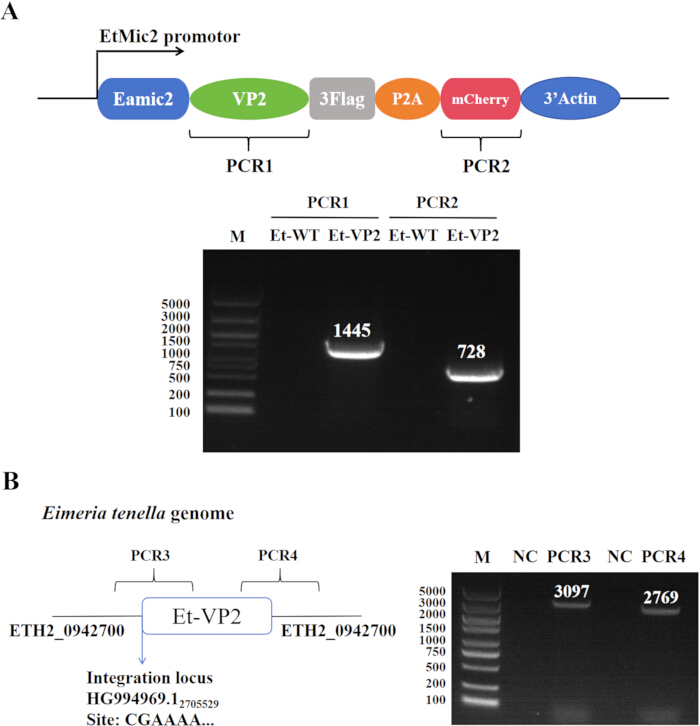
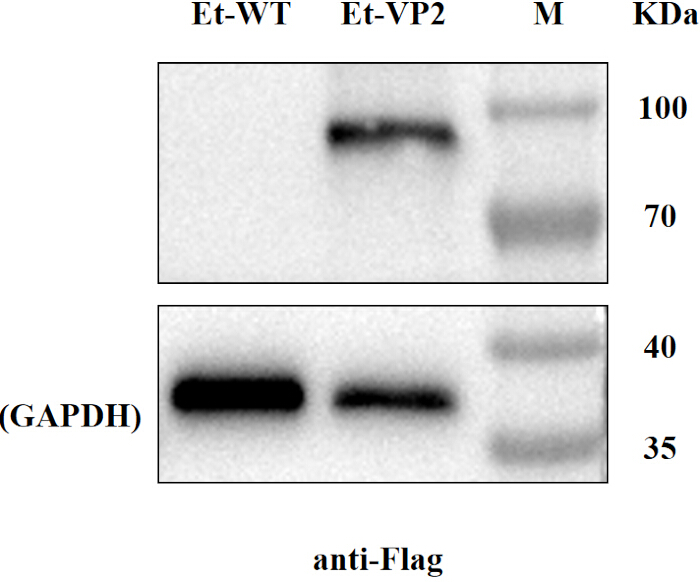
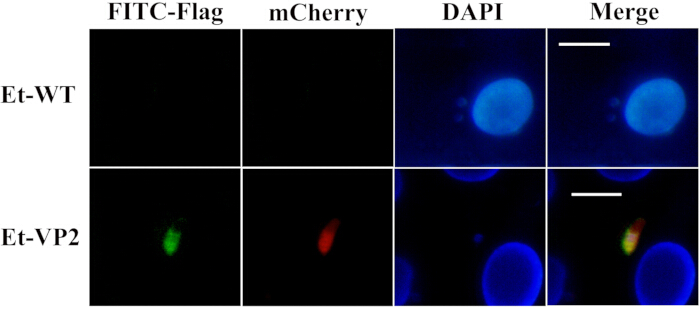
Discussion
Loading...
Disclosures
Loading...
Acknowledgements
Loading...
Materials
| Name | Company | Catalog Number | Comments |
|---|---|---|---|
| Antifade Mounting Medium | MCE | HYK1042 | Fluorescent mounting medium to prevent photobleaching |
| BSA (3%) | Beyotime | ST023 | Blocking buffer and antibody dilution buffer for IFA; block at room temperature for 30 min |
| Chloroform:isoamyl alcohol (24:1) | Sigma | C0549 | Reagent for removing residual phenol during genomic DNA extraction |
| Coccidia-Free Chickens | Boehringer-Ingelheim | SPF | Used for in vivo passage and amplification of transgenic strains; approved by the Ethics Committee (approval number: CAU20160628-2) |
| CTAB (Cetyltrimethylammonium bromide) | Merck KGaA | H5882 | Component of genomic DNA extraction buffer; formulation: 3 g CTAB + 12.27 g NaCl + 15 mL 1 mol/L Tris-HCl + 6 mL 0.5 mol/L EDTA, adjusted to a final volume of 150 mL with ddH2O |
| DE-52 Cellulose | Solarbio | C8350 | Ion exchange chromatography medium for sporozoite purification; sequentially treated with NaOH, HCl, and distilled water, then equilibrated with glycine solution |
| ECL Substrate (Solution A + Solution B) | thermofisher | 32106 | Chemiluminescent detection reagent; mix equal volumes of Solution A and B before use |
| FITC-Conjugated Goat Anti-Mouse IgG | Sigma | AP124F | Fluorescent secondary antibody for IFA, dilution ratio 1:200 |
| Glass beads | Sigma | Z250473-1PAK | |
| Glycine Solution | Sigma | 67419 | Equilibration and elution buffer for chromatography columns; formulation: 0.75 g glycine + 7.9 g NaCl dissolved in 500 mL distilled water, pH adjusted to 7.4-7.6, autoclaved |
| Hoechst 33258 | Sigma | 94403 | Nuclear staining reagent, dilution ratio 1:100; used for IFA localization |
| HRP-Conjugated Goat Anti-Mouse IgG | Sigma | 12-349 | Secondary antibody for Western blotting, dilution ratio 1:2000 |
| Illumina NovaSeq Sequencing Platform | Personalbio Biotechnology Co., Ltd. (Shanghai, China) | Next-generation sequencing platform; paired-end sequencing (150 bp read length), sequencing depth 100×, generating ≥6 GB raw data (Q20>90%) | |
| Low Speed Centrifuge | BEIJING ERA BEILI CENTRIFUGE | DT5-2 | |
| Mouse Monoclonal Anti-Flag Antibody | Sigma | F1804 | Primary antibody, dilution ratio 1:200; used for IFA detection of Flag-tagged fusion protein |
| Mouse Monoclonal Anti-GAPDH Antibody | Sigma | G8795 | Primary antibody, dilution ratio 1:2000; used as a loading control for Western blotting |
| Nonfat Milk (5%) | Beyotime | P0216 | Blocking buffer for Western blotting; block at room temperature for 1 h or 4°C overnight |
| Paraformaldehyde (4%) | Merck KGaA | 30525 | Cell fixation solution; fix at room temperature for 30 min |
| PBS | Solarbio | P1010 | |
| Penicillin-Streptomycin (100×) | Yeasen | 60162ES76 | Antibiotic for cell culture; inhibits microbial contamination |
| Percoll (DG gradient stock | GE Healthcare | 17-0891-09 | |
| Phenol:chloroform:isoamyl alcohol (25:24:1) | Merck KGaA | 77617 | Reagent for protein removal during genomic DNA extraction |
| Protein Loading Buffer (6×) | Beyotime | P0015F | Protein electrophoresis loading buffer; formulation: 100 mM Tris (pH 6.8), 4% SDS, 2 mM EDTA, 2% glycerol, 6 M urea; mix with 50 μL 2 M DTT and 50 μL 5% bromophenol blue before use |
| Proteinase K | Merck KGaA | 39450-01-6 | 200 mg dissolved in 10 mL ddH2O, used for protein digestion during genomic DNA extraction |
| PVDF Membrane | thermofisher | 88518 | Protein transfer membrane; activated with methanol for 1 min before use |
| RIPA Lysis Buffer | Yeasen | 20101 | Lysis buffer for sporozoite protein extraction |
| RNase A | Merck KGaA | 9001-99-4 | 25 mg dissolved in 2.5 mL 0.01 mol/L NaAc, heated at 100°C for 10-15 min, pH adjusted to 7.4 with 1 mol/L Tris-HCl; used for RNA removal from DNA samples |
| SDS-PAGE Gel Reagents (Acrylamide, Bis-acrylamide, Tris, SDS, APS, TEMED) | Bio | 101 | Reagents for SDS-PAGE gel preparation; acrylamide concentration adjusted according to the molecular weight of the target protein |
| Sodium taurodeoxycholate hydrate | Sigma | T0875 | |
| solution) | |||
| Taq Master Mix (2×) | Vazyme | P112-01/02/03 | PCR amplification premix containing Taq polymerase, dNTPs, etc. |
| Triton X-100 (0.25%) | Merck KGaA | 9036 | Cell permeabilization solution; incubate at room temperature for 30 min |
| Trypsin | Solarbio | T8150 | |
| Vortex Mixer | Beijing North TZ-Biotech | HQ-60-II | |
| Water Bath Thermostat | Grant Instruments (Cambridge) | GD120,GM0815010 |
Reprints and Permissions
Request permission to reuse the text or figures of this JoVE article
Request Permission