This study integrates bibliometric and two-sample Mendelian randomization analyses to systematically examine research trends and assess the causal relationship between hypertension and erectile dysfunction, identifying key contributors, emerging topics, and genetic evidence linking hypertension to increased erectile dysfunction risk.
Research Article
Bibliometric and Two-Sample Mendelian Randomization Analyses of the Causal Relationship Between Hypertension and Erectile Dysfunction
Jisheng Wang*1 , Sheng Deng*2 , Fei Teng*3 , Lu Wang1 , Zixi Wang3 , Haisong Li1 , Fanchao Meng4 , Xian Wang5
1Department of Andrology, Dongzhimen Hospital, Beijing University of Chinese Medicine, 2Department of Andrology, Shunyi Hospital, Beijing Hospital of Traditional Chinese Medicine, 3Beijing University of Chinese Medicine, 4Urology Surgery, The Third Affiliated Hospital of Beijing University of Chinese Medicine, 5Department of Cardiology, Dongzhimen Hospital, Beijing University of Chinese Medicine
Opens in a new tab
In This Article
Summary
Loading...
$$\rightleftharpoonup{xx}$$
$$\longleftharp{xx}$$,
$$\longrightharp{xx}$$,
Abstract
Loading...
$$\rightleftharpoonup{xx}$$
$$\longleftharp{xx}$$,
$$\longrightharp{xx}$$,
Hypertension (HT)-related erectile dysfunction (ED), a condition secondary to HT, is characterized by a persistent inability to achieve or maintain an erection sufficient for satisfactory sexual performance. This study aimed to systematically analyze and visualize publications related to HT-related ED using bibliometrics to identify key topics, research hotspots, and knowledge gaps, and to explore the underlying causal relationship between HT and ED using Mendelian randomization (MR). Literature was retrieved from the Web of Science Core Collection, and publishing trends were profiled by country, institution, author, journal, and collaboration networks. For the MR analysis, single-nucleotide polymorphisms considerably associated with HT were selected, followed by pruning, filtering, and adjustment for potential confounders. The inverse variance weighting method was used as the primary analysis, complemented by MR–Egger and weighted median approaches, along with sensitivity analyses including heterogeneity and pleiotropy assessments to ensure robustness. Between 2001 and 2025, 1,661 articles were published in 1,099 journals, reflecting the evolving global research status and future directions. Academic institutions in Europe and North America have played a dominant role. The most prolific country, institution, journal, and author are the United States, University of São Paulo, Journal of Sexual Medicine, and Faix, A., respectively. Common keywords include nitric oxide, metabolic syndrome, and endothelial dysfunction. MR results confirmed that HT has a significant positive causal effect on ED risk. Research hotspots primarily involve impotence, oral sildenafil, vardenafil, safety, inhaled nitric oxide, international index, predictor, late onset hypogonadism, testosterone, obesity, oxidative stress, and phosphodiesterase 5 inhibitor. Two-sample MR provides robust causal evidence that supplements observational findings, offering a comprehensive framework for understanding HT-related ED.
Introduction
Loading...
$$\rightleftharpoonup{xx}$$
$$\longleftharp{xx}$$,
$$\longrightharp{xx}$$,
Hypertension (HT) is the predominant risk factor driving cardiovascular disease (CVD) development and mortality1. CVD leads to nearly 17 million deaths globally each year, of which approximately 55% are attributed to complications of HT2,3. Erectile dysfunction (ED) is characterized by persistent inability to achieve or sustain a penile erection adequate for satisfactory sexual activity4. Surveys have shown that, among patients with HT, the prevalence of ED ranges from 36% to 45%, which is significantly higher than that in non-hypertensive populations5. High blood pressure and ED exhibit a clear correlation6. High blood pressure can negatively impact sexual function by reducing blood flow, potentially leading to decreased libido, difficulty with arousal, and impaired orgasm. This sexual dysfunction can also affect a patient’s adherence to HT treatment7,8,9.
The term “bibliometrics” was first coined by Alan Pritchard in 196910. As an analytical approach based on bibliometric indicators, it enables the quantitative evaluation of research performance within a specific field11,12. The CiteSpace clustering software and the VOSviewer visualization tool are widely used for bibliometric analysis that facilitate the examination of research trends through clustering and mapping techniques, presenting findings as visual knowledge structures13,14,15. Using these tools, the literature on HT-related ED can be systematically visualized and analyzed over recent decades. In this study, the Web of Science (WOS) database was selected as the data source, and the clustering software, visualization tool, and Microsoft Excel were used to identify and characterize developmental trends and emerging research hotspots in this field.
To further examine the potential causal association between HT and ED, Mendelian randomization (MR) analysis utilizing genome-wide association study (GWAS) data was conducted. This method applies genetic variants as instrumental variables (IVs) to emulate the conditions of a natural randomized controlled trial. Using a two-sample MR framework, the causal effect of HT on ED was systematically evaluated. The MR analysis provides insight into etiological mechanisms and potential early diagnostic value, while the bibliometric analysis identifies key contributors, evolving research frontiers, and future directions in this rapidly developing field. By integrating bibliometric mapping with genetic causal inference, the present study offers a dual-perspective framework: bibliometric analysis delineates the knowledge landscape, identifies research gaps, and generates hypotheses regarding the HT–ED relationship, while two-sample MR provides independent genetic evidence to formally test the causal hypothesis that emerges from the observational literature.
Protocol
Loading...
$$\rightleftharpoonup{xx}$$
$$\longleftharp{xx}$$,
$$\longrightharp{xx}$$,
This study used publicly available data from the WOS database (https://www.webofscience.com/wos/woscc/basic-search) and did not involve human participants; therefore, ethical approval was not required.
Data Sources and Collection
The Web of Science (WOS) database is a widely recognized and frequently used resource for scientific and bibliometric research. It includes data from approximately 9,000 high-impact journals and over 12,000 academic conference proceedings, offering a comprehensive representation of global research across scientific, technological, medical, and related fields16,17,18. This database was selected for the present bibliometric analysis because of its rigorous journal selection process, consistent indexing of high-quality peer-reviewed literature, and its provision of comprehensive citation data—including cited references—which are essential for co-citation and bibliographic coupling analyses in tools such as CiteSpace and VOSviewer.
To minimize the potential impact of database updates on record consistency, all search and retrieval operations were completed within a single day (December 20, 2025). The Web of Science Core Collection was accessed via institutional subscription through Beijing University of Chinese Medicine using the standard Clarivate web interface. The search period covered publications from January 1, 2001, to December 20, 2025. The year 2001 was chosen as the starting point because it follows the landmark approval of sildenafil in 1998 and the subsequent establishment of oral phosphodiesterase type 5 inhibitors as first-line therapy for ED. This timeframe ensures comprehensive coverage of the modern research era while excluding earlier, less standardized studies.
The search was performed in the Web of Science Core Collection using the Topic (TS) field, which includes the title, abstract, author keywords, and Keywords Plus. All citation indexes within the Core Collection (i.e., SCI-Expanded, SSCI, A&HCI, CPCI-S, CPCI-SSH, ESCI, CCR-Expanded, and IC) were included without any restrictions. All Clarivate default search settings were retained without modification, including any automatic term mapping or expansion settings. The complete search query was defined as: TS = (hypertension AND (impotence OR “erectile dysfunction”)). Only documents classified as “Article” or “Review” were included. The retrieved records were exported in plain text format, with “Full Record and Cited References” selected as the output content. Due to the Web of Science platform’s export limit of 500 records per batch, the 1,661 records were exported in four batches. Batch 1 contained records 1–500, batch 2 contained records 501–1000, batch 3 contained records 1001–1500, and batch 4 contained records 1501–1661. Prior to analysis, the four plain text files were merged into a single dataset using the deduplication and merging function in CiteSpace (version R6.1.3) (Data→Import/Export→Remove Duplicates), thereby removing any potential duplicate records while preserving the complete dataset for subsequent bibliometric analysis.
Bibliometric Analysis and Software
Bibliometric analysis was conducted using a combination of specialized visualization and statistical tools.
CiteSpace (version R6.1.3) is a Java-based application widely used to visualize and analyze trends and patterns in scientific literature19. It was developed by Dr. Chen Chaomei in 200420. The software was operated on a Microsoft Windows 10 (64-bit) system with Java Runtime Environment version 8. Built on principles of scientometrics, data analysis, and information visualization, it reveals knowledge structures by examining patterns, distributions, and relationships within the literature. In this study, CiteSpace was applied for keyword clustering and burst detection. The time slicing was set to one year per slice across the 2001–2025 period. For network construction and pruning, the g-index was used with a scaling factor of k = 25. Keyword clustering employed the log-likelihood ratio algorithm to generate cluster labels. To identify research hotspots, citation burst detection was conducted with the number of states set to 2, a default ratio of a1/a0 = 2.0, and a minimum burst duration of 2 years. The gamma parameter was defined as 1.04 for keyword burst detection and 0.97 for reference burst detection.
VOSviewer (version 1.6.18) is a bibliometric analysis tool designed for knowledge mapping and visualization21. It supports various analytical approaches, including literature analysis, co-occurrence analysis, and bibliographic coupling. In the present study, VOSviewer was used to generate visual representations of countries/regions, authors, institutions, cited journals, and keywords, as well as to produce density maps. For these visualizations, minimum occurrence thresholds were applied to maintain clarity in the graphical representation. Specifically, a threshold of at least 1 publication was set for the analysis of countries/regions and authors, a threshold of at least 4 publications was set for institutions, a threshold of at least 2 publications was set for journals, and a threshold of at least 6 occurrences was set for keyword co-occurrence analysis. For co-citation analyses (cited journals, co-cited authors, and co-cited references), a minimum threshold of 10 citations was applied. Default association strength normalization was used for all network constructions. For all VOSviewer analyses in this study, including co-authorship networks (countries/regions, institutions, authors), journal co-citation analysis, and keyword co-occurrence analysis, the full counting method was applied.
This study aimed to describe key characteristics of the literature, including countries/regions, institutions, journals, highly cited articles, co-citation networks, and frequently occurring keywords. In addition to noun phrases extracted from titles and abstracts, keywords provided in publications were also analyzed to identify trends in keyword occurrence and citation patterns. Keywords with a minimum occurrence threshold of 6 were included in the co-occurrence and clustering analyses. No manual removal of keywords was performed to avoid introducing subjective bias; all terms meeting the occurrence threshold were retained for objective analysis. All analytical procedures were independently verified by two researchers to ensure the accuracy and reproducibility of the network layouts and citation metrics.
MR Analysis
A two-sample MR method was used to evaluate the potential causal link between HT and ED. This approach is founded on three principal assumptions: (1) the genetic instruments are significantly associated with the exposure (relevance); (2) the instruments are not related to confounding variables influencing the exposure–outcome association (independence); and (3) the instruments affect the outcome solely through the exposure (exclusion restriction).
GWAS summary statistics were obtained from the IEU OpenGWAS platform (https://gwas.mrcieu.ac.uk/; accessed on December 20, 2025). No additional local database snapshot was generated; reproducibility is supported by the use of stable GWAS identifiers, FinnGen release versioning, and archived analysis code. Genetic instruments for HT were obtained from the FinnGen dataset (FinnGen Biobank, release 5; finn-b-I9_HYPTENS_EXNONE), defined as hypertensive diseases excluding secondary HT, including 55,917 cases and 162,837 controls of European (Finnish) ancestry. Outcome data for ED were obtained from the FinnGen dataset (release 5; finn-b-ERECTILE_DYSFUNCTION), comprising 1,154 cases and 94,024 controls of European ancestry. Single-nucleotide polymorphisms (SNPs) significantly associated with HT at the genome-wide threshold (P < 5 × 10⁻8) were first selected as candidate instrumental variables. Linkage disequilibrium (LD) clumping was then applied to exclude correlated variants, using a threshold of r2 < 0.001 and a clumping window of 10,000 kb. To reduce the possibility of weak-instrument bias, the F-statistic was calculated for each retained SNP using the Wald ratio formula: F = (βexposure / SEexposure)2, where βexposure and SEexposure represent the SNP–HT association estimate and its standard error, respectively. Only variants with F > 10 were included in the final MR analysis.
To minimize confounding effects, the retained instrumental variables were evaluated using LDtrait (LDlink) for reported associations with smoking and alcohol consumption; no instruments required exclusion on this basis (Supplementary Table 1). Harmonization of exposure and outcome data was conducted using the harmonise_data() function in the TwoSampleMR package (version 0.6.2), which aligned effect alleles across datasets, inferred strand orientation for palindromic SNPs based on allele frequency (minor allele frequency < 0.3), and excluded palindromic SNPs with ambiguous alignment.
The inverse variance weighting (IVW) method was employed as the primary analytical approach, while MR–Egger, weighted median, and mode-based methods were used as supplementary analyses. The main IVW estimate was calculated using the multiplicative random-effects model implemented in the mr_ivw() function of the TwoSampleMR package with default parameters. Effect sizes were expressed as odds ratios (ORs) with 95% confidence intervals (CIs) following exponentiation of the beta coefficients. MR-PRESSO analysis was conducted to assess horizontal pleiotropy through the global test and to identify potential outliers; the distortion test was applied when outliers were detected. A significance threshold of P < 0.05 was used. No SNPs were excluded prior to the final analysis, as no outliers were identified by MR-PRESSO. The results were visualized using forest plots, funnel plots, scatter plots, and leave-one-out analyses. The analytical code is publicly available at GitHub, release v1.0: https://github.com/tengfeitcm/Two-Sample-Mendelian-Randomization-/releases/tag/v1.0, ensuring reproducibility of the exact analysis version used in this study.
Results
Loading...
$$\rightleftharpoonup{xx}$$
$$\longleftharp{xx}$$,
$$\longrightharp{xx}$$,
Bibliometric Analysis Results
Time trends in publications and citations:
Annual publication output serves as a key indicator of research development and, to some extent, reflects the progression of knowledge within a field. As of December 20, 2025, a total of 1,661 publications related to HT-associated ED were identified in the Web of Science database (Figure 1). The yearly distribution of published articles is presented in Figure 2.
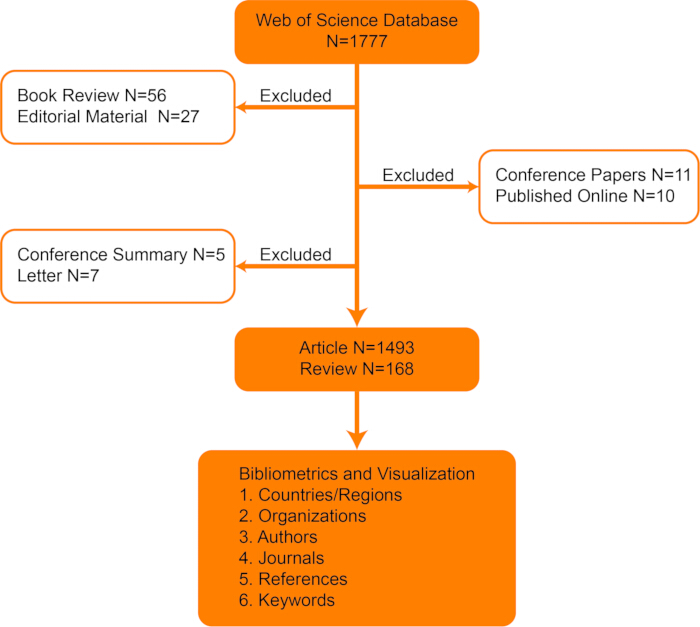
Figure 1. Flowchart of the literature search and study selection process. The initial search of the Web of Science database identified 1,777 records. Records were excluded based on publication type, including book reviews (N = 56), editorial materials (N = 27), conference papers (N = 11), published online items (N = 10), conference summaries (N = 5), and letters (N = 7). After screening, 1,493 articles and 168 reviews were included for bibliometric and visualization analysis, including countries/regions, organizations, authors, journals, references, and keywords. Please click here to view a larger version of this figure.
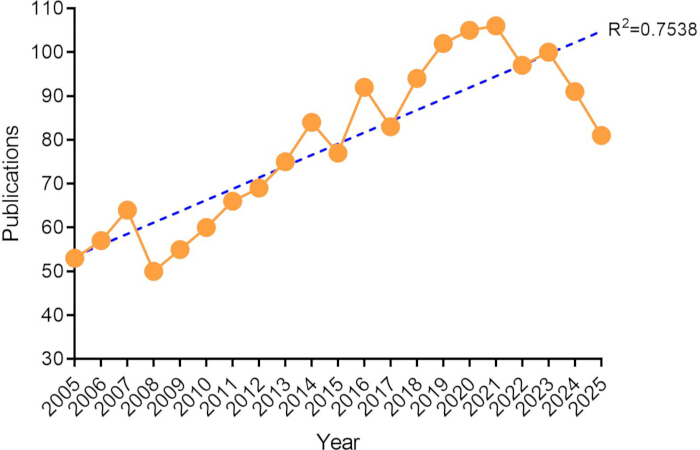
Figure 2. Annual global publication trends on hypertension-related erectile dysfunction from 2005 to 2025. The number of publications per year is illustrated, with the x-axis representing the year and the y-axis indicating publication counts. The dashed line reflects the overall trend, with a coefficient of determination (R2 = 0.7538). Please click here to view a larger version of this figure.
Analysis of most productive countries/regions:
A total of 108 countries/regions have published relevant papers in this field. The top ten countries contributing to publications on HT-related ED were the United States (342 publications), England (129), Italy (100), Brazil (98), Spain (90), India (82), Australia (66), Turkey (66), France (56), and Canada (55) (Figure 3, Table 1). The United States had the highest number of publications, the highest number of citations (7,299), and a link strength of 118.
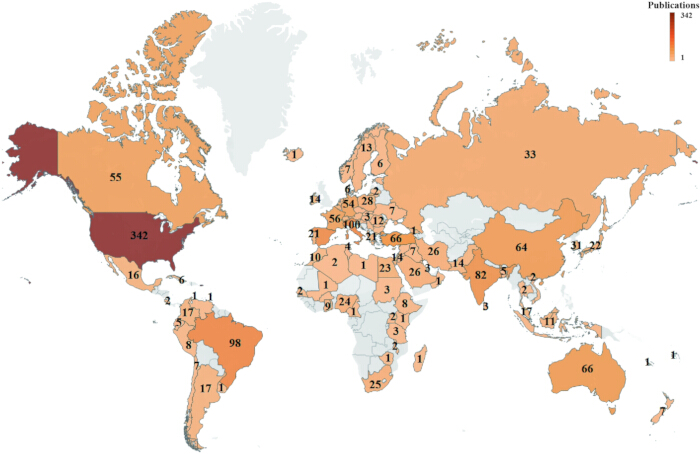
Figure 3. Worldwide distribution of publications on hypertension-related erectile dysfunction by country. The map displays publication output for each country, with numerical labels indicating the number of publications. Color intensity corresponds to publication volume, with darker shades representing higher output. Please click here to view a larger version of this figure.
| Rank | Country | No. of publications | No. of citations | Total link strength |
| 1 | USA | 342 | 7299 | 118 |
| 2 | England | 129 | 2630 | 104 |
| 3 | Italy | 100 | 2105 | 57 |
| 4 | Brazil | 98 | 1007 | 21 |
| 5 | Spain | 90 | 604 | 42 |
| 6 | India | 82 | 470 | 32 |
| 7 | Australia | 66 | 1677 | 52 |
| 8 | Turkey | 66 | 424 | 15 |
| 9 | France | 56 | 230 | 26 |
| 10 | Canada | 55 | 1871 | 52 |
Table 1: Top 10 countries contributing to research on hypertension-related erectile dysfunction. Countries are ranked according to publication output. “No. of publications” refers to the total number of articles produced by each country. “No. of citations” denotes the cumulative citation count, and “Total link strength” indicates the level of collaboration between countries.
In terms of citation counts, the top ten countries were the United States (7,299), England (2,630), Italy (2,105), Canada (1,871), Australia (1,677), Brazil (1,007), Spain (604), Germany (564), South Korea (559), and Japan (559) (Table 2). These results indicate that these countries have a strong influence in the field of HT-related ED. Collaboration analysis showed that the United States (24,943), Italy (6,975), England (6,692), Canada (5,196), Germany (4,443), and China (2,533) had extensive cooperation with other countries. However, collaboration among other countries was relatively weaker (Figure 4). The dominance of the United States in publication volume and citation impact reflects its long-standing investment in sexual medicine research and its leadership in cardiovascular epidemiology.
| Rank | Country | No. of publications | No. of citations | Total link strength |
| 1 | USA | 342 | 7299 | 118 |
| 2 | England | 129 | 2630 | 104 |
| 3 | Italy | 100 | 2105 | 57 |
| 4 | Canada | 55 | 1871 | 52 |
| 5 | Australia | 66 | 1677 | 52 |
| 6 | Brazil | 98 | 1007 | 21 |
| 7 | Spain | 90 | 604 | 42 |
| 8 | Germany | 54 | 564 | 25 |
| 9 | South Korea | 31 | 559 | 24 |
| 10 | Japan | 22 | 559 | 16 |
Table 2: Top 10 countries ranked by citation counts in hypertension-related erectile dysfunction research. Countries are ordered based on total citations. “No. of publications” represents the number of articles published by each country. “No. of citations” indicates total citations, and “Total link strength” reflects the degree of collaboration between countries.
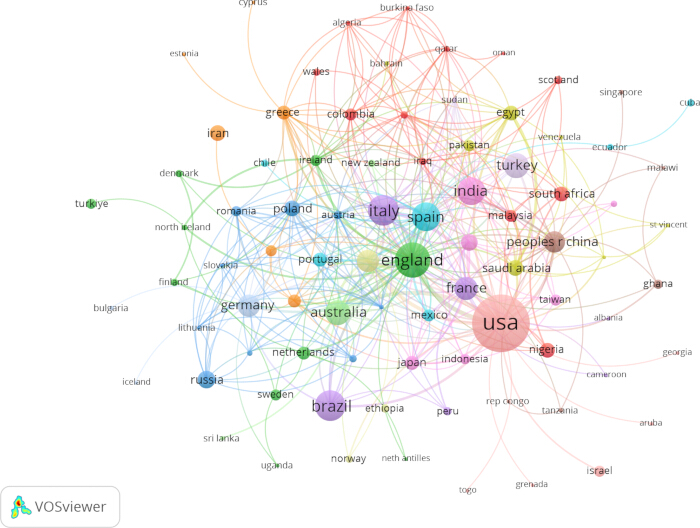
Figure 4. Co-occurrence network of countries/regions in hypertension-related erectile dysfunction research. Nodes represent countries or regions, with larger nodes indicating a higher number of publications. Connecting lines denote collaborations between countries, where thicker lines indicate stronger collaborative relationships. Different colors indicate distinct collaboration clusters. Please click here to view a larger version of this figure.
Contributions of top organizations:
A total of 2,172 institutions contributed to publications related to HT-related ED. The top ten organizations contributing to this field were the University of São Paulo (14 publications), Pfizer Inc. (12), University of Sydney (11), Columbia University (10), University of British Columbia (10), University of Milan (10), Fundação Oswaldo Cruz (9), University of Michigan (9), University College London (9), and University of Waterloo (8) (Table 3).
| Rank | Organization | No. of publications | No. of citations | Total link strength |
| 1 | University of Sao Paulo | 14 | 180 | 2 |
| 2 | Pfizer Inc. | 12 | 1000 | 19 |
| 3 | University of Sydney | 11 | 129 | 6 |
| 4 | Columbia University | 10 | 461 | 9 |
| 5 | The University of British Columbia | 10 | 482 | 5 |
| 6 | University of Milan | 10 | 76 | 3 |
| 7 | Fundação Oswaldo Cruz | 9 | 371 | 6 |
| 8 | University of Michigan | 9 | 212 | 4 |
| 9 | University College London | 9 | 674 | 2 |
| 10 | University of Waterloo | 8 | 779 | 9 |
Table 3: Top 10 institutions contributing to research on hypertension-related erectile dysfunction. Institutions are ranked by publication output. “No. of publications” indicates the total number of articles from each institution. “No. of citations” represents total citation counts, and “Total link strength” reflects collaboration among institutions.
Among these institutions, the University of São Paulo had the highest number of publications (14), whereas Pfizer Inc. exhibited the highest total link strength (19) and the highest number of citations (1,000). In terms of citation counts, the top institutions were Pfizer Inc. (1,000), University of Waterloo (779), University of Chicago (720), University College London (674), Northwestern University (603), University of British Columbia (482), Columbia University (461), Boston University (380), Fundação Oswaldo Cruz (371), and Sapienza University of Rome (358) (Table 4).
| Rank | Organization | No. of publications | No. of citations | Total link strength |
| 1 | Pfizer Inc. | 12 | 1000 | 19 |
| 2 | University of Waterloo | 8 | 779 | 5 |
| 3 | The University of Chicago | 5 | 720 | 9 |
| 4 | University College London | 9 | 674 | 2 |
| 5 | Northwestern University | 6 | 603 | 1 |
| 6 | The University of British Columbia | 10 | 482 | 5 |
| 7 | Columbia University | 10 | 461 | 9 |
| 8 | Boston University | 7 | 380 | 6 |
| 9 | Fundação Oswaldo Cruz | 9 | 371 | 6 |
| 10 | Sapienza University of Rome | 7 | 358 | 3 |
Table 4: Top 10 institutions ranked by citation counts in hypertension-related erectile dysfunction research. Institutions are listed according to total citations. “No. of publications” refers to the number of articles published by each institution. “No. of citations” denotes total citations, and “Total link strength” represents the extent of institutional collaboration.
Collaboration analysis indicated that Pfizer Inc., Fundação Oswaldo Cruz, and the University of North Carolina were central to institutional partnerships. However, most institutions were fragmented and lacked strong collaboration (Figure 5). The prominence of Pfizer Inc. in citation metrics reflects not only its commercial role in developing sildenafil but also its extensive sponsorship of post-marketing clinical trials and investigator-initiated studies that generated foundational evidence on the cardiovascular safety and efficacy of phosphodiesterase type 5 inhibitors in patients with HT.
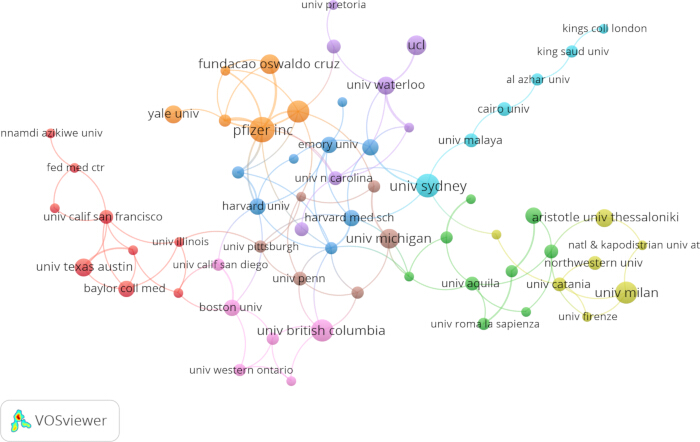
Figure 5. Co-occurrence network of institutions involved in hypertension-related erectile dysfunction research. Nodes correspond to institutions, with node size reflecting publication volume. Lines between nodes represent institutional collaborations, with thicker lines indicating stronger connections. Colors differentiate collaboration clusters. Please click here to view a larger version of this figure.
Analysis of authors and co-cited authors:
Co-occurrence analysis is used to identify influential authors within a field and to assess the extent of collaboration among them. In contrast, co-citation analysis describes the relationship between two authors or publications based on how frequently they are cited together by subsequent studies. A total of 40,281 authors were identified in this study. Among them, Faix, A. (7 publications) and Grellet, I. (7 publications) had the highest number of publications, followed by Colson, M.H. (6), Cuzin, B. (6), Huyghes, E. (6), Fonzi, Laura (5), Pallagrosi, Mauro (5), Picardi, Angelo (5), Biondi, Massimo (5), and Couper, Iand. (4) (Table 5). Fong, Geoffrey T., and Hammond, David exhibited strong collaboration, forming two distinct groups of authors (Figure 6). However, collaboration among other authors was limited, and the research field appeared relatively fragmented.
| Rank | Author | No. of publications | No. of citations | Total link strength |
| 1 | Faix, A. | 7 | 29 | 25 |
| 2 | Grellet, I. | 7 | 29 | 25 |
| 3 | Colson, M.H. | 6 | 27 | 24 |
| 4 | Cuzin, B. | 6 | 27 | 24 |
| 5 | Huyghes, E. | 6 | 27 | 24 |
| 6 | Fonzi, Laura | 5 | 55 | 15 |
| 7 | Pallagrosi, Mauro | 5 | 55 | 15 |
| 8 | Picardi, Angelo | 5 | 55 | 15 |
| 9 | Biondi, Massimo | 5 | 55 | 13 |
| 10 | Couper, Iand. | 4 | 18 | 8 |
Table 5: Top 10 authors ranked by publication output in hypertension-related erectile dysfunction research. “No. of publications” indicates the number of articles authored by each individual. “No. of citations” represents total citation counts, and “Total link strength” reflects collaboration among authors.
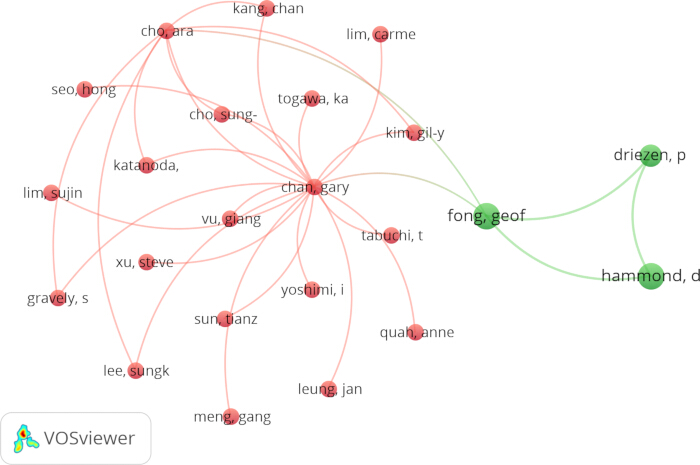
Figure 6. Co-occurrence network of authors in hypertension-related erectile dysfunction research. Nodes represent authors, with larger nodes indicating greater publication output. Links between nodes reflect collaborative relationships, with thicker lines representing more frequent collaboration. Node color indicates the publication year. Please click here to view a larger version of this figure.
Co-citation analysis showed that Rosen, R.C. (235), Feldman, H.A. (201), Corona, G. (110), Laumann, E.O. (105), Shabsigh, R. (90), Montorsi, F. (84), Esposito, K. (80), Droller, M.J. (79), Goldstein, I. (78), and Lue, T.F. (70) had the highest number of co-citations (Table 6). These results indicate that these authors play an important role in this research field.
| Rank | Author | No. of co-citations | Total link strength |
| 1 | Rosen, R.C. | 235 | 2052 |
| 2 | Feldman, H.A. | 201 | 1901 |
| 3 | Corona, G. | 110 | 1280 |
| 4 | Laumann, E.O. | 105 | 1027 |
| 5 | Shabsigh, R. | 90 | 1035 |
| 6 | Montorsi, F. | 84 | 977 |
| 7 | Esposito, K. | 80 | 1530 |
| 8 | Droller, M.J. | 79 | 772 |
| 9 | Goldstein, I. | 78 | 946 |
| 10 | Lue, T.F. | 70 | 651 |
Table 6: Top 10 authors ranked by co-citation frequency in hypertension-related erectile dysfunction research. “No. of co-citations” refers to the number of times an author is cited alongside others. “Total link strength” indicates the strength of co-citation relationships among authors.
Distribution of journals:
All selected papers were published in 1,099 journals. The top ten most prolific journals were the Journal of Sexual Medicine (36 publications), International Journal of Impotence Research (32), Archivio Italiano di Urologia e Andrologia (20), Cureus Journal of Medical Science (20), American Journal of Men’s Health (17), Sexologies (15), Journal of Men’s Health (12), Turkish Journal of Urology (11), Ciência & Saúde Coletiva (11), and Journal of Clinical Urology (10) (Table 7, Figure 7).
| Rank | Source | No. of publications | No. of citations | IF/JCR (2022) | Total link strength |
| 1 | Journal of Sexual Medicine | 36 | 1627 | 3.3/Q1 | 36 |
| 2 | International Journal of Impotence Research | 32 | 857 | 2.5/Q2 | 25 |
| 3 | Archivio Italiano di Urologia e Andrologia | 20 | 152 | 1.3/Q3 | 5 |
| 4 | Cureus Journal of Medical Science | 20 | 85 | 1.3/Q2 | 5 |
| 5 | American Journal of Men's Health | 17 | 169 | 2.4/Q2 | 5 |
| 6 | Sexologies | 15 | 54 | 0.855/Q4 | 9 |
| 7 | Journal of Men's Health | 12 | 39 | 0.6/Q4 | 8 |
| 8 | Turkish Journal of Urology | 11 | 92 | 1.1/Q3 | 4 |
| 9 | Ciencia & Saude Coletiva | 11 | 124 | 1.2/Q4 | 1 |
| 10 | Journal of Clinical Urology | 10 | 8 | 0.5/Q4 | 2 |
Table 7: Top 10 journals ranked by publication output in hypertension-related erectile dysfunction research. “No. of publications” denotes the number of articles published in each journal. “No. of citations” represents total citation counts. “IF/JCR (2022)” indicates the journal impact factor and Journal Citation Reports quartile ranking. “Total link strength” reflects citation relationships among journals.
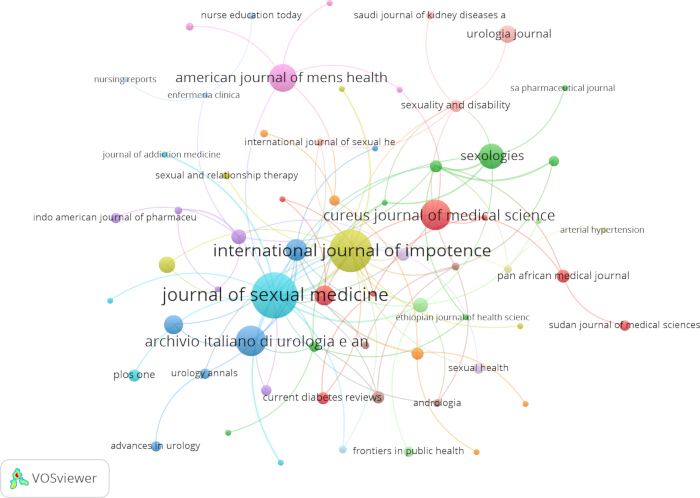
Figure 7: Co-occurrence network of cited journals in hypertension-related erectile dysfunction research. Nodes represent journals, with node size corresponding to citation frequency. Lines indicate co-citation relationships, with thicker lines representing stronger associations. Different colors denote distinct journal clusters. Please click here to view a larger version of this figure.
Journal co-citation analysis identified 28,612 co-cited journals. The top ten co-cited journals were the Journal of Sexual Medicine (1,511), Journal of Urology (1,385), International Journal of Impotence Research (1,161), Urology (761), European Urology (567), Journal of the American Medical Association (449), BJU International (442), New England Journal of Medicine (371), Diabetes Care (297), and The Lancet (291) (Table 8). The Journal of Sexual Medicine and the International Journal of Impotence Research serve as the principal dissemination platforms for this research area. Their dual emphasis on sexual medicine and urology reflects the multidisciplinary nature of the field, which spans vascular biology, endocrinology, and clinical pharmacology. The high co-citation of general medical journals such as JAMA, The Lancet, and The New England Journal of Medicine further indicates that landmark cardiovascular and metabolic studies provide critical contextual evidence for this specialized literature.
| Rank | Source | Co-citations | Total link strength |
| 1 | The Journal of Sexual Medicine | 1511 | 47196 |
| 2 | The Journal of Urology | 1385 | 38007 |
| 3 | International Journal of Impotence Research | 1161 | 34534 |
| 4 | Urology | 761 | 23859 |
| 5 | European Urology | 567 | 19648 |
| 6 | Journal of the American Medical Association | 449 | 14936 |
| 7 | BJU International | 442 | 14019 |
| 8 | The New England Journal of Medicine | 371 | 13740 |
| 9 | Diabetes Care | 297 | 12529 |
| 10 | The Lancet | 291 | 8687 |
Table 8: Top 10 co-cited journals in hypertension-related erectile dysfunction research. Journals are ranked by co-citation frequency. “Co-citations” indicates how often journals are cited together. “Total link strength” represents the strength of co-citation relationships between journals.
Analysis of highly cited literature and co-cited literature:
A total of 1,661 references were identified. References with more than 200 citations included Hammond (2006), Mazza (2020), Amaral (2008), Maiorino (2014), Fisher (2005), and Nicolosi (2005) (Table 9). In addition, 15 references with strong citation bursts were identified. The three references with the highest burst intensity were Nicolosi A (2003), Martin-Morales A (2001), and Rosen R.C. (2004) (Figure 8).
| Rank | Publication | No. of citations | No. of links |
| 1 | Hammond (2006) | 430 | 9 |
| 2 | Mazza (2020) | 324 | 0 |
| 3 | Amaral (2008) | 281 | 0 |
| 4 | Maiorino (2014) | 257 | 10 |
| 5 | Fisher (2005) | 255 | 10 |
| 6 | Nicolosi (2005) | 235 | 6 |
| 7 | Siahpush (2006) | 188 | 3 |
| 8 | Oliffe (2005) | 173 | 11 |
| 9 | Laumann (2009) | 173 | 3 |
| 10 | Laumann (2007) | 172 | 5 |
Table 9: Top 10 references ranked by citation counts in hypertension-related erectile dysfunction research. “No. of citations” denotes the total citation count for each reference. “No. of links” reflects the number of connections with other references.
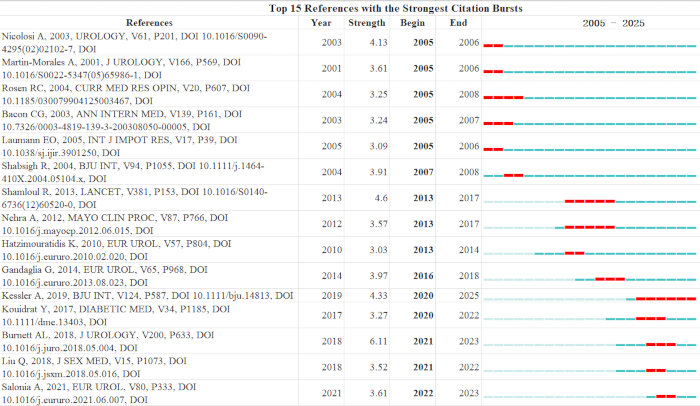
Figure 8. Top 15 references exhibiting the strongest citation bursts in hypertension-related erectile dysfunction research. The figure presents references with the highest burst intensity over time. Each row corresponds to a reference, and the timeline illustrates its citation activity period. Red segments denote intervals of increased citation frequency, while the baseline represents the full duration of the analysis. Please click here to view a larger version of this figure.
Keywords analysis:
Keyword co-occurrence and prominence analysis were used to identify trends in research topics over time and to detect research hotspots. A total of 6,273 keywords were identified. The most frequent keywords were erectile dysfunction (987 occurrences), men (376), hypertension (376), prevalence (361), risk factor (255), sildenafil (209), sexual dysfunction (198), nitric oxide (158), metabolic syndrome (144), and endothelial dysfunction (141) (Table 10, Figure 9). After clustering analysis, the top 15 keywords with the strongest citation bursts included epidemiology (5.15), prostate cancer (3.85), double blind (3.54), disease (3.96), population (4.07), life (3.33), hypertension (3.97), penile prosthesis (3.51), urinary tract symptom (3.22), United States (3.77), climate change (5.26), mental health (5.22), model (3.23), inhibitor (3.79), and sexual health (3.44) (Figure 10). The presence of seemingly unrelated terms such as “climate change” may reflect emerging research on environmental determinants of cardiovascular and sexual health rather than direct relevance to HT-related ED.
| Rank | Keyword | No. of occurrences | Total link strength |
| 1 | erectile dysfunction | 987 | 5254 |
| 2 | men | 376 | 2349 |
| 3 | hypertension | 376 | 2235 |
| 4 | prevalence | 361 | 2308 |
| 5 | risk-factor | 255 | 1665 |
| 6 | sildenafil | 209 | 1193 |
| 7 | sexual dysfunction | 198 | 1322 |
| 8 | nitric oxide | 158 | 812 |
| 9 | metabolic syndrome | 144 | 901 |
| 10 | endothelial dysfunction | 141 | 870 |
Table 10: Top 10 keywords in hypertension-related erectile dysfunction research. Keywords are ranked by frequency of occurrence. “No. of occurrences” indicates how often each keyword appears. “Total link strength” reflects the strength of co-occurrence relationships among keywords.
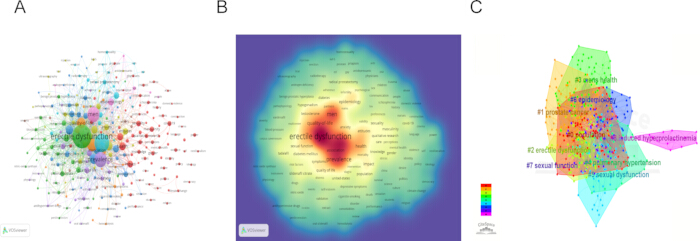
Figure 9. Keyword analysis in hypertension-related erectile dysfunction research. (A) Keyword co-occurrence network, where node size indicates frequency of occurrence, line thickness reflects co-occurrence strength, and colors represent different clusters. (B) Keyword density map, in which color intensity corresponds to keyword frequency. (C) Keyword clustering map displaying 10 keyword categories, with distinct color blocks indicating different clusters. Please click here to view a larger version of this figure.
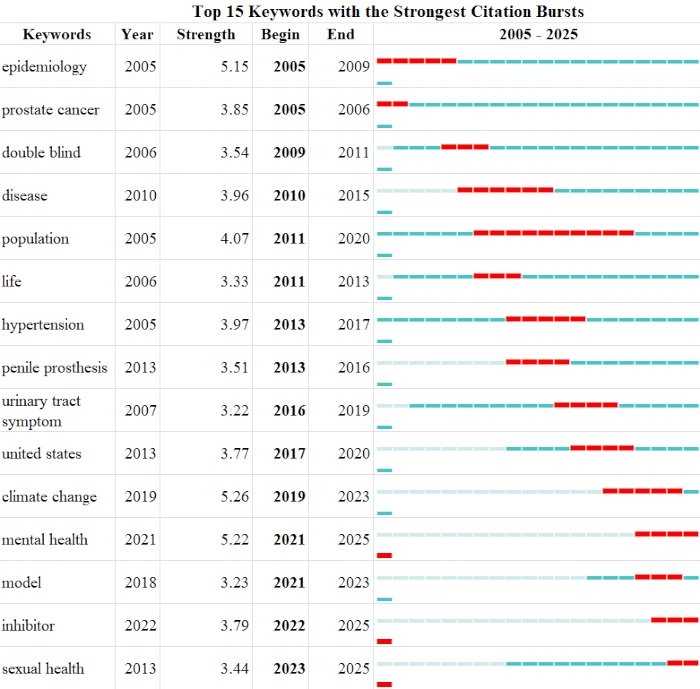
Figure 10. Top 15 keywords with the most pronounced citation bursts in hypertension-related erectile dysfunction research. The figure illustrates keywords with the highest burst strength over time. Each row represents a keyword, with columns showing the year, burst strength, and the start and end of the burst period. The timeline (2005–2025) indicates the analysis period, with red segments marking intervals of elevated keyword frequency. Please click here to view a larger version of this figure.
MR Results
In the exposure data (hypertension, FinnGen: finn-b-I9_HYPTENS_EXNONE), the instrumental variables obtained using a threshold of P < 5 × 10⁻8 and linkage disequilibrium pruning were distributed across multiple chromosomes (Figure 11A). The corresponding genome-wide association peaks were distinct (Figure 11B), indicating that the instrumental variables had sufficient strength and diverse sources. After harmonization with the outcome data (erectile dysfunction, FinnGen: finn-b-ERECTILE_DYSFUNCTION), the data were included in a two-sample MR analysis. Using 61 SNPs as instrumental variables, the inverse-variance weighted analysis suggested a positive association between genetically predicted liability to HT and the risk of ED (OR = 1.181, 95% CI: 1.003–1.391, P = 0.046). The weighted median method showed a similar but non-significant direction of effect (OR = 1.123, 95% CI: 0.889–1.420, P = 0.331), whereas MR-Egger regression did not support a significant association (OR = 0.759, 95% CI: 0.448–1.286, P = 0.309). The simple mode and weighted mode analyses were also non-significant, with ORs of 1.058 (95% CI: 0.618–1.811, P = 0.837) and 1.098 (95% CI: 0.679–1.774, P = 0.704), respectively. No significant heterogeneity was detected (IVW Q = 52.10, P = 0.756; MR-Egger Q = 49.11, P = 0.817), and the MR-Egger intercept did not indicate strong directional pleiotropy (intercept = 0.037, P = 0.089). The pleiotropy detection package did not identify outlier SNPs. The retained instruments showed adequate strength; the mean and median F-statistics were 50.79 and 40.88, respectively, and all instruments had F-statistics > 10.
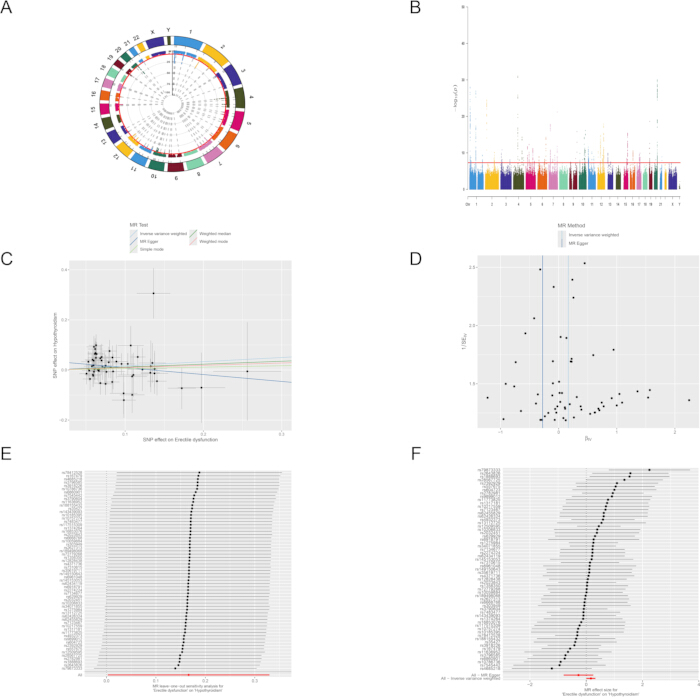
Figure 11. Mendelian randomization analysis examining the causal relationship between hypertension and erectile dysfunction. (A) Chromosomal distribution of instrumental variables. (B) Genome-wide association results for hypertension. (C) Scatter plot depicting causal effect estimates obtained from different Mendelian randomization methods. (D) Funnel plot used to evaluate potential bias and heterogeneity. (E) Leave-one-out analysis assessing the influence of individual instrumental variables on the overall estimate. (F) Forest plot presenting effect estimates for individual instrumental variables along with the combined estimate. Please click here to view a larger version of this figure.
The causal effect of HT on ED was positive and statistically significant. In the scatter plot, the IVW fitted line showed a clear positive slope and was located above the null value. The direction and magnitude of the slopes derived from MR–Egger, weighted median, and mode-based methods were consistent with those from the IVW method (Figure 11C), indicating consistent results across different analytical approaches. The single-SNP forest plot showed that most loci had positive effect estimates. The pooled effect estimate was located to the right of zero, and its confidence interval did not cross zero (Figure 11F).
Sensitivity analyses supported these findings. Leave-one-out analysis showed that removing individual instrumental variables did not substantially change the overall effect, and the positive trend remained consistent (Figure 11E). The funnel plot was approximately symmetrical, and the IVW and MR–Egger lines were centered within the distribution (Figure 11D), indicating no evidence of directional pleiotropy. Combined with MR–Egger intercept and Cochran’s Q test results, no significant bias or heterogeneity was observed. Overall, these findings indicate a robust positive causal association between HT and an increased risk of ED.
DATA AVAILABILITY STATEMENT:
The bibliometric data supporting this study were retrieved from the Web of Science Core Collection (https://www.webofscience.com/) and can be accessed by replicating the search strategy described in the Methods section. The GWAS summary statistics used for the Mendelian randomization analysis are publicly available through the IEU OpenGWAS platform (https://gwas.mrcieu.ac.uk/). The exposure dataset (finn-b-I9_HYPTENS_EXNONE) and outcome dataset (finn-b-ERECTILE_DYSFUNCTION) were obtained from the FinnGen Biobank (release 5). The analytical code is publicly available at GitHub, release v1.0: https://github.com/tengfeitcm/Two-Sample-Mendelian-Randomization-/releases/tag/v1.0.
Supplementary Table 1. List of instrumental single-nucleotide polymorphisms (SNPs) included in the Mendelian randomization analysis and their evaluation status. This table summarizes all SNPs selected as instrumental variables for hypertension in the two-sample Mendelian randomization analysis. For each SNP, the corresponding status indicates whether it was retained after linkage disequilibrium (LD) clumping and screening procedures. No SNPs were excluded based on LDtrait (LDlink) assessment for associations with potential confounders (e.g., smoking or alcohol consumption) in the final analytical pipeline. Notes are provided for specific variants where prior literature has reported potential gene–environment interactions or contextual associations; these SNPs were retained but should be interpreted with caution. Please click here to download this file.
Discussion
Loading...
$$\rightleftharpoonup{xx}$$
$$\longleftharp{xx}$$,
$$\longrightharp{xx}$$,
By providing a comprehensive and systematic overview of the research topics, trends, and global landscape of HT-related ED, this study offers a rapid and preliminary understanding of the field. In the context of the big data era, it is increasingly important for researchers to recognize the developmental trajectory of their respective research areas. Compared with systematic reviews or meta-analyses, bibliometric analysis applies specialized visualization tools to comprehensively evaluate existing literature, allowing intuitive identification of research trends and prediction of future hotspots21. This analytical approach enables quantitative assessment of research output and facilitates the identification of knowledge structures and emerging directions. Therefore, bibliometric analysis provides a valuable methodological framework for evaluating the evolution of scientific fields. To the best of our knowledge, this study represents the first attempt to systematically summarize HT-related ED research over the past 20 years using bibliometric techniques, thereby providing a comprehensive overview of this rapidly developing area.
From the perspective of countries/regions and institutions, the United States demonstrated a significantly higher number of publications and citation counts compared with other countries, indicating its dominant role in this field. Most of the top contributing institutions are located in Europe and the United States, whereas relatively fewer contributions originate from other regions. Collaboration among institutions appears limited, with many research groups operating independently rather than within integrated global networks. This fragmentation suggests substantial room for improvement in international collaboration. Strengthening communication and cooperation among global research teams, particularly involving countries and institutions in Asia and other underrepresented regions, may contribute to more balanced development and promote high-quality research outcomes. Analysis of authors and references showed that Faix, A. had the highest publication output, whereas Rosen, R.C. had the highest number of co-citations, reflecting strong academic influence. Other authors, including Grellet, I. and Colson, M.H., also occupy important positions in HT-related ED research. Faix, A.’s studies are mainly focused on clinical aspects of ED22,23,24, whereas Rosen, R.C.’s work predominantly involves clinical and literature-based investigations25,26,27. In addition, the Journal of Sexual Medicine published the largest number of articles in this field, indicating its central role as a key dissemination platform. Overall, the literature reflects sustained growth and a high level of scientific output.
Through analysis of bibliometric indicators, including keyword co-occurrence, clustering, and burst detection, this study identified major research topics and hotspots in HT-related ED. These include impotence, oral sildenafil, vardenafil, safety, inhaled nitric oxide, international index, predictors, late-onset hypogonadism, testosterone, obesity, oxidative stress, and phosphodiesterase 5 inhibitors. Pharmacological therapy remains the primary treatment approach for ED, including phosphodiesterase 5 inhibitors, androgen therapy, and vasoactive drugs28,29,30. Among these, phosphodiesterase 5 inhibitors are considered first-line oral medications and are widely recommended in clinical practice. These agents act by increasing cyclic guanosine monophosphate (cGMP) levels in vascular smooth muscle cells, reducing intracellular calcium concentrations, promoting smooth muscle relaxation, and increasing penile blood flow. As a result, erectile function is improved, and clinical outcomes are enhanced. Clinical studies have demonstrated that these drugs significantly improve International Index of Erectile Function-5 (IIEF-5) scores and increase sexual success rates31,32,33,34,35. Therefore, pharmacological intervention remains a cornerstone in the management of ED associated with HT.
At the molecular level, ED is driven by multiple underlying biological mechanisms. Research has demonstrated that Toll-like receptor 4 expression is markedly increased in the cavernous tissue of diabetic rats compared with controls36. Additionally, elevated levels of inducible nitric oxide synthase (iNOS) are closely linked to penile microvascular dysfunction in diabetes, and endotoxemia has also been associated with iNOS activity37. Experimental evidence indicates that excessive iNOS expression contributes to endothelial dysfunction by suppressing endothelial nitric oxide synthase (eNOS) activity38. Additionally, inhibition of iNOS has been reported to alleviate damage related to diabetic ED by slowing the reduction in eNOS phosphorylation, decreasing sustained iNOS overexpression, and improving microvascular fibrosis39. During sexual stimulation, relaxation of smooth muscle and dilation of penile resistance vessels within the corpus cavernosum are critical for achieving erection40. Nitric oxide (NO), released from nerve terminals or endothelial cells, plays a central role in this process. NO promotes the synthesis of cyclic guanosine monophosphate (cGMP), which facilitates smooth muscle relaxation and enhances blood flow to the corpus cavernosum41,42. Disruption of the NO/cGMP signaling pathway at any stage can impair smooth muscle relaxation and consequently compromise erectile function43. Clinical and metabolic factors also significantly influence the onset and progression of ED. Disease severity is associated with metabolic abnormalities such as increased waist circumference, hyperglycemia, hypertriglyceridemia, hyperlipidemia, and diabetes. Late-onset hypogonadism, characterized by reduced testosterone levels and symptoms including decreased libido, ED, and impaired orgasm, further contributes to disease burden. Severe ED may also serve as an indicator of adverse clinical outcomes in affected individuals44. Testosterone plays a vital role in maintaining erectile function by modulating smooth muscle activity, endothelial function, and nitric oxide synthase pathways45,46,47,48,49,50,51,52. The prevalence of ED increases with advancing age and is strongly associated with cardiovascular risk factors such as HT, obesity, and smoking46,47,48,49. Furthermore, reduced serum testosterone levels are linked to diminished libido and erectile impairment, whereas testosterone replacement therapy has been shown to improve these symptoms. Collectively, these findings underscore the importance of hormonal regulation in the pathophysiology and management of ED.
This study also demonstrated that research on HT-related ED is unevenly distributed across different regions, with influential authors and institutions primarily concentrated in Europe and Asia. Although notable progress has been made in clinical diagnosis and treatment, the underlying mechanisms remain incompletely understood and require further investigation. Several limitations should be acknowledged. Citation-based analyses may underestimate recently published high-quality studies due to citation lag. In addition, only English-language publications from the Web of Science Core Collection were included, and no sensitivity analyses using other databases were performed. The MR analysis demonstrated a positive causal relationship between HT and ED. Using genome-wide significant instrumental variables and multiple analytical methods, including IVW, MR–Egger, weighted median, and mode-based approaches, consistent directional effects were observed. Sensitivity analyses, including leave-one-out analysis, funnel plots, and pleiotropy assessments, supported the robustness of these findings. These results complement observational studies and provide genetic evidence supporting the role of HT as a risk factor for ED. From a clinical perspective, these findings reinforce the importance of effective blood pressure control and comprehensive cardiovascular risk management in patients with ED.
Several additional limitations should be considered. Potential sample overlap between exposure and outcome datasets could not be fully excluded. Residual pleiotropy and confounding cannot be entirely ruled out, as systematic phenotype-wide screening was not incorporated. Steiger filtering and colocalization analyses were not performed, and the use of a binary HT phenotype limits interpretation compared with continuous blood pressure traits. Multivariable or mediation MR analyses were also not conducted, preventing differentiation between direct and indirect effects. Furthermore, the findings are primarily based on populations of European ancestry, which may limit generalizability. Future research should focus on expanding bibliometric analyses through multidatabase searches and improving international collaboration networks. In the MR context, future studies should incorporate independent datasets, continuous blood pressure phenotypes, colocalization analysis, and multivariable or mediation approaches to further validate and refine causal inferences. Additionally, deeper investigation into molecular mechanisms, including nitric oxide signaling, metabolic pathways, and endocrine regulation, will enhance understanding of disease pathophysiology. Emerging areas such as gene therapy, stem cell research, and novel pharmacological interventions also represent promising directions for future exploration. Overall, this study provides a comprehensive overview of HT-related ED research and offers a framework for integrating bibliometric and genetic epidemiological approaches to advance the field.
Disclosures
Loading...
$$\rightleftharpoonup{xx}$$
$$\longleftharp{xx}$$,
$$\longrightharp{xx}$$,
The authors declare no potential conflict of interest.
Acknowledgements
Loading...
$$\rightleftharpoonup{xx}$$
$$\longleftharp{xx}$$,
$$\longrightharp{xx}$$,
The authors acknowledge financial support from the China Postdoctoral Innovative Talent Support Program (BX20220047), the China Postdoctoral Science Foundation (No. 2022M720528), the Young Talent Support Project of the Beijing Association of Science and Technology (BYESS2022182), and the Young Talent Support Project of the Chinese Association of Chinese Medicine (CACM-2021-QNRC2-B04). Additional funding was provided by the New Teacher Start-up Fund Project of Beijing University of Chinese Medicine (2023-JYB-XJSJJ052), the Clinical Research Funds for High-Level Traditional Chinese Medicine Hospitals of the Central Government—Pilot Project for Enhancing Clinical Research and Achievement Transformation Capacity of Dongzhimen Hospital (DZMG-MLZY-23006), and the High-Level Traditional Chinese Medicine Hospital SM Project—Talent Training Program of Dongzhimen Hospital, Beijing University of Chinese Medicine (DZMG-QNGG0001). Further support was received from the Beijing Municipal Administration of Hospitals Incubating Program (PZ2024014) and the Shunyi District Health Development Research Special Project (Wsjkfzkyzx-2023-q-07).
Materials
| Name | Company | Catalog Number | Comments |
|---|---|---|---|
| CiteSpace | Drexel University, USA | R6.1.3 | RRID:SCR_025121 |
| CMplot | Yin L, et al. rMVP: a memory-efficient, visualization-enhanced, and parallel-accelerated tool for genome-wide association study. Genom Proteom Bioinform. 2021;19(4):619-28. | 4.5.1 | NA |
| FinnGen dataset | FinnGen Consortium | Release 5 | RRID:SCR_022254 |
| gwasglue | MRCIEU, University of Bristol | 0.0.0.9000 | NA |
| IEU OpenGWAS platform | MRCIEU, University of Bristol | NA | NA |
| LDlink (LDtrait) | National Cancer Institute, NIH, USA | NA | RRID:SCR_011403 |
| Microsoft Excel | Microsoft Corporation, USA | 2021 | RRID:SCR_016137 |
| MR-PRESSO | Verbanck et al. | 1 | NA |
| R software | R Foundation for Statistical Computing, Austria | 4.4.0 | RRID:SCR_001905 |
| TwoSampleMR | MRCIEU, University of Bristol | 0.6.3 | RRID:SCR_019010 |
| VariantAnnotation | Bioconductor | 1.50.0 | RRID:SCR_000074 |
| VOSviewer | Leiden University, Netherlands | 1.6.18 | RRID:SCR_023516 |
| Web of Science Core Collection | Clarivate Analytics, USA | Accessed on December 20, 2025 | RRID:SCR_005051 |
Reprints and Permissions
Request permission to reuse the text or figures of this JoVE article
Request Permission