This protocol assesses the Alexis retractor as a temporary abdominal closure method in damage control surgery and compares it with the Bogotá bag technique, focusing on application time, technical difficulty, training requirements, need for assistance, and operator-related variability in a preclinical training model.
Method Article
Preclinical Evaluation of the Alexis Retractor as a Temporary Abdominal Closure Device in Damage Control Surgery Using a Dead Tissue Training Model
* These authors contributed equally
In This Article
Summary
Abstract
Temporary abdominal closure (TAC) is a critical component of damage control surgery. Negative pressure wound therapy (NPWT), particularly when combined with continuous fascial traction, is regarded as the preferred TAC strategy because of improved delayed fascial closure rates. However, dedicated equipment, consumables, and technical expertise may be unavailable in military, humanitarian, mass-casualty, or resource-limited settings, where simpler techniques such as the Bogotá bag remain relevant. The Alexis retractor provides circumferential retraction and wound-edge protection but has not previously been evaluated as a TAC technique.
A prospective comparative Dead Tissue Training (DTT) study was conducted using 12 porcine cadaver models. Twenty-nine participants from a multidisciplinary DCS group performed TAC with the Bogotá bag and Alexis retractor after standardized instruction. The primary outcome was application time; secondary outcomes were perceived difficulty, need for assistance, estimated training requirements, and preference. Mean application time was shorter with the Alexis retractor than with the Bogotá bag (122.1 ± 45.3 s versus 573.3 ± 265.5 s; p < 0.01). Median perceived difficulty was also lower (2.0 versus 6.0 on a 0–10 scale; p < 0.01). Thirteen participants required no assistance, 10 required assistance only for the Bogotá bag, and 6 required assistance for both (p = 0.02). Most participants reported one training session was sufficient for the Alexis retractor, and estimated training requirements differed between techniques (p = 0.012). Most preferred the Alexis retractor. In this preclinical model, the Alexis retractor demonstrated procedural advantages over the Bogotá bag, including faster application, lower perceived difficulty, reduced need for assistance, and lower estimated training requirements. It may represent a rapidly deployable TAC option when NPWT is unavailable or impractical, but it should not be regarded as a substitute for guideline-recommended NPWT-based strategies. Clinical studies are required to evaluate visceral safety, fascial closure, leakage, infection, and patient outcomes.
Introduction
In hemodynamically unstable trauma patients, immediate definitive surgical reconstruction may increase complications. In such situations, damage control surgery (DCS) is applied. Unlike total trauma care, DCS prioritizes physiological stabilization over definitive anatomical repair by rapidly addressing life-threatening hemorrhage and contamination1,2,3,4. Prevention focuses on the so-called lethal diamond consisting of acidosis, hypothermia, calcium depletion, and coagulopathy. Rapid stabilization is therefore essential to reduce morbidity and mortality1,2,3,4.
DCS follows a staged approach. The first stage, initial stabilization, focuses on identifying and controlling life-threatening conditions using rapid temporary measures such as packing to stop bleeding and contamination. The second stage involves temporary closure, during which the abdomen is temporarily closed without aiming for definitive repair. This step allows physiological stabilization while preventing the development of abdominal compartment syndrome. The third stage, resuscitation, occurs in the intensive care unit (ICU), where physiological function is restored through fluid therapy, blood products, and continuous monitoring. Finally, re-operation is performed once the patient is stabilised to achieve definitive anatomical repair. This staged strategy has significantly improved outcomes in severely injured patients5.
A key complication encountered in severely injured patients undergoing damage control surgery is abdominal compartment syndrome (ACS), which may impair organ perfusion and worsen physiological instability6.
When ACS develops, or when there is a significant risk of its occurrence, temporary abdominal closure (TAC) is required to allow decompression of the abdominal cavity. TAC may also be indicated in cases of severe intra-abdominal infection or when a planned “second-look” laparotomy is necessary. As such, TAC represents a crucial component of damage control surgery. An ideal TAC technique should protect intra-abdominal contents, allow easy re-entry, facilitate monitoring for complications, and permit planning for definitive abdominal closure while minimizing the risk of infection6.
Among the most commonly used TAC techniques in DCS are the Bogotá bag and the vacuum-pack technique. The Bogotá bag technique uses a sterile intravenous fluid bag that is sutured to the skin or fascia to achieve temporary abdominal closure7,8. The technique is simple, widely available, and cost-effective. However, it has several limitations, including the need for suturing and relatively limited drainage capacity, which may lead to accumulation of intra-abdominal fluid and an increased risk of infection5,6,9.
The vacuum-pack technique, also known as the Barker technique, consists of placing a fenestrated polyethylene sheet between the abdominal wall and the intestines, followed by surgical pads and suction drains connected to negative pressure. An adhesive drape is then applied to seal the wound and maintain the vacuum. Compared with the Bogotá bag, this technique generally provides improved drainage and preserves the fascia, which may facilitate later definitive abdominal wall closure5,7,8,9(Figure 1). A comparison between these commonly used temporary abdominal closure techniques is summarized in Table 1.
Current international guidelines suggest negative pressure wound therapy (NPWT), preferably combined with continuous fascial traction, as the preferred temporary abdominal closure strategy because it is associated with higher delayed primary fascial closure rates10,11,12. However, this technique requires dedicated equipment, consumables, and technical expertise, which may not always be available in military, humanitarian, mass-casualty, or resource-limited settings. In such circumstances, simpler TAC techniques such as the Bogotá bag remain clinically relevant10. The Bogotá bag was therefore selected as a representative technique for low-resource settings rather than as an alternative to NPWT in conventional trauma care. Accordingly, the intended comparator in this study was the most widely available low-resource TAC technique rather than the current guideline-recommended standard of care. Evaluating alternative methods that can be applied rapidly and with limited training may be particularly relevant in these settings.
The novelty of the proposed method lies not in the individual use of surgical pads, drains, or adhesive drapes, but in converting a self-retaining wound retractor from an exposure device into a rapidly deployable, sutureless temporary closure system.
The Alexis retractor is a surgical device composed of two rings connected by a polyurethane sheath that provides circumferential retraction and wound-edge protection. It enables optimal exposure of the operative field while requiring only a relatively small incision. Previous studies have shown that the Alexis retractor may reduce incision-site infections and improve surgical access compared with conventional retractors13,14,15,16,17,18,19. In addition, the design of the device may allow rapid placement while simultaneously protecting the wound edges and maintaining atraumatic circumferential retraction.
Given these characteristics, the Alexis retractor may offer a rapid and technically simple alternative for temporary abdominal closure in damage control surgery. However, despite its widespread use in abdominal procedures, its application as a TAC technique in this context has not yet been systematically evaluated.
The proposed role of the Alexis retractor is to provide a rapid temporary closure option after completion of the initial damage control procedures, once hemorrhage control has been achieved but definitive abdominal closure is not appropriate. The technique may be particularly relevant in austere military, humanitarian, mass-casualty, or resource-limited settings where personnel and equipment are constrained. However, it may be unsuitable when unrestricted access to the upper abdomen remains necessary, such as during ongoing hemorrhage control involving the liver or spleen, or when prolonged open abdomen management is anticipated.
This protocol is intended for trauma and general surgeons, as well as surgical trainees involved in damage control surgery, particularly in emergency or resource-limited settings such as military or austere environments. It may also serve as a training tool in surgical education programs using simulation or cadaver-based models.
Therefore, the present study evaluates a novel TAC technique using the Alexis retractor and compares it with the Bogotá bag. Efficiency, simplicity, and provider preference were assessed in a Dead Tissue Training (DTT) model in order to determine whether the Alexis retractor offers procedural advantages over the Bogotá bag and may represent a feasible temporary abdominal closure option in austere or resource-constrained environments where NPWT-based systems are unavailable or impractical. This protocol provides a reproducible method for applying the Alexis retractor as a TAC technique and allows direct comparison with the conventional Bogotá bag.
Protocol
All procedures were conducted in accordance with the guidelines of the Faculty of Veterinary Medicine of Ghent University. Formal approval by an animal ethics committee was not required because the porcine specimens were obtained from animals that had been euthanized for a separate Dead Tissue Training program for military surgeons and were not euthanized for the purpose of the present study. The animals were sedated and euthanized using barbiturates by a veterinarian in accordance with local animal welfare requirements. No animals were sacrificed specifically for the purpose of this study.
1. Study design and outcome measures
- Establish the study design
- Conduct a prospective comparative study using a porcine cadaver Dead Tissue Training (DTT) model to evaluate the procedural performance of temporary abdominal closure using the Alexis retractor and the Bogotá bag20.
- Recruit participants from a multidisciplinary damage control surgery provider group comprising surgical residents, emergency physicians, and military surgeons. Provide standardized instruction on the temporary abdominal closure techniques before the study procedures.
- Have each participant perform temporary abdominal closure using both the Bogotá bag and the Alexis retractor in a paired manner to allow direct within-participant comparison of procedural performance.
- Define and record the outcome measures
- Record procedure duration as the primary outcome measure. Measure the application time for each temporary abdominal closure technique according to the predefined start and stop points described in Section 7.
- Record perceived technical difficulty, need for assistance, estimated training requirements, and overall technique preference as secondary outcome measures.
- Assess perceived difficulty using a 0–10 rating scale, record whether additional assistance was required during each technique, and ask participants to estimate the number of training sessions required to achieve competency with each technique.
- Record the participant's overall technique preference after completion of both temporary abdominal closure procedures. Collect the outcome measures using the standardized questionnaire described in Section 8.
2. Preparation of the Experimental Model
- Prepare the porcine cadaver model
- Position and fix the porcine specimen in a supine position on a surgical table to simulate a realistic operating environment.
- Prepare the surgical materials and instruments
- Prepare the following materials for temporary abdominal closure: the wound retractor device, sterile fluid bags, surgical pads (45 cm × 45 cm), drainage catheters, and adhesive drapes. Prepare a sufficient number of surgical pads to allow complete coverage of the exposed abdominal viscera during temporary closure.
- Prepare standard surgical instruments, including scissors, scalpels, needle holders, and sutures, for performing both the conventional Bogotá bag procedure and the Alexis technique.
NOTE: These instruments are required for performing both the conventional Bogotá bag procedure and the Alexis technique.
3. Perform Laparotomy and Damage Control Training
- Perform abdominal access and exploration
- Perform a laparotomy on the porcine specimen and allow trainees to explore the abdominal cavity and retroperitoneal areas to simulate DCS procedures.
4. Temporary Abdominal Closure Using the Alexis Retractor
- Insert the wound retractor and secure the retractor
- Insert the flexible inner ring of the wound retractor into the abdominal cavity, position the flexible ring completely behind the abdominal wall within the peritoneal cavity, and ensure that the intestinal contents remain within the cylindrical space created by the device.
- Roll the rigid outer ring inward toward the abdominal wall and continue rolling until the retractor is secured and circumferential exposure of the abdominal cavity is achieved.
NOTE: At this stage the device functions as a self-retaining retraction system that allows DCS.
- Convert the retractor to temporary abdominal closure
- Place sufficient surgical pads (45 cm × 45 cm) over the intestines to completely cover the exposed abdominal viscera, and position two standard PVC suction catheters (CH 18 mm × 520 mm) on top of the surgical pads.
- Create additional fenestrations in each catheter to optimize drainage. The number and size of the additional fenestrations were not standardized during the DTT sessions.
- Secure and seal the closure
- Unfold the wound retractor away from the abdominal cavity, turn the rigid outer ring in a circular motion to tighten the chamber created by the device, and maintain the catheter ends outside the closure to ensure proper drainage.
- Apply an adhesive drape over the wound area and ensure that the closure is watertight and secure, as shown in Figure 2.
NOTE: The drainage catheters were not connected to an active suction source during the experimental procedures.
5. Temporary Abdominal Closure Using the Bogotá Bag
- Prepare the abdominal cavity
- Place sufficient surgical pads (45 cm × 45 cm) between the intestines and the abdominal wall to completely cover the exposed abdominal viscera, and position the PVC suction catheter (CH 18 mm × 520 mm) above the surgical pads to allow passive drainage of intra-abdominal fluids.
- Prepare the sterile fluid bag
- Obtain a sterile intravenous fluid bag (3 L), cut the bag open using sterile scissors, and adjust the size of the bag to match the dimensions of the abdominal wound.
- Secure the Bogotá bag closure
- Position the sterile fluid bag over the abdominal opening and suture the bag to the skin of the wound using a continuous suture on both sides.
- Ensure that the drainage tubes remain positioned to allow adequate passive drainage and that the temporary closure is configured as shown in Figure 3.
NOTE: The Bogotá bag technique represents a commonly used temporary abdominal closure technique in damage control surgery5,6,9. The drainage catheter was not connected to an active suction source during the experimental procedures.
6. Study of the Intervention
- Perform the training procedures and collect data
- Perform laparotomy on the porcine models during the training sessions and perform temporary abdominal closure at the end of the procedure.
NOTE: TAC represents the focus of the present evaluation. - Record quantitative data including procedure duration, rated difficulty on a 0–10 scale, need for assistance, preferred technique, and estimated number of training sessions required to master each technique.
- Collect qualitative data through open-ended survey questions asking why assistance was required and why one technique was preferred.
- Perform laparotomy on the porcine models during the training sessions and perform temporary abdominal closure at the end of the procedure.
7. Timing Measurements
- Standardize pre-procedure instruction
- Demonstrate the Alexis technique using the same instructor for consistency and ask participants to report any prior familiarity with the Bogotá bag technique before the timed simulation.
- Demonstrate the Bogotá bag technique to participants reporting no prior familiarity with the procedure.
NOTE: This approach was used to minimize performance bias related to unequal prior familiarity with the two techniques.
- Perform timed simulations
- Allow participants to perform temporary abdominal closure after the instruction or demonstration phase and provide assistance from another surgeon, nurse, or anaesthesiologist when required.
- Have twenty-nine participants (n = 29) perform timed simulations of temporary abdominal closure using both the Bogotá bag and the wound retractor techniques.
- Record timing for the Alexis technique
- Start the timer when the wound retractor is inserted and adequate abdominal exposure is achieved, and stop the timer when temporary abdominal closure is completed.
NOTE: Record all timing measurements by an independent assessor using a Standardized approach.
- Start the timer when the wound retractor is inserted and adequate abdominal exposure is achieved, and stop the timer when temporary abdominal closure is completed.
- Record timing for the Bogotá bag technique
- Start the timer when the surgical pads are placed in the abdominal cavity and stop the timer after the sterile fluid bag has been sutured in place.
NOTE: Record all timing measurements by an independent assessor using a Standardized approach. Procedure duration represents the primary outcome because rapid execution of temporary abdominal closure is important in DCS and may influence surgical efficiency, patient stabilization, and survival21.
- Start the timer when the surgical pads are placed in the abdominal cavity and stop the timer after the sterile fluid bag has been sutured in place.
8. Survey Measurements
- Distribute the questionnaire
- Provide participants with access to an online questionnaire using a QR code and collect responses individually after completion of both techniques.
- Use the Qualtrics platform to host the questionnaire and enable automatic statistical data collection and analysis.
- Assess perceived difficulty
- Ask participants to rate the perceived difficulty of each technique using a scale from 0–10, where 0 indicates “very easy” and 10 indicates “very difficult or requiring a high level of expertise.”
- Assess need for assistance
- Ask participants whether additional assistance was required during the procedure and, if assistance was required, ask participants to provide the reason.
- Assess training requirements
- Ask participants which technique required more training and ask participants to estimate the number of sessions required to master each technique.
NOTE: These responses provide insight into the learning curve and clinical utility of both techniques22.
- Ask participants which technique required more training and ask participants to estimate the number of sessions required to master each technique.
- Record technique preference
- Ask participants to select the overall preferred TAC technique after performing both procedures.
- Provide the following predefined response options: very strong preference for the Alexis retractor, strong preference for the Alexis retractor, moderate preference for the Alexis retractor, neutral, moderate preference for the Bogotá bag, strong preference for the Bogotá bag, and very strong preference for the Bogotá bag. Record all responses for subsequent analysis.
NOTE: The questionnaire quantifies subjective user experience, which is an important factor when evaluating feasibility and implementation22.
9. Statistical Analysis
- Prepare the data and assess normality
- Perform all statistical analyses using SPSS software and set statistical significance at p < 0.05.
- Standardize all procedure duration values to seconds and assess normality using the Shapiro-Wilk test.
- Compare procedure duration
- Create a difference variable representing the difference in procedure duration between techniques (Alexis − Bogotá).
- Perform a paired t-test to compare procedure duration23,24,25 and confirm the results using the Wilcoxon signed-rank test.
- Analyze survey data
- Analyze survey data using descriptive and inferential statistics and assess normality of the difficulty scores using the Shapiro-Wilk test.
- Compare non-normally distributed variables using the Wilcoxon signed-rank test.
- Analyze categorical variables
- Analyze categorical outcomes including need for assistance, number of training sessions required, and technique preference. Apply chi-square analysis where appropriate and use Fisher’s exact test when more than 20% of expected frequencies are below five26.
- Summarize technique preference descriptively.
Results
Procedure duration
A total of 29 participants, comprising surgical residents, emergency physicians, and military surgeons, performed temporary abdominal closure using both techniques during the Dead Tissue Training sessions. Individual levels of surgical training, demographic characteristics, and prior experience with damage control surgery and temporary abdominal closure techniques were not systematically recorded. All 29 participants successfully completed both TAC procedures, allowing paired assessment of procedure duration and participant-reported outcomes and thereby demonstrating successful implementation of the protocol in the DTT setting.
Application time differed substantially between the two techniques. The mean ± SD application time was 573.3 ± 265.5 s for the Bogotá bag and 122.1 ± 45.3 s for the Alexis retractor (p < 0.01), indicating markedly faster application of the Alexis technique. Timing variability was also lower for the Alexis retractor, suggesting less variability in performance between operators (Figure 4).
Survey results
Perceived difficulty
The Bogotá bag received a median difficulty score of 6.0 (IQR 3.5–7.0), whereas the Alexis retractor received a median score of 2.0 (IQR 1.5–3.0; p < 0.01), indicating that participants perceived the Alexis technique as easier to perform (Figure 5).
Need for assistance
Of the 29 participants, 13 completed both techniques without assistance. Six participants required assistance during both techniques, whereas 10 required assistance only during the Bogotá bag procedure. No participant required assistance exclusively during the Alexis retractor procedure (p = 0.02).
Participants who required assistance during the Bogotá bag procedure most frequently reported difficulties related to maintaining retraction of the fluid bag or retrieving additional sutures. Participants who required assistance during both techniques reported difficulties such as positioning the surgical pads or handling instruments during the procedure. These represented the main practical difficulties encountered during implementation of the protocol.
Training requirements
Participants were asked to indicate which technique required more training to master. The most frequently selected responses were “more training required for the Bogotá bag” (8 participants) and “slightly more training required for the Bogotá bag” (7 participants).
When estimating the number of training sessions required to achieve competency, most participants selected “1–5 sessions” for the Bogotá bag (17 participants), while 7 selected “1 session” and 5 selected “5–10 sessions.” In contrast, 20 participants selected “1 session” for the Alexis retractor, while 8 selected “1–5 sessions” and 1 selected “5–10 sessions” (p = 0.012).
Technique preference
No participant preferred the Bogotá bag. Two participants indicated a neutral preference, while 18 participants reported a very strong preference for the Alexis retractor, 6 reported a strong preference, and 3 reported a moderate preference. Reasons given for preferring the Alexis retractor included faster application, greater simplicity, improved fluid management, airtight closure, reduced need for suturing, fewer required personnel, intuitive handling, and perceived reliability. Feedback regarding the Bogotá bag included both practical advantages and reported limitations. An overview of the five evaluated procedural criteria is presented in Figure 6.
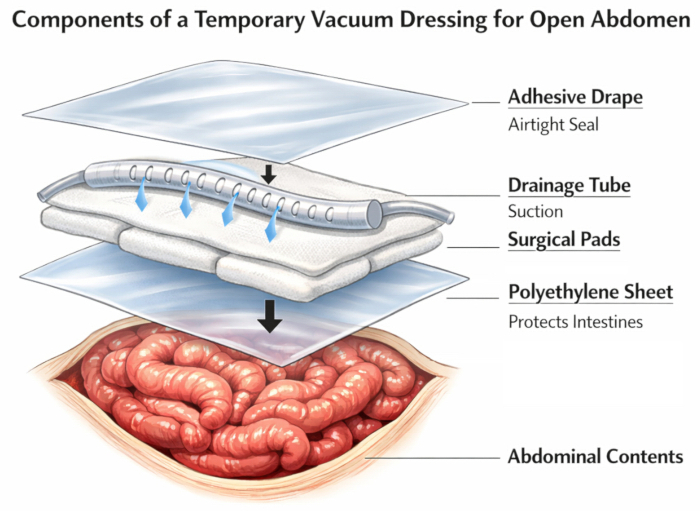
Figure 1: Structural layout of the vacuum-pack temporary abdominal closure system. The polyethylene sheet protects the intestines from direct contact with the abdominal wall, while surgical pads and drainage tubes facilitate fluid evacuation. The adhesive drape seals the wound and enables continuous negative pressure therapy. Please click here to view a larger version of this figure.
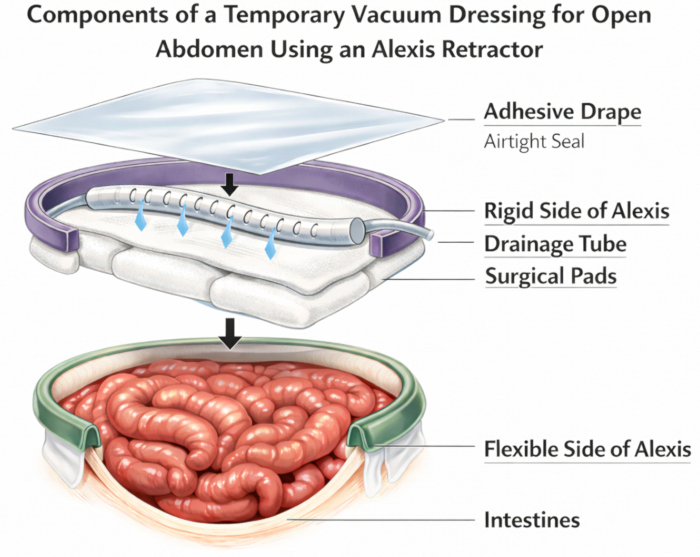
Figure 2: Structural configuration of the Alexis retractor temporary abdominal closure technique. The flexible inner ring of the Alexis retractor is positioned within the abdominal cavity, while the rigid outer ring provides circumferential tension at the wound edges. Surgical pads and drainage tubes allow passive fluid drainage, and the wound is sealed with an adhesive drape. Please click here to view a larger version of this figure.
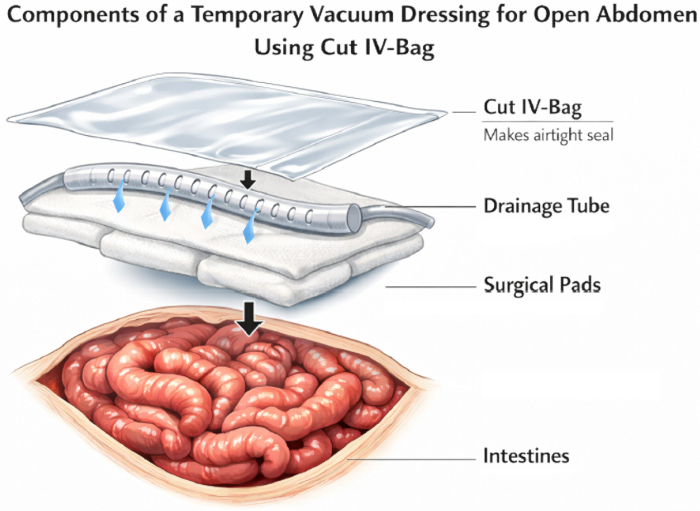
Figure 3: Structural configuration of the Bogotá bag temporary abdominal closure technique. The cut intravenous fluid bag is sutured to the abdominal wall to create a temporary barrier over the viscera. Surgical pads protect the intestines, while drainage tubes facilitate passive evacuation of intra-abdominal fluids without active suction. Please click here to view a larger version of this figure.
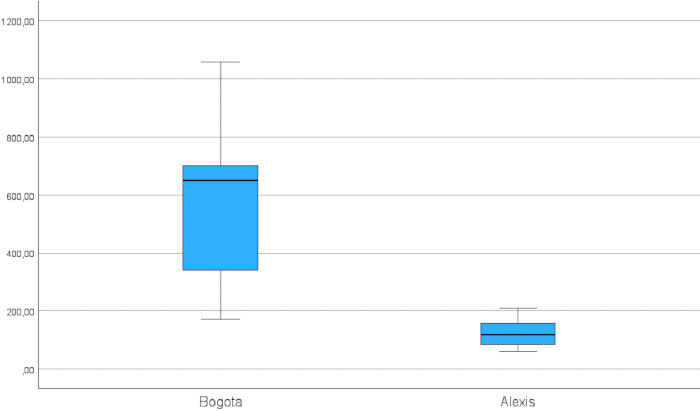
Figure 4: Application time for temporary abdominal closure techniques. Boxplots show application time (seconds) for the Bogotá bag and the Alexis retractor. The horizontal line within each box represents the median, the box represents the interquartile range (IQR; 25th–75th percentile), and the whiskers represent the most extreme values within 1.5 × IQR. The Alexis retractor demonstrated significantly shorter application times compared with the Bogotá bag. Please click here to view a larger version of this figure.
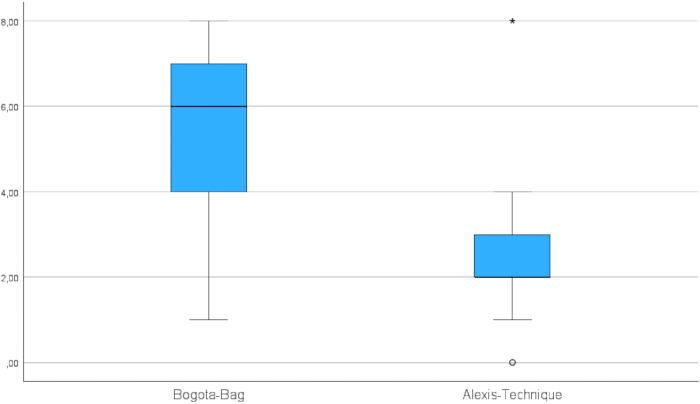
Figure 5: Comparison of perceived technical difficulty between the Bogotá bag and Alexis retractor technique. Boxplots illustrate participant-rated difficulty scores on a 0–10 scale, where higher scores indicate greater difficulty. The horizontal line within each box represents the median, the box represents the interquartile range (IQR; 25th–75th percentile), and the whiskers represent the most extreme values within 1.5 × IQR. Circles indicate outliers between 1.5 and 3 × IQR from the box, and asterisks indicate extreme outliers more than 3 × IQR from the box. The Alexis retractor was rated as significantly easier to perform compared with the Bogotá bag. Please click here to view a larger version of this figure.
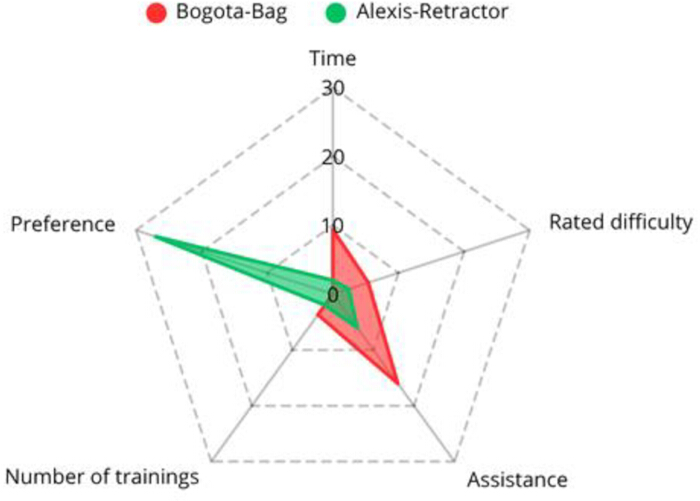
Figure 6: Comparison between the Alexis retractor and the Bogotá bag across five evaluation criteria. The radar chart uses a common display scale ranging from 0–30. Procedure duration represents the mean application time converted from seconds to minutes. Rated difficulty represents the median participant-rated difficulty score on the original 0–10 scale. Number of trainings represents the mean estimated number of training sessions required for each technique. Assistance represents the number of participants who required assistance during each technique, and preference represents the number of participants who expressed an overall preference for each technique; neutral responses were not assigned to either technique. No normalization across variables was applied; the values were plotted on the common display scale using their respective units or response measures. Please click here to view a larger version of this figure.
| Bogotá-Bag | Vacuum-Pack | Alexis retractor | |
| Cost-effective | €6.07 | €94/day | €61.62 |
| Material availability | = | -- | = |
| Suturing required | + | - | - |
| Timing | -- | / | ++ |
Table 1: Comparison between the Bogotá bag, vacuum-pack technique, and Alexis retractor. “+” indicates that a binary characteristic is present, whereas “−” indicates that it is absent. For qualitative comparisons, “++” indicates the most favorable performance and “−−” the least favorable performance for the specified criterion among the techniques compared. “=” indicates comparable performance or availability, and “/” indicates that the criterion was not assessed. The qualitative symbols are descriptive and do not represent a validated quantitative scoring system.
Discussion
The present study evaluated procedural feasibility rather than clinical effectiveness. This study represents the first systematic evaluation of the Alexis retractor as a temporary abdominal closure technique in a Dead Tissue Training model designed to simulate damage control surgery. Negative pressure wound therapy, preferably combined with continuous fascial traction, remains the preferred TAC strategy because it is associated with higher delayed primary fascial closure rates and improved clinical outcomes10,11,12. However, its use requires dedicated equipment, consumables, and technical expertise, which may not be readily available in military, humanitarian, mass-casualty, or resource-limited settings. In these circumstances, simpler TAC techniques such as the Bogotá bag remain relevant. The present findings concern the procedural feasibility of the Alexis retractor in these selected settings and should not be interpreted as evidence of clinical equivalence to NPWT. Because no NPWT comparator was included, the present findings cannot be used to infer superiority, equivalence, or non-inferiority relative to NPWT-based temporary abdominal closure strategies. Compared with the Bogotá bag, the Alexis retractor was applied more rapidly, was perceived as less difficult, required less assistance, and had lower estimated training requirements. The porcine DTT model provided an anatomically relevant environment for practicing damage control procedures involving the intra-abdominal and retroperitoneal compartments20. These findings suggest that the Alexis retractor may represent a practical TAC option when NPWT is unavailable or impractical. A structured overview of the practical differences between the two techniques is provided in Table 1.
Several steps in the protocol are critical for the successful application of the technique. Correct placement of the flexible inner ring within the abdominal cavity is essential to ensure that the bowel loops remain contained within the cylindrical chamber created by the device. Adequate placement of surgical pads and drainage catheters is necessary to facilitate fluid absorption and evacuation while avoiding excessive pressure on the underlying bowel. In addition, the outer ring must be rolled evenly to generate circumferential tension and achieve a stable temporary closure. Failure to perform these steps correctly may compromise the integrity of the closure or reduce the effectiveness of drainage. No alternative Alexis configurations or formal troubleshooting modifications were systematically evaluated in the present study.
The shorter application time observed in this study is consistent with the simplified deployment of the Alexis retractor compared with the preparation-intensive Bogotá bag technique. The Bogotá bag requires cutting and suturing of a fluid bag, whereas the Alexis retractor can be deployed in a single step. In the context of DCS, where rapid stabilization is crucial, reducing operative time may facilitate earlier transition to subsequent resuscitation or transport phases27. Gabrielsen et al. described placement of the Alexis as an expeditious method for abdominal access, while the Bogotá bag has consistently been reported as slower due to the additional preparation and suturing steps required8,28. Survey responses further emphasized the practical advantages of the Alexis retractor. Participants consistently rated the technique as easier to perform, requiring fewer training sessions and less assistance during application. Most respondents indicated that a single training session was sufficient to master the technique, and none expressed a preference for the Bogotá bag. These findings suggest that the device may reduce intraoperative workload and dependence on additional personnel. The circumferential, hands-free retraction provided by the Alexis retractor likely contributes to this effect by maintaining constant tension on the abdominal wall9,29. Another relevant aspect is the ability of the Alexis system to provide even surgical exposure while protecting the tissue margins. The transparent polyurethane membrane maintains wound opening and prevents desiccation of exposed tissues. Previous studies in gastrointestinal surgery have reported reduced wound contamination and lower rates of surgical site infection when wound protectors such as the Alexis device are used16,17,30. Although infection outcomes could not be evaluated in the present porcine cadaver model, these findings support the potential clinical relevance of the device beyond application speed.
Several limitations should be acknowledged. First, this was a porcine cadaver DTT model and therefore did not reproduce hemorrhage, bowel oedema, visceral swelling, contamination, abdominal wall tension, or ongoing resuscitation conditions encountered in real trauma surgery. Second, the participant group was heterogeneous. Although this reflects the multidisciplinary composition of damage control surgery teams, individual levels of surgical training, prior exposure to TAC techniques, and experience with open abdomen management were not systematically recorded and may have influenced procedural performance. Third, the Alexis technique was demonstrated systematically before testing, whereas the Bogotá bag technique was demonstrated only to participants reporting no prior familiarity with the procedure. Although this approach was intended to reduce bias related to unequal prior familiarity, some performance bias cannot be excluded. Fourth, the order of technique application was fixed, a learning or fatigue effect may have influenced the results. Fifth, the start and end points used for procedure timing were not entirely equivalent between techniques, which may have introduced measurement bias in favor of either approach. Neither the Bogotá bag nor the Alexis retractor provides active fascial traction or directly promotes delayed primary fascial closure, and both techniques should therefore be viewed as options for selected clinical scenarios rather than as substitutes for guideline-recommended NPWT-based strategies. The described Alexis configuration does not include a dedicated protective layer between the bowel and the absorbent surgical materials. Although the technique is intended for short-term use until planned re-exploration, the risks of adhesion formation, bowel injury, and enterocutaneous fistula formation require clinical evaluation, particularly during prolonged open abdomen management. The Alexis retractor may also be unsuitable when unrestricted access to the upper abdomen remains necessary, such as during ongoing hemorrhage control involving the liver or spleen. Its potential role is therefore as a temporary closure option after completion of the initial damage control procedures rather than as a universal replacement for established TAC techniques. No data were available on fascial closure, leakage, infection, visceral injury, or patient outcomes. Studies involving predefined expertise levels and direct clinical comparison with vacuum-pack and other NPWT-based strategies remain necessary.
Despite these limitations, the findings highlight the potential value of the Alexis retractor as a TAC technique. It is not proposed as a replacement for NPWT-based open abdomen management in modern trauma centers, but rather as a rapidly deployable TAC option in austere environments where NPWT systems, mesh-mediated traction systems, or specialized consumables are unavailable. Future clinical studies should compare the Alexis retractor with NPWT-based TAC strategies, including mesh-mediated fascial traction and vacuum-assisted closure systems, to determine whether acceptable fascial closure rates and complication profiles can be achieved in austere environments. Such studies could be designed as non-inferiority trials if procedural simplicity, cost, or logistical advantages are considered sufficient to justify a small reduction in effectiveness.
Disclosures
The authors declare no conflicts of interest.
The authors acknowledge the use of ChatGPT (OpenAI, GPT-4) as a tool to assist with language refinement and editing of the manuscript.
Acknowledgements
The authors thank the administrative and paramedic personnel of the Belgian Defence and the Faculty of Veterinary Medicine of Ghent University for the support provided during this study. Funding for the porcine specimens and consumables used during the Dead Tissue Training sessions was provided by the Belgian Ministry of Defence. Ghent University provided the animal dissection laboratory facilities. The authors acknowledge the use of ChatGPT (OpenAI, GPT-4) for language refinement and for the visual enhancement of original schematic illustrations created by the authors. All scientific content and final illustrations were reviewed and approved by the authors.
Materials
| Name | Company | Catalog Number | Comments |
|---|---|---|---|
| Adhesive surgical drape | Smith & Nephew | 4988 | Used to create an airtight seal over the wound |
| IBM SPSS Statistics | IBM Corp | Version 29.0 | Statistical software used for data analysis |
| Intravenous fluid bag (3 L) | Baxter Healthcare SA | REF 3KB7127 | Used for Bogotá bag technique; cut open and adapted |
| Needle holder | Mayo-Hegar | ref BM066R | Standard surgical instrument |
| Polyvinyl chloride (PVC) suction catheter (CH 18 × 520 mm) | Teleflex Medical / Rüsch | REF B-1A051218 | Fenestrated manually to improve drainage |
| Scalpel | Swann-Monton | N/A | Standard number 24 scalpel |
| Scissors (surgical) | Vitry Surgical Scissors For Dressings And Bandages | ref 3538892892955 | Used for cutting materials |
| Sterile surgical compresses (45 × 45 cm) | STS Medical Group AD | REF 625105K | Placed over intestines for protection and fluid absorption |
| Sutures | Ethicon Prolene Size 1 ref 8425H | ref 8425H | Used for securing the Bogotá bag |
| Wound retractor device (Alexis-type) | Applied Medical | C8404 / Extra large | Dual-ring retractor with polyurethane sheath. Size: Extra large |
References
- Brock WB, Barker DE, Burns RP. Temporary closure of open abdominal wounds: the vacuum pack. Am Surg. 1995;61:30–5.
- Moore EE, et al. Trauma-induced coagulopathy. Nat Rev Dis Primers. 2021;7:30.
- Rotondo MF, et al. Damage control: an approach for improved survival in exsanguinating penetrating abdominal injury. J Trauma. 1993;35:375–82.
- Wray JP, et al. The diamond of death: hypocalcemia in trauma and resuscitation. Am J Emerg Med. 2021;41:104–9.
- Giannou C, Baldan M, Molde Å. War Surgery. Volume 32: Injuries to the abdomen. Geneva: International Committee of the Red Cross; 2021.
- Deenichin GP. Abdominal compartment syndrome. Surg Today. 2008;38:5–19.
- Ribeiro MA Jr, et al. Comparative study of abdominal cavity temporary closure techniques for damage control. Rev Col Bras Cir. 2016;43:368–73.
- Ribeiro Junior MA, et al. Open abdomen in gastrointestinal surgery: which technique is the best for temporary closure during damage control? World J Gastrointest Surg. 2016;8:590–7.
- Brown LR, Rentea RM. Temporary abdominal closure techniques. StatPearls [Internet]. Treasure Island (FL): StatPearls Publishing; 2024.
- Coccolini F, et al. The open abdomen in trauma and non-trauma patients: WSES guidelines. World J Emerg Surg. 2018;13:7.
- Petersson P, Petersson U. Dynamic fascial closure with vacuum-assisted wound closure and mesh-mediated fascial traction treatment of the open abdomen: an updated systematic review. Front Surg. 2020;7:577104.
- Acosta S, Björck M, Petersson U. Vacuum-assisted wound closure and mesh-mediated fascial traction for open abdomen therapy: a systematic review. Anaesthesiol Intensive Ther. 2017;49(2):139–145.
- Galosi AB, et al. Does Alexis wound protector/retractor reduce the risk of surgical site infections after open radical cystectomy for bladder cancer? Results from a single center, comparative study. Urology. 2024;184:162–8.
- Reid K, Pockney P, Draganic B, Smith SR. Barrier wound protection decreases surgical site infection in open elective colorectal surgery: a randomized clinical trial. Dis Colon Rectum. 2010;53:1374–80.
- Joshi BD, Koirala U, Upadhyaya AM, Joshi A, Dhital S. Bogota bag in abdominal compartment syndrome at Kathmandu Model Hospital. J Nepal Health Res Counc. 2017;15:159–63.
- Cheng KP, et al. Alexis O-Ring wound retractor vs conventional wound protection for prevention of surgical site infections in colorectal resections. Colorectal Dis. 2012;14:e346–51.
- Horiuchi T, et al. Randomized, controlled investigation of the anti-infective properties of the Alexis retractor/protector of incision sites. J Trauma. 2007;62:212–5.
- Edwards JP, Ho AL, Tee MC, Dixon E, Ball CG. Wound protectors reduce surgical site infection: a meta-analysis of randomized controlled trials. Ann Surg. 2012;256:53–9.
- Zhang L, Elsolh B, Patel SV. Wound protectors in reducing surgical site infections in lower gastrointestinal surgery: an updated meta-analysis. Surg Endosc. 2018;32:1111–22.
- Swindle MM, Makin A, Herron AJ, Clubb FJ Jr, Frazier KS. Swine as models in biomedical research and toxicology testing. Vet Pathol. 2012;49:344–56.
- Rotondo MF, Zonies DH. The damage control sequence and underlying logic. Surg Clin North Am. 1997;77:761–77.
- Peters JH, et al. Development and validation of a comprehensive program of education and assessment of the basic fundamentals of laparoscopic surgery. Surgery. 2004;135:21–7.
- Razali NM, Wah YB. Power comparisons of Shapiro-Wilk, Kolmogorov-Smirnov, Lilliefors and Anderson-Darling tests. J Stat Model Anal. 2011;2:21–33.
- Mishra P, et al. Descriptive statistics and normality tests for statistical data. Ann Card Anaesth. 2019;22:67–72.
- Bridge PD, Sawilowsky SS. Increasing physicians’ awareness of the impact of statistics on research outcomes: comparative power of the t-test and Wilcoxon rank-sum test in small samples applied research. J Clin Epidemiol. 1999;52:229–35.
- Kim HY. Statistical notes for clinical researchers: chi-squared test and Fisher’s exact test. Restor Dent Endod. 2017;42:152–5.
- Giannou C, Baldan M, Molde Å. War Surgery. Volume 5.8: The lethality of context: delay to treatment. Geneva: International Committee of the Red Cross; 2021.
- Gabrielsen J, Petrick A, Ibele A, Wood GC, Benotti P. A novel technique for wound protector deployment and efficient specimen extraction following laparoscopic sleeve gastrectomy. J Gastrointest Surg. 2014;18:1678–82.
- Dessy LA, Fallico N, Serratore F, Ribuffo D, Mazzocchi M. The use of the Alexis device in breast augmentation to improve outcomes: a comparative randomized case-control study. Gland Surg. 2016;5:287–94.
- Salgado-Nesme N, Morales-Cruz M, Navarro-Navarro A, Patino-Gomez TA, Vergara-Fernandez O. Usefulness of a circumferential wound retractor in emergency colorectal surgery as a preventive measure for surgical site infection. Rev Gastroenterol Mex (Engl Ed). 2020;85:399–403.