Tail artery blood sampling in rats under isoflurane anesthesia allows low-stress, controlled collection of comparatively large blood volumes. Rapid recovery and suitability for repeated sampling make this method ideal for longitudinal studies requiring reliable physiological parameters.
Rapid Report
Tail Artery Blood Sampling in Isoflurane Anesthetized Rats Reduces Stress and Improves Reliability
In This Article
Summary
Abstract
This method describes blood sampling via the tail artery in isoflurane-anesthetized rats. The use of isoflurane minimizes defensive movements, thereby enabling a controlled, low-stress procedure for both the animal and the researcher. Further advantages include the rapid recovery of animals after sampling due to the short-acting nature of isoflurane, the ability to collect comparatively large blood volumes from a single puncture site, and the suitability of the technique for repeated blood sampling. In addition, the rapid arterial blood flow may reduce the likelihood of coagulation artifacts, although this was not specifically evaluated in the present study. The results were determined as part of a pharmacokinetic study. Blood collection was successful in all animals, resulting in a 100% sampling success rate. No significant body weight loss was observed 24 h after blood sampling, and animals showed rapid recovery without visible signs of distress or procedure-related complications. Overall, this approach is highly suitable for experimental settings requiring reliable and reproducible blood collection with minimal handling stress. After a short learning phase, the procedure proved to be reliable for routine experimental use. However, the potential influence of isoflurane anesthesia on blood gas, metabolic, and endocrine parameters should be considered when planning experiments and interpreting the results.
Introduction
Blood sampling is a key technique in experimental research using rats to assess physiological and pharmacokinetic parameters. Recommended techniques include tail incision, sampling from the lateral tail vein, saphenous vein, sublingual vein, jugularis vein, and retro-orbital sinus, and catheterization1,2,3,4,5,6,7. However, the choice of method depends on the desired outcomes, and each has inherent limitations.
Lateral tail vein sampling and tail incision may yield limited volumes, while retro-orbital sampling, though efficient, is more invasive, affects recovery1 and carries risks of tissue damage4,8 and ethical concerns. Saphenous vein sampling requires restraint and shaving of the puncture site2, which may induce stress and affect experimental outcomes. Repeated blood draws from the saphenous vein can also be challenging due to the vein's short length and hemostasis. The same applies to the sublingual vein. Although large blood volumes can be obtained quickly via jugular vein puncture, there is a risk of lung injury leading to pneumothorax. Also, as the vein is not visible, the puncture must be performed blindly6.
In this context, refined methods that minimize animal suffering while ensuring good sample quality are becoming increasingly important. Tail artery blood sampling under isoflurane anesthesia offers such an approach. The use of short-acting inhalation anesthesia reduces handling stress and facilitates a controlled procedure. In addition, arterial blood collection is expected to provide good-quality blood samples with a reduced risk of coagulation artifacts due to the rapid blood flow. The technique is particularly suitable for repeated sampling and longitudinal study designs, as animals recover rapidly and physiological disturbance is minimized. Overall, this method combines technical reliability with improved animal welfare and is therefore well-suited for experimental settings requiring precise and reproducible blood measurements.
Protocol
All experiments involving the presented method were approved by the Ethics Committee of the Medical University of Vienna and the Austrian Ministry of Education, Science, and Research.
1. Preparation
NOTE: Prepare all required materials prior to anesthesia to ensure a smooth and efficient procedure.
- Fill the syringe with 3.2% citrate (amount depends on the desired parameters) to prevent blood clotting.
- Set the oxygen flow to 0.5 L/min, directing it into the induction chamber and the mask.
- Occlude the hose connected to the mask to ensure that the induction gas and oxygen are directed exclusively into the chamber.
- Remove the rat from the cage and place it in the induction chamber.
- Close the lid of the induction chamber, ensuring the rat's tail or feet are not pinched.
- Set the isoflurane to 3% (depending on the hosing system) and maintain until the animal shows loss of spontaneous movement and of righting reflex.
- Gently rock the chamber back and forth to confirm loss of the righting reflex.
- Occlude the hose connected to the box to redirect gas and oxygen to the mask.
- Open the lid of the chamber and remove the rat.
- Place the rat in a supine position on the heating pad (38 °C) with its nose positioned in the mask (Figure 1).
- Clean the tail with water and dry with tissue paper.
- Disinfect the tail with alcohol.
- Confirm the absence of the interdigital reflex by pinching between the toes of the rat's hind limb and verifying the lack of a withdrawal response.
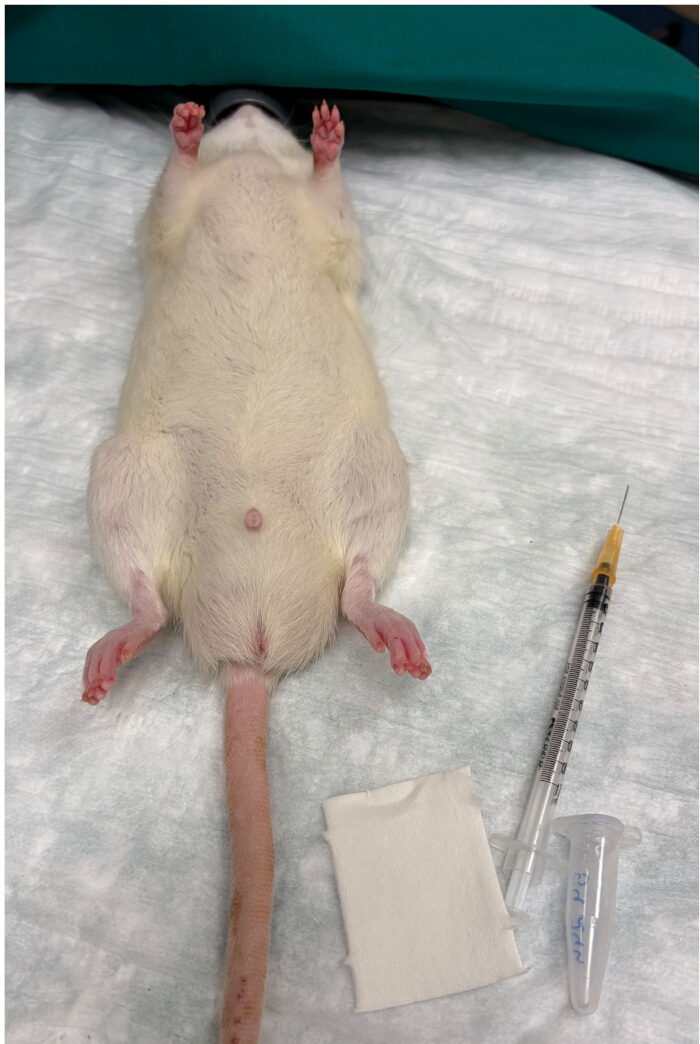
Figure 1: Rat position. The rat is positioned on its back with its nose placed in the anesthesia mask. Please click here to view a larger version of this figure.
2. Blood sampling
NOTE: The artery is located on the ventral side of the tail. The optimal puncture site is located between the middle and distal parts of the tail. The artery is identified primarily by its anatomical position, but in lightly pigmented rats (e.g., Sprague Dawley), the ventral tail artery may occasionally be visible as a faint bluish vessel. In this case, the ventral tail artery can usually be readily identified at the base of the tail by its anatomical position in the ventral midline. Once identified, its course can be followed distally to the intended puncture site.
- Follow the artery from proximal to distal.
- Orient the needle bevel upwards.
- Insert the needle at an approximately 30 ° angle (Figure 2).
- Advance the needle cranially and then parallel to the tail (Figure 2).
- Draw blood into the syringe (Figure 2).
NOTE: If the needle can be advanced easily, withdraw the required volume of blood in accordance with the applicable guidelines. If blood pressure is too low for sampling, reduce the isoflurane concentration to 2.5% and repeat the procedure without removing the needle from the puncture site. For each subsequent blood draw, the puncture site should be positioned cranially to the previous site. - Use a swab to press down on the injection site before removing the needle.
- Turn off the gas anesthesia and check the insertion site.
NOTE: Once bleeding has ceased, return the rat to its home cage.
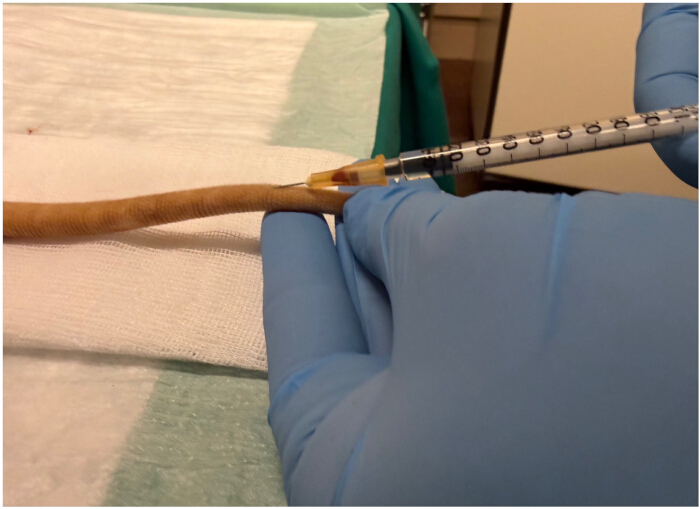
Figure 2: Puncture site. The puncture site is located ventrally between the middle and distal third of the tail, and the needle should be inserted at an angle of 30°. Please click here to view a larger version of this figure.
3. Blood processing
- Pour the collected blood into a tube.
- Store the blood on ice until centrifugation.
Results
The data presented in this method paper were obtained during a pharmacokinetic study. Only male Sprague Dawley rats aged 6–8 weeks, with a body weight ranging from 393 g to 429 g, were included. A single blood sample (0.3 mL) was collected from the tail artery on day 0. Body weight was recorded immediately before blood collection and again 24 h after sampling. The anesthetic gas was rapidly exhaled, and the animals recovered quickly. Shortly thereafter, they began to eat and showed no signs of impaired general well-being. The rats exhibited no signs of distress or fear when removed from the cage for subsequent blood sampling. Also, no defensive behavior was observed in the days following the procedure. No hematomas were visible on the tail when the procedure was performed correctly. The animals showed no signs of pain either immediately after the blood draw or in the days that followed, and the blood draw sites on their tails were also painless to the touch. No body weight loss was observed within 24 h after blood collection. Mean body weight increased from 409 g at day 0 to 419 g at day 1, corresponding to a mean body weight gain of 2.6% ±± 1.1%, suggesting that the blood sampling procedure was well tolerated (Figure 3).
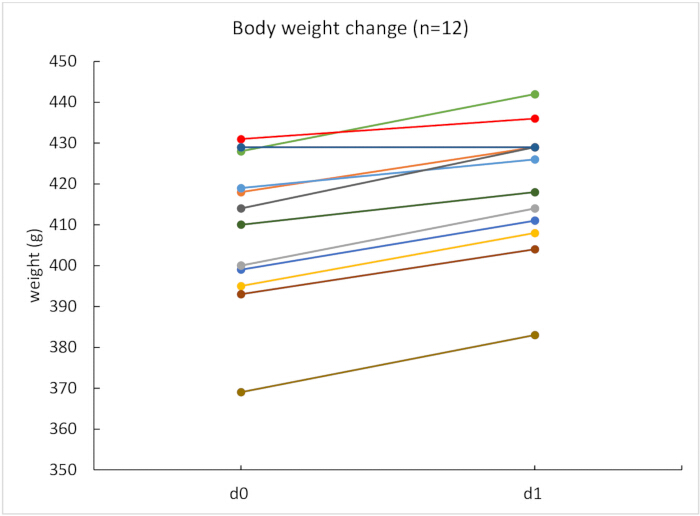
Figure 3: Body weight change. Body weight (g) before (d0) and 24 h after (d1) blood sampling in rats (n = 12). No body weight loss was observed following blood collection. Please click here to view a larger version of this figure.
Discussion
The presented tail artery blood sampling technique is particularly suitable for studies requiring repeated blood sampling or comparatively large blood sample volumes. Compared with tail vein sampling, the technique facilitates the collection of larger blood volumes from a single puncture site and may offer practical advantages for repeated sampling, as repeated venipuncture can become more challenging because of hematoma formation and reduced vein accessibility. According to the recommendations of Die Gesellschaft für Versuchstierkunde / Society of Laboratory Animal Science (GV-SOLAS) and Federation of European Laboratory Animal Science Associations (FELASA), a single blood collection should not exceed 10% of the circulating blood volume, whereas repeated daily sampling should be limited to approximately 1% of the circulating blood volume per 24 h, followed by an appropriate recovery period. The described technique enables these recommended sampling volumes to be obtained in a reliable and reproducible manner, making it suitable for both single and repeated blood collection protocols.
An ideal blood collection technique should provide sufficient blood volumes for the intended analyses while minimizing procedural stress and ensuring high-quality samples. Blood collection from the retro-orbital venous plexus and the sublingual vein can lead to coagulation problems due to tissue trauma8,9, which would be suboptimal for coagulation studies. Similarly, drip techniques—such as "milking" the tail vein—could also lead to sampling-induced coagulation. Compared to these sampling methods, arterial blood obtained via the tail appears less prone to premature clotting. This may be attributed to the rapid collection process, the absence of tissue trauma, and the immediate contact of blood with citrate in the syringe, which effectively prevents coagulation. Other techniques, such as puncture of the jugular vein, carry a risk of organ damage1,6 and recommended catheterization procedures require general anesthesia, followed by postoperative care and wound management. Regular flushing of the catheter is necessary to prevent blockages, and there is always the risk of animals removing the catheter.
Blood collection from the caudal artery requires brief sedation, as the animals must be placed in a supine position and the puncture is painful, making defensive movements likely. The use of isoflurane anesthesia minimizes defensive movements, allowing the procedure to be performed in a controlled and efficient manner. As a result, blood collection can be completed rapidly, reducing the overall burden on the animal compared to venipuncture techniques using the tail vein, where it may take longer to collect the desired amount of blood. The lack of defensive movements also reduces the likelihood of repeated needle pricks. Importantly, animals do not consciously perceive the procedure, recover quickly, and generally return to normal behavior shortly after sampling1. Following blood collection, animals recovered rapidly from isoflurane anesthesia and typically resumed normal behavior shortly thereafter. In the present study, body weight measured 24 h after blood sampling showed a slight increase compared with baseline, suggesting that food intake was not adversely affected by the procedure and supporting an uneventful short-term recovery.
Isoflurane is known to reduce blood pressure10,11, which can complicate venous blood sampling due to reduced venous filling. In contrast, performing venous sampling without anesthesia requires restraint1,2, which can induce significant stress and potentially affect experimental outcomes. Apart from that, stress causes vasoconstriction, which can also make blood collection more difficult. Reduced blood pressure may also affect arterial sampling; however, in our experience, this issue can be readily managed by adjusting the Isoflurane concentration, thereby maintaining sufficient blood flow for sampling.
Isoflurane, however, is also known to influence physiological parameters, particularly blood gas values, due to respiratory depression12,13. Isoflurane can affect respiratory function and gas exchange, potentially altering arterial oxygen and carbon dioxide levels. Several studies have demonstrated that isoflurane can also alter metabolic and endocrine parameters, including blood glucose, lactate, insulin, corticosterone, and lipid metabolism14,15,16. Nevertheless, isoflurane has been shown to induce fewer alterations in stress-related parameters than several other anesthetic regimens and provides the advantages of rapid induction, short recovery time, and precise control of anesthetic depth, making it well-suited for routine blood sampling procedures14. Consequently, the potential influence of isoflurane should be considered when planning and interpreting experiments, because arterial blood samples obtained under anesthesia may not accurately reflect baseline physiological conditions. For pharmacokinetic studies, however, these effects are often of minor relevance compared with the benefits of obtaining reproducible blood samples while minimizing handling-related stress.
An additional consideration is the occupational exposure of the experimenter to isoflurane. As the system is not fully closed, there is a risk of anesthetic gas exposure during the procedure. Working under a laminar flow hood or with appropriate scavenging systems would minimize exposure, but such equipment may not be available in all experimental settings.
Overall, the described technique represents a valuable alternative to conventional blood sampling methods, combining expected good sample quality with reduced stress and improved handling conditions. It provides clear benefits in terms of animal welfare and procedural efficiency. Its suitability ultimately depends on the specific research question, but it is particularly advantageous in experimental settings where reliable blood parameters and minimal physiological disturbance are essential.
Disclosures
The author has no conflicts of interest to disclose.
Acknowledgements
The author would like to thank Katharina Tillmann for inspiring her to publish this method.
Materials
| Name | Company | Catalog Number | Comments |
|---|---|---|---|
| Anesthesia System | Dräger | https://www.draeger.com/en-us_us/Productfinder/Anaesthesia/Anaesthesia-Machines#products | Gas Anesthesia |
| Citrate Vacuette (Sodium citrate 3.2%) | Greiner Bio-One | 454332 | Anticoagulans |
| Eppendorf Tube 1.5 mL | Eppendorf | 3,01,25,150 | Blood storage |
| Isoflurane Liquid (Isospire) | Dechra | Gas Anesthesia | |
| Needle (25 G ´ 5/8'') | BD Microlance | 300600 | Blood Sampling |
| Syringe 1 mL (Tuberculin Luer) | Chirana | CHTUB01 | Blood sampling |
| Thermomaquet 2000 | Maquet | Thermomaquet 2000 | Heating system |
| Zelletten Cellulose Swab 5 cm ´ 4 cm | Lohmann&Rauscher | Hemostasis |
References
- Toft, M., Peterson, M. H., Dragsted, N., Hansen, A. K. The impact of different blood sampling methods on laboratory rats under different types of anaesthesia. Laboratory Animals. 40, 261-274 (2006).
- Hem, A., Smith, A. J., Solberg, P. Saphenous vein puncture for blood sampling of the mouse, rat, hamster, gerbil, guineapig, ferret and mink. Laboratory Animals. 32, 364-368 (1998).
- Harikrishnan, V. S., Hansen, A. K., Abelson, K. S. P., Sørensen, D. B. A comparison of various methods of blood sampling in mice and rats: Effects on animal welfare. Laboratory Animals. 52 (3), 253-264 (2018).
- Parasuraman, S., Raveendran, R., Kesavan, R. Blood sample collection in small laboratory animals. J Pharmacol Pharmacother. 1 (2), 87-93 (2010).
- National Institutes of Health, Office of Animal Care and Use. . Guidelines for survival blood collection in mice and rats. , (2025).
- Xu, Y., Zhu, Y., Lin, J., Borlak, J. Serial blood collection in anaesthetised rats: Enhancing animal welfare without the need for jugular vein catheterisation. Regul Toxicol Pharmacol. 164, 105988 (2026).
- Fluttert, M., Dalm, S., Oitzl, M. S. A refined method for sequential blood sampling by tail incision in rats. Laboratory Animals. 34, 372-378 (2000).
- Salemink, P. J. M., Korsten, J., de Leeuw, P. Prothrombin times and activated partial thromboplastin times in toxicology: a comparison of different blood withdrawal sites for Wistar rats. Comp Haematol Int. 4, 173-176 (1994).
- Seibel, J., et al. Comparison of haematology, coagulation and clinical chemistry parameters in blood samples from the sublingual vein and vena cava in Sprague-Dawley rats. Laboratory Animals. 44, 344-351 (2010).
- Albrecht, M., et al. Influence of repeated anaesthesia on physiological parameters in male Wistar rats: a telemetric study about isoflurane, ketamine-xylazine and a combination of medetomidine, midazolam and fentanyl. BMC Vet Res. 10, 310 (2014).
- Janssen, B. J. A., et al. Effects of anesthetics on systemic hemodynamics in mice. Am J Physiol Heart Circ Physiol. 287, H1618-H1624 (2004).
- Flecknell, P. . Laboratory animal anaesthesia. , (2009).
- Tsukamoto, A., et al. Combining isoflurane anesthesia with midazolam and butorphanol in rats. Exp Anim. 65 (3), 223-230 (2016).
- Arnold, M., Langhans, W. Effects of anesthesia and blood sampling techniques on plasma metabolites and corticosterone in the rat. Physiol Behav. 99, 592-598 (2010).
- Rauch, E., Ari, C., D'Agostino, D. P., Kovács, Z. Exogenous ketone supplement administration abrogated isoflurane-anesthesia-induced increase in blood glucose level in female WAG/Rij rats. Nutrients. 16 (10), 1477 (2024).
- Wren-Dail, M. A., et al. Effect of isoflurane anesthesia on circadian metabolism and physiology in rats. Comp Med. 67 (2), 122-132 (2017).
Reprints and Permissions
This article has been published
Video Coming Soon