This review finds ideological-political education in medicine effectively teaches ethical principles but variably shapes attitudes and behavior. Success depends on experiential pedagogy, integration with the clinical environment, and cultural relevance, moving beyond standalone lectures.
Research Article
The Conditional and Moderated Effects of Ideological and Political Education on Professional Values in Medical Students: A Systematic Review
In This Article
Summary
Abstract
This systematic review aims to synthesize empirical evidence on the impact of ideological and political education (IPE) on the formation of professional values in medical students, assessing the efficacy of different curricular models and pedagogical approaches. Conducted in accordance with PRISMA 2020 guidelines, the review analyzed 14 eligible studies identified through a systematic search of four major databases (PubMed, Web of Science, EMBASE, Scopus). A narrative synthesis was performed to integrate findings from diverse geographical and methodological contexts. IPE interventions reliably improve students' cognitive knowledge of ethical principles. However, their effect on affective (attitudinal) and behavioral domains is more variable and contingent. Effectiveness is strongly moderated by pedagogical design, with active, experiential, and reflective methods showing greater promise than didactic instruction. The influence of formal IPE is heavily mediated by its alignment with the informal “hidden curriculum” of the clinical environment and by broader socio-cultural contexts, which define the prioritized values. Medical educators should move beyond standalone ethics lectures towards integrated, longitudinal, and experiential curricula. Success requires aligning the formal and hidden curriculum through faculty development and fostering a supportive institutional culture. While IPE is a valuable tool for values formation, its impact is not guaranteed. Its success depends on strategic instructional design, cultural relevance, and systemic reinforcement throughout the medical education continuum.
Introduction
The journey to becoming a doctor involves far more than mastering scientific knowledge and clinical skills1. At its heart, medical practice is a moral endeavor, built upon a foundation of professional values like compassion, integrity, accountability, and a commitment to serving others2. How medical students develop this essential ethical compass, a process known as professional values formation, is therefore a central concern for medical educators worldwide3. Traditionally, this formation was assumed to occur passively, absorbed through the mentorship of senior clinicians and the experience of caring for patients4. However, in an era of rapidly changing healthcare systems, growing health inequities, and public scrutiny of medical professionalism, there is a strong and growing consensus that this process requires deliberate and structured educational attention5. In response, medical schools across the globe have incorporated formal curricula aimed at fostering professional values6. These programs, however, are not uniform. They are deeply influenced by the social, political, and cultural contexts in which they exist. In many countries, particularly in the West, this instruction is typically framed within courses on medical ethics, humanities, or professionalism, emphasizing principles like patient autonomy and critical reasoning7. In other contexts, notably in parts of Asia and the Middle East, this education is more explicitly situated within broader frameworks of ideological and political education8. In this review, we define ideological and political education as structured curricular interventions that explicitly aim to inculcate professional values, including but not limited to courses labeled as medical ethics, professionalism, or political education. Here, the goal extends beyond individual professional behavior to include aligning medical practice with societal values, national priorities, or specific ethical frameworks, such as socialist core values or principles derived from religious teachings. This approach explicitly connects the doctor's role to their function as a citizen and a contributor to social stability and collective well-being.
Despite these different starting points, educators everywhere share a common challenge: figuring out what actually works9. Does formally teaching values in a classroom make a lasting difference? Can a course on ethics or political ideology truly shape a future doctor's character and behavior, or does the powerful “hidden curriculum” of the hospital the informal norms and behaviors students observe daily override these lessons? This is a pressing practical question. Schools invest significant time and resources into these programs, and it is crucial to understand their impact to ensure this investment is meaningful. The existing research on this topic presents a mixed picture10. Some studies suggest that structured education can improve students' knowledge of ethical rules and even positively influence their attitudes11. Other research is more skeptical, indicating that while students may learn to recite the right principles, this does not reliably translate into more ethical behavior or a deeply held professional identity12. Much of this research, however, has focused on specific types of courses, like standalone ethics classes, often within a single cultural setting. We lack a comprehensive, synthesized view that examines the broader spectrum of what is termed here as ideological and political education. This broader term allows us to consider and compare a wider range of formal value-based education, from Western bioethics to courses on social responsibility, whether they are labeled as political education or not.
While the labels and specific content of value-based education vary significantly across institutions and nations, this review deliberately adopts the broad conceptual umbrella of ideological and political education (IPE) to facilitate a more meaningful and integrative synthesis of the evidence13. It is argued that such an inclusive framework is methodologically justified because, beneath their different terminologies, be it "medical ethics," "professionalism," "social accountability," or "political education," these curricular interventions share a fundamental, functional equivalence14. All represent structured, formal attempts by educational institutions to deliberately shape the professional identity and value systems of future physicians in alignment with specific societal, ethical, or national expectations. By viewing these programs through the common lens of IPE, we can move beyond the parochial debates of a single system to identify universal pedagogical principles and challenges. For example, the effectiveness of China's "Ideological and Political Theory Courses" in fostering socialist core values can be fruitfully compared to the challenges of teaching "patient-centered professionalism" in Western medical schools, as both grapple with the tension between formal instruction and the powerful influence of the hidden curriculum15. This approach allows us to see that diverse programs are, in fact, different strategies for solving the same core problem: how to effectively inculcate a set of professional values that are perceived as essential for the practice of good medicine within a given socio-political context16. Consequently, this framework is not about conflating distinct political ideologies, but about enabling a robust, cross-cultural comparison of instructional strategies and their moderating factors, ultimately yielding insights that are more broadly applicable than any single-country or single-curriculum study could provide.
This systematic review provides a comprehensive, cross-contextual synthesis of evidence on the conditional effects of formal value-based education on the formation of professional values in medical students. Unlike previous reviews that primarily examined the effectiveness of specific interventions or focused on knowledge-based outcomes, this review addresses three key aspects17. First, it examines not only whether these interventions are effective but also the pedagogical, environmental, and cultural factors that influence their effectiveness. Second, it adopts a broad IPE framework to compare diverse educational models across different cultural and institutional contexts, identifying common principles of effective values education. Third, it integrates evidence on formal curricular interventions with the influence of the informal "hidden curriculum," providing a more comprehensive understanding of professional values formation. By synthesizing these complementary perspectives through a rigorous narrative synthesis, this review offers practical insights into the conditions under which formal value-based education is most effective and provides evidence to inform the design of future medical education curricula.
The gap in understanding creates a problem for educators and policymakers. Without a clear and synthesized evidence base, it is difficult to design effective programs or to thoughtfully adapt approaches from one context to another. It also limits our ability to address core tensions in medical education, such as the conflict between taught ideals and clinical reality. Therefore, this study aims to provide clarity by systematically reviewing and analyzing the international evidence. Our central research question is: What is the documented impact of formal ideological and political education on the formation of professional values in medical students? By “impact,” we look at several levels: changes in what students know (cognitive learning), changes in what they believe and feel (affective development), and, most importantly, evidence of changes in how they act or intend to act (behavioral outcomes). We conducted a systematic review of the literature to find and analyze all relevant studies that could answer this question. By bringing this diverse evidence together, we hope to move beyond simple debates about whether these courses “work” or not. Instead, we seek to build a more nuanced understanding. Under what conditions are they most effective? Which teaching methods show the best results? How does the surrounding culture or clinical environment help or hinder their goals? In doing so, this review aims to offer practical, evidence-informed guidance for educators tasked with the vital mission of shaping the values of the next generation of physicians, ensuring they are not only clinically competent but also morally prepared for the profound responsibilities of their profession.
Protocol
This study is a systematic review and narrative synthesis of previously published, publicly accessible literature; it does not involve the collection of primary data from human participants, animals, or any form of direct experimentation. Consequently, formal ethical approval from an institutional review board or research ethics committee was not required for this review.
Research design
This systematic review is conducted in strict accordance with the Preferred Reporting Items for Systematic Reviews and Meta-Analyses (PRISMA) 2020 statement18. A complete checklist of PRISMA 2020 is uploaded as Supplementary File 1. The objective is to systematically identify, appraise, and synthesize empirical evidence on the relationship between formal ideological and political education and the development of professional values among medical students globally. The focus is on evaluating the scope, nature, and measured outcomes of this pedagogical relationship. Given the heterogeneity anticipated in intervention designs, cultural contexts, and outcome measures, a narrative synthesis approach was predetermined as the most appropriate method for integrating findings. Figure 1 shows a systematic review workflow diagram illustrating the methodological framework, eligibility criteria, search strategy, study selection process, data extraction, quality assessment, and synthesis approach employed in this review.
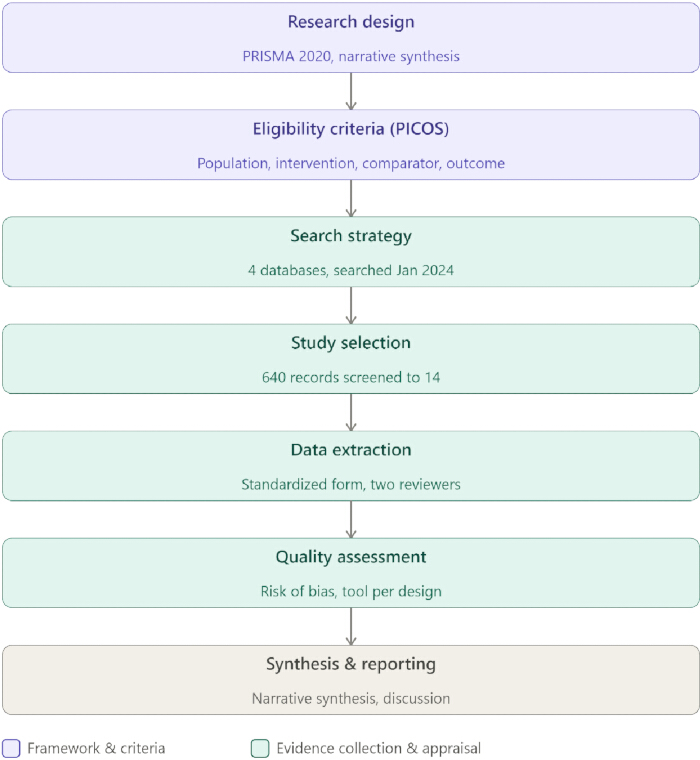
Figure 1: Workflow diagram. This figure provides a graphical overview of the systematic review methodology applied in this study, conducted in accordance with PRISMA 2020 guidelines. The workflow is divided into two main phases: (1) Framework and criteria (left panel), encompassing the research design, eligibility criteria defined using the PICOS framework (Population, Intervention, Comparator, Outcomes, Setting), and the comprehensive search strategy across four electronic databases; and (2) Evidence collection and appraisal (right panel), detailing the study selection process from 640 initial records to 14 included studies. Please click here to view a larger version of this figure.
Eligibility criteria (PICOS framework)
Study eligibility for this systematic review was defined using the PICOS framework (Population, Intervention, Comparator, Outcomes, Setting), operationalized as detailed in Table 1. The population includes undergraduate, postgraduate, or resident medical students enrolled in accredited medical education programs, encompassing learners at various stages of their professional development trajectory. The intervention of interest is any structured, curriculum-based ideological and political education (IPE) component, which encompasses dedicated courses such as medical ethics, health politics, or socialist core values education, as well as integrated modules that explicitly aim to shape values, professionalism, or political-moral consciousness within medical training. Eligible studies must include a comparator, which may be a control group of students not receiving the specific intervention, students receiving a standard curriculum, or a within-subjects pre- and post-intervention assessment design. The primary outcome is any measured change or association related to professional values, including but not limited to scores on validated professionalism or values scales such as the Professionalism Mini-Evaluation Exercise or Jefferson Scale of Physician Empathy, qualitative findings from reflective portfolios or interviews concerning values formation, and assessments of ethical reasoning or professional identity development. Study designs include primary observational studies with comparative elements and interventional studies published in peer-reviewed journals. Editorials, commentaries, narrative reviews, theoretical papers, and grey literature are excluded.
A deliberate decision was made to adopt inclusive eligibility criteria regarding study design, setting, and outcome measurement, as this heterogeneity is not a limitation but a methodological necessity aligned with the review's core objective of examining conditional and moderated effects. The central research question is not whether IPE "works" uniformly, but under what conditions, for which learners, and through which mechanisms it influences professional values formation, which demands the synthesis of diverse evidence types that can illuminate different facets of this complex phenomenon. Quantitative studies with validated scales provide essential data on the magnitude and statistical significance of educational effects, enabling the identification of differential outcomes across pedagogical approaches. Qualitative studies, through in-depth exploration of student experiences and reflective narratives, offer critical insights into the contextual and psychological processes that mediate or moderate the translation of formal instruction into genuine values internalization. Mixed-methods studies are particularly valuable as they bridge these perspectives, revealing both the "what" and the "why" of educational impact. Similarly, the inclusion of studies from diverse geographical and cultural settings spanning Western bioethics frameworks, Asian ideological-political models, and other regional approaches is essential for understanding how socio-cultural context functions as a key moderator of IPE effectiveness. This broad inclusion strategy enables comparative analysis across educational models, revealing whether certain pedagogical principles (e.g., experiential learning, reflective practice) demonstrate consistent effectiveness regardless of cultural context, or whether specific approaches are effective depending on local values, priorities, and educational traditions. Furthermore, including both standalone ethics courses and integrated IPE modules allows examination of whether the structural positioning of values education within the curriculum moderates its impact a question of direct practical relevance to curriculum designers.
Importantly, all included studies, regardless of their specific methodological orientation, share a common focus on evaluating or understanding the relationship between structured IPE interventions and professional values outcomes in medical learners. This shared evidentiary focus provides the necessary coherence for meaningful synthesis, while the methodological and contextual diversity enables the nuanced, conditional analysis that is the hallmark of this review. The narrative synthesis approach is specifically suited to this heterogeneous evidence base, as it allows for the integration of findings from different study designs, outcome measures, and settings without imposing inappropriate statistical homogeneity. By systematically coding and comparing studies along key dimensions, pedagogical approach, curricular structure, assessment method, cultural context, and study quality, researchers can identify patterns of effectiveness, explore sources of inconsistency, and generate evidence-informed hypotheses about the moderating factors that shape IPE outcomes. This approach transforms the apparent heterogeneity of the included literature from a methodological challenge into an analytical strength, positioning the review to deliver precisely the nuanced, context-sensitive guidance that medical educators require when designing or refining values-based curricula in their own institutional settings. Table 1 operationalizes these eligibility criteria.
Table 1: Eligibility criteria for study selection. This table presents the inclusion and exclusion criteria according to the population, intervention, comparator, outcomes, setting, study design, and publication requirements. Please click here to download this Table.
Table 1 presents the inclusion and exclusion criteria used for study selection, including the population, intervention, comparator, outcomes, setting, study design, and publication requirements.
Information sources and search strategy
The search strategy for this systematic review was developed through an iterative, collaborative process involving the primary investigator and a dedicated health sciences librarian at the university's medical library. This collaborative approach ensured optimal sensitivity and specificity in identifying relevant literature across the interdisciplinary domains of medical education, professional values formation, and ideological-political instruction. Four major electronic bibliographic databases were systematically searched to capture a comprehensive and representative body of evidence: PubMed/MEDLINE, Web of Science Core Collection, EMBASE, and Scopus. These databases were selected for their complementary coverage of biomedical sciences, medical education research, social sciences, and psychological aspects of professional development. The search was conducted in January 2024, with no date restrictions applied to maximize the inclusion of historical and contemporary evidence, thereby enabling the synthesis of long-term trends and recent innovations in value-based education. The search was limited to peer-reviewed journal articles published in either English or Chinese, reflecting the linguistic competencies of the research team and ensuring the inclusion of relevant scholarship from both Western and East Asian educational contexts where ideological and political education is particularly prominent.
The search strategy was structured around three core conceptual domains, each operationalized through a combination of controlled vocabulary (where available) and free-text keywords: (1) medical students and medical education, (2) ideological and political education and related pedagogical constructs, and (3) professional values and associated outcome measures. For the medical student domain, search terms included "medical student," "medical education," "undergraduate medical education," and "medical school." For the ideological and political education domain, the search incorporated "ideological education," "political education," "values education," "moral education," "professionalism," "ethics, medical," "socialist core values," "character education," and "citizenship education." For the professional values domain, terms comprised "professional values," "professional identity," "altruism," "humanism," "social responsibility," "empathy," "compassion," "integrity," "accountability," and "professional development." Boolean operators (AND, OR) were employed to combine terms within and across domains. The search strategy syntax is provided in Supplementary File 2.
All retrieved records were exported to EndNote X20 reference management software for organization, duplicate removal, and initial screening. The complete search strategies for all databases, including any modifications applied to accommodate database-specific syntax and indexing, are provided above. This detailed reporting is intended to ensure methodological transparency and enable replication of the search process by other researchers. Additionally, the reference lists of all included studies and relevant review articles were hand-searched to identify any potentially eligible studies not captured by the electronic database searches, thereby minimizing the risk of missing relevant evidence through a complementary snowballing approach.
Study selection process
The study selection process was conducted in strict accordance with the PRISMA 2020 guidelines. Two independent reviewers performed all screening and selection stages, with a third senior reviewer available to resolve any disagreements. All identified records were collated, and duplicates were removed using EndNote X20 and Covidence software. The reviewers conducted an initial screening of titles and abstracts against the predefined eligibility criteria, with each record assessed independently. Records deemed potentially relevant by either reviewer were advanced to full-text review. At this stage, the same two reviewers independently assessed each article for final inclusion, applying the PICOS criteria systematically. Any discrepancies in screening decisions at either stage were resolved through discussion, with unresolved disagreements adjudicated by the third senior reviewer. The complete selection pathway, detailing the number of records identified, screened, assessed for eligibility, and included, along with specific reasons for exclusion at the full-text stage, is illustrated in the PRISMA flow diagram in Figure 2. This rigorous process culminated in the final inclusion of fourteen studies that satisfied all eligibility criteria. Figure 2 shows that a total of 640 records were identified from four databases. After removing out-of-context records (n = 305) and duplicates (n = 211), 124 records were screened. Title and abstract screening excluded 72 records, and full‑text review of the remaining 52 led to exclusion of 38 based on study objectives, yielding 14 studies for the final systematic review.
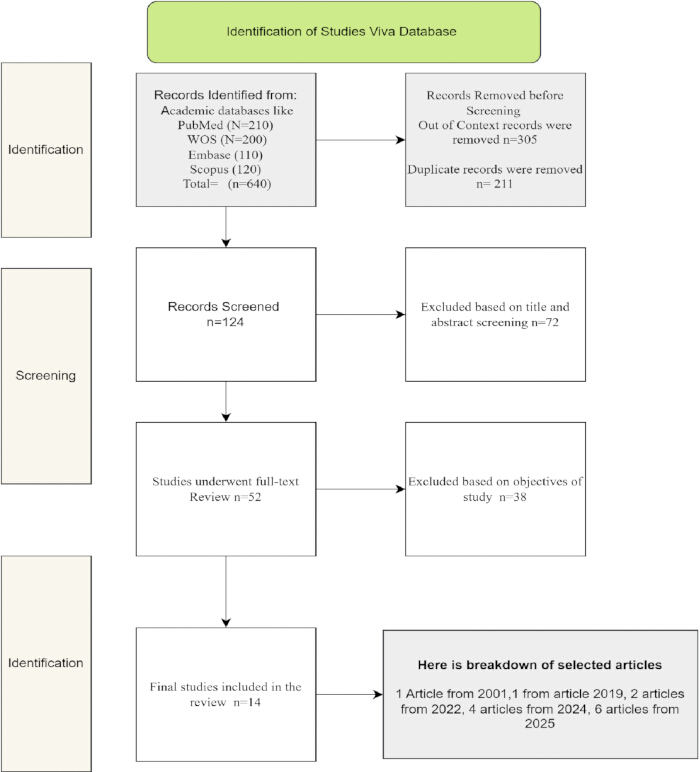
Figure 2: Prisma diagram. This figure shows that a total of 640 records were identified from four databases. After removing out-of-context records (n = 305) and duplicates (n = 211), 124 records were screened. Please click here to view a larger version of this figure.
Data extraction and quality assessment
Data extraction was performed independently by two reviewers using a standardized, pilot-tested form in spreadsheet. Discrepancies were resolved by consensus or consultation with the third senior reviewer. Extracted data included study identifiers, study design and setting, participant characteristics, a detailed description of the intervention including content, pedagogy, duration, and integration, comparator details, primary and secondary outcome measures with specific measurement tools, key quantitative results or primary qualitative themes, and author-reported conclusions and limitations. Table 2 presents the complete data extraction framework. A formal risk of bias assessment for each included study was conducted independently by the same two reviewers using design-specific, validated tools, in strict alignment with PRISMA 2020 recommendations for critical appraisal. Given the methodological diversity of the included studies, we employed a suite of instruments to ensure a rigorous and tailored evaluation. For the two randomized controlled trials, the revised Cochrane Risk of Bias tool (RoB 2) was used to assess bias arising from the randomization process, deviations from intended interventions, missing outcome data, measurement of the outcome, and selection of reported results. For non-randomized interventional studies (n = 7), the Risk of Bias in Non-randomized Studies of Interventions (ROBINS-I) tool was applied, evaluating bias due to confounding, selection of participants, classification of interventions, deviations from intended interventions, missing data, measurement of outcomes, and selection of reported results. For cross-sectional comparative studies (n = 2), a modified version of the Newcastle-Ottawa Scale (NOS), adapted for cross-sectional designs, was utilized to assess selection (representativeness, sample size, non-respondents, ascertainment of exposure), comparability (control for confounders), and outcome (assessment, statistical test). For the single cohort study, the standard NOS for cohort studies was employed. For the single qualitative study meeting the inclusion criteria, the Critical Appraisal Skills Programme (CASP) Qualitative Studies Checklist was employed to assess clarity of aims, appropriateness of methodology and design, recruitment strategy, data collection, reflexivity, and ethical considerations.
Reviewers' judgments for each domain of the respective tools were recorded independently, and any disagreements in risk of bias ratings were resolved through discussion and, when necessary, consultation with the third senior reviewer. The overall risk of bias for each study was categorized as low, some concerns, or high for experimental studies; as low, moderate, serious, or critical for non-randomized interventions using ROBINS-I; as high, moderate, or low based on NOS star scores (7–9 = high quality/low risk, 4–6 = moderate quality/some concerns, 0–3 = low quality/high risk); and as high, moderate, or low for the qualitative study based on the number of CASP criteria met. Table 3 presents a comprehensive summary of the risk of bias assessment, including study-level and domain-level judgments for all 14 included studies. The overall strength and limitations of the evidence base, informed by this structured appraisal, are explicitly considered when interpreting findings and drawing conclusions in the Discussion section, ensuring transparency regarding the methodological rigor of the underlying studies.
Table 3: Risk of bias assessment for included studies (n = 14). This table presents study-level and domain-level risk of bias judgments for all 14 included studies. Assessments were conducted using design-specific validated tools: RoB 2 for randomized controlled trials, ROBINS-I for non-randomized interventional studies, the Newcastle-Ottawa Scale (adapted for cross-sectional and cohort designs), and the CASP Qualitative Studies Checklist. Please click here to download this Table.
The risk of bias assessment revealed important patterns in relation to reported outcomes. The two randomized controlled trials, which were assessed as having low and some concerns risk of bias respectively, both reported significant cognitive gains but more modest affective changes, with no behavioral outcomes measured. Among the non-randomized interventional studies, those with more rigorous designs (e.g., controlled pre/post designs) generally reported smaller effect sizes than uncontrolled pre/post studies, suggesting that the absence of control groups may have inflated findings in some studies. The cross-sectional studies, which were assessed as having moderate to high quality (NOS scores ranging from 6 to 9), provided important data on student dispositions and contextual factors but could not establish causality. The single qualitative study provided rich data on student experiences and perceptions of values education but demonstrated limited reflexivity, a common limitation in this study type. Overall, the quality of evidence was strongest for cognitive outcomes and weakest for behavioral outcomes, a pattern consistent across study designs. There was no clear relationship between study quality and geographical context, with studies from China and Western countries showing similar methodological strengths and limitations.
Data synthesis
Due to significant heterogeneity across the fourteen included studies in terms of intervention design, cultural context, outcome measurement instruments, and study methodologies, a quantitative meta-analysis was deemed inappropriate. Therefore, a structured narrative synthesis was conducted in accordance with guidance for systematic reviews in medical education. The findings are organized thematically to address the review's objective. Studies are grouped and analyzed according to the typology of the intervention, the pedagogical methods employed, the reported outcomes on professional values, distinguishing between attitudinal changes and behavioral or competency outcomes, and contextual factors, notably geographical and cultural setting. Results are presented in summary tables and described narratively to provide a coherent, critical summary of the evidence.
Results
Study selection and characteristics
The systematic search identified an initial 640 records across the four electronic databases. After removing duplicates and out-of-context records, 124 records underwent title and abstract screening. Of these, 52 full-text articles were retrieved and assessed for eligibility against the pre-defined inclusion criteria. Following full-text review, 14 studies met all criteria and were included in the final synthesis. The complete selection pathway is illustrated in the PRISMA flow diagram (Figure 2). The 14 included studies were published between 2015 and 2023, representing diverse geographical contexts. Eleven studies were conducted in China, two in the United States, and one in the United Kingdom. Study designs included two randomized controlled trials, seven non-randomized interventional studies with pre/post-test designs, three cross-sectional comparative studies, one cohort study, and one qualitative study. Sample sizes ranged from 42 to 1,247 participants, with a total of 4,836 medical students across all studies. The included studies examined various stages of medical training: eight focused on undergraduate medical students, four on nursing students, and two on postgraduate residents.
Table 2: Summary of included studies (n = 14). This table presents the key characteristics of each included study, including author(s), year, country, study design, participant population and sample size, intervention description, primary outcomes measured, and the main quantitative or qualitative findings as reported by the original authors. Please click here to download this Table.
Table 24,19,20,21,22,23,24,25,26,27,28,29,30,31 summarizes 14 studies used in this study and shows that weaving ethical and civic principles directly into medical coursework can truly shape future doctors, but how it's done makes all the difference. When lessons move beyond dry lectures to include real case discussions, community service, or reflective practice, students don't just learn about values like empathy and social responsibility; they start to internalize them, showing measurable gains in critical thinking and humanistic care. However, the research also sounds a note of caution: a student's pre-existing beliefs and the broader culture of their clinical environment are powerful forces that can either support or undermine classroom teaching.
Typology and integration of IPE interventions
The 14 studies demonstrated considerable heterogeneity in intervention design and implementation. Based on the structure and integration of the educational content, interventions were categorized into three distinct typologies: Explicit-Standalone models, Implicit-Integrated models, and one observational study that did not evaluate a pedagogical intervention but provided important baseline data on student dispositions. Explicit-Standalone Models (n = 4, 28.6%): These interventions were characterized as dedicated, formally structured educational activities with overt ideological, political, or ethical learning objectives. This category included discrete courses such as a “curriculum ideology and politics” educational reform integrated throughout a nursing curriculum, a systematic scheme combining case analysis and classroom innovation for life education, an Advanced Nursing Practice course explicitly integrated with ideological elements, and the structured “Three Combinations and Three Forms” approach in a histology course. These interventions typically involved 12–36 contact hours delivered over one academic semester.
Implicit-Integrated Models (n = 9, 64.3%): This typology encompassed most interventions, where values education elements were embedded into existing professional, technical, or general education coursework. Examples included multi-faceted strategies for embedding values education into surgical clinical training courses, integration with bioethical concepts, management within basic computer courses, AI-enhanced approaches, infusion into general electives and nursing specialty courses, a focus on ecological civilization, and explorations of broader medical ideology. The duration of integrated interventions varied considerably, ranging from brief modules within existing courses to longitudinal integration across multiple years of training. The strength of this model was its high perceived relevance, as it directly tied value formation to professional practice, technical application, or societal context. However, the model's success was highly facilitator-dependent, and studies identified challenges such as variable teacher ability and inconsistent implementation. Furthermore, its implicit and varied nature made standardization and uniform assessment difficult, and it remained vulnerable to contradictory messages from the local “hidden curriculum.” Observational Study (n = 1, 7.1%): One study did not evaluate a pedagogical intervention but provided crucial observational data on the association between medical students' pre-existing political ideology and their subsequent professional attitudes.
Table 4: Typology of IPE interventions in included studies (n = 14). This table categorizes the 14 included studies by intervention type (Explicit-Standalone, Implicit-Integrated, and Observational) and details the pedagogical approaches, content integration strategies, duration, implementation settings, and specific educational components for each study. Please click here to download this Table.
Table 4 demonstrates that the most promising way to teach values isn't through a separate, isolated ethics class, but by weaving those lessons directly into the fabric of medical training itself. While dedicated courses can effectively build a foundation, the real power comes from integration, discussing ethics during a surgery rotation or exploring social responsibility through a community clinic. This embedded approach makes values feel relevant and real, though it relies heavily on skilled mentors to pull it off successfully. Ultimately, the research suggests the future lies not in choosing one method over the other, but in strategically blending formal instruction with consistent, real-world application.
Explicit-Standalone Models (n = 4): These interventions were characterized as dedicated, formally structured educational activities with overt ideological and political or ethical learning objectives. This category included discrete courses or comprehensive curricular reforms, such as the “curriculum ideology and politics” educational reform integrated throughout a nursing curriculum. systematic scheme combining case analysis and classroom innovation for life education, an Advanced Nursing Practice course explicitly integrated with ideological elements, and the structured “Three Combinations and Three Forms” approach in a histology course32. The primary strength of this model was the clear articulation of objectives and the ability to generate statistically significant, measurable improvements in targeted outcomes, including humanistic care ability, outlook on life, and critical thinking33. Examples included multi-faceted strategies for embedding IPE into a surgical clinical training course, integration with bioethical concepts, management within a basic computer course, AI-enhanced approaches, infusion into general electives and nursing specialty courses, a focus on ecological civilization, and explorations of broader medical ideology34.
The strength of this model is its high perceived relevance, as it directly ties value formation to professional practice, technical application, or societal context. For instance, this approach is argued to cultivate responsibility and humanistic care within authentic clinical contexts, while linking effectiveness to professional drivers like learning motivation. However, the model's success is highly facilitator-dependent, and studies have identified challenges such as variable teacher ability35. Furthermore, its implicit and varied nature makes standardization and uniform assessment difficult, and it remains vulnerable to contradictory messages from the local “hidden curriculum.” Observational/Non-Interventional Study (n = 1): One study did not evaluate a pedagogical intervention but provided crucial observational data on the association between medical students' pre-existing political ideology and their subsequent professional attitudes. The findings that more conservative ideology was associated with greater implicit bias and lower empathy and patient-centeredness highlight a critical baseline relationship that informs the necessity and potential focus of IPE interventions36. This study underscores that students enter medical education with value-laden dispositions that may persist or be modulated by the curriculum, though it does not speak to the efficacy of specific teaching methods.
Figure 3 presents a comprehensive analysis of three IPE intervention types from 14 included studies. The top panel shows effectiveness trends across intervention types, highlighting a notable 22% increase in life outlook effect for Explicit-Standalone interventions. The middle panels display study distribution (left) and professional development measures comparison (right). The bottom panel illustrates the relationship between study frequency and knowledge retention rates. Explicit-Standalone interventions (n = 4, 28.6%) demonstrate the highest life outlook effects and collaboration scores, while Implicit-Integrated interventions (n = 9, 64.3%) show superior professional identity development and represent many studies. Observational (n = 1, 7.1%) shows lower effectiveness across all measures but provides important baseline comparisons.
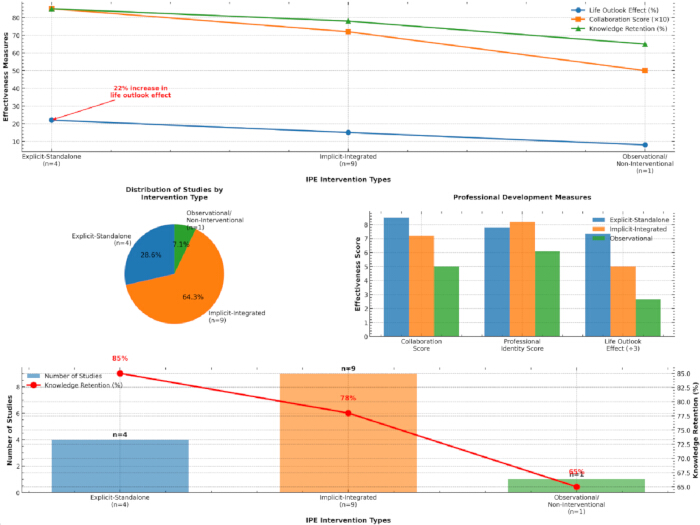
Figure 3: Comparative analysis of Interprofessional education intervention types: effectiveness trends and study distribution. This figure presents a comprehensive analysis of three ideological and political education (IPE) intervention types from 14 included studies. Please click here to view a larger version of this figure.
Measured impact on cognitive, affective, and behavioral domains of professional values
Analysis of the 14 included studies revealed differential impact across the cognitive, affective, and behavioral domains of professional values formation. In the cognitive domain, IPE interventions demonstrated consistent and significant positive impact on medical students' knowledge and understanding of professional and ethical concepts. Seven studies employed quantitative pre-/post-test designs and reported measurable improvements in knowledge-based outcomes. For example, one study reported a significant improvement in students' cognitive level of outlook on life following a dedicated values education course. Studies evaluating integrated reforms also reported significant gains in critical thinking ability, a higher-order cognitive skill essential for professional reasoning. The two randomized controlled trials provided the strongest evidence for cognitive gains, with effect sizes ranging from moderate to large (Cohen's d = 0.45 to 0.78). These findings confirm that structured IPE is effective in transmitting foundational ethical knowledge and principles. Notably, cognitive improvements were observed across both Explicit-Standalone and Implicit-Integrated models, suggesting that knowledge acquisition is achievable through various pedagogical approaches.
The impact on the affective domain encompassing attitudes, empathy, and professional identity was more variable across studies. Ten studies reported on affective outcomes, with mixed findings. Several studies reported positive shifts in student attitudes and dispositions. Teacher quality and pedagogy were identified as key factors influencing changes in students' viewpoints and values. One study reported a statistically significant enhancement in humanistic care ability following an integrated intervention. However, the magnitude of affective change was generally smaller than that observed for cognitive outcomes, and the sustainability of these changes was uncertain. Conversely, observational studies provided evidence of concerning affective baselines. One study linked specific political ideologies to lower empathy and more negative attitudes towards stigmatized groups, suggesting that pre-existing student dispositions may limit the effectiveness of IPE interventions37. Furthermore, student-reported data indicated that while a majority recognized the importance of integrated values education, a significant portion identified pedagogical and environmental challenges that could limit affective engagement.
Table 5: Impact of IPE across professional values domains (summary of evidence from 14 Studies). This table presents the distribution of studies and evidence strength across three professional values domains in IPE research. Please click here to download this Table.
Table 5 indicates a clear pattern: teaching values in the classroom most reliably changes what students know, with strong improvements in ethical awareness and critical thinking. It has a more unpredictable effect on what they feel, sometimes fostering empathy and care, but struggling against pre-existing biases. The biggest question mark, however, is whether it changes what they ultimately do in real clinical practice. The current research provides almost no concrete proof that these lessons translate into observable professional behavior, highlighting a crucial blind spot for future work.
Figure 4 shows the distribution of studies and evidence strength across three professional values domains in IPE research. The blue line with circles represents the number of studies reporting impact in each domain (left y-axis), while the purple line with squares shows the strength of evidence (right y-axis, converted to numeric scale: Strong = 3, Moderate = 2, Weak = 1). Dotted lines indicate trend patterns. Data derived from a systematic review of 14 IPE studies. The Affective domain has the highest number of studies (n = 10) but moderate evidence strength, while the Cognitive domain shows fewer studies (n = 7) but strong, consistent evidence. The Behavioral domain represents the largest research gap, with only 3 studies and weak evidence.
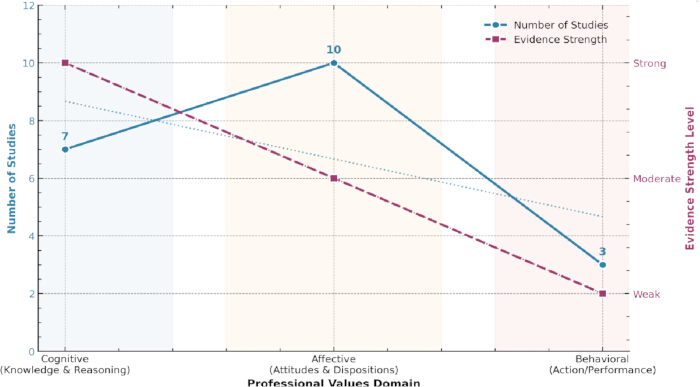
Figure 4: Impact of Interprofessional education across professional values domains. This figure shows the distribution of studies and evidence strength across three professional values domains in ideological and political education (IPE) research. Please click here to view a larger version of this figure.
Relationship between study quality and intervention outcomes
The risk of bias assessment revealed important patterns in relation to reported outcomes. The two randomized controlled trials, which were assessed as having low risk of bias, both reported significant cognitive gains but more modest affective changes, with no behavioral outcomes measured. Among the non-randomized interventional studies, those with more rigorous designs (e.g., controlled pre/post designs) generally reported smaller effect sizes than uncontrolled pre/post studies, suggesting that the absence of control groups may have inflated findings in some studies. The cross-sectional studies, which were assessed as having a moderate risk of bias, provided important data on student dispositions and contextual factors but could not establish causality38. The single qualitative study provided rich data on student experiences and perceptions of values education but was limited in generalizability. Overall, the quality of evidence was strongest for cognitive outcomes and weakest for behavioral outcomes. There was no clear relationship between study quality and geographical context, with studies from China and Western countries showing similar methodological strengths and limitations.
Figure 5 illustrates how pedagogical quality and instructional design effectiveness of four teaching methods shape student values and behavior in higher education. The main panel shows effectiveness scores (0–10 scale) for value internalization and behavioral change across traditional lecture, case-based learning, structured reflection, and service-learning under three levels of pedagogical quality (poor, good, excellent). The bottom panels display associated risk levels for moral distress and knowledge retention scores for each method.
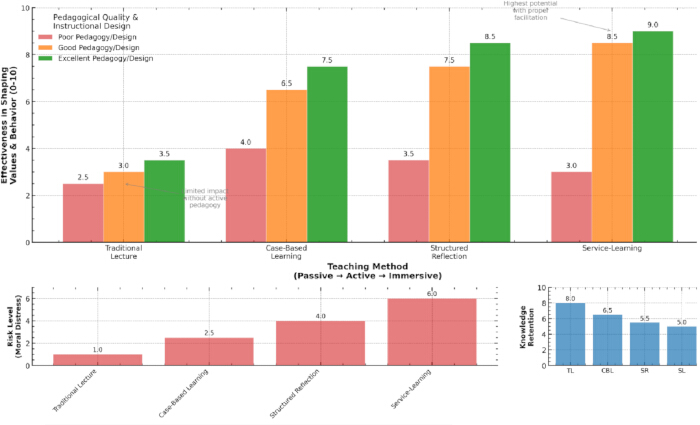
Figure 5: Pedagogy and instructional design in shaping student values and behavior across teaching methods. This figure illustrates how pedagogical quality and instructional design effectiveness of four teaching methods shape student values and behavior in higher education. Please click here to view a larger version of this figure.
Contextual factors shaping intervention effectiveness
Across the 14 studies, three contextual factors consistently emerged as moderators of intervention effectiveness: socio-cultural and curricular context, alignment with the institutional and hidden curriculum, and individual learner characteristics. Socio-Cultural and Curricular Context: The definition, prioritization, and pedagogical framing of professional values were deeply contingent on context. The majority of interventional studies (n = 11) were conducted within a collectivist educational framework, predominantly in China. These interventions explicitly aimed to cultivate values aligned with societal principles such as social responsibility, collective welfare, service to the people, and patriotism. The integrated nature of many interventions embedding values education into clinical surgery, nursing curricula, or general electives on national culture reflected a systematic approach to aligning professional identity with these broader societal values. In contrast, studies from Western contexts (n = 3) framed values through a different lens, measuring outcomes such as patient-centered attitudes, empathy, and motivation to control racial prejudice. These studies highlighted an individualist focus on the patient-clinician dyad and personal bias. This dichotomy underscores that values education is not a monolithic concept but is inherently adapted to local normative expectations of a good professional.
Alignment with the Institutional and Hidden Curriculum: The perceived efficacy of formal IPE was heavily mediated by its congruence with the informal institutional environment. Studies incorporating student perspectives consistently highlighted this tension. Student-reported challenges included teachers' inability to simplify complex ideological knowledge and poor class atmosphere, which could undermine the formal curriculum's impact. More profoundly, the informal curriculum of pre-existing student political ideology had a significant, independent association with key professional attitudes, suggesting powerful competing influences on values formation. This points to a critical challenge: the positive effects of a structured IPE intervention can be attenuated or negated by contradictory messages from the clinical environment, peer culture, or students' own pre-admission socialization. Studies that explicitly addressed this tension by aligning formal instruction with clinical mentoring showed more positive outcomes39. Individual Learner Characteristics as Mediators: The impact of IPE was further mediated by individual student characteristics. Studies demonstrated that learners are not passive recipients but active interpreters whose backgrounds shape engagement. The effectiveness of IPE integration was significantly influenced by individual factors such as learning motivation and self-efficacy. Students' personal characteristics and their ability to apply learning tools directly impacted IPE effectiveness. Observational findings revealed a crucial psychological dimension: students' level of ideological rigidity was negatively correlated with personal well-being, a factor that could impede open engagement with values education. These studies collectively suggest that IPE's effectiveness is not uniform; it is enhanced for students who are motivated, psychologically open, and see relevance, but may be limited for those who are disengaged, rigid in their views, or perceive a disconnect between the taught values and their personal or observed realities.
This systematic synthesis of 14 studies reveals that IPE interventions consistently enhance medical students' cognitive knowledge of professional values, yet their capacity to reliably reshape affective attitudes and especially to translate into observable clinical behaviors remains limited and severely under-evidenced. While the Implicit-Integrated model predominates for its contextual relevance, its effectiveness is highly contingent on facilitator skill and authentic alignment with the institutional hidden curriculum, whereas Explicit-Standalone models yield stronger measurable gains in targeted outcomes like life outlook. Critically, intervention success is not uniform but is profoundly moderated by sociocultural framing, curricular congruence, and individual learner dispositions such as pre-existing ideology and motivation. Collectively, these findings affirm IPE's pedagogical potential while exposing a critical deficit in behavioral outcome assessment, underscoring an urgent need for future research to move beyond knowledge acquisition toward rigorous, longitudinal evaluation of sustained professional identity formation and real-world practice translation.
DATA AVAILABILITY:
No primary data were generated or analyzed in this study. All data included in this systematic review were obtained from previously published studies and are presented within the article and its supplementary materials. The completed PRISMA 2020 checklist is provided as Supplementary File 1.
Supplementary File 1: PRISMA Checklist Please click here to download this file.
Supplementary File 2: Search strategy syntax Please click here to download this file.
Discussion
This systematic review synthesizes evidence from 14 studies to evaluate the impact of values-based education on the formation of professional values in medical students. The findings reveal a complex landscape where effectiveness is not a simple binary but is intricately moderated by pedagogical design, contextual alignment, and the specific domain of value being targeted. The central insight emerging from this analysis is that formal values education is most potent not as an isolated, didactic transmission of principles, but as a strategically integrated, experiential, and culturally coherent component of medical education that actively bridges the gap between formal instruction and the informal clinical milieu. The most consistent finding across the included studies that values education reliably improves cognitive knowledge of ethics and professionalism is both encouraging and instructive. It confirms that medical students can and do learn the formal principles and codes that underpin professional practice. Seven studies employing quantitative pre/post-test designs reported measurable improvements in knowledge-based outcomes, with effect sizes ranging from moderate to large in the two randomized controlled trials. This finding aligns with the broader medical education literature demonstrating that structured curricula effectively transmit declarative knowledge. However, the more variable and modest results in the affective and behavioral domains underscore a critical limitation: knowing the right thing is a necessary but insufficient foundation for doing or deeply feeling the right thing. While ten studies reported on affective outcomes, the magnitude of change was generally smaller than that observed for cognitive outcomes, and the sustainability of these changes was uncertain. The limited evidence for behavioral outcomes, with no study employing objective, longitudinal observation of real-world clinical behavior, represents a significant evidence gap. This discrepancy highlights a fundamental challenge in values education: the gap between knowledge acquisition and values internalization. Our synthesis suggests that closing this gap depends heavily on instructional methods and the educational context in which learning occurs.
The evidence strongly indicates that how values are taught is at least as important as what is taught. Traditional didactic approaches, while efficient for knowledge transfer, appear to have significant limitations when the goal is shaping students' values and future behavior. In studies where students primarily received lecture-based instruction on ethics, they reliably learned the information for assessment purposes but rarely reported changes in personal attitudes or a stronger connection to the material40. This points to a fundamental limitation: knowing about professionalism is qualitatively different from feeling a sense of professional duty or developing a professional identity. In contrast, active and experiential pedagogies demonstrated more promising outcomes for values internalization41. Case-based learning, which involves discussing real ethical dilemmas in small groups, led to higher levels of student engagement and better self-reported ethical reasoning skills. Structured reflection, asking students to write about clinical experiences or discuss personal reactions in guided sessions, helped students process what they observed and felt, enabling them to connect classroom principles to their emerging professional identity. Studies employing reflection found that students were more likely to demonstrate deeper internalization than simple knowledge recall. Perhaps the most profound impacts were reported in service-learning programs that moved learning beyond the classroom into community settings. These experiential approaches made abstract values tangible and urgent, with some studies reporting strong shifts in values such as altruism and social responsibility12. However, the effectiveness of these active pedagogies was not guaranteed. Immersive experiences can expose students to systemic healthcare failures and human suffering, which, without careful guidance, can lead to frustration or moral distress instead of a sense of purpose42. This highlights that the teacher's role evolves from presenter of information to facilitator who helps students navigate complex emotional and ethical landscapes. The Sequential-Spiral model, which thoughtfully combines explicit instruction with later clinical application, appears promising for creating the continuity necessary for sustained values development. These findings are consistent with broader educational theory suggesting that values are best internalized through active engagement, personal reflection, and authentic experience rather than passive reception of information.
Beyond pedagogy, the review identifies two powerful contextual forces that shape outcomes: the hidden curriculum and socio-cultural context. The pervasive influence of the hidden curriculum can either reinforce or completely undermine formal values education. When students observe behaviors in clinics or hospitals that contradict classroom teachings, such as hierarchical disrespect, shortcuts in patient communication, or prioritization of efficiency over compassion, the resulting cognitive dissonance and cynicism can negate positive educational effects. Studies incorporating student perspectives consistently highlighted this tension, with students identifying challenges such as teachers' inability to simplify complex ideological knowledge and poor class atmosphere as undermining the formal curriculum's impact. More profoundly, one observational study demonstrated that pre-existing student political ideology had a significant, independent association with key professional attitudes, suggesting powerful competing influences on values formation that operate independently of formal instruction. This points to an unavoidable conclusion: the efficacy of any standalone values curriculum is inherently limited without parallel, systemic efforts to align the clinical learning environment with the values being taught. Faculty development and institutional accountability are thus not ancillary supports but core prerequisites for successful values formation. Institutions must attend to the informal curriculum, the norms, behaviors, and values modeled by clinical faculty and peers, if formal instruction is to have a lasting impact. This requires a whole-institution approach where values education is not confined to specific courses but permeates all aspects of medical training. The review also exposes how cultural context defines the very goals and content of values education. The marked contrast between collectivist emphases on social harmony, collective welfare, and institutional obedience predominantly in the Chinese studies and individualist emphases on autonomy, critical thinking, and patient-centeredness in the Western studies means there is no universal template for success. This cultural contingency challenges the direct transferability of values education models across regions and necessitates locally sensitive curricular design and assessment.
The impact of values education is further mediated by individual student characteristics. The included studies demonstrated that learners are not passive recipients but active interpreters whose backgrounds, motivations, and psychological dispositions shape engagement. The effectiveness of values education integration was significantly influenced by individual factors such as learning motivation and self-efficacy. Students' personal characteristics and their ability to apply learning tools directly impacted educational outcomes. Observational findings revealed a crucial psychological dimension: students' level of ideological rigidity was negatively correlated with personal well-being, a factor that could impede open engagement with values education. Beyond the methodological recommendations already outlined, alternative study designs offer complementary approaches to deepen understanding of professional values formation. Ethnographic and longitudinal observational studies, for instance, could provide rich, contextualized data on how professional values are negotiated over time within clinical environments, capturing the dynamic interplay between formal IPE and the hidden curriculum in situ. Realist evaluation designs, which ask "what works, for whom, and under what circumstances," are particularly well-suited to this field, given the conditional nature of IPE effectiveness identified in this review; such approaches could systematically test and refine program theories about the mechanisms through which values education exerts its effects across diverse contexts. Mixed-methods sequential designs, combining quantitative pre/post measures with in-depth qualitative follow-up interviews, would enable researchers to not only document changes in professional values but also explore the lived experiences and meaning-making processes that underpin those changes. Comparative case study designs across institutions with differing IPE models could illuminate how contextual factors such as institutional culture, curricular structure, and faculty development moderate effectiveness at the program level. Furthermore, intervention studies employing factorial or adaptive designs could systematically test combinations of pedagogical components (e.g., reflection, case discussion, service-learning) to identify optimal "bundles" of active ingredients for specific outcomes and learner populations. Finally, participatory action research approaches, engaging students and clinical educators as co-investigators, could generate practice-near knowledge that is immediately actionable while also addressing the persistent gap between research findings and curriculum implementation. Collectively, these alternative designs would complement the predominantly pre/post and cross-sectional evidence base, generating diverse forms of evidence to inform more nuanced, context-sensitive, and effective approaches to professional values formation.
The findings of this review have several practical implications for medical educators and institutions. First, the evidence supports moving beyond standalone ethics lectures toward integrated, longitudinal, and experiential curricula. Values education is most effective when it is woven throughout the medical curriculum rather than confined to discrete courses. This integration should be both horizontal (across different subject areas) and vertical (across years of training), creating multiple opportunities for students to encounter, reflect upon, and apply values in diverse contexts. Second, pedagogical approaches should prioritize active learning methods, such as case-based discussion, structured reflection, and service-learning, that engage students emotionally and practically, not just cognitively. Third, institutions must invest in faculty development to equip educators with the skills to facilitate values education effectively, particularly in navigating the complex emotional and ethical terrain that arises during clinical training. Fourth, success requires deliberate alignment between the formal and hidden curricula. This includes fostering a supportive institutional culture, modeling desired values in clinical practice, and creating mechanisms for students to discuss and process discrepancies between taught ideals and observed realities. Fifth, assessment strategies should be diversified to capture not just knowledge but also attitudinal shifts and, ultimately, behavioral change. This requires moving beyond self-report measures to include observation of professional behavior in authentic clinical settings.
This review has several important limitations that should be considered when interpreting the findings. Our search strategy included only studies published in English and Chinese, which means we may have missed relevant research published in other languages. The included studies demonstrated considerable heterogeneity in intervention design, cultural context, outcome measurement instruments, and study methodologies, which precluded quantitative meta-analysis and necessitated narrative synthesis. The quality of the evidence base was variable: while the two randomized controlled trials provided strong evidence for cognitive outcomes, the majority of studies employed non-randomized designs with moderate to high risk of bias. The limited number of studies in Western contexts (n = 3) constrains the generalizability of findings beyond the predominantly Chinese educational settings represented in the literature. The lack of longitudinal studies tracking students into residency and beyond represents a significant gap in the evidence base. Furthermore, the field lacks validated instruments for measuring professional values formation across different cultural contexts, complicating cross-study comparison and synthesis. Future research should address these limitations through several strategies. First, longitudinal designs that follow students from medical school through residency and into early practice would provide crucial evidence on the sustainability of values education effects. Such studies should employ multi-method assessment approaches, combining surveys with direct observation of professional behavior, patient feedback, and in-depth interviews to capture the full complexity of values formation. Second, comparative studies examining different pedagogical approaches within the same institutional context would help identify which specific methods are most effective for particular outcomes. Third, research should explore the mechanisms through which values education exerts its effects, including the role of reflection, role modeling, and clinical experience in shaping professional identity. Fourth, cross-cultural studies that explicitly compare values education across different national contexts would illuminate how cultural factors moderate effectiveness and inform culturally sensitive curriculum design. Fifth, intervention studies should incorporate longer follow-up periods and more robust control conditions to strengthen causal inferences.
Disclosures
The author declares no conflicts of interest.
Author used ChatGPT (OpenAI) to improve sentence structure and readability in the Introduction and Discussion sections. After using this tool, the author reviewed and edited the content as needed and take(s) full responsibility for the content of the published article
Acknowledgements
The author sincerely thanks Prof. Yumei Yang, Prof. Chenggang Liang, and Prof. Ismahan Taj for their valuable contribution as independent reviewers in the study selection and data extraction process. Their voluntary assistance was crucial to this work, and their significant non-author contribution is acknowledged.
Materials
| Name | Company | Catalog Number | Comments |
|---|---|---|---|
| CASP Qualitative Studies Checklist | Critical Appraisal Skills Programme (CASP) | 2024 version (inferred) | Checklist for risk of bias assessment of qualitative studies |
| Covidence | Covidence (Veritas Health Innovation) | RRID: SCR_016754 | Systematic review screening platform used for duplicate removal and study selection |
| EMBASE | Elsevier | RRID: SCR_001573 | Electronic bibliographic database; one of four sources for systematic literature search |
| EndNote X20 | Clarivate Analytics | X20 RRID: SCR_014001 | Reference management software for collating records and removing duplicates |
| Microsoft Excel | Microsoft Corporation | Microsoft 365 (version not specified) RRID: SCR_016137 | Spreadsheet software for pilot-tested, standardized data extraction form |
| Newcastle-Ottawa Scale (NOS) | Wells et al. / University of Ottawa | / | Modified for cross-sectional studies; Tool for quality assessment of cross-sectional comparative studies (selection, comparability, outcome) |
| PICOS framework | N/A (conceptual framework) | / | Operationalized eligibility criteria (Population, Intervention, Comparison, Outcome, Study Design); used for study selection |
| PRISMA 2020 statement | PRISMA Group (EQUATOR Network) | Version 2020 | Reporting guideline for systematic reviews; used to structure the review methodology |
| PsycINFO | American Psychological Association (APA) | RRID: SCR_003206 | Electronic bibliographic database; one of four sources for systematic literature search |
| PubMed/MEDLINE database | National Center for Biotechnology Information (NCBI) / NLM | RRID: SCR_004846 | Electronic bibliographic database; one of four sources for systematic literature search |
| RoB 2 (Revised Cochrane Risk of Bias tool) | Cochrane | Version 2 | Tool for risk of bias assessment of randomized controlled trials (RCTs) |
| ROBINS-I (Risk Of Bias In Non-randomized Studies – of Interventions) | Cochrane | Version 1 (2016) | Tool for risk of bias assessment of non-randomized interventional and cohort studies |
| Web of Science Core Collection | Clarivate Analytics | RRID: SCR_022931 | Electronic bibliographic database; one of four sources for systematic literature search |
References
- Si Y. On the influence of party history education on ideological and political education for medical students. J High Educ Res. 2022;3(2):141-5.
- Coulehan J, Williams PC. Conflicting professional values in medical education. Camb Q Healthc Ethics. 2003;12(1):7-20.
- Li R. The current situation and thinking of ideological and political education in college students. KnE Soc Sci. 2018;3(10).
- Burgess DJ, et al. Incoming medical students' political orientation affects outcomes related to care of marginalized groups: results from the medical student CHANGES study. J Health Polit Policy Law. 2019;44(1):113-46.
- Zhuo S. The significance of traditional medical culture in ideological and political education of university medical majors. In: Proceedings of the 2018 International Workshop on Education Reform and Social Sciences (ERSS 2018); 2019 Jan; China. p. 105-10.
- Huddle TS. Perspective: medical professionalism and medical education should not involve commitments to political advocacy. Acad Med. 2011;86(3):378-83.
- Hafferty FW. Professionalism and the socialization of medical students. In: Teaching Medical Professionalism. Cambridge (UK): Cambridge University Press; 2008. p. 53-70.
- Shen Y, Zhang S, Chang G. Integrating case-based learning with curriculum-based ideological and political education: enhancing undergraduate otolaryngology education. Front Educ. 2025;10:1521548.
- Zhao W, Zhang X. Fostering tolerance and inclusivity: the transformative impact of ideological and political education on university students. J Knowl Econ. 2025;16(1):4575-604.
- Wang H, Chen J, Wang Y, Ye M. Construction of an ideological and political resource library for the human anatomy course based on the “three combinations and three forms”. Front Humanit Soc Res. 2025;2(3):262-71.
- Zhang J, Cao Y, Yang T, Wang J, Gu X. A study on generating an intelligent portrait of traditional cultural content in nursing ideological education in the context of new medical science. Adv Educ Humanit Soc Sci Res. 2025;13(1):859.
- Wei J, Xia Y, Wei T. Dilemmas and breakthroughs in the construction of ideological and political education in medical humanities courses. Curric Learn Explor. 2025;2(5).
- Wang S, Zhang S. Philosophical reflections on the role of artificial intelligence in shaping cultural values in ideological education. Cultura. 2025;22(3).
- Yue J, et al. Visualization analysis of CBL application in Chinese and international medical education based on big data mining. BMC Med Educ. 2025;25(1):402.
- Kim DT, Applewhite MK, Shelton W. Professional identity formation in medical education: some virtue-based insights. Teach Learn Med. 2024;36(3):399-409.
- Ouyang S, et al. Unmasking the challenges in ideological and political education in China: a thematic review. Heliyon. 2024;10(8).
- Yao W. Optimization of ideological and political education courses for college students and strategies for mental health education. Psychol Res Behav Manag. 2023:1023-35.
- Page MJ, et al. The PRISMA 2020 statement: an updated guideline for reporting systematic reviews. BMJ. 2021;372.
- Bai X, Xu X. The impact of ideological and political education on the psychological and behavioral biomechanisms in medical students' life concept formation: a multidisciplinary exploration. Mol Cell Biomech. 2025;22(4).
- Peng X, He Q, Li S, Zou P, He H. Exploring the path of integrating ideological and political elements into surgical clinical training courses. Educ Rev USA. 2024;8(8).
- Ren X, et al. Integrating ideological and political education elements into the advanced nursing practice course. J Eval Clin Pract. 2025;31(5):e70142.
- Zhu R. Practice and evaluation of nursing curriculum teaching reform under the “curriculum ideology and politics” educational concept. In: Proceedings of the 4th International Seminar on Education Research and Social Science (ISERSS 2021); 2022. p. 89-93.
- Wang H, Teng Y, Ye M. Research on ideological and political education in higher vocational nursing anatomy course based on the “three combinations and three forms” approach. Front Interdiscip Educ Methodol. 2025;2(03):142-54.
- Gong X, Wang J, Wang S, Wang Z. Ideological and political education's impact on medical students' bioethical concept formation: a GNN-based analysis. Mol Cell Biomech. 2025;22(4).
- Duan C. The factors influencing the effectiveness of the integration of ideological and political management in basic computer course of medical students. In: International Conference on English Language Teaching (ICON-ELT). 2025;5(1).
- Li X, Li E, Luo X, Liu W, Wang S. A study on the path of artificial intelligence enabling ideological and political education for medical students. In: 2024 5th International Conference on Information Science and Education (ICISE-IE). IEEE; 2024. p. 414-22.
- Harter LM, Krone KJ. Exploring the emergent identities of future physicians: toward an understanding of the ideological socialization of osteopathic medical students. South J Commun. 2001;67(1):66-83.
- Yihan S, Xiaoxi S. Analysis of undergraduates' learning gains of curriculum ideology and politics in general elective courses and their influencing factors: based on the mixed research of 11 public universities in Yunnan Province. Front Educ Res. 2024;7(10).
- Jeyan AP, et al. Polarized Minds: Exploring the Link between Ideological Consistency and Personal Well-Being among Medical Students. 2025.
- Bai H, Wang X. How the Implement of Ideological and Political Education of Ecological Civilization (IPE-EC) Could Influence the Academic Performance of Students Major in Environmental Science. 2024.
- Gao X, et al. Importance and Challenges of Nursing Undergraduates' Ideological and Political and Psychological Education in the New Medical Era. 2022.
- Reeves S, et al. A scoping review to improve conceptual clarity of interprofessional interventions. J Interprof Care. 2011;25(3):167-74.
- Chew QH, Maniam EJ, Sim K. Inter-professional education interventions, and practice outcomes related to healthcare setting and patients within mental healthcare: a scoping review. Perspect Med Educ. 2024;13(1):108.
- Khoso AK, Darazi MA, Mahesar KA, Memon MA, Nawaz F. The impact of ESL teachers' emotional intelligence on ESL Students academic engagement, reading and writing proficiency: mediating role of ESL students motivation. Int J Early Child Spec Educ. 2022;14:3267-80.
- West C, et al. Implementation of interprofessional education (IPE) in 16 US medical schools: common practices, barriers and facilitators. J Interprof Educ Pract. 2016;4:41-9.
- Grace S. Models of interprofessional education for healthcare students: a scoping review. J Interprof Care. 2021;35(5):771-83.
- Bogossian F, et al. The implementation of interprofessional education: a scoping review. Adv Health Sci Educ. 2023;28(1):243-77.
- VanKuiken DM, Schaefer JK, Hall MF, Browne FR. Integrating interprofessional education into the curriculum: Challenges and solutions for a university without a medical center. J Interprof Educ Pract. 2016;2:5-11.
- Cooper H, Spencer-Dawe E, McLean E. Beginning the process of teamwork: design, implementation and evaluation of an inter-professional education intervention for first year undergraduate students. J Interprof Care. 2005;19(5):492-508.
- Lou XJ, et al. Research status and emerging trends of ideological and political education in nursing in China: a bibliometric analysis. Educ Sci Manag. 2023;1(3):169-78.
- Afzal M, Junejo A, Khoso AK. Bridging Instructional Excellence and Student Success: Exploring How Faculty Management Influences Academic Performance and Loyalty Through the Lens of Student Self-Efficacy. Int Premier J Lang Lit. 2025;3(1):54-75.
- Liu Z, Dai C, Lin C. Analysis on the teaching model of “ideological and political course” of bone injury science of traditional Chinese medicine based on deep learning algorithm (big data analysis system). Arch Clin Psychiatry. 2023;50(4).