本文介绍了一种在SH-SY5Y细胞中建立冈田酸诱导的阿尔茨海默病细胞模型的实验方案,并通过氧化应激及AKT/GSK-3β信号通路分析,评估天麻素的神经保护作用。
需要JoVE订阅才能观看此内容。 请登录或开始免费试用
研究文章
天麻素通过调节AKT/GSK-3β信号通路缓解阿尔茨海默病细胞模型中的Tau蛋白过度磷酸化
* These authors contributed equally
本文内容
摘要
摘要
阿尔茨海默病(AD)是一种常见的神经退行性疾病,目前有效的治疗药物有限。天麻素(GAS)是从天麻(Gastrodia elata)中提取的主要生物活性成分,已显示出明确的治疗AD潜力;然而,其作用的分子机制尚待阐明。本研究旨在探讨GAS对AD模型细胞的作用机制。采用网络药理学方法分析GAS在AD中影响的靶点及信号通路。通过冈田酸(OA)诱导人神经母细胞瘤SH-SY5Y细胞构建AD细胞模型。采用CCK-8法检测细胞活力,测定超氧化物歧化酶(SOD)、丙二醛(MDA)和总抗氧化能力(T-AOC)水平。通过Annexin V-FITC/PI双染法检测细胞凋亡率,并利用RT-qPCR和Western blotting技术分析凋亡相关因子以及AKT、GSK-3β、p-Tau(Ser396)和p-Tau(Thr181)的表达水平。网络药理学分析表明,GAS可能调控细胞凋亡及相关信号通路,包括PI3K/AKT通路。实验结果显示,GAS可抑制AD模型细胞中MDA水平,提高T-AOC和SOD水平,并减少细胞凋亡。Western blotting结果表明,GAS可缓解OA对p-AKT(Ser473)和p-GSK-3β(Ser9)表达的抑制作用。此外,GAS还能减轻p-Tau(Ser396)和p-Tau(Thr181)的过表达,抑制Bax表达,并增强Bcl-2表达。GAS表现出缓解OA诱导的氧化应激损伤和抑制细胞凋亡的能力。GAS可能通过调节AKT/GSK-3β信号通路相关的变化,抑制Tau蛋白的过度磷酸化,从而发挥潜在的神经保护作用。
引言
阿尔茨海默病(AD)是一种进行性神经退行性疾病,主要特征为记忆丧失和认知功能障碍,是全球最常见的痴呆类型,约占所有病例的60%至80%1。AD的潜在发病机制十分复杂,尚未完全阐明2。在临床AD病例中观察到的关键病理特征包括大脑内老年斑(SP)和神经原纤维缠结(NFTs)的积聚3,4。目前公认,AD的两个核心病理事件是β-淀粉样蛋白(Aβ)在细胞外沉积形成老年斑,以及过度磷酸化的Tau蛋白在细胞内聚集形成神经原纤维缠结5,6,7。此外,氧化应激和神经炎症是可促进AD病情加重的辅助因素8,9,10,11。
随着全球人口老龄化趋势加剧,痴呆症患者数量显著增加12,13然而,目前针对阿尔茨海默病(AD)的治疗选择仍然有限,主要为单靶点药物,如美金刚、多奈哌齐和加兰他敏14然而,这些疗法的效果主要为缓解症状,而非改变疾病进程,且已有报道称其存在某些不良反应,如胃肠道紊乱、头晕和心动过缓。因此,开发更安全且更有效的治疗策略仍是重要的研究重点。15,16. 近期推出的单克隆抗体药物(如 Lecanemab)为轻度阿尔茨海默病(AD)患者带来了新的希望。然而,这些药物高昂的成本及其应用局限性仍无法满足巨大的治疗需求。阿尔茨海默病的预防与治疗依然面临重大挑战。17,18各种研究结果表明,药用植物尤其是中药具有多成分作用,可靶向阿尔茨海默病(AD)等神经退行性疾病中涉及的多条通路。研究表明,来自植物的活性化合物 灵芝 可减轻AD小鼠脑组织的氧化损伤,抑制细胞凋亡,减少海马神经元坏死,并改善认知功能障碍19在阿尔茨海默病(AD)研究中,Bao 等人利用网络药理学方法鉴定了黄芪甲苷IV在AD相关炎症中的关键作用靶点。研究结果表明,表皮生长因子受体(EGFR)和白细胞介素-1β(IL-1β)是关键靶点,为神经退行性疾病的临床治疗提供了潜在的治疗候选分子和疾病干预靶点20Dartigues 等人21 分析 银杏 提取并证明其对降低老年人群的痴呆风险和死亡率具有有益作用。接受治疗的患者 银杏(Ginkgo biloba) 提取物表现出较低的死亡率22.
Gastrodia elata 属于兰科(Orchidaceae),是一种传统的中草药,兼具食用与药用价值。Gastrodia elata 的根茎富含天麻素(GAS)、天麻多糖和生物碱。近年来的药理学研究表明,这些活性成分具有增强记忆、改善认知功能以及神经保护作用,并对失眠和头晕等症状具有治疗效果23。Gastrodia elata 的主要生物活性成分为天麻素(GAS),其从块茎中提取,具有药理活性。GAS 又称为 4-羟基苄醇-4-O-β-D-葡萄糖苷,属于酚苷类化合物24。GAS 的化学结构如图1所示,分子量为 286.278。糖苷类尤其是单糖苷相对较低的分子质量有助于其高效穿透血脑屏障,从而为 GAS 发挥神经保护作用提供了基础25。此外,其高吸收性进一步增强了其药效26。近年来,大量研究证实了 GAS 在治疗多种脑部疾病方面的潜力,包括阿尔茨海默病(AD)27,28,29,30、帕金森病(PD)31 和脑缺血32。GAS 具有广泛的药理学特性,包括抗氧化、降血脂、抗炎和抗衰老作用33,34。其作用机制涉及多个信号通路,如 Nrf2、NF-κB 和 AMPK 通路35。GAS 通过调控 Wnt/Nrf2 通路,在铅(Pb)诱导的神经损伤小鼠模型中发挥神经保护作用36;同时,通过调节 Nrf2 信号通路,在治疗神经退行性疾病中表现出抗凋亡效应37。此外,GAS 还可通过蛋白激酶/真核起始因子-2α(PKR/eIF2α)信号通路抑制海马区 BACE1 的表达,从而对阿尔茨海默病产生有益影响38。同时,GAS 对 TCDD 诱导的 NF-κB 信号通路激活具有抑制作用,从而减轻 PC12 神经元的凋亡及星形胶质细胞的活化39。
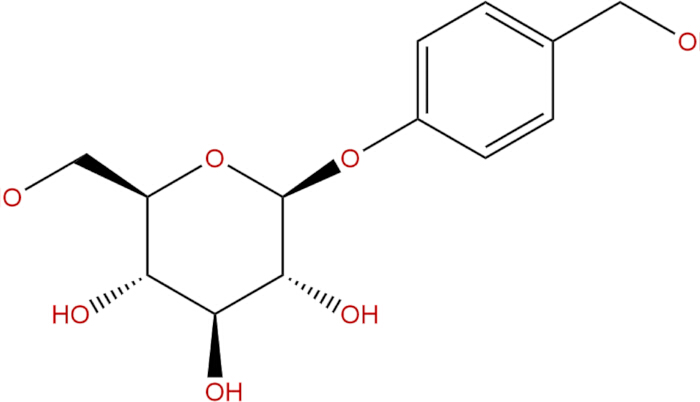
图 1:GAS 的化学结构式。 请点击此处查看此图的放大版本。
OA(冈田酸)源自Halichondria属的黑色海绵,属于长链脂肪酸类化合物,是腹泻性贝类毒素(DSP)的主要成分。它能有效抑制蛋白磷酸酶(尤其是PP1A和PP2A)的活性,导致细胞内蛋白质过度磷酸化,破坏细胞稳态40,41。这一特性使其成为研究与蛋白质磷酸化相关疾病的重要工具。因此,利用OA可构建以Tau蛋白磷酸化改变为特征的阿尔茨海默病(AD)细胞模型。本研究旨在探讨GAS(天麻素)——中药天麻(Gastrodia elata)的主要活性成分——对OA诱导的AD细胞模型的影响及其作用机制,并阐明其通过靶向AKT/GSK-3β信号通路在AD模型细胞中发挥的神经保护作用。
访问受限。请登录或开始试用以查看此内容。
方案
所有网络药理学操作均按照《网络药理学评价方法指南》进行。所有实验操作均遵守浙江理工大学实验室管理规定。
网络药理学
GAS 潜在靶点的预测:从 PubChem 数据库获取 GAS (PubChem CID: 1150) 的标准 SMILES 结构42。将该 SMILES 结构上传至 SwissTargetPrediction 数据库(http://www.swisstargetprediction.ch/)43,物种参数设定为 Homo sapiens。为减少假阳性预测结果,仅保留预测概率值 > 0.1 的靶点。所有预测的蛋白质靶点均通过 UniProt 数据库43(物种限定为 Homo sapiens)标准化为官方基因符号,并剔除重复条目。
阿尔茨海默病相关基因从 GeneCards 数据库(https://www.genecards.org/)收集44,45 以及 OMIM 数据库(https://www.omim.org/)46 使用 "阿尔茨海默病" 作为搜索词。在 GeneCards 中,具有相关性评分的基因 > 10个被选中。从GeneCards和OMIM获得的靶点合并后去除重复项,并使用UniProt对基因名称进行标准化。
将预测的GAS靶基因与AD相关基因导入Venny 2.1在线平台,以获取重叠靶基因。共鉴定出52个交集基因(见补充表1),被确定为GAS在AD中的潜在治疗靶点。
将52个交集靶点上传至STRING数据库(https://string-db.org/)47 进行蛋白质-蛋白质相互作用(PPI)分析。设定物种为智人(Homo sapiens),最低所需相互作用得分为0.4(中等置信度)。隐藏了未连接的节点。将所得的相互作用数据导出,并使用Cytoscape软件(版本3.9.1)进行可视化。
GO 和 KEGG 富集分析:将 52 个交集靶点上传至 Metascape 数据库(https://metascape.org/)48 ,进行基因本体(GO)和京都基因与基因组百科全书(KEGG)富集分析。物种设定为 Homo sapiens。富集标准定义为 p 值 < 0.01,最小重叠数 ≥ 3,富集因子 > 1.5。根据 p 值对 KEGG 通路进行排序,并选取前 20 条显著富集的通路用于可视化。富集结果通过在线生物信息学平台进行可视化展示。
GSK-3β 的蛋白质结构文件来自 RCSB PDB 数据库。GAS 的结构文件以 SDF 格式从 PubChem 数据库下载,随后使用 Open Babel GUI 软件转换为 Mol2 格式。上述文件使用 AutoDock 软件进行处理,以添加氢原子、去除水分子并分配电荷。处理后的文件随后保存为 PDBQT 格式。在检测并处理配体分子中的扭转键后,文件再次以 PDBQT 格式存储。通过使用 AutoDock Vina 软件进行分子对接,获得两个分子之间的最低结合能。随后,利用 PyMOL 对对接结果进行可视化和分析。
储备液的配制
将OA粉末(25 µg)完全溶解于1200 µL用无菌磷酸盐缓冲液(PBS)配制的10%二甲基亚砜(DMSO)中,制备成25 µM的储备液。将储备液分装后于-80 °C保存。每次实验前,用完全杜尔贝科改良伊格尔培养基(DMEM)(见材料表)将OA新鲜稀释至所需的工作浓度。将GAS粉末(20 mg)溶于1.4 mL无菌PBS中,经0.22 µm滤膜过滤除菌,配制成50 mM的储备液,并于-20 °C保存。使用前,用完全DMEM将该储备液稀释至指定的工作浓度。
AD 细胞模型的构建
本研究获取并使用了人神经母细胞瘤 SH-SY5Y 细胞(见材料表)。通过不同梯度浓度的冈田酸(OA)(0、10、20、40、80、160 nM)分别处理 SH-SY5Y 细胞 12、24 和 36 小时,以建立 AD 细胞模型。
细胞活力检测
为确定建立阿尔茨海默病(AD)细胞模型所需的最适油酸(OA)浓度及诱导时间,采用不同梯度浓度的OA(0、10、20、40、80和160 nM)处理SH-SY5Y细胞,并在不同时间点(12、24和36小时)通过CCK-8法检测细胞活力49。将SH-SY5Y细胞以每孔7.5 × 10³个细胞的密度接种于96孔板中,每孔加入100 µL完全DMEM培养基。将培养板置于含5% CO₂的湿润培养箱中,37 °C孵育24小时,使细胞充分贴壁。贴壁24小时后,向各孔加入100 µL OA工作液,使终体积为每孔200 µL,终浓度分别为0、10、20、40、80和160 nM。对照组(CON)加入等体积不含OA的完全DMEM培养基,OA处理组则加入相应浓度的OA。细胞在标准培养条件下分别孵育12小时、24小时或36小时。每个浓度和时间点设置六个复孔,并设置三个空白孔(仅含培养基)用于背景校正。
细胞氧化应激指数的测定
将处于对数生长期的 SH-SY5Y 细胞接种至 6 孔板中。细胞处理后,弃去各孔中的原有培养基。随后,用预冷的 PBS 在 4 °C 下洗涤细胞 3 次。之后加入细胞裂解液,按照试剂盒说明书推荐的方法在冰上进行细胞裂解。使用 BCA 蛋白质定量试剂盒(见材料表)测定样品的蛋白含量。根据相应检测试剂盒的说明书(见材料表)测定总抗氧化能力(T-AOC)、超氧化物歧化酶(SOD)活性和丙二醛(MDA)含量。
细胞凋亡检测
根据制造商说明书,使用Annexin V-FITC/PI双染试剂盒(见材料表)检测细胞凋亡。简言之,收集悬浮细胞和贴壁细胞;用不含EDTA的胰蛋白酶消化贴壁细胞,以避免人为膜损伤,并与悬浮细胞合并。细胞用预冷的PBS洗涤两次,然后重悬于500 µL 1× Binding Buffer中,细胞密度为0.5–1 × 10⁶ 个细胞。
随后,向每个样品中加入5 µL Annexin V-FITC和5 µL碘化丙啶(PI),轻轻混匀,并在室温避光条件下孵育10–20分钟。样品置于冰上,并在1小时内使用流式细胞仪进行分析。
进行流式细胞术分析时,使用未染色对照和单染对照(仅 Annexin V-FITC 和仅 PI)来设定补偿参数和象限门。首先根据前向散射光和侧向散射光(FSC/SSC)设门,以排除碎片和细胞聚集体。每样本至少采集 10,000 个事件。数据使用 FlowJo 软件进行分析。
实时定量PCR分析(RT-qPCR)
根据AG逆转录试剂盒提供的说明书,将提取的RNA进行逆转录反应以生成互补DNA(cDNA),随后用无菌水将cDNA模板稀释10倍。按照Green Master Mix(No Rox)试剂盒的操作步骤配制RT-qPCR反应体系,并使用荧光定量PCR仪进行分析(见 材料表)。获得的Ct值经过处理与分析,采用2-ΔΔCt法计算目的基因的表达水平,其中ΔCt表示处理组Ct值与GAPDH的Ct值之差,ΔΔCt表示处理组ΔCt值与对照组ΔCt值之差。引物序列列表见于 补充表 2.
Western印迹分析
将细胞裂解缓冲液、蛋白酶抑制剂和磷酸酶抑制剂按100:1:1的比例混合。裂解细胞以提取细胞总蛋白。使用BCA法蛋白检测试剂盒测定蛋白浓度。取20–30 µg蛋白样品上样,在10% SDS-PAGE凝胶中电泳分离,浓缩胶阶段电压为80 V,分离胶阶段电压为120 V。通过湿转法在300 mA电流下将蛋白转移至PVDF膜(0.45 µm)上,转移时间为90分钟。用5%脱脂牛奶在室温下封闭膜2小时,随后在4 °C下与一抗(见材料表)孵育过夜。室温下与二抗孵育1小时后,用TBST缓冲液洗涤膜4次,每次5分钟。使用增强型化学发光(ECL)检测试剂(见材料表)显色,并通过凝胶成像系统进行检测。使用ImageJ软件分析条带灰度值,以获得数据信息。
访问受限。请登录或开始试用以查看此内容。
结果
针对阿尔茨海默病治疗的GAS相关靶点筛选
通过数据库检索和软件分析,确定了GAS治疗阿尔茨海默病(AD)的潜在靶点。Swiss Target Prediction数据库提供了100个潜在靶点,而OMIM和GeneCards数据库(相关性评分>10)被用于查询与AD相关的靶点,共获得2376个潜在靶点。随后,利用Venny 2.1在线平台分析,筛选出GAS治疗AD的52个潜在治疗靶点(图2A)。
从 STRING 数据库获得的蛋白质-蛋白质相互作用(PPI)信息进一步通过 Cytoscape 软件进行筛选,应用了 Degree 值 > 10 的过滤条件,从而构建了 PPI 网络。GAS 在阿尔茨海默病(AD)中的潜在作用与十一个关键靶点相关,如图 2B所示。这些关键靶点包括 GAPDH、半胱天冬酶 3(CASP3)、丝裂原活化蛋白激酶 1(MAPK1)、胰岛素样生长因子 1 受体(IGF1R)、磷脂酰肌醇-3-激...
访问受限。请登录或开始试用以查看此内容。
讨论
近年来,阿尔茨海默病(AD)的患病率在全球范围内呈上升趋势。该疾病具有病程慢性、不可逆、致残以及死亡率升高等特点,因此在全球人口老龄化背景下构成了重大挑战。尽管该病备受关注,但其病因复杂,发病机制尚未完全阐明51。
传统医学在疾病预防和治疗方面具有显著优势,表现出良好的疗效和相对较高的安全性52,53。现代药理学研究表明,天麻(Gastrodia elata)中所含的活性成分具有增强记忆、改善认知功能障碍以及神经保护作用。Sui 等人54的研究发现,天麻素(GAS)可通过上调 Sirt3 水平,抑制神经毒性并减轻星形胶质细胞的炎症反应,从而发挥神经保护作用。此外,研究证实 GAS 能显著减少转基因小鼠脑内 Aβ 沉积,并抑制神经胶质细胞的活化55。尽管 GAS 在预防和治疗阿尔茨海默病(AD)方面展现出良好...
访问受限。请登录或开始试用以查看此内容。
披露
作者无任何利益冲突需要披露。
致谢
本研究得到了浙江理工大学绍兴生物医药研究院开放基金(SXAB202007)的资助。
访问受限。请登录或开始试用以查看此内容。
材料
| 姓名 | 公司 | 目录编号 | 评论 |
|---|---|---|---|
| 7500 实时荧光定量 PCR 系统 | APExBIO | S0080 | 用于检测凋亡细胞 |
| A450 酶标仪 | Proteintech | 50599-2-Ig | WB,稀释比例 1:1000 |
| Annexin V-FITC 凋亡检测试剂盒 | Proteintech | 60178-1-Ig | WB,稀释比例 1:1000 |
| Anti-Bax 抗体 | Proteintech | 10494-1-AP | WB,稀释比例 1:1000 |
| Anti-Bcl-2 抗体 | Abcam | ab32057 | WB,稀释比例 1:1000 |
| Anti-GAPDH 抗体 | Proteintech | 28866-1-AP | WB,稀释比例 1:1000 |
| Anti-p-Tau (Ser396) 抗体 | Biofroxx | 1172 | WB 封闭缓冲液 |
| Anti-p-Tau (Thr181) 抗体 | Vazyme Biotech | A311-01/02 | 用于细胞活力检测 |
| Biofroxx 脱脂奶粉 | Solarbio Science & Technology | D8371 | 化合物溶剂 |
| CCK-8 试剂盒 | Wisent Biotechnology | 319-105-CL | 用于细胞培养 |
| 二甲基亚砜 (DMSO) | APExBIO (USA) | K1231 | WB 检测试剂 |
| DMEM 高糖培养基 | Aladdin Biochemical Technology | G111309 | 活性化合物 |
| ECL 化学发光试剂 | Promega | A6101 | 用于 qPCR 扩增 |
| 流式细胞仪 | Solarbio Science & Technology | BC6410 | 脂质过氧化检测 |
| 天麻素 (GAS) 粉末,纯度 ≥98% | MedChemExpress | HY-N6785 | tau 蛋白过度磷酸化的诱导剂 |
| 凝胶成像系统 | Beyotime Biotechnology | C0221A | 洗涤细胞 |
| GoTaq qPCR 预混液 | Proteintech | SA00001-1 | WB,稀释比例 1:5000 |
| MDA 检测试剂盒(丙二醛) | Proteintech | SA00001-2 | WB,稀释比例 1:5000 |
| 冈田酸 (OA) | ATCC | CRL-2266 | 细胞 |
| PBS | Beyotime Biotechnology | S0101M | 用于氧化应激检测 |
| 二抗(山羊抗小鼠 IgG,HRP 标记) | Solarbio Science & Technology | BC1315 | 抗氧化能力检测 |
| 二抗(山羊抗兔 IgG,HRP 标记) | Beyotime Biotechnology | R0016 | RNA 提取 |
| SH-SY5Y | Sigma-Aldrich | 9002-07-7 | 细胞消化 |
| SOD 检测试剂盒(总超氧化物歧化酶) | Thermo Fisher Scientific | A45072 | 多功能酶标仪,用于吸光度检测 |
| 总抗氧化能力 (T-AOC) 试剂盒 | Becton, Dickinson and Company | 661310 | 用于多参数单细胞分析和细胞分选 |
| Trizol 试剂 | Thermo Fisher Scientific | 4351104 | 基因表达分析 |
| 胰蛋白酶 | Bio Rad | 1708195 | DNA/RNA/蛋白质凝胶成像 |
参考文献
- Hu, X., Wang, T., Jin, F. Alzheimer's disease and gut microbiota. Sci China Life Sci. 59 (10), 1006-1023 (2016).
- Qiu, C., Du, Y. A call for action to strengthen research on population interventions against Alzheimer's disease and senile dementia. J Shandong Univ Health Sci. 55 (10), 1-6 (2017).
- Livingston, G., et al. Dementia prevention, intervention,and care: 2020 report of the Lancet Commission. Lancet. 396 (10248), 413-446 (2020).
- Li, T. F., Guo, Z. Q., Wang, Y. Abnormal ß-amyloid metabolism and Alzheimer disease. J Neurosci Ment Health. 22 (12), 904-908 (2022).
- Zheng, J., et al. Oral administration of a fusion protein between the cholera toxin B subunit and the 42-amino acid isoform of amyloid-β peptide produced in silkworm pupae protects against Alzheimer's disease in mice. PLoS One. 9 (12), e113585(2014).
- La Spada, A. R., et al. A Becn1 mutation mediates hyperactive autophagic sequestration of amyloid oligomers and improved cognition in Alzheimer's disease. PLoS Genet. 13 (8), e1006962(2017).
- Aboelwafa, H. R., El-Kott, A. F., Abd-Ella, E. M., Yousef, H. N. The possible neuroprotective effect of silymarin against aluminum chloride-prompted Alzheimer's-like disease in rats. Brain Sci. 10 (9), 628(2020).
- Tobore, T. O. On the central role of mitochondria dysfunction and oxidative stress in Alzheimer's disease. Neurol Sci. 40 (8), 1527-1540 (2019).
- Kawamoto, E. M., et al. Oxidative state in platelets and erythrocytes in aging and Alzheimer's disease. Neurobiol Aging. 26 (6), 857-864 (2005).
- Stancu, I. C., et al. Aggregated Tau activates NLRP3–ASC inflammasome exacerbating exogenously seeded and non-exogenously seeded Tau pathology in vivo. Acta Neuropathol. 137 (4), 599-617 (2019).
- Connolly, K., et al. Potential role of chitinase-3-like protein 1 (CHI3L1/YKL-40) in neurodegeneration and Alzheimer's disease. Alzheimers Dement. 19 (1), 9-24 (2022).
- Yingquan, W., Jing-Hong, L., Ruixia, J. Alzheimer disease in China (2015-2050) estimated using the 1% population sampling survey in 2015. China J Alzheimers Dis Relat Disord. 2 (1), 289-298 (2019).
- Amat-Ur-Rasool, H., Ahmed, M., Hasnain, S., Carter, W. G. Anti-cholinesterase combination drug therapy as a potential treatment for Alzheimer's disease. Brain Sci. 11 (2), 184(2021).
- Cummings, J., Lee, G., Mortsdorf, T., Ritter, A., Zhong, K. Alzheimer's disease drug development pipeline: 2017. Alzheimers Dement (N Y). 3 (3), 367-384 (2017).
- Birks, J. S., Harvey, R. J. Donepezil for dementia due to Alzheimer's disease. Cochrane Database Syst Rev. 6 (6), CD001190(2018).
- Knopman, D. S., et al. Alzheimer's disease. Nat Rev Dis Primers. 7 (1), 33(2021).
- Silva, T., Reis, J., Teixeira, J., Borges, F. Alzheimer's disease, enzyme targets and drug discovery struggles: from natural products to drug prototypes. Ageing Res Rev. 15, 116-145 (2014).
- Liu, X., Yi, W., Xi, B., Dai, Q., Lu, L. Identification of drug-disease associations using a random walk with restart method and supervised learning. Comput Math Methods Med. 2022 (1), 7035634(2022).
- Yu, N., et al. Ganoderma lucidum triterpenoids (GLTs) reduce neuronal apoptosis via inhibition of ROCK signal pathway in APP/PS1 transgenic Alzheimer's disease mice. Oxid Med Cell Longev. 2020 (1), 1-11 (2020).
- Bao, M., et al. Astragaloside IV against Alzheimer's disease via microglia-mediated neuroinflammation using network pharmacology and experimental validation. Eur J Pharmacol. 957, 175992(2023).
- Dartigues, J. F., et al. Ginkgo biloba extract consumption and long-term occurrence of death and dementia. J Prev Alzheimers Dis. 4 (1), 16-20 (2017).
- Savaskan, E., Mueller, H., Hoerr, R., von Gunten, A., Gauthier, S. Treatment effects of Ginkgo biloba extract EGb 761® on the spectrum of behavioral and psychological symptoms of dementia: meta-analysis of randomized controlled trials. Int Psychogeriatr. 30 (3), 285-293 (2017).
- Wang, D., Liu, W., Lu, M., Xu, Q. Neuropharmacological effects of Gastrodia elata Blume and its active ingredients. Front Neurol. 16, 1574277(2025).
- El Menyiy, N., et al. Chemistry, biological activities,and pharmacological properties of gastrodin: mechanism insights. Chem Biodivers. 21 (6), e202400402(2024).
- Yu, H., et al. Research progress on classification of chemical constituents from Gastrodia elata and their pharmacological effects. Chin Tradit Herbal Drugs. 53, 5553-5562 (2022).
- Tang, C., et al. Comparative pharmacokinetics of gastrodin in rats after intragastric administration of free gastrodin, parishin and Gastrodia elata extract. J Ethnopharmacol. 176, 49-54 (2015).
- Fu, X., et al. Antioxidation effects and mechanism of gastrodin in AD rat models. Acta Anat Sin. 41 (4), 485-490 (2010).
- Shi, R., et al. Gastrodin alleviates vascular dementia in a 2-VO vascular dementia rat model by altering amyloid and Tau levels. Pharmacology. 105 (7-8), 386-396 (2020).
- Fasina, O. B., et al. Gastrodin from Gastrodia elata enhances cognitive function and neuroprotection of AD mice via the regulation of gut microbiota composition and inhibition of neuron inflammation. Front Pharmacol. 13, 814271(2022).
- Zheng, Q., et al. MicroRNA-452 promotes tumorigenesis in hepatocellular carcinoma by targeting cyclin-dependent kinase inhibitor 1B. Mol Cell Biochem. 389 (1-2), 187-195 (2014).
- Yan, J., Yang, Z., Zhao, N., Li, Z., Cao, X. Gastrodin protects dopaminergic neurons via insulin-like pathway in a Parkinson's disease model. BMC Neurosci. 20 (1), 31(2019).
- Xiao, H., et al. Gastrodin promotes hippocampal neurogenesis via PDE9-cGMP-PKG pathway in mice following cerebral ischemia. Neurochem Int. 150, 105171(2021).
- Liu, Y., et al. A review on central nervous system effects of gastrodin. Front Pharmacol. 9, 24(2018).
- Fu, J., et al. Gastrodia elata specific miRNA attenuates neuroinflammation via modulating NF-κB signaling pathway. Int J Neurosci. 134 (12), 1652-1662 (2023).
- Wang, Y., et al. Gastrodin: a comprehensive pharmacological review. Naunyn Schmiedebergs Arch Pharmacol. 397 (6), 3781-3802 (2024).
- Liu, C. M., et al. Effects of gastrodin against lead-induced brain injury in mice associated with the Wnt/Nrf2 pathway. Nutrients. 12 (6), 1805(2020).
- De Oliveira, M. R., Brasil, F. B., Fürstenau, C. R. Nrf2 mediates the anti-apoptotic and anti-inflammatory effects induced by gastrodin in hydrogen peroxide-treated SH-SY5Y cells. J Mol Neurosci. 69 (1), 115-122 (2019).
- Zhang, J. S., et al. Gastrodin suppresses BACE1 expression under oxidative stress condition via inhibition of the PKR/eIF2α pathway in Alzheimer's disease. Neuroscience. 325, 1-9 (2016).
- Jiao, M., et al. Effect of the SSeCKS–TRAF6 interaction on gastrodin-mediated protection against 2,3,7,8-tetrachlorodibenzo-p-dioxin-induced astrocyte activation and neuronal death. Chemosphere. 226, 678-686 (2019).
- Cohen, P., Holmes, C. F., Tsukitani, Y. Okadaic acid: a new probe for the study of cellular regulation. Trends Biochem Sci. 15 (3), 98-102 (1990).
- Qin, Y., et al. Okadaic acid detection through a rapid and sensitive amplified luminescent proximity homogeneous assay. Toxins (Basel). 15 (8), 501(2023).
- Kim, S., et al. PubChem 2023 update. Nucleic Acids Res. 51 (D1), D1373-D1380 (2022).
- Daina, A., Michielin, O., Zoete, V. SwissTargetPrediction: updated data and new features for efficient prediction of protein targets of small molecules. Nucleic Acids Res. 47 (W1), W357-W364 (2019).
- Stelzer, G., et al. The GeneCards suite: from gene data mining to disease genome sequence analyses. Curr Protoc Bioinformatics. 54 (1), 1.30.31-1.30.33 (2016).
- Safran, M., et al. Practical guide to life science databases. , Springer Nature. Singapore. (2021).
- Amberger, J. S., Bocchini, C. A., Schiettecatte, F., Scott, A. F., Hamosh, A. OMIM.org: Online Mendelian Inheritance in Man (OMIM®), an online catalog of human genes and genetic disorders. Nucleic Acids Res. 43 (D1), D789-D798 (2014).
- Szklarczyk, D., et al. The STRING database in 2021: customizable protein–protein networks,and functional characterization of user-uploaded gene/measurement sets. Nucleic Acids Res. 49 (D1), D605-D612 (2020).
- Zhou, Y., et al. Metascape provides a biologist-oriented resource for the analysis of systems-level datasets. Nat Commun. 10 (1), 1523(2019).
- Tominaga, H., et al. A water-soluble tetrazolium salt useful for colorimetric cell viability assay. Anal Commun. 36 (2), 47-50 (1999).
- Ton, A. M. M., et al. Oxidative stress and dementia in Alzheimer's patients: effects of synbiotic supplementation. Oxid Med Cell Longev. 2020 (1), 2638703(2020).
- Roth, K. A. Caspases, apoptosis,and Alzheimer disease: causation,correlation,and confusion. J Neuropathol Exp Neurol. 60 (9), 829-838 (2001).
- Cheng, M., et al. The effects of Porphyromonas gingivalis on the apoptosis of hippocampal cells in Sprague-Dawley rats and its underlying mechanisms. Int J Clin Exp Med. 13 (1), 300-309 (2020).
- Liu, H., et al. Development of chemical fingerprints for quality control of Xiong Ma Tang and its related preparations by high-performance liquid chromatography. J Chromatogr Sci. 54 (2), 206-215 (2016).
- Liu, S. J., et al. Gastrodin attenuates microglia activation through renin-angiotensin system and Sirtuin3 pathway. Neurochem Int. 120, 49-63 (2018).
- Hu, Y., Li, C., Shen, W. Gastrodin alleviates memory deficits and reduces neuropathology in a mouse model of Alzheimer's disease. Neuropathology. 34 (4), 370-377 (2014).
- Liu, J., et al. Systems pharmacology uncovers the multiple mechanisms of Xijiao Dihuang decoction for the treatment of viral hemorrhagic fever. Evid Based Complement Alternat Med. 2016 (1), 9025036(2016).
- Ran, B., et al. Drug-drug interactions prediction using fingerprint only. Comput Math Methods Med. 2022 (1), 7818480(2022).
- Sharma, V. K., Singh, T. G., Singh, S., Garg, N., Dhiman, S. Apoptotic pathways and Alzheimer's disease: probing therapeutic potential. Neurochem Res. 46 (12), 3103-3122 (2021).
- Zhou, W., Gao, Y., Xu, S., Yang, Z., Xu, T. Purification of a mannose-binding lectin Pinellia ternata agglutinin and its induction of apoptosis in Bel-7404 cells. Protein Expr Purif. 93, 11-17 (2014).
- Goedert, M., Spillantini, M. G., Jakes, R., Rutherford, D., Crowther, R. Multiple isoforms of human microtubule-associated protein tau: sequences and localization in neurofibrillary tangles of Alzheimer's disease. Neuron. 3 (4), 519-526 (1989).
- Hernández, F., Gómez De Barreda, E., Fuster-Matanzo, A., Lucas, J. J., Avila, J. GSK3: a possible link between beta amyloid peptide and tau protein. Exp Neurol. 223 (2), 322-325 (2010).
- Lu, Z., et al. Neuroprotection and mechanism of Gas-miR36-5p from Gastrodia elata in an Alzheimer's disease model by regulating glycogen synthase kinase-3β. Int J Mol Sci. 24 (24), 17295(2023).
- Vossel, K. A., et al. Tau reduction prevents Aβ-induced axonal transport deficits by blocking activation of GSK3β. J Cell Biol. 209 (3), 419-433 (2015).
- Singh, A. K., et al. Berberine: a plant-derived alkaloid with therapeutic potential to combat Alzheimer's disease. CNS Agents Med Chem. 19 (3), 154-170 (2019).
- Belsare, K. D., et al. Soluble TREM2 inhibits secondary nucleation of Aβ fibrillization and enhances cellular uptake of fibrillar Aβ. Proc Natl Acad Sci U S A. 119 (5), e2114486119(2022).
- Matsuda, S., et al. Roles of PI3K/AKT/GSK3 pathway involved in psychiatric illnesses. Diseases. 7 (1), 22(2019).
- Pan, S., et al. Oleanolic acid derivatives induce apoptosis in human leukemia K562 cell involved in inhibition of both Akt1 translocation and pAkt1 expression. Cytotechnology. 67 (5), 821-829 (2014).
- Zhou, F., et al. Network pharmacology-based strategy to investigate pharmacological mechanisms of Tinospora sinensis for treatment of Alzheimer's disease. J Ethnopharmacol. 259, 112940(2020).
- Liu, Z., Wang, Z. Protein tyrosine kinase 2 regulates tau phosphorylation through PI3K/AKT/Gsk3β signaling pathway. Labeled Immunoassays Clin Med. 29 (3), 464-470 (2022).
- Cope, P. J., Ourradi, K., Li, Y., Sharif, M. Models of osteoarthritis: the good, the bad and the promising. Osteoarthritis Cartilage. 27 (2), 230-239 (2019).
- Wang, X., Blanchard, J., Tung, Y. C., Grundke-Iqbal, I., Iqbal, K. Inhibition of protein phosphatase-2A (PP2A) by I1PP2A leads to hyperphosphorylation of tau, neurodegeneration,and cognitive impairment in rats. J Alzheimers Dis. 45 (2), 423-435 (2015).
- Liu, T. T., et al. Gastrodin alleviates Aβ25-35-induced glycolytic dysfunction via activating PI3K/AKT/BACH1 signaling in Alzheimer's disease models. Exp Neurol. 389, 115225(2025).
- Zuo, H. J., et al. Gastrodin regulates PI3K/AKT-Sirt3 signaling pathway and proinflammatory mediators in activated microglia. Mol Neurobiol. 61 (5), 2728-2744 (2024).
- Wang, Y. P., Mandelkow, E. Tau in physiology and pathology. Nat Rev Neurosci. 17, 22-35 (2015).
- Pardridge, W. M. Drug transport across the blood–brain barrier. J Cereb Blood Flow Metab. 32 (11), 1959-1972 (2012).
访问受限。请登录或开始试用以查看此内容。