9.10
ניתן לצייר את מבנה לואיס של אניון ניטריט (NO2−) בשתי דרכים שונות, מובחן על ידי מיקומי הקשרים N-O ו-N=O.
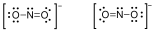
אם יוני ניטריט אכן מכילים קשר יחיד וכפול, שני…
רוב המולקולות והיונים יכולים להיות מיוצגים במבני לואיס ייחודיים. אך תרכובות מסוימות ניתנות לייצוג בכמה מבני לואיס, שכולם תקפים באותה מידה. לדוגמה, מבנה לואיס של גופרית תלת-חמצנית.
הקשרים היחידים בין כל אטום חמצן ואטומי הגופרית המרכזיים משלימים אוקטט של אטומי החמצן. אך כדי להשלים אוקטט מלא בגופרית, חייב להיווצר קשר נוסף בין הגופרית ואחד מאטומי החמצן. כיוון שכל אחד משלושת אטומי החמצן יכול ליצור קשר כפול עם גופרית, יכולים להיווצר שלושה מבני לואיס שונים.
מבני לואיס מרובים אלה נקראים מבני רזוננס"ובהם מבני השלד נשארים זהים, אבל אלקטרונים מפוזרים באופן אחר. כל שלושת המבנים הם ייצוגים תקפים ושווים של המולקולה, אבל כולם לא קיימים בטבע. המבנה בפועל לא מחליף צורה בין מבני הרזוננס, אלא הוא הכלאה או ממוצע של שלושת מבני לואיס, הניתן למדידה באמצעות אורכי קשר.
בגופרית, אורכו של קשר יחיד של תחמוצת גופרית הוא 1.51 אנגסטרום בעוד שבגופרית תלת-חמצנית, אורך הקשר גופרית-חמצן הוא 1.42 אנגסטרום. לכן, במולקולה הממוצעת, אורך הקשר הוא בתווך בין קשר יחיד לכפול. במולקולות ממוצעות, אלקטרונים המהווים חלק מקשרים כפולים או יחידים מפוזרים על פני כמה קשרים או אטומים, כלומר, הם אינם קבועים על אטום מסוים.
הפיזור מפחית את האנרגיה הפוטנציאלית של האלקטרונים, מה שמוביל ליציבות המכונה יציבות רזוננס"רזוננס נצפה גם בתרכובות ארומטיות כגון בנזן. בנזן הוא טבעת פחמן משושה שבה מימן אחד קשור לכל אחד אטומי הפחמן וקשרים יחידים וכפולים מתחלפים בין אטומי הפחמן. על סמך מיקומם של קשרי פחמן-פחמן כפולים, לבנזן יכולים להיות בשני מבני רזוננס.
זכרו שקשרים כפולים הם בדרך כלל קצרים יותר מקשרים יחידים. אך לכל קשרי פחמן-פחמן בבנזין יש אורכי קשר זהים, הנמצאים בתווך בין קשרי פחמן-פחמן יחידים וכפולים. לכן, בנזין קיים כהכלאת רזוננס וניתן לייצוג כמשושה עם עיגול בפנים.
העיגול מעיד על כך שהבנזין הוא תרכובת של שני מבני רזוננס, והקשרים הכפולים לא יכולים להיות ממוקמים בשני אטומי פחמן ספציפיים כלשהם.
View the full transcript and gain access to JoVE Core videos
Q1: What are resonance structures and why do molecules have multiple Lewis representations?
Resonance structures are multiple, equally valid Lewis structures for a single molecule where the skeletal arrangement remains identical but electrons distribute differently. Certain compounds like sulfur trioxide and nitrite ions cannot be accurately represented by a single Lewis structure. Instead, two or more resonance forms are needed to describe the actual electron distribution. These structures are not interchangeable; the molecule exists as a resonance hybrid, an average of all possible structures.
Q2: How does a resonance hybrid differ from the individual resonance structures?
A resonance hybrid is the actual electronic structure of a molecule, representing an average of all resonance forms rather than oscillating between them. Individual resonance structures are convenient, imaginary representations used to describe bonding. The hybrid never possesses the electronic structure of any single resonance form. Like a rhinoceros is neither a dragon nor a unicorn, a resonance hybrid is neither of its resonance forms at any given time, yet it is a real entity confirmed by experimental evidence.
Q3: What does electron delocalization mean in resonance hybrid molecules?
Electron delocalization occurs when electrons participating in double bonds or lone pairs are not stationary on one particular atom but spread across multiple bonds or atoms. This distribution reduces the potential energy of electrons, resulting in resonance stabilization that makes the molecule more stable. In sulfur trioxide, electrons are delocalized across the sulfur-oxygen bonds, creating intermediate bond lengths between single and double bonds rather than distinct bond types.
Q4: Why do resonance hybrid molecules have intermediate bond lengths?
In resonance hybrids, bond lengths are intermediate between single and double bonds because electrons are delocalized across multiple bonding positions. For example, sulfur-oxygen bonds in sulfur trioxide measure 1.42 angstroms, between a typical single bond (1.51 angstroms) and a double bond. Similarly, all carbon-carbon bonds in benzene are equal and intermediate in length, confirming that the molecule exists as a hybrid rather than alternating single and double bonds.
Q5: How is benzene represented as a resonance hybrid?
Benzene is a hexagonal carbon ring with alternating single and double bonds between carbons. However, since all carbon-carbon bonds have equal lengths intermediate between single and double bonds, benzene cannot be represented by either resonance structure alone. Instead, benzene is depicted as a hexagon with a circle inside, indicating it is a blend of two resonance structures where double bonds cannot be localized to specific carbon atoms.
Q6: What experimental evidence confirms that molecules are resonance hybrids rather than oscillating structures?
Experimental measurements of bond lengths and bond strengths provide direct evidence for resonance hybrids. In nitrite ions and carbonate ions, all bonds are experimentally identical in length and strength, even though resonance structures suggest different bond types. If molecules oscillated between resonance forms, bonds would show different properties. Instead, the uniform measurements confirm that molecules exist as stable averages of resonance structures, not as fluctuating entities.
Q7: Why is resonance stabilization important for molecular stability?
Resonance stabilization lowers the potential energy of electrons through delocalization across multiple atoms or bonds, making resonance hybrid molecules more stable than any single resonance structure would predict. This energy reduction explains why molecules like benzene and carbonate ions are particularly stable and unreactive. The delocalized electron distribution provides greater stability than if electrons were confined to specific bonds, as shown in individual Lewis structures.