
Guest Editor

Collection Overview
Mechanical deformations of DNA and chromatin occur ubiquitously in biology, almost every time DNA interacts with proteins. Our understanding of how critical processes in chromatin biology are modulated by the response of DNA and chromatin to mechanical stresses has been shaped by several recent advances. This collection will bring together examples of such advances, with a particular focus on single-molecule, genomic, and computational approaches. Each method explores the physical properties of DNA and chromatin, and the energetics of DNA:protein interactions, at various scales and resolutions, providing readouts such as high-resolution dynamic measurements of DNA and chromatin dynamics, static measurements of DNA shape, high-throughput measurements of DNA mechanics and DNA:protein interactions in a genome-wide context.
Examples of methods to be included in this Collection are: Structural and computational studies of DNA shape and their impact on DNA:protein interactions, high-throughput methods for characterizing the DNA:protein interactions landscape, and the physical properties of DNA and chromatin, genome-wide, via next generation sequencing, and single-molecule methods for measuring the response of DNA and chromatin to physical stresses induced by tension, torsion, or the action of molecular motors.
Editorial

Articles


In Vitro Characterization of Histone Chaperones using Analytical, Pull-Down and Chaperoning Assays
0 Views
•
Cited by 3
•
2021
•

Deciphering Molecular Mechanism of Histone Assembly by DNA Curtain Technique
0 Views
•
Cited by 7
•
2022
•

Genome-wide Profiling of Transcription Factor-DNA Binding Interactions in Candida albicans: A Comprehensive CUT&RUN Method and Data Analysis Workflow
0 Views
•
Cited by 9
•
2022
•
Mohammad N. Qasim*1,2, Ashley Valle Arevalo*1,2, Akshay D. Paropkari*1,2, Craig L. Ennis1,2,4, Suzanne S. Sindi3, Clarissa J. Nobile1,4, Aaron D. Hernday1,4
1Department of Molecular and Cell Biology, University of California, Merced, 2Quantitative and Systems Biology Graduate Program, University of California, Merced, 3Department of Applied Mathematics, University of California, Merced, 4Health Sciences Research Institute, University of California, Merced

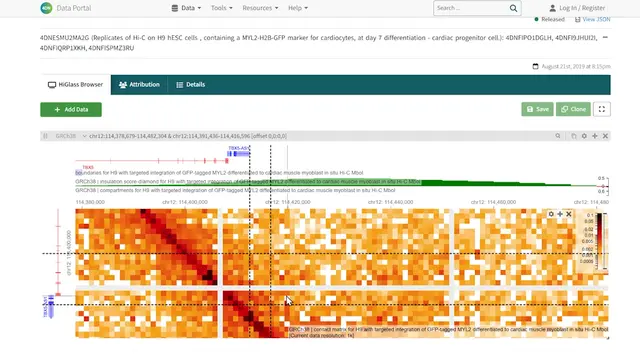
A Web-Based Workflow for Selecting Gene- and Tissue-Specific Enhancers
0 Views
•
2025
•
1Department of Paediatrics, Faculty of Medicine, Dentistry and Health Sciences, University of Melbourne, 2Australian Regenerative Medicine Institute, Monash University, 3Stem Cell Medicine Department, Murdoch Children's Research Institute, The Royal Children's Hospital, 4The Novo Nordisk Foundation Center for Stem Cell Medicine, reNEW Melbourne, Murdoch Children's Research Institute, 5Systems Biology Institute (SBI) Australia
Abstracts
<p>Biophysical and Biochemical methods to characterize Protein-DNA interactions</p>
Dhiraj Bhatia*1,
Bhaskar Datta*1,
Sharmistha Majumdar*1
1Discipline of Biological Engineering, Indian Institute of Technology-Gandhinagar