
Guest Editor

Collection Overview
For ages, the scientific field has been looking for a robust in-vitro model system that mimics in vivo biology closely. Pluripotent stem cells serve as a renewable source of cells to understand biology in a dish. Recently, organoid method of stem cell differentiation provides a robust and physiologically relevant model to understand disease progression and etiology compared to conventional monolayer cells. Furthermore, adult stem cell-derived organoids provide an approach to use end-term patient-derived cells for understanding disease biology and drug screening. Recent advances in stem cell-derived – organoids, when used with CRISPR genome editing, patient samples, bioengineering matrices, and high throughput screens, have significantly improvised the organoids technology moving towards efficient and faster validation of several ‘lead candidates’ to potential drugs. The ultimate idea of stem cell organoids is to replace and take the burden of animal research.
One of the biggest hurdles faced in biological research is variability in the differentiation protocols from lab to lab and individual-to-individual, due to several uncontrolled factors which compromises the reproducibility of assays. The aim of this collection is to bring together the methodologies for stem cell-derived: i) organoid generation, ii) improvising organoid maturation by bio-materials and co-culture.
Articles

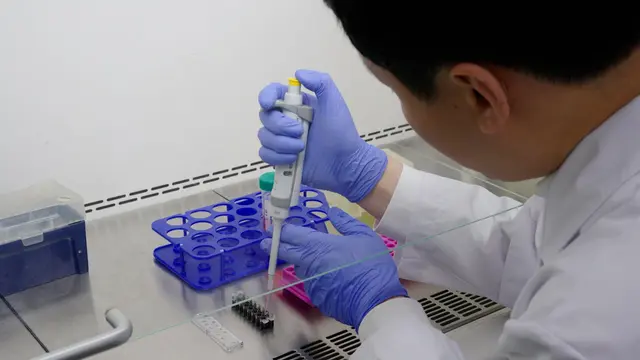
Generation and Genetic Manipulation of Human Cervical Organoids
0 Views
•
2026
•
1Department of New Biology, DGIST, 2Department of Obstetrics and Gynecology, Kyungpook National University Chilgok Hospital, 3Clinical Omics Institute, Kyungpook National University, 4Department of Obstetrics and Gynecology, Kyungpook National University School of Medicine, 5New Biology Research Center, DGIST, 6Graduate Program in Biomedical Science & Engineering, DGIST
Abstracts
Co-culture of pluripotent stem cells with fibroblasts in 3D and spontaneous differentiations
Bipasha Bose*1
1Yenepoya University
<p>Co-culture of pluripotent stem cells with fibroblasts in 3D and spontaneous differentiations</p>
Bipasha Bose*1
1Yenepoya University