Guest Editors

Eleonora Isotta
Northwestern University
<p class="ql-align-justify">Eleonora Isotta is a Postdoctoral Fellow in the Department of Materials Science and Engineering at Northwestern University. She earned her Bachelor of Science degree in Environmental Engineering in 2015 and her Master of Science degree in Energy Engineering in 2017 from the University of Trento. In 2021, she completed her PhD in Materials Science at the University of Trento, with a dissertation on the interplay between crystal structure and transport properties in thermoelectric materials. In November 2021, she started an appointment as a postdoctoral fellow at Michigan State University, where her work focused on the influence of elasticity and crystal structure on thermal transport, as well as the effects of oxidation on thermoelectric performance. In October 2022, she transitioned to Northwestern University, where she is currently investigating the impact of microstructure, specifically grain boundaries, on the heat transport properties of thermoelectrics. Her areas of interest encompass thermoelectrics, thermal transport, microstructure engineering, and crystallography.</p>

Sevan Chanakian
Michigan State University
<p>Sevan Chanakian began researching thermoelectric materials in Dr. Jeffrey Synder's group as an undergraduate at the California Institute of Technology. She continued her work on novel thermoelectric materials as a process engineer at NASA's Jet Propulsion Laboratory. In 2017, she started her PhD at Michigan State University in Dr. Alexandra Zevalkink's group, focusing on understanding the relationship between crystal structures' features and the material's macroscopic electronic and thermal properties. This work encompassed a variety of materials, including single crystals and dense polycrystalline puck</p><p>forms.</p><p>Sevan is expected to defend her PhD in the summer of 2023, after which she will work as a Senior Research Scientist at Molten Materials. There, she will tackle the ever-growing plastic waste crisis until her inevitable return to the field of thermoelectrics. Sevan's research interests are twofold. On one hand, she aims to use science to design circular frameworks that integrate with existing ecological and environmental systems. On the other hand, she focuses on experimentally quantifying fundamental electronic materials parameters, specifically carrier effective mass and carrier scattering.</p>
Collection Overview
Thermoelectric (TE) materials can convert temperature gradients into electricity and vice versa, playing a crucial role in NASA's deep space exploration since the 1970s. In recent years, TE has gained significant importance in applications such as sensing, powering small devices (including the Internet of Things and medical appliances), thermal management, and waste heat recovery for renewable energy technologies. The field of TEs is unique in its scientific nature as it involves the intricate interplay between thermal and electronic phenomena within materials.
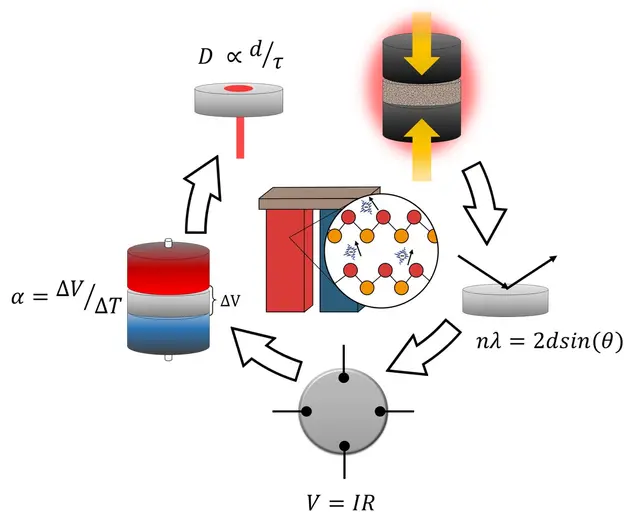
To fully understand the TE properties of a material, a diverse range of techniques is required for comprehensive characterization. The TE community has encountered challenges in establishing uniform measurement methodologies and synthesis procedures, which hinder reliable performance comparisons across different laboratories. Addressing these inconsistencies is crucial for successfully transitioning novel TE materials from the laboratory to the market.
Optimizing the TE performance of materials requires careful adjustment of numerous, often conflicting parameters. Classically, this has included electronic and thermal transport properties as well as mechanical performance, but these are closely tied and controlled by crystallographic, compositional, and microstructural features. Consequently, a wide array of synthesis procedures has been developed, exploring diverse and innovative approaches to enhance TE performance.
This Topical Collection aims to foster transparency in synthesis and characterization processes, thereby reducing barriers to entry in TE research and enhancing the reproducibility of reported material properties. This collection invites authors to share their synthesis and characterization methodologies, facilitating the rigorous exploration of TE materials while advancing the understanding and reproducibility of measurement techniques.
Articles


The Frequency Domain Thermoreflectance Technique for Thermal Property Measurements
0 Views
•
2025
•
Alesanmi R. Odufisan1, Benjamin Stern2, Ryohei Nagahiro3, Rosemary Wynnychenko2,4, Sevan Chanakian5, Junichiro Shiomi3,6, Eleonora Isotta7, Oluwaseyi Balogun2
1Department of Theoretical and Applied Mechanics, Northwestern University, 2Department of Mechanical Engineering, Northwestern University, 3Institute of Engineering Innovation, The University of Tokyo, 4Department of Physics, Wellsley College, 5Department of Chemical Engineering and Materials Science, Michigan State University, 6Department of Mechanical Engineering, The University of Tokyo, 7Department of Materials Science and Engineering, Northwestern University

Sample Preparation and Resistivity Measurements for Operando Transmission Electron Microscopy During Heating and Electrical Biasing
0 Views
•
2026
•
Abstracts
Kirigami-inspired film-based thermoelectric devices with built-in heat sink
Chongyang Zeng1,
Emiliano Bilotti*1
1Imperial College London