
Guest Editors

Fei Yu
AVIC, Aircraft Strength Research Institute of China, Department of Composite Structures
<p>Dr. Fei Yu received his PhD in Mechanical Engineering from the University of Nottingham, UK in 2022, with the research topic on design and analysis of composites preforming processes for Automotive & Aerospace sectors. He holds a research engineer position in Aircraft Strength Research Institute of China, AVIC. His research interest includes constitutive modelling for textile/fabric reinforcement during preforming, experimental and numerical evaluation on the strength of fibre reinforced polymer (FRP) structures for aerospace applications, damage analysis for FRP. His recent research focuses on the development of composites manufacturing processes and simulation tools, whilst supplying feasible solutions for high-quality and defect-free preforms via simulation-informed design iterations. This research is of great importance for boosting the production rate of high-quality preforms for liquid composite moulding, whilst maintaining low manufacturing costs and energy consumption. </p>
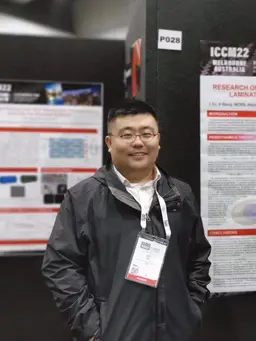
Jian Yu
Nanjing University of Aeronautics and Astronautics, College of General Aviation and Flight
<p>Dr. Jian Yu is Assistant Professor of Nanjing University of Aeronautics and Astronautics in China; PhD of Nanjing University of Aeronautics and Astronautics and Visiting PhD of the University of Nottingham; Member of the Chinese Society of Theoretical and Applied Mechanics; Member of American Institute of Aeronautics and Astronautics (AIAA). His recent research focus on the strain rate dependent mechanical properties of 3D composites, based on methods containing micromechanics model, Multi-scale analysis, FEM, etc.</p>

Xiaomeng Wang
Southwest Jiaotong University, School of Mechanics and Engineering, Applied Mechanics and Structure Safety Key Laboratory of Sichuan Province
<p>Dr. Xiaomeng Wang received her PhD in Engineering Mechanics from Nanjing University of Aeronautics and Astronautics. In 2018, She pursued her career as a Recognized Researcher at the Institute of Nanomaterials, Advanced Technologies and Innovation (CXI), Technical University of Liberec, Czech Republic. In 2020, She holds an associate professor position in Southwest Jiaotong University, China. Her research interest includes constitutive relation theories and their application in mechanical analysis of fiber reinforced polymer (FRP) structures and concrete reinforced structures. Her recent researches focus on the long-term mechanical behavior and special treatment of flax fiber reinforced composite to improve its mechanical properties. This research is of great significance for solving resource and environmental problems such as unrecyclable and energy consumption caused by the massive use of artificial fibers, which has significant social and economic benefits.</p>
Collection Overview
Viscoelastic behaviors are common in polymers, composites, geological materials, biomaterials, and even metals. Viscoelastic mechanics focus on the time-dependent mechanical characteristics, constitutive relation, and failure process of these materials. Viscoelastic material shows itself in various ways, such as creep, relaxation, hysteresis, and mechanical loss. Hysteresis and mechanical loss are the dynamic viscoelastic phenomena, creep and stress relaxation are static viscoelastic phenomena. The failure of viscoelastic materials shows obvious "time effect" and "temperature effect". It is difficult to prevent catastrophic accidents caused by sudden delayed fracture of viscoelastic materials under long-term loading or extreme conditions (such as high temperature, high-stress level). Therefore, it is inadequate to consider only the static properties of component materials in structural design. However, the literature and design standards of some new viscoelastic materials are not sufficient, which brings great challenges to their engineering applications. Therefore, it is urgent to find practical constitutive models and effective calculation methods to solve the viscoelastic problems.
This collection aims to collate current experimental or simulation work on mechanical properties and mechanical modeling of viscoelastic behavior. This collection will be a useful resource for researchers and engineers to obtain a better understanding of the viscoelastic behavior, which can help predict the long-term performance and dimensional stability of structures.
Articles

Biological Preparation and Mechanical Technique for Determining Viscoelastic Properties of Zonular Fibers
0 Views
•
Cited by 3
•
2021
•
1Department of Basic Sciences, University of Health Sciences and Pharmacy, 2Department of Ophthalmology & Visual Sciences, Washington University School of Medicine, 3Department of Biomedical Engineering, The Ohio State University, 4Department of Cell Biology & Physiology, Washington University School of Medicine

Rapid Viscoelastic Characterization of Airway Mucus Using a Benchtop Rheometer
0 Views
•
Cited by 5
•
2022
•
Jason A. Wykoff1, Kendall M. Shaffer1, Kenza C. Araba1, Matthew R. Markovetz1, Jérémy Patarin2, Matthieu Robert de Saint Vincent2, Scott H. Donaldson1,3, Camille Ehre1,4
1Marsico Lung Institute / CF Center, The University of North Carolina at Chapel Hill, 2Rheonova, 3Department of Pulmonary and Critical Care Medicine, The University of North Carolina at Chapel Hill, 4Department of Pediatric, Pediatric Pulmonology Division, The University of North Carolina at Chapel Hill

Investigating Stress-relaxation and Failure Responses in the Trachea
0 Views
•
Cited by 1
•
2022
•

Abstracts
<p>Small-Scale Indentation Measurements of Viscoelasticity in Soft Solids</p>
Michelle Oyen*1
1pending move to new institution 1/1/22