The video demonstrates the isolation of kidneys containing Staphylococcus aureus-infected macrophages, followed by tissue homogenization to release intracellular bacteria. It quantifies bacterial persistence within macrophages in control and antibiotic-treated groups by counting colony-forming units.
Subskrypcja JoVE jest wymagana do oglądania tego materiału. Zaloguj się lub rozpocznij bezpłatny okres próbny.
Artykuł metodologiczny
Assessing Intracellular Bacterial Persistence and Antibiotic Resistance in a Mouse Model
192 wyświetleń
⸱
1 lipca 2026
W tym artykule
Streszczenie
Protokół
All procedures involving animal models have been reviewed by the local institutional animal care committee and the JoVE veterinary review board.
- Intracellular bacterial infection in mice
- Randomly divide 20 Balb/c mice into four groups (n=5, Figure 1A).
- For Group I, inject 3 x 10⁶ CFU (Colony-Forming Unit) planktonic MRSA252 per mouse by intravenous injection. For Group II, inject 3 x 10⁶ CFU planktonic MRSA252 (Methicillin-Resistant Staphylococcus aureus 252) and vancomycin (110 mg/kg; see Table of Materials) per mouse by intravenous injection. For Group III, inject the intracellular bacteria Staphylococcus aureus (S. aureus) by intravenous injection. For Group IV, inject the intracellular bacteria S. aureus and vancomycin (110 mg/kg) per mouse by intravenous injection.
- Place the mice under the infrared physiotherapy lamp until their tail veins become dilated.
- Intravenously inject 3 x 10⁶ CFU planktonic MRSA252 per mouse of Group I and Group II. Intravenously inject the intracellular bacteria into the mice of Groups III and IV.
NOTE: When using a syringe to collect liquid containing intracellular bacteria, it is recommended to first gently mix the liquid evenly with a pipette to ensure consistent infection levels across all mice. - After 30 min, intravenously inject vancomycin into Group II and Group IV per mouse.
- Evaluation of in vivo intracellular infection model
- Evaluate the intracellular infection model of mice by counting the colonization of bacteria in the kidneys. After 24 h of injection, anesthetize the mice with 3% isoflurane and sacrifice them by cervical dislocation. Disinfect them in 75% ethyl alcohol.
- Immobilize the mice, lift the abdominal skin with tweezers with one hand, cut the abdominal skin of the mouse with ophthalmic scissors with the other hand, find the kidneys in the abdominal cavity, and completely strip the kidneys. Put them in PBS (Phosphate-Buffered Saline).
- Add 1 mL of PBS to the tissue grinding tube. Transfer the kidneys from each mouse into separate grinding tubes and grind until no solid tissue remains. Pour the homogenized tissue into individual Eppendorf tubes and label each tube with the corresponding mouse identification.
- Use PBS to serially dilute the tissue homogenate. Spot each dilution onto separate TSA (Tryptic Soy Agar) plates and incubate overnight at 37 °C. Count the colonies and analyze the data (Figure 1B).
Dostęp ograniczony. Zaloguj się lub rozpocznij wersję próbną, aby wyświetlić tę treść.
Wyniki
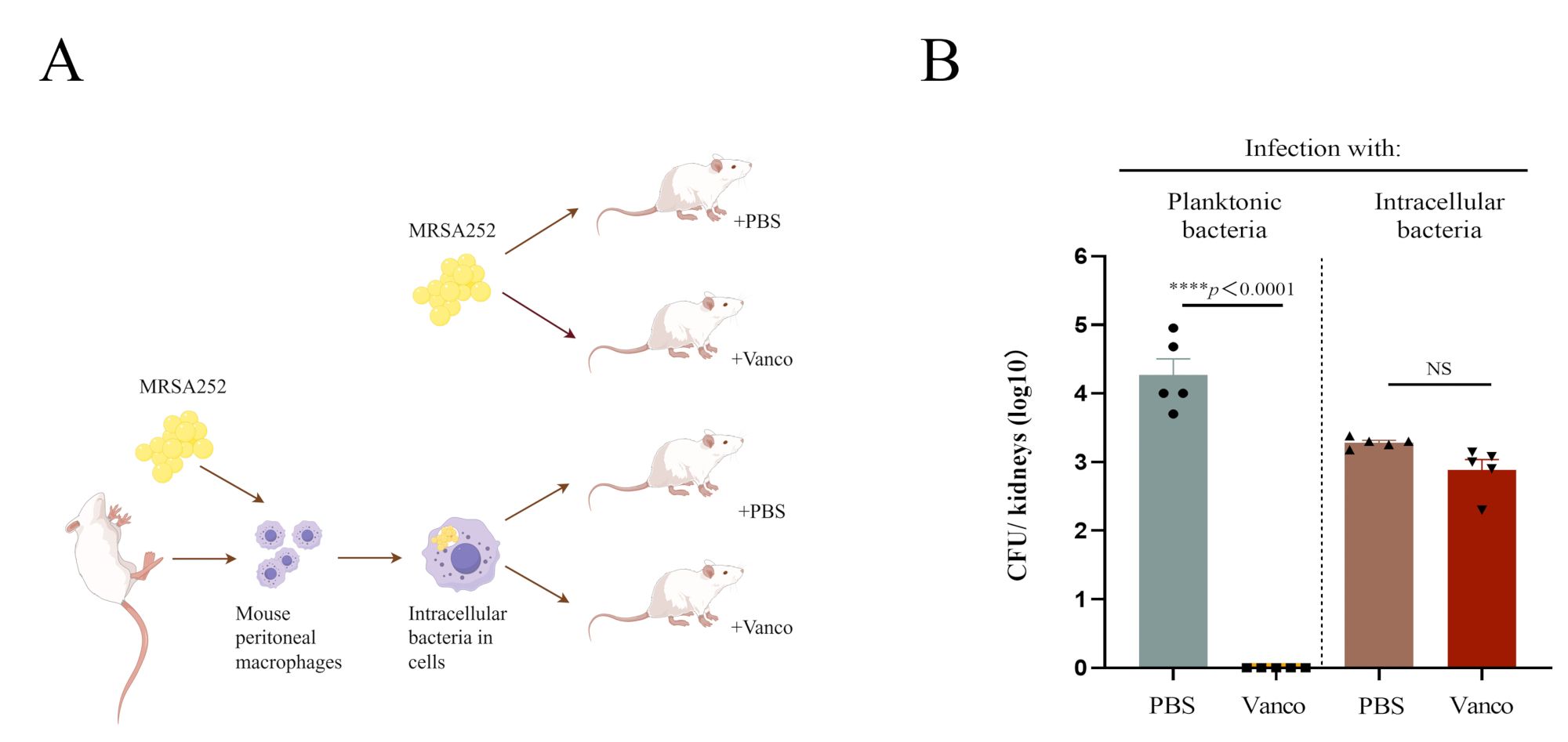
Figure 1: Intracellular infection with MRSA252 (Methicillin-Resistant Staphylococcus aureus 252) is resistant to vancomycin killing. (A) Graphical abs...
Dostęp ograniczony. Zaloguj się lub rozpocznij wersję próbną, aby wyświetlić tę treść.
Materiały
| Nazwa | Firma | Numer katalogowy | Komentarze |
|---|---|---|---|
| Beef extract powder | BBI, UK | A600114-0500 | |
| Biohazard safety equipment | Heal force, China | VS-1300L-u | |
| Cell incubator | ESCO, Singapore | CCL-170B-8 | |
| Centrifuge M1416R | RWD, China | M1416R | |
| Centrifuge tube | Guanghou Labselect, China | CT-002-50A | |
| Gentamycin | Shanghai Sangon, China | B540724-0010 | |
| Incubator | Shanghai Hengzi, China | HDPF-150 | |
| Methicillin-Resistant Staphylococcus aureus 252 | Third Military Medical University, China | null | |
| Penicillin and Streptomycin | Shanghai Beyotime, China | C0222 | |
| Phosphate Buffer Solution | Shanghai Beyotime, China | ST476 | |
| Saline | Sichuan Kelun, China | null | |
| Tryptic Soy Agar (TSA) plates | Beijing AOBOX Biotechnology Co., LTD,China | 02-130 | |
| Tryptic Soy Broth (TSB) medium | Beijing AOBOX Biotechnology Co., LTD,China | 02-102K | |
| Tryptone | OXOID, UK | LP0042B | |
| Vancomycin | Shanghai Beyotime, China | ST2807-250mg |
