
Theory of Evolution
The theory of evolution explains how species change over time through a process called natural selection. According to this scientific theory, organis
Video Duration: 1 minute and 23 secondsMIDDLE SCHOOL
Life Science
The theory of evolution explains how species change over time through a process called natural selection. According to this scientific theory, organis
Video Duration: 1 minute and 23 seconds
Giant tortoises and Darwin’s finches are two famous examples that helped shape the theory of evolution. Charles Darwin observed these animals on the G
Video Duration: 1 minute and 26 seconds
Charles Darwin’s theory of evolution was shaped by the ideas, observations, and discoveries of others. While traveling on the HMS Beagle, Darwin read
Video Duration: 1 minute and 26 seconds
Why do some animals blend into their surroundings while others stand out? Why do certain traits, like a cheetah's speed or a polar bear’s thick fur, h
Video Duration: 1 minute and 21 seconds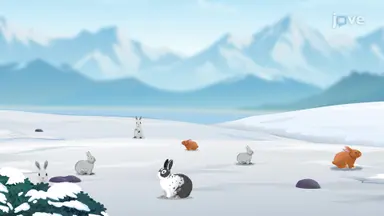
Have you ever wondered why some animals have spots, stripes, or specific colors? These visible traits, called phenotypes, are shaped by natural select
Video Duration: 1 minute and 28 seconds
Fossils are preserved remains or traces of organisms that lived in the past. They provide important evidence for understanding the history of life on
Video Duration: 1 minute and 21 seconds
Chordates are a large group of animals that share important features at some stage of development such as a notochord, dorsal nerve cord, and gill sli
Video Duration: 1 minute and 12 seconds
Vertebrates are animals with backbones, and they come in many forms—from swimming fish and hopping frogs to flying birds and running mammals. The five
Video Duration: 1 minute and 28 seconds
Fish are important for understanding the early evolution of vertebrates and how life adapted to aquatic environments over time. They demonstrate a wid
Video Duration: 1 minute and 16 seconds
Jawless fish are some of the oldest and most interesting animals on Earth. They show us what early vertebrates (animals with backbones) may have looke
Video Duration: 1 minute and 16 seconds
Cartilaginous fish are a special animal group that includes sharks, rays, and skates. They differ from most other fish because their skeletons are mad
Video Duration: 1 minute and 23 seconds
Bony fish are the largest group of fish in the world. They are important because they show how fish evolved strong skeletons, new ways to stay afloat,
Video Duration: 1 minute and 17 seconds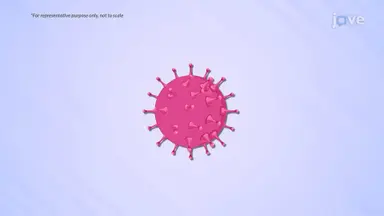
Viruses are microscopic infectious agents that can replicate only inside the living cells of organisms. Unlike bacteria or eukaryotic cells, viruses a
Video Duration: 1 minute and 23 seconds
Bacteria are among the simplest and most ancient life forms, yet they are incredibly diverse and essential to life on Earth. These unicellular organis
Video Duration: 1 minute and 25 seconds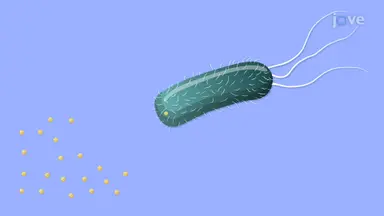
Bacteria display a wide range of nutritional strategies that enable them to survive in nearly every environment on Earth, from deep-sea vents to the h
Video Duration: 1 minute and 26 seconds
Bacteria are tiny, single-celled organisms that play a surprisingly big role in daily life. While some bacteria cause diseases, many others are helpfu
Video Duration: 1 minute and 31 seconds
Archaea are ancient microorganisms that offer important insights into the early evolution of life on Earth. Although they resemble bacteria in appeara
Video Duration: 1 minute and 30 seconds
Archaea are microscopic, single-celled organisms that form one of the three domains of life, alongside Bacteria and Eukarya. Although they resemble ba
Video Duration: 1 minute and 27 seconds