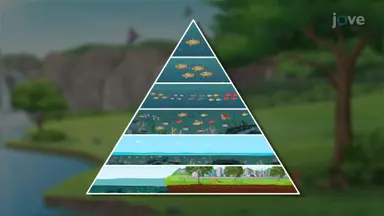
Ecology Overview
Ecology is the study of how living things interact with each other and their environment. It helps scientists understand how ecosystems function, from
Video Duration: 1 minute and 28 secondsMIDDLE SCHOOL
Life Science
Ecology is the study of how living things interact with each other and their environment. It helps scientists understand how ecosystems function, from
Video Duration: 1 minute and 28 seconds
Every ecosystem is a complex network where living (biotic) and non-living (abiotic) components interact closely to maintain balance. Biotic factors in
Video Duration: 1 minute and 24 seconds
Ecological organization refers to the hierarchical structure of ecosystems, which organizes life from individual organisms to the entire biosphere. Th
Video Duration: 1 minute and 26 seconds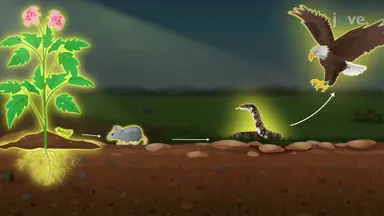
An ecosystem is a community of living organisms interacting with their physical environment. Ecosystems include biotic (living) components like plants
Video Duration: 1 minute and 28 seconds
Every living organism lives in a specific environment known as its habitat and plays a unique role in that environment, which is called its niche. A h
Video Duration: 1 minute and 19 seconds
Habitat destruction occurs when natural environments are changed or removed, making species' survival difficult or impossible. This can happen due to
Video Duration: 1 minute and 20 seconds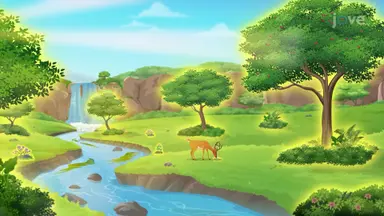
Producers, also known as autotrophs, are organisms that generate their own food through photosynthesis or chemosynthesis. They form the foundation of
Video Duration: 1 minute and 25 seconds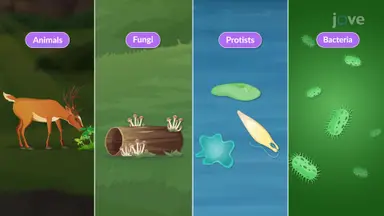
Consumers, also known as heterotrophs, are organisms that cannot produce their own food and must obtain energy by consuming other organisms. They occu
Video Duration: 1 minute and 29 seconds
Decomposers, such as fungi, bacteria, and some invertebrates, are organisms that break down dead organic matter and waste. By doing so, they release n
Video Duration: 1 minute and 26 seconds
A food web is a more detailed food chain that shows how energy and nutrients move through an ecosystem. It includes many different plants and animals,
Video Duration: 1 minute and 30 seconds
A food chain shows how energy passes from one living thing to another in an ecosystem. It always starts with producers, like plants, which make their
Video Duration: 1 minute and 31 seconds
Energy flows through an ecosystem in a clear and organized path. It all starts with the Sun, which gives energy to producers like plants. These plants
Video Duration: 1 minute and 15 seconds
The biosphere is the part of Earth where all life exists, including land, water, and air. It includes every ecosystem, from deserts to rainforests, oc
Video Duration: 1 minute and 28 seconds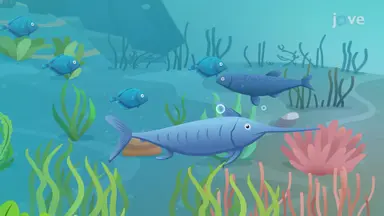
Biomes are large geographic regions characterized by specific climate conditions, types of plants, and animal life. Examples of biomes include deserts
Video Duration: 1 minute and 30 seconds
Terrestrial biomes are large areas of land that share the same climate, types of plants, and animals. They are influenced by temperature, the amount o
Video Duration: 1 minute and 28 seconds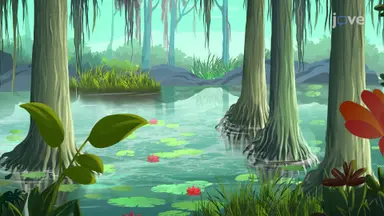
Aquatic biomes are ecosystems found in water environments, including freshwater and marine systems. These biomes are classified based on salinity, wat
Video Duration: 1 minute and 28 seconds
A population is a group of individuals of the same species living in a particular area at the same time. Populations change over time due to factors l
Video Duration: 1 minute and 16 seconds
Population growth patterns show how the size of a group of living things changes over time. These patterns can increase, decrease, or stay the same de
Video Duration: 1 minute and 20 seconds
The human population is the total number of people living on Earth, and it’s been growing quickly! As more people are born, we need more food, water,
Video Duration: 1 minute and 17 seconds
Competition in ecosystems happens when organisms compete for the same limited resources, such as food, water, shelter, or sunlight. Competition can be
Video Duration: 1 minute and 27 seconds
Predation is an interaction in which one organism, the predator, hunts and consumes another organism, the prey. This relationship plays an important r
Video Duration: 1 minute and 23 seconds
Symbiosis is a close relationship between two species that live together and interact regularly. The main types of symbiosis are mutualism (both benef
Video Duration: 1 minute and 9 seconds
Animal behavior is how animals respond to their environment and interact with other living things. These behaviors help animals find food, escape pred
Video Duration: 1 minute and 21 seconds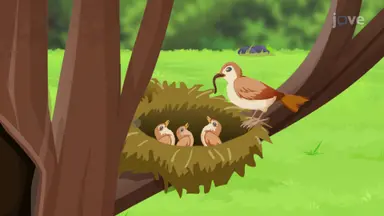
Innate behavior is a type of instinctive action that animals are born knowing how to perform, without needing to learn or practice. Examples include b
Video Duration: 1 minute and 10 seconds
Learned behaviors are actions that animals develop through experience, observation, or practice rather than being born with them. For example, a dog l
Video Duration: 1 minute and 19 seconds
Teaching a dog to sit or learning how to ride a bike are examples of learned behaviors—actions acquired through experience and practice. These behavio
Video Duration: 1 minute and 20 seconds
Some animals live alone, but many species survive and thrive by interacting with others through social behavior. Social behavior includes the ways ani
Video Duration: 1 minute and 24 seconds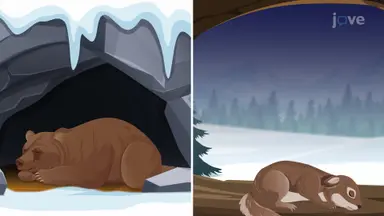
Cyclic behaviors are patterns of behavior that repeat in a regular cycle. These behaviors help animals survive by keeping them in sync with nature’s r
Video Duration: 1 minute and 24 seconds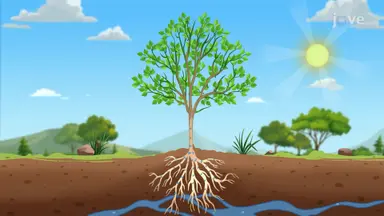
Plants are living organisms that play a key role in ecosystems by producing oxygen and food through photosynthesis. They have several key characterist
Video Duration: 1 minute and 24 seconds
Plant evolution explains how plants have changed and adapted over millions of years to survive in different environments. The first plants began as si
Video Duration: 1 minute and 25 seconds
Plants have life cycles that include stages like reproduction, growth, and development. They reproduce using an alternation of generations, switching
Video Duration: 1 minute and 29 seconds
Flowering plants (angiosperms) and cone-bearing plants (gymnosperms) have more advanced life cycles compared to algae, bryophytes, and ferns. These se
Video Duration: 1 minute and 26 seconds
Have you ever wondered why some plants grow tall like trees, and others stay small like grass? Or why do some have flowers while others don’t? Scienti
Video Duration: 1 minute and 28 seconds
Plants do much more than just make our world green—they are essential to life on Earth. Plants provide us with oxygen, food, medicine, and materials l
Video Duration: 1 minute and 23 seconds
Air pollution happens when harmful gases, dust, smoke, or chemicals enter our air. These pollutants can come from cars, factories, wildfires, or every
Video Duration: 1 minute and 27 seconds
When we think of air pollution, we often imagine smoggy skies or factory smoke, but indoor air pollution can be just as harmful. Air pollutants like d
Video Duration: 1 minute and 27 seconds
Air pollution doesn’t just harm the environment; it can also profoundly affect human health. Breathing polluted air can cause problems like asthma, al
Video Duration: 1 minute and 20 seconds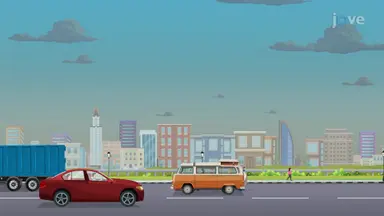
Air pollution occurs when harmful substances such as gases, chemicals, or particles enter the air and negatively affect human health, the environment,
Video Duration: 1 minute and 24 seconds
Water pollution happens when harmful substances, like trash, chemicals, or waste, enter rivers, lakes, oceans, or groundwater and make the water unsaf
Video Duration: 1 minute and 25 seconds
Water is one of the most important resources on Earth. We use it daily to drink, cook, clean, grow food, and have fun. But clean water isn’t unlimited
Video Duration: 1 minute and 23 seconds
Conservation is the careful use and protection of natural resources to make sure they last for future generations. This includes saving water, protect
Video Duration: 1 minute and 29 seconds
Biodiversity is the variety of all living things, plants, animals, fungi, and even tiny microorganisms, that live in different environments around the
Video Duration: 1 minute and 23 seconds
Mass extinction occurs when many species disappear from Earth in a short period. Throughout Earth’s history, five major mass extinctions have been cau
Video Duration: 1 minute and 17 seconds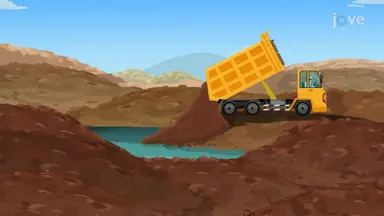
Habitat destruction occurs when natural environments where animals and plants live are altered or damaged, making it impossible for them to survive th
Video Duration: 1 minute and 29 seconds