
Scientific Inquiry and Method
Scientific inquiry is how we ask questions and find answers about the world around us. Scientists use the scientific method to test ideas and learn fr
Video Duration: 1 minute and 21 secondsMIDDLE SCHOOL
Physical Science
Scientific inquiry is how we ask questions and find answers about the world around us. Scientists use the scientific method to test ideas and learn fr
Video Duration: 1 minute and 21 seconds
Lab safety is an important part of doing science. Following safety rules in the laboratory helps prevent accidents and ensures that experiments are ca
Video Duration: 1 minute and 25 seconds
Measurement is a fundamental part of science. It helps scientists collect accurate data to test ideas, analyze results, and draw conclusions. Whether
Video Duration: 1 minute and 24 seconds
The metric system and the International System of Units (SI) are the globally recognized standards for scientific measurement. This system ensures acc
Video Duration: 1 minute and 29 seconds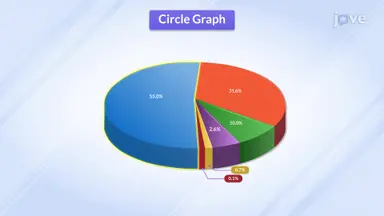
Graphs help scientists recognize patterns, make predictions, and explain observations. Organizing data into a graph makes it easier to understand and
Video Duration: 1 minute and 29 seconds
In science, getting the right measurements is important. Accuracy and precision help make sure data is reliable and results make sense. But what do th
Video Duration: 1 minute and 11 seconds
Matter and mass are important concepts in science. Matter is anything that has mass and takes up space. Everything around us, including air, water, ro
Video Duration: 1 minute and 13 seconds
Density and volume are important properties that help us understand the nature of matter. Volume measures the amount of space an object occupies, whil
Video Duration: 1 minute and 17 seconds
Physical properties are characteristics of matter that can be observed or measured without changing the substance’s identity. These properties include
Video Duration: 1 minute and 27 seconds
Chemical properties describe how a substance can change into a different substance through a chemical reaction. These properties include reactivity, f
Video Duration: 1 minute and 28 seconds
Everything around us is made of matter, which can be classified into three main types: elements, compounds, and mixtures. Elements are pure substances
Video Duration: 1 minute and 27 seconds
A mixture is a combination of two or more substances that are physically combined but not chemically bonded. Mixtures can be classified into two main
Video Duration: 1 minute and 30 seconds
All matter is made up of tiny particles called atoms. Each atom has three primary subatomic particles: protons, neutrons, and electrons. Protons, whic
Video Duration: 1 minute and 21 seconds
Atoms are held together by various forces that determine their structure and interactions. These forces include the strong nuclear force, electromagne
Video Duration: 1 minute and 25 seconds
For example, all carbon atoms have an atomic number of 6 because they contain 6 protons. However, their mass numbers can vary based on the number of n
Video Duration: 1 minute and 21 seconds
When an atom loses one or more electrons, it becomes a positively charged ion called a cation. For example, Sodium (Na) loses one electron to form Na⁺
Video Duration: 1 minute and 22 seconds
Science and Engineering Practices (SEP): Developing and Using Models, Scientists use diagrams and models to illustrate how isotopes of an element have
Video Duration: 1 minute and 25 seconds
In ancient Greece, around 400 BCE, a philosopher named Democritus proposed an early theory about the nature of matter. He suggested that all matter is
Video Duration: 1 minute and 22 seconds