image

Basic Methods in Cellular and Molecular Biology

Visual demonstrations of key scientific experiments

image
6 collections
15 Videos
2K+ Multiple Choice Questions

Table of Contents

Basic Methods in Cellular and Molecular Biology

Using a Hemacytometer to Count Cells
10:19
Using a Hemacytometer to Count Cells

Many biomedical experiments require manipulation of a known quantity of cells, in order to achieve accurate, reproducible, and statistically-relevant data. Therefore, learning how to count cells is a particularly essential technique for any successful biomedical scientist. The most common way to count cells is by using a hemacytometer - an instrument that bears two laser-etched grids, which aid in the enumeration of an aliquot cells under a simple light microscope. This data can then be used to...

Video Duration: 10 minutes and 19 seconds
0 views
Passaging Cells
10:02
Passaging Cells

Cell lines are frequently used in biomedical experiments, as they allow rapid culture and expansion of cell types for experimental analysis. Cell lines are cultured under similar conditions when compared to freshly-isolated, or primary, cells, but with some basic important differences: (i) cell lines require their own specific growth factor cocktails and (ii) their growth must be more closely monitored than primary cells, as the mutations that allow them to be grown indefinitely also can...

Video Duration: 10 minutes and 2 seconds
0 views
PCR: The Polymerase Chain Reaction
13:27
PCR: The Polymerase Chain Reaction

The polymerase chain reaction, or PCR, is a technique used to amplify DNA through thermocycling – cyles of temperature changes at fixed time intervals. Using a thermostable DNA polymerase, PCR can create numerous copies of DNA from DNA building blocks called dNTPs. There are three steps in PCR: denaturation, annealing, and elongation. Denaturation is the first step in the cycle and causes the DNA to melt by disrupting hydrogen bonds between the bases resulting in single-stranded DNA. Annealing...

Video Duration: 13 minutes and 27 seconds
0 views
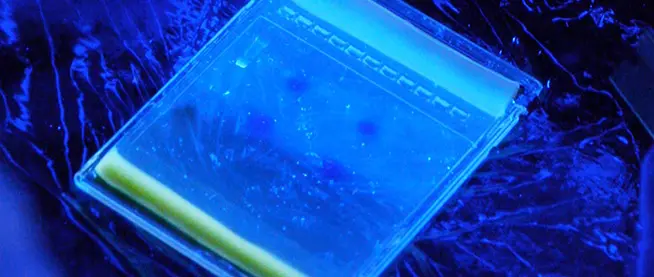
DNA Gel Electrophoresis
09:22
DNA Gel Electrophoresis

DNA gel electrophoresis is a technique used for the detection and separation of DNA molecules. An electric field is applied to a gel matrix comprised of agarose, and within the gel, charge particles will migrate and separate based on size. The negatively charged phosphates of the DNA backbone cause DNA fragments to move toward the anode - a positively charged electrode. The video explains the mechanism by which DNA fragments are resolved on an agarose gel, and it provides a step-by-step...

Video Duration: 9 minutes and 22 seconds
0 viewsFree Sample
Separating Protein with SDS-PAGE
07:29
Separating Protein with SDS-PAGE

Sodium Dodecyl Sulfate Poly-Acrylamide Gel Electrophoresis, or SDS-PAGE, is a widely-used technique for separating mixtures of proteins based on their size and nothing else. SDS, an anionic detergent, is used to produce an even charge across the length of proteins that have been linearized. By first loading them into a gel made of polyacrylamide and then applying an electric field to the gel, SDS-coated proteins are then separated. The electric field acts as the driving force, drawing the SDS...

Video Duration: 7 minutes and 29 seconds
0 views
Bacterial Transformation: The Heat Shock Method
11:01
Bacterial Transformation: The Heat Shock Method

Transformation is the process that occurs when a cell ingests foreign DNA from its surroundings. Transformation can occur in nature in certain types of bacteria. In molecular biology, transformation is artificially reproduced in the lab via the creation of pores in bacterial cell membranes. Bacterial cells that are able to take up DNA from the environment are called competent cells. In the laboratory, bacterial cells can be made competent and DNA subsequently introduced by a procedure called...

Video Duration: 11 minutes and 1 second
0 views
Bacterial Transformation: Electroporation
12:19
Bacterial Transformation: Electroporation

The term “transformation” refers cellular ingestion of foreign DNA. In nature, transformation can occur in certain types of bacteria. In molecular biology, however, transformation is artificially induced through the creation of pores in the bacterial cell walls. Bacterial cells that are able to take up DNA from the environment are called competent cells. Electrocompetent cells can be produced in the laboratory and transformation of these cells can be achieve via the application of an...

Video Duration: 12 minutes and 19 seconds
0 views
The ELISA Method
10:06
The ELISA Method

An enzyme-linked immunosorbent assay (ELISA) is typically performed to detect the presence and/or amount of a target protein of interest within an experimental sample. Detection of the target protein is made possible by antibodies, which make the ELISA an immunoassay. Through a series of incubation and washing steps, these antibodies, which are frequently linked, or conjugated, to an enzyme, will detect protein coating the bottom of a well on a microtiter plate. When exposed to a substrate,...

Video Duration: 10 minutes and 6 seconds
0 views
Plasmid Purification
08:16
Plasmid Purification

Plasmid purification is a technique used to isolate and purify plasmid DNA from genomic DNA, proteins, ribosomes, and the bacterial cell wall. A plasmid is a small, circular, double-stranded DNA that is used as a carrier of specific DNA molecules. When introduced into a host organism via transformation, a plasmid will be replicated, creating numerous copies of the DNA fragment under study. In this video, a step-by-step generalized procedure is described for how to perform plasmid purification.

Video Duration: 8 minutes and 16 seconds
0 views
Gel Purification
06:30
Gel Purification

Gel purification is used to recover DNA fragments after electrophoretic separation. DNA recovery from an agarose gel includes three basic steps: binding, washing and eluting from a silica column. DNA is believed to bind to silica in the presence of high salt via a salt bridge. Following binding, DNA is washed of impurities and eluted under low salt conditions disrupting this interaction. This video goes through a step-by-step, generalized procedure for cutting out a band from the gel, gel...

Video Duration: 6 minutes and 30 seconds
0 views
The Western Blot
08:48
The Western Blot

Western Blotting is used to identify the presence of specific proteins in electrophoretically separated samples. Following separation by a technique known as sodium dodecyl sulfate polyacrylamide gel electrophoresis, or SDS-PAGE, western transfer is used to move proteins from a polyacrylamide gel onto a piece of membrane which traps the proteins in their respective locations. Next, the membranes are probed with antibodies in a process called immunboblotting. Immunoblotting uses...

Video Duration: 8 minutes and 48 seconds
0 views
An Introduction to Transfection
07:28
An Introduction to Transfection

Transfection is the process of inserting genetic material, such as DNA and double stranded RNA, into mammalian cells. The insertion of DNA into a cell enables the expression, or production, of proteins using the cells own machinery, whereas insertion of RNA into a cell is used to down-regulate the production of a specific protein by stopping translation. While the site of action for transfected RNA is the cytoplasm, DNA must be transported to the nucleus for effective transfection. There, the...

Video Duration: 7 minutes and 28 seconds
0 views
DNA Ligation Reactions
07:34
DNA Ligation Reactions

In molecular biology, ligation refers to the joining of two DNA fragments through the formation of a phosphodiester bond. An enzyme known as a ligase catalyzes the ligation reaction. In the cell, ligases repair single and double strand breaks that occur during DNA replication. In the laboratory, DNA ligase is used during molecular cloning to join DNA fragments of inserts with vectors – carrier DNA molecules that will replicate target fragments in host organisms. This video provides an...

Video Duration: 7 minutes and 34 seconds
0 views
Restriction Enzyme Digests
09:45
Restriction Enzyme Digests

Restriction enzymes or endonucleases recognize and cut DNA at a specific sequence. These enzymes occur naturally in bacteria as a defense against bacteriophages - viruses that infect bacteria. Bacterial restriction enzymes cut the invading bacteriophage DNA while leaving the bacterial genomic DNA unharmed due to addition of methyl groups. This video explains the basic principles of restriction enzymes including: how restriction enzymes are named and the types of recognition sites and...

Video Duration: 9 minutes and 45 seconds
0 views
Molecular Cloning
09:55
Molecular Cloning

Molecular cloning is a set of methods, which are used to insert recombinant DNA into a vector - a carrier of DNA molecules that will replicate recombinant DNA fragments in host organisms. The DNA fragment, which may be a gene, can be isolated from a prokaryotic or eukaryotic specimen. Following isolation of the fragment of interest, or insert, both the vector and insert must be cut with restriction enzymes and purified. The purified pieces are joined together though a technique called...

Video Duration: 9 minutes and 55 seconds
0 views

Why Choose JoVE Science Education

Why Choose JoVE Science Education

Better learning outcomes for students

Peer review studies showed that students’ test grades are 2X higher after using JoVE video.

Easier teaching

90% of students report higher engagement with subject when using JoVE video

Visualized experiments

Step-by-step video demonstrations of key lab experiments and theory behind.

Better learning outcomes for students

Peer review studies showed that students’ test grades are 2X higher after using JoVE video.

Easier teaching

90% of students report higher engagement with subject when using JoVE video

Visualized experiments

Step-by-step video demonstrations of key lab experiments and theory behind.