This video demonstrates an agar well diffusion assay used to evaluate the antimicrobial activity of nisin variants. It shows how Lactococcus lactis expressing the membrane-bound peptidase NisP activates nisin precursors produced in E. coli, resulting in growth inhibition halos. The size of these halos reflects the bioactivity of each nisin variant.
A subscription to JoVE is required to view this content. Sign in or start your free trial.
Method Article
Assessing the Antimicrobial Activity of Nisin Variants Using an Agar Well Diffusion Assay
794 views
⸱
October 30th, 2025
In This Article
Abstract
Protocol
1. Antimicrobial Activity Test
- Preparation of GM17-agar plates under sterile conditions
- Prepare an overnight culture of the indicator strain L. lactis NZ9000 carrying plasmid pNG nisPT at 30 °C in M17 broth with 1% (w/v) glucose (=GM17) and 5 µg/mL chloramphenicol.
- Measure OD600, inoculate fresh medium to OD600 = 0.1 and incubate until OD600 = 0.4-0.6. Then place the flask on ice.
NOTE: Each OD600 measurement will consume culture volume. Keep in mind that for each assay agar plate, 1 mL bacterial culture will be needed. If required, scale up the liquid culture volume accordingly. - For 1.5% agar, weigh out 4.5 g agar in a glass media bottle. Add 300 mL ddH2O, mix, and autoclave.
- Prepare 2x M17 broth (two-times concentrated) in 300 mL ddH2O and autoclave.
- Mix 25 mL 2x M17 broth containing 10 µg/mL chloramphenicol and 2% glucose with 1 mL L. lactis preculture (4% v/v).
- Add 25 mL molten 1.5% agar (freshly autoclaved or heated in a microwave).
NOTE: Prior to this, let the bottle cool to the touch (around 50 °C). This is necessary since L. lactis is a mesophilic organism sensitive to high temperatures. - Pour the solution into a large petri dish. Dry plates for 10-15 min.
- Sterilize the ends of a glass Pasteur pipette by flame. Wait for it to cool down, then use the wide end to create holes in the solidified GM17-agar.
- Sample preparation
- Take 1 mL of the E. coli expression cultures in a labelled 1.5 mL tube and centrifuge for 3 min at 7,000 x g. Aspirate the remaining medium and resuspend the cell pellet in 500 µL Na-P (50 mM sodium phosphate buffer, pH 7.4 made from 0.5 M sodium dihydrogen phosphate and 0.5 M disodium hydrogen phosphate).
- Sonicate the samples on ice. Submerge the tip of the sonicator probe into the cell suspension. Set sonicator at 30 % amplitude with pulse of 1 s on and 5 s off for 3 min.
- Centrifuge the cell lysate for 10 min at 13,000 x g to pellet cell debris. Transfer the supernatant to a new reaction tube on ice.
- Dilute and normalize the cell extract supernatants to 1 mL OD600 = 0.6, relative to the harvested cell density, with Na-P.
- Activity test
- Add 40 µL of each normalized sample into a hole of the indicator agar plate (Figure 1). Use chloramphenicol at 400 µg/mL as antibacterial control compound. Use elution buffer as a negative control. Wait until all samples are diffused into the agar. Incubate the plate overnight at 30 °C.
- Take pictures of the agar plates using a flatbed scanner or digital camera. Growth inhibition halo sizes can be measured by hand or using ImageJ.
Access restricted. Please log in or start a trial to view this content.
Results
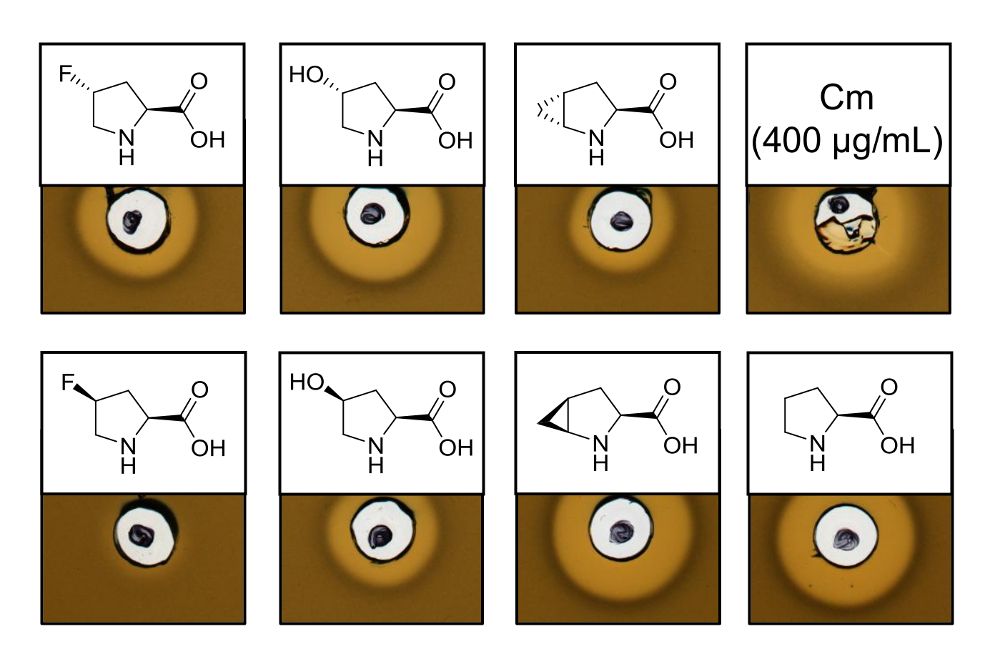
Figure 1. Antimicrobial activity assay of cell lysates containing nisin variants produced
Access restricted. Please log in or start a trial to view this content.
Materials
| Name | Company | Catalog Number | Comments |
|---|---|---|---|
| Sodium dihydrogen phosphate monohydrate | Carl Roth, Germany | K300.2 | |
| Disodium hydrogen phosphate | Carl Roth, Germany | P030.2 | |
| D-glucose | Carl Roth, Germany | 6780 | Prepare a 20% (w/v) solution for addition into molten agar |
| Chloramphenicol | Carl Roth, Germany | 3886.1 | Working concentration 5 µg/mL for L. lactis, prepare 37 mg/mL stock in ethanol |
| M17-broth | Sigmal-Aldrich, Germany | 56156 | Commercial product |
| Agar-agar | Carl Roth, Germany | 5210.5 | |
| Nisin from Lactococcus lactis | Sigma-Aldrich, Germany | N5764 | Commercial product, can be used as reference for bioactivity |
| 1.5 mL Eppendorf tubes | Eppendorf, Germany | 30120086 | |
| Petri dishes (polystyrene, sterile) | Carl Roth, Germany | TA19 | |
| Lactococcus lactis NZ9000 pNG nisPT | Bacterial indicator strain | ||
| Benchtop centrifuge for 1.5 mL Eppendorf tubes | Eppendorf, Germany | 5427 R | |
| Probe sonicator | Bandelin, Germany | Sonopuls HD3200 with sonotrode MS-72 | 200 W maximum HF output |
