This video demonstrates the use of a microbial microdroplet culture system to drive adaptive evolution of bacteria toward methanol tolerance. By mixing engineered bacterial cultures with a high-methanol stress medium and segmenting them into microdroplets, the system selects for mutants that exhibit improved growth under methanol stress. Through iterative enrichment cycles and colony isolation, methanol-adapted bacterial strains are cultured for further analysis or application.
A subscription to JoVE is required to view this content. Sign in or start your free trial.
Method Article
Adaptive Evolution of Bacteria Using a Microbial Microdroplet Culture System
522 views
⸱
October 30th, 2025
In This Article
Abstract
Protocol
Adaptive evolution in MMC
- Preparation for the initial bacterial solution
- Follow the related standard regulations to prepare the special liquid medium and solid plates for the MeSV2.2 and autoclave at 121 °C for 15 min.
- Cultivate the MeSV2.2 using the solid plate (diameter = 90 mm) in a 37 °C constant-temperature incubator for 72 h. Then, pick an independent colony and cultivate it in a 50 mL shake flask with 10 mL of the special liquid medium in a shaking incubator (200 rpm) at 37 °C for 72 h.
- Dilute the cultured MeSV2.2 solution with the medium to an OD600 of 0.1-0.2 (ensure that the total volume is not less than 10 mL) and continue cultivating it in the shake flask for 5 h to obtain the initial bacteria solution.
NOTE: The MeSV2.2 is a methanol-essential E. coli strain. The special liquid medium contains 500 mmol/L methanol, which is a strong stress for MeSV2.2, resulting in very slow growth..
- Initialize the MMC.
- Take out two sterilized reagent bottles, one of which is for the initial bacteria solution and the other is for the fresh medium. Inject the initial bacteria solution (5 mL), fresh medium (12-15 mL), and MMC oil into the reagent bottles.
NOTE: As adaptive evolution is a long-term process involving multiple sub-cultivations, store as much fresh medium as possible in MMC. The medium cannot be replenished during the experiment. - Install the two reagent bottles into MMC. Install the one for the initial bacteria solution between the C2 and O2 connector and the other for the fresh medium between the C4 and O4 connector.
- Click on ALE to choose the function of adaptive evolution (Figure 1B). In the parameter setting interface, turn on the OD Detection switch.
Set the Number as 50, Wavelength as 600 nm, Concentration as 0%, Type as Time, Parameter as 30 h, and Repetitions as 99. Click on Start to start droplet generation. It will take about 25 min.
NOTE: Here, "Concentration" refers to the maximum concentration of chemical factors for adaptive evolution. For different droplets, it is realizable in MMC to introduce different concentrations of chemical factors to provide different growth conditions. Calculate the introduced concentrations using the following equation:
Here, "C" refers to the concentration of chemical factors introduced into droplets; "a" refers to the concentration of chemical factors in the reagent bottles between the C4 and O4 connector; "b" refers to the concentration of chemical factors in the reagent bottles between the C6 and O6 connector; and "i" refers to the available concentration. There are eight concentrations available in MMC. Since the chemical factor here has a single concentration (500 mmol/L methanol) and it is one of the ingredients of the medium, only one reagent bottle containing the chemical factor is installed here, and the Concentration is set as 0%. Type refers to the mode of sub-cultivation, which is divided into three types: time mode, OD value mode, and fluorescence mode. The former means to cultivate the droplets for a fixed time and then sub-cultivate, while the latter two mean to cultivate the droplets to a pre-defined OD value/fluorescence intensity and then sub-cultivate. Parameter refers to the related parameter required when choosing a mode of sub-cultivation. Repetitions refer to the number of sub-cultivations.
- Remove the reagent bottle placed between the C2 and O2 connectors.
- Observe whether the maximum OD values of the droplets during each sub-cultivation period have increased significantly. If the increase occurs and meets the experiment requirements, click on the Data Export button to export the OD data.
NOTE: Here, the sub-cultivation period depends on the Parameter. For example, when setting Type as Time and Parameter as 30 h, the sub-cultivation period is 30 h. During each sub-cultivation period, there are maximum OD values of the droplets. Estimate whether the adaptive evolution meets the experiment requirements by the increase of maximum OD values (The increase depends on the actual cultivation process of the strain, for example, increased by more than 20%).CAUTION: Pay attention to whether the stored fresh medium is exhausted. If the significant increase has not occurred even after the medium is exhausted, extract the better-growing droplets and carry out a new round of adaptive evolution. - Extract the target droplets from the MMC.
- Click on the Screening button to choose the function of droplet extraction (Figure 1C). Choose the Collect option, click on the number of target droplets, and then click on OK.
NOTE: Droplet screening includes "Collect", "Discard", and "Extract seed solution". "Extract seed solution" means to collect the remaining droplets after the sub-cultivation operation. - Wait for the pop-up window to prompt, "Please pull out the CF quick connector and put it into the EP tube". Put the CF quick connector into the microcentrifuge tube for collection according to the software prompt and then click on OK (Figure 2D).
- After 1-2 min, the software interface will pop up a new window prompting, "Please insert the connector back and click OK if finished". Then, insert the CF quick connector back and click on OK to make MMC continue to run (Figure 2D).
NOTE: After all the target droplets are collected, the MMC will continue cultivating the remaining droplets. If the cultivation is not necessary, click on Stop to directly terminate the operation. - Extract the droplet using a 2.5 µL pipette, drop it on the 90 mm agarose plate, and spread it evenly with a triangular glass spreading rod with a side length of 3 cm. Then, cultivate it in a 37 °C constant temperature incubator for 72 h.
- Pick 3-5 independent colonies and separately cultivate them in the 50 mL shake flasks with 10 mL of fresh medium in a shaking incubator (200 rpm) at 37 °C for 48-72 h. Follow the related standard regulations to store the cultured bacteria solution in the glycerol tube for subsequent experiments.
- Click on the Screening button to choose the function of droplet extraction (Figure 1C). Choose the Collect option, click on the number of target droplets, and then click on OK.
Access restricted. Please log in or start a trial to view this content.
Results
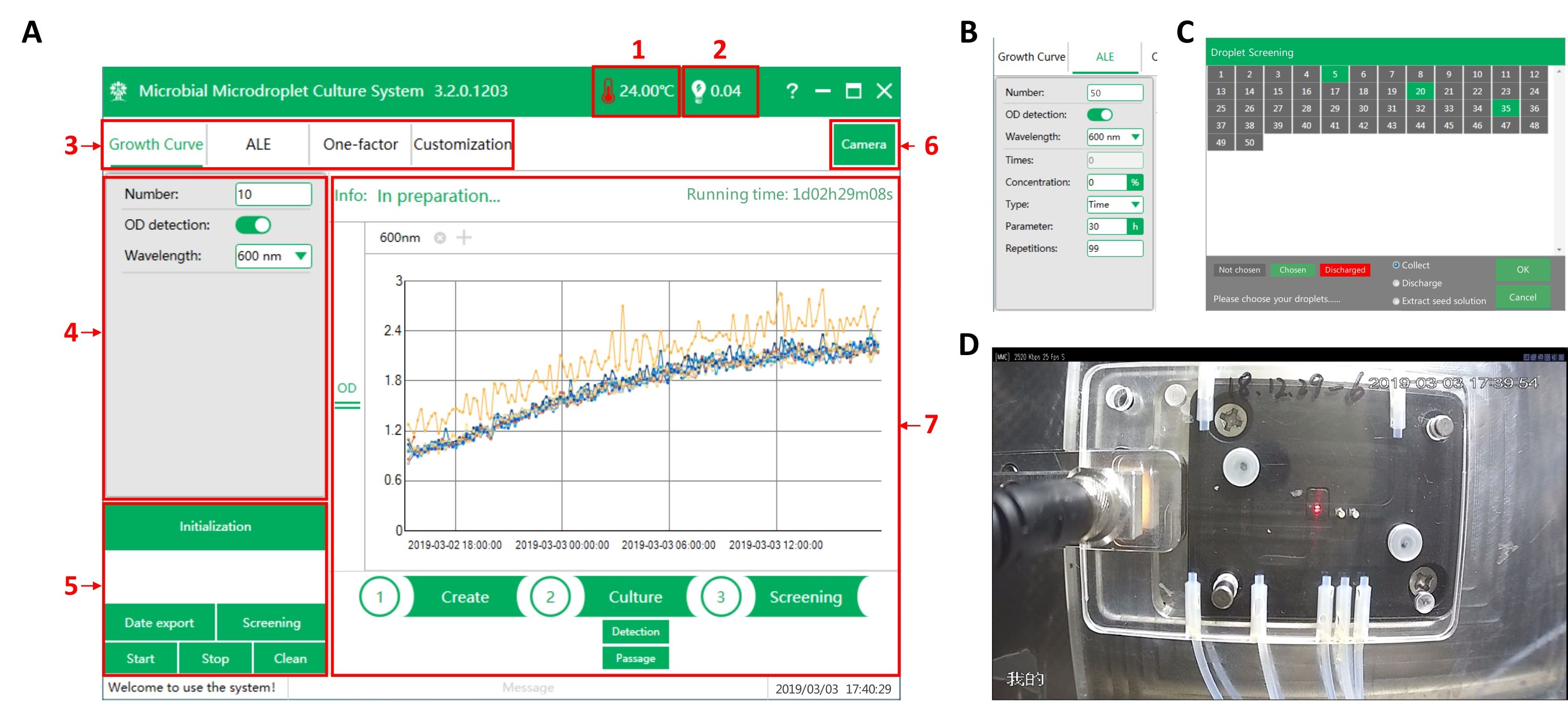
Figure 1: Operation software interface of MMC. (A) The main interface of the...
Access restricted. Please log in or start a trial to view this content.
Materials
| Name | Company | Catalog Number | Comments |
|---|---|---|---|
| Methanol | MACKLIN | M813895 | Component of the special medium for MeSV2.2. |
| Microbial Microdroplet Culture System (MMC) | Luoyang TMAXTREE Biotechnology Co., Ltd. | MMC-I | Performing growth curve determination and adaptive evolution. Please refer to http://www.tmaxtree.com/en/index.php?v=news&id=110 |
| Microfluidic chip | Luoyang TMAXTREE Biotechnology Co., Ltd. | MMC-ALE-OD | For various droplet operations. Please refer to http://www.tmaxtree.com/en/ |
| MMC oil | Luoyang TMAXTREE Biotechnology Co., Ltd. | MMC-M/S-OD | The oil phase for droplet microfluidics. Please refer to http://www.tmaxtree.com/en/ |
| Petri dish | Corning Incorporated | 90 mm | For the preparation of solid medium |
| Pipette | eppendorf | 2.5 μL, 10 μL, 100μL, 1000μL | For liquid handling |
| Quick connector A | Luoyang TMAXTREE Biotechnology Co., Ltd. | — | For the connection of each joint. Please refer to http://www.tmaxtree.com/en/ |
| Reagent bottle | Luoyang TMAXTREE Biotechnology Co., Ltd. | MMC-PCB | Sampling and storage of bacteria solution and reagents. Please refer to http://www.tmaxtree.com/en/ |
| Shake flask | Union-Biotech | 50 mL | For microbial cultivation |
| Shaking incubator | Shanghai Sukun Industrial Co., Ltd. | SKY-210 2B | For the microbial cultivation in shake flask |
| Streptomycin sulfate | Solarbio | S8290 | Component of the special medium for MeSV2.2. |
| Syringe | JIANGSU ZHIYU MEDICAL INSTRUCTMENT CO., LTD | 10 mL | Draw liquid and inject it into the reagent bottle |
| Syringe needle | OUBEL Hardware Store | 22G | Inner diameter is 0.41 mm and outer diameter is 0.71 mm. |
