This video describes the lentiviral transduction of mouse intestinal organoids from a crypt-like structure containing suspension. Using a basement membrane matrix as a scaffold and growth factor–supplemented media, lentiviral vectors are introduced to enable stable gene integration
A subscription to JoVE is required to view this content. Sign in or start your free trial.
Method Article
Gene Delivery to Mouse Intestinal Organoids Using Lentiviral Vectors
100 views
⸱
August 31st, 2026
In This Article
Abstract
Protocol
Lentiviral Transduction of Organoids
Day 0:
- Split a full 0.95 cm² well of organoids two days prior to transduction into a new well, aiming to obtain approximately 50 small organoids. Split the organoids (Figure 1A, B).
- Supplement organoid culture medium with 10 µM Chir99021 and 10 mM nicotinamide to obtain cystic hyperproliferative crypts (Figure 1C).
NOTE: Cystic crypts will develop best when freshly split organoids are grown in the presence of Chir99021.
Day 2:
- Harvest organoids by pipetting up and down the matrigel and medium, thereby disrupting the mixture with a p1000 micropipette. Place the mixture in a 15 mL tube.
- Disrupt further using a Pasteur pipette in which the distal opening has been decreased by melting. Centrifuge organoids to pellet for 5 min at 100 x g.
NOTE: Dependent on the size of the centrifuge, use a different centrifuge speed. It is necessary to find the exact speed at which disrupted organoids are separated from the mixture. - Remove the supernatant and add 500 µL of pre-warmed 1x trypsin (similar to 0.25% trypsin). Resuspend organoids in trypsin and incubate for 3 min in a 37 °C water bath.
- Inactivate trypsin by adding 3.5 mL of cell line culture medium [Dulbecco's Modified Eagle Medium (DMEM) supplemented with 10% fetal calf serum (FCS), 1% penicillin/streptomycin and glutamine]. Centrifuge for 5 min at 500 x g.
- Remove the supernatant to leave a pellet in approximately 20 µL of medium. Transfer the organoids in this last small amount of medium into a well on a 48-well plate.
- Add high-titer lentivirus in transduction medium, resuspend and continue to step 3.10. When encountering low transduction efficacy.
NOTE: For efficient transduction, typically add one aliquot of 250 µL of high-titer lentivirus to one well of organoids. This represents 50% of all harvested lentivirus from a single production. - Optionally: to enhance transduction efficacy, perform spinoculation by putting the 48-well plate containing organoids in a pre-warmed centrifuge on 32 °C and rotate at 600 x g for 1 hr.
- Put organoid-virus mixture in culture incubator and incubate for 1 hr at 37 °C in a culture incubator to allow transduction.
- Optionally: to further enhance transduction efficacy, incubate organoids for an additional 3 hr at 37 °C in a culture incubator.
- Add 1 mL of organoid culture medium and resuspend the organoid-virus mixture, transfer into a microcentrifuge tube and centrifuge in a microcentrifuge for 5 min at 850 x g to pellet organoids.
- Remove the supernatant and resuspend the pellet in 20 µL of ice-cold Matrigel. Since the material solidifies when it becomes warmer, use pipette tips that are chilled by pipetting up and down ice-cold PBS a number of times.
- Put the droplet in the middle of a well in a 48-well plate and incubate in a culture incubator at 37 °C for 15 min to solidify.
- After 15 min, carefully add 250 µL of organoid culture medium supplemented with 10 mM nicotinamide, 10 µM Chir99021 and 10 µM Y27632. Small disrupted organoid fragments will form into small cystic organoids within 24 hr.
Day 5:
- Refresh medium and supplement with a selection of antibiotics (for puromycin, use 4 µg/mL).
Day 7:
- Replace medium with standard organoid culture medium, supplemented with selection antibiotic.
NOTE: Budding will be complete 2-3 weeks after Chir99021 withdrawal. After selection, organoids may be grown without selection antibiotics.
Access restricted. Please log in or start a trial to view this content.
Results
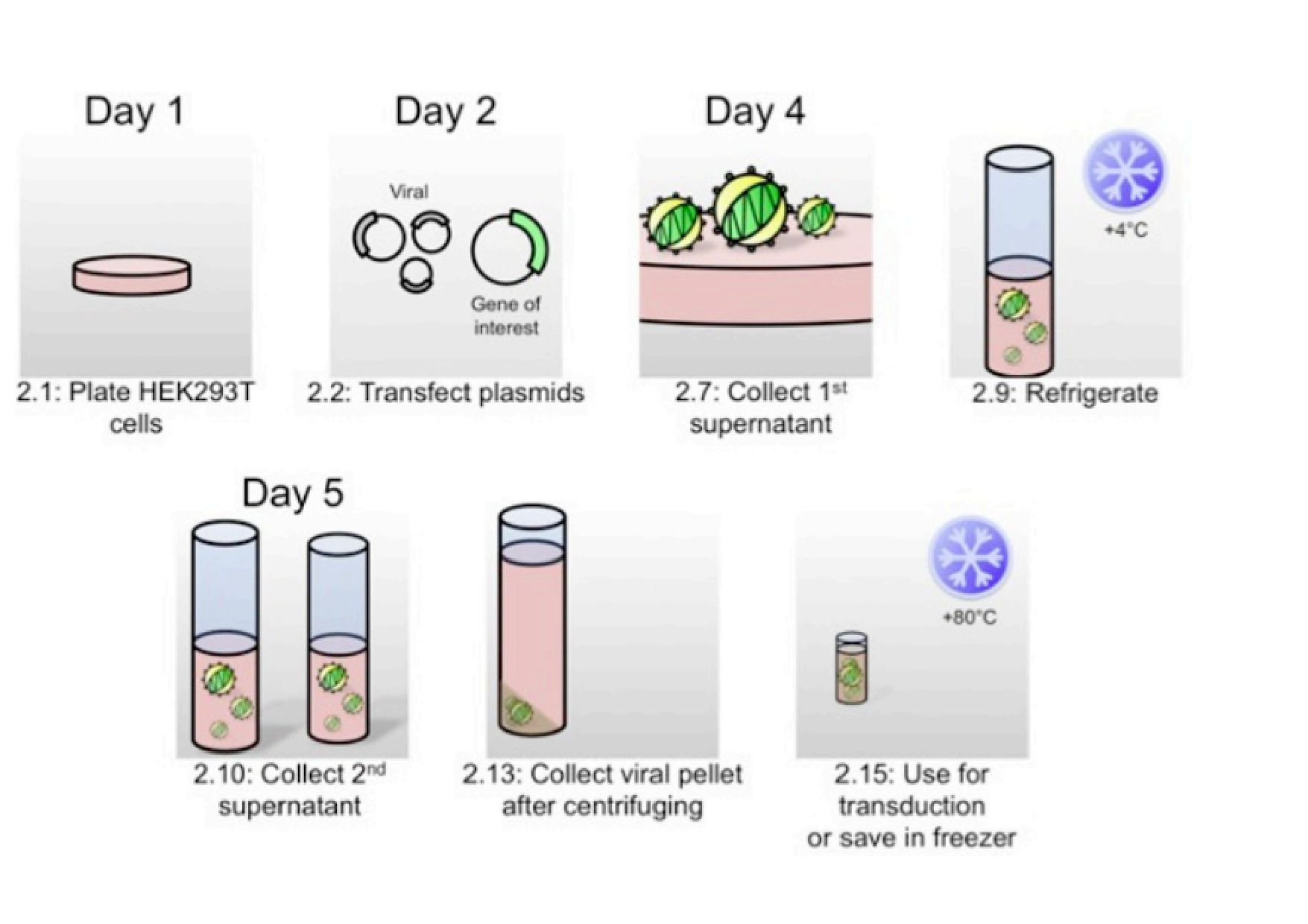
Figure 1: Schematic of lentivirus production for organoid transduction.
Access restricted. Please log in or start a trial to view this content.
Materials
| Name | Company | Catalog Number | Comments |
|---|---|---|---|
| Polyethylene imine | Polysciences | 23966-2 | |
| DMEM medium | Lonza | BE12-614F | |
| Fetal calf serum | Lonza | DE14-801F | |
| Penicillin-streptomycin | Invitrogen | 15140-122 | |
| Glutamin | Invitrogen | 25030-024 | |
| Matrigel | BD | BD 356231 | |
| Advanced DMEM-F12 | Gibco | 12634-010 | |
| N2 | Invitrogen | 17502-048 | |
| B27 | Invitrogen | 17504-044 | |
| N-acetyl cysteine | Sigma | A9165-1G | |
| Mouse Egf | Invitrogen | PMG8045 | |
| Hepes 1 M | Invitrogen | 15630-056 | |
| Glutamax 100x | Invitrogen | 35050-038 | |
| Chir 99021 | Axon | 1386 | |
| Y27632 | Sigma | Y0503-5MG | |
| Polybrene | Sigma | 107689 | |
| Nicotinamide | Sigma | N0636 | |
| Trypsin | Lonza | BE02-007E |
