This video demonstrates a precise intranasal administration technique for delivering neuron-targeting peptide-siRNA complexes to the mouse brain using a specialized positioning device. Anesthetized mice are secured in a head-down-and-forward position to optimize siRNA inhalation while preventing lung drainage. The targeting peptide facilitates receptor-mediated uptake in neurons, enabling targeted siRNA delivery and gene silencing in the brain.
A subscription to JoVE is required to view this content. Sign in or start your free trial.
Method Article
Intranasal Delivery of siRNA to the Mouse Brain Using a Positioning Device
1.6K views
⸱
August 8th, 2025
In This Article
Abstract
Protocol
All procedures involving animal models have been reviewed by the local institutional animal care committee and the JoVE veterinary review board.
1. Mouse positioning
1. Assess the level of anesthesia by pedal reflex (firm toe pinch) to maintain the surgical plane.
2. Place the positioning device at an appropriate distance and height so as to provide for convenient access to all required reagents.
3. Once the mice are properly anesthetized, gently lift each mouse by the scruff of their neck with thumb and pointer finger and place it on the designated chair.
4. Proper positioning of the mouse on the chair is very important at this stage. Lay the mouse's back parallel to the back support of the chair, and at 90° to the chair seat. Lift the hands off the mouse and let the animal lie naturally in the head down-and-forward position, without pushing or pressing, as shown in Figure 1B. Make sure the mouse's forelimbs provide natural support while the animal is in this relaxed position, without any discomfort to the mouse.
5. Once the mice are properly positioned, strap the mice in with the chair belt, and immediately start the intranasal inoculation.
2. Intranasal (IN) delivery
NOTE: This protocol describes the IN delivery of RVG9R:siRNA complexes using the mouse positioning device. Using this protocol, a maximum of 20-30 µL of solution can be easily administered to each mouse in 2 µL drops. This volume is lower than that of the mouse's nasal cavity, which is 0.032 cm3, so the procedure does not result in lethal nostril obstruction or asphyxiation. This protocol allows for the simultaneous inoculation of at least four mice and a maximum of eight mice per device, resulting in time optimization and reduced variability.
1. Take the 10 µL micropipette and adjust it to 2 µL.
2. Load the micropipette with 2 µL of RVG9R:siRNA complex solution (e.g., 5.2 µg of siCy5 complexed with 104 µg of RVG9R for the delivery experiment, and 13.5 µg of siSOD1 complexed with 270 µg of RVG9R for the silencing experiment, in a final volume of 25 µL of PBS containing 5% glucose.
3. While holding the pipette in the dominant hand, adjust position by placing an elbow on the bench top. Support the hand holding the pipette with the other hand to avoid uncontrolled movements while administering.
4. Place a ~2 µL drop very close to one nostril so that the mouse can directly inhale the droplet (refer to Figure 1B). If a tiny drop is not easily formed, then replace the pipette tip with a new one and repeat the operation. Use the stopwatch to verify the time interval between inoculations.
5. This device allows for the treatment of at least four mice at a time. If another group of mice is required to repeat step 2.4, set another bar with four chairs above or below the first bar with four chairs to accommodate up to eight mice at a time on the device.
6. Repeat step 2.4 with the other nostril after 3-4 min from the first inoculation. This time interval is sufficient for the mouse to complete the inhalation of the first dose and restore normal breathing. If a drop of the inhaled solution is dislodged due to accidental snorting out from the mouse's naris, reinoculate an additional 2 µL of solution.
7. Repeat the entire process with alternate nostrils until the 20-30 µL dose is finished. It will take ~30-45 min to complete the entire inoculation procedure.
8. Put wet ointment on the mice's eyes before returning the mice back to their designated cages.
NOTE: Do not leave the mice unattended until they have regained sufficient consciousness to maintain sternal recumbency.
Access restricted. Please log in or start a trial to view this content.
Results
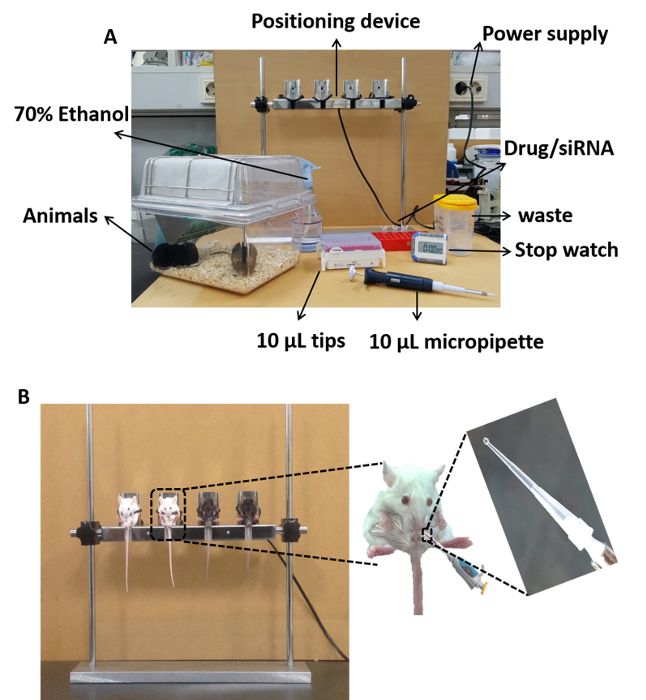
Figure 1: Photographic presentation of the IN inoculation procedure using the positioning device. (A) Experi...
Access restricted. Please log in or start a trial to view this content.
Materials
| Name | Company | Catalog Number | Comments |
|---|---|---|---|
| Mouse strain | |||
| Balb/c | Orient Bio | N/A | 6-8 week old, 20-30g |
| Peptides | |||
| RVG9R | Peptron | N/A | YTIWMPENPRPGTPCDIFTNSR GKRASNGGGGRRRRRRRRR |
| RVM9R | Peptron | N/A | MNLLRKIVKNRRDEDTQKSS PASAPLDGGGGRRRRRRRRR |
| Software, algorithms and devices | |||
| Mouse positioning device | Signet Biotech | N/A | |
| Oligonucleotides and primers | |||
| siSOD1 | ST Pharm | N/A | Sense: 5’- GGUGGAAAUGAAGAAAGUA-3’ |
| SOD1 primers | ST Pharm | N/A | F: 5’-CCAGTGCAGGACCTCATTTT-3’ R: 5’-CACCTTTGCCCAAGTCATCT-3’ |
