Heligmosomoides polygyrus is a murine nematode with powerful immunomodulatory capabilities that closely resemble those of highly-prevalent human helminth infection. Here we describe a protocol for the long-term maintenance of the H. polygyrus lifecycle.
Method Article
Cultivation of Heligmosomoides Polygyrus: An Immunomodulatory Nematode Parasite and its Secreted Products
In This Article
Summary
Abstract
Heligmosomoides polygyrus (formerly known as Nematospiroides dubius, and also referred to by some as H. bakeri) is a gastrointestinal helminth that employs multiple immunomodulatory mechanisms to establish chronic infection in mice and closely resembles prevalent human helminth infections. H. polygyrus has been studied extensively in the field of helminth-derived immune regulation and has been found to potently suppress experimental models of allergy and autoimmunity (both with active infection and isolated secreted products). The protocol described in this paper outlines management of the H. polygyrus life cycle for consistent production of L3 larvae, recovery of adult parasites, and collection of their excretory-secretory products (HES).
Introduction
Heligmosomoides polygyrus is a natural murine gastrointestinal helminth that is closely related to highly-prevalent human nematode parasites 1. In contrast to other nematode models such as Nippostrongylus brasiliensis, H. polygyrus consistently establishes chronic infection in mice as a direct result of multiple powerful immunomodulatory mechanisms it employs to suppress the host immune response 2.
H. polygyrus has a direct life cycle: infective L3 larvae are ingested by feco-oral transmission (or administered by oral gavage in the laboratory setting), whereupon they migrate to the subserosal layer of the duodenum and encyst before returning to the intestinal lumen as adult worms approximately eight days after initial infection. Mating and egg production occurs by day 10 and it is possible to harvest adult worms for culture and collection of excretory-secretory products from day 14 onwards 3. H. polygyrus also interacts with the commensal microflora, with increased Lactobacilli present in infected susceptible mice 4-6, and increased levels of H. polygyrus infection following exposure of mice to Lactobacilli 6.
Active infection with H. polygyrus has been shown to protect against immunopathology in many animal models of autoimmunity 7-10, colitis 11,12 and allergy 13-16. There has consequently been great interest in the potential of Excretory-Secretory molecules from this parasite (“HES”) to down-modulate pathology in vivo 17,18. Indeed, protective effects are seen following treatment of mice with HES products 19 through pathways which are now being identified 18,20. Here we describe a protocol for the reliable production of Heligmosomoides polygyrus and recovery of its secreted products that can be further utilized for a range of functional biochemical and immunological investigations.
Protocol
NOTE: All procedures in this protocol are performed in accordance with guidelines set out by the United Kingdom Home Office and the University of Edinburgh Veterinary Services.
1. Infection of Mice by Gavage
- Store Heligmosomoides polygyrus L3 larvae in distilled water for up to six months at 4 °C.
- Before use, wash L3 larvae three times in distilled water: centrifuge at 300 x g for 10 min (with brake), remove all but 500 μl of water (to avoid disturbing pelleted L3 larvae) and resuspend the pellet each time.
- For the third wash, add water to an exact volume (typically 40 ml) and aspirate 20 µl with a 200 µl tip cut to widen its aperture. Place two 20 µl samples on the surface of a 60 mm culture dish and count the L3 larvae (usually mobile, and best viewed under 50X magnification with a dissecting microscope). Resuspend the final pellet in distilled water to a concentration of 2,000 L3 larvae per ml.
- For life cycle production, infect 8 week-old F1 (C57BL/6xCBA) mice with 400 H. polygyrus L3 larvae in 200 μl of distilled water by oral gavage (restrain mice in the upright position by the scruff of the neck and gently pass the blunt gavage needle through the mouth and esophagus into the stomach). Agitate thoroughly prior to each infection (larvae settle quickly in water) and aspirate 200 µl in a 1 ml syringe; use a dedicated gavage needle with a rounded end. For experimental infection of younger mice (6-8 weeks old), or other inbred strains (e.g. C57BL/6 or BALBc), infect mice with 200 L3 larvae.
2. Propagation and Maintenance of H. polygyrus
- Place charcoal in the center of a large plastic tub and allow cold tap water to run over it for a minimum of 30 min (unwashed activated charcoal is toxic to L3 larvae). Drain the water from the tub and place the charcoal on two layers of absorbent paper, leaving it exposed to room air until completely dry.
- If eggs are required, scrape feces first out of the colon with forceps (and scissors if necessary). If a large number of L3 larvae is needed, place mice on a wire grid and collect fecal pellets over several days.
- Mix the feces with granulated charcoal at a ratio of at least a 1:1, to achieve a consistency just damp enough to adhere to filter paper. Smear a thin layer on the center of some dampened filter paper in a petri dish and place this in a humid box (add some damp paper towel and a dish of water) in the dark for 12-14 days.
- Remove L3 larvae from day 7 onwards, and collect them on at least two occasions before the paper is discarded. The larvae form a ring around the edge of the filter paper; lift the filter paper out of the petri dish and rinse the larvae that are left of the plate (using a pipette and 5 ml of sterile water per plate) into a 50 ml tube.
- Lift off the filter paper and harvest the remaining larvae left on the plate with distilled water into a 50 ml tube. Centrifuge the effluent solution at 300 x g for 10 min. Wash the larvae three times with distilled water and then store at 4 °C in up to 50 ml of distilled water until required.
NOTE: Larvae remain viable and infective for at least 6 months.
3. Collection of Adult H. polygyrus Worms
- Prepare the modified Baermann Apparatus in advance as shown in Figure 1.
- Cull mice fourteen days after infection.
- Wash the abdomen with 70% ethanol. Cut the skin over the abdomen and pull back to reveal the anterior abdominal wall. Make midline incision to enter the peritoneal cavity.
- Remove the entire small and large intestine (from proximal duodenum to distal rectum). Place into a dry Petri dish.
- Straighten the gut along its entire length; excise the feces-containing colon; place this into a separate dish for egg preparations later.
- Excise the proximal 20 cm of small intestine that contains the adult worms –identified by the relatively thick wall of the duodenum and often a red appearance due to the intra-luminal worms. Place into a (100 mm diameter) Petri dish with 5 ml of Hanks’ Solution, warmed to 37 °C (two specimens per dish).
- Open the worm-filled proximal gut portion longitudinally with scissors (round-ended scissors are best for this), and scrape down inside of gut lining with two glass slides to remove the worms. Then discard the clean gut wall.
- Tip worms into small muslin bags, staple closed and secure with paperclips around the edge of the glass funnel (Figure 1).
- Fill funnel with Hanks’ Solution and add approximately 4 Petri dishes of worms into each funnel.
- Place apparatus in 37 °C incubator for 1-2 hr, gently agitating half way through to dislodge debris from the gut preparation that may occlude the muslin filter. Take care to avoid spillage of debris outside the muslin bag – this will cause contamination of the final HES preparation. Adult worms should have slowly migrated through the muslin cloth and settled at the bottom of the glass test tube. Carefully detach the test tube from the connecting rubber hose over the sink (taking care to avoid losing worms at this point).
- Using a plastic pipette, transfer the worms into a 50 ml tube and wash six times with Hanks’ Solution (allow worms to settle with gravity, remove media with a stripette, add 40 ml of Hanks’ Solution and repeat five times).
NOTE: worm culture must be kept sterile from this point onwards.- Move to a laminar flow hood and wash another six times in sterile Hanks’ Solution supplemented with 100 U/ml penicillin and 100 µg/ml streptomycin, ready for in vitro culture.
- Count the adult worms recovered by taking two samples of 20 µl taken up with a yellow tip cut to widen its aperture; expect approximately 50% of the quantity of inoculated larvae.
4. Setting Up Cultures for HES: Medium Preparation, Washing Adult Worms
- Soak the worms from 3.11 in approximately 10 ml of RPMI supplemented with 10% Gentamycin for 20 min, leaving the tube resting at an angle to ensure worms are fully covered.
- Perform this in a laminar flow hood: wash again six times with Hanks' Solution (supplemented with 5 U/ml penicillin and 5 μg/ml streptomycin).
- Prepare H. polygrus media.
- Maintaining sterility in a laminar flow hood, to 500 ml of RPMI1640, add 11.1 ml of 45% glucose (final concentration 1.2% as RPMI1640 contains 0.2% glucose), 5 ml of 100x Peniclllin-Streptomycin (final concentration 5 U/ml penicillin, 5 μg/ml streptomycin), 5 ml of L-glutamine (final concentration 2 mM), and 5 ml of Gentamycin (final concentration 1%). Do not add FCS.
- Aliquot worms into vented T25 flasks, approx. 1,000 worms in 15 ml H. polygyrus media per flask, and place upright in 37 °C incubator (5% CO2) for 3 weeks.
5. Preparation of HES
- Collect HES-containing culture media from cultures at intervals of no longer than twice per week, setting aside the first collection after 24 hr of culture (due to high levels of LPS contamination and host proteins – can be processed separately or discarded). Keep each collection separate and clearly labeled with the date and batch number. Replace with an equal volume of H. polygyrus media on each occasion.
- Centrifuge HES-containing media at 400 x g for 5 min. Then filter sterilize through 0.2 µm low-protein-binding filters into 50 ml tubes. Store in the -20 °C freezer clearly labeled with date of worm harvest and date of HES collection.
- After 21 days of HES collection from culture, discard worms.
- Pool 500-1,000 ml of HES supernatant (usually from frozen stock, and not including the first 24 hr collection) and concentrate over a 3,000 MWCO filter in the ultrafiltration device under nitrogen pressure.
NOTE: Be very careful not to let the filter run dry.- To set up the filter device, first wash the 3 kDa membrane shiny side down in a 1 liter beaker with distilled water for 3 x 20 min whilst stirring. Assemble the ultrafiltration device as per manufacturer’s instructions with filter membrane shiny side up. Place in cabinet at 4 °C and pass 50 ml of distilled water through before starting to concentrate pooled HES.
- Add each tube of HES into the filtration device as required (100-140 ml per day), until the volume is concentrated down to 2-5 ml.
- In order to remove contaminants from the HES-containing culture media, add 50 ml of pyrogen-free PBS to the filtration device and and then concentrate down to approximately 2 ml. Repeat this step twice (150 ml of PBS in total). Transfer HES into a 15 ml tube, filter sterilize (with a 0.2 μm filter) in a laminar flow hood and measure protein concentration using a spectrophotometer (E280 = 10) or by Bradford assay.
- Aliquot, label with batch number and date, and freeze at -80 °C.
- Perform a chromogenic LAL assay according to the manufacturer’s protocols on each batch of HES prior to use. If LPS levels are greater than 1 U LPS per 1 µg protein, consider not using this batch for in vivo experiments or in vitro cultures.
- Process the HES collected at 24 hr separately in the same manner; it will contain LPS and some host proteins and, while not suitable for functional experiments, it is a useful source of individual molecules that may be isolated by monoclonal antibody affinity purification.
Results
Susceptibility to infection with H. polygyrus is controlled to a large degree by the genetic background of the mouse strain (Table 1); C57BL/6 and CBA mice are highly susceptible 21,22. For maintenance of the parasite life cycle, the F1 hybrid between these two strains has been chosen for its ability to withstand much higher worm burdens without morbidity (excessive intestinal epithelial damage) compared to either parental strain. Oral gavage of 400 L3 larvae is used to maintain the life cycle in F1 mice (resulting in adult worm burdens shown in Figure 2), whilst a dose of 200 L3 larvae is generally used for experiments in homozygous inbred strains (e.g., C57BL/6 or BALBc). However, this dosage may need to be reduced depending on environmental co-factors that may differ between animal facilities, such as variations in gut flora.
Batches of HES have proven reproducible efficacy in functional assays and in protein composition; moreover, when supernatants from each successive week of culture were analysed, up to a total of 4 weeks, the protein profiles were found to be very similar (Figure 3). When HES concentration is measured by Bradford assay (see 5.5), the total protein is usually approximately 1 mg/ml (Figure 4).
An alternative method of concentrating HES is with a centrifugal concentrator (eg Vivaspin 3-kDa cut-off membrane), in which samples are spun at up to 4,000 g in a swing-out rotor centrifuge, removing buffer salts and low molecular weight components. Centrifugal concentration is best suited to small processing volumes (1-10 ml) and are limited to a maximum concentration factor of approximately 30x.
When collecting HES, avoidance of contamination is critical. To avoid contamination with host molecules, we discard HES-containing culture media from the first 24 hr after adult worm harvest from the mouse intestine. We also quantify the level of LPS contamination in each batch of HES with a Chromogenic LAL assay (see 5.7). 1 U of LPS equates to ~100 pg LPS and levels below this are considered negligible 23. In our hands, most batches of HES are significantly below this limit, the mean concentration of LPS in HES being 0.23 U/µg (Figure 5). The effects of LPS in in vivo models of pathology (for instance the suppression of asthmatic responses) requires at least 10 ng of LPS 23. Hence in vivo administration of 5 µg HES from a batch with 100 pg LPS/µg HES will include 500 pg LPS, well below the effective concentration where LPS becomes a problem.
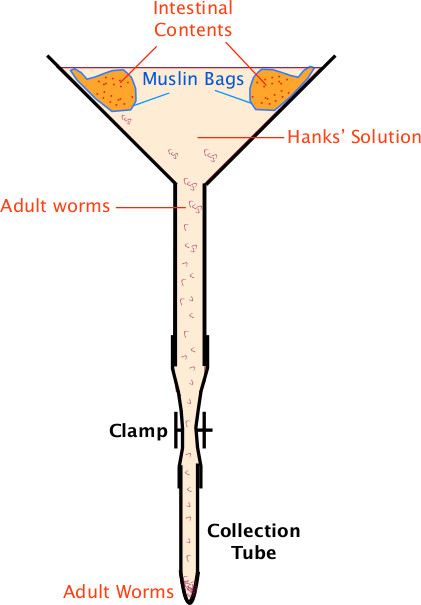
Figure 1: Baermann Apparatus Baermann Apparatus setup for collection of adult H. polygyrus (as described in section 2).
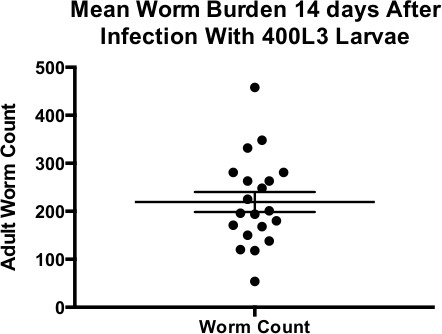
Figure 2: Mean Worm Burden 14 Days After Infection with 400 L3 Larvae Mean worm burdens 14 days after infection with 400 L3 larvae. Data points shown are from 19 separate rounds of infection of C57BL/6xCBA mice. Mean ± SEM shown.
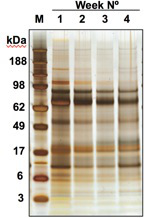
Figure 3: Protein Profiles of HES From Successive Weeks in Culture SDS-PAGE profile of HES proteins collected in successive weeks of culture.
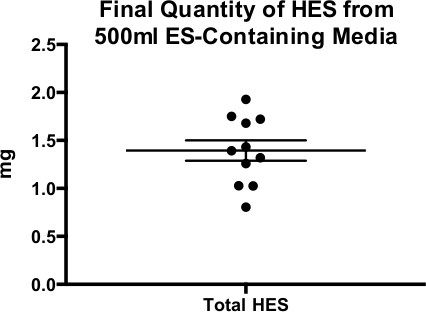
Figure 4: Final Quantity of HES from 500 ml ES-Containing Media Yield of HES protein from 11 different batches derived from approximately 500 ml of culture supernatant. Mean ± SEM shown.
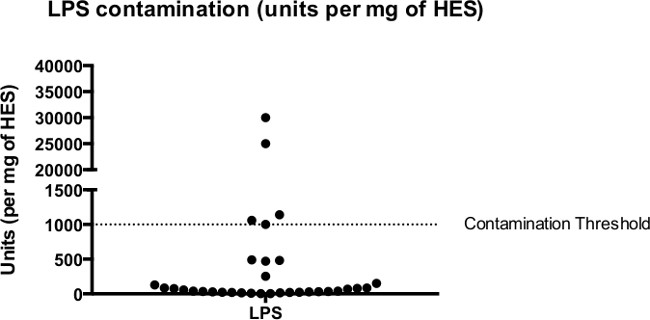
Figure 5: LPS Contamination of HES Levels of LPS contamination in 41 batches of HES measured by the Limulus ameobocyte assay. Median LPS concentration = 86 U per mg of HES.
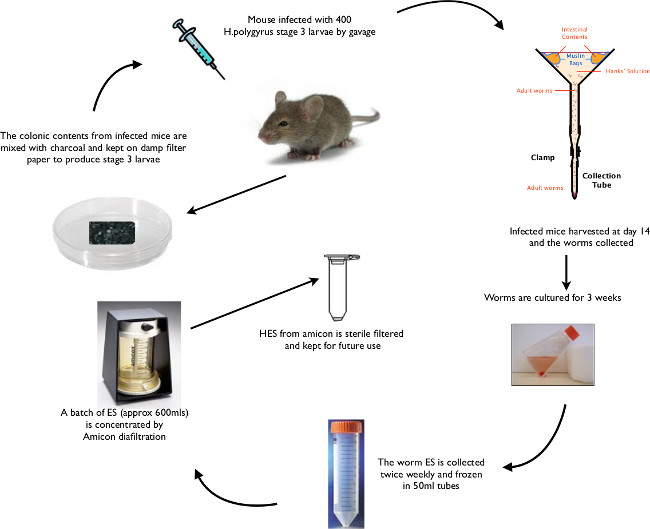
Figure 6: Animated Schematic of H. polygyrus Life Cycle Summary of key life cycle stages from oral gavage of L3 larvae, through recovery of larvae and adult worms to isolation of HES.
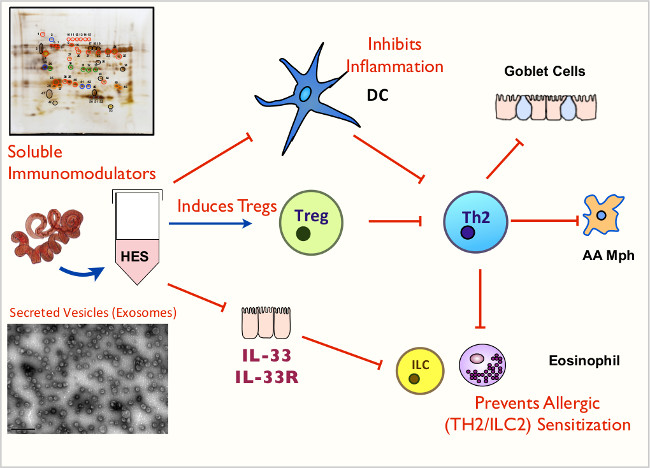
Figure 7: Animated Schematic of HES and its Functions Key immunomodulatory effects of soluble mediators and exosomes contained within HES.
| Genotype (and background strain) | Primary Infection Phenotype | Reference |
| Inbred strains | ||
| A/J, CBA, C3H | Highly susceptible | 22,29 |
| C57BL/6 and C57BL/10 | Susceptible | 22,30 |
| BALB/c, DBA/2, 129/J | Intermediate | 22,31 |
| NIH, SJL, SWR | Low susceptibility | 22,32 |
| Transgenic for cytokines or cytokine receptors | ||
| IL-1β-/- | More susceptible | 33 |
| IL-1R-/- | Less susceptible (a); no change in susceptibility but increased granulomas (b) | (a) 33 |
| (b) 34 | ||
| IL-2Rβ Transgenic (C57BL/6) | Resistant | 35 |
| IL-4-/- | Higher fecundity | 36 |
| IL-4R-/- (C57BL/6 or BALB/c) | Highly susceptible | 22 |
| IL-6–/– (BALB/c or C57BL/6) | Highly Resistant | 37 |
| IL-9 Transgenic (FVB) | Resistant | 38 |
| IL-21R –/– (C57BL/6) | Deficient Th2, decreased granuloma gormation | 39,40 |
| IL-25-/- (BALB/c) | More susceptible | 33 |
| IL-33R (T1/ST2) -/- (BALB/c) | No change in susceptibility | 33 |
| TGFβRIIdn (C57BL/6) | High Th1, Increased susceptibility | 41,42 |
| Transgenic for T cell markers | ||
| CD28–/– (BALB/c) | Marginally higher fecundity | 43 |
| CD86 (B7-2)–/– (BALB/c) | Higher fecundity | 44 |
| OX40L–/– (BALB/c) | Higher fecundity | 45 |
| Transgenic for innate Immune loci | ||
| Type 1 interferon receptor (IFNAR)-/- (C57BL/6) | Higher fecundity, more granulomas | 34 |
| MyD88–/– (C57BL/6) | More resistant, more granulomas | 34 |
| C-KitW/Wv (WBB6) | More susceptible | 46,47 |
Table 1: Primary infections with H. polygyrus in genetically different and gene-targetted mouse strains.
Discussion
The life cycle of H. polygyrus proceeds in a reliably consistent fashion. Following natural ingestion or oral gavage of L3 larvae on day 0, cysts begin to form under the duodenal serosa by day 5, progressing to larval moults and then emerging as adult worms into the gut lumen from day 10, eggs can be seen in feces from day 14 and granulomas are visible on the duodenal serosal surface from day 21. The protocol described above (and summarized in Figure 6) allows for high-throughput production of H. polygyrus excretory-secretory products (HES), in addition to reliable recovery of viable L3 larvae for future experimental and life cycle infections.
H. polygyrus infection has been shown to be protective in models of asthma dependent on OVA or Der p 1 (House dust mite allergen)14. Furthermore, suppression of airway inflammation could be transferred with CD4+CD25+ regulatory T cells 14 or CD19+CD23hi regulatory B cells 24 from non-sensitised, H. polygyrus-infected mice. In models of autoimmunity, H. polygyrus infection has been shown to be suppressive in the experimental autoimmune encephalomyelitis (EAE) model of multiple sclerosis 9, and suppression can be transferred with either CD4+ T cells or CD19+ B cells from infected mice 24.
Heligmosomoides polygyrus excretory-secretory products (HES) modulate the host immune response and suppress Th2-mediated inflammation by a number of mechanisms (outlined in Figure 7), including: a) Inhibition of dendritic cell responsiveness to stimulation 25, b) induction of CD4+Foxp3+ regulatory T cells 18 . and c) blockade of IL-33 production 20. HES has been shown to be protective when administered at sensitization or challenge in the OVA-alum model of asthma 19 and also when administered intranasally with Alternaria extract allergen 20, through suppression of early IL-33 release. Avoidance of LPS contamination of HES is often crucial for the success of future immunological experiments. In the protocol outlined here, the critical steps in achieving this are to ensure that debris contained within the muslin bags of the Baermann Apparatus does not enter the final HES preparation (see 2.10) and to set aside ES solution from the first 24 hr of culture (see 5.1).
Over recent years, HES has been thoroughly characterized at the proteomic level with over 370 distinct proteins identified 26,27. In addition, ES from the 4th stage larvae has been subjected to proteomic analysis 28. Ongoing work includes characterizing the major glycan components of HES, known to be strongly immunogenic 3, and secreted micro-RNAs that are encapsulated in 50-100 nm vesicles or exosomes (Buck et al., submitted for publication). With the establishment of reproducible protocols for the collection of ES from this highly immunomodulatory parasite, and with extensive proteomic data identifying the molecular components of HES, the stage is now set for the identification and therapeutic testing of individual molecules from H. polygyrus that can mediate key effects on the host immune system.
Disclosures
The authors have no conflicts of interest.
Acknowledgements
The authors are funded by the Wellcome Trust through the Edinburgh Clinical Academic Track (C.J.C.J.) and Programme Grant (Y.H., and R.M.M.) and Fellowship (J.R.G) funding, the BBSRC (G.C.), the American Asthma Foundation (E.R., H.J.McS. and R.M.M.), Asthma UK (H.J.McS.) and the Rainin Foundation (D.J.S. and R.M.M.).
Materials
| Name | Company | Catalog Number | Comments |
|---|---|---|---|
| Amicon concentrator | Millipore | 5112 | Model 8050 50 ml http://www.emdmillipore.com/INTL/en/product/Stirred-Cell-Model-8050,-50%C2%A0mL,MM _NF-5122 |
| Hanks’ buffered salt solution | Sigma | H9394 | 500 ml http://www.sigmaaldrich.com/catalog/product/sigma/h9394?lang=en®ion=GB |
| Penicillin streptomycin | Invitrogen | 15070-063 | 100 ml http://www.lifetechnologies.com/order/catalog/product/15070063 |
| L-glutamine | Invitrogen | 25030-081 | 200 MM 100ml https://www.lifetechnologies.com/order/catalog/product/25030081?ICID=search-25030081 |
| Activated charcoal | Merck | 1.09624.0500 | 18-35 mesh http://www.merckmillipore.com/GB/en/product/Charcoal-activated,MDA_CHEM-109624 |
| Glucose solution | Sigma | G8769 | 100 ml 45% solution http://www.sigmaaldrich.com/catalog/product/sigma/g8769?lang=en®ion=GB |
| Falcon tubes | Sarstedt | 62.547.254 | 50 ml http://www.scribd.com/doc/124320105/Sarstedt-Falcon |
| T25 Flasks | Sigma | CLS430639 | 25cm vented flask http://www.sigmaaldrich.com/catalog/product/sigma/cls430639?lang=en®ion=GB |
| Chromogenic LAL assay | Lonza | 50-647U | QCL-1000 assay http://www.lonza.com/products-services/pharma-biotech/endotoxin-detection/endotoxin-detection-assays/endpoint-chromogenic-lal-assay.aspx |
| Gentamicin | Gibco | 15710-049 | 100 ml http://www.lifetechnologies.com/order/catalog/product/15710072 |
| Roswell Park Memorial Institute (RPMI) 1640 | Gibco | 11875093 | 500 ml; without L-glutamine http://www.lifetechnologies.com/order/catalog/product/11875093 |
References
- Monroy, F. G., Enriquez, F. J. Heligmosomoides polygyrus : a model for chronic gastrointestinal helminthiasis. Parasitol. Today. 8, 49-54 (1992).
- Maizels, R. M., et al. Immune modulation and modulators in Heligmosomoides polygyrus infection. Exp. Parasitol. 132, 76-89 (2012).
- Hewitson, J. P., et al. Heligmosomoides polygyrus elicits a dominant nonprotective antibody response directed at restricted glycan and peptide epitopes. J Immunol. 187, 4764-4777 (2011).
- Walk, S. T., Blum, A. M., Ewing, S. A., Weinstock, J. V., Young, V. B. Alteration of the murine gut microbiota during infection with the parasitic helminth Heligmosomoides polygyrus. Inflamm Bowel Dis. 16, 1841-1849 (2010).
- Rausch, S., et al. Small intestinal nematode infection of mice Is associated with increased enterobacterial loads alongside the intestinal tract. PLoS ONE. 8, e74026(2013).
- Reynolds, L. A., et al. Commensal-pathogen interactions in the intestinal tract: Lactobacilli promote infection with, and are promoted by, helminth parasites. Gut Microbes. 5, 10-19 (2014).
- Saunders, K. A., Raine, T., Cooke, A., Lawrence, C. E. Inhibition of autoimmune type 1 diabetes by gastrointestinal helminth infection. Infect Immun. 75, 397-407 (2007).
- Liu, Q., et al. Helminth infection can reduce insulitis and type 1 diabetes through CD25- and IL-10-independent mechanisms. Infect Immun. 77, 5347-5358 (2009).
- Donskow-Łysoniewska, K., Krawczak, K., Doligalska, M. Heligmosomoides polygyrus: EAE remission is correlated with different systemic cytokine profiles provoked by L4 and adult nematodes. Exp Parasitol. 132, 243-248 (2012).
- Mishra, P. K., Patel, N., Wu, W., Bleich, D., Gause, W. C. Prevention of type 1 diabetes through infection with an intestinal nematode parasite requires IL-10 in the absence of a Th2-type response. Mucosal Immunol. 6, 297-308 (2013).
- Sutton, T. L., et al. Anti-Inflammatory mechanisms of enteric Heligmosomoides polygyrus infection against trinitrobenzene sulfonic acid-induced colitis in a murine model. Infect Immun. 76, 4772-4782 (2008).
- Hang, L., et al. Heligmosomoides polygyrus bakeri infection activates colonic Foxp3+ T cells enhancing their capacity to prevent colitis. J Immunol. 191, 1927-1934 (2013).
- Bashir, M. E., Andersen, P., Fuss, I. J., Shi, H. N., Nagler-Anderson, C. An enteric helminth infection protects against an allergic response to dietary antigen. J Immunol. 169, 3284-3292 (2002).
- Wilson, M. S., et al. Suppression of allergic airway inflammation by helminth-induced regulatory T cells. J. Exp. Med. 202, 1199-1212 (2005).
- Kitagaki, K., et al. Intestinal helminths protect in a murine model of asthma. J Immunol. 177, 1628-1635 (2006).
- Hartmann, S., et al. Gastrointestinal nematode infection interferes with experimental allergic airway inflammation but not atopic dermatitis. Clin Exp Allergy. 39, 1585-1596 (2009).
- Pritchard, D. I., Lawrence, C. E., Appleby, P., Gibb, I. A., Glover, K. Immunosuppressive proteins secreted by the gastrointestinal nematode parasite Heligmosomoides polygyrus. Int. J. Parasitol. 24, 495-500 (1994).
- Grainger, J. R., et al. Helminth secretions induce de novo T cell Foxp3 expression and regulatory function through the TGF-β pathway. J Exp Med. 207, 2331-2341 (2010).
- McSorley, H. J., et al. Suppression of type 2 immunity and allergic airway inflammation by secreted products of the helminth Heligmosomoides polygyrus. Eur. J. Immunol. 42, 2667-2682 (2012).
- McSorley, H. J., Blair, N. F., Smith, K. A., McKenzie, A. N. J., Maizels, R. M. Blockade of IL-33 release and suppression of type 2 innate lymphoid cell responses by helminth secreted products in airway allergy. Mucosal Immunol. 7, 1068-1078 (2014).
- Behnke, J. M., Menge, D. M., Noyes, H. Heligmosomoides bakeri: a model for exploring the biology and genetics of restance to chronic gastrointestinal nematode infections. Parasitology. 136, 1565-1580 (2009).
- Filbey, K. J., et al. Innate and adaptive type 2 immune cell responses in genetically controlled resistance to intestinal helminth infection. Immunology and Cell Biology. 92, 436-448 (2014).
- Bortolatto, J., et al. Toll-like receptor 4 agonists adsorbed to aluminium hydroxide adjuvant attenuate ovalbumin-specific allergic airway disease: role of MyD88 adaptor molecule and interleukin-12/interferon-gamma axis. Clin Exp Allergy. 38, 1668-1679 (2008).
- Wilson, M. S., et al. Helminth-induced CD19+CD23hi B cells modulate experimental allergic and autoimmune inflammation. Eur J Immunol. 40, 1682-1696 (2010).
- Segura, M., Su, Z., Piccirillo, C., Stevenson, M. M. Impairment of dendritic cell function by excretory-secretory products: A potential mechanism for nematode-induced immunosuppression. Eur J Immunol. 37, 1887-1904 (2007).
- Hewitson, J. P., et al. Proteomic analysis of secretory products from the model gastrointestinal nematode Heligmosomoides polygyrus reveals dominance of Venom Allergen-Like (VAL) proteins. J Proteomics. 74, 1573-1594 (2011).
- Moreno, Y., et al. Proteomic analysis of excretory-secretory products of Heligmosomoides polygyrus assessed with next-generation sequencing transcriptomic information. PLoS Negl Trop Dis. 5, e1370(2011).
- Hewitson, J. P., et al. Secretion of protective antigens by tissue-stage nematode larvae revealed by proteomic analysis and vaccination-induced sterile immunity. PLOS Pathogens. 9, e1003492(2013).
- Prowse, S. J., Mitchell, G. F. On the choice of mice for dissection of strain variations in the development of resistance to infection with Nematospiroides dubius. Austral J Exp Biol Med. 58, 603-605 (1980).
- Behnke, J. M., Robinson, M. Genetic control of immunity to Nematospiroides dubius: a 9-day anthelmintic abbreviated immunizing regime which separates weak and strong responder strains of mice. Parasite Immunol. 7, 235-253 (1985).
- Zhong, S., Dobson, C. Heligmosomoides polygyrus: resistance in inbred, outbred, and selected mice. Exp. Parasitol. 82, 122-131 (1996).
- Behnke, J. M., et al. Genetic variation in resistance to repeated infections with Heligmosomoides polygyrus bakeri, in inbred mouse strains selected for the mouse genome project. Parasite Immunol. 28, 85-94 (2006).
- Zaiss, M. M., et al. IL-1β suppresses innate IL-25 and IL-33 production and maintains helminth chronicity. PLoS Pathog. 9, e1003531(2013).
- Reynolds, L. A., et al. MyD88 signaling inhibits protective immunity to the gastrointestinal helminth parasite Heligmosomoides polygyrus. J Immunol. , (2014).
- Morimoto, M., Utsumiya, K. Enhanced protection against Heligmosomoides polygyrus in IL-2 receptor β-chain overexpressed transgenic mice with intestinal mastocytosis. J Vet Med Sci. 73, 849-851 (2011).
- Urban, J. F., Katona, I. M., Paul, W. E., Finkelman, F. D. Interleukin 4 is important in protective immunity to a gastrointestinal nematode infection in mice. Proc. Natl. Acad. Sci. USA. 88, 5513-5517 (1991).
- Smith, K. A., Maizels, R. M. IL-6 controls susceptibility to helminth infection by impeding Th2 responsiveness and altering the Treg phenotype in vivo. Eur J Immunol. 44, 150-161 (2014).
- Hayes, K. S., Bancroft, A. J., Grencis, R. K. Immune-mediated regulation of chronic intestinal nematode infection. Immunol Rev. 201, 75-88 (2004).
- Fröhlich, A., et al. IL-21 receptor signaling is integral to the development of Th2 effector responses in vivo. Blood. 109, 2023-2031 (2007).
- King, I. L., Mohrs, K., Mohrs, M. A nonredundant role for IL-21 receptor signaling in plasma cell differentiation and protective type 2 immunity against gastrointestinal helminth infection. J Immunol. 185, 6138-6145 (2010).
- Ince, M. N., et al. Role of T cell TGF-β signaling in intestinal cytokine responses and helminthic immune modulation. Eur J Immunol. 39, 1870-1878 (2009).
- Reynolds, L. A., Maizels, R. M. Cutting Edge: In the absence of TGF-β signaling in T cells, fewer CD103+ regulatory T cells develop, but exuberant IFN-γ production renders mice more susceptible to helminth infection. J Immunol. 189, 1113-1117 (2012).
- Ekkens, M. J., et al. Memory Th2 effector cells can develop in the absence of B7-1/B7-2, CD28 interactions, and effector Th cells after priming with an intestinal nematode parasite. J Immunol. 168, 6344-6351 (2002).
- Greenwald, R. J., et al. B7-2 is required for the progression but not the initiation of the type 2 immune response to a gastrointestinal nematode parasite. J. Immunol. 162, 4133-4139 (1999).
- Ekkens, M. J., et al. The role of OX40 ligand interactions in the development of the Th2 response to the gastrointestinal nematode parasite Heligmosomoides polygyrus. J. Immunol. 170, 384-393 (2003).
- Hashimoto, K., et al. Immunity-mediated regulation of fecundity in the nematode Heligmosomoides polygyrus--the potential role of mast cells. Parasitology. 137, 881-887 (2010).
- Hepworth, M. R., et al. Mast cells orchestrate type 2 immunity to helminths through regulation of tissue-derived cytokines. Proc Natl Acad Sci U S A. 109, 6644-6649 (2012).
Reprints and Permissions
