The sensitivity enhancement provided by dissolution dynamic nuclear polarization (DNP) enables following metabolic processes in real time by NMR and MRI. The characteristics and performances of a dedicated dissolution DNP setup designed for study enzymatic reactions are discussed.
A subscription to JoVE is required to view this content. Sign in or start your free trial.
Method Article
Dissolution Dynamic Nuclear Polarization Instrumentation for Real-time Enzymatic Reaction Rate Measurements by NMR
In This Article
Summary
Abstract
The main limitation of NMR-based investigations is low sensitivity. This prompts for long acquisition times, thus preventing real-time NMR measurements of metabolic transformations. Hyperpolarization via dissolution DNP circumvents part of the sensitivity issues thanks to the large out-of-equilibrium nuclear magnetization stemming from the electron-to-nucleus spin polarization transfer. The high NMR signal obtained can be used to monitor chemical reactions in real time. The downside of hyperpolarized NMR resides in the limited time window available for signal acquisition, which is usually on the order of the nuclear spin longitudinal relaxation time constant, T1, or, in favorable cases, on the order of the relaxation time constant associated with the singlet-state of coupled nuclei, TLLS. Cellular uptake of endogenous molecules and metabolic rates can provide essential information on tumor development and drug response. Numerous previous hyperpolarized NMR studies have demonstrated the relevancy of pyruvate as a metabolic substrate for monitoring enzymatic activity in vivo. This work provides a detailed description of the experimental setup and methods required for the study of enzymatic reactions, in particular the pyruvate-to-lactate conversion rate in presence of lactate dehydrogenase (LDH), by hyperpolarized NMR.
Introduction
Dynamic nuclear polarization (DNP),1,2 a technique designed to enhance the nuclear spin polarization, i.e., the imbalance between 'up' and 'down' spin populations (P = [N↑ - N↓] / [N↑ + N↓]), was first introduced in the 1950's. Nuclear spins such as 13C can be polarized up to P = 10-1 in favorable conditions, typically at a temperature on the order of 1 K and in a magnetic field of 3.357 T.3,4 A breakthrough for biological applications came in the early 2000's with the development of dissolution DNP which consists in dissolving frozen polarized samples in superheated water while retaining the high nuclear polarization level obtained at low temperature.5 The liquid-state NMR signal is enhanced by a factor 103-104 as compared to common thermally-polarized RT NMR conditions. Dissolution DNP therefore provides a way to non-invasively measure biochemical reaction rates in situ in realtime, allowing monitoring dynamics by NMR with a temporal resolution of 1 sec or less.6-10 It also became possible to detect analytes in very low concentrations.11
Among the non-invasive molecular imaging modalities, hyperpolarized NMR is the only technique that allows simultaneously measuring a substrate and its metabolic products in real-time. Dissolution DNP was received with enthusiasm in various scientific areas ranging from in vitro NMR to clinical MRI12 and the most promising applications are related to the in situ monitoring of metabolism.13,14 The main limitation of dissolution DNP is that, after a time on the order of five times the longitudinal relaxation time constant T1, the enhanced polarization is lost. It is therefore necessary to use molecules bearing nuclear spins exhibiting relatively long T1. To extend the time-span of the polarization enhancement, slowly-relaxing nuclear spin states, known as long-lived states (LLS), may be used.15-17 LLS are insensitive to the intra-pair dipole-dipole interaction, so their characteristic relaxation time constant, TLLS, can be much longer than T1.18 A magnetization lifetime of tens of minutes and up to 1 hr could therefore be obtained,19,20 and LLS have been proposed for both magnetic resonance spectroscopy (MRS) and MRI.21
The main points that need to be carefully optimized for studying enzymatic reaction rates by hyperpolarized NMR are: (i) maximize the solid-state polarization and (ii) minimize the polarization loss during the transfer of the hyperpolarized solution from the polarizer to the NMR spectrometer. This article describes the adaptation of a custom-made dissolution DNP apparatus and injection system to study enzymatic reactions. The characteristics and performance of the setup will be demonstrated with the well-known and widely-used hyperpolarized substrate [1-13C]pyruvate. The main reasons for this choice are, first, its naturally long 13C longitudinal relaxation time (T1 >50 sec at high magnetic fields and temperatures above 293 K) which allows monitoring reactions during several minutes, and, second, its central role in cancer metabolism.13,14 Using dissolution DNP NMR and a custom-developed injection system, the oxidation of pyruvate catalyzed by lactate dehydrogenase (LDH) can be monitored in presence of an initial pool of unlabelled lactate9,22 or with no unlabelled lactate added, as shown here. It has been shown that the [1-13C]lactate signal measured in vivo (including in cells) following the injection of hyperpolarized [1-13C]pyruvate is mainly due to a fast label exchange between pyruvate and lactate rather than to lactate production.6
We herein present the real-time production of [1-13C]lactate from hyperpolarized [1-13C]pyruvate injected into a NMR tube containing LDH but initially no lactate.
System description
There are two main parts in a dissolution DNP setup (Figure 1): the DNP polarizer and the NMR spectrometer. The main element of the DNP polarizer is a cryostat to cooling the sample to around 1 K in a pumped helium bath. The cryostat is inserted in a 3.35 T superconductive magnet and has a geometry that guarantees to have the polarizing sample at the isocenter of the magnet (Figure 1). Inside the cryostat, the sample (a) is surrounded by a NMR coil (b), to measure the polarization buildup, contained in an overmoded microwave cavity (c). The whole sample is kept at low temperature in a pumped helium bath (d) and irradiated with microwaves through the waveguide. The whole system is managed by custom-made software (Figure 2D).
The hardware and cryogenic equipment needed to perform DNP and the subsequent dissolution are still a technological challenge. A new DNP cryostat23,24 was developed and tested to determine its cryogenic performances and then optimized for fast cool-down, helium hold-time and overall minimal helium consumption during operation.
The cryostat consists of two parts. The first part of the cryostat is the insulation dewar (Figure 2A) that can be roughly separated in top part (a) the tail, or sample space (b), and the outer vacuum chamber (OVC) kept under high vacuum and housing the radiation screens (c). The second part of the cryostat is the main insert (Figure 2B), placed into the insulation dewar, where all the flow regulations are managed. The liquid helium coming from the external storage dewar through the transfer line (a), is in the first stage condensed in the separator (b), an intermediate chamber used both to keep the top part of the cryostat cold and to remove the helium evaporated during the transfer. The separator pressure is lowered by pumping through a capillary (c) wrapped around the top part of the cryostat; the flow of cold helium in this capillary is used to cool down the baffles (d) and the radiation screens in the insulation dewar (OVC). The sample is placed and polarized in the sample space. The sample space is connected to the separator through another capillary (e), wrapped around the tail of the main cryostat insert. This capillary can be opened or closed through a needle valve manually operated from outside.
To achieve the low temperature used during the DNP process, liquid helium needs to be collected in the cryostat sample space and its pressure lowered to the mbar range. The operations needed for cryostat operation are performed through a rather complex pumping system with three sets of pumps, monitored and operated in different points with electronic and electro-mechanic instruments (Figure 2C). The cryostat OVC needs to be pumped to high vacuum by the first pumping system. This system is composed of a turbo-molecular pump backed up by a rotary pump (a). The liquid helium is transferred from the storage dewar (b) through the cryostat transfer line inlet to the cryostat separator. The separator has an outlet connected to the second pumping set. This set is composed of a 35 m3/hr membrane pump (c). This line allows removing the helium gas boiled during the transfer from the dewar and during separator cooling. The liquid helium collected in the separator can then be transferred to the sample space through the capillary tubes described above. To transfer liquid helium from the separator to the sample space and subsequently to lower sample space pressure to mbar range, a third pumping system composed of a 250 m3/hr Roots pump backed up by a 65 m3/hr rotary pump (d) is connected to the cryostat through a manual butterfly valve (e).
All the vacuum system operations are controlled and regulated by an electropneumatic custom-made device (f). This device controls vacuum line connections between the cryostat separator (g) and sample space (h) outlets, the second/third pumping systems (c, d), a compressed helium bottle (i) and the outside. Communication between (f) and the outside passes through a one-way valve (j). The electro-pneumatic device (f) as well as all the system parameters and the dissolution hardware are controlled and operated by a custom-made electronic device interfaced USB with a common PC. Finally all the system, through the electronic device, is managed by custom-made standalone software (Figure 2D) where relevant operations are launched through an interface using software buttons.
To manage the sample and measure NMR signal build-up in the solid state a series of inserts are used (Figure 3A). To prepare the cryostat for polarization, place the main sample insert (a), into the cryostat. The main sample insert is provided with an NMR coil (b) placed inside an overmoded gold-plated microwave cavity. Pre-freeze the substrate containing solution to be polarized (polarizing solution) at liquid nitrogen temperature in a suitable sample container and place it at the end bottom of the fiberglass sample holder (c). Slide the sample holder into the main sample insert to reach the magnet isocenter. Insert the gold-plated waveguide (d) in the sample holder. The waveguide allows the microwave generated from an external microwave source to travel with minimal losses to the sample.
The custom-made software for cryostat management handles automatically, upon clicking the corresponding interface button, different operations like cooldown (the cryostat temperature is lowered close to liquid helium temperature), filling (the cryostat is filled with liquid helium to a pre-determined level), an additional step of cooling to T ≈ 1 K (the liquid helium bath is pumped to achieve the lowest temperature possible), pressurization (the cryostat is pressurized slightly above room pressure at P = 10-30 mbar to allow cryostat opening without risks of contamination of the cryostat by air) and dissolution (automatic procedure to dissolve the DNP sample and transfer the resulting hyperpolarized solution to the measurement site, i.e., the NMR spectrometer).
The polarization is performed irradiating the sample with microwaves at 94 GHz (in a polarizing field B0 = 3.35 T). A sample is considered completely polarized after 3 TDNP, where TDNP is the polarization buildup time. TDNP is of the same order of magnitude as the longitudinal relaxation time of the target nuclei in solid state at the given field and temperature. In all our experiments the sample was polarized for more than 5 TDNP.
At the end of the polarization time, the sample has to be dissolved in a RT solution in order to be used for measurement of enzymatic activity. During the dissolution process, 5 ml of superheated D2O from the boiler of the dissolution insert (Figure 3B) are pushed by compressed helium gas (P = 6-8 bar) to reach the DNP-enhanced sample and dissolve it. The resulting hyperpolarized solution is pushed out the dissolution insert by the compressed helium gas, through the dissolution insert outlet (Figure 3C-b), a 2 mm inner diameter Teflon transfer tube. The time needed for the dissolution process is 300 msec.23 The time needed for the sample transfer from the DNP polarizer to the NMR spectrometer site is about 3 sec.
The dissolution process is performed using a dissolution insert (Figure 3B). The dissolution insert is composed of an electronic-pneumatic assembly (a), a carbon fiber stick (b) containing connection tubes between the boiler in the pneumatic assembly and the sample container locker (c), which allows leak-tight coupling with the sample container, and back out to the outlet. The electro-pneumatic assembly (Figure 3C) is used to produce and drive superheated D2O through the carbon fiber stick to the sample container and then to extract the hyperpolarized solution from the cryostat. The electro-pneumatic assembly is composed of pneumatic valves (a) that control the connections between the compressed helium (P = 6-8 bar) line (b), the boiler (c) where the D2O is injected through the valve (d), and the outlet (e) through the carbon fiber stick (f). The system is completed by a pressure G, a thermometer and a heating resistive wire in the boiler (c), a trigger (h) and a connection box (i) used to interface the system with the electronic management device.
The DNP cryostat and the NMR spectrometer are connected by a transfer line, i.e., a PTFE tube of 2 mm inner diameter inside which the hyperpolarized solution is pushed by pressurized helium (P = 6-8 bar) when dissolution is triggered.
The dissolution sequence is composed of the following operations: in the first 300 msec, superheated D2O is pushed to the sample container in order to melt and dissolve the hyperpolarized frozen solution. Afterwards, the hyperpolarized solution is extracted from the cryostat by mean of pressurized (P = 6-8 bar) helium gas and pushed through the 2 mm inner diameter PTFE tube (Figure 3C-e) to the measurement site where the injection is performed with either of the procedures described in Step 6.2.1 or Step 6.2.2.
The second component of the dissolution DNP NMR setup is the NMR spectrometer. In the setup described herein, the NMR spectrometer operates at a field B0 = 11.7 Tesla. A 5 mm NMR probe is used to measure the hyperpolarized signal after the dissolution. The NMR spectrometer is operated through the NMR console, used for both solid-state and liquid-state NMR measurements, and the firm-provided software XWinNMR. A typical measurement is composed of a low flip angle hard pulse (either calibrated, for liquidstate or un-calibrated, for solid-state measurements) followed by signal acquisitions.
Measurements of the solid state thermal polarization signal and DNP-derived signal build-up are performed using the custom-made 13C coil at the site of the DNP polarizer (Figure 3Ab) coupled to the NMR spectrometer. In this particular situation the NMR spectrometer does not perform signal locking. When solid-state measurements are carried out, to avoid significant perturbations to the polarization, the time delay between acquisitions should be long enough, roughly longer than 0.5 TDNP.
The solid-state enhancement is defined as  where
where  is the hyperpolarized signal (obtained in Step 3.3) and
  is the solid state signal (obtained at thermal equilibrium at pumped liquid helium temperature in Step 3.2) (Figure 4A). This parameter defines the maximal polarization available for NMR experiments, prior to unavoidable losses during the transfer of the hyperpolarized solution. The measurement is performed with a simple pulse-acquire sequence using an un-calibrated low flip angle pulse. Pulse calibration is commonly skipped for solidstate measurements.
An analogous procedure can be used to determine the hyperpolarized signal enhancement in the liquid-state. In this case, the sample placed in the spectrometer tube before the injection (Step 6.2) is composed of 500 µl of D2O. After dissolution and injection, there are two important parameters to monitor. The first is the hyperpolarized enhancement at the NMR spectrometer site,  (Figure 4B), where
  is the signal just after the injection of the hyperpolarized solution (obtained in Step 7.1) and
  is the thermal polarization signal (obtained in Step 7.2). The second is the longitudinal relaxation time, T1 (Figure 4B, inset), associated with the substrate and each metabolic product (obtained by exponential fitting signals obtained in Step 7.1). These two parameters define the minimum substrate concentration necessary to obtain a sufficient signal-to-noise ratio (SNR) and the available time window for the measurement of the metabolic transformations. The ratio between solid-state polarization
  and liquidstate polarization
  gives an estimate of the polarization losses due to relaxation during the hyperpolarized solution transfer. A value
 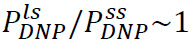 should be observed in absence of relaxation losses.
Access restricted. Please log in or start a trial to view this content.
Protocol
NOTE: All data analysis was performed using commercial software.
1. Prepare the Polarizing Solution
- Prepare 2 ml of a 1.12 M 13C-labeled sodium pyruvate (Na+[CH3-CO-13COO]-, substrate) solution doped with 33 mM of TEMPOL radical (4-hydroxy-2,2,6,6-tetramethylpiperidin-1-oxyl, polarizing agent)4 in 2:1 D2O/d6-ethanol for 13C observations. CAUTION: Handling precautions must be taken due to the flammable nature of d6-ethanol.
- Verify that the radical concentration is optimal in terms of achieved polarization.
- Change slightly the radical concentration of the solution at point 1.1 (e.g., to 30 mM or 35 mM).
- Determine iteratively the solid-state enhancement (see Step 3) and find the radical concentration that leads to the maximum enhancement.
2. Polarization
- Lower the DNP cryostat temperature through the cooldown procedure. Click the 'Cooldown' button on the cryostat software interface (Figure 2D).
- Collect liquid helium in the DNP cryostat through the filling procedure. Click the 'Filling' button on the cryostat software interface (Figure 2D).
- Place 300 μl of the optimized polarizing solution from Step 1.1 in the sample container provided with the DNP polarizer. Freeze the sample container with the sample inside by gently immersing it in a liquid nitrogen bath.
- Eliminate the liquid nitrogen that may be present in the sample container after the freezing procedure (Step 2.3) by extracting the sample container from the liquid nitrogen bath and rotating it upside down.
NOTE: This step is crucial to obtain a thorough dissolution of the sample (see Step 5). - Insert the sample into the cryostat.
NOTE: This Step, composed of the following sub-step, must be performed rapidly (i.e., in less than 10-20 sec) to prevent the sample from melting.- Insert the sample container in the sample holder. Insert the sample holder in the main cryostat insert. Insert the microwaves waveguide in the sample holder.
- Lower the cryostat temperature by starting the 1 K cooling procedure. Click the '1K Cooling' button on the cryostat software interface (Figure 2D).
- Turn the microwave source on and irradiate the sample. Click the 'MW-ON' button on the cryostat software interface (Figure 2D).
3. Solid-state NMR Measurements
- Disconnect the coaxial cable of the NMR console detection channel from the spectrometer coil by rotating the connector anticlockwise by 90° and pulling it. Plug the coaxial cable of the detection channel to the coaxial connector of the cryostat NMR coil. Insert the male connector of the NMR console cable in the female connector of the cryostat NMR coil, paying attention to the orientation pin; push firmly and rotate the connector clockwise by 90°.
- Measure the NMR thermal signal in the solid-state at the cryostat site using a simple pulse-acquire sequence with un-calibrated low flip-angle pulses repeated at an interval of T = 5 min. After setting up the measurement, write in the command line of the software 'zg' and press the 'Enter' keyboard key. Refer to NMR spectrometer operation manual for further details on spectrometer operation and measurement setup.
- Measure the DNP-enhanced NMR signal. Repeat operations of step 3.2 after initiating the DNP process as described in Section 2.
- Disconnect the NMR console detection channel coaxial cable from the cryostat NMR coil by rotating the connector anticlockwise by 90° and pulling it. Plug the coaxial cable of the detection channel to the coaxial connector of the spectrometer coil. Insert the male connector of the NMR console cable in the female connector of the spectrometer coil, paying attention to the orientation pin; push firmly and rotate the connector clockwise by 90°.
4. Optimize the Homogeneity of the Main Magnet Field ('Shimming')
- Place in the spectrometer a tube containing 500 μl of mixture produced in previous experiments (i.e., after Step 6.2).
- Perform NMR spectrometer shimming by varying the current in the shimming gradient coils searching for the maximum 'lock' signal of deuterium. Select the relevant shimming coil by pushing the corresponding button on the NMR console.
- Rotate the knob on the NMR console to determine the rotation direction that increases the lock signal. Continue to rotate until the signal reaches a maximum. Select another shimming coil and repeat the maximization until a local maximum for all the shimming coils is found. Refer to NMR spectrometer operation manual for further details. At the end, remove the sample used for locking.
5. Dissolution
- Insert 5 ml of D2O in the dissolution insert boiler. Pressurize and heat the D2O by means of the resistive wire until T ≈ 180-200 °C is reached. Click the 'Prepare Heater' button on the cryostat software interface (Figure 2D).
- After completion of the sample polarization procedure (e.g., after 3 TDNP), pressurize the cryostat slightly above room pressure. Click the 'SS Operations' button on the cryostat software interface (Figure 2D). Remove the microwave guide from the dissolution insert.
- Slide the dissolution insert (Figure 3B) down into the sample holder (Figure 3A-c). The dissolution insert has to reach the bottom of the sample holder and must be pushed firmly to make a leaktight connection with the sample container in order to avoid D2O leaking in the cryostat.
- Press the hardware trigger (Figure 3C-h) to begin the dissolution sequence, a pre-determined timed sequence of pneumatic valves operations.
6. Injection
- Before dissolution place a 5 mm NMR tube, containing 500 μl sample (e.g., D2O for
 measurement in Step 7 or LDH solution from Step 8 for enzymatic activity measurements in Step 9), in the isocenter of the 11.74 T NMR spectrometer (see Step 4).
 - Just after the dissolution (Step 5), mix 500 μl of hyperpolarized solution with the sample placed in the NMR spectrometer in Step 6.1.
- Manual Injection: collect the hyperpolarized solution at the end of a 2.5 m long transfer tube in a glass beaker placed close to the NMR spectrometer magnet. Manually inject 500 μl of hyperpolarized solution in the NMR sample tube through a custom made capillary system.
- Automatic injection: before the dissolution process, connect the transfer tube to an automated custom made injection device that separates the hyperpolarized solution from the helium gas used for transfer. The device automatically delivers 500 μl of hyperpolarized solution into the sample tube.
7. Liquid-state NMR Measurement
- After the dissolution, measure the NMR hyperpolarized signal from the sample in the spectrometer by a series of 10° flip angle pulse-acquire sequences spaced by 1.5 sec to follow the progression of magnetization of the substrate (A) and the product (B). After setting up the measurement, write in the command line of the software 'zg' and press the 'Enter' keyboard key. Refer to NMR spectrometer operation manual for further details on spectrometer operation and measurement setup.
- Once the magnetization is fully relaxed (i.e., after T = 10 T1), measure the NMR thermal signal by a series of 90° flip angle pulse-acquire sequences spaced by T = 3 T1 ≈ 3 min. After setting up the measurement, write in the command line of the software 'zg' and press the 'Enter' keyboard key. Refer to NMR spectrometer operation manual for further details on spectrometer operation and measurement setup.
8. Preparation of Enzyme-containing Samples (Specific for the Pyruvate-to-lactate Transformation)
- Prepare the reaction buffer with the following recipe: 50 mM reduced nicotinamide adenine dinucleotide (NADH), 1 mM ethylene-diaminetetraacetic acid (EDTA), 0.1 mM dithiothreitol (DTT) in 0.1 M phosphate buffer, pH = 7.0.
- Prepare a rabbit muscle LDH solution 1 U/ml prepared freshly in reaction buffer with 20 μg/ml bovine serum albumin, BSA.
- Mix 478 μl reaction buffer (Step 8.1), 20 μl D2O to allow for spectrometer field stabilization ('locking') and 2 μl LDH solution (Step 7.2).
- Place the 500 μl solution volume prepared in Step 8.3 into a 5 mm NMR tube and position the tube into the 500 MHz NMR spectrometer.
9. Complete Enzymatic Reaction Rate Measurement Procedure
- Prepare the polarizing sample (Step 1) and polarize it (Step 2).
- Perform shimming on the spectrometer (Step 4) and prepare the enzymatic sample (Step 8).
- Perform the dissolution (Step 5) and the injection (Step 6).
- Measure a series of signals from the hyperpolarized sample with 10° flip angle pulses acquisitions spaced by 1.5 sec (Step 7). This step allows measuring the hyperpolarized signal decay and the signal buildup of metabolites.
10. Fitting
- For each spectrum acquired in Step 9.4, identify the peaks corresponding to substrate (A) and product (B) respectively and integrate them (determine the area of the peaks). The peaks integrals give the magnetization time course signals (M(A,B)(t), see equation 2).
- Using the solution of equation (2), determine the value of F = (RA + keff ) from a simple exponential fit of the substrate signal integrated in Step 10.1.
- Using the value F = (RA + keff ) determined in Step 10.2, determine keff and RB from a fit of the product signal MB(t) with the function obtained by integrating equation (2). Refer to Representative results section (Enzymatic activity and metabolic measurements) for details on the reaction modeling, fitting and rf correction.
Access restricted. Please log in or start a trial to view this content.
Results
NMR signal gains using dissolution DNP
The DNP effect consists in the transfer of the high polarization of unpaired electron spins, typically from stable radical molecules, to NMR-active nuclei, under microwave irradiation of the sample. The most often-used free radicals are TAM(OXO63) and TEMPOL.4 Polarization procedures using TEMPOL may be optimized by 'cross-polarization'.25
Optimizing the concentrat...
Access restricted. Please log in or start a trial to view this content.
Discussion
The critical points of the dissolution DNP NMR experiment are: (i) the level of polarization attained for the substrate, which determines the lowest product concentration necessary for experiments as well as the number of signal acquisitions that can be performed and (ii) the lifetimes of magnetization, compared to the duration of the transfer between the polarization and the detection sites and to the rate of substrate transformation. The injection system of the dissolution DNP setup herein described allows for sample t...
Access restricted. Please log in or start a trial to view this content.
Disclosures
The authors declare that they have no competing financial interests
Acknowledgements
The authors thank Dr J. J. van der Klink for the assistance in the choice and assembly of the equipment, as well as Dr F. Kateb and Dr G. Bertho for useful discussions. A.C. was supported by the Swiss National Science Foundation (grant PPOOP2_157547). We acknowledge financing from Paris Sorbonne Cité (NMR@Com, DIM Analytics, Ville de Paris, the Fondation de la Recherche Médicale (FRM ING20130526708), and the Parteneriat Hubert Curien Brancusi 32662QK. Our team is part of Equipex programs Paris-en-Résonance and CACSICE.
Access restricted. Please log in or start a trial to view this content.
Materials
| Name | Company | Catalog Number | Comments |
|---|---|---|---|
| DNP polarizer | Vanderklink s.a.r.l (Switzerland) | /// | Cryostat and electronic equipment for sample polarization |
| Vacuum system components | Edwards vacuum (France) | Various | - turbomolecular pumping setup - membrane pumping setup - high capacity roots pumping system - vacuum fittings and components |
| DNP 3.35T Magnet | Bruker (France) | ||
| 500 MHz NMR Spectrometer | Bruker (France) | ||
| Origin 8.0 | OriginLab (US) | Data analysis software | |
| Chemicals | |||
| SODIUM PYRUVATE-1-13C, 99 ATOM % 13C | Sigma Aldrich (France) | 490709 | |
| ETHANOL-D6, ANHYDROUS, 99.5 ATOM % D | Sigma Aldrich (France) | 186414 | |
| 4-Hydroxy-TEMPO 97% | Sigma Aldrich (France) | 176141 | |
| Deuterium oxide | Sigma Aldrich (France) | 151882 | |
| reduced nicotinamide adenine dinucleotide (NADH) | Sigma Aldrich (France) | ||
| ethylene-diaminetetraacetic acid (EDTA) | Sigma Aldrich (France) | ||
| dithiothreitol (DTT) | Sigma Aldrich (France) | ||
| phosphate buffer, pH = 7.0 | Sigma Aldrich (France) | ||
| LDH enzyme in | Sigma Aldrich (France) | L-2500 | |
| bovine serum albumin, BSA | Sigma Aldrich (France) |
References
- Overhauser, A. W. Polarization of Nuclei in Metals. Phys. Rev. 92 (2), 411-415 (1953).
- Abragam, A., Goldman, M. Principles of dynamic nuclear polarisation. Rep. Prog. Phys. 41 (3), 395(1978).
- Wolber, J., Ellner, F., et al. Generating highly polarized nuclear spins in solution using dynamic nuclear polarization. Nuc. Inst. Met. Phys. Res. Sec. A. 526 (1-2), 173-181 (2004).
- Cheng, T., Capozzi, A., Takado, Y., Balzan, R., Comment, A. Over 35% liquid-state 13C polarization obtained via dissolution dynamic nuclear polarization at 7 T and 1 K using ubiquitous nitroxyl radicals. PCCP. 15 (48), 20819-20822 (2013).
- Ardenkjaer-Larsen, J. H., Fridlund, B., et al. Increase in signal-to-noise ratio of > 10,000 times in liquid-state NMR. PNAS. 100 (18), 10158-10163 (2003).
- Day, S. E., Kettunen, M. I., et al. Detecting tumor response to treatment using hyperpolarized 13C magnetic resonance imaging and spectroscopy. Nat. Med. 13 (11), 1382-1387 (2007).
- Keshari, K. R., Wilson, D. M., et al. Hyperpolarized [2-13C]-Fructose: A Hemiketal DNP Substrate for In Vivo Metabolic Imaging. JACS. 131 (48), 17591-17596 (2009).
- Zeng, H., Lee, Y., Hilty, C. Quantitative Rate Determination by Dynamic Nuclear Polarization Enhanced NMR of a Diels−Alder Reaction. An. Chem. 82 (21), 8897-8902 (2010).
- Harrison, C., Yang, C., et al. Comparison of kinetic models for analysis of pyruvate-to-lactate exchange by hyperpolarized 13C NMR. NMR in Biom. 25 (11), 1286-1294 (2012).
- Allouche-Arnon, H., Gamliel, A., Sosna, J., Gomori, J. M., Katz-Brull, R. In vitro visualization of betaine aldehyde synthesis and oxidation using hyperpolarized magnetic resonance spectroscopy. Chem. Comm. 49 (63), 7076-7078 (2013).
- Lerche, M. H., Meier, S., et al. Quantitative dynamic nuclear polarization-NMR on blood plasma for assays of drug metabolism. NMR in Biom. 24 (1), 96-103 (2011).
- Nelson, S. J., Kurhanewicz, J., et al. Metabolic Imaging of Patients with Prostate Cancer Using Hyperpolarized [1-13C]Pyruvate. Sci. Trans. Med. 5 (198), 198ra108(2013).
- Kurhanewicz, J., Vigneron, D. B., et al. Analysis of Cancer Metabolism by Imaging Hyperpolarized Nuclei: Prospects for Translation to Clinical Research. Neoplasia. 13 (2), 81-97 (2011).
- Comment, A., Merritt, M. E. Hyperpolarized Magnetic Resonance as a Sensitive Detector of Metabolic Function. Biochem. 53 (47), 7333-7357 (2014).
- Carravetta, M., Johannessen, O. G., Levitt, M. H. Beyond the T-1 limit: Singlet nuclear spin states in low magnetic fields. PRL. 92 (15), 153003(2004).
- Carravetta, M., Levitt, M. H. Theory of long-lived nuclear spin states in solution nuclear magnetic resonance. I. Singlet states in low magnetic field. J. Chem. Phys. 122 (21), 214505(2005).
- Vasos, P. R., Comment, A., et al. Long-lived states to sustain hyperpolarized magnetization. PNAS. 106 (44), 18469-18473 (2009).
- Claytor, K., Theis, T., Feng, Y., Warren, W. Measuring long-lived 13C2 state lifetimes at natural abundance. JMR. 239, 81-86 (2014).
- Pileio, G., Carravetta, M., Hughes, E., Levitt, M. H. The long-lived nuclear singlet state of N-15-nitrous oxide in solution. JACS. 130 (38), 12582-12583 (2008).
- Stevanato, G., Hill-Cousins, J. T., et al. A Nuclear Singlet Lifetime of More than One Hour in Room-Temperature Solution. Ange. Chem. Int. Ed. 54 (12), 3740-3743 (2015).
- Ghosh, R. K., Kadlecek, S. J., et al. Measurements of the Persistent Singlet State of N(2)O in Blood and Other Solvents-Potential as a Magnetic Tracer. MRM. 66 (4), 1177-1180 (2011).
- Harris, T., Eliyahu, G., Frydman, L., Degani, H. Kinetics of hyperpolarized 13C1-pyruvate transport and metabolism in living human breast cancer cells. PNAS. 106 (43), 18131-18136 (2009).
- Comment, A., van den Brandt, B., et al. Design and performance of a DNP prepolarizer coupled to a rodent MRI scanner. Conc. Mag. Res. B. 31 (4), 255-269 (2007).
- Balzan, R. Methods for Molecular Magnetic Resonance Imaging and Magnetic Resonance Spectroscopy using Hyperpolarized Nuclei. 5966, EPFL - EDPY. Available from: http://infoscience.epfl.ch/record/190351/files/EPFL_TH5966.pdf 1-140 (2013).
- Bornet, A., Melzi, R., et al. Boosting Dissolution Dynamic Nuclear Polarization by Cross Polarization. JPC Letters. 4 (1), 111-114 (2013).
- Bowen, S., Hilty, C. Rapid sample injection for hyperpolarized NMR spectroscopy. PCCP. 12 (22), 5766-5770 (2010).
- Cavadini, S., Vasos, P. R. Singlet states open the way to longer time-scales in the measurement of diffusion by NMR spectroscopy. Conc. Mag. Res. A. 32 (1), 68-78 (2008).
- Ahuja, P., Sarkar, R., Vasos, P. R., Bodenhausen, G. Long-lived States in Multiple-Spin Systems. Chem. Phys. Chem. 10 (13), 2217-2220 (2009).
- Ahuja, P., Sarkar, R., Jannin, S., Vasos, P. R., Bodenhausen, G. Proton hyperpolarisation preserved in long-lived states. Chem. Comm. 46 (43), 8192-8194 (2010).
- Sarkar, R., Comment, A., et al. Proton NMR of 15N-Choline Metabolites Enhanced by Dynamic Nuclear Polarization. JACS. 131 (44), 16014-16015 (2009).
Access restricted. Please log in or start a trial to view this content.
Reprints and Permissions
