Constructed wetland treatment systems have been used for decades to treat wastewater, but their application to treat oil sands process-affected waters is relatively new. To explore this potential, a surface flow mesocosm design and experimental methods are outlined. This approach aims to enhance our understanding of key design parameters and improve treatment efficacy.
Method Article
Mesocosm-Scale Constructed Wetland Design for Wastewater Treatment
* These authors contributed equally
In This Article
Summary
Abstract
Oil sands process-affected water (OSPW), a by-product of bitumen extraction through surface mining in Alberta, Canada, contains various constituents of concern, including naphthenic acid fraction compounds (NAFCs). These organic compounds are particularly worrisome due to their toxicity and persistence in the environment. Constructed wetland treatment systems (CWTS) use plants and their associated microbes to attenuate contaminants in wastewater. Field-scale CWTS have been presented as a potential large-scale treatment option for OSPW, specifically for degrading NAFCs. To optimize the use of CWTS for large-scale treatment of NAFCs in OSPW, it is essential to deepen our understanding of various design parameters and explore ways to enhance efficacy.
Mesocosm-scale experiments serve as a valuable intermediary, bridging the gap between complex field trials and controlled laboratory settings. Mesocosms provide a controlled, replicable environment to study the effects of various parameters such as substrate, plant species, temperature, and retention time while incorporating ecological complexities in their design. Published and previous work has shown that this method is successful in evaluating the impacts of different parameters on the efficacy of CWTS to attenuate NAFCs in OSPW. This protocol outlines the design and setup of a surface flow wetland mesocosm, along with the experimental approach for treating NAFCs in OSPW. This method can be adapted to treat other wastewaters across diverse geographical locations.
Introduction
The oil sands region in northern Alberta, Canada, contains the third largest oil reserves in the world, producing over 3 million barrels of crude oil daily1. However, bitumen extraction from surface mining generates substantial volumes of tailings and oil sands process-affected water (OSPW) as by-products. Due to Alberta's zero discharge policy, these by-products are stored in tailings ponds across the mineable oil sands region. As of 2023, an estimated 391.1 Mm3 of OSPW exists as free water in tailings ponds and does not include the pore water that will continue to be released during tailings settlement2. OSPW contains <5% solids and is characterized by elevated levels of salts, trace metals, as well as organic contaminants3.
Several major classes of contaminants are present in OSPW, including naphthenic acid fraction compounds (NAFCs), polycyclic aromatic hydrocarbons (PAHs), BTEX (benzene, toluene, ethylbenzene, and xylenes), phenols, and heavy metals3,4. NAFCs are organic compounds in bitumen that are solubilized and concentrated during the extraction process and are consistently identified as the primary source of OSPW acute toxicity5,6. OSPW pose several environmental and economic challenges due to the volume, complexity, and toxicity of the mixture. Developing cost-effective, passive, and scalable treatment technologies for OSPW is critical as conventional methods, such as chemical oxidation and filtration, remain limited in their feasibility for large-scale applications. Constructed wetland treatment systems (CWTS) are low-energy, cost-effective, and sustainable water treatment systems that rely on the use of plants and their associated microbes to attenuate contaminants in wastewater; they have emerged as a promising alternative for treating OSPW7,8,9,10,11,12.
CWTS are engineered wetlands designed to replicate the filtering functions of natural wetlands. Originally designed to treat stormwater and municipal wastewater, CWTS are now utilized for a wide range of applications, including agricultural waste, acid mine drainage, industrial wastewater, and other remediation efforts13. These systems have three basic components: substrate, water, and vegetation. CWTS can be designed as surface flow or subsurface flow systems, with water movement configured to flow either horizontally or vertically13,14. Hydrophytic wetland plants are widely utilized in CWTS due to their adaptation to persistently saturated soil conditions. In general, CWTS commonly uses emergent plant species such as Typha sp. (cattails), Juncus sp. (rushes), and Carex sp. (sedges).
CWTS employs various mechanisms for water treatment. Suspended solids can adsorb contaminants and settle, forming a sediment bed that promotes plant growth. Additionally, plants can transfer or transform dissolved contaminants through a combination of biotic and abiotic mechanisms. Abiotic mechanisms include filtration, sedimentation, precipitation, sorption, chemical oxidation/reduction, complexation, photodegradation, and volatilization. Biotic processes involve biotransformation (microbial or plant-mediated), phytoaccumulation, and phytostabilization13,14. CWTS offer significant advantages as self-sustaining systems that typically become more efficient over time14. These systems are versatile and capable of treating multiple contaminants simultaneously while being environmentally sustainable and publicly acceptable. Furthermore, their low operating and capital costs compared to conventional treatment methods make them well-suited for handling large volumes of wastewater, such as OSPW. However, the complexity of the various abiotic and biotic processes occurring simultaneously in OSPW requires careful design to optimize CWTS for maximum treatment efficacy. A clear understanding of treatment objectives, combined with systematic testing at the lab bench, pilot, and demonstration scales, is essential for optimizing the system and predicting the success of full-scale implementation14.
Pilot scale experiments, often called mesocosm experiments, are typically conducted using tubs or tanks that simulate individual treatment cells. Mesocosms can either be conducted indoors or outdoors as a field-based experiment. Mesocosms are partially enclosed systems that offer greater ecological complexity than bench-scale experiments, while still maintaining sufficient control and replication to assess the impacts of individual design parameters on contaminant removal. Mesocosm scale studies are necessary to confirm treatment mechanisms and uncover complications at a smaller scale, where design corrections and adjustments can be implemented14. This protocol describes the setup and operation of an indoor mesocosm-scale horizontal surface flow CWTS, providing a practical framework for designing CWTS studies, especially for the attenuation of NAFCs in OSPW.
Protocol
1. Mesocosm construction
NOTE: See Table of Materials for a comprehensive list of materials required for mesocosm construction and Figure 1 for a schematic of mesocosm construction.
- Remove the top of the polyethylene tank (129.5 cm x 30.0 cm) if needed.
- Prepare drainage holes; drill two holes (Parts #1 and #2) onto the same side of the polypropylene tank. Place a PVC bulkhead fitting (Part #3) into both holes with the male threads facing outward. Seal the outer edge of the bulkhead fitting using a waterproof sealant.
- Soil water drainage hole (Part #2): position this at the corner base of the tank, ensuring there is enough room for the bulkhead fitting.
- Surface water drainage hole (Part #1): place it above the height of the soil level, close to the center of the tank.
- Place a hose washer (Part #4) with a filter screen (Part #5) on the inside of the bulkhead fitting and secure it with sealant.
- Set up internal drainage plumbing:
- For the surface water drainage hole (Part #1), first attach the PVC male adapter (Part #10) to the bulkhead fitting (Part #3) followed by the 90° PVC elbow (Part #11).
- Insert a piece of PVC pipe (Part #12) cut to match the height of the desired water level to the 90° elbow.
- Setup external drainage plumbing. Throughout the following steps, use crimp rings to secure PEX to fittings.
- Wrap Teflon tape around the threads of the 3/4-inch PEX x 3/4-inch MPT brass adapter (Part #6) and connect to the bulkhead fittings (Part #3).
- Cut two equal lengths of 3/4-inch PEX (Part #7) and attach to MPT brass adapters (Part #6).
- Add a plastic expansion elbow fitting to the PEX pipe (Part #7), facing down for the surface water drainage hole and facing the center of the tank for the soil drainage hole.
- For the soil drainage hole (Part #2), connect a PEX pipe to the elbow, followed by a ball valve, another PEX segment, and a plastic expansion tee. Adjust PEX lengths to align the top of the expansion tee with the surface water drainage plumbing.
- For the surface water drainage hole, connect a PEX pipe to the plastic expansion elbow, linking it to the expansion tee.
- Once the system is connected, add another piece of PEX (Part #7) to the plastic expansion tee, ending with a downward-facing plastic expansion elbow.
- Add another piece of PEX (Part #7) to the bottom of the plastic expansion elbow fitting to ensure the water is draining into the reservoir tank.
- Increase the structural integrity of the mesocosm:
- Build a frame (Part #13, 129.5 cm length x 37.0 cm width) using 2-inch x 4-inch pieces of lumber.
- Secure the frame with wood screws.
- Place the frame on the mesocosm, ensuring it does not sit on the plumbing fittings.
- Wrap the outside of the mesocosm in aluminum foil to reduce light entering the soil from the mesocosm sides.
2. Mesocosm setup and maintenance
- Grow plants for the experiment from seed:
- Stratify seeds as required.
- Place the seeds into standard styroblock containers containing peat as plug stock.
- Once the seedlings have germinated, fertilize the seedlings 3x a week using water-soluble plant food (24-8-16).
- Let the seedlings grow for a minimum of 3-5 months to ensure they reach an optimum size for treatment response.
NOTE: The exact length of time will depend on the size and type of species. This step may be omitted if seedlings are purchased rather than grown.
- Place the mesocosms in the greenhouse:
- (Optional) Reinforce greenhouse tables with plywood to support the weight of the mesocosms.
- Distribute the mesocosms evenly across the greenhouse bay tables to ensure random placement of treatments and minimize variations in environmental conditions (Figure 2).
- Position the plumbing to hang off the edge of the table for proper drainage into the reservoir tank (Figure 2).
- Set up the reservoir tank:
- Place the 57 L open-top plastic industrial drum under the drainage plumping.
- Install a submersible powerhead circulation pump between the middle and bottom of the tank to allow for continuous in-tank mixing. Secure the power cord to the outside of the tank.
- Add and saturate the substrate:
- Spread the substrate evenly in the mesocosm and tamp down the substrate with moderate pressure to the desired height.
NOTE: The height of the substrate depends on the research objectives and plant species. - Fully saturate the substrate with reverse osmosis (RO) water, measure the volume of water added; this is equivalent to the volume of porewater in the substrate.
NOTE: The pore water is the volume of water added when the substrate is saturated, which can be observed when the water level matches the top of the substrate. This process may take up to a day. Pore water volume is important to determine the exact amount of water in the system and calculate the flow rate.
- Spread the substrate evenly in the mesocosm and tamp down the substrate with moderate pressure to the desired height.
- Determine the flow rate:
- Select a retention time based on prior studies and study objectives.
- Calculate the total water volume in the mesocosm.

- Calculate the flow rate.

- Install the pumps:
- Position one pump between two adjacent mesocosms.
NOTE: One pump can also be used for one mesocosm if needed. - Link all the pumps together using a male-male USB cable, connecting the last pump to the controller.
- Submerge the in-valve tubing in the reservoir, securing or weighting it down to remain in place.
- Secure the out-valve tubing to the back top corner of the mesocosm, ensuring it stays above the waterline.
- Wrap the tubing in aluminum foil to help prevent algae growth.
- Set up and calibrate the pumps, power bar, and controller according to the manufacturer's instructions15.
- Adjust the pumps to the calculated flow rate.
- Position one pump between two adjacent mesocosms.
- Plant and acclimate the plant species:
- Adjust the temperature and LED grow lights to optimal levels for plant growth while conditioning the plant species to the mesocosm.
- Plant 6-12 individual plant species evenly to ensure equal biomass per unit area in the mesocosm.
NOTE: The number of individuals may change depending on the research objectives and the physiology of the species (e.g., as Typha latifolia becomes root-bound, the number of individuals may be reduced). - Gradually raise the RO water level, maintaining one water level for 1-2 days, and replace the PVC pipe (step 1.4.2) as needed to match the water level.
- Turn on the pumps with the final desired flow rate.
- Once the desired water level is reached, adjust the greenhouse light and temperature to experimental settings and allow plants to acclimate for ~35 days.
- Drain and flush the system:
- Remove the PVC standpipe and open the ball valve to drain the system completely; this may take up to 2 days.
- Flush the system with OSPW and let it drain completely, ensuring the PVC pipe remains off and the ball valve is open. Make sure that the OSPW used during the flushing is not used during the experiment.
- Once flushed, close the ball valve and add the PVC pipe to match the desired water level.
- Add OSPW:
- Carefully pour the OSPW into each mesocosm to avoid disturbing the substrate or plants, filling until the desired water level is reached.
- If using multiple batches of water, ensure chemical properties are consistent, or distribute evenly across all mesocosms.
- Fill the reservoir tank with OSPW, leaving approximately 5 cm of space from the top.
- Manage evaporation:
- Refill the reservoir tank with RO water as needed, maintaining the water level approximately 5 cm below the top.
3. Sampling
- Plant species measurements:
- Every retention time cycle, measure plant health and growth metrics16. Plant health metrics include visible signs of stress such as chlorosis and insect damage, while plant growth metrics include mortality, height, and % cover.
- At the end of the experiment, take samples for plant above-ground biomass and plant tissue chemistry if desired.
NOTE: The monitoring intervals and measurements used are recommended for studying the effect of NAFCs on plant health and may differ depending on the experimental objectives.
- Substrate measurements:
- Baseline characterization: Before substrates are added to each mesocosm, measure a suite of parameters (e.g., pH, electrical conductivity (EC), oxidation-reduction potential (ORP), major anions/cations, nutrients, NAFCs, and any other relevant contaminants).
- During the first retention cycle, collect substrate samples from each mesocosm to gain a baseline for general chemistry. Collect substrate samples from random locations in each mesocosm.
- Every retention time cycle, measure substrate ORP using an appropriate ORP probe.
- At the end of the experiment, collect substrate samples from each mesocosm and measure the same parameters as in the baseline characterization (e.g., pH, EC, ORP, major anions/cations, nutrients, NAFCs, and any other relevant contaminants).
- Water measurements:
- Baseline characterization: before the OSPW is added to each mesocosm, measure a suite of parameters (e.g., pH, EC, ORP, major anions/cations, nutrients, NAFCs, and any other relevant contaminants).
- After the experiment starts, take initial samples of OSPW from each mesocosm after several days (end of retention cycle 1) to allow the sediment within the OSPW to settle and for the OSPW to fill the pore water space. Collect the OSPW samples from the front of each mesocosm.
- Every retention time cycle, measure dissolved oxygen (DO), ORP, pH, EC, and temperature using the referenced instrument.
- At the end of the experiment, collect final water samples to measure general chemistry, measure a suite of parameters (e.g., DO, pH, EC, ORP, major anions/cations, nutrients, NAFCs, and any other relevant contaminants).
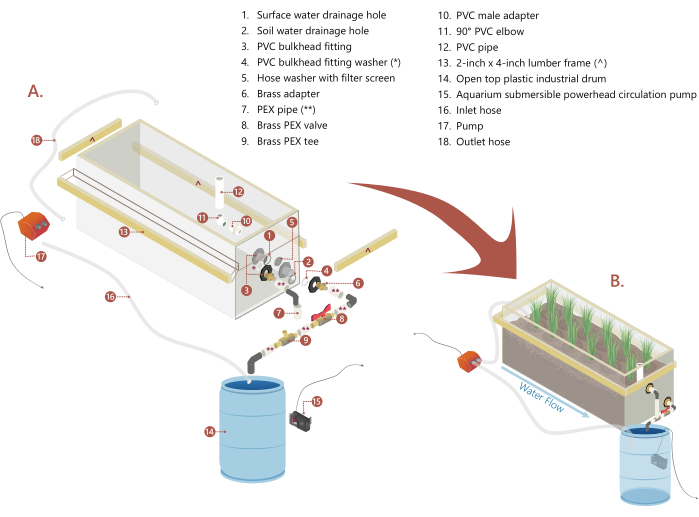
Figure 1: Schematic of the mesocosm design and experimental setup. (A) Schematic of mesocosm construction and required components. (B) Example experimental setup, including substrate and plant addition, along with reservoir placement. Please click here to view a larger version of this figure.

Figure 2: Mesocosm and reservoir layout example. (A) Layout of mesocosms and reservoir tanks in the greenhouse without aluminum foil. (B) Layout showing mesocosms and reservoir tanks with aluminum foil wrapped around the mesocosms to limit light penetration, with one pump per two mesocosms. Please click here to view a larger version of this figure.
Results
The success of this mesocosm constructed wetland protocol is demonstrated by the robust growth and development of plant species, the ongoing monitoring of environmental parameters, and the efficient removal of contaminants over time. Data collected by Trepanier et al.17 illustrates the method's efficacy and expected outcomes. The study evaluated the ability of Carex aquatilis, a water sedge commonly found in boreal wetlands, to reduce NAFCs in OSPW. It compared the performance of mesocosms with C. aquatilis to those without plants, using either OSPW or lab-made process water. The mesocosms were constructed with a substrate of 10 cm of coarse sand tailings (CST) layered with 10 cm of peat mineral mix (PMM) and 25 cm of OSPW overlaying the substrates. Before the experiment, plants were grown for 3 months to an average height of 83 cm and then transplanted into the system. RO water was added (Figure 3) to acclimate the plants to the mesocosm, and the systems were maintained at 20 oC for 32 days.
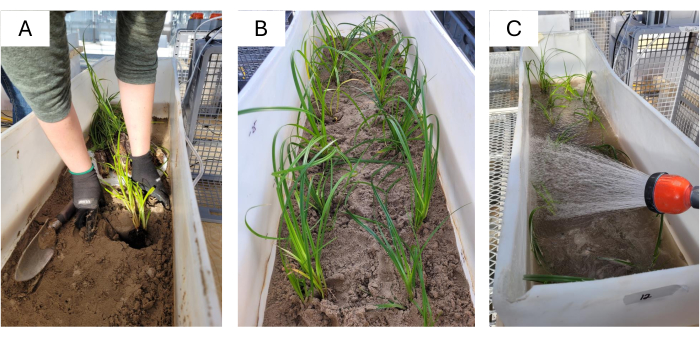
Figure 3: Planting species and RO water addition. (A) Addition of the tampered substrate and an example of planting species into the substrate. (B) Even distribution of the plant species throughout the mesocosm. (C) Addition of RO water to the mesocosms for the plant acclimation period. Abbreviation: RO = reverse osmosis. Please click here to view a larger version of this figure.
Plants demonstrated robust growth throughout the experiment, with notable increases in height and cover (Figure 4). Figure 5 further illustrates the steady growth of C. aquatilis, reaching heights of approximately 150 cm by day 40 before plateauing. This was within the expected growth range of 20-155 cm for C. aquatilis. Plant survival was high at 98%, with 99% alive plant tissue by the end of the experiment. However, most plants showed signs of chlorosis, necrosis, and/or mottling, and in some cases, deformed and crinkled leaves17. Routine monitoring of plant health is vital in the identification of potential issues, such as pest infestations.

Figure 4: Photos of plant growth at the experiment start and end. An example photo of the growth and health of Carex aquatilis from Day 0 to Day 78. Please click here to view a larger version of this figure.
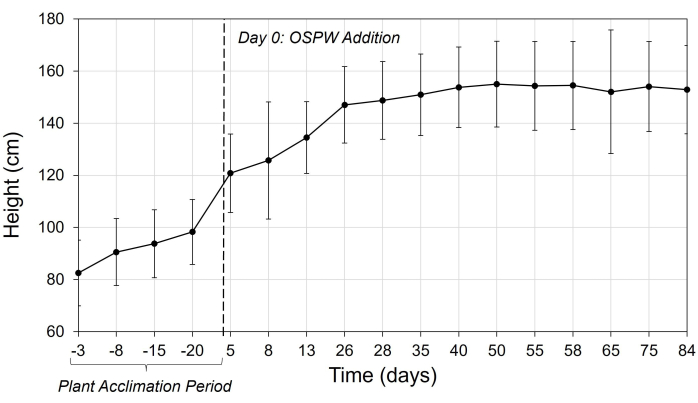
Figure 5: Plant height over time in the mesocosm containing Carex aquatilis. Mean plant height for Carex aquatilis in mesocosms (n = 48). Day 0 is when OSPW was added to the system. The plant acclimation period refers to the period when mesocosms contained RO water prior to OSPW addition. Error bars indicate one standard deviation of the mean. This figure was adapted from Trepanier et al.17. Abbreviations: RO = reverse osmosis; OSPW = oil sands process-affected water. Please click here to view a larger version of this figure.
Key environmental parameters, such as water DO and substrate redox, were routinely monitored to ensure optimal system performance since maintaining adequate oxygen levels is critical for plant health and effective contaminant removal in CWTS. Substrate redox values fluctuated throughout the experiment, with unplanted mesocosms remaining in oxidizing conditions between 50 mV and 100 mV, while mesocosms containing C. aquatilis occasionally approached 0 mV. The OSPW maintained DO levels > 5 ppm throughout the experiment, and DO was higher overall in mesocosms without plants, particularly by the end of the experiment (Figure 6). A DO of 8 ppm is often considered ideal for plant growth; however, a DO value above 5 ppm is acceptable. Routine monitoring allows for the identification of occasional declines in DO, which may prompt system checks, such as verifying pump functionality, to ensure consistent operation.
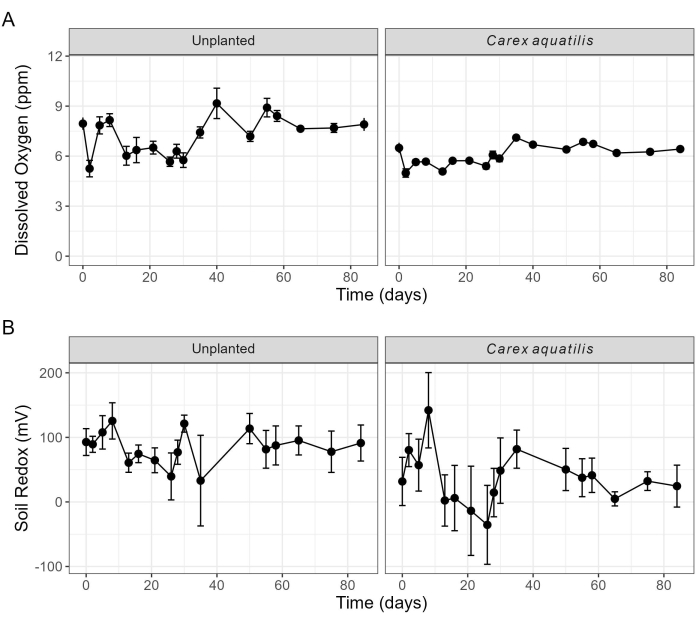
Figure 6: Dissolved oxygen and soil redox measurements within the mesocosms. (A) Dissolved oxygen in OSPW and (B) soil redox potential for mesocosms with Carex aquatilis and unplanted treatments with only OSPW. Data points represent averages from four replicate mesocosms (n = 4), with error bars indicating one standard error of the mean. Abbreviation: OSPW = oil sands process-affected water. Please click here to view a larger version of this figure.
The primary objective of the study was to evaluate the potential for NAFC attenuation from OSPW using a mesocosm CWTS. Figure 7 illustrates a gradual decline in NAFC concentrations throughout the experiment, demonstrating the system's effectiveness. The presence of C. aquatilis enhanced NAFC removal, achieving a 76% reduction in NAFCs over 82 days (72.1 mg/L initial to 17.1 mg/L final), compared to 8.5% in the unplanted control treatment over 82 days (64.5 mg/L initial to 59.0 mg/L final)17. The successful reduction in the concentration of NAFCs, along with healthy plant growth and favorable environmental conditions, confirm that the mesocosm setup is working effectively. These outcomes demonstrate the system's ability to simulate constructed wetlands and provide valuable insights into the role of CWTS in reducing the toxicity of OSPW.
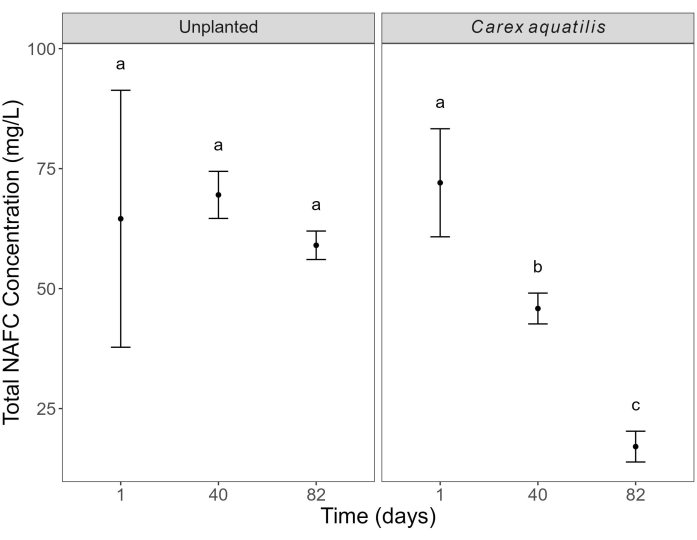
Figure 7: NAFC concentration over time in the mesocosms. Concentration of naphthenic acid fraction compounds in mesocosms with Carex aquatilis and unplanted treatments with only OSPW. Data points represent averages from four replicate mesocosms (n = 4), with error bars indicating one standard error of the mean. Differing letters between means indicate a significant difference (P < 0.05). This figure was adapted from Trepanier et al.17. Abbreviations: OSPW = oil sands process-affected water; NAFC = naphthenic acid fraction compounds. Please click here to view a larger version of this figure.
Discussion
CWTS have been used as a passive and cost-effective treatment for many wastewaters13; however, they are a relatively new method for treating OSPW for NAFC attenuation7,8,9,10,11,12,17,18. Using the methods described in this paper, the efficacy of CWTS can be enhanced by evaluating various design parameters.
Mesocosms are assembled as shown in Figure 1, ensuring proper drainage piping is installed. To prevent potential flow issues or uneven retention times caused by substrate clogging the outlets, a hose washer with a filter screen is placed on the bottom drainage plug, and the top drainage hole is positioned above the substrate level. If clogs occur despite these measures, a drainage auger or air pressure could be used to clear the blockages.
Mesocosms are placed on greenhouse tables reinforced with plywood, with reservoir buckets positioned at the ends of the tables for water recirculation. Water circulates through the system using gravity flow, entering at the inlet hose and exiting at the surface drainage hole end before cycling back to the reservoir. Retention time (days) was chosen based on previous constructed wetland studies7. Submersible circulating pumps are used to ensure continuous mixing of the reservoir. Dosing pumps are used to facilitate water movement between the mesocosm and reservoir. It is possible to connect one dosing pump to two mesocosms. The pumps should be set based on experimental objectives to attain the desired flow rate and retention time.
After mesocosm construction, the substrate is evenly packed into the mesocosms, plants are transplanted, and RO water is added. RO water is used initially during a plant acclimation period, to ensure a well-functioning system with healthy plants before initiating the experiment. After the acclimation period, mesocosms are drained, flushed with 100% OSPW for 24 h to ensure replacement of the porewater, and then, refilled with OSPW before beginning the experiment.
Key measurements that should be completed include plant health and growth metrics, substrate and water chemistry parameters, and concentrations of the target contaminant. Routine measurements of water and substrate parameters are taken once per cycle to ensure the mesocosm is operating as expected. It is recommended to measure water quality parameters, including DO, ORP, pH, and conductivity, once per cycle using a YSI Professional Plus Multiparameter instrument. Soil ORP and water DO are key parameters to monitor to ensure mesocosms maintain aerobic conditions.
The method described is highly adaptable and can be altered based on the treatment objectives. The main treatment modifications include but are not limited to, plant species, use of multiple plant species, retention time, environmental conditions, substrate composition and depth, and addition of fertilizers. Plant species should be chosen based on characteristics that enhance plant survival and phytoremediation effectiveness. Choosing native wetland plant species adapted to the local climate will improve the likelihood of successful growth and survival11,13,14. Plant species that are well suited for use in CWTS include those that develop deep and wide roots, strong rhizomes, rapid growth, sufficient oxygen transport, and have mechanisms to counteract salinity effects17,19,20. It is often recommended to avoid planting mixtures of plant species as increased plant diversity can lead to decreased certainty in the efficacy of the CWTS. Especially if one plant becomes dominant, it is difficult to model how the CWTS will behave14. The selected plant species will also impact evapotranspiration, which could have a concentration effect of salt and other contaminants.
It is important to ensure evapotranspiration is accounted for in the system; ensuring the OSPW level is maintained with RO-water. The use of municipal or non-RO water can lead to an increase in other constituents (e.g., chloride, calcium, fluoride), which may impact the findings of the mesocosm study. Altering the retention time may help with aeration, ensuring the various components and levels within the mesocosm do not become anaerobic which could lead to impacts on the microbial communities and plant health.
Pulsed or intermittent inflows can be used to simulate natural wetland dynamics (i.e., storm events and seasonal runoff). Ensuring the environmental variables (temperature, light conditions, and seasonal variations) are similar to those in the study area is important for extrapolating the work to large-scale CWTS, as it will reduce the number of new variables that will impact the system and the analysis of how these variables impact the efficacy of the CWTS in attenuating NAFCs. Choosing substrates for the mesocosms that can be used on a larger-scale CWTS will help inform the future design and increase the efficacy of the treatment system. In oil sands mining, coarse sand tailings and peat-mineral mix are substrates and have been previously tested in mesocosm studies to determine the optimal substrate to improve plant health, increase beneficial microbial communities, and help in the attenuation of NAFCs17.
The main limitation of this method is the restricted size and depth of the mesocosm, which may impact root growth and cause plants to become root-bound. These constraints can be overcome by reducing the length of the experiment and/or the number of individual plants used. If multiple species are used in the same mesocosm, there could be synergistic or additive effects from competition. Ultimately, the size and depth of the mesocosm may result in a shorter duration for the experiment, limiting the amount of data collected. Longer-term experiments can examine processes such as nutrient cycling, which occur when organic matter is added to the system through the accumulation and slow decomposition of plant detritus and root exudates. This may impact microbial communities and the rate of attenuation of contaminants. Additionally, the relatively short experimental time frame of this mesocosm design provides rapid feedback that can be used to enhance future experiments. Nutrients can be added to the mesocosm system; however, the type and amount of fertilizer added require extensive monitoring to prevent algae bloom.
The conditions in the greenhouse are set to create an optimal growing environment; the temperature ranges are set to appropriately reflect the seasonal temperatures of the region, with gradual changes implemented to simulate natural diurnal fluctuations. Humidity levels are also managed to vary within a range representative of the regional climate. Additionally, the greenhouse is designed to receive 25,000 lux, equivalent to approximately 200 W/m² of ambient daylight, during the designated daylight hours. To ensure consistent light intensity, LED lights are activated whenever natural light levels fall below this threshold. Using a greenhouse also has its limitations. While it provides a controlled environment, greenhouses can also present unique challenges such as pest infestations, greenhouse effects, and the creation of unnatural environments. Pest infestations are particularly common in greenhouse environments and can impact plant health and growth. To reduce the use of insecticides, natural predators or physical pest removal are great alternatives. Despite these challenges, a greenhouse remains the optimal environment to conduct a pilot study as it allows for precise control and examination of individual parameters14.
This method represents one of many approaches to designing mesocosm experiments. Pilot-scale CWTS experiments can be conducted either outdoors10,21 or indoors4,17. Outdoor mesocosms are influenced by multivariate environmental factors, which can interact in complex and unpredictable ways. These interactions make it challenging to model individual variables or elucidate the specific mechanisms driving observed outcomes. As a result, it becomes difficult to determine which factors are contributing to the CWTS performance and identify opportunities for improving system design; however, they more closely replicate full-scale CWTS conditions14. In contrast, indoor mesocosms provide a more controlled environment, minimizing the effects of nature and other external influences, making it easier to understand processes and identify design parameters that can enhance performance.
CWTS designs typically feature either horizontal surface flow4,10,17,18 or vertical subsurface flow18. The method described here represents a horizontal surface flow mesocosm design. While vertical flow systems rely on gravity to facilitate vertical water movement, offering better oxygenation and requiring less space, horizontal flow systems maintain more stable conditions10 and enhance phytoremediation potential22. Mesocosms offer significant advantages for developing CWTS by testing integral components and enhancing efficiencies for future large-scale applications, allowing for replicability and control of the surrounding environment, and enabling the isolation and measurement of individual experimental parameters, while also tracking biotic changes and chemical dissipation pathways.
Disclosures
The authors have no conflicts of interest to disclose.
Acknowledgements
Funding for this research was provided by Genome Canada Large Scale Applied Research Project (LSARP, grant #18207) and the Canadian Forest Service Cumulative Effects funding program. We would like to thank Imperial Oil Ltd. for supplying the materials used in this research. We would also like to thank everyone who assisted in the experiments: Ian J. Vander Meulen, Jason M.E. Ahad, Sara Correa-Garcia, Simon Morvan, Marie-Josée Bergeron, Dilini Atugala, Lisa Gieg, John V. Headley, Étienne Yergeau, and Christine Martineau. We would also like to thank Douglas Muench for experimental and mesocosm design. We would also like to thank the staff at the Northern Forestry Centre and summer students who assisted throughout the experiments. We would like to acknowledge that our research was conducted on Treaty 6 territory and the materials sources for these experiments were collected from Treaty 8 territory. We acknowledge and honor First Nations, Métis, and Inuit peoples who lived, gathered, and traveled on these lands.
Materials
| Name | Company | Catalog Number | Comments |
|---|---|---|---|
| 2-inch x 4-inch x 12 ft Lumber | Any Supplier | N/A | |
| 3/4-inch Brass PEX Ball Valve | Any Supplier | N/A | |
| 3/4-inch Copper PEX Crimp Ring for PEX Pipe | Any Supplier | N/A | |
| 3/4-inch IPEX Schedule 40 PVC 90° Welding Street Elbow | Any Supplier | N/A | |
| 3/4-inch PEX Stick White | Any Supplier | N/A | For the outside of the mesocosm |
| 3/4-inch PEX x 3/4-inch MPT Brass adapter | Any Supplier | N/A | |
| 3/4-inch Plastic Expansion Elbow Fitting for PEX | Any Supplier | N/A | |
| 3/4-inch Plastic Expansion Tee for PEX | Any Supplier | N/A | |
| 3/4-inch PVC Bulkhead Fitting Water Tank Connector Adapter | Any Supplier | N/A | |
| 3/4-inch PVC Schedule 40 / 90 Degree Elbow | Any Supplier | N/A | |
| 3/4-inch PVC Schedule 40 Male Adapter | Any Supplier | N/A | |
| 3/4-inch PVC White | Any Supplier | N/A | For the inside of the mesocosm |
| 4-inch Wood Screws | Any Supplier | N/A | |
| Aluminum Foil | Any Supplier | N/A | |
| Aquarium Submersible Powerhead Circulation Pump | Any Supplier | N/A | Suction cup or magnetic |
| Hose Washer | Any Supplier | N/A | |
| Miracle Grow water-soluble plant food | Miracle Grow | N/A | 24-8-16 formula |
| Neptune Apex A3 Aquarium Controller and Power Bar | Neptune Systems | N/A | |
| Neptune Apex DOS Quiet Drive Dosing Pump | Neptune Systems | N/A | |
| Neptune AquaBus Cable - 15-Foot Male/Male | Neptune Systems | N/A | |
| Neptune DOS DDR Tubing | Neptune Systems | N/A | |
| Open Top Plastic Industrial Drum | Any Supplier | N/A | 57 L |
| Petri dish | Any Supplier | N/A | For seed stratication |
| Peat | Any Supplier | N/A | |
| Polypropylene Tank | D&M Plastics Inc. | RW1016 | 50.8 cm height × 33.0 cm width × 129.5 cm length; 248.1 L |
| Silicone All-Purpose Waterproof Sealant (Aquarium Grade) | Any Supplier | N/A | |
| Standard styroblock containers (415A) | Any Supplier | N/A | |
| Teflon Tape | Any Supplier | N/A | |
| YSI Professional Plus Multiparameter instrument | YSI Inc. | 6050000 |
References
- Alberta Geological Survey Oil Sands. , Alberta Geological Survey. https://ags.aer.ca/our-science/oil-and-gas/oil-sands (2024).
- Alberta Geological Survey. Energy Regulator State of Fluid Tailings Management for Mineable Oil Sands, 2020. , 83(2021).
- Allen, E. W. Process water treatment in Canada's oil sands industry: II. A review of emerging technologies. J Environ Eng Sci. 7 (5), 499-524 (2008).
- McQueen, A. D., et al. Performance of a hybrid pilot-scale constructed wetland system for treating oil sands process-affected water from the Athabasca oil sands. Ecol Eng. 102, 152-165 (2017).
- Hughes, S. A., et al. Using ultrahigh-resolution mass spectrometry and toxicity identification techniques to characterize the toxicity of oil sands process-affected water: The case for classical naphthenic acids. Environ Toxicol Chem. 36 (11), 3148-3157 (2017).
- Morandi, G. D., et al. Effects-directed analysis of dissolved organic compounds in oil sands process-affected water. Environ Sci Technol. 49 (20), 12395-12404 (2015).
- Ajaero, C., et al. Fate and behavior of oil sands naphthenic acids in a pilot-scale treatment wetland as characterized by negative-ion electrospray ionization Orbitrap mass spectrometry. Sci Total Environ. 631 - 632, 829-839 (2018).
- Ajaero, C., et al. Developments in molecular level characterization of naphthenic acid fraction compounds degradation in a constructed wetland treatment system. Environments. 7 (10), 1-16 (2020).
- Cancelli, A. M., Gobas, F. A. P. C. Treatment of naphthenic acids in oil sands process-affected waters with a surface flow treatment wetland: Mass removal, half-life, and toxicity-reduction. SSRN Electronic Journal. 213, 113755(2022).
- Cancelli, A. M., Gobas, F. A. P. C. Treatment of polycyclic aromatic hydrocarbons in oil sands process-affected water with a surface flow treatment wetland. Environments. 7 (9), 1-16 (2020).
- Cancelli, A. M., Borkenhagen, A. K., Bekele, A. A vegetation assessment of the Kearl treatment wetland following exposure to oil sands process-affected. Water. 14 (22), 1-18 (2022).
- Simair, M. C., et al. Treatment of oil sands process affected waters by constructed wetlands: Evaluation of designs and plant types. Sci Total Environ. 772, 145508(2021).
- Constructed Treatment Wetland. , Interstate Technology Regulatory Council Mining Waste Treatment Technology Selection. https://projects.itrcweb.org/miningwaste-guidance/to_const_treat.htm (2010).
- Haakensen, M., Pittet, V., Spacil, M. M., Castle, J. W., Rodgers, J. H. Jr Key aspects for successful design and implementation of passive water treatment systems. J Environ Solutions Oil Gas Mining. 1 (1), 59-81 (2015).
- Get started identifying the Apex and EB832. , Available from: https://help.neptunesystems.com/getstarted/apexng/ (2024).
- Pouliot, R., Rochefort, L., Graf, M. D. Impacts of oil sands process water on fen plants: Implications for plant selection in required reclamation projects. Environ Pollut. 167, 132-137 (2012).
- Trepanier, K. E., Vander Meulen, I. J., Ahad, J. M. E., Headley, J. V., Degenhardt, D. Evaluating the attenuation of naphthenic acids in constructed wetland mesocosms planted with Carex aquatilis. Environ Monit Assess. 195 (10), 1228(2023).
- Hendrikse, M., et al. Treatment of oil sands process-affected waters using a pilot-scale hybrid constructed wetland. Ecol Eng. 115, 45-57 (2018).
- Albert, R., Popp, M. Chemical composition of halophytes from the Neusiedler Lake region in Austria. Oecologia. 27 (2), 157-170 (1977).
- Cooper, A. The effects of salinity and waterlogging on the growth and cation up take of salt marsh plants. New Phytol. 90 (2), 263-275 (1982).
- Reis, P. C. J., et al. Microbial degradation of naphthenic acids using constructed wetland treatment systems: metabolic and genomic insights for improved bioremediation of process-affected water. FEMS Microbiol Ecol. 99 (12), fiad153(2023).
- Yang, L., Bekele, A., Gamal El-Din, M. Comprehensive characterization of organics in oil sands process water in constructed mesocosms utilizing multiple analytical methods. Environ Res. 252, 118972(2024).
Reprints and Permissions
