Δ9-tetrahydrocannabinol (THC) is the intoxicating constituent in cannabis and a controlled substance in the United States. This article outlines standard procedures for obtaining, storing, and administering THC to mice complying with current legal regulations and briefly introduces a method to assess basic pharmacodynamic effects of THC in rodents.
Method Article
Administration of Δ9-Tetrahydrocannabinol (THC) in Adolescent and Adult Mice
In This Article
Summary
Abstract
Δ9-tetrahydrocannabinol (THC) is responsible for the intoxicating (psychotropic) effects of cannabis and cannabis-derived products currently available in the legal and illegal markets. The psychotropic effects of THC are produced via activation of CB1 cannabinoid receptors in the brain, which are normally engaged by endogenous cannabinoid (endocannabinoid) substances. Outside the brain, THC contributes to the regulation of a wide range of physiological processes by activating CB1 and CB2 receptors. The physiological functions served by endocannabinoid substances and cannabinoid receptors - collectively known as the endocannabinoid system - change considerably throughout the lifespan, with adolescence being a period of heightened sensitivity to the contributions of this signaling complex. This article describes a protocol for preparing THC for parenteral administration and assessing its acute pharmacodynamic effects in mice of both sexes at two developmental stages: adolescence and young adulthood. Focusing on three doses that are widely used in the literature (1, 5, and 10 mg/kg) and the intraperitoneal route, the well-known effects of THC-catalepsy induction, locomotor activity inhibition, and nociception suppression-are illustrated. Moreover, given THC's status as a controlled substance in the United States, the procedures for obtaining and storing it in compliance with current legislation are briefly outlined.
Introduction
The prevalence of cannabis use in the adult population of the United States has climbed continuously in the last decades and remained high in 2023. Among adults aged 19 to 30, approximately 42% reported using cannabis in the past year, 29% in the past month, and 10% reported daily or quasi-daily use (20 or more times in the past 30 days)1. For adults aged 35 to 50, the figures are 29%, 19%, and 8%, respectively. Although these estimates are not statistically different from those obtained in 2022, they indicate increases over the past 5 and 10 years for both demographic groups1. Importantly, current evidence suggests that approximately 9% of people who use cannabis develop tolerance to and dependence on the drug - a condition known as cannabis use disorder (SUD)2 and a potential health concern3.
As with other psychoactive drugs, cannabis use typically starts in the early teenage years and progressively increases throughout adolescence. In 2023, 8% of 8th graders in the United States, 18% of 10th graders, and 29% of 12th graders reported having used the drug at least once4. Though relatively stable for the last few years, even in the face of a decreased perception of risk5,6, these numbers remain too high. In addition to its widespread non-medical use, cannabis has shown therapeutic potential across a range of medical conditions7,8. A synthetic form of its intoxicating (psychotropic) constituent, Δ9-tetrahydrocannabinol (THC) (Figure 1), has been used for more than 40 years as a prescription medication to treat nausea and appetite loss in HIV and cancer patients undergoing chemotherapy9,10. Both THC and its analog cannabidiol (CBD) (Figure 1), which is not psychotropic, have been implicated in the management of pain, inflammation, and various neurological disorders11,12. Therefore, the rapid spread of medicinal cannabis-derived products - e.g., in childhood epilepsy and autism - is also introducing new groups of young people to the drug. These developments are especially concerning in a social context where legislative changes and broadening acceptance fuel financial interests that can override public health and safety concerns13.
THC-containing cannabis ('marijuana') is consumed in various forms, including smoking, vaporizing, edibles, tinctures, and oils. Once ingested, THC distributes throughout the body and enters the brain, where it produces euphoria, relaxation, altered sensory perception, and increased appetite, although it can also cause anxiety and paranoia in some individuals14,15. THC interacts with the endocannabinoid (ECB) system by activating two types of cannabinoid (CB) receptors located both inside and outside the brain15,16. In the brain, where CB1 receptors are most abundant, their activation affects mood, pain perception, appetite, and cognition, among other functions. THC also activates CB1 and CB2 receptors in peripheral organs, influencing systemic energy metabolism - including nutrient intake, absorption, and storage - as well as pain initiation, inflammation, and immunity17,18.
THC exerts both acute and persistent effects, and additional preclinical and clinical research on the long-term consequences of cannabis use is still required. Special emphasis should be given to the potential adverse reactions to high-dose THC, considering that the average THC concentration in the cannabis sold in the United States has increased over the last decades from 8.9% in 2008 to 17.1% in 201719 and even higher in recent years. 'High-potency cannabis products' (products containing high concentrations of THC) are common in many legal markets throughout the United States, where the average THC content in cannabis flower is 20-35%, with some extractive products reaching up to 90% THC. At these high dosages, THC may have qualitatively different effects than those produced by the traditional 'low-potency cannabis' used in the 1970s and 1980s, which contained 6% THC or less20. Thus, understanding the pharmacology of high-potency cannabis products is critical to inform preventive strategies and guide regulatory and fiscal policy. Additionally, understanding how factors such as age, genetics, and pre-existing conditions influence individual responses to THC can help tailor prevention and treatment to specific populations. In particular, the consequences of cannabis use by teenagers and expecting or nursing mothers should be further investigated as cannabinoid exposure during prenatal/perinatal and adolescent periods, in which the ECB system plays a key neurodevelopmental role, could lead to persistent negative consequences21. Also, more research is needed to understand how THC interacts with other medications or substances. Comprehensive data on the safety and efficacy of THC can inform regulatory decisions and public health policies, ensuring safe use in both medical and non-medical contexts.
Here, we outline standard procedures for obtaining, storing, and administering THC in a laboratory setting in accordance with current United States legislation (the Controlled Substance Act of 1971). Focusing on three THC doses widely used in the scientific literature (1, 5, and 10 mg/kg)22 and the intraperitoneal (i.p.) route of administration, three classical effects on THC were illustrated: induction of catalepsy, inhibition of locomotor activity, and antinociception. This protocol can also be used following multiple THC injections to study the consequences of chronic THC use, which leads to tolerance and a range of mental health consequences that are not typically observed with acute administration in humans.
Protocol
All procedures were approved by the IACUC of the University of California, Irvine, and were carrie out in strict accordance with the National Institutes of Health (NIH) guidelines for the care and use of experimental animals.
1. Procedures for obtaining and storing THC
NOTE: In the United States, using THC in an academic research setting requires following several steps demanded by cannabis' legal status. Both cannabis and cannabis-derived THC are classified as Schedule I controlled substances. For this reason, before cannabis or THC can be purchased, researchers must obtain a license from the Drug Enforcement Administration (DEA). An overview of this process, which can take up to 6 months or more, is provided below.
- Determining the scope of research: Define the purpose and objectives of the research process and specify why THC is necessary. Develop a research protocol detailing the amounts of THC needed, its commercial source, and how it will be handled and stored. Include as much relevant detail as possible.
- Receiving Institutional Regulatory Approval: Submit the research proposal to the local institution's Animal Care and Use Committee (IACUC) (for preclinical work) or Institutional Review Board (IRB) (for clinical work). This review step protects the rights of research subjects and ensures that the study complies with ethical standards.
- Compliance with State Regulations: Be mindful of any state-specific regulations regarding cannabis research, as these can vary significantly. For instance, in California, obtain approval from the Research Advisory Panel of California (RAPC)23.
- Obtaining THC: Purchase cannabis and THC from cultivators or manufacturers who are licensed for this purpose.
NOTE: A list of approved cultivators is available on the DEA's website. The National Institute on Drug Abuse (NIDA) provides THC through the NIDA Drug Supply Program24. To apply for this program, information must be provided about an institution, a detailed research protocol, and documentation of institutional regulations such as IACUC or IRB approval letters. Completion of DEA Form 222, which is the single-page form specifically designated for each DEA registration number, is required for the purchase or transfer of Schedule 1 controlled substances. - Receiving and storing THC
- Store THC in a securely locked safe or vault that follows a design approved by the DEA. Access to the research area should be controlled (for example, the building's and/or lab's doors should be locked). Only authorized personnel should have access to THC.
- Prepare and set a list of individuals who are allowed to access it, and keep the list updated. Clearly label THC containers with name, concentration, date received, and hazard warnings.
- Follow established disposal procedures, which require specific documentation and adherence to federal and state regulations. Keep THC at or below -20 °C.
- Inventory management:
- Implement a robust inventory system to track the THC's quantity, use, and location. Preparare a Controlled Substance Binder, which includes a Schedule 1 license, authorized personnel information, records of all receipts, disposals, and any substance usage (Figure 2).
- Conduct regular audits of the inventory and storage practices by completing the biannual inventory log to ensure compliance with regulatory requirements. Check access logs and inventory records periodically.
- Training and protocols: Training should be provided for all personnel who handle THC. Clear protocols should be established for storage, handling, and disposal of the drug.
NOTE: By implementing these practices, academic labs can ensure they comply with legal requirements and maintain a safe research environment.
2. Procedures for administering THC to mice by i.p. injection
NOTE: When handling THC, it is essential to control temperature and protect the compound from light to preserve its stability. THC is sensitive to heat and should be stored at or below -20 °C for long-term storage. For short-term storage, THC can be kept at room temperature or refrigerated at 4 °C for several hours. THC is also sensitive to ultraviolet (UV) and visible light, which can cause degradation through oxidation. To prevent this, THC should be stored in airtight amber glass containers or clear containers wrapped in aluminum foil and stored in the dark. It is recommended to label all samples with dates and storage conditions to ensure proper tracking and stability.
- Materials
- Prepare all solutions using ultrapure water and analytical-grade reagents. Obtain THC from Cayman Chemical (Ann Arbor, MI) or RTI International (Research Triangle Park, NC) or through the NIDA Drug Supply Program24.
- Equipment and supplies
- Ensure the items listed in the Table of Materials are ready before beginning the procedure.
NOTE: It is essential to use glass vials (8 mL or similar) and containers when working with THC. Plastics can react with or absorb hydrophobic molecules such as THC, which can lead to sample loss or inconsistent concentrations. Glass is chemically stable and non-reactive, which helps prevent unwanted interactions with hydrophobic molecules.
- Ensure the items listed in the Table of Materials are ready before beginning the procedure.
- Procedures for THC administration in mice
- Remove the THC container from the safety locker in the freezer.
- Keeping the container on ice, withdraw an appropriate volume of THC using a pipette and carefully add it to the bottom of an 8 mL glass vial. Calculate the volume based on the dose (mg/kg) and the body weight of the mice (g).
- Move the vial to a chemical fume hood and gently evaporate the solvent to dryness with a gentle stream of nitrogen gas. Take care not to splash the THC-containing solution on the sides of the vial, as this will result in severe loss. This process takes approximately 5-10 min.
- Record in the Controlled Substance I Usage Log in the Controlled Substance Binder how much THC was taken from the vial currently being used.
- When the solvent is completely dried, add an appropriate volume of Tween-80. This is the volume of Tween-80 required to obtain a final 5% concentration of Tween-80 in saline, as shown in step 2.3.8.
- Warm the vial in a beaker containing hot water at or below 60 °C. Vortex the vial to fully dissolve THC and repeat as needed.
- Gradually add sterile saline in small increments: for example, 200 µL, 300 µL, 500 µL, and 1 mL. Vortex and heat up.
- Repeat steps 2.3.6 and 2.3.7 until the total volume of saline needed has been added to make a final THC solution in 5% Tween-80 and 95% saline and the solution is fully dissolved.
- (OPTIONAL) Sonicate the vial in an ultrasonic water bath set to approximately 100% power at 40 kHz and 37 °C for 5 min. Verify that the solution is clear and free of any undissolved substance. The color of the liquid may vary depending on the vehicle used.
- Weigh the mouse and determine the appropriate amount to inject.The volume of injection should be 10 mL/kg per mouse.
- Proceed with the intraperitoneal (i.p.) injections. Ensure that THC solutions are freshly prepared on the day of use.
3. Procedures for assessing the pharmacological effects of THC
- Animals
- Use mice of both sexes for this study.
NOTE: In this study, adolescent (postnatal day, PND, 30-35) and adult (PND 70-75) C57BL/6J mice of both sexes from Jackson Laboratories (Farmington, CT) were used.
The procedure is applicable to other mouse strains. - House the mice in ventilated cages (4-5 per cage) with food and water available ad libitum. Assign age- and weight-matched animals randomly to treatment groups and allow them to acclimate for at least 1 week before experiments.
- Maintain the housing rooms on a 12-h light/12-h dark cycle (lights on at 6:30 AM) with constant temperature (20 ± 2 °C) and relative humidity (55%-60%).
- Use mice of both sexes for this study.
- Experimental groups
- Divide each age and sex group into four treatment groups: one vehicle control group and three THC treatment groups for 1, 5, and 10 mg/kg doses.
- Drug administration
- Freshly prepare THC as described above in a vehicle of 95% saline with 5% Tween-80 and administered by i.p. injection.
- Behavioral testing
NOTE: In this example, each animal underwent the tests described below to track THC's effects22. The three behavioral tests were conducted successively on the same cohort of animals. The order of the procedures was: locomotion (30 min post-THC), catalepsy (45 min post-THC), and tail immersion (60-, 180- and 300-min post-THC) (Figure 3). For the adolescent female experiments, we reused the same Vehicle-treated group and then administered either 1 mg/kg or 10 mg/kg THC to the same cohort in order to conduct the catalepsy and tail immersion tests. This approach allowed us to reach sufficient statistical power while minimizing the number of animals used, in accordance with ethical guidelines. Behavior was recorded using a Camcorder, and movie files were analyzed using behavioral tracking software.- Catalepsy test
NOTE: Catalepsy in mice is a (patho)physiological state characterized by a lack of voluntary movement, rigidity of posture, and resistance to externally induced changes in body position. It is considered one of four standard effects of THC, along with locomotor inhibition, antinociception, and decreased body temperature. In this example, cataleptic behavior was assessed based on established procedures22, as detailed below:- Setup: Prepare a horizontal bar (7 cm in length) elevated 4 cm above the surface of a clean lab bench with normal ambient illumination (160 lux). Place an electronic timer nearby that is ready for use.
- Transfer the mouse from the housing facilities to the testing lab and acclimate it within the cage for 60 min before testing. Wear a clean lab coat and no perfume.
- Using clean latex gloves, gently remove the mouse from its cage, safely administer an appropriate amount of THC or vehicle, and place it back into the cage.
- At an appropriate time after THC injection (45 min in this case), remove the mouse from the cage and gently place its front paws on the horizontal bar.
- Record immobility time using the electronic timer.
NOTE: Immobility time is defined as the time passed from when the mouse is placed on the bar to the moment it removes one or both paws. - Stop the timer when the mouse removes one or both of their paws from the bar or when the cutoff time of 10 s is reached.
- Repeat the test twice for each mouse, with a rest interval of 2 min between trials.
- Use the average of the two immobility times for final data analysis.
- Outcome measure: Use immobility time (in seconds) as an indicator of catalepsy.
- Open-field test (Locomotor activity in a novel environment)
NOTE: THC-induced hypo-locomotion is assessed using the open-field test and following an established protocol25.- Setup: Use an open-field arena equipped with video tracking equipment for this test. Ensure that the open-field arena is clean and free of odor cues from previous experiments.
NOTE: Effective cleanup can be done using commercially available products described in the Table for Materials. - Transfer the mouse from the housing facilities to the testing lab and acclimate it within its cage for 60 min before testing. Ensure that the testing room has low-intensity illumination (10 lux)25. Wear a clean lab coat, and do not use perfume.
- Using clean gloves, gently remove the mouse from its cage, safely administer an appropriate amount of THC or vehicle, and place the mouse back into the cage.
- At an appropriate time after THC injection (30 min in this case), place the mouse gently in the center of the arena, taking care to minimize handling stress.
- Record 10-min sessions using a camcorder and behavioral tracking software.
- After the test, return the mouse to its home cage and clean the arena thoroughly with the cleaning solution described above.
- Outcome measure: Calculate the total distance traveled, measured in meters, as the primary parameter to quantify locomotor activity.
- Setup: Use an open-field arena equipped with video tracking equipment for this test. Ensure that the open-field arena is clean and free of odor cues from previous experiments.
- Tail immersion test (Nociceptive thresholds, also referred to as the Hot Water Tail Withdrawal Test)
NOTE: Nociception is evaluated using the tail immersion test, as previously described26. This test is used to evaluate the effectiveness of potential analgesics and to assess tolerance to their effects. During the test, heat is applied to a mouse's tail as a painful stimulus, and the time to withdraw the tail away from the heat source is measured.- Setup: Prepare a water bath maintained at 54 °C under normal ambient illumination (160 lux). Place an electronic timer nearby that is ready for use.
- Gently restrain the mouse using a soft tissue pocket crafted using pet training pads (Glad), ensuring the tail remains accessible.
- Immerse the distal one-third of the tail into the water bath and start the timer simultaneously.
- Record the latency to tail withdrawal (in seconds), defined as the reflexive flicking of the tail.
- Set a maximum cutoff time of 10 s to prevent tissue damage and discomfort.
- Repeat the measurement twice for each mouse at each time point (in this case, 60, 180-, and 300-min post-THC injection), with a 5-min interval between trials.
- Average the two latency measurements for data analysis.
- Outcome measure: Calculate the latency to tail withdrawal, measured in seconds, as the primary outcome variable to evaluate antinociceptive effects.
- Catalepsy test
- Statistical analyses
- Express results as means ± SEM. Determine significance using two-way analysis of variance (ANOVA) followed by Šídák's multiple comparisons test or three-way ANOVA followed by Tukey's multiple comparisons test. Consider the differences significant if P < 0.05.
NOTE: GraphPad Prism version 10.4 was used to perform the analysis.
- Express results as means ± SEM. Determine significance using two-way analysis of variance (ANOVA) followed by Šídák's multiple comparisons test or three-way ANOVA followed by Tukey's multiple comparisons test. Consider the differences significant if P < 0.05.
Results
To illustrate the protocol outlined above, we present results on THC's acute pharmacological effects. Four groups of mice (8 per group), adolescent male, adult male, adolescent female, and adult female, were given three doses of THC - 1, 5, and 10 mg/kg - along with vehicle as a control. Then, catalepsy, locomotor activity, and nociception were assessed, focusing on the dose-dependency of the effects and differences across sexes and ages.
First, for the acute cataleptic effects, THC produced dose-dependent catalepsy in adolescent and adult male mice (Figure 4A and Table 1). The duration of the response was dose-dependent (P<0.0001, two-way ANOVA), with 5 and 10 mg/kg producing statistically significant effects in both age groups, compared to vehicle controls in each group (P < 0.0001 by Šídák's multiple comparisons test). At the 10 mg/kg dose, THC produced catalepsy both in adolescent and adult female mice (Figure 4B and Table 2), with adult females showing a less marked response compared to adolescent females (P < 0.0001 by Šídák's multiple comparisons test). The datasets were further analyzed to determine whether sex affected THC-induced catalepsy. A modest but significant sexually dimorphic response was observed in female adolescents compared to males (P = 0.0204) (Figure 4C and Table 3). A considerably stronger effect of sex was found in female adults, which were significantly less sensitive to THC's cataleptic effects compared to male adult mice (P < 0.0001) (Figure 4D and Table 4).
Second, for the acute locomotor effects, THC reduced locomotor activity in male mice (Figure 5A and Table 5). This effect was both THC dose- and animal age-dependent (P < 0.0001 and P = 0.0042, respectively), with adolescent mice being more sensitive to the effect of THC compared to adult mice. Post-hoc multiple comparison tests indicated that at 5 mg/kg THC dose, adolescent mice moved significantly less than adult mice (P < 0.0001). THC reduced locomotor activity also in female mice (Figure 5B and Table 6). Two-way ANOVA showed significant effects of both dose and age also in female mice (P < 0.0001 and P = 0.0103, respectively) (Figure 5B and Table 6). However, post-hoc multiple comparison tests did not reveal statistically significant differences between adolescent and adult female mice at either 0 or 10 mg/kg THC doses (Figure 5B). These datasets were further analyzed to determine whether sex affected THC-induced hypo-locomotion. Sexual dimorphism was not observed in adolescent mice (Figure 5C and Table 7); however, adult mice exhibited statistically significant sexual dimorphism (P = 0.0046), with adult females showing significantly higher movement compared to adult males. Nevertheless, post-hoc multiple comparison tests did not reveal statistically significant differences between sexes at either 0 or 10 mg/kg THC doses (Figure 5D and Table 8).
Third, for the acute antinociceptive effects, THC reduced tail immersion nociception in male mice (adolescents, Figure 6A and Table 9; adults, Figure 6C and Table 11). In adolescent males, THC produced significant antinociceptive effects at 5 and 10 mg/kg, tested at 60, 180, and 360 minutes after administration (P < 0.0001 by Šídák's multiple comparisons test, relative to tail-flick latency of vehicle control mice) (Figure 6A and Table 9). Two-way ANOVA confirmed the strong effects of THC dose on tail flick latency (P < 0.0001) and showed a time-dependent decrease in antinociceptive effects, especially at the highest dose (P = 0.0133) (Figure 6A and Table 9). A similar THC dose-dependent effect, but not the effect of time, was observed in female adolescent mice (P < 0.0001 and P = 0.9923, respectively) (Figure 6B and Table 10). In adult males, THC produced significant antinociceptive effects only at the highest dose (10 mg/kg) and the earliest time point (60 min after administration) (P < 0.0001 by Šídák's multiple comparisons test, compared to vehicle controls) (Figure 6C and Table 11). Two-way ANOVA showed a significant effect of both dose and time (dose, P < 0.0001; time, P = 0.0007) (Table 11). In adult females, a significant antinociceptive effect was observed only at the highest dose (10 mg/kg) and earliest time point (60 min after administration) (P < 0.0012 by Šídák's multiple comparisons test, relative to vehicle controls) (Figure 6D and Table 12). Regarding the effects of sex and age on THC-induced antinociception, two-way ANOVA revealed that the effects of THC on tail flick latency were affected by both age and sex (Figure 6E,F, Table 13, and Table14). The strongest effect was observed in adolescent males 60 min after THC administration, although all four groups of mice displayed significant THC-induced antinociception when compared to the appropriate vehicle controls at this time point (Figure 6E). Interestingly, a significant effect of sex was observed in adolescent but not adult mice at the 60 min post-THC time point (adolescents, P = 0.0083; adults, P = 0.9919 by Šídák's multiple comparisons test) (Figure 6E and Table 13). At the 300 min post-THC time point, significant antinociceptive effects were found only in adolescent mice, both male and female, but not in adult mice (Figure 6F and Table 14). Three-way ANOVA tested the three variables, dose, age, and sex, simultaneously and revealed significant effects of both the time and dose (P = 0.0007 and P < 0.0001, respectively) and the significant interaction between time and dose (P = 0.0022) (Table 15).

Figure 1: Chemical structures of phytocannabinoids, THC and CBD, and endocannabinoids, anandamide, and 2-AG. Delta-9-tetrahydrocannabinol (THC) is produced in the inflorescence of the female cannabis plant and is responsible for its psychotropic effects; THC acts by binding to G protein-coupled CB1 and CB2 receptors in the brain and other tissues of the body. Cannabidiol (CBD) is a non-psychotropic cannabinoid with antiepileptic and possibly antipsychotic and anti-inflammatory properties. Two main endogenous activators of CB receptors, anandamide and 2-arachidonoyl-sn-glycerol (2-AG), are lipid-derived messengers in the brain and peripheral tissues, produced on demand, and are involved in various short-range signaling processes such as fine-tuning synaptic plasticity in the CNS. Please click here to view a larger version of this figure.
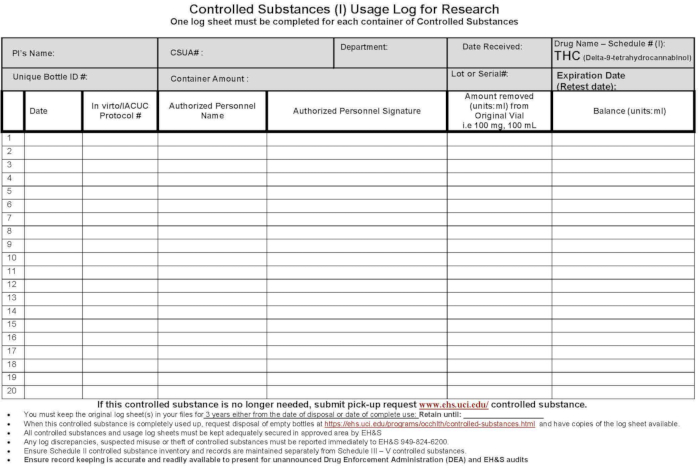
Figure 2: Example of a Controlled Substance I Usage Log. Any usage of THC should be recorded in an ad-hoc Controlled Substance I Usage Log, which is kept in the Controlled Substance Binder stored in a locked cabinet or a secure office space. This form should include the name and affiliation of the Principal Investigator who must be registered for a Schedule 1 license, information on the scheduled drug and the exact batch, protocol number, authorized person who is using the drug with the quantity and balance for each use. Please click here to view a larger version of this figure.

Figure 3: Schematic showing the order of behavioral testing experiments. The order of the procedures was: locomotion (30 min post-THC), catalepsy (45 min post-THC), and tail immersion (60-, 180- and 300-min post-THC). Please click here to view a larger version of this figure.
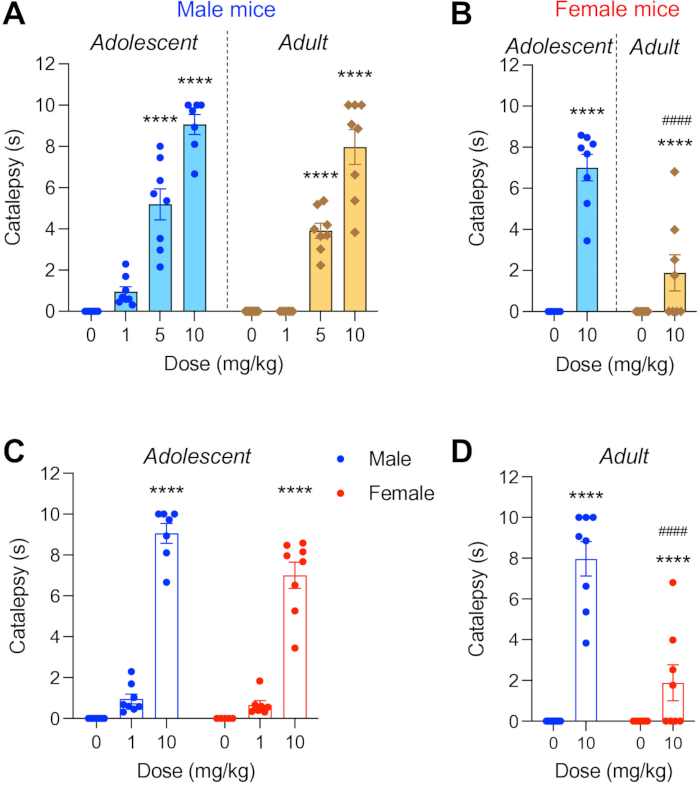
Figure 4: THC-induced acute catalepsy in mice. THC produces catalepsy in adolescent and adult (A) male and (B) female mice. The response was assessed using the bar test after i.p. injection of THC at the indicated dose. The same dataset was analyzed for the effects of sex on THC-induced catalepsy in (C) adolescent and (D) adult male and female mice. Results are expressed as means ± SEM. Significance was determined using two-way ANOVA followed by Šídák's multiple comparisons test. Differences were considered significant if P < 0.05. ****P < 0.0001 compared to the vehicle control, ##P < 0.01, and ####P < 0.0001 compared to the adolescent 10 mg/kg group in panel B or male 10 mg/kg group in panels C and D. Please click here to view a larger version of this figure.
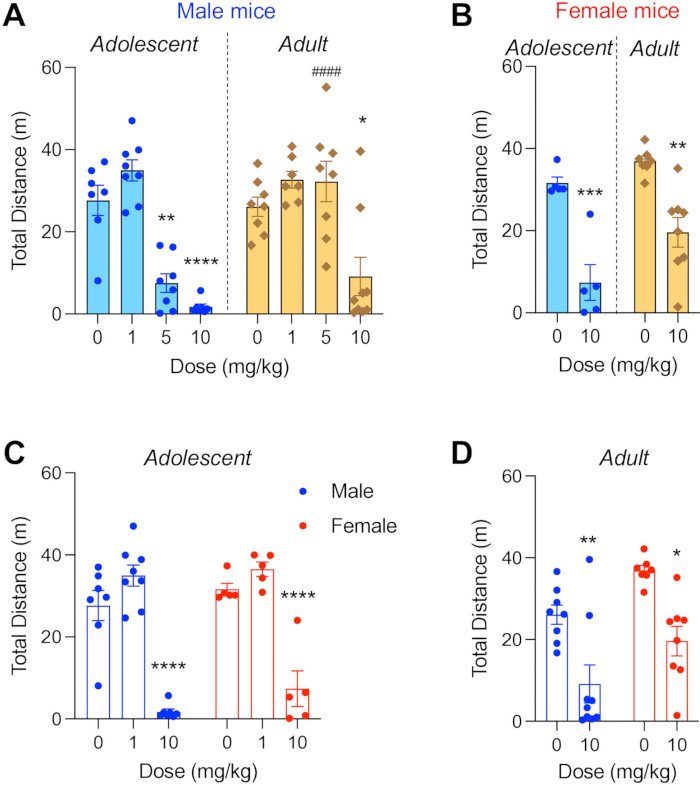
Figure 5: THC-induced acute hypo-locomotion in mice. THC reduces spontaneous locomotor activity in adolescent and adult (A) male and (B) female mice. The response was assessed using the open field test after i.p. injection of THC at the indicated dose. The same dataset was analyzed for the effects of sex on THC-induced hypolocomotion in (C) adolescent and (D) adult male and female mice. Results are expressed as means ± SEM. Significance was determined using two-way ANOVA followed by Šídák's multiple comparisons test. Differences were considered significant if P < 0.05. *P < 0.05, **P < 0.01, ***P < 0.001, and ****P < 0.0001 compared to the vehicle control, and ####P < 0.0001 compared to the adolescent 5 mg/kg group in panel A. Please click here to view a larger version of this figure.
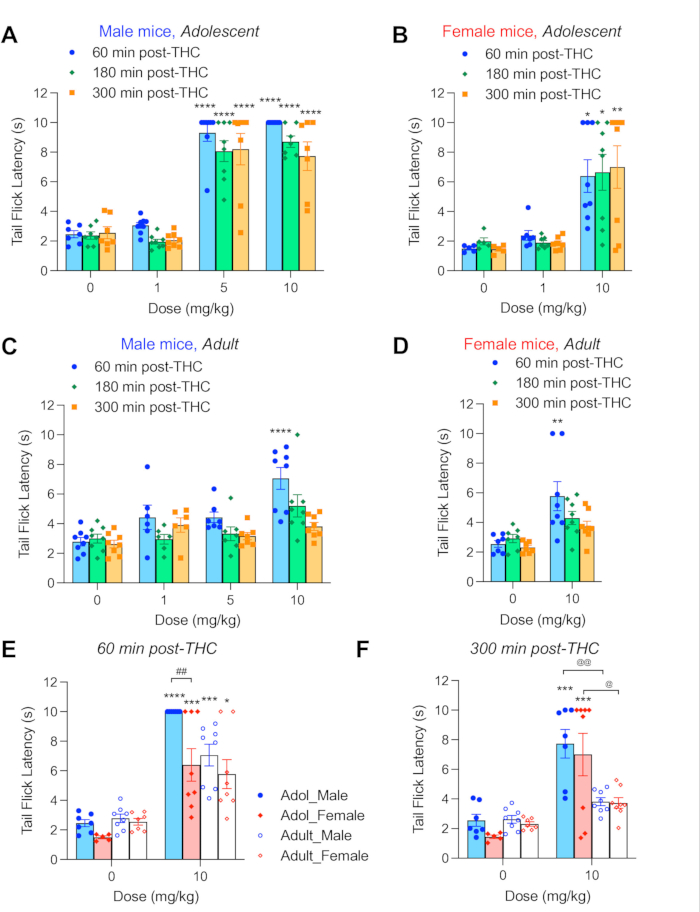
Figure 6: THC-induced acute analgesia in mice. Acute antinociceptive effects of THC were measured using the tail immersion test in (A) adolescent male, (B) adolescent female, (C) adult male, and (D) adult female mice after 60, 180, or 300 minutes from the i.p. injection of THC at the indicated dose. The same dataset was analyzed for the effects of age and sex on THC-induced antinociception after (E) 60 min or (F) 300 minfrom the THC administration. Results are expressed as means ± SEM. Significance was determined using two-way ANOVA followed by Šídák's multiple comparisons test. Differences were considered significant if P < 0.05. *P < 0.05, ***P < 0.001, and ****P < 0.0001 compared to the vehicle control, and ##P < 0.01 between the 10 mg/kg adolescent male and adolescent female group, and @P < 0.05 and @@P < 0.01 compared to the 10 mg/kg adult male and adult female group, respectively. Please click here to view a larger version of this figure.
Table 1: Two-way ANOVA analysis on the acute effects of THC in producing catalepsy in adolescent and adult male mice (related to Figure 4A) (n = 7-8 per group). Please click here to download this Table.
Table 2: Two-way ANOVA analysis on the acute effects of THC in producing catalepsy in adolescent and adult female mice (related to Figure 4B) (n = 5-8 per group). Please click here to download this Table.
Table 3: Two-way ANOVA analysis on the acute effects of THC in producing catalepsy in adolescent male and female mice (related to Figure 4C) (n = 5-8 per group). Please click here to download this Table.
Table 4: Two-way ANOVA analysis on the acute effects of THC in producing catalepsy in adult male and female mice (related to Figure 4D) (n = 7-10 per group). Please click here to download this Table.
Table 5: Two-way ANOVA analysis on the acute effects of THC on locomotion in adolescent and adult male mice (related to Figure 5A) (n = 7-9 per group). Please click here to download this Table.
Table 6: Two-way ANOVA analysis on the acute effects of THC on locomotion in adolescent and adult female mice (related to Figure 5B) (n = 5-8 per group). Please click here to download this Table.
Table 7: Two-way ANOVA analysis on the acute effects of THC on locomotion in adolescent male and female mice (related to Figure 5C) (n = 5-8 per group). Please click here to download this Table.
Table 8: Two-way ANOVA analysis on the acute effects of THC on locomotion in adult male and female mice (related to Figure 5D) (n = 7-9 per group). Please click here to download this Table.
Table 9: Two-way ANOVA analysis on the acute analgesic effects of THC in adolescent male mice (related to Figure 6A) (n = 7-8 per group). Please click here to download this Table.
Table 10: Two-way ANOVA analysis on the acute analgesic effects of THC in adolescent female mice (related to Figure 6B) (n = 5-8 per group). Please click here to download this Table.
Table 11: Two-way ANOVA analysis on the acute analgesic effects of THC in adult male mice (related to Figure 6C) (n = 6-8 per group). Please click here to download this Table.
Table 12: Two-way ANOVA analysis on the acute analgesic effects of THC in adult female mice (related to Figure 6D) (n = 7-8 per group). Please click here to download this Table.
Table 13: Two-way ANOVA analysis on the acute analgesic effects of THC in adolescent and adult, male and female mice, tested after 60 min from the injection of 10 mg/kg THC (related to Figure 6E) (n = 5-8 per group). Please click here to download this Table.
Table 14: Two-way ANOVA analysis on the acute analgesic effects of THC in adolescent and adult, male and female mice, tested after 300 min from the injection of 10 mg/kg THC (related to Figure 6F) (n = 5-8 per group). Please click here to download this Table.
Table 15: Three-way ANOVA analysis on the acute analgesic effects of THC in adolescent and adult, male and female mice, tested after 60, 180, and 300 min from the injection of 10 mg/kg THC (related to Figure 6E and 6F) (n = 7-8 per group). Please click here to download this Table.
Discussion
This article provides an overview of the procedures for obtaining and storing THC in accordance with current US regulations and outlines a protocol for preparing THC for intraperitoneal injection and administering it to adolescent (PND 30-35) and young adult mice (PND 70-75). It is critical to obtain THC from a legitimate source and to comply with all applicable regulations. In the United States, researchers must satisfy both federal and state regulatory requirements, even in states where cannabis is legal for both medical and non-medical use. Using a certified source ensures access to research-grade THC, which is manufactured under strict control guaranteeing consistent potency and purity. In contrast, using an unregulated or unauthorized source compromises scientific integrity, introduces a risk of diversion, and exposes researchers to legal consequences.
We examined three standard pharmacological responses to THC - catalepsy, reduced locomotion, and analgesia. We reproduced extensive literature data (see, for example, references27,28,29) showing that THC affects these responses in a dose-dependent manner. These tests are used in preclinical research to assess the pharmacological properties of cannabinoid receptor agonists, although their relevance to human experience can vary. Catalepsy refers to a state in which the subject experiences a reduced ability to move or engage in normal motor functions. This manifests as a physical immobilization or rigidity, with the subject holding unusual postures. Reduced locomotion (or hypo-locomotion) refers to a decrease in the overall level of horizontal motor activity, which manifests as slowed or less frequent movement. This can be due to sedation, motor impairment, or simply a lack of motivation to move. In animal studies, this is often observed as a reduction in exploratory behavior or general activity levels in a novel environment. The third test, antinociception, refers to the ability of THC to increase tail withdrawal latency in a tail immersion test. In animal models-where assessing the subjective component of analgesia requires specialized tests-tail immersion antinociception provides a useful, though limited, view of how drugs affect nociceptive function.
The results presented here show that THC dose-dependently induces catalepsy regardless of sex and age, in particular at the 5 mg/kg and 10 mg/kg doses. An age- and sex-specific effect was observed in adult female mice, which displayed significantly blunted production of catalepsy compared to male or adolescent female mice. THC-induced hypolocomotion in a novel environment was stronger in adolescent mice compared to adult mice, regardless of sex. This age-related difference was distinguishable from adult-selective hypolocomotor effects of THC in their home cage, a familiar environment30. Regarding the acute antinociceptive actions of THC, statistically significant effects were found at both 5 mg/kg and 10 mg/kg doses in adolescent male mice, but in adult male mice, only the 10 mg/kg dose was effective. Among the three time points tested here, the antinociceptive effects of THC were highest at 60 min post-THC and decayed afterward. Adolescent males were the most sensitive to the antinociceptive effects of THC among the four age-sex groups, and a significant difference between sexes was observed in the adolescent mice groups after 60 min from the injection of 10 mg/kg THC. After 300 min of THC administration, a clear effect of age was found in which significant antinociceptive effects were observed in adolescents but not in adult mice, regardless of sex. In general, adolescent mice exhibited heightened sensitivity to THC compared to adults, particularly in measures of locomotion and nociception. All in all, these results indicate that adolescence is a sensitive period for the acute pharmacological effects of THC, though this may be test-dependent30. The results here also identify the impact of both age and sex in the effects of THC, suggesting that adult females are the least sensitive to THC.
Exposure to THC during adolescence -- especially when frequent and in high doses -- can disrupt the function of the endocannabinoid system throughout the body, including the brain31. This disruption may lead to long-lasting effects on both mental and physical health32,33,34. Epidemiological studies over the past three decades have consistently shown associations between adolescent cannabis use and long-term impairments in cognition, mood, and psychosocial functioning, with these effects potentially extending into adulthood, even after cessation of use32,33,34,35,36. In addition, long-term alterations in body weight, metabolism, and immune function have been reported. Although these associations are well-documented, it is critical to establish a causal relationship between cannabis use and its potential health impacts. Various methods, including discordant twin analysis, Mendelian randomization, and quasi-experimental interventions, can be used to assess causality in human populations. However, laboratory animal experiments also play a vital role in elucidating causation37. Findings from our laboratory, funded by the National Institute on Drug Abuse, using a rodent model of moderate but frequent THC exposure during adolescence, support the hypothesis that adolescence is a vulnerable period for THC exposure17,18,25,38,39,40. Even moderate doses of the drug during this critical developmental window can have lasting effects on various components of the adult endocannabinoid system. These effects are linked to neurobehavioral changes, as well as impairments in immune responses and the ability to cope with psychosocial stress. Our previous research also uncovered unexpected alterations in the function of adipose tissue, providing a potential molecular explanation for the long-term metabolic changes seen in regular cannabis users18. By inappropriately activating CB1 receptors in the brain during important neurodevelopmental periods such as adolescence, THC may disrupt the balance required for brain maturation, leading to structural and functional changes that can persist into adulthood.
In humans, smoking and vaping are the most common methods of cannabis consumption across all age groups. Our current protocol outlines the administration of THC via the intraperitoneal (i.p.) route, which is practical, reproducible, and produces pharmacokinetic and pharmacodynamic responses in rodents that, in several respects, resemble those observed in human cannabis users. For instance, an i.p. dose of 5 mg/kg THC in adolescent and adult male mice has been shown to produce peak blood concentrations comparable to those reported in adult human users. Aerosol delivery of THC (colloquially referred to as 'vapor') is being explored as a complement to i.p. injection. This approach is based on the premise that passive inhalation of aerosolized THC, like smoking or vaping, leads to pulmonary absorption, resulting in a more rapid onset of effects, reduced first-pass liver metabolism, and potentially distinct psychoactive outcomes compared to parenteral administration. Notably, previous studies have demonstrated that rats self-administer aerosolized cannabis extracts or THC/cannabidiol mixtures in operant behavioral paradigms, highlighting the potential of this method for studying the reinforcing properties of THC.
In conclusion, this protocol builds upon established methods for assessing cannabinoid-induced tetrad behaviors41,42, which are dependent on the activation of neuronal CB1 receptors43, by offering several key updates and refinements. First, we describe procedures that align with current DEA and institutional regulations for obtaining, handling, and administering THC-critical considerations for anyone with no hands-on experience. Second, we apply the tetrad paradigm to adolescent (PND 30-35) and young adult (PND 70-75) mice, two developmental stages that are highly relevant to early-life and emerging adult cannabis exposure yet remain underrepresented in preclinical research. The findings of this study recapitulate known dose-dependent effects of THC on catalepsy, locomotion, and analgesia while revealing increased sensitivity to THC in adolescent mice, particularly in nociceptive and locomotor domains. This age-specific insight and regulatory alignment make this protocol especially valuable for newcomers in cannabinoid research and for researchers investigating the developmental impact of cannabinoids.
Disclosures
The authors report no biomedical financial interests or potential conflicts of interest.
Acknowledgements
This work was supported by the National Institutes on Drug Abuse (Grant No. 2P50DA044118 [to DP]).
Materials
| Name | Company | Catalog Number | Comments |
|---|---|---|---|
| 1 mL TB Syringes | BD | 309659 | 200/case; Sterile, Single Use. |
| 8 mL Glass Vials | Fisher Scientific | W224584 | 144/Case, used to prepare THC injection solution. |
| ANY-maze software | ANY-maze | 6000 | Used to record videos of behavioral tests and quantify elements of the tests for data analysis. |
| C57BL/6J Mice | Jackson Laboratories | #000664 | Wild type mice used for all experiments; Can specify exact age and sex desired. |
| Compass CX Scale | Ohaus | CR221 | Used to weigh mice to determine amount of THC to inject; 220 g maximum, d = 0.1 g. |
| Corning Pyroceram Hot Plate | Fisher Scientific | 11500151 | Used to heat up water bath for Tail Flick test. |
| Delta-9-tetrahydrocannabinol | Cayman Chemical | 12068 | Stored in the securely locked safe for Schedule 1 drugs in a -30 ºC freezer. |
| Fisherbrand Nitrile Gloves | Fisher Scientific | 19-181-610 | 100/pack; Single use, latex free gloves used for proper personal protective equipment. |
| GraphPad Prism v10.4 | GraphPad | n/a | Statistical analysis software used to analyze experimental data and run statistical tests. |
| Heavy Duty Beaker | Fisher Scientific | S81280 | Used to hold hot water for the Tail Flick test. |
| High-Purity Nitrogen Gas | Airgas | UN1066 | Used to evaporate ethanol from THC stock solution. |
| Logitech C920 Webcamera | Logitech | 960-001055 | Used to record animal behavioral tests; Carl Zeiss 1080p/30 fps HD USB. |
| Open Field Box | Stoelting Co | 60101 | Box with opaque sides to conduct open field tests; Sides easily removable for cleaning. |
| Pet Training Pads | Glad | B088G1N2H8 | 85/pack; 22 in. ´ 22 in.; used to wrap and hold mice for Tail Flick test. |
| PrecisionGlide Needles | BD | 305109 | 100/case; 0.4 mm ´ 13 mm; Sterile, Single Use. |
| Saline | Fisher Scientific (Cytiva) | Z1377 | 1 L bottles, USP Sterile Grade. |
| SCOE 1x | BioFOG | R-SK | Cleaning solution used to clean behavioral testing materials. |
| Tween-80 | Sigma Aldrich | P8074-500ML | BioXtra, viscous liquid; CAS # 9005-65-6. |
| Ultrasonic Water Bath | Fisher Scientific (Branson) | CPX2800 | Temp control; Digital Ultrasonic Cleaner. |
| Vortex Mixer | Fisher Scientific | 2215365 | Used to mix the contents of the THC injection solution as it is being prepared. |
References
- Patrick, M. E., Miech, R. A., Johnston, L. D., O'Malley, P. M. Monitoring the future panel study annual report: National data on substance use among adults ages 19 to 65, 1976-2023. , At. https://monitoringthefuture.org/wp-content/uploads/2024/07/mtfpanel2024.pdf (2024).
- Lopez-Quintero, C., et al. Probability and predictors of transition from first use to dependence on nicotine, alcohol, cannabis, and cocaine: Results of the National Epidemiologic Survey on Alcohol and Related Conditions (NESARC). Drug Alcohol Depend. 115 (1-2), 120-130 (2011).
- Cerda, M., et al. Association between recreational marijuana legalization in the United States and changes in marijuana use and cannabis use disorder from 2008 to 2016. JAMA Psychiatry. 77 (2), 165-171 (2020).
- Miech, R. A., et al. Monitoring the future national survey results on drug use, 1975-2023: Secondary school students. , https://archive.org/details/mtf2023 (2023).
- Pacek, L. R., Mauro, P. M., Martins, S. S. Perceived risk of regular cannabis use in the United States from 2002 to 2012: Differences by sex, age, and race/ethnicity. Drug Alcohol Depend. 149, 232-244 (2015).
- Hammond, C. J., Chaney, A., Hendrickson, B., Sharma, P. Cannabis use among U.S. adolescents in the era of marijuana legalization: A review of changing use patterns, comorbidity, and health correlates. Int Rev Psychiatry. 32 (3), 221-234 (2020).
- National Academies of Sciences, Engineering, and Medicine. The health effects of cannabis and cannabinoids: The current state of evidence and recommendations for research. , Natl Acad Press. (2017).
- Health effects of cannabis and cannabinoids and barriers to research: Report to Congress pursuant to requirements of the Medical Marijuana and Cannabidiol Research Expansion Act. Dept Health Hum Serv. , National Institutes of Health. (2023).
- Maccarrone, M., et al. Goods and bads of the endocannabinoid system as a therapeutic target: Lessons learned after 30 years. Pharmacol Rev. 75 (5), 885-958 (2023).
- Whiting, P. F., et al. Cannabinoids for medical use: A systematic review and meta-analysis. JAMA. 313 (24), 2456-2473 (2015).
- Montagner, P., et al. Charting the therapeutic landscape: A comprehensive evidence map on medical cannabis for health outcomes. Front Pharmacol. 15, 1494492(2024).
- Manzoni, O. J., Manduca, A., Trezza, V. Therapeutic potential of cannabidiol polypharmacology in neuropsychiatric disorders. Trends Pharmacol Sci. 46 (2), 145-162 (2025).
- Kalant, H. Cannabis control policy: No rational basis yet for legalization. Clin Pharmacol Ther. 97 (6), 538-540 (2015).
- Huestis, M. A. Pharmacokinetics and metabolism of the plant cannabinoids, delta9-tetrahydrocannabinol, cannabidiol and cannabinol. Handb Exp Pharmacol. 168, 657-690 (2005).
- Grotenhermen, F. Pharmacokinetics and pharmacodynamics of cannabinoids. Clin Pharmacokinet. 42 (4), 327-360 (2003).
- Jung, K. M., Piomelli, D. Cannabinoids and Endocannabinoids. Neuroscience in the 21st Century. , Springer. New York. (2016).
- Jung, K. M., Lin, L., Piomelli, D. Overactivation of the endocannabinoid system in adolescence disrupts adult adipose organ function in mice. Cells. 13 (5), 461(2024).
- Lin, L., et al. Adolescent exposure to low-dose THC disrupts energy balance and adipose organ homeostasis in adulthood. Cell Metab. 35 (7), 1227-1241.e7 (2023).
- Chandra, S., et al. New trends in cannabis potency in USA and Europe during the last decade (2008-2017). Eur Arch Psychiatry Clin Neurosci. 269 (1), 5-15 (2019).
- Petrilli, K., et al. Association of cannabis potency with mental ill health and addiction: A systematic review. Lancet Psychiatry. 9 (9), 736-750 (2022).
- Bara, A., et al. Cannabis and synaptic reprogramming of the developing brain. Nat Rev Neurosci. 22 (7), 423-438 (2021).
- Mabou Tagne, A., et al. Delta(9)-tetrahydrocannabinol alleviates hyperalgesia in a humanized mouse model of sickle cell disease. J Pharmacol Exp Ther. 391 (9), 174-181 (2024).
- Research advisory panel. , Office of the Attorney General, State of California. At https://oag.ca.gov/research (2024).
- NIDA drug supply program. , National Institute on Drug Abuse. At https://nida.nih.gov/research/research-data-measures-resources/nida-drug-supply-program (2024).
- Lee, H. L., et al. Frequent low-impact exposure to THC during adolescence causes persistent sexually dimorphic alterations in the response to viral infection in mice. Pharmacol Res. 199, 107049(2024).
- Mabou Tagne, A., et al. Persistent exposure to delta(9)-tetrahydrocannabinol during adolescence does not affect nociceptive responding in adult mice. J Pharmacol Exp Ther. 378 (3), 215-221 (2021).
- Martin, B. R., et al. molecular modeling evaluations of cannabinoid analogs. Pharmacol Biochem Behav. 40 (3), 471-478 (1991).
- Fride, E., Mechoulam, R. Pharmacological activity of the cannabinoid receptor agonist, anandamide, a brain constituent. Eur J Pharmacol. 231 (2), 313-314 (1993).
- Pertwee, R. G. The central neuropharmacology of psychotropic cannabinoids. Pharmacol Ther. 36 (2-3), 189-261 (1988).
- Torrens, A., et al. Comparative pharmacokinetics of delta(9)-tetrahydrocannabinol in adolescent and adult male mice. J Pharmacol Exp Ther. 374 (1), 151-160 (2020).
- Rubino, T., Parolaro, D. Long lasting consequences of cannabis exposure in adolescence. Mol Cell Endocrinol. 286 (1-2 Suppl 1), S108-S113 (2008).
- Schneider, M. Puberty as a highly vulnerable developmental period for the consequences of cannabis exposure. Addict Biol. 13 (2), 253-263 (2008).
- Chadwick, B., Miller, M. L., Hurd, Y. L. Cannabis use during adolescent development: Susceptibility to psychiatric illness. Front Psychiatry. 4, 129(2013).
- Renard, J., et al. Long-term consequences of adolescent cannabinoid exposure in adult psychopathology. Front Neurosci. 8, 361(2014).
- Albaugh, M. D., et al. Association of cannabis use during adolescence with neurodevelopment. JAMA Psychiatry. 78 (9), 1-11 (2021).
- Schweinsburg, A. D., Brown, S. A., Tapert, S. F. The influence of marijuana use on neurocognitive functioning in adolescents. Curr Drug Abuse Rev. 1 (1), 99-111 (2008).
- Rubino, T., Parolaro, D. The impact of exposure to cannabinoids in adolescence: Insights from animal models. Biol Psychiatry. 79 (7), 578-585 (2016).
- Lee, H. L., et al. Frequent low-dose delta(9)-tetrahydrocannabinol in adolescence disrupts microglia homeostasis and disables responses to microbial infection and social stress in young adulthood. Biol Psychiatry. 92 (11), 845-860 (2022).
- Lim, J., et al. Adolescent exposure to low-dose delta9-tetrahydrocannabinol depletes the ovarian reserve in female mice. Toxicol Sci. 193 (1), 31-47 (2023).
- Torrens, A., et al. Comparative pharmacokinetics of delta9-tetrahydrocannabinol in adolescent and adult female mice. Cannabis Cannabinoid Res. 9 (6), 1537-1542 (2024).
- Fride, E., et al. Behavioral methods in cannabinoid research. Methods Mol Med. 123, 269-290 (2006).
- Metna-Laurent, M., et al. Cannabinoid-induced tetrad in mice. Curr Protoc Neurosci. 80, 9.59.1-9.59.10 (2017).
- Monory, K., et al. Genetic dissection of behavioural and autonomic effects of delta(9)-tetrahydrocannabinol in mice. PLoS Biol. 5 (9), e269(2007).
Reprints and Permissions
