This study aimed to identify independent clinical predictors of computed tomography (CT)–detected small airway mucus plugs in patients with chronic obstructive pulmonary disease (COPD) and to construct and validate a nomogram for individualized risk prediction.
Research Article
Construction and Validation of A Nomogram to Identify Mucus Obstruction In Patients With Chronic Obstructive Pulmonary Disease
In This Article
Summary
Abstract
Small airway mucus impaction in chest computed tomography (CT) is a clinically significant finding in chronic obstructive pulmonary disease (COPD), associated with accelerated pulmonary function decline, increased frequency of acute exacerbations, and higher susceptibility to respiratory infections. However, a validated predictive tool for identifying patients at risk of CT-detected mucus plugs is currently lacking. This study aimed to develop and validate a nomogram to predict small airway mucus obstruction in patients with COPD. We retrospectively enrolled 212 COPD patients from Shenzhen Second People’s Hospital (January 2021 to June 2022), of whom 47 had CT-confirmed mucus plugs (mucus plug group, MP) and 165 did not (non-mucus plug group, NMP). Univariate and receiver operating characteristic (ROC) analyses were used to identify candidate predictors. Multivariate logistic regression was conducted to construct the final predictive model, which was then transformed into a nomogram. Internal validation was performed using bootstrap sampling (1000 iterations). Bronchiectasis, chronic rhinosinusitis (CRS), body mass index (BMI), forced expiratory flow at 25–75% of predicted (FEF25–75%pred), residual volume-to-total lung capacity ratio (RV/TLC), and serum 25-hydroxyvitamin D [25(OH)D] were identified as independent risk factors for CT mucus plugs. The nomogram demonstrated excellent predictive value with an AUC of 0.9611. Calibration curves and decision curve analyses demonstrated good clinical utility. Bootstrap internal validation further supported the model’s predictive stability. This nomogram provides a practical, individualized tool to facilitate early identification and personalized management of COPD patients at risk of small-airway mucus obstruction.
Introduction
Chronic obstructive pulmonary disease (COPD) is characterized by persistent and largely irreversible airflow limitation. The World Health Organization states that it is projected to become the third leading cause of death globally by 20301. The disease primarily initiates in the small airways (airways with an internal diameter of less than 2 mm), which represent a fundamental site of COPD pathology. Structural and inflammatory changes in these regions often precede the emergence of clinical symptoms by several years, yet contribute substantially to the airflow obstruction. Pathological hallmarks of small airway disease in COPD include infiltration by inflammatory cells,2,3,4 impairment of epithelial defense mechanisms5,6 airway remodeling and fibrosis7,8,9and the formation of mucus plugs (MP)10,11.
Airway mucus plugs in COPD represent a pathological accumulation of mucus within the airway lumen, resulting in airflow limitation12. Mucus plug formation is associated with a pro-inflammatory milieu, characterized by elevated eosinophil counts and upregulation of type 2 cytokine gene expression13. Excessive intraluminal mucus impairs oxygen diffusion and causes hypoxia in airway epithelial cells, creating conditions favorable to persistent bacterial colonization and recurrent lower respiratory tract infections14. These infections exacerbate disease severity and increase mortality risk15. Elevated airway mucus secretion has further been identified as a precursor to acute exacerbation events in COPD16. This highlights the critical need for early detection and a mechanistic understanding of the factors contributing to mucus plugs in patients with COPD.
A range of risk factors have been associated with airway mucus plug formation in chronic airway diseases, including viral infections17,18, colonization by Pseudomonas aeruginosa19,20 recurrent acute exacerbation episodes, impaired pulmonary function as measured by forced expiratory volume in 1 second (FEV1)21, smoking history22, elevated eosinophil peroxidase levels23, intrabronchial mucin 5B (MUC5B) protein concentrations, and 25-hydroxyvitamin D (25(OH)D) levels, as well as infections attributable to mycoplasma and Aspergillus. species24,25,26. Nevertheless, the specific risk profile for mucus plug development in COPD patients remains incompletely characterized, and the prognostic utility of individual risk factors in isolation is limited.
A multifactorial approach integrating several predictors may yield more clinically meaningful risk stratification. Nomograms have been widely applied across medical specialties, including oncology, cardiology, and pulmonology, to facilitate survival predictions, risk stratification, and therapeutic decision-making27. They provide a nuanced, interpretable way to capture complex interactions among diverse clinical variables. Despite their broad utility, no validated nomogram exists to predict CT-detected mucus plugs in COPD patients. This study addresses this gap by identifying independent risk factors for mucus plug formation in COPD and developing a validated predictive nomogram to enable individualized risk assessment. Such a tool could be readily integrated into routine COPD management workflows, particularly in centers with access to HRCT imaging and spirometry, to support early targeted interventions and reduce the burden of exacerbations in at-risk patients.
Protocol
The present study was approved by the Ethics Committee of Shenzhen Second People’s Hospital (Protocol No. 20193357024). Informed consent was obtained from all participants or their legal representatives prior to enrollment.
Study population and methodology
This study was designed as a single-center, retrospective cohort study. Medical records of patients with a primary diagnosis of COPD at the Department of Respiratory Medicine, Shenzhen Second People’s Hospital, from January 2021 to June 2022 were reviewed. All adult patients (≥18 years) with a primary diagnosis of COPD were initially screened using International Classification of Diseases (ICD-10) coding and chart review from the hospital’s electronic medical record (EMR) system.
Inclusion criteria
(1) Confirmed diagnosis of COPD in accordance with the Global Initiative for chronic obstructive lung disease (GOLD) guidelines; (2) Availability of high-resolution computed tomography (HRCT) of the chest performed within one week of hospitalization; (3) Availability of complete spirometry and laboratory data; and (4) At least one year of follow-up data for acute exacerbation monitoring.
Exclusion criteria
(1) Active pulmonary infections (e.g., pneumonia or tuberculosis) at the time of HRCT imaging; (2) Coexisting lung malignancy; (3) Prior thoracic surgery with potential impact on airway anatomy; and (4) Missing critical clinical data or non-evaluable imaging due to motion artifacts. After applying these criteria, a final cohort of 212 patients was enrolled, comprising 47 patients in the mucus plug-positive (MP) group and 165 patients in the non-mucus plug (NMP) group. Representative HRCT images are illustrated in Figure 1. Patients in the NMP group (n = 165) served as internal controls, enabling statistical comparison of clinical characteristics, pulmonary function indices, and laboratory biomarkers between groups. All analyses were conducted on this internally controlled cohort to support hypothesis-driven model development.
Data collection
Data extraction followed a structured, sequential protocol. Demographic variables collected included age, sex, body mass index (BMI), and smoking status. Clinical history variables comprised COPD duration, acute exacerbation frequency, and comorbidities. Spirometry parameters retrieved including FEV1%, FEV1 to forced vital capacity(FVC), Vital capacity(VC), forced expiratory flow(FEF25–75%pred), Residual volume(RV), Total lung capacity(TLC), and the RV/TLC ratio. Laboratory indices included serum total immunoglobulin E (IgE), 25-hydroxyvitamin D(25(OH)D), serum calcium (Ca2+), phosphorus, Carbohydrate antigen (CA199), and fractional exhaled nitric oxide (FeNO), and conducting airway nitric oxide (CaNO). Comorbidity screening included sinusitis, asthma, bronchiectasis, fungal and bacterial colonization, and cardiovascular and metabolic diseases. All data was retrieved from the hospital’s electronic medical record (EMR) system. HRCT images were accessed from the hospital’s picture archiving and communication system (PACS) archive. Details of the software and equipment used in this study are provided in the Table of Materials. No physical reagents or laboratory materials were used; all analyses were performed using existing clinical and radiological data. All patient data were reviewed by two independent investigators. Missing data were handled using the ‘missForest’ non-parametric imputation method implemented in R, to minimize distortion in multivariate analyses.
HRCT diagnostic criteria for mucus plugs
All patients underwent HRCT using standardized institutional imaging protocols. Mucus plugs were defined radiologically on axial CT slices as identified as tubular or branching soft-tissue attenuation structures occupying an airway lumen, visible on at least two contiguous axial slices, consistent with published diagnostic criteria. Only cases with clearly demarcated, segmental or subsegmental airway opacities with soft tissue attenuation similar to soft tissue and not attributable to artifacts or bronchiectasis alone were labeled as mucus-plug positive. HRCT imaging was performed using a Siemens SOMATOM Definition AS (128-slice) CT scanner with the following acquisition parameters: slice thickness 1.0 mm, reconstruction interval 0.75 mm, and use of the B70f high-resolution kernel. Images were reviewed in standard lung window settings (window width : 1600 Hounsfield units [HU]; Window level: 600 HU. Two board-certified thoracic radiologists with over 8 years of experience independently reviewed all scans. Cases with interpretive discrepancies were resolved by consensus discussion. Diagnostic criteria were applied uniformly across all cases to ensure classification consistency.
Nomogram construction, evaluation, and validation
A nomogram was developed to predict CT-detected mucus plugs in COPD patients based on multivariate logistic regression results. The final model incorporated the following independent predictors: bronchiectasis, chronic rhinosinusitis (CRS), acute exacerbations (AE), BMI, FEF25–75%pred, RV/TLC ratio, and serum 25(OH)D levels. Each predictor is assigned a score on a horizontal points scale; individual scores are summed to yield a total score, which corresponds to a predicted probability of mucus plug presence on the output probability scale. The nomogram was subjected to internal validation via bootstrap resampling (1000 iterations) to assess predictive accuracy and discrimination using calibration curves (AUC and ROC).
Statistical analyses
All statistical analyses were performed using R version 4.1.2 and IBM SPSS Statistics version 25.0. Categorical data were expressed as frequencies and percentages; comparisons between groups were performed using the chi-squared test or Fisher’s exact test, as appropriate. Continuous data with normal distribution were expressed as mean ± standard deviation (SD) and compared using the independent samples t-test; non-normally distributed continuous data were expressed as median (interquartile range (IQR) and compared using the Mann-Whitney U test. Variables with P < 0.1 in the univariate logistic regression analysis were included in the model, consistent with standard practice in predictive model development. The R packages used were “rms”, “mstate”, “data.table”, “pROC”, “rmada”, “rio”, “boot”, and “missForest”. Nomogram construction was implemented using the lrm and nomogram functions from the rms package. ROC curves and AUC values were computed using the roc and auc functions from the pROC package. Calibration curves were generated with the calibrate function in RMS. Decision curve analysis (DCA) was performed using the decision curve function from the rmda package. Missing data imputation was performed using the missForest function. Bootstrap internal validation (1000 iterations) was conducted using the boot package. A fixed random seed (set.seed[240708] was applied at the start of the analysis to ensure reproducibility. A P-value of < 0.05 was considered statistically significant. The logistic regression model formula was:
glm(mucus_status ~ bronchiectasis + CRS + BMI + FEF25_75 + RV_TLC + VitD, family = "binomial")
Results
Baseline characteristics
The study comprised a cohort of 212 patients with COPD, divided into two groups: 47 with mucus plugs (MP) and 165 without mucus plugs (NMP). The occurrence of mucus plugs in this COPD population was found to be 28.33%. Statistical analysis, detailed in Table 1, identified significant differences between the MP and NMP groups in several key metrics. These included body mass index (BMI), the frequency of acute exacerbations (AE), prevalence of bronchiectasis and chronic rhinosinusitis, forced expiratory flow at 25–75% of pulmonary volume (FEF25–75pred%), the residual volume to total lung capacity ratio (RV/TLC), and serum levels of carbohydrate antigen 199 (CA199) and 25-hydroxyvitamin D (25(OH)D), each demonstrating a P-value less than 0.05. The COPD patients in the MP group had significantly higher AE, combined bronchiectasis, sinusitis, fungal infection, and CA199 index than the NMP group (P < 0.05), and significantly lower BMI, FEF 25–75 pred%, and RV/ TLC than the NMP group (P < 0.05). Table 1 presents the baseline demographic and clinical characteristics of the COPD cohorts, offering a detailed, quantitative overview of the study population. This table is crucial for highlighting the clinical and physiological differences between the MP and NMP groups among COPD patients, thereby laying the groundwork for further analysis and clinical interpretation.
Univariate logistic regression analysis
To identify potential predictors of mucus plug formation, we first conducted univariate logistic regression analyses for the clinical and radiological variables described above. Several factors demonstrated associations with mucus plug presence at a P < 0.1 threshold and were therefore selected for further evaluation. This inclusive criterion helped ensure that relevant variables were not excluded prematurely. These candidate predictors were subsequently subjected to ROC analysis and multivariate logistic regression to develop the final predictive model.
ROC analysis and optimal cutoff values
In this study, mucoid impaction was defined as the dependent variable. We selected eight variables showing statistically significant differences between the MP (Mucoid impaction positive) and NMP (Mucoid impaction negative) groups for receiver operating characteristic (ROC) curve analysis. The results of this analysis are methodically presented in Table 2. Furthermore, using ROC curve analysis, the optimal cutoff values for these variables were determined, with the findings thoroughly documented in Table 3. In this study, optimal cutoff points for variables were determined using the maximal Youden Index, as detailed in the table. Mucus plug-positive status was defined based on HRCT criteria: presence of soft-tissue density within the bronchial lumen occupying at least 50% of the airway diameter, present on at least two consecutive axial slices, and consistent with mucus rather than artifact or fluid. Cutoff values for continuous variables (e.g., FEF25–75, RV/TLC, vitamin D) were determined using ROC curve analysis. The optimal threshold for each was determined using the Youden index (sensitivity + specificity – 1), which identifies the threshold that simultaneously maximizes sensitivity and specificity. This identifies the value that maximizes sensitivity and specificity. These thresholds were used to transform variables into binary categories for multivariate logistic regression.
Multivariate Logistic regression analysis of MP
An advanced stepwise logistic regression analysis was performed, with the presence of mucus plugs as the dependent variable. The analysis used dichotomized predictors to identify independent risk factors. These findings are elaborated in Table 4. Using variables significant in the univariate analysis, the multivariate logistic regression model revealed statistically significant results. The analysis identified several independent risk factors for CT-detected mucus plugs in COPD patients. These included bronchiectasis, with an Odds Ratio (OR) and 95% Confidence Interval (CI) of 13.699 (4.256, 44.1); chronic rhinosinusitis, with an OR 95% CI of 7.291 (1.867, 28.467); body mass index, with an OR 95% CI of 0.17 (0.053, 0.547); Forced expiratory flow at 25–75% of pulmonary volume predicted (FEF25–75% pred), with an OR 95% CI of 0.091 (0.027, 0.307); residual volume to total lung capacity ratio (RV/TLC), with an OR 95% CI of 0.144 (0.038, 0.541); and serum 25-hydroxyvitamin D (25(OH)D) levels, with an OR 95% CI of 0.042 (0.011, 0.151) (P < 0.05). These findings are elaborated in Table 5.
Nomogram evaluation
The nomogram constructed in this study is a visual translation of the multivariate logistic regression model and serves as an individualized, interpretable risk estimation tool. Each predictor in the model is assigned a point value on a horizontal axis; these points are summed to yield a total score, which maps to a probability scale indicating the risk of mucus plug presence. This graphical interface allows clinicians to estimate patient-specific risk using routinely available clinical and imaging data. This approach follows previously validated frameworks, such as the pulmonary embolism nomogram proposed. Figure 1 depicts the column line diagram modeling, and Figure 2 displays a column-line diagram that was constructed to visualize the relative influence of predictive features in the nomogram model. Columns represent individual risk factors (e.g., bronchiectasis, CRS, BMI), while line heights indicate their contribution strength to the predicted probability of mucus plug presence. The diagram aids the interpretation of feature weightings and interactions. All values were generated from multivariate logistic regression output. No error bars or scale bars are applicable; the validation results, illustrated in Figure 3, demonstrate a significant concordance between predicted and actual occurrences of mucus plugs in COPD patients. The AUC in Figure 4 validates the model's accuracy. The pattern shown by the calibration curves in Figure 5 emphatically highlights the nomogram's reliable predictive value in a clinical setting, while Figure 6 emphasizes the accuracy of the reliability of the model through the sensitivity plot.
DATA AVAILABILITY:
All relevant raw data supporting the findings of this study have been submitted as the Supplementary Table.
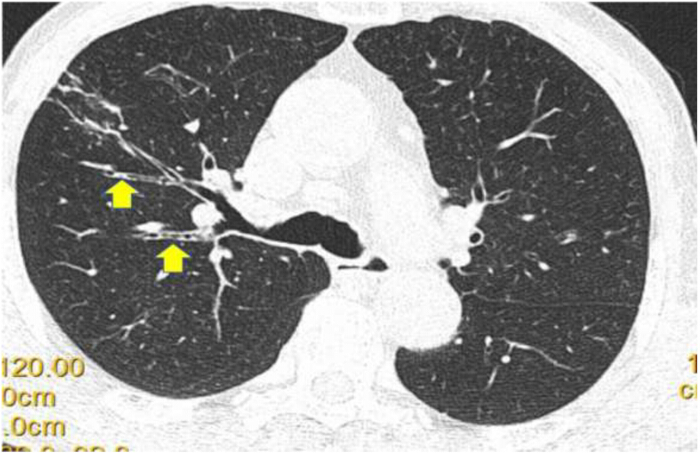
Figure 1: Representative HRCT image of a COPD patient from the mucus plug-positive (MP) group demonstrating small airway mucus plug status. Yellow arrows indicate tubular soft-tissue attenuation structures occupying small airway lumens on contiguous axial slices, consistent with mucus plug formation. The image was acquired using a Siemens SOMATOM Definition AS (128-slice) CT scanner with lung window settings (width: 1,600 HU; level: −600 HU). Please click here to view a larger version of this figure.
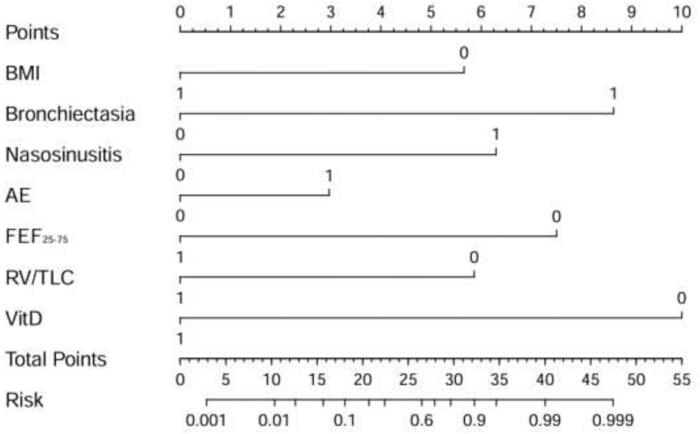
Figure 2: Nomogram for predicting CT-detected small airway mucus plugs in COPD patients. Each predictor is represented on a horizontal axis with an assigned point value. Individual scores are summed to generate a total score, which maps to the predicted probability of mucus plug presence on the output scale. Predictors included: bronchiectasis, chronic rhinosinusitis (CRS), body mass index (BMI), FEF25–75%pred, RV/TLC ratio, and serum 25(OH)D levels. All values were derived from the multivariate logistic regression model. Please click here to view a larger version of this figure.
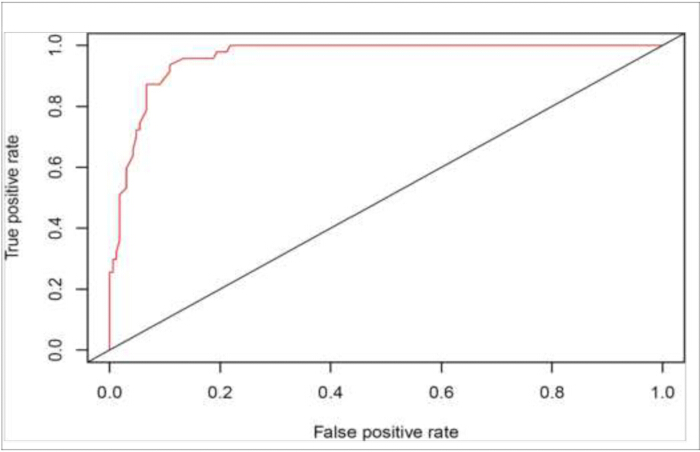
Figure 3: Receiver operating characteristic (ROC) curve of the nomogram. The red curve demonstrates the model’s discriminatory performance in distinguishing mucus plug-positive from mucus plug-negative COPD patients. The x-axis represents the false positive rate (1 − specificity), and the y-axis represents the true positive rate (sensitivity). The diagonal reference line represents a non-discriminating classifier. Please click here to view a larger version of this figure.
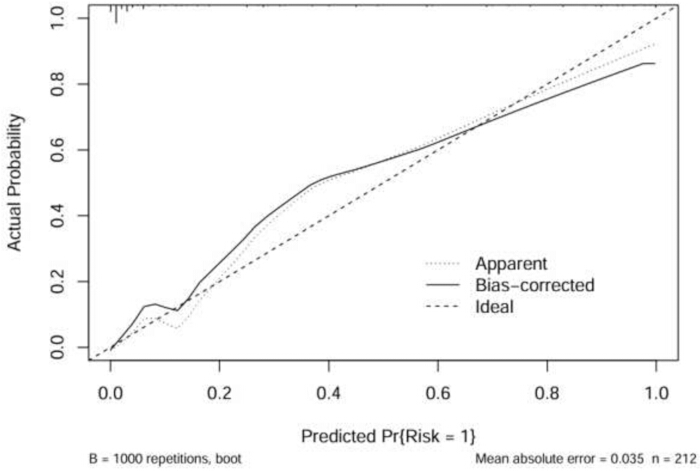
Figure 4: Calibration curve for internal validation of the nomogram. The x-axis represents the nomogram-predicted probability, and the y-axis represents the observed (actual) probability of mucus plug presence. Three curves are displayed: Apparent (dotted), Bias-corrected (solid), and Ideal (dashed). Bootstrap internal validation was performed with B = 1,000 repetitions (n = 212); mean absolute error = 0.035, indicating strong agreement between predicted and observed probabilities. Please click here to view a larger version of this figure.
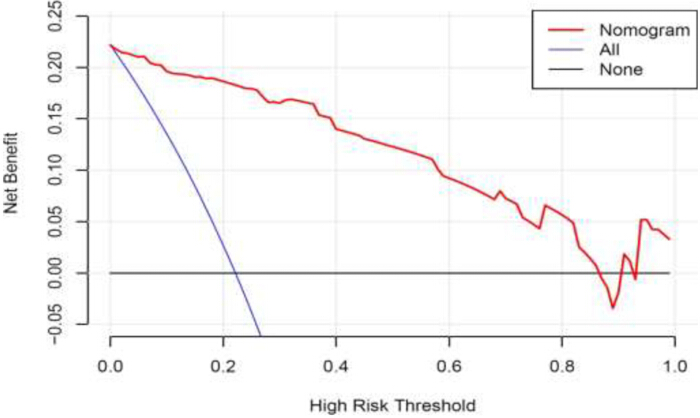
Figure 5: Decision curve analysis (DCA) for the nomogram. Net clinical benefit (y-axis) is plotted against a range of high-risk threshold probabilities (x-axis) for three strategies: the nomogram (red), treat-all (blue), and treat-none (black). The nomogram demonstrates superior net benefit compared with default strategies across the clinically relevant threshold range. Please click here to view a larger version of this figure.
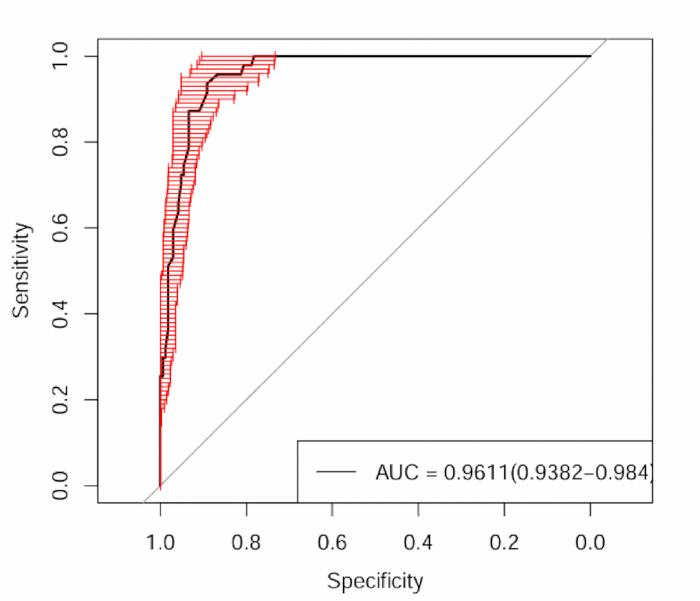
Figure 6: Bootstrap-validated receiver operating characteristic (ROC) curve of the nomogram. The black curve represents the mean ROC curve, and the red error bars indicate the variability across 1,000 bootstrap resampling iterations. The area under the curve (AUC = 0.9611; 95% CI: 0.9382–0.984) confirms the high discriminatory performance and predictive stability of the nomogram. Please click here to view a larger version of this figure.
| Variable | MP (n = 47) | NMP (n = 165) | P-value |
| Age (years) | 68 (65–78) | 69 (64–74) | 0.39 |
| Male (%) | 39 (82.98%) | 139 (84.24%) | 1 |
| Female (%) | 8 (17.02%) | 26 (15.76%) | — |
| BMI (kg/m²) | 20.76 (19.55–23.10) | 23.03 (21.90–24.51) | <0.001 |
| Disease duration (months) | 10 (5–20) | 10 (5–13) | 0.06 |
| Smoking (pack-years) | 30 (0–40) | 20 (0–40) | 0.35 |
| AE ≥2/year (%) | 17 (36.17%) | 19 (11.52%) | <0.001 |
| Respiratory failure (%) | 8 (17.02%) | 25 (15.15%) | 0.82 |
| Bronchiectasis (%) | 33 (70.21%) | 38 (23.03%) | <0.001 |
| Chronic rhinosinusitis (%) | 18 (38.30%) | 24 (14.55%) | <0.001 |
| Fungal infection (%) | 5 (10.64%) | 5 (3.03%) | 0.05 |
| FEF25–75% | 12.00 (9.40–18.71) | 19.00 (13.27–29.30) | <0.001 |
| RV/TLC (%) | 45.51 (42.85–49.25) | 48.68 (43.32–54.51) | 0.02 |
| CA199 | 26.82 (17.65–49.94) | 13.86 (10.60–20.61) | <0.001 |
| 25(OH)D (ng/mL) | 21.05 (18.49–23.40) | 25.32 (23.66–27.74) | <0.001 |
Table 1: Baseline clinical and demographic characteristics of the study cohort. Comparison between the mucus plug-positive (MP) and mucus plug-negative (NMP) groups. Data are presented as n (%), mean ± SD, or median (IQR) as appropriate. Abbreviations: BMI, body mass index; AE, acute exacerbations; FEV1%, forced expiratory volume in 1 second percentage predicted; FEV1/FVC, FEV1-to-forced vital capacity ratio; FEF25–75%pred, forced expiratory flow at 25–75% predicted. Abbreviations; RV = residual volume; TLC = total lung capacity; RV/TLC = residual volume-to-total lung capacity ratio; IgE = immunoglobulin E; 25(OH)D = 25-hydroxyvitamin D; CA199 = carbohydrate antigen 199; FeNO = fractional exhaled nitric oxide; CaNO = conducting airway nitric oxide.
| Variable | AUC | 95% CI | P-value |
| 25(OH)D | 0.826 | 0.755–0.896 | <0.001 |
| BMI | 0.737 | 0.652–0.821 | <0.001 |
| CA199 | 0.757 | 0.670–0.843 | <0.001 |
| Bronchiectasis | 0.736 | 0.651–0.820 | <0.001 |
| FEF25–75% | 0.716 | 0.632–0.800 | <0.001 |
| RV/TLC | 0.616 | 0.535–0.697 | 0.015 |
| AE | 0.623 | 0.526–0.721 | 0.01 |
| Chronic rhinosinusitis | 0.619 | 0.522–0.716 | 0.013 |
Table 2: ROC analysis results for candidate predictor variables. Area under the curve (AUC) values are presented for eight variables demonstrating statistically significant differences between the MP and NMP groups, along with 95% confidence intervals, sensitivity, and specificity.
| Variable | Cutoff | Sensitivity | Specificity | Youden Index |
| BMI | 21.11 | 0.842 | 0.617 | 0.459 |
| 25(OH)D | 23.06 | 0.806 | 0.745 | 0.551 |
| RV/TLC | 49.82 | 0.473 | 0.787 | 0.26 |
| FEF25–75% | 15.35 | 0.679 | 0.702 | 0.381 |
| CA199 | 17.08 | 0.809 | 0.685 | 0.494 |
| Bronchiectasis | 0.5 | 0.702 | 0.77 | 0.472 |
| AE | 0.5 | 0.362 | 0.885 | 0.247 |
| Chronic rhinosinusitis | 0.5 | 0.383 | 0.855 | 0.238 |
Table 3: Optimal cutoff values for continuous predictors. Threshold values were determined by the Youden index (sensitivity + specificity − 1) from ROC curve analysis. Variables were dichotomized at these thresholds prior to entry into multivariate logistic regression.
| Variable | OR | 95% CI | P-value |
| BMI | 0.116 | 0.056–0.239 | <0.001 |
| 25(OH)D | 0.082 | 0.039–0.177 | <0.001 |
| FEF25–75% | 0.201 | 0.099–0.406 | <0.001 |
| RV/TLC | 0.301 | 0.141–0.646 | 0.002 |
| CA199 | 7.109 | 3.403–14.852 | <0.001 |
| Bronchiectasis | 7.878 | 3.825–16.226 | <0.001 |
| AE | 4.354 | 2.030–9.341 | <0.001 |
| Chronic rhinosinusitis | 3.647 | 1.757–7.568 | 0.001 |
Table 4: Univariate logistic regression analysis of candidate predictors. Results are presented as odds ratios (OR) with 95% confidence intervals (CI) and corresponding P-values. Variables with P < 0.1 were selected for inclusion in the multivariate logistic regression model.
| Variable | β | OR | 95% CI | P-value |
| Bronchiectasis | 2.617 | 13.699 | 4.256–44.100 | <0.001 |
| Chronic rhinosinusitis | 1.987 | 7.291 | 1.867–28.467 | 0.004 |
| BMI | -1.771 | 0.17 | 0.053–0.547 | 0.003 |
| FEF25–75% | -2.397 | 0.091 | 0.027–0.307 | <0.001 |
| RV/TLC | -1.941 | 0.144 | 0.038–0.541 | 0.004 |
| 25(OH)D | -3.179 | 0.042 | 0.011–0.151 | <0.001 |
Table 5: Stepwise multivariate logistic regression analysis identifying independent risk factors for CT-detected mucus plugs. Results are presented as odds ratios (OR) with 95% confidence intervals (CI) and P-values. P < 0.05 was considered statistically significant.
Discussion
In this study, the prevalence of CT-detected mucus plug formation among hospitalized COPD patients was 22.16%, consistent with estimates reported in prior literature27. Mucus plugs in COPD are clinically significant due to their association with accelerated pulmonary function decline, increased acute exacerbation frequency, and higher mortality risk28. Despite this, a validated predictive tool for identifying at-risk patients was previously lacking. This analysis identified bronchiectasis, chronic rhinosinusitis (CRS), BMI, FEF25–75%pred, RV/TLC, and 25(OH)D as independent risk factors for CT-detected mucus plugs, and these were integrated into a nomogram with excellent discriminatory performance.
Bronchiectasis demonstrated the strongest independent association with mucus plug formation (OR = 13.70), consistent with its established role in impairing mucociliary clearance and promoting mucus stasis. These findings support the conceptualization of bronchiectasis-COPD overlap (BCO) as a distinct clinical phenotype with heightened susceptibility to small airway obstruction29. Bronchiectasis was radiologically detected in 24.5% of COPD patients in a prior study29, and patients with concurrent disease exhibited more extensive airway involvement, including air trapping and peribronchial wall thickening. The independent association of CRS with mucus plug risk likely reflects the unified airway hypothesis, in which upper- and lower-airway inflammatory processes are mechanistically linked. Regarding BMI, patients hospitalized for acute COPD exacerbations with lower BMI had elevated sputum mucin and neutrophil elastase levels, suggesting that nutritional deficiency may potentiate mucus hypersecretion, particularly in advanced disease.
FEF25–75%pred is a sensitive spirometric marker of small airway obstruction, and its inverse association with mucus plug formation is consistent with published evidence linking CT mucus impaction to diminished small airway expiratory flow30. A cross-sectional study demonstrated a significant correlation between luminal mucus scoring, lung function parameters, and health-related quality of life in COPD patients. Another study involving 500 participants reported a 22% prevalence of CT mucus impaction, with higher global initiative for chronic obstructive lung disease (GOLD) stage patients exhibiting greater impaction burden and lower FEV1 and FEF25–75% values; notably, 73% of patients with initial CT mucus obstruction retained it after five years. A further study demonstrated that FEV1 independently predicted luminal mucus scoring in hospitalized patients with acute exacerbations of COPD (AECOPD) (R2 = 0.348, F = 18.960, P < 0.001)31. Elevated RV/TLC reflects gas trapping, a physiological consequence of small airway disease, corroborating the role of dynamic hyperinflation in mucus plug pathogenesis32.
Vitamin D plays a critical role in pulmonary immune defense, including regulation of cytokine production, enhancement of macrophage phagocytosis, and attenuation of inflammatory responses33. Prior studies have demonstrated associations between low serum 25(OH)D levels and worse lung function34, or COPD severity35. These findings of significantly lower 25(OH)D levels in the MP group are consistent with this body of evidence and underscore the potential role of vitamin D supplementation as a modifiable intervention target. Vitamin D deficiency has been associated with increased respiratory bacterial colonization36,37, impaired ciliary clearance through alterations in intracellular and extracellular calcium homeostasis, and heightened susceptibility to respiratory infection. It was also shown that increased mortality in male patients with mild-to-moderate COPD is associated with significantly lower serum 25(OH)D levels38,39.
Unlike established COPD prognostic tools such as the BODE index (body mass index, airflow obstruction, dyspnea, exercise capacity) or the ADO score (age, dyspnea, airflow obstruction)- which incorporate systemic clinical parameters and spirometric measurements (lung function indices derived from spirometry, including FEV1, FVC, and derived ratios) to predict outcomes such as exacerbation risk or mortality—this model specifically targets the radiological presence of small airway mucus plugs. This represents a distinct pathological feature with independent clinical implications that is not addressed by existing risk tools. This nomogram, therefore, provides added value for airway-level phenotyping in COPD populations. With further multicenter external validation, the model could be embedded in radiology reporting platforms or electronic health record (EHR) systems to flag high-risk patients for early mucolytic therapy, airway clearance therapies, or bronchoscopic intervention.
This study also demonstrates the value of integrating multiple biomarker domains, serological, functional, radiological, and clinical history, into a single predictive framework. An animal-model pharmacological study demonstrated that tetrandrine significantly reduces excessive MUC5AC production and suppresses expression of TNF-α, IL-6, IL-8, and IL-17A in a lipopolysaccharide-induced mucus hypersecretion model40, suggesting candidate therapeutic pathways. Population-level evidence from the Copenhagen cohort established a strong association between impaired pulmonary function, chronic mucus hypersecretion, and both all-cause and COPD-specific mortality41 while the COPD Gene study confirmed that CT-detected luminal obstruction correlates with airflow limitation, diminished quality of life, and emphysematous phenotypes42.
In conclusion, this study identifies bronchiectasis, chronic rhinosinusitis, BMI, FEF25–75% pred, RV/TLC, and serum 25(OH)D as independent risk factors for CT-detected small airway mucus plugs in COPD patients and presents a validated nomogram with high predictive accuracy (AUC = 0.96), strong calibration, and demonstrated clinical utility. The model is distinguished by its integration of diverse predictor domains, its interpretable graphical format, and its reliance on routinely available clinical data. It offers potential for future integration into COPD care workflows and EHR systems to support individualized, data-driven decision-making.
This retrospective single-center study is subject to inherent selection bias, and the relatively small sample size (n = 212) limits the statistical power for subgroup analyses. The nomogram currently lacks external validation across independent patient populations and imaging systems, which is a critical prerequisite for broad clinical adoption. The study was conducted at a single Chinese tertiary center, and generalizability to other ethnic populations or healthcare settings requires investigation. Future studies should pursue prospective multicenter validation, consider machine learning approaches (such as random forests or gradient boosting) to enhance predictive performance and automate feature selection, and assess the longitudinal predictive value of the model for monitoring mucus plug dynamics and treatment response over time.
Disclosures
The authors declare that they have no known competing financial interests or personal relationships that could have influenced the work reported in this paper. They also have no conflicts of interest regarding the publication of this manuscript. The research was conducted in accordance with ethical standards, and all authors have contributed to the work in accordance with the journal's requirements. There are no financial or non-financial interests that could potentially bias the research or the interpretation of the results. The Authors confirm that the AI-based language tools (Grammarly and Quilbot) were used to improve and polish the grammar and phrasing of the manuscript. All parts of the manuscript were manually written by the authors, and even after using the tools for polishing the paper, the authors manually reviewed the final output. All authors have read and approved the final manuscript. They each take full responsibility for the accuracy and integrity of the work.
Acknowledgements
This research was supported by “Comparison of treatable traits of bronchiectasis with various clinical phenotypes: a prospective cohort study” under Grant (LCYSSQ20220823091203007) from the Shenzhen Clinical Research Center for Respiratory Disease, Shenzhen Institute of Respiratory Disease, Shenzhen People’s Hospital China.
I would like to express my sincere gratitude to all those who have contributed to this research and the writing of this manuscript. First and foremost, I am deeply indebted to my supervisor, He Huang, for his constant encouragement, valuable guidance, and insightful comments throughout the entire process. His expertise and patience have been instrumental in helping me to clarify my ideas and improve the quality of this work. I am also grateful to my colleagues in the Department of Pulmonary and Critical Care Medicine, The First Affiliated Hospital of Shenzhen University (Shenzhen Second People’s Hospital), Shenzhen, Guangdong, China, especially Yan Zhang, Zhi Yang, and others. They have provided me with essential support, including sharing experimental equipment, offering technical advice, and participating in fruitful discussions. Their contributions have significantly facilitated my research. In addition, I would like to thank “Comparison of treatable traits of bronchiectasis with various clinical phenotypes: a prospective cohort study” for their financial support, without which this research would not have been possible. Finally, I want to thank my family and friends for their unwavering support and understanding during my research and writing. Their love and encouragement have given me the strength to overcome difficulties and complete this work.
Materials
| Name | Company | Catalog Number | Comments |
|---|---|---|---|
| HRCT Scans | Shenzhen Second People's Hospital | Used for diagnosing small airway mucus obstruction in COPD patients | |
| SPSS 25.0 Software | 1BM | Statistical software used for data analysis, including t-tests and logistic regression. | |
| R Software (Packages: mms, mstate, etc.) | R Foundation for Statistical Computing | Used for statistical analysis and model validation, including calculation of the C-index. | |
| Electronic Medical Record System | Shenzhen Second People's Hospital | Data source for clinical and laboratory variables, including patient history and diagnostic parameters. | |
| Logistic Regression Equation | Custom (Applied via SPSS and R) | Used to screen for independent risk factors related to small airway mucus obstruction in COPD patients. |
References
- Fazleen, A., Wilkinson, T. Early COPD: current evidence for diagnosis and management. Ther. Adv. Respir. Dis. 14, 1753466620942128(2020).
- Eapen, M. S., et al. Profiling cellular and inflammatory changes in the airway wall of mild to moderate COPD. Respirology. 22, 1125-1132 (2017).
- Bu, T., Wang, L. F., Yin, Y. Q. How do innate immune cells contribute to airway remodeling in COPD progression? Int. J. Chron. Obstruct. Pulmon. Dis. 15, 107-116 (2020).
- Ladjemi, M. Z., et al. Increased IgA expression in lung lymphoid follicles in severe COPD. Am. J. Respir. Crit. Care Med. 199, 592-602 (2019).
- Blackburn, J. B., et al. Secretory cells are the primary source of pIgR in small airways. Am. J. Respir. Cell Mol. Biol. 67, 334-345 (2022).
- Polosukhin, V. V., et al. Secretory IgA deficiency in individual small airways is associated with persistent inflammation and remodeling. Am. J. Respir. Crit. Care Med. 195, 1010-1021 (2017).
- Zakarya, R., et al. BET proteins are associated with the induction of small airway fibrosis in COPD. Thorax. 76, 647-655 (2021).
- Mahmood, M. Q., et al. Transforming growth factor (TGF)β1 and Smad signalling pathways: a likely key to EMT-associated COPD pathogenesis. Respirology. 22, 974-985 (2017).
- Balázs, A., Mall, M. A. Mucus obstruction and inflammation in early cystic fibrosis lung disease: emerging role of the IL-1 signaling pathway. Pediatr. Pulmonol. 54, S5-S12 (2019).
- Radicioni, G., et al. Airway mucin MUC5AC and MUC5B concentrations and the initiation and progression of COPD: an analysis of the SPIROMICS cohort. Lancet Respir. Med. 9, 1241-1254 (2021).
- Ghosh, A., Boucher, R. C., Tarran, R. Airway hydration and COPD. Cell. Mol. Life Sci. 72, 3637-3652 (2015).
- Dunican, E. M., Watchorn, D. C., Fahy, J. V. Autopsy and imaging studies of mucus in asthma: lessons learned about disease mechanisms and the role of mucus in airflow obstruction. Ann. Am. Thorac. Soc. 15, S184-S191 (2018).
- Thornton, D. J., Rousseau, K., McGuckin, M. A. Structure and function of the polymeric mucins in airways mucus. Annu. Rev. Physiol. 70, 459-486 (2008).
- Mall, M. A., Danahay, H., Boucher, R. C. Emerging concepts and therapies for mucoobstructive lung disease. Ann. Am. Thorac. Soc. 15, S216-S226 (2018).
- Hogg, J. C., et al. Survival after lung volume reduction in COPD: insights from small airway pathology. Am. J. Respir. Crit. Care Med. 176, 454-459 (2007).
- Jacobson, P. K., Lind, L., Persson, H. L. The exacerbation of COPD: which symptom is most important to monitor? Int. J. Chron. Obstruct. Pulmon. Dis. 18, 1533-1541 (2023).
- Inoue, D., et al. Mechanisms of mucin production by rhinovirus infection in cultured human airway epithelial cells. Respir. Physiol. Neurobiol. 154, 484-499 (2006).
- Jing, Y., et al. NOTCH3 contributes to rhinovirus-induced goblet cell hyperplasia in COPD airway epithelial cells. Thorax. 74, 18-32 (2019).
- Lillehoj, E. P., et al. Neuraminidase 1-mediated desialylation of the mucin 1 ectodomain releases a decoy receptor protecting against Pseudomonas aeruginosa lung infection. J. Biol. Chem. 294, 662-678 (2019).
- Kato, K., et al. Membrane-tethered MUC1 mucin counter-regulates the phagocytic activity of macrophages. Am. J. Respir. Cell Mol. Biol. 54, 515-523 (2016).
- Hogg, J. C. Pathophysiology of airflow limitation in COPD. Lancet. 364, 709-721 (2004).
- Lin, V. Y., et al. Excess mucus viscosity and airway dehydration impact COPD airway clearance. Eur. Respir. J. 55, 1900419(2020).
- Dunican, E. M., et al. Mucus plugs in patients with asthma linked to eosinophilia and airflow obstruction. J. Clin. Invest. 128, 997-1009 (2018).
- Dunican, E. M., et al. Mucus plugs and emphysema in the pathophysiology of airflow obstruction and hypoxemia in smokers. Am. J. Respir. Crit. Care Med. 203, 957-968 (2021).
- Kun, J., et al. Reduced serum 25(OH)D is closely related to bronchial mucus plug formation in children with mycoplasma pneumonia: a prospective cohort study. Front. Public Health. 11, 1099683(2023).
- Kodaka, N., et al. Effectiveness of mucus plug removal by bronchoscopy for high-attenuation mucus with allergic bronchopulmonary mycosis. Allergol. Int. 71, 150-152 (2022).
- Okajima, Y., et al. Luminal plugging on chest CT scan: association with lung function, quality of life, and COPD clinical phenotypes. Chest. 158, 121-130 (2020).
- Rogliani, P., Calzetta, L. Impact of airway-occluding mucus plugs on mortality in COPD according to disease severity: a subset analysis from COPDGene. Int. J. Chron. Obstruct. Pulmon. Dis. 20, 831-840 (2025).
- da Silva, S. M. D., et al. Bronchiectasis associated with severe COPD: clinical, functional, microbiological and tomographic features. Lung India. 39, 502-509 (2022).
- Polosukhin, V. V., et al. Small airway determinants of airflow limitation in COPD. Thorax. 76, 1079-1088 (2021).
- Yang, C., et al. Correlation of luminal mucus score in large airways with lung function and quality of life in severe acute exacerbation of COPD. Int. J. Chron. Obstruct. Pulmon. Dis. 16, 1449-1459 (2021).
- Yasuo, M., et al. Differences between central airway obstruction and COPD detected with the forced oscillation technique. Int. J. Chron. Obstruct. Pulmon. Dis. 15, 1425-1434 (2020).
- Islam, S., et al. Association of serum vitamin D (25OHD) level with acute exacerbation of COPD. Mymensingh Med. J. 28, 441-448 (2019).
- Ghosh, A. J., et al. Vitamin D deficiency is associated with respiratory symptoms and airway wall thickening in smokers with and without COPD: a prospective cohort study. BMC Pulm. Med. 20, 141(2020).
- Kurian, N., et al. Dual role for a MEK inhibitor as a modulator of inflammation and host defense in COPD. Int. J. Chron. Obstruct. Pulmon. Dis. 14, 2611-2624 (2019).
- Jiang, J. J., et al. TLR3 inhibitor and tyrosine kinase inhibitor attenuate cigarette smoke/poly I:C-induced airway inflammation and remodeling via the EGFR/TLR3/MAPK pathway. Eur. J. Pharmacol. 890, 173654(2021).
- Liu, W., et al. Chinese patent medicine for COPD based on tonifying Qi, promoting blood circulation, and resolving phlegm: a systematic review of RCTs. J. Tradit. Chin. Med. 35, 1-10 (2015).
- Jorde, I., et al. Association of serum vitamin D levels with disease severity, systemic inflammation, lung function loss, and exacerbations in COPD patients. J. Thorac. Dis. 13, 3597-3609 (2021).
- Wannamethee, S. G., et al. Vitamin D deficiency, impaired lung function, and total and respiratory mortality in older men: The British Regional Heart Study. BMJ Open. 11, e040650(2021).
- Liu, W., Zhang, X., Mao, B., Jiang, H. Systems pharmacology-based study of Tanreqing injection in airway mucus hypersecretion. J. Ethnopharmacol. 249, 112425(2020).
- Lange, P., et al. Relation of ventilatory impairment and chronic mucus hypersecretion to mortality from obstructive lung disease and from all causes. Thorax. 45, 579-585 (1990).
- Wu, Z., Wang, D., Tang, C. A novel nomogram for predicting the risk of coronary atherosclerosis in patients with gastroesophageal reflux disease. Arab J. Gastroenterol. 26, 176-184 (2025).