
Guest Editors
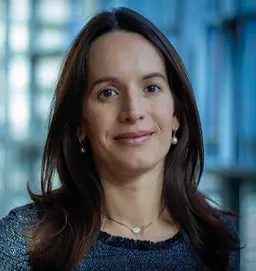
Sofia Grade
Institute of Molecular Biotechnology of the Austrian Academy of Sciences (IMBA), Vienna, Austria
Sofia Grade is a biologist and group leader at the IMBA in Vienna. She obtained her PhD in Neuroscience from the University of Coimbra and the Laval University in Québec. Her PhD research has focused on the neural stem cell response to brain disease, including stroke and demyelination. She studied stem cell differentiation and neuroblast migration, utilizing in vivo and in vitro models of these neurological conditions. During her postdoctoral work in the laboratory of Magdalena Götz, at the LMU Munich, she worked in cell transplantation for cell replacement in brain disease. She addressed a fundamental question in stem cell therapy – whether transplanted neurons can integrate into complex brain networks. Additionally, she contributed to advances in our understanding of stem cell niche regulation and myelin replacement. In 2020 she started her own lab that seeks to understand neural circuit remodeling in disease and to exploit intervention strategies for brain repair.
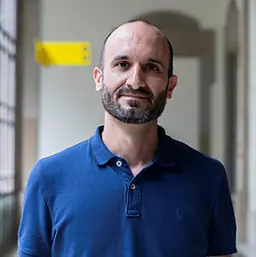
Daniel Tornero
University of Barcelona, Faculty of Medicine and Health Science
Daniel Tornero has a PhD in Neurosciences from the University of Castilla-La Mancha (Spain) and more than twenty years of experience in the field. His scientific interest has been oriented towards the exploration of new strategies for the study and treatment of neurological disorders, in particular ischemic stroke. He spent most of his postdoctoral time at Lund Stem Cell Center (Sweden), where he developed cell therapies based on human-induced pluripotent stem cells (iPSCs) for ischemic stroke. Since 2019, Daniel is an Assistant Professor at the University of Barcelona and Head of the Laboratory of Neural Stem Cells and Brain Damage. His projects are focused on the study of functional neuronal integration in cell therapies applied to brain injuries and neurodegenerative diseases. He also participates in projects related to the development of models, both in vivo and in vitro, that help to explore neurodegenerative processes and diseases that affect. neurodevelopment.
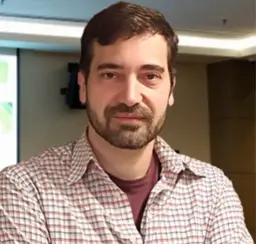
Sergio Gascón Jiménez
Cajal Institute, Department of Molecular, Cellular and Developmental Neurobiology
Sergio Gascón carried out his PhD studies (Institute for Biomedical Research-Alberto Sols, Madrid) on the topic of glutamate NMDA receptors and other interacting postsynaptic proteins that are involved in cerebrovascular diseases. During this time, he carried out research stays at the previous laboratory of Peter Scheiffele (Columbia University, New York), to develop lentiviral vectors for the efficient gene expression in neurons. After completing his PhD (2007, Autónoma University of Madrid), Sergio moved to the laboratory of Magdalena Götz (Ludwig Maximilian University, Munich), where he focused on the neuronal reprogramming field. Sergio participated in several articles demonstrating that astroglia can be reprogrammed into neurons and identified metabolic constraints blocking the conversion process. Moreover, Sergio’s research also addressed fundamental questions regarding neurogenesis and neuronal connectivity. Currently, Sergio’s research team, at the Cajal Institute-CSIC (Madrid) focuses on new strategies to improve neuronal reprogramming and to develop human models of brain diseases invitro.
Collection Overview
The most elementary computational units of our brain take on a vast variety of shapes and functions. Categorizing this diversity into discrete cell types is an extraordinary task, nonetheless, recent discoveries have tremendously expanded our knowledge on the mechanisms that determine neuronal lineages in the developing brain. With new insights highlighting developmental programs and epigenetic configurations that govern neuronal specification and diversification, emerged our ability to manipulate cell identity, by recapitulating those rules and molecular trajectories in stem and somatic cells.
Neuronal reprogramming has been achieved in vitro and invivo. Invitro strategies offer a great opportunity to generate human neurons or organoids, for cell therapy, but also to study pathological processes or run drug screening. Invivo, direct conversion of non-neuronal brain cells into functional induced neurons (iNs) at the site of the disease may provide a basis for reconstructing brain circuits. Major reprogramming roadblocks have been identified and overcome, to improve the conversion efficiency and maturity of the iNs. All in all, the output of neuronal reprogramming technologies became immensely impactful.
The goal of this collection is to gather engineering methodologies and applications that foster the advancement of this young field of research. We welcome contributions in various aspects including:
- Efficient protocols to generate specific neurons from PSCs lines or somatic cells
- Methods to improve the fitness of iNs (survival/connectivity) or speed up conversion
- Comparative studies across different cell sources for reprogramming
- Modeling neurological disease
- Drug screening/discovery
- Transplantation studies
- Neuronal identity and diversification during neural development
Articles

Isolation and Direct Neuronal Reprogramming of Mouse Astrocytes
0 Views
•
Cited by 2
•
2022
•

Transplantation of Human Stem Cell-Derived GABAergic Neurons into the Early Postnatal Mouse Hippocampus to Mitigate Neurodevelopmental Disorders
0 Views
•
Cited by 2
•
2022
•
1Cellular Neurophysiology and Epilepsy Group, Epilepsy Centre, Department of Clinical Sciences, Lund University Hospital, 2Experimental Epilepsy Group, Epilepsy Centre, Department of Clinical Sciences, Lund University Hospital, 3Molecular Neurophysiology and Epilepsy Group, Epilepsy Center, Department of Clinical Sciences, Lund University Hospital


Early Unguided Human Brain Organoid Neurovascular Niche Modeling into the Permissive Chick Embryo Chorioallantoic Membrane
0 Views
•
Cited by 3
•
2024
•
Luciano Fiore1,2, Jan Arderiu3, Andrea Martí-Sarrias3,4, Isabel Turpín3,4, Ruth I. Pareja3,5, Arcadi Navarro5,6,7,8, Mariana Holubiec2,9, Julieta Bianchelli9, Tomas Falzone2,9, Gonzalo Spelzini1,2, Gabriel Scicolone1,2, Sandra Acosta3,4
1Instituto de Biología Celular y Neurociencias “Prof. E. De Robertis” (IBCN), CONICET - Universidad de Buenos Aires, 2Facultad de Medicina, Departamento de Biología Celular, Histología, Embriología y Genética, Universidad de Buenos Aires, 3Institute of Neurosciences, Pathology and Experimental Therapeutics Dept, University of Barcelona, 4Functional Neurogenomics Group, Neurodevelopmental Disorders, IDIBELL, L’Hospitalet de Llobregat, 5IBE, Institute of Evolutionary Biology (UPF-CSIC), Department of Medicine and Life Sciences, Universitat Pompeu Fabra, 6Institució Catalana de Recerca i Estudis Avançats (ICREA) and Universitat Pompeu Fabra, 7Center for Genomic Regulation (CRG), The Barcelona Institute of Science and Technology, 8BarcelonaBeta Brain Research Center, Pasqual Maragall Foundation, 9Instituto de Investigación en Biomedicina (IBioBA) – CONICET – Instituto Partner de la Sociedad Max Planck
Abstracts
Organotypic cultures of adult human cortex as a ex vivo model for human stem cell therapy testing and validation
Sara Palma-Tortosa*1
1Laboratory of Stem Cells and Restorative Neurology, Lund Stem Cell Center, Lund University, SE-22184, Lund, Sweden.
Astrocyte-to-neuron reprogramming in an acute or chronic mouse model of ischemic stroke
Ricky Siu*1,
Tom Enbar1,
Maryam Faiz1,
Daria Ivanova1,
Cindi M Morshead*1,
Jessica Livingston1
1University of Toronto, Department of surgery
Early human brain organoid neurovascular niche modelling into the permissive chick embryo chorioallantoic membrane.
Sandra Acosta*1,
Luciano Fiore*2
1Functional Neurogenomics Group, Neurobell Program, IDIBELL,
2Universidad de Buenos Aires, Facultad de Medicina, Departamento de Biología Celular, Histología, Embriología y Genética, Ciudad Autónoma de Buenos Aires, Argentina