
Guest Editors
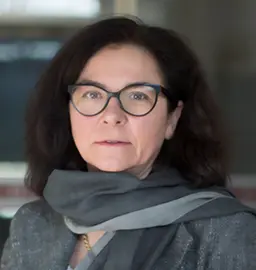
Maja Cemazar
Institute of Oncology Ljubljana, University of Primorska
Professor Maja Cemazar is the Head of Research and Education at the Institute of Oncology in Ljubljana. She also lectures in undergraduate and postgraduate courses on Cell and Tumor Biology. She earned her PhD in basic medical sciences from the University of Ljubljana. Additionally, she has worked as a postdoctoral fellow and researcher at the Gray Cancer Institute in the UK and the Institute of Pharmacology and Structural Biology in France.Her primary research focuses on electroporation-based treatments, specifically electrochemotherapy and gene electrotransfer, a form of gene therapy. She is actively involved in the development and execution of clinical trials for both veterinary and human applications, exploring electrochemotherapy and immune-based gene therapies.Professor Cemazar has supervised 16 PhD students and more than 30 BSc theses. She is the author of over 300 articles in peer-reviewed journals, and her h-index is 48.
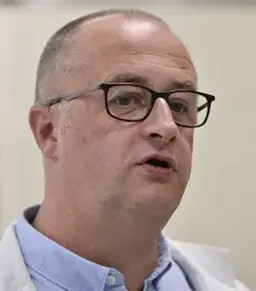
Dimitrij Kuhelj
Clinical Radiology Institute, UMC Ljubljana; Faculty of Medicine, University of Ljubljana
Assoc. Professor Dimitrij Kuhelj, MD, PhD, heads the Clinical Institute of Radiology at UMC Ljubljana and serves as the Chief of Interventional Radiology. He earned his PhD from the University of Maribor, specializing in Interventional Radiology and Radiation Protection. Currently, he is a guest professor at Rijeka University and a lecturer at the University of Ljubljana and the Faculty of Novo Mesto. Dr. Kuhelj is a member of the multidisciplinary board for vascular anomalies and is actively involved in the diagnostics and treatment of these conditions. His main work and research areas include vascular and non-vascular interventional radiology. Currently, he is involved in two EU projects. He has authored or co-authored over 300 publications and has an h-index of 8.

Julie Gehl
Zealand University Hospital, Faculty of Health and Medical Sciences; University of Copenhagen
Prof. Julie Gehl is a professor of clinical oncology at the University of Copenhagen and serves as the chief physician at the Department of Clinical Oncology and Palliative Care at the University of New Zealand. She earned her MD in 1991 and subsequently completed her doctoral degree in 2003, focusing on the use of electroporation for drug and gene delivery. She is board-certified in oncology and has held various academic and clinical leadership roles, particularly at Herlev Hospital.Prof. Gehl has played a crucial role in advancing cancer treatments, particularly in the field of electrochemotherapy. She chairs the InspECT network and has organized several international conferences. Her international experience includes positions as a visiting scholar in France and the USA. Currently, she contributes to health research strategy groups at both national and EU levels.She is the author of over 130 peer-reviewed publications, holds an H-index of 52, has four patents, and has written multiple book chapters.
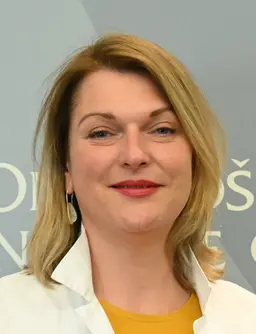
Barbara Perić
Department of Surgical Oncology, Institute of Oncology Ljubljana
Barbara Perić, MD, PhD, is a surgical oncologist specializing in treating cutaneous melanoma. She has dedicated her career to addressing this complex disease in Slovenia, which has one of the highest incidences of melanoma in Europe. Dr. Perić has developed significant expertise in managing this condition and has actively participated in several impactful multicenter clinical trials, including MINITUB, EAGLE, and MelMART II, contributing to advancements in melanoma care.She is also recognized for her work in electrochemotherapy. Her research focuses on the synergy between electrochemotherapy and immune checkpoint inhibitors, exploring promising and evolving areas of oncologic treatment. Additionally, Dr. Perić is a member of InspECT, the international consortium of experts in electrochemotherapy, reflecting her commitment to collaborative, cutting-edge cancer research.Beyond her clinical and research roles, Dr. Perić provides specialized care to individuals with familial melanoma, offering both medical expertise and compassionate support.
Collection Overview
Electroporation-based therapies have emerged as a powerful modality in the treatment of cancer, offering targeted, minimally invasive, and highly effective therapeutic options. By transiently permeabilizing cell membranes through the application of electric pulses, electroporation facilitates the delivery of chemotherapeutic agents (electrochemotherapy), nucleic acids (gene electrotransfer), and other therapeutic molecules directly into tumor cells. These methods not only enhance drug efficacy but also allow for reduced systemic toxicity, offering substantial clinical benefits in both cutaneous and deep-seated tumors.
This topic is increasingly important in oncology due to its broad applicability across cancer types, compatibility with immune therapies, and the growing clinical evidence supporting its use. Furthermore, electroporation is also being successfully utilized outside of oncology; for instance, in the treatment of vascular malformations through bleomycin electrosclerotherapy (BEST). This approach reduces the number of treatment applications and offers an effective therapeutic alternative for complex cases. The JoVE Methods Collection aims to provide a comprehensive, visualized repository of standardized protocols for electroporation-based therapies in clinical oncology.
Sharing detailed, step-by-step procedures in a visual format will help overcome technical barriers, enhance methodological transparency, and accelerate the adoption and optimization of these therapies across clinical settings to treat different tumor types and locations, such as subcutaneous vs. deep-seated. The percutaneous approach to the treatment of vascular malformation will also be discussed.
Articles

Integration of Electroporation in Urological Practice: Design and Evaluation of a New Transurethral Electrode
0 Views
•
2026
•
1Department of Urology, Copenhagen University Hospital - Zealand University Hospital Roskilde, 2Department of Clinical Medicine, Faculty of Health and Medical Sciences, University of Copenhagen, 3Department of Veterinary Clinical Sciences, Faculty of Health and Medical Sciences, University of Copenhagen, 4Department of Clinical Oncology and Palliative Care, Copenhagen University Hospital - Zealand University Hospital Roskilde

A Video Protocol of a Randomized Controlled Clinical Trial - Electrochemotherapy of Cutaneous Metastases with Reduced Dose Bleomycin (BLESS Trial)
0 Views
•
2026
•
Marie Abildgaard Tolstrup1,2, Camilla Kjaer Lonkvist3, Elizabeth Emilie Rosted1,4, Taiba Abdulmohsen M Alrasheed5, Freya Armstrong Bastrup1, Biljana Mojsoska6, Helena Plesnik7, Tina Kosjek7, Lisbet Rosenkrantz Hölmich2,8, Nicco Krezdorn5, Julie Gehl1,2
1Department of Clinical Oncology and Palliative Care, Zealand University Hospital, 2Department of Clinical Medicine, Faculty of Health and Medical Sciences, University of Copenhagen, 3Department of Oncology, Copenhagen University Hospital, Herlev and Gentofte Hospital, 4Department of Regional Health Research, University of Southern Denmark, 5Department of Plastic Surgery and Breast Surgery, Zealand University Hospital, 6Department of Science and Environment, Roskilde University, 7Department of Environmental Sciences, Jožef Stefan Institute, 8Department of Plastic Surgery, Copenhagen University Hospital, Herlev and Gentofte Hospital

Current Operating Procedure (COP) for the Treatment of Slow-Flow Vascular Malformations with Bleomycin Electrosclerotherapy (BEST)
0 Views
•
2026
•
Miha Stabuc1, Rok Dezman2, Tobian Muir3, Walter A Wohlgemuth4, Tine Arnez5, Orjana Velikonja6, Masa Omerzel2, Barbara Lisec2, Dimitrij Kuhelj1, Maja Cemazar2,7, Gregor Sersa2,8
1Institute of Radiology, University Medical Center Ljubljana, 2Department of Experimental Oncology, Institute of Oncology Ljubljana, 3James Cook University Hospital, 4Martin-Luther University Halle-Wittenberg, 5Division of Surgery, University Medical Center Ljubljana, 6Pediatric Clinic, University Medical Center Ljubljana, 7University of Primorska, 8University of Ljubljana

Patient-Specific Electric Field Simulation In Spinal Metastasis Electrochemotherapy
0 Views
•
2026
•
Paul Beunon1, Baptiste Bonnet1, Lambros Tselikas1, Paul Janvier1, Genti Xhepa1, Olivier Sutter2,3, Baudouin Denis de Senneville4, Luc Lafitte4, Olivier Seror2,3, Lluis M. Mir5, Frederic Deschamps1, Clair Poignard3
1Department of Anesthesiology, Surgery and Interventional Radiology, Gustave Roussy, 2Interventional Radiology Department, Avicenne Hospital, 3AIMOKA : Inria, Assistance Publique Hôpitaux de Paris, Université Sorbonne Paris Nord, 4CNRS, INRIA, University of Bordeaux, 5UMR 9018 METSY, Université Paris-Saclay, CNRS, Gustave Roussy