Rodent Handling and Restraint Techniques

Source: Kay Stewart, RVT, RLATG, CMAR; Valerie A. Schroeder, RVT, RLATG. University of Notre Dame, IN
It has been demonstrated that even minimal handl…
All animal procedures described here must be conducted in accordance with institutional animal ethics guidelines and approved by IACUC. All procedures must follow the principles of the 3Rs—Replacement, Reduction, and Refinement—and must be performed by trained personnel.
1. Rodent handling:
- Rodent handling is essential for routine procedures but can induce stress responses. These responses may affect animal welfare and experimental outcomes. Refined handling techniques are therefore necessary to minimize stress and improve data reliability.
- Habituation involves gradual exposure to handling and procedures to reduce fear responses. Repeated, non-threatening interactions help animals become familiar with the handler and environment. Handling devices can be introduced into the cage to allow voluntary exploration before use. Positive reinforcement, such as food rewards, can encourage voluntary participation and cooperative behavior.
- Cup Handling
- Cup handling is a refined, non-aversive technique commonly used for mice.
- The animal is gently guided onto open hands or scooped using both hands to provide full body support.
- The mouse is allowed to freely explore the hands, reducing anxiety and minimizing defensive behaviors.
- Gentle, controlled movements and continuous support are essential to maintain a low-stress interaction.
- With repeated handling, animals become habituated, improving ease of handling and reducing stress responses.
- Tunnel Handling
- Tunnel handling involves transferring rodents using a tube or tunnel, rather than direct hand contact.
- Tunnels can be placed in the home cage to allow animals to use them as shelter and become familiar with them.
- Rodents often voluntarily enter the tunnel, after which they can be transferred between locations.
- This method reduces handling-induced stress and is particularly useful for routine tasks such as cage changing.
- Tunnel handling is widely recommended as a refinement technique for minimizing aversion to handling.
- Three-Finger Method (Refined Restraint Support)
- The three-finger method is a refined approach used during manual restraint of mice.
- It involves gently securing the animal using the thumb and index finger at the scruff, while the middle finger provides additional support along the body.
- This technique improves stability and control while minimizing pressure on the animal.
- Proper support of the body and hindquarters is essential to reduce discomfort and prevent injury.
- This method should be applied by trained personnel and only when restraint is required for procedures.
- Cup Handling
2. Restraint techniques
- Scruffing
Mice and sometimes young rats may be restrained using scruffing when required for specific procedures; however, refined handling methods should be used wherever possible prior to restraint. Adult rats are more difficult to restrain with this technique due to a more muscular neck, a reduced amount of loose skin, and an aversion to this method.- The one-handed restraint method is utilized most often in mouse strains that are very calm, such as the athymic nude, SCID, and some GEM strains. However, there is a greater risk for being bitten with this method. Novice animal handlers should become comfortable with the two-handed restraint technique before attempting the one-handed method.
- Place the animal on a surface that they can grip, such as a wire bar cage top or a mat.
- The animal may be gently guided into position on a surface it can grip, minimizing the need for tail traction.
- Turn the hand so that the palm is facing the body of the animal.
- With the index finger and thumb, pin the rodent over the shoulders.
- Gently slide the thumb and index finger forward, and position them at the base of the skull. Grasp the loose skin at the neck and lift the animal.
- Use the middle finger to stabilize the animal along the back by pinning the dorsal skin against the base of the thumb.
- Two-handed restraint
- Place the animal on a surface that they can grip.
- Hold the tail at the base (within 1-2 cm of the body) with the dominant hand, and apply gentle backward traction. This causes the animal to hold onto the surface, and results in the body being stretched and elongated.
- With the index finger and thumb of the other hand, pin the rodent over the shoulders.
- Gently slide the thumb and index finger forward, and position them at the base of the skull. Grasp the loose skin at the neck and lift the animal.
- Use the remaining fingers to stabilize the animal along the back by pinning the dorsal skin against the base of the thumb.
- Secure the hindquarters by pinning the tail against the palm with the fourth finger, or by allowing the hind limbs to rest on a solid surface.
- The one-handed restraint method is utilized most often in mouse strains that are very calm, such as the athymic nude, SCID, and some GEM strains. However, there is a greater risk for being bitten with this method. Novice animal handlers should become comfortable with the two-handed restraint technique before attempting the one-handed method.
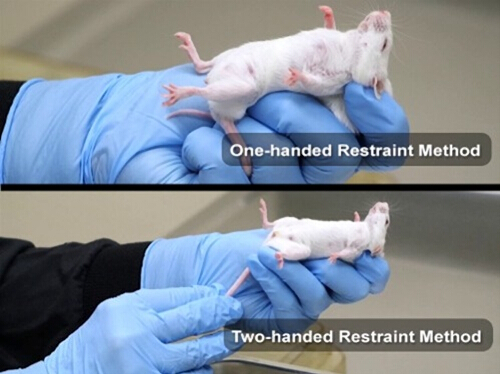
Figure 1: One-handed and two-handed restraint method for mice
2. Gloves
There are a variety of gloves available for handlers to wear for protection from rat bites. Gloves should allow adequate dexterity and gentle handling, as reduced tactile sensitivity may increase stress to the animal. Often, the disadvantages of many glove types outweigh the advantages.
- Cotton canvas work gloves are not bite resistant, but provide a small amount of protection from teeth and nails. They do not provide good grip as they slide easily over the fur.
- Good quality leather gloves are bite resistant. However, their stiffness causes a reduction in dexterity. The thickness of the leather, though protective, reduces tactile acuity and hand mobility.
- Chain mail gloves provide a psychological sense of security for the animal handler. However, they are heavy and most rats' teeth can penetrate between the links. In addition, these gloves decrease manual dexterity, and if used improperly are more dangerous for both the animal and the handler.
- Rubber-insulated gloves that are commonly used in homes for washing dishes provide a textured palmar surface, and allow for a secure grip on the hair coat of rodents. The stretchy latex surface is thick enough to resist puncture by rodent incisors, and thin enough to be able to feel and control the animal. The major disadvantage is that they are made of latex, which is a concern for persons with latex allergies. Furthermore, these gloves deteriorate in light, and need to be replaced regularly.
3. Body Restraint
- The "T. rex grip" is a two-handed restraint method for rats.
- Place a rat on a surface that can be gripped.
- Holding the base of the tail with one hand, bring the other hand up and over the back with the index and middle fingers split.
- Place the hand over the shoulder with the index finger on one side of the head, and the middle finger on the other side. The fingers on each side of the head restrict side-to-side movement of the head.
- Encircle the body behind the forelegs with the third finger, the fourth finger, and the thumb. Care must be taken to avoid compressing the chest and compromising respirations. This grip prevents the rat from moving forward or backward out of the hand.
- Stabilize the tail and hindquarters by grasping the base of the tail with or without holding onto the hind feet.
- This restraint works well with larger rats, and when access to the head is needed.
- The forelimb control method is a two-handed restraint method.
- Place the animal on a surface that they can grip.
- Hold the tail at the base (within 1-2 cm of the body) with the dominant hand and apply gentle backward traction. This causes the animal to grip onto the surface, and results in the body being stretched and elongated.
- Bring the other hand from behind over the back.
- Grasp the rat directly behind the shoulders, with the fingers on one side and the thumb on the other side of the chest, and slide the hand forward, thus forcing the forelegs forward.
- The forelegs will cross under the rat's chin, creating a physical barrier and preventing the rat from moving its head down toward the fingers.
- Take care to avoid compressing the chest and compromising respirations.
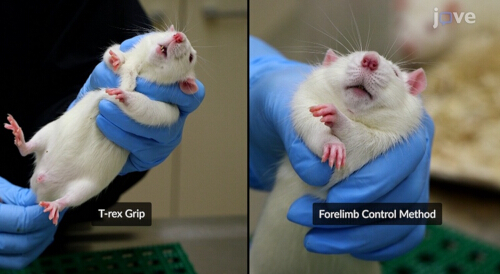
Figure 2: T-rex grip and forelimb control method for restraining rats
4. Restraint devices
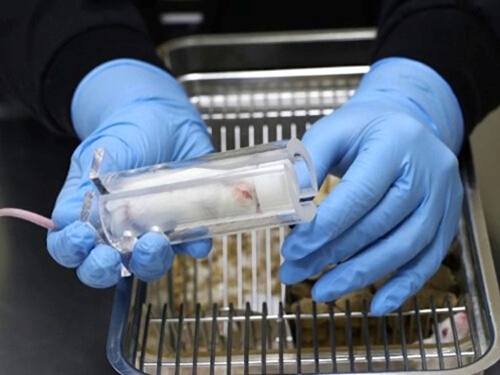
Figure 3: Broome-style restraining device
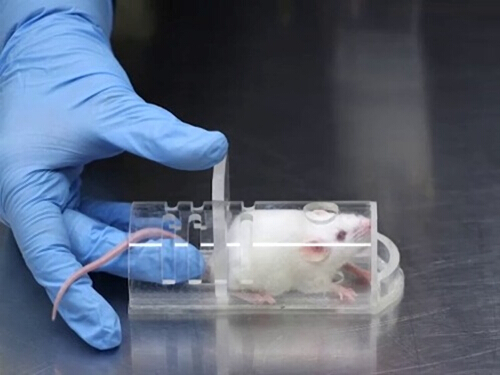
Figure 4: Flat-bottomed rodent restrainer
- Rigid devices come in a variety of types, and are generally made of nonporous material that is easily disinfected.
- The Broome-style restraint is designed to provide access to the tail for intravenous injections. It is constructed with a slot that runs along the full length of the device, which allows the animal to be guided into the restrainer hindquarters first. A plastic nosepiece is inserted to hold the animal in place.
- Remove the nosepiece from the body of the restraint tube by loosening the screw.
- Grasp the animal at the base of the tail, and orient the restraint tube so that the slit that runs the length of the tube is facing up. Gently guide the animal into the restraint device hindquarters first.
- It is often advantageous to place the animal on a smooth surface to facilitate its placement into the tube.
- Once the animal is fully in the tube-and has been drawn to the closed end-slide the plastic nosepiece into the tube to occlude the opening.
- Place the nosepiece assembly so that the animal's nose is in the center opening. Do not position the nosepiece so tightly that the animal cannot breathe.
- The flat-bottomed rodent restrainer is a half cylinder with openings that allow access from the top and the bottom of the restraint device. A rigid plastic gate is inserted into one of several graduated slots to hold the animal within the device.
- Hold the animal by the base of the tail with the dominant hand on a smooth surface, or on a cage top.
- Hold the flat-bottomed restraint tube in the other hand, and angle it so that the open end is at the animal's head at a 45° angle to the table/cage top surface.
- Some animals will immediately enter the tube, while others are reluctant and require the handler to steer them into the tube.
- Place the tube over the animal's head. Gently guide the animal forward to encourage entry into the device.
- Once the animal is in the restraint device, slide the plastic gate into the appropriate slot to hold the animal in the restraint device.
- Tube restraints are Plexiglass cylinders with one closed end containing holes or slits for air circulation. Some are modified with a wide slot half the length of the cylinder to accommodate exposure of a hind limb for intramuscular injections, saphenous and femoral blood collection, or access to the dorsal surface for subcutaneous injections.
- Grasp the animal by the base of the tail with the dominant hand on a smooth surface, or on a cage top.
- Hold the restraint tube in the other hand and angle it so that the open end is at the animal's head at a 45° angle to the table/cage top surface.
- Some animals will immediately enter the tube. Other animals are reluctant and require the handler to steer them into the tube.
- Place the tube over the animal's head. Gently guide the animal forward to encourage entry into the device.
- For animals that do not readily cooperate, brief manual restraint may be used by trained personnel.
- Once the animal is in the restraint device, it is necessary to occlude the opening to prevent the animal from backing up.
- Depending on the procedure, several fingers are placed across the opening.
- Stuff a large latex glove into the opening. The gloves are usually textured and will grip the Plexiglass surface.
- Some restraint tubes will have closures specific to that style or size.
- The Broome-style restraint is designed to provide access to the tail for intravenous injections. It is constructed with a slot that runs along the full length of the device, which allows the animal to be guided into the restrainer hindquarters first. A plastic nosepiece is inserted to hold the animal in place.
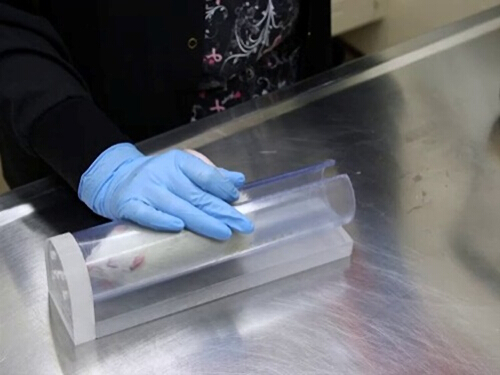
Figure 5: Tube restraining device
- Flexible restrainers are disposable flexible plastic cones. They are available in either transparent or opaque plastic. The plastic is thin enough to allow penetration by a needle to accomplish injections without removing the animal from the restraint device. They come in a variety of sizes to fit mice and rats, both adult and weanling.
- Cut the plastic with scissors to allow access to the limbs, the tail, and other injection sites.
- Select a cone size appropriate for the animal. The cone should be long enough to extend 2-3 inches beyond the animal's rump.
- Insert the animal into the cone
- Open the cone and grasp it around the upper half.
- Grasp the animal by the base of the tail with the dominant hand, placing it on a smooth surface or a cage top.
- Hold the restraint cone in the other hand, and angle it so that the open end is at the animal's head at a 45° angle to the table/cage top surface.
- Some animals will immediately enter the cone. Other animals are reluctant and require the handler to steer them into the restraint cone.
- Place the cone over the animal's head. Immediately tap the animal's rump and maintain pressure to prevent the animal from backing up. Due to the larger diameter of the cone opening, animals are much more likely to turn around to exit the cone.
- As soon as the animal enters the cone, grasp the open end and seal it to force the animal to the end.
- Secure the opening by folding the plastic to one side of the tail and applying the binder clip to the folded plastic, being careful to avoid clamping the tail or skin. Alternatively, gather the plastic around the tail evenly, and place the twist tie as close to the body as possible to secure the opening.
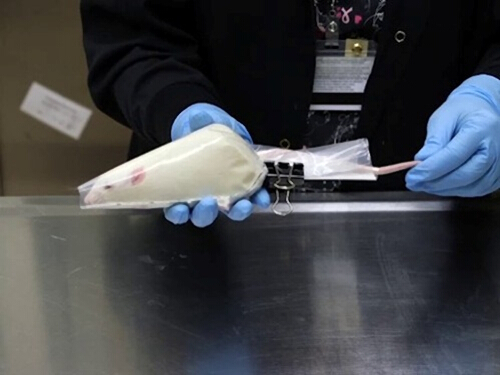
Figure 6: Flexible restrainer
5. Restraint methods for specific technical procedures
- Ventral exposure is required for intraperitoneal injections.
- Scruffing
- Scruff the animal and turn the hand so that the abdomen is exposed.
- Tilt the animal so that the head is pointing downward at a 30° angle.
- Secure the hindquarters by pinning the tail against the palm using the fourth finger.
- Alternatively, the hindquarters can be immobilized by pinning the excess skin along the back between the fingers and the base of the thumb.
- T. rex grip and forelimb control restraint methods
- Grasp the animal (rats only) using either of the above techniques.
- With the free hand, grasp both hind legs above the hock, and extend them caudally.
- Support the weight of the animal with the palm of the hand on the back.
- Tilt the animal so that the head is pointing downward at a 30° angle.
- A second person performs the injection.
- Rigid restrainer
- Most rigid restraint devices cannot prevent the animal from instinctively rolling to remain upright.
- If a rigid restrainer is employed, turn the animal so that its head is pointed down and is perpendicular to the tabletop.
- Flexible restrainer
- When placed properly in a flexible plastic cone, the animal is unable to turn over or around.
- Care must be taken to position the animal such that the hind limbs are sufficiently separated to allow access to the abdomen.
- As the animal is compressed, it is imperative that the injection be low enough on the ventral surface to avoid puncture of the spleen, liver, kidney, or stomach.
- Scruffing
- Dorsal exposure is required for injections into the subcutaneous space.
- Scruffing
- Scruff the animal and allow its hind legs to rest on a solid, flat surface.
- Lift the scruff to create a tent of skin over the neck and shoulders.
- Place the weight of the hand on the table when injecting mice. Placing weight on the mouse can cause suffocation.
- Hold rats in place with weight on the hindquarters, but never the chest.
- Inject the substance into the space below the fingers on the body of the animal.
- Rigid restrainers
- Place the animal in a restraint device with an opening large enough to allow gentle lifting of the skin up.
- It may be necessary to use forceps to grasp the skin.
- Most animals remain in the proper posture unless the restraint is rotated.
- Do not inject a volume that prevents the skin from receding from the opening once the injection is complete.
- Scruffing
- The restraint of the hind limb is necessary for intramuscular injection; blood withdrawal from the saphenous vein, femoral vein, or femoral artery; and injection into the footpad.
- Scruffing of mice and small rats (under 200 g)
- Scruff the animal and turn the hand so that the abdomen is exposed.
- Access the hind foot by placing the foot between the fingers.
- This method is best used only for footpad injections.
- T. rex grip or forelimb control
- This method requires two people: one for restraint of the body, and one for restraint of the limb and the performance of the injection.
- Extend the rat's hind leg by grasping the foot for access to the saphenous vein, femoral vein or artery, or the muscle for injection.
- Hold the leg just above the hock for injection of the footpad.
- Rigid restrainers
- Place the animal in a restraint tube head first.
- Expose the tail and hindquarters by gently guiding them backward from the tube.
- Immobilize the leg by grasping the skin of the flank and locking the knee straight. This provides access to the quadriceps muscle for injection in the mouse or rat, and prevents the animal from exiting the restraint device.
- In devices with large slots, position the leg outside the tube for access to the blood vessels for sampling or footpad injection.
- Those restraint tubes with flat end pieces allow the tube to rest on the table and stabilize the device during the procedure.
- Because the animal is secured in this manner, it is possible to perform injections or blood sampling of rats by a single technician.
- Flexible restraint
- Flexible plastic restraints can be modified by cutting openings to accommodate the exposure of limbs.
- The openings made can be customized for each animal, or for specific procedures.
- As the animal is secured in this manner, it is possible for a single technician to perform injections or blood sampling of rats.
- Scruffing of mice and small rats (under 200 g)
Key Terms and Definitions:
Common methods for removing rodents from their cages include cup handling, tunnel handling, and full-body supported transfer. Tail handling should be reserved for specific situations where alternative methods are not feasible.
For animals that are anxious or exhibit stereotypies, placing tubes into the cage may decrease handling difficulty, and reduce the flight/fright response to daily animal husbandry. A tube made of a nonporous material can be added for enrichment, and serve as a place for the animal to shelter or seek safe refuge. Such tubes can be open-ended or capped on one end. Most mice or rats will willingly go into the tubes when their cage is opened, or they can be easily guided to the tube. Once the animal is inside the tube, the open end is covered to transport the animal to the new location. When placed in a fresh cage, the tube can be gently tipped upward to encourage the animals to leave it. Animals are easily conditioned to this method of cage changing and will immediately enter the tubes, making this method as quick and easy as others for moving animals from one place to another. Although tubes do not have to be present in the home cage to be effective, having a tube in the primary enclosure increases recognition of a familiar safe site, as well as provides cage enrichment.
Some institutions prefer that animals be lifted by the body for routine handling, especially for handling rats. Animals must be habituated to this method from an early age. Young rats between 2-4 weeks of age tend to jump straight up. Placing a hand over the rat's back will cause it to jump into the palm of the handler, allowing it to be grasped. A second hand may be needed to prevent the rat from squirming out of grasp before placing it into another cage. Adult rats should be lifted using techniques that provide full-body support, with the forequarters and hindquarters supported throughout transfer.
When changing cages with neonate mice or rats, it is often necessary to remove them while keeping the nest intact. With the use of two hands to scoop the nest and neonates from the bottom of the cage, the intact nest is moved into a new cage. However, to avoid dropping pups, the fingers of each hand must be held closely together. Once moved to a new cage, it is important to verify that the pups are all present. It is advisable to count the pups before and after moving them. A plastic scoop may be used instead of the hands. If this method is used, a hand should be placed over the top of the scoop to prevent neonates from wiggling or jumping out of the scoop. This method of transferring pups, compared to the individual handling of the pups, is less distressing to both the pups and the dams.
Restraint for technical procedures requires a confident and firm, but gentle, touch. Restraint should be performed by trained personnel using calm, controlled, and consistent techniques that minimize stress and ensure animal and handler safety.
Mice and small rats can be restrained by grasping the skin at the nape of the neck, referred to as scruffing. Precautions for this method include both grasping the skin too firmly or too loosely. If the skin is grasped too tightly, the airway can become constricted, which can lead to death. If grasped too loosely, the animal will be able to turn its head and potentially bite the handler.
Animals exhibiting signs of fear or distress may be more difficult to handle safely. It is best to calm the animal prior to handling. There are various calming techniques that have been tried with varying success. The most reliable method is to use some sort of chemical restraint, most often an inhalation anesthetic. Isoflurane or sevoflurane are short-acting inhalation anesthetics that can be delivered with only the handling required to transfer the animal from its cage to an induction chamber. Once the animal is anesthetized, they can be manipulated or manually restrained for the procedure.
Questions that this video will help you answer
Routine handling for cage changing and technical procedures is a cause of stress for experimental animals. Although this type of stress is not a threat to the overall wellbeing of the animal, it can cause fluctuations in physiologic parameters that can have an adverse effect on the research data. The use of skilled personnel, proper techniques, and equipment can mitigate some of the stress.
Rodents are widely used model organisms to investigate diverse scientific questions, and it has been demonstrated that handling can be stressful for these animals.
Handling for simple tasks such as cage changing may cause an increase in heart rate, blood pressure, and serum corticosterone levels, and these effects can persist for several hours.
In addition, restraint methods used for procedures such as injections and blood collection can induce physiological changes that may affect scientific data.
Therefore, proper training in handling and restraint techniques, along with habituation of animals to these procedures, is essential to minimize stress and improve compliance.
During habituation, positive reinforcement, such as food rewards or gentle interaction, may be used to encourage voluntary participation and reduce stress.
In this video, we will first review the basic techniques for handling rodents, followed by an overview of restraint procedures, including manual techniques and the use of restraining devices.
Let’s begin by discussing the basics of rodent handling. Traditionally, tail and forceps handling were commonly used; however, these methods are now avoided in favor of refined, low-stress handling approaches.
Refined, non-aversive handling methods such as cupping and tunnel handling should be used as the first approach, while more restrictive methods are reserved for procedures when necessary.
In the cup handling technique, introduce a gloved hand into the home cage and hold it still before attempting to pick up the mouse. Allow the mouse to habituate to the presence of the hand.
Next, gently attempt to pick up the mouse using cupped hands. If the mouse does not readily step onto the hand, bring both hands together and use them to calmly guide the mouse toward a corner of the cage. Once positioned, scoop the mouse up using both hands to provide full body support.
After removing the mouse from the cage, keep your hands flat and open to form a stable platform. Allow the mouse to freely explore your hands. This approach reduces stress and minimizes the likelihood of defensive behaviors such as biting.
Hold one hand open with the palm facing upward, and position the other hand adjacent to the mouse. Allow the mouse to move voluntarily between hands without restraint.
Gradually curve the fingers to form a gentle cup, supporting the mouse while still allowing movement. Introduce a controlled, gentle rolling motion between the hands, ensuring continuous full body support.
Alternate between free exploration on open hands and gentle rolling between cupped hands, using slow, controlled movements to minimize stress.
Rats are handled using methods that provide full body support, ensuring the animal is held securely and gently during lifting and restraint.
In addition, rat tickling is a positive handling technique that mimics aspects of social play behavior and can reduce stress while promoting positive human–animal interactions.
Although tail handling is avoided for routine use, they may still be employed in specific situations where alternative methods are not feasible, such as when working with aggressive animals or during procedures requiring rapid and controlled handling.
In such cases, their use should be brief, performed by trained personnel, and followed by appropriate support to minimize stress.
Transfer tubes, also referred to as tunnels, made of non-porous material can be used to move rodents between cages. These tubes may be placed in the home cage, allowing animals to use them as shelter and become familiar with them.
Most mice and rats will voluntarily enter the tube when the cage is opened, or they can be gently guided inside. Once inside, the tube can be carefully lifted and transferred to the new cage.
The animal can then be allowed to exit the tube voluntarily. With repeated use, animals become habituated to this method, making it an efficient and low-stress approach for cage transfer.
In addition to tube transfer, rats may be moved using direct handling when necessary. In such cases, the animal should be supported using both hands, ensuring full body support during transfer.
With habituation, rats may voluntarily move into the handler’s hand, allowing smooth and low-stress transfer.
When changing cages with neonate mice or rats, it is often necessary to remove them while keeping the nest intact. Use two hands to scoop the nest and pups from the bottom of the cage into a new cage.
Hold the fingers close together to avoid dropping the pups. Once the nest has been moved to a new cage, it is important to verify that all the pups are present. Alternatively, a plastic scoop may be used to move neonate rodents in their nests.
While doing this, it is important that you place your hand over the top of the scoop to prevent neonates from wiggling or jumping out. Compared to the individual handling of the pups, scooping the entire nest is less distressing to both the pups and the dams.
Now that we have discussed the basics of rodent handling, we will review restraint techniques used for specific procedures. Restraint should be applied only when necessary and for the shortest duration possible, using methods that minimize stress to the animal.
Mice and young rats may be restrained using one- or two-handed techniques by trained personnel. For adult rats, full body restraint techniques, such as the T-rex grip or forelimb control methods, may be used when appropriate.
For the one-handed restraint method, place the mouse on a surface it can grip. Hold the tail between the fingers of your non-dominant hand and apply gentle guidance to position the animal. Using the thumb and index finger of the same hand, grasp the loose skin at the back of the neck, while the remaining fingers support the body to maintain stability.
To perform the two-handed restraint method, place the mouse on a surface it can grip, such as a wire bar lid. Using your dominant hand, hold the base of the tail and apply gentle guidance to position the animal, allowing it to maintain contact with the surface.
With your non-dominant hand, gently secure the animal by holding the skin at the back of the neck, positioning the thumb and index finger near the base of the skull.
The remaining fingers are used to support and stabilize the body, ensuring the animal is held securely without excessive pressure. The hindquarters may be stabilized by gently controlling the tail.
In refined handling approaches, scruffing may also be performed using a three-finger technique, in which the thumb, index, and middle fingers are used to create a broader grip across the skin. This helps distribute pressure more evenly and reduce compression of the neck.
The T-rex grip is a two-handed restraint method used for rats during specific procedures. Place the rat on a stable surface. While holding the base of the tail, position your other hand over the shoulders, with the fingers placed on either side of the head to limit movement.
The body is then supported by placing the fingers behind the forelimbs, ensuring a secure but gentle hold. Care should be taken to avoid compressing the chest, allowing normal breathing throughout the procedure. The hindquarters may be stabilized as needed depending on the procedure.
To restrain a rat using the forelimb control method, place the animal on a surface it can grip. Hold the base of the tail and apply gentle backward guidance to position the animal.
With the other hand, grasp the animal behind the shoulders and carefully slide the hand forward to position the forelimbs beneath the chin, helping to limit head movement.
Ensure that the grip is secure without compressing the chest, allowing normal breathing throughout the procedure.
Now that we have reviewed the manual restraint techniques, let's learn how to restrain rodents using specialized devices.
Animals should be acclimated to the device when feasible, and all procedures must be performed by trained personnel. Animals should be continuously monitored for normal breathing and signs of distress, and restraint devices should not be used as a routine method of handling or for convenience.
The first device that we will review is the Broome-style restraint device. This device contains a slot running along its full length and a plastic nosepiece used to help secure the animal in position.
First, loosen the screw and remove the plastic nosepiece. Next, orient the restraint tube so that the slit is facing upward. Gently guide the animal into the restraint device, hindquarters first, using calm and controlled movement.
Once the animal is fully positioned inside the device, slide the plastic nosepiece back into place. Adjust the nosepiece so that the animal’s nose is centered in the opening. Take care not to position the nosepiece too tightly, and ensure that the animal is able to breathe normally throughout the procedure.
Another example of a restraint device is the flat-bottomed rodent restrainer. This device is a half-cylinder with openings that allow access from the top and bottom, and it contains slots for insertion of a rigid plastic gate.
To use this restrainer, first position the animal on a smooth surface. Hold the flat-bottomed restraint tube so that the open end is angled toward the animal’s head at approximately 45 degrees to the surface. Gently guide the animal forward into the device.
Once the animal is inside, slide the plastic gate into the appropriate slot to secure its position. Confirm that the animal is properly positioned and able to breathe normally.
The third type of restraint device is the tube restrainer. These are Plexiglass cylinders with one closed end containing openings for air circulation and a slit near the open end.
To use a tube restraint, place the animal on a smooth surface. Next, position the open end of the tube at the animal’s head at an angle of approximately 45 degrees.
Allow the animal to move forward into the tube, or gently guide it into position if needed. Once the animal is inside, secure the opening using an appropriate closure that prevents escape while maintaining adequate airflow. Throughout the restraint period, monitor the animal to ensure proper breathing and positioning.
Lastly, we will discuss flexible restrainers. These are disposable plastic cones available in different sizes. The appropriate cone size should be selected based on the size of the animal, and it should be long enough to extend beyond the animal’s rump.
To use the restrainer, first place the animal on a smooth surface. Then position the open end of the restraint cone over the animal’s head at an angle of approximately 45 degrees. Allow the animal to enter the cone voluntarily, or gently guide it forward if needed.
Once the animal is positioned inside the cone, secure the open end to maintain the animal’s position. Fold the plastic carefully to one side of the tail and apply a binder clip, taking care not to clamp the tail or skin. After securing the restrainer, verify that the animal is positioned correctly and able to breathe normally.
After discussing the basics of handling and the use of restraint devices, it is important to understand why these procedures are necessary in laboratory animal practice.
Knowledge of proper handling and restraint techniques is essential for maintaining animal welfare and supporting reliable scientific outcomes.
From birth onward, rodents are routinely handled for activities such as weighing, inspection, and cage changing, and these procedures should be performed using methods that minimize stress.
Restraint techniques are also required for specific technical procedures. For example, scruff restraint may be used for certain identification or minor procedures in mice.
While restraint devices may be appropriate for procedures in rats that require reduced movement, such as microchip placement or intravenous administration.
Manual restraint methods are commonly used for procedures such as subcutaneous or intraperitoneal injection, while restraint devices are especially useful when a higher degree of immobilization is required.
You've just watched JoVE's introduction to basic handling and restraint techniques for rodents. These procedures require a confident and firm, but gentle touch. Tentative approaches can result in handler bites, while aggressive handling can cause injury to the rodent. Therefore, it is important to learn these techniques thoroughly and find a balance of an assertive yet gentle grip.
View the full transcript and gain access to JoVE Science Education videos
Q1: Why is proper rodent handling training important for research?
Even minimal handling of mice and rats causes stress, increasing heart rate, blood pressure, and serum corticosterone levels for several hours. Restraint procedures for injections and blood withdrawals also cause physiological changes that can affect scientific data. Proper training minimizes these effects, ensuring animal welfare and data integrity in research.
Q2: What is the correct way to lift a rodent by its tail?
Grasp the tail at the base near the rump, never at the end, to prevent skin from being pulled off and causing tail amputation. Move the animal quickly and steadily without suspending it in air for extended periods, as this causes distress and struggling. Never place a hand under the animal, as it may bite while seeking security.
Q3: How do forceps compare to other methods for handling multiple rodents?
Forceps minimize cross-contamination between animals and are quicker and less expensive than changing gloves between cages. Long-dressing or tongue forceps with rubber, plastic, or silicone tubing cushioning can grasp mice at the scruff or tail base. Handlers must be trained on proper grip pressure to avoid interfering with breathing.
Q4: What is the two-handed restraint method for mice?
Place the mouse on a grippable surface like a wire bar lid. Hold the tail base with your dominant hand and gently tug backward to stretch the body. With your other hand, pin the skull base with index and thumb, grasp neck skin to lift, and stabilize the back against your thumb base. Secure hindquarters by pinning the tail with your ring finger.
Q5: How does the T-rex grip restrain adult rats?
Place the rat on a grippable surface and hold the tail base with one hand. Position your other hand over the shoulder with index and middle fingers split on either side to restrict head movement. Encircle the body behind forelegs with middle and ring fingers and thumb, avoiding chest compression. Grasp the tail base with or without hind feet depending on the procedure.
Q6: What are the key features of a Broome-style restraint device?
The Broome-style device has a slot running its full length and a plastic nosepiece for holding animals. Insert the animal hindquarters first by gently pulling at the tail base. Slide the nosepiece back to secure the animal with its nose centered in the opening, ensuring it can still breathe freely.
Q7: When should manual restraint methods be used versus restraint devices?
Manual restraint methods like scruffing are used for marking procedures such as ear punching and for common injection procedures including subcutaneous and intraperitoneal administration. Restraint devices should be used for procedures requiring minimal animal movement, such as intravenous administration and microchip insertion, where compound administration rodents injection techniques demand precise positioning.