Blood Withdrawal II

All animal procedures described here must be conducted in accordance with institutional animal ethics guidelines and approved by IACUC. All procedures must follow the principles of the 3Rs—Replacement, Reduction, and Refinement—and must be performed by trained personnel.
1. Submandibular bleed in mice:
Submandibular and facial vein sampling are often combined in IACUC protocols because they refer to the same anatomical region and closely related blood collection technique in rodents. The puncture site targets vessels in the cheek area, and terminology may vary between institutions or literature. Combining them avoids confusion and ensures standardized training, technique, and welfare considerations for a single procedure.
- Equipment
- Collection of the blood is from a free catch into a blood tube or an Eppendorf tube. In some cases, it is desirable to collect directly into hematocrit tubes.
- 18-22 gauge needles are selected based on the appropriate size for the animal according to age and sex.
- Needles are selected according to the age/size of mice and as per the approved IACUC guideline:
22 gauge: 3-4 week old mice (under 15 grams body weight)
20 gauge: female mice under 10 weeks (under ~20 grams body weight)
20 gauge: male mice under 6 weeks (under ~20 grams body weight)
20 gauge: for single-drop samples (for blood smears)
18 gauge: female mice over 10 weeks (over ~20 grams body weight)
18 gauge: male mice over 6 weeks (over ~20 grams body weight)
18 gauge: large samples
- Needles are selected according to the age/size of mice and as per the approved IACUC guideline:
- Restraint
- Mice are restrained using the scruffing technique.
- It is important that side-to-side movement of the head be minimized. This ensures accurate and safe venipuncture with the needle.
- Blood withdrawal
- The needle is held perpendicular to the surface of the skin.
- While restraining the mouse, locate the approximate area of the submandibular vein by the point where a line from the corner of the mouth intersects a line from the lateral canthus of the eye. This coincides with a small, hairless dimple found caudal to the corner of the mouth and slightly below the jaw line.
- For better accuracy in puncturing the vessel, position the mouse in lateral recumbency.
- Pierce the skin with the tip of the needle at that point. This is done with a firm push and not as throwing a dart.
- The needle is not inserted beyond the tip of the bevel.
- Upon removal of the needle, blood will begin to flow.
- To assist blood flow, position the mouse with the head lower than the heart.
- Collect the blood in the desired collection vessel.
- Blot the puncture site with a gauze pad, taking care not to touch the cornea of the eye
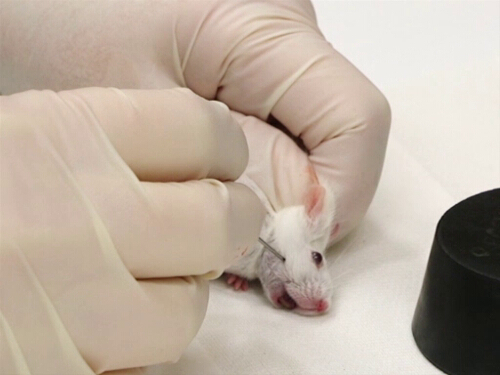
Figure 1. Submandibular (facial) vein bleed in mice.
2. Saphenous bleed
- Equipment
- 27–25 gauge needle or blood lancet (for mice)
- Hair removal tool (electric shaver preferred)
- Haematocrit tubes or appropriate blood collection tubes
- Sterile gauze or swabs
- Aseptic supplies (e.g., gloves, disinfectant)
- Restraint
- Gentle manual restraint or use restrain tube
- The mouse is restrained gently by hand for the minimum duration necessary.
- The hind leg is extended and immobilised by applying gentle downward pressure just above the knee joint.
- This position stretches the skin over the ankle and stabilises the limb for sampling.
- Blood withdrawal
- Hair is removed from the lateral aspect of the hind leg, from just above the foot to below the knee, using an electric shaver.
- Aseptic technique is followed throughout the procedure.
- Gentle pressure is applied above the knee joint to stretch the skin and visualise the lateral saphenous vein.
-
The needle is held perpendicular to the skin over the vein.Puncture the vessel carefully, avoiding deep insertion into the underlying tissue.
-
Blood is allowed to bead on the skin surface and is collected by capillary action into a haematocrit tube or allowed to passively drip into a collection tube.
-
If required, alternate legs may be used for repeated sampling. No more than three needle sticks should be attempted per sampling session, and no more than four samples should be collected within 24 hours.
-
Haemostasis and recovery
-
Blood flow is stopped by relaxing the grip on the leg and applying gentle pressure with a sterile swab over the puncture site.
-
Ensure complete haemostasis before returning the animal to its home cage.
-
The animal is monitored for adverse effects such as bruising, haemorrhage, infection, or favouring of the opposite limb.
-
3. Catheterization
- Equipment
- Appropriate sterile catheter/cannula
- Sterile tubing, caps, and connectors
- Aseptic supplies (gloves, disinfectant, sterile solutions)
- Protective bandaging materials
- Restraint system if required (e.g., harness, tether, swivel)
- Restraint
- Animals may require restraint to prevent removal of the catheter.
- Where restraint systems (e.g., harness and tether) are used, animals should be acclimatised prior to the procedure.
- Where possible, social housing should be maintained; appropriate protection of the catheter allows group housing in some species.
- Catheter placement and use
- Catheterisation is used to enable repeated blood sampling while reducing stress associated with repeated restraint and needle puncture.
- This technique is recommended when multiple samples are required over short time periods.
- The procedure is performed using aseptic technique with sterile equipment to minimise infection risk.
- Animals selected for catheterisation should be assessed for good health and suitable temperament to tolerate handling and catheter maintenance.
- Post-procedure care and monitoring
- Catheterisation may cause discomfort; appropriate analgesia should be provided post-operatively.
- Animals must be monitored closely for the duration the catheter is in place.
- The catheter site and system should be checked regularly for signs of infection, blockage, or displacement.
- Strict hygiene and aseptic handling should be maintained during all sampling procedures.
Key Terms and Definitions
There is a submandibular/facial vein in the mouse that runs along the lower jaw. Both vessels converge into the jugular vein just below the jaw line, making them easily accessible. Serial samples can be taken from either vessel by alternating the side used. However, neither side should be used more often than every 5-7 days.
When bleeding from the submandibular vein, the insertion depth of the needle is critical. An insertion depth exceeding 4-5.5 mm may result in trauma to the muscles, nerves, and other vessels that are in the head, neck, and oral cavity. Subsequent complications include excessive hemorrhage resulting in hypovolemia, drowning caused by the fluid in the mouth, and damage to oral structures that interfere with eating and drinking.
Restraint of the animal is crucial for a successful bleed for both facial vein and submandibular vein procedures. If the grip on the scruff is too tight, the blood flow to the facial vein can be restricted. This will result in a reduction in the volume collected. Collection volumes will vary on both the facial vein and submandibular vein bleed. It is imperative to limit collection volumes so that they do not exceed the maximum volume for survival blood collection in accordance with institutional policies and an approved animal protocol. Ensuring hemostasis once the desired amount is collected will prevent additional or excessive blood loss.
Blood collection from the saphenous vein is another viable alternative for serial bleeds. The lateral saphenous vein is a superficial vessel that runs dorsally, and then laterally, across the tarsal joint. Although this procedure may be more aesthetically acceptable than the retro-orbital bleed, because of the preparation required-and no use of anesthesia for this method-it may actually be more stressful to the animal. Complications that can arise from a saphenous bleed are related to the puncture site. If the needle puncture is not directly on the vessel, blood may pool subcutaneously, resulting in a hematoma. Bruising, possible infection, and favoring of the limb are other possible problems. This method requires training, but it is easily grasped. Volumes collected with this method are between 10-150 µL, depending upon the frequency of sampling. The samples are variable in quality as they may contain tissue products. No more than four blood samples should be taken within a 24 hour period from the same leg.
Questions that this video will help you answer
The method of blood collection can cause a variation in the analysis of the sample. The skill level of the technician performing the sample collection has an impact on the quality of the sample and the welfare of the animal. The use of anesthetics can also affect the sample quality. The methods described here are all performed without the use of anesthesia, thus that variable has been eliminated. Also, all of these techniques can be used for serial sampling with minimal discomfort to the animal.
Source: Kay Stewart, RVT, RLATG, CMAR; Valerie A. Schroeder, RVT, RLATG. University of Notre Dame, IN
The collection of blood from mice and rats for a…
Chapters in this video
0:00
Overview
1:08
Submandibular (Facial) Vein Bleed
2:52
Saphenous Vein Bleed
4:33
Applications
6:09
Summary
Copyright © 2026 MyJoVE Corporation. All rights reserved.