This study aimed to explore the effect of eye-tracking technology-based visual scanning training on recovery from unilateral spatial neglect after stroke.
Method Article
Effect of Eye-Tracking Technology-Based Visual Scanning Training on Unilateral Spatial Neglect after Stroke
In This Article
Summary
Abstract
This study aimed to explore the effect of eye-tracking technology-based visual scanning training on recovery from unilateral spatial neglect after stroke. Stroke patients with unilateral spatial neglect (n = 48) from Beijing Bo'ai Hospital were recruited and randomly divided into an eye-tracking technology-based visual scanning training group (n = 24) and a conventional visual scanning training group (n = 24). The training regimen was 30 min/session, 1 session/day, and 5 days/week. The experimental group received visual scanning training via eye-tracking technology for 15 min and conventional unilateral spatial neglect training for 15 min. The control group received conventional unilateral spatial neglect training for 30 min. Both groups received conventional drug therapy and underwent conventional occupational rehabilitation.
The Behaviour Inattention Test-Conventional Group (BIT-C), the Catherine Bergego Scale (CBS), and the Modified Barthel Index (MBI) were used to assess recovery from unilateral spatial neglect and to evaluate activities of daily living (ADLs) before and after treatment. The Mini-Mental State Examination (MMSE) was used to assess cognitive function before and after treatment. The results suggested that eye-tracking technology-based visual scanning training is more effective than conventional training in terms of alleviating unilateral spatial neglect and reducing the severity of neglect in ADLs. However, compared with conventional training, eye-tracking technology-based visual scanning training did not significantly increase ADL or MMSE scores.
Introduction
Unilateral neglect (USN) is one of the most common and severe cognitive disorders that occurs after a right-sided stroke. The prevalence of USN varies depending on assessment tools, duration of disease, and other factors, with the estimated prevalence reaching as high as 30%1. Patients with USN cannot respond well to sensory stimulation on the side contralateral to the injury, and the information obtained on this side cannot be effectively processed. USN seriously affects the recovery of a patient's overall function, prolongs the patient's hospital stay, and prevents the patient from engaging in good self-care. Patients with USN perform washing, dressing, and grooming of the face on only one side. USN is associated with the risk of easily bumping into objects on the ignored side when walking, which can cause injuries and falls, and the ability to perform activities of daily living (ADLs) is severely impaired. USN not only places a heavy and severe economic burden on patients and families but also results in considerable economic losses and corresponding social problems nationwide. Therefore, early detection and effective treatment are important ways to promote early recovery in patients with USN.
USN treatment can be classified as activity-based therapy or non-activity-based therapy2. Activity-based therapy focuses on improving skills through participation in activities to enhance an individual's functional ability. Examples of activity-based therapy include visual scanning or exploration training, smooth pursuit eye movement therapy, optokinetic stimulation, mental practice, mirror therapy, voluntary trunk rotation, and vestibular rehabilitation. Nonactivity-based interventions are designed to reduce structural damage to and dysfunction of the human body through the use of external agents such as prism glasses, somatosensory electrical stimulation, transcutaneous electrical nerve stimulation, and theta burst stimulation. Additionally, on the basis of a patient's awareness of USN and their degree of participation in therapy, USN rehabilitation can be classified as follows3: "top-down" interventions, which trigger a patient's awareness of his or her USN-related deficits and require the patient's active participation, including self-cues and visual scanning training; or "bottom-up" interventions, which include passive sensory stimulation, such as neck vibration and prism adaptation.
Visual scanning training is one of the standard treatment methods for USN. This training requires patients to actively pay attention to the training space of contralateral stimuli4. Furthermore, this training is activity-based and requires the active participation of patients to improve their skills and awareness of neglect. Previous studies have shown that visual scanning training can effectively alleviate USN, and this approach is widely used in clinical practice5,6. Visual scanning training usually involves searching for letters or pictures, drawing graphs, and reading sentences. Therapist feedback plays an important role in the training process. However, in conventional visual scanning training, the feedback provided by the therapist is mainly based on subjective judgment.
In recent years, eye-tracking technology, which is a simple and reliable technology that involves accurate measurements as well as real-time tracking and analysis of subjects' eye movements, has been widely used in the fields of ophthalmology, neurology, and other fields. The use of this technology has led to new ideas and new methods for the exploration of cognitive rehabilitation strategies.
Eye-tracking technology has been widely applied in stroke rehabilitation for identifying cognitive disorders7,8, assessing attention and language comprehension deficits9, detecting emotional changes10,11, and providing feedback on intervention efficacy12. Eye tracking-based tasks can improve executive dysfunction13, balance14, and movement disorders, among other conditions15. Eye tracking-based tasks serve as a feasible tool for evaluating and ameliorating stroke-related dysfunctions, which are unrestricted by conditions such as limb impairments, demonstrating significant application value. Eye tracking-based tasks have also been used to assess USN after stroke in previous studies16,17,18. Visual scanning training based on eye tracking can provide feedback to rehabilitation therapists and patients by providing information such as fixation points on the screen, thus helping therapists and patients adjust visual scanning training methods and strategies. Therefore, eye-tracking technology can be effective for mitigating USN. The present study aimed to explore the effect of eye-tracking technology-based visual scanning training on USN.
Protocol
This single-blind randomized controlled trial was approved by the Ethics Committee of the China Rehabilitation Research Center (2003-042-01) and registered with the Chinese Clinical Trials Registry (ChiCTR2300074202). This was a single-blinded study, in which the assessor was blinded. The study required informed consent, so the participants were aware of their group assignment. To randomize and provide correct intervention measures, the personnel assigning random numbers and implementing interventions were aware of the group assignment. Although this study was single-blind, some procedures were undertaken to minimize bias arising from the lack of double-blinding. For example, the data statisticians were blinded, and all the researchers executed the study according to standard operating procedures (SOPs), which reduced performance bias.
1. Participants
- In accordance with the literature19, use the reported BIT-C scores of the experimental group (EG) and the control group (CG) after 4 weeks of treatment as the standard to calculate the sample size.
- Set the alternative hypothesis to two-sided, the power to 0.9, and the alpha to 0.05 using PASS software. Assume the population means to be 82.4 and 100.6. Set the standard deviation (SD) of the BIT-C score to 16.9. The results revealed that the experimental and control groups required 20 samples each. Consider a potential 20% dropout rate and determine the total sample size to be 48 patients (24 patients in each group). The sample size calculation can be found in Supplementary File 1.
- Recruit patients from the Occupational Therapy Department of the China Rehabilitation Research Center.
- Set the inclusion criteria as follows: diagnosis of first-onset right hemispheric injury (RHD); onset time within 1-6 months; no sensory aphasia or comprehension problems; the ability to hold a pen in the right hand; a Mini-Mental State Examination (MMSE) score> 10; the ability to cooperate with rehabilitation; right-handedness; age between 18 and 65 years; education above the junior high school level; an intact or corrected-to-normal visual field; a stable condition; and the ability to complete the test in a seated position.
- Set the exclusion criteria as follows: other psychiatric diseases or neurological diseases, such as disability, agnosia, visual impairment, or visual field loss; deterioration of the condition; new infarction; bleeding lesions; epilepsy or consciousness disorders; recent use of tricyclic antidepressants, sedatives, or various therapeutic pumps; and pregnancy or parental status.
- Include only participants who sign an informed consent form before the start of the study. The recruitment flow chart is shown in Figure 1.
2. Randomization and allocation
- Randomly allocate the patients who meet the eligibility criteria into either the EG or the CG.
- Assign a therapist who is not involved in subject assessment or selection to perform the randomization procedure using a random numbers table.
3. Intervention
- Provide both groups with conventional drug therapy and conventional occupational rehabilitation.
- For the EG, provide 15 min of eye-tracking technology-based visual scanning training, followed by 15 min of conventional USN training.
- For the CG, provide 30 min of conventional USN training.
- Implement the training regimen as follows: 30 min per session; 1 session per day; and 5 days per week for 4 weeks.
- Visual scanning training based on eye-tracking technology should involve the following aspects.
NOTE: Perform visual scanning training using a high-performance EMT instrument with eye-tracking technology. This eye-tracking device should also include an eye-tracking function, which can visually show a patient's eye movement trajectory, provide the patient with visual feedback, and help the therapist better train the patient. The training described below should follow the principle from easy to difficult, gradually making the training content more complex. Provide verbal and visual cues in the early stages of treatment and gradually decrease the number of cues as patients' abilities improve. Gradually increase the distance of the training target from the center. Additionally, gradually increase the number of jamming options. Two therapists who underwent standardized training provided visual scanning training based on eye-tracking technology to 24 patients. The therapist-to-patient ratio was 1:12.- Insect shoot-down task:
- Randomly present insects on either the left or right side of the screen, moving upwards (as shown in Figure 2A).
- Instruct the patient to visually scan and search for each insect.
- Instruct the patient to fixate on an insect to eliminate it.
- Start by instructing the patient to eliminate insects from the tree near the midline (the second tree). Progress to eliminating insects from the leftmost tree if performance is good.
- When the feedback circle indicates the patient's gaze is not near the insects, verbally prompt them ("The insects are on the Xth tree") or use a pointing rod to guide their gaze. If their gaze remains near midline/right trees without shifting left, verbally instruct ("Find the insects on the first tree") or use the rod to direct them leftward. Gradually reduce verbal and visual cues as performance improves.
- Increase game difficulty by adding insects or accelerating their movement to demand faster responses. Decrease difficulty if the feedback circle indicates irregular or disorganized saccadic search.
- Ensure the patient continues searching for and eliminating subsequent insects until training ends.
- Fruit cutting training:
- Initialize the training interface where fruits fall vertically at a constant speed.
- Instruct the patient to fixate on each falling fruit to trigger its splitting animation and an audible click.
- Direct the patient to rapidly shift their gaze to the next target fruit (as shown in Figure 2B).
- Monitor fixation accuracy through real-time eye-tracking feedback.
- Emphasize speed and precision in target acquisition throughout the exercise.
- Use the clicking sound as immediate auditory reinforcement for successful hits.
NOTE: When the feedback circle indicates the patient initially notices only center-falling fruit, provide verbal cues ("Look for the left-side fruit") or guide their gaze using a pointing rod. Gradually reduce verbal and visual prompts as performance improves.
- Shopping training:
- Present three rows of lockers displaying 12 total items (drugs or books), with 4 items per row (as shown in Figure 2C).
- Clearly instruct the patient to locate specified products one at a time.
- Request steady fixation on each target item for a pre-established duration to register a "purchase."
- Direct the patient to immediately shift their attention to the next designated product.
- Monitor fixation accuracy and scan paths in real time.
- Terminate the exercise once all the items have been successfully purchased.
- Adjust the target difficulty or duration as needed on the basis of performance tracking, as described in steps 3.2.3.8-3.2.3.11.
- Begin by instructing the patient to buy items near the midline (i.e., second column). Advance to having them buy items in the leftmost column (i.e., first column) if performance is good.
- When the feedback circle indicates the patient's gaze is not approaching the item, verbally prompt its row/column location or guide their gaze with a pointing rod.
- If the feedback circle shows persistent midline/right-field gaze without first-column focus, verbally instruct "Locate items in the first column" or direct their gaze leftward with the pointer.
- Gradually reduce verbal and visual prompts as ability improves.
- Increase difficulty when performance improves-start by instructing them to buy items in the leftmost column. Decrease difficulty if the feedback circle reveals irregular/disorganized gaze patterns.
- Reading training:
- Display the paragraph on the interface for the patient to read, as shown in Figure 2D.
- Begin by having the patient fixate on and read the middle text, based on feedback from the circle or their spoken words. Then verbally prompt "Look at the left text" or guide their gaze leftward with a pointing rod. Provide additional verbal/visual cues based on further feedback to direct attention further left.
- Guide the patient to view the text immediately left of their current focus. Gradually extend guidance toward the column's first character.
- Reduce verbal and visual prompts as ability improves. Increase task difficulty-for example, by adding more text rows to read.
- Insect shoot-down task:
- Conventional USN training
- Visual scanning training: Ask the patient to detect specific numbers/figures in several different locations on a table. First, present the numbers in a linear order from right to left.
After the prompt is provided and after the therapist provides guidance, instruct the patient to identify the stimulus and read it aloud. - Reading training: Under the guidance of the therapist, instruct the patient to read or transcribe and dictate a complete paragraph.
- Writing training: Under the guidance of the therapist, instruct the patient to copy or dictate a paragraph and attempt to write the required words completely.
- Compensation and environmental adaptation methods: Remind the patient not to forget to eat food on the affected side during meals and to use a posture mirror when dressing. Lengthen and mark the handle of the wheelchair handbrake on the ignored side.
- Visual scanning training: Ask the patient to detect specific numbers/figures in several different locations on a table. First, present the numbers in a linear order from right to left.
- Follow the training principle of progressing from easy to difficult. Gradually increase the complexity of the training content. Provide verbal and visual requests in the early stage of treatment.
NOTE: The amount of guidance gradually decreases as the patient's ability improves. With improved scanning ability, the stimuli are gradually moved towards the affected side. The number of stimuli increased over time. The degree of arrangement disorder progressively increases. Lengthen the sentences for reading and writing step by step. Four therapists who underwent standardized training provided conventional USN training based on eye-tracking technology to 48 patients. The therapist-to-patient ratio was 1:12. To minimize the impact of therapist interaction on the outcomes, we selected therapists with comparable experience levels to provide conventional USN training and visual scanning training. During the SOP training, clear guidelines were established on how therapists should make verbal and visual requests, and the complexity of the training content. Additionally, the training period for USN was set at 30 min for both the EG and CG. - Conventional occupational rehabilitation
- Conduct repetitive upper limb exercise training on the basis of the functional status of the participants, including proper limb positioning, range-of-motion exercises, and muscle strengthening exercises.
- Ensure that the functional training includes three specific programs-roller training, wooden peg training, and matte board training-aimed at enhancing upper limb motor function and control, as well as improving torso stability.
- Simulate everyday activities such as eating and dressing for ADL training.
4. Assessment
- Have another therapist who is blinded to the group assignments perform the clinical assessments. Ensure that this therapist assesses each patient twice, including once before the intervention and once immediately after the 4-week intervention.
- Collect basic participant information, including age, sex, education level, type of injury, course of disease, affected side, and dextromanuality.
- Assess USN before and after the intervention using BIT-C and CBI.
NOTE: The behavioural attention test (BIT)20, developed in 1987 by Wilson et al., is a standardized evaluation method. The evaluation is divided into two parts: the conventional part (BIT-C) and the behavioural part (BIT-B). The conventional items include line deletion (36 points), text deletion (40 points), star deletion (54 points), character and figure copying (4 points), straight line equivalence (9 points), and free drawing (3 points). The maximum score of the six items is 146 points, and a score of less than 129 points indicates abnormality. The Catherine Bergego Scale (CBS)21 is a highly reliable behavioural assessment scale that identifies and assesses the severity of neglect by evaluating 10 activities of daily living. Each item is rated on a scale ranging from 0 to 3, with a total maximum score of 30 points. A total score of 0 indicates no neglect, a score of 1-10 indicates mild neglect, a score of 11-20 indicates moderate neglect, and a score of 21-30 indicates severe neglect. - Assess the ability to perform ADLs using the modified Barthel index (MBI).
NOTE: The modified Barthel index is widely used to assess the ability to perform ten daily activities. The total possible score on the Barthel index is 100 points, with higher scores indicating a stronger ability to perform ADLs. - Assess the cognitive function of patients using the MMSE.
5. Statistics
- Use an appropriate statistical software (e.g., SPSS) for statistical analysis.
- Assess data normality using the Shapiro-Wilk test.
- Compare the general data of the patients in each group using Fisher's exact test or an independent sample t-test. Express the normally distributed data as means (± s) and compare using t tests. Express nonnormally distributed data as M(QL, QH) values and compare using the rank sum test.
- Use the chi-square test to compare categorical data. The significance level was α = 0.05. Use MATLAB (R2024b) to calculate the P value after the Benjamini-Hochberg procedure used for FDR control. Use MATLAB (R2024b) to calculate the 95% CI.
Results
We recruited 48 patients from June 2024 to December 2024, all of whom ultimately completed the study. No patients experienced any adverse events during the trial.
The average ages of the patients in the EG and the CG were 55.96 ± 11.667 and 58.29 ± 13.470 years (P > 0.05), respectively. No significant differences in age, sex, education level, type of injury, course of disease, affected side, dextromanuality, MMSE score, MBI score, BIT-C score, or CBS score were noted(P > 0.05), as shown in Table 1.
The Mann-Whitney U test results revealed that there was no significant difference in the MMSE scores between the two groups before treatment (P > 0.05, r = 0.055, Z = -0.382, 95% CI = -11.700-11.900). The Wilcoxon signed-rank test results revealed that after treatment, the MMSE scores of the two groups significantly increased (P < 0.01, r = -0.474, Z = -3.279, 95% CI = -12.700-4.600; P < 0.01, r = -0.473, Z = -3.173, 95% CI = -9.900-4.600). Furthermore, the Mann-Whitney U test results also revealed that there was no significant difference between the two groups after treatment (P > 0.05, r = -0.015, Z = -0.104, 95% CI = -14.800-11.700), as shown in Table 2.
The independent samples t-test results revealed that there was no significant difference in the MBI score between the two groups before treatment (P > 0.05, Cohen's d = -0.007, t = -0.023, 95% CI = -14.919-14.586). The results of paired t tests revealed that after treatment, the MBI scores of the two groups were not significantly different (P > 0.05, Cohen's d = -0.401, t = -1.962, 95% CI = -15.150-0.400; P > 0.05, Cohen's d = -0.375, t = -1.839, 95% CI = -15.139-0.889). However, the independent samples t-test results revealed that there was no significant difference between the two groups after treatment (P > 0.05, Cohen's d = 0.003, t = 0.011, 95% CI = -15.295-15.461), as shown in Table 3.
The Mann-Whitney U test results revealed that there was no significant difference in BIT-C scores between the two groups before treatment (P > 0.05, r = -0.024, Z = -0.166, 95% CI = -37.800-47.800). After treatment, the BIT-C scores of the two groups significantly increased (P < 0.01, r = -0.619, Z = -4.287, 95% CI = -51.800-2.300; P < 0.01, r = -0.580, Z = -4.017, 95% CI = -28.700-0.000). A significant difference in the BIT-C score was noted between the two groups after treatment (P < 0.01, r = -0.822, Z = -3.197, 95% CI = 0.100-40.700), such that the BIT-C score of the EG was better than that of the CG (Table 4).
The Mann-Whitney U test results revealed that there was no significant difference in CBS scores between the two groups before treatment (P > 0.05, r = -0.125, Z = -0.866, 95% CI = -16.014-9.885). After treatment, the CBS scores of the two groups significantly increased (P < 0.01, r = -0.606, Z = -4.201, 95% CI = 0.3014-18.249; P < 0.01, r = -0.607, Z = -4.206, 95% CI = -0.014-14.611). Significant differences in CBS scores were noted between the two groups after treatment (P < 0.01, r = -0.461, Z = -3.197, 95% CI = -19.267-11.628), such that the CBS score of the EG was better than that of the CG (Table 5).
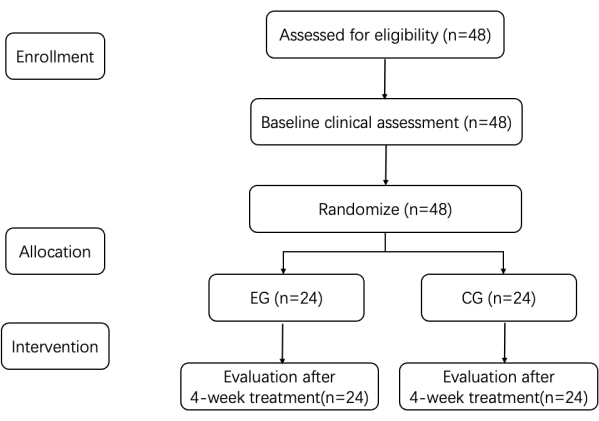
Figure 1: Recruitment flow chart. A total of 48 subjects were recruited. EG: experimental group; CG: control group. Please click here to view a larger version of this figure.

Figure 2: Visual scanning training based on eye-tracking technology. (A) Insect shoot-down task. (B) Fruit cutting training. (C) Shopping training. (D) Reading training. The target circles in the four small figures are the "gaze circles." Please click here to view a larger version of this figure.
Table 1: Subject characteristics. EG: experimental group; CG: control group; LV: lateral ventricles; BG: basal ganglia; CR: corona radiata; MMSE: Mini-Mental State Examination; MBI: Modified Barthel Index; BIT-C: Behavioural Inattention Test-Conventional subtests; CBS: Catherine Bergego Scale; P values obtained with a two-sided permutation test. Please click here to download this Table.
Table 2: Results of the MMSE. EG: experimental group; CG: control group; MMSE: Mini-Mental State Examination; P values were obtained with a two-sided permutation test. Please click here to download this Table.
Table 3: Results of the MBI. EG: experimental group; CG: control group; MBI: modified Barthel index; P values were obtained with a two-sided permutation test. Please click here to download this Table.
Table 4: Results of the BIT-C. EG: Experimental group; CG: Control group; BIT-C: Behavioural Inattention Test-Conventional subtests; P values obtained with a two-sided permutation test. Please click here to download this Table.
Table 5: Results of the CBS. EG: experimental group; CG: control group; CBS: Catherine Bergego Scale; P values were obtained with a two-sided permutation test. Please click here to download this Table.
Supplementary File 1: Sample size calculation. Please click here to download this File.
Discussion
The results of this study revealed that USN was effectively alleviated in both the EG and CG when the traditional evaluation method or the ADL evaluation method was used. After 4 weeks of treatment, the BIT-C score of the EG was significantly higher than that of the CG. The BIT-C score of the EG improved to normal. The BIT-C score of the CG also improved, but the results revealed that the patients still had hemineglect disorders. According to the CBS results, although hemineglect disorders were ameliorated in both groups, after 4 weeks of treatment, the EG exhibited improvement from moderate to mild impairment, and the CG still exhibited moderate impairment. This study revealed that eye-tracking technology-based visual scanning training is superior to conventional visual scanning training for patients with hemineglect.
In eye-tracking technology-based visual scanning training, therapists can objectively understand a patient's eye fixation point and saccade trajectory according to the eye movement trajectory feedback on the screen and further observe whether the patient has repeated searches on the right side, whether the eye line crosses the midline in the scanning, and the specific eye movement range to adjust the intensity of visual scanning training. For example, changing the distance between the target stimulus and the midline, which is based on more objective and appropriate language cue guidance, prompts and provides feedback according to a patient's performance; scientifically guides the patient's rehabilitation training; and helps the patient gradually and effectively relieve their hemineglect. In addition, the feedback of the eye movement trajectory on the screen is also visual and provides cues for patients with USN. Patients with good cognition can adjust their visual search strategy according to their eye movement trajectory. For example, during or after training, patients can remind themselves to pay more attention to the neglected places in the training or the next training according to the eye movement trajectory formed in the visual search task. In this process, patients can also gradually increase their awareness of USN and gradually develop a self-management strategy for USN.
The effective alleviation of USN in the EG may also be related to the fact that eye-tracking technology-based visual scanning training can more effectively improve eye movement among individuals with USN. In typical visual behaviours, eye movements and spatial attention are closely related, and the spatial bias of eye movements (search and gaze) may represent a typical hallmark of USN22. Although they visually search for static stimuli, patients with left USN rarely find targets in the left lateral region23. In the visual search task, patients with USN are characterized not only by the omission of visual targets but also by more general search performance deficits, such as unsystematic search patterns and irregular eye movement patterns24,25. Studies have shown that eye-tracking-based assessment methods have good reliability and validity for identifying unilateral neglect16,17,18. Studies have also shown that conventional visual scanning training cannot directly alleviate hemineglect disorders but rather encourages patients' eye and head movements to form a compensation strategy, thereby reducing hemineglect26. Compared with conventional visual scanning training, eye-tracking technology-based visual scanning training can help therapists and patients guide visual scanning training according to objective eye movement information, which may be more effective in terms of improving the spatial bias of eye movements and thus improving the ability to notice the neglected side.
The effective reduction in USN observed in the EG may also be related to the fact that eye-tracking training can improve patients' perceptual bias through visual feedback. Neglect may be associated primarily with impaired lateral spatial attention (i.e., the input phase) or with a patient's inability to respond to presented stimuli (i.e., the output phase). Perceptual and response biases are used to represent input-related and output-related biases, respectively27,28. Studies have shown that conventional visual scanning training has a stronger moderating effect on response bias, and training methods that can improve both perception and response bias are more effective than conventional visual scanning training. Most patients have a combination of the two types of bias. The visual feedback information provided in eye-tracking technology-based visual scanning training can reduce a patient's perceptual bias and simultaneously adjust their perceptual bias and response bias, which may contribute to reductions in their ability to hemineglect symptoms. To verify this, a discriminative assessment method for both types of bias could be added to the assessment in subsequent studies.
Compared with conventional visual scanning, eye-tracking technology-based visual scanning training provides objective eye movement information to therapists and patients, helps therapists scientifically guide patient training, and further reduces patients' eye movement spatial bias while improving their perceptual ability, self-awareness, and self-management awareness of half neglect. Thus, patients can effectively improve their general condition using eye-tracking technology-based visual scanning training.
The results of this study (Table 2) also suggest that the 4-week treatment improved the cognitive function of the patients in both groups, but the difference between the groups was not significant. Cognitive function involves dimensions such as orientation, computation, language, execution, and visuospatial ability, whereas the visual scanning training in this study focused on semilateral neglect and involved attention, reactions, reading, and object recognition. This may explain why there was no significant difference in cognitive function between the two groups after 4 weeks of treatment. The improvement in cognitive function in the two groups may be related to the natural recovery of the disease course and other factors.
In this study, the symptoms of hemineglect in daily life were effectively alleviated. However,the 4-week treatment did not improve the ADL abilities of the patients in either group (Table 3). This lack of improvement may be attributed to motor function limitations, global cognitive function, and insufficient intervention duration. The results of this study are consistent with those of previous studies, indicating that routine visual scanning training can reverse visual-related neglect impairment but cannot restore all the functional and activity limitations related to neglect (such as ADL abilities and cognitive function) by alleviating neglect impairment in visual exploration and reading4,29.
A limitation of this study is that the neurological mechanisms, such as the difference in cortical activation between visual scanning training with and without eye movement feedback, were not explored to further explain the rehabilitation effect and elucidate the central mechanism involved. Another limitation is that this study adopted a single-blind design and did not implement blinding for the interventionists. Although all the researchers executed the study according to SOPs, performance bias may still exist.
Disclosures
The authors declare that the research was conducted in the absence of any commercial or financial relationship that could be construed as a potential conflict of interest.
Acknowledgements
This study was supported by the Project of China Rehabilitation Research Center (number: 2023ZX-Q10) and Investigator-Initiated Trials of China Rehabilitation Research Center (number:2025IIT-04).
Materials
| Name | Company | Catalog Number | Comments |
|---|---|---|---|
| Cognitive rehabilitation training system based on eye tracking technology | Beijing Litech Technology Co., LTD | JZ-RZ-20USD | EG training: Visual scanning training based on eye tracking technology |
References
- Esposito, E., Shekhtman, G., Chen, P. Prevalence of spatial neglect post-stroke: A systematic review. Ann Phys Rehabil Med. 64 (5), 101459(2021).
- Liu, K. P. Y., Hanly, J., Fahey, P., Fong, S. S. M., Bye, R. A systematic review and meta-analysis of rehabilitative interventions for unilateral spatial neglect and hemianopia poststroke from 2006 through 2016. Arch Phys Med Rehabil. 100 (5), 956-979 (2019).
- Klinke, M. E., Hafsteinsdóttir, T. B., Hjaltason, H., Jónsdóttir, H. Ward-based interventions for patients with hemispatial neglect in stroke rehabilitation: A systematic literature review. Int J Nurs Stud. 52 (8), 1375-1403 (2015).
- Kerkhoff, G., Schenk, T. Rehabilitation of neglect: An update. Neuropsychologia. 50 (6), 1072-1079 (2012).
- Gammeri, R., et al. Effects of prism adaptation and visual scanning training on perceptual and response bias in unilateral spatial neglect. Neuropsychol Rehabil. 34 (2), 155-180 (2024).
- Spaccavento, S., Cellamare, F., Cafforio, E., Loverre, A., Craca, A. Efficacy of visual-scanning training and prism adaptation for neglect rehabilitation. Appl Neuropsychol Adult. 23 (5), 313-321 (2016).
- Brouwer, V., et al. Applying machine learning to dissociate between stroke patients and healthy controls using eye movement features obtained from a virtual reality task. Heliyon. 8 (4), e09207(2022).
- Buvarp, D., Rafsten, L., Abzhandadze, T., Sunnerhagen, K. S. A prospective cohort study on longitudinal trajectories of cognitive function after stroke. Sci Rep. 11 (1), 17271(2021).
- Kis, O., Steklács, J., Jakab, K., Klivényi, P. Investigation of reading abilities of ischemic stroke patients with aphasia. Ideggyogy Sz. 75 (11-12), 397-409 (2022).
- Tarnowski, P., Kołodziej, M., Majkowski, A., Rak, R. J. Eye-tracking analysis for emotion recognition. Comput Intell Neurosci. 2020, 2909267(2020).
- Ashaie, S. A., Cherney, L. R. Eye tracking as a tool to identify mood in aphasia: A feasibility study. Neurorehabil Neural Repair. 34 (5), 463-471 (2020).
- Van Nispen, K., Sekine, K., Van Der Meulen, I., Preisig, B. C. Gesture in the eye of the beholder: An eye-tracking study on factors determining the attention for gestures produced by people with aphasia. Neuropsychologia. 174, 108315(2022).
- Moon, S. J., et al. Effects of an eye-tracking linkage attention training system on cognitive function compared to conventional computerized cognitive training system in patients with stroke. Healthcare (Basel). 10 (3), 456(2022).
- Batool, S., Zafar, H., Gilani, S. A., Ahmad, A., Hanif, A. Effects of visual scanning exercises in addition to task specific approach on balance and activities of daily livings in post stroke patients with eye movement disorders: A randomized controlled trial. BMC Neurol. 22 (1), 312(2022).
- Llorens, R., et al. Effectiveness of a combined transcranial direct current stimulation and virtual reality-based intervention on upper limb function in chronic individuals post-stroke with persistent severe hemiparesis: A randomized controlled trial. J Neuroeng Rehabil. 18 (1), 108(2021).
- Gomes Paiva, A. F., et al. Feasibility of assessing post-stroke neglect with eye-tracking glasses during a locomotion task. Ann Phys Rehabil Med. 64 (5), 101436(2021).
- Kaufmann, B. C., et al. Eyetracking during free visual exploration detects neglect more reliably than paper-pencil tests. Cortex. 129, 223-235 (2020).
- Perez-Marcos, D., et al. An immersive virtual reality system for ecological assessment of peripersonal and extrapersonal unilateral spatial neglect. J Neuroeng Rehabil. 20 (1), 33(2023).
- Kai, C., et al. Effect of visual exploration therapy on cognitive function and activities of daily living of stroke patients with unilateral neglect. Chi J Rehabil Ther Prac. 22 (12), 1430-1433 (2016).
- Azouvi, P., et al. A battery of tests for the quantitative assessment of unilateral neglect. Restor Neurol Neurosci. 24 (4-6), 273-285 (2006).
- Menon, A., Korner-Bitensky, N. Evaluating unilateral spatial neglect post stroke: Working your way through the maze of assessment choices. Top Stroke Rehabil. 11 (3), 41-66 (2004).
- Walle, K. M., et al. Unilateral neglect post stroke: Eye movement frequencies indicate directional hypokinesia while fixation distributions suggest compensational mechanism. Brain Behav. 9 (1), e01170(2019).
- Machner, B., Könemund, I., Von Der Gablentz, J., Bays, P. M., Sprenger, A. The ipsilesional attention bias in right-hemisphere stroke patients as revealed by a realistic visual search task: Neuroanatomical correlates and functional relevance. Neuropsychology. 32 (7), 850-865 (2018).
- Behrmann, M., Ebert, P., Black, S. E. Hemispatial neglect and visual search: A large scale analysis. Cortex. 40 (2), 247-263 (2004).
- Samuelsson, H., Hjelmquist, E. K., Jensen, C., Blomstrand, C. Search pattern in a verbally reported visual scanning test in patients showing spatial neglect. J Int Neuropsychol Soc. 8 (3), 382-394 (2002).
- Schofield, T. M., Leff, A. P. Rehabilitation of hemianopia. Curr Opin Neurol. 22 (1), 36-40 (2009).
- Bisiach, E., Ricci, R., Lualdi, M., Colombo, M. R. Perceptual and response bias in unilateral neglect: Two modified versions of the Milner landmark task. Brain Cogn. 37 (3), 369-386 (1998).
- Vossel, S., Eschenbeck, P., Weiss, P. H., Fink, G. R. The neural basis of perceptual bias and response bias in the landmark task. Neuropsychologia. 48 (13), 3949-3954 (2010).
- Antonucci, G., et al. Effectiveness of neglect rehabilitation in a randomized group study. J Clin Exp Neuropsychol. 17 (3), 383-389 (1995).