This review aims to explore the mechanistic role of transient receptor potential ankyrin 1 (TRPA1) in the pathogenesis of CIPN and evaluate its potential as a therapeutic target for immunomodulatory and anti-inflammatory intervention.
Review Article
TRPA1 in Chemotherapy-Induced Peripheral Neuropathy: A Promising Target for Immunomodulation and Anti-Inflammatory Therapy
Huini Yao1,2 , Mingzhu Li1 , Shengbo Jin3 , Jun Yu4 , Yuxin Jiang4 , Haozhe Piao5 , Ningxin Li2 , Qian Liu4 , Yue Shen4 , Sizuo Yan2
1Department of Integrated Traditional Chinese and Western Medicine Medical Oncology, Cancer Hospital of Dalian University of Technology, Liaoning Cancer Hospital & Institute, 2China Medical University, 3College of Acupuncture and Massage of Liaoning Traditional Chinese Medicine, 4Liaoning University of Traditional Chinese Medicine, 5Department of Neurosurgery, Cancer Hospital of Dalian University of Technology, Liaoning Cancer Hospital & Institute
Opens in a new tab
In This Article
Summary
Loading...
$$\rightleftharpoonup{xx}$$
$$\longleftharp{xx}$$,
$$\longrightharp{xx}$$,
Abstract
Loading...
$$\rightleftharpoonup{xx}$$
$$\longleftharp{xx}$$,
$$\longrightharp{xx}$$,
Chemotherapy-induced peripheral neuropathy (CIPN) is a common and serious clinical condition that results when a chemotherapeutic agent damages the peripheral nervous system and is usually characterized by abnormal pain in the distal limbs and increased sensitivity to hot and cold stimuli. However, few clinical treatments for CIPN are available, so it is critical to identify effective treatment modalities. Transient receptor potential ankyrin 1 (TRPA1), an injury receptor, can be activated by oxidative stress, inflammatory mediators, and hypothermic conditions during the pathogenesis and progression of CIPN. TRPA1 modulates the downstream inflammatory pathway and promotes the release of inflammatory factors and neuropeptides, resulting in abnormal immune regulation, which in turn leads to a neurogenic inflammatory response and pain signaling. In this study, the role of TRPA1 in the pathogenesis of CIPN is examined, the possibility of targeting TRPA1 to treat CIPN by inhibiting neuroinflammation is verified, and the prospects of using TRPA1 antagonists and natural herbs for the clinical treatment of CIPN are explored.
Introduction
Loading...
$$\rightleftharpoonup{xx}$$
$$\longleftharp{xx}$$,
$$\longrightharp{xx}$$,
Cancer remains one of the major global public health challenges1. Although chemotherapy plays a crucial role in improving cancer survival, it is often accompanied by severe adverse effects, among which CIPN is one of the most common and complex complications. CIPN is clinically characterized by symmetrical pain, paresthesia, and abnormal sensitivity to cold or heat in the distal extremities2, and some patients may also experience impaired fine motor coordination3. The reported incidence of CIPN varies widely, ranging from approximately 50% to 90%, and about 30%-40% of cases may progress to chronic neurological complications2, significantly reducing patients' quality of life and treatment compliance. The risk of developing CIPN is influenced by multiple factors, including the mode of administration (single dose, cumulative dose, or treatment duration), concomitant medications, age, anemia, higher body mass index (BMI), and pre-existing neuropathy2,4,5. Antineoplastic agents reported to induce varying degrees of neurotoxicity include platinum-based compounds, taxanes, vinca alkaloids, proteasome inhibitors (such as bortezomib), epigenetic or immunomodulatory drugs (such as thalidomide and lenalidomide), and microtubule inhibitors (such as eribulin)6.
Currently, pharmacological options for the management of CIPN remain limited. The American Society of Clinical Oncology (ASCO) recommends duloxetine as the only pharmacological intervention with evidence-based support for CIPN treatment. Clinical studies have demonstrated that duloxetine is effective in alleviating CIPN-related pain, with its therapeutic benefit being most pronounced in neuropathy induced by platinum-based chemotherapeutic agents, particularly oxaliplatin (OXA), whereas its efficacy in CIPN caused by other agents, such as taxanes and vinca alkaloids, appears to be more variable across studies7. Despite its demonstrated analgesic efficacy, the overall clinical benefit of duloxetine is moderate, as it primarily provides symptomatic relief rather than preventing CIPN or reversing underlying pathological changes. Moreover, although duloxetine is generally well tolerated, treatment may be accompanied by mild to moderate adverse effects, including fatigue, insomnia, and nausea, which may limit long-term adherence in some patients. Other commonly used agents, such as gabapentin and pregabalin, are employed for symptomatic management but have shown inconsistent or unsatisfactory therapeutic outcomes in CIPN8,9. Therefore, there remains an urgent need to develop more effective preventive strategies and to identify novel therapeutic targets for CIPN.
In recent years, with the deepening understanding of the pathogenesis of CIPN, multiple mechanisms such as inflammatory response, oxidative stress, and alterations in neural plasticity have gradually attracted increasing attention10,11,12. Among these, oxidative stress and neuroinflammation are considered central contributors to the initiation and progression of neuronal injury in CIPN. Importantly, the TRPA1 channel, a redox-sensitive ion channel abundantly expressed in sensory neurons, has emerged as a key molecular mediator linking oxidative stress and inflammatory signaling to neuronal hyperexcitability and pain hypersensitivity13,14. Distinct from TRPV1, which primarily senses noxious heat, and TRPM8, which detects cold stimuli, TRPA1 is characterized by its high sensitivity to various oxidative and electrophilic metabolites such as 4-hydroxynonenal (4-HNE)15. The activation of TRPA1 typically involves covalent modification of critical cysteine residues16, a unique mechanism that positions TRPA1 as a crucial molecular bridge linking chemotherapy-induced oxidative and lipid peroxidation stress to the development of pain hypersensitivity. Moreover, several animal studies have demonstrated a functional involvement of TRPA1 in chemotherapy-induced neuropathic pain. In particular, in OXA-induced neuropathy models, genetic ablation or pharmacological blockade of TRPA1 markedly alleviates cold and mechanical allodynia, indicating a crucial contribution of TRPA1 to the pathogenesis of CIPN17,18.
Specifically, TRPA1 is a redox-sensitive ion channel highly expressed in peripheral nociceptive neurons. Chemotherapeutic agents frequently induce mitochondrial dysfunction, oxidative stress, and lipid peroxidation in neurons, leading to excessive accumulation of reactive oxygen species (ROS) and lipid peroxidation products such as 4-HNE. These reactive molecules can covalently modify key cysteine residues of TRPA1 or alter its activation threshold, resulting in channel opening, Ca²⁺ influx, and neuronal depolarization, thereby amplifying pain transmission and inflammatory signaling19,20,21. Previous studies have further demonstrated that TRPA1 is sensitive to cold and can be activated by endogenous inflammatory mediators, contributing to the development of cold-induced pain hypersensitivity22. In addition, TRPA1 has been shown to act as a mechanosensitive ion channel whose activity is modulated by the cellular redox state, participating in abnormal mechanical pain and hypersensitivity22,23. Beyond neurons, TRPA1 is also expressed in multiple immune cell types, where its activation modulates cytokine release and inflammatory cascades, further amplifying peripheral neuro-inflammation24. Collectively, the cold sensitivity, mechanosensitivity, and redox responsiveness of TRPA1 establish a clear mechanistic link between chemotherapy-induced oxidative stress and the ensuing pathological pain processes, thereby contributing to the initiation and maintenance of CIPN. Accordingly, targeting TRPA1 to disrupt the vicious cycle of oxidative stress and neuroinflammatory toxicity may represent a promising therapeutic strategy for the management of chemotherapy-induced peripheral neuropathic pain. In existing studies, intervention strategies targeting TRPA1 have been validated across multiple model systems. In vitro, DRG neuron cultures combined with calcium imaging are commonly used to verify the impact of TRPA1 activation on chemotherapy-induced neuronal excitability25. In vivo, CIPN is typically induced in rodents using OXA, paclitaxel, or bortezomib, followed by pharmacological or genetic inhibition of TRPA1 and subsequent behavioral assessments such as cold and mechanical hypersensitivity17,26,27. At the therapeutic level, TRPA1 antagonists have demonstrated efficacy in alleviating neuropathic pain in preclinical models28,29. Collectively, these findings provide a solid experimental basis for translational research targeting TRPA1 as a therapeutic strategy for CIPN.
Current research has already revealed a possible connection between TRPA1 and CIPN. However, these studies have mainly focused on the direct impact of TRPA1 on pain signal transmission and its local role in the inflammatory response. Yet, there is still a lack of systematic research and in-depth exploration of the mechanisms by which TRPA1 modulates immune responses to affect the overall pathological process of CIPN. Therefore, this article discusses the potential mechanisms of CIPN, with a focus on exploring the role of TRPA1 in CIPN pathogenesis. The current status of research on TRPA1 antagonists and natural herbs is also summarized to validate the feasibility of inhibiting TRPA1 to produce anti-inflammatory immune effects for the treatment of CIPN. The innovation of this article lies in systematically studying the role of TRPA1 in the pathogenesis of CIPN from an immune-regulatory perspective, overcoming previous research limitations that focused solely on its effects in nerve cells or local inflammation. In addition, it provides new targets and theoretical support for the development of drugs to treat CIPN, with great scientific significance and clinical application value.
Review and Perspective
Loading...
$$\rightleftharpoonup{xx}$$
$$\longleftharp{xx}$$,
$$\longrightharp{xx}$$,
1. Potential mechanisms for CIPN
The pathomechanism of CIPN is complex and associated with chemotherapeutic drug-induced mitochondrial dysfunction, oxidative stress, immune system abnormalities, ion channel dysregulation, dorsal root ganglion (DRG) neuron damage, and disruption of the neuronal cytoskeleton2,30,31,32,33,34,35,36,37,38,39,40,41,42. Table 1 provides an overview of the specific pathogenic mechanisms involved in CIPN.
- Mitochondrial dysfunction and oxidative stress
Chemotherapeutic agents induce mitochondrial morphological alterations, bioenergetic disturbances, and excessive production of ROS, leading to mitochondrial structural damage, functional impairment, and oxidative stress12,43. These events activate immune cells, elevate proinflammatory cytokine levels, and trigger inflammatory signaling pathways, ultimately contributing to the development of CIPN. Specifically, platinum-based chemotherapeutic agents form platinum-DNA adducts that accumulate in the DRG, where they bind to nuclear DNA (nDNA) and mitochondrial DNA (mtDNA). This promotes crosslinking, alters the structure and synthesis of nuclear DNA, induces DNA/mitochondrial damage, enhances ROS production, activates injury receptor-related channels, and induces neuronal apoptosis. There is also evidence that OXA induces neuropathic pain by activating astrocytes and upregulating proinflammatory cytokines in the mitogen-activated protein kinase (MAPK) pathway.
In addition to platinum-based compounds, other chemotherapeutic agents can impair mitochondrial integrity through diverse mechanisms. Paclitaxel interferes with both axonal and mitochondrial transport, leading to the opening of the mitochondrial permeability transition pore (mPTP). This event results in the loss of mitochondrial membrane potential, excessive generation of ROS, ATP depletion, calcium efflux, and mitochondrial swelling. Bortezomib, on the other hand, inhibits proteasome activity and disrupts cellular protein homeostasis, thereby inducing mitochondrial structural damage and functional impairment. These alterations are manifested as mitochondrial swelling and vacuolization, calcium dysregulation, suppression of the respiratory chain, decreased ATP production, and accumulation of ROS. Moreover, vincristine (VCR) inhibits microtubule polymerization, which compromises mitochondrial transport along axons and subsequently leads to reduced membrane potential, disturbed calcium homeostasis, and abnormal neuronal excitability. Collectively, these agents highlight the central role of mitochondrial dysfunction in the neurotoxic effects of chemotherapeutic drugs41,44,45,46,47.
Similarly, mitochondrial dysfunction serves as a central regulator of proinflammatory signaling, while inflammation, in turn, exacerbates mitochondrial damage, thereby creating a vicious cycle of neurotoxicity30,31. Notably, the ROS generated during this process directly activate the redox-sensitive ion channel TRPA1, inducing calcium influx, neuronal hyperexcitability, and characteristic CIPN-associated symptoms such as cold and mechanical allodynia. Thus, oxidative stress acts as a pivotal nexus linking mitochondrial damage, TRPA1 activation, and the pathogenesis of CIPN. Figure 1 illustrates the mechanisms by which mitochondrial dysfunction and oxidative stress contribute to the development of CIPN. - Abnormalities in the immune system
- Neuroimmune Interactions
Neuroimmune interactions play a crucial role in the development and persistence of CIPN. Increasing evidence suggests that communication between the nervous and immune systems contributes significantly to its pathogenesis. Chemotherapeutic agents induce cellular stress and axonal injury, leading to the release of damage-associated molecular patterns (DAMPs) that activate Toll-like receptor 4 (TLR4) signaling on macrophages and glial cells. This activation promotes M1 macrophage polarization and the secretion of chemokines such as CCL2 and CXCL10, which recruit CD4+ and CD8+ T lymphocytes and B cells into the DRG, while reducing the number of anti-inflammatory T cells48,49,50,51. Although neutrophils are highly susceptible to the cytotoxic effects of chemotherapy, leading to systemic neutropenia, several studies have reported increased neutrophil activation and infiltration in the peripheral nervous system and DRG during chemotherapy-induced neuropathy32. Mast cells (MCs) further regulate proinflammatory responses by recruiting immune cells and releasing a variety of inflammatory cytokines. In addition, proinflammatory cytokines can suppress natural killer (NK) cells' activity, exacerbating neuroinflammation and oxidative stress and thereby promoting CIPN progression52.
Chemotherapeutic agents can also alter the expression of genes associated with immune and neuronal functions in sensory neurons. For example, VCR upregulates the expression of activating transcription factor 3 (Atf3) and neurotensin (Nts), thereby modulating chemokine release and promoting the recruitment of immune cells to the DRG, which in turn influences the neuroinflammatory response. OXA regulates the expression of prostaglandin-H2 D-isomerase (Ptgds) and small nucleolar RNA host gene 1 (Snhg1), which are involved in the synthesis of inflammatory mediators and the modulation of neuronal plasticity, thereby affecting neuronal excitability and pain signal transmission. In contrast, cisplatin (CDDP) alters the expression of lipocalin-2 (Lcn2) and zinc finger homeobox 2 (Zfhx2), disrupting neuronal metabolic homeostasis and transcriptional regulation, and consequently promoting neuroinflammation and neuronal dysfunction53. Collectively, the dysregulation of these gene expression profiles under chemotherapeutic stress reveals the complex interplay between neuronal injury and immune activation during the pathogenesis of CIPN.
Moreover, TRPA1 is expressed not only in sensory neurons but also in immune cells such as macrophages and MCs, where it mediates the release of proinflammatory cytokines. This dual neuronal and immune expression of TRPA1 may serve as a key molecular link driving the neuroimmune crosstalk and inflammation underlying CIPN. - Exacerbation of Neuroinflammation
Chemotherapeutic agents modulate the activation of and immune mediator secretion from satellite glial cells (SGCs) in the DRG, microglia and astrocytes in the spinal cord, and Schwann cells in the axons54. Immune cell activation increases the levels of proinflammatory cytokines, such as tumor necrosis factor-alpha (TNF-α), interleukin-1 beta (IL-1β), interleukin-6 (IL-6), interleukin-8 (IL-8), interleukin-20 (IL-20), which promote neuroinflammation and neuronal sensitization; conversely, the expression of anti-inflammatory cytokines such as interleukin-10 (IL-10) and interleukin-4 (IL-4) is suppressed, impairing the resolution of inflammation. In parallel, chemokines including CCL2, CXCL1, CXCL12, CX3CL1, and CCL3 contribute to immune cell recruitment and glial-neuronal interactions. These changes collectively activate key inflammatory signaling pathways, such as MAPK and the nuclear factor kappa-light-chain-enhancer of activated B cells (NF-κB), which further enhance cytokine production and neuronal hyperexcitability54,55,56,57,58,59. Figure 2 illustrates the mechanisms by which immune system dysregulation induces CIPN.
Importantly, recent studies have demonstrated that TRPA1 acts as a critical downstream effector and amplifier of these inflammatory cascades. Proinflammatory cytokines and oxidative mediators can sensitize or directly activate TRPA1 channels on sensory neurons, thereby linking neuroinflammation to increased neuronal excitability and pain hypersensitivity in CIPN60,61.
- Neuroimmune Interactions
- Ion channel dysregulation
- Potassium channels
Chemotherapeutic agents induce a neuroinflammatory response, leading to the aberrant expression of Kir4.1 channels, which promotes the activation of SGCs, the upregulation of glial fibrillary acid protein (GFAP), and the release of proinflammatory cytokines (e.g., TNF-α and IL-6). This exacerbates the excitability of DRG neurons and induces CIPN33. - TRP Channels
TRP channels are involved in the inflammatory response and neuropathic pain associated with CIPN and can be activated by chemotherapy-induced oxidative stress. Among them, the TRPA1 channel, predominantly localized in sensory neurons, mediates neurogenic inflammation by releasing neuropeptides such as calcitonin gene-related peptide (CGRP) and substance P (SP), which promote the recruitment of immune cells to sites of injury. Meanwhile, TRPA1 is also expressed in glial and immune cells, where its activation stimulates the release of proinflammatory cytokines and chemokines, further enhancing immune cell recruitment and amplifying the inflammatory response. Collectively, TRPA1 serves as a crucial bridge between the nervous and immune systems, contributing to enhanced inflammation and neuronal hypersensitivity in CIPN. Therefore, TRPA1 antagonism may alleviate pain through dual neuro-immune modulation by inhibiting the release of CGRP and SP, reducing neurogenic inflammation and immune cell recruitment, and lowering proinflammatory cytokine levels62.
Singh et al. reported that OXA treatment increased the coexpression of transient receptor potential vanilloid 1 (TRPV1) and transient receptor potential M8 (TRPM8) with TRPA1 in the DRGs of rats, leading to enhanced neuropathic pain behaviors. Notably, TRPA1 and TRPV1 share functional crosstalk in chemotherapy-induced pain signaling; however, current clinical applications mainly focus on the TRPV1 agonist capsaicin, which alleviates neuropathic pain by desensitizing TRPV1-expressing nociceptors34. This provides insight for the future development of analgesic strategies targeting TRPA1. Collectively, TRPA1 acts as a critical integrator of oxidative stress, immune activation, and pain signaling, making it a promising target for both analgesic and anti-inflammatory therapies in CIPN.
- Potassium channels
- DRG neuronal injury
- Direct Neuronal Damage
The DRG is the primary site affected by CIPN, but the mechanisms of neuronal damage differ among chemotherapeutic agents. Figure 3 depicts the distinct pathways involved in DRG neuronal injury induced by various drugs. For instance, PTX promotes macrophage infiltration into the DRG, which subsequently reduces the number of intraepidermal nerve fibers (IENFs) and accelerates the progression of CIPN35. Platinum-based agents accumulate in DRG neurons, causing mitochondrial dysfunction, excessive ROS generation, and neuronal apoptosis. Thalidomide can directly induce DRG neuronal damage. Moreover, several chemotherapeutic agents alter the expression and function of sodium, potassium, and calcium ion channels, leading to neuronal hyperexcitability36,37. Disruption of microtubule structures in the DRG further impairs axonal transport and triggers Wallerian degeneration, ultimately resulting in nerve fiber loss and impaired neural transmission38. - Indirect immune-mediated damage
In addition to direct neuronal toxicity, chemotherapeutic agents can indirectly injure DRG neurons through the activation of innate immune signaling. Cellular injury caused by these agents releases DAMPs, which in turn activate pattern recognition receptors (PRRs) such as TLR4 and the receptor for advanced glycation end products (RAGE). Activation of these receptors induces neuroinflammatory cascades, amplifies neuronal excitability, and exacerbates neuropathic pain39. Collectively, these findings suggest that chemotherapeutic agents induce DRG injury through both direct cytotoxic mechanisms and indirect immune-mediated pathways, thereby contributing to the onset and progression of CIPN.
- Direct Neuronal Damage
- Disruption of the neuronal cytoskeleton
Previous studies have shown that microtubule depolymerization directly weakens the structural integrity of neurons and impairs their axonal elongation capacity. The disassembly of the cytoskeleton causes irregularities on the neuronal surface, and these mechanical alterations can serve as physical hallmarks of CIPN40. Another study by Chine et al. was the first to demonstrate that Hsp27 can prevent CIPN by protecting axonal structure. Unlike traditional anti-inflammatory mechanisms, Hsp27 exerts neuroprotective effects by regulating apoptotic pathways and maintaining cytoskeletal stability46.
Vinca alkaloids (such as vincristine, VCR) specifically bind to the β-tubulin ends, blocking spindle formation and axonal transport, leading to microtubule depolymerization and defects in neurite outgrowth40. In contrast, paclitaxel stabilizes microtubules and prevents their depolymerization, thereby disrupting electrical signal transmission and mitochondrial transport within axons, which induces demyelination of peripheral nerve fibers41. Bortezomib, through a non-proteasomal pathway, induces excessive microtubule polymerization, inhibits neurite extension, and triggers axonal degeneration42.
These drugs collectively lead to axonal transport impairment, neuronal apoptosis, and loss of neural conduction, forming the core pathological basis of CIPN. In addition, activation of the RhoA/ROCK/LIMK/cofilin signaling pathway prevents actin filament remodeling, further inhibiting axonal regeneration63. Cytoskeletal disruption also interacts with mitochondrial transport defects and calpain activation, forming a vicious "structure-energy-apoptosis" cycle that accelerates the progression of CIPN64.
2. Mechanisms of CIPN associated with TRPA1
TRPA1 is a non-selective cation channel typically existing as a homotetramer in the cell membrane. It contains six transmembrane segments (S1-S6) characteristic of TRP channels. Among these, S1-S4 form the voltage sensor-like domain (VSLD), while S5 and S6 shape the pore through which ions pass. These regions are essential for the channel's activation and its role in sensing painful, thermal, and chemical stimuli65. The long N-terminal region of TRPA1 contains multiple ankyrin repeat domains (ARDs), which mediate interactions with other proteins and contribute to channel regulation. This region also serves as a key site for modulation by kinases involved in pain signaling66,67. At the C-terminus, the TRP-like domain connects to the transmembrane region and plays a central role in channel gating. Movement of this domain, together with rearrangements of S5 and S6, underlies channel opening and Ca2+ influx, which activates downstream signaling pathways involved in inflammation and pain68,69. Overall, the ARDs, transmembrane helices (S1-S6), and TRP-like domain are the major structural features that determine TRPA1 activation and its role in pain and inflammatory signaling. Figure 4 illustrates the key structural domains of TRPA1 relevant to its activation by chemotherapeutic agents, while Table 2 summarizes the mechanisms of CIPN associated with TRPA161,62,70,71,72,73,74,75,76,77,78,79,80,81,82,83.
- Oxidative stress-mediated activation of TRPA1 in CIPN
- Oxidative stress is a major contributor to both the antitumor efficacy and neurotoxicity of chemotherapeutic drugs84.TRPA1 functions as a redox- and electrophile-sensitive ion channel that becomes activated under conditions of elevated oxidative stress during chemotherapy. Oxidized phospholipids (OxPAPCs) and other reactive oxygen species (ROS)-derived electrophiles covalently modify cysteine residues in the N-terminal domain of TRPA1, thereby activating the channel and promoting calcium influx. This activation leads to the release of neuropeptides and inflammatory mediators such as CGRP and SP, which mediate abnormal pain transmission and neurogenic inflammation in CIPN pathogenesis61,70. Meanwhile, peripheral inflammation triggered by chemotherapeutic drugs results in excessive generation and accumulation of ROS in sensory ganglia, which further activates and upregulates TRPA1, forming a ROS-TRPA1 positive feedback loop that amplifies inflammatory and mechanical hypersensitivity85.
CDDP-induced CIPN also relies on this mechanism, as CDDP promotes ROS production in oral tissues, which activates TRPA1 and leads to persistent orofacial pain86. Similarly, OXA modulates TRPA1 activity through multiple mechanisms. On one hand, OXA directly activates TRPA1 via a glutathione-sensitive mechanism, leading to cytoplasmic acidification in DRG neurons71,87. On the other hand, OXA inhibits prolyl hydroxylase (PHD), thereby preventing hydroxylation of the proline residues in the N-terminal region of TRPA1, which enhances the channel's sensitivity to ROS and markedly increases its responsiveness to cold stimuli71. In addition, OXA activates the p38 MAPK signaling pathway, further promoting TRPA1-mediated cold hypersensitivity88.
Animal studies have provided strong evidence supporting these mechanisms. In OXA-treated wild-type mice, pronounced mechanical allodynia and cold hypersensitivity were observed, whereas these responses were significantly attenuated in TRPA1 knockout mice89. Consistent findings were also obtained in a zebrafish larval model of CIPN, in which TRPA1 activation enhanced ROS production through promoting oxidative stress and pain signal transduction, thereby sustaining the pain response90. Collectively, these findings indicate that TRPA1 functions as a critical nexus linking ROS sensing and pain amplification, forming a central pathway through which oxidative stress mediates neuropathic pain in CIPN.
- Oxidative stress is a major contributor to both the antitumor efficacy and neurotoxicity of chemotherapeutic drugs84.TRPA1 functions as a redox- and electrophile-sensitive ion channel that becomes activated under conditions of elevated oxidative stress during chemotherapy. Oxidized phospholipids (OxPAPCs) and other reactive oxygen species (ROS)-derived electrophiles covalently modify cysteine residues in the N-terminal domain of TRPA1, thereby activating the channel and promoting calcium influx. This activation leads to the release of neuropeptides and inflammatory mediators such as CGRP and SP, which mediate abnormal pain transmission and neurogenic inflammation in CIPN pathogenesis61,70. Meanwhile, peripheral inflammation triggered by chemotherapeutic drugs results in excessive generation and accumulation of ROS in sensory ganglia, which further activates and upregulates TRPA1, forming a ROS-TRPA1 positive feedback loop that amplifies inflammatory and mechanical hypersensitivity85.
- The Role of TRPA1 in immune regulation and inflammatory pain
TRPA1 is a redox-sensitive, non-selective cation channel that is expressed in both the peripheral sensory nervous system and various immune cell types. It can be activated by chemotherapeutic drug-induced oxidative, nitrative, and aldehyde stresses, as well as by inflammatory mediators and electrochemical stimuli, thereby playing a critical role in inflammatory responses and pain sensitization during CIPN24,91,92.- TRPA1 regulates immune cell-mediated neuroinflammation
In the peripheral nervous system, TRPA1 is best characterized in DRG sensory neurons, where it serves as a key mediator of nociception. During chemotherapy, elevated levels of ROS, reactive nitrogen species (RNS), and aldehyde metabolites, primarily originating from injured neurons and surrounding Schwann cells, can directly activate neuronal TRPA1, leading to enhanced neuronal excitability and pain hypersensitivity93. Meanwhile, in sensory neurons, TLR4 signaling has been shown to upregulate TRPA1 expression in DRG neurons, thereby enhancing pain hypersensitivity94.
Beyond neurons, Schwann cells also express TRPA1, which can be activated by oxidative stress. Activated Schwann cells amplify ROS signals and release inflammatory mediators, forming a "Schwann cell-neuron-TRPA1" feedback loop that sustains neuroinflammation and contributes to the development of CIPN72,73. Animal studies have shown that depletion of sciatic nerve-resident macrophages markedly attenuates cancer-related pain induced by Schwann cell TRPA1 activation and oxidative stress, highlighting the interplay between Schwann cells and myeloid cells73.
In addition to sensory neurons, TRPA1 is functionally expressed in several immune cell populations, including macrophages, T cells, NK cells, and MCs24,74,95. ROS, RNS, and metabolites generated during chemotherapy can activate TRPA1 in these cells, leading to diverse immune responses depending on the cell type91. In macrophages, TRPA1 suppresses proinflammatory activation, promotes an anti-inflammatory phenotype, and limits macrophage infiltration, thereby exerting anti-inflammatory and tissue-protective effects14,96. In lymphocytes, TRPA1 activation suppresses T cell activation and effector functions, negatively regulating T cell-mediated immune responses97, whereas TRPA1-mediated Ca2+ influx may enhance NK cell cytotoxicity, modulating neuroinflammatory responses following nerve injury52,74. In mast cells, TRPA1 activation has been implicated in stress-induced degranulation and proinflammatory signaling, contributing to the amplification of allergic and neurogenic inflammation24,75.
Together, these observations suggest that TRPA1 serves as a signaling hub linking neurons, Schwann cells, and immune cells, with elevated TRPA1 activation in each cell type contributing to the initiation and maintenance of CIPN. Figure 5 depicts the proposed mechanisms of TRPA1-mediated neuroimmune crosstalk and pain signaling in CIPN. - TRPA1 in inflammatory pain and CIPN-related nociception
In the sensory nervous system, TRPA1 is predominantly localized in primary sensory neurons of the DRG, trigeminal ganglia (TG), and vagal ganglia (VG). Oxidative stress products, inflammatory mediators, and protein kinase signaling (PKA/PKC) induced by chemotherapeutic agents enhance TRPA1 phosphorylation and channel activity26. Channel activation increases intracellular Ca2+ influx, triggering the release of neuropeptides such as SP, neurokinin A (NK-A), and CGRP, which promote vasodilation, plasma extravasation, and immune cell recruitment, thereby inducing neurogenic inflammation and pain sensitization62.
Under inflammatory conditions, elevated levels of proinflammatory cytokines (IL-1 family, TNF-α, IL-6, IL-8) and chemokines (CXCL5/CXCR2) further augment ROS production and TRPA1 activation, leading to membrane depolarization and hyperexcitability of DRG neurons, ultimately contributing to neuropathic pain. Additionally, inflammatory mediators such as NGF upregulate TRPA1 expression, forming a positive feedback loop that sustains inflammation and pain14,98,99,100. TRPA1 also participates in both peripheral and central sensitization, thereby amplifying pain transmission101.
Furthermore, TRPA1 promotes nociceptive signaling by modulating inflammation-related pathways. Upregulated TRPA1 increases Ca2+ influx and activates the pannexin-1 (PANX1) pathway, enhancing adenosine triphosphate (ATP) release. Extracellular ATP, acting as a neurotransmitter, further contributes to pain hypersensitivity102. Chemotherapeutic agents can also sensitize TRPA1 via activation of bradykinin B2 receptors and downstream PLC/PKCε signaling in mast cells, exacerbating CIPN-related pain103. Conversely, opioid compounds such as loperamide have been shown to suppress TRPA1 and voltage-gated sodium channel (VGSC) activity, inhibit microglial activation and oxidative stress, and consequently alleviate hyperalgesia in CIPN104,105.
In summary, TRPA1 serves as a key molecular target linking oxidative stress and inflammatory signaling in CIPN. By coordinating bidirectional interactions between immune cells and sensory neurons, TRPA1 not only initiates and propagates inflammation but also amplifies pain, serving as a critical bridge between immune regulation, neuroinflammation, and nociceptive hypersensitivity. - TRPA1-mediated ion channel crosstalk and DRG neuronal sensitization
TRPA1 is highly expressed in injured sensory neurons, particularly in the DRG, and acts as a key ion channel mediating CIPN. It modulates neuronal excitability and promotes nociceptive signal transmission through interactions with multiple ion channels. For example, activation of TRPV1 can enhance TRPA1 sensitivity, and both channels are often co-expressed, synergistically contributing to cold allodynia and mechanical hyperalgesia76,106. In addition, TRPA1 exhibits complementary functions with the cold-sensitive channel TRPM8: TRPM8 mediates innocuous cooling sensations within the range of 25-28 °C, whereas TRPA1 is activated below 17 °C and is responsible for detecting intense, noxious cold stimuli. Abnormal activation of both channels has been implicated in the cold hypersensitivity commonly observed in CIPN patients77. Chemotherapy-induced oxidative stress and enhanced Ca2+ channel activity can further activate TRPA1 channels, leading to frequent action potential firing dependent on voltage-gated Na+ channels (Nav1.7)78,79. Moreover, Zn2+ can directly activate TRPA1 to promote the release of CGRP80, whereas voltage-gated K+ channels (Kv7) exert a negative regulatory effect on this process81. Collectively, the cooperative interaction between TRPA1 and other ion channels, including TRPV1, TRPM8, Ca2+, Na+, K+, and Zn2+ channels, amplifies neuronal excitability and nociceptive transmission in CIPN.
Furthermore, intracellular pH homeostasis can modulate TRPA1 activity. The Na+/H+ exchanger 1 (NHE1) influences TRPA1 sensitivity by regulating intracellular pH. Under inflammatory or chemotherapy-induced injury conditions, TRPA1 and NHE1 interact in DRG neurons87,107, and intracellular acidification enhances TRPA1 responsiveness, leading to increased action potential frequency and elevated release of neurotransmitters such as glutamate and CGRP82,83. This process contributes to inflammatory pain and cold hypersensitivity and further sustains neuroinflammation. Conversely, inhibition of TRPA1 expression or function in DRG neurons markedly attenuates nociceptive transmission and neuroinflammatory responses108.
In summary, TRPA1 serves as a central molecular hub linking oxidative stress and ion channel signaling in CIPN. Through extensive crosstalk with multiple ion channels and intracellular regulatory mechanisms, TRPA1 promotes sensory neuron hyperexcitability and pain hypersensitization, representing a critical molecular target for the treatment of CIPN-associated pain. Figure 6 depicts the mechanism by which TRPA1 modulates neuronal excitability and enhances nociceptive signaling through interactions with various ion channels.
- TRPA1 regulates immune cell-mediated neuroinflammation
3. Potential of targeting TRPA1 for CIPN treatment
In the previous section, we elucidated how TRPA1 is a key target for alleviating CIPN by triggering a neuroinflammatory cascade response. The mechanism of action of TRPA1 is twofold: on the one hand, TRPA1 is directly modulated by the neuroinflammatory cascade and participates in the pathological process of CIPN; on the other hand, TRPA1 interacts with inflammatory signals, which in turn mediate neurotoxic responses and exacerbate neuronal damage. Therefore, targeted inhibition of TRPA1 can reduce oxidative stress and neuroinflammatory responses, attenuate pain signaling, and ultimately improve CIPN-related symptoms. Figure 7 depicts the proposed mechanisms through which inhibition of TRPA1, either by specific antagonists or natural herbal agents, mitigates neuropathic pain associated with CIPN.
- TRPA1 antagonist
TRPA1 can be activated by exogenous substances (e.g., mustard oil and cinnamaldehyde) and endogenous substances (e.g., oxidative stress products and inflammatory mediators)62 to cause pain, itching, and inflammation109. For this reason, TRPA1 has been recognized as a therapeutic target with broad application potential, including pain management, inflammatory diseases, and neurological disorders. Therefore, researching and developing TRPA1 antagonists are crucial.
Several TRPA1 antagonists have demonstrated potential therapeutic value in alleviating CIPN109,110,111,112,113,114,115,116,117. Their primary mechanisms involve suppressing TRPA1-mediated oxidative stress responses, calcium influx, and neuroinflammatory signaling, thereby exerting antagonistic effects on TRPA1 activity. In preclinical studies, the selective TRPA1 blocker HC-030031 significantly alleviated OXA- and CDDP-induced mechanical and cold hypersensitivity28. Meanwhile, next-generation antagonists such as GRC-17536 and LY-3526318 have advanced to phase II clinical trials for diabetic neuropathy, chronic cough, and osteoarthritis-related neuropathic pain, showing good tolerability and preliminary efficacy109,113.
Table 3 provides a summary of the current development status and clinical applications of representative TRPA1 antagonists. These studies provide clinical evidence supporting the translational potential of TRPA1 antagonists in the treatment of neuropathic pain. However, most TRPA1 antagonists are still limited by low bioavailability and potential off-target effects115,118,119, and have not yet entered CIPN-specific clinical evaluation. Future research should focus on optimizing compound selectivity and pharmacokinetic properties, as well as designing clinical trials specifically targeting CIPN, to validate the therapeutic relevance of TRPA1 inhibition in this context.
In addition to direct antagonism, modulation of TRPA1 activity through other molecular targets has also shown promise in CIPN. Sigma-1 receptors exert regulatory functions on a variety of ion channels, and Sigma-1 receptor antagonists have been shown to significantly inhibit the plasma membrane expression and function of TRPA1 channels, thereby preventing the progression of pain symptoms in OXA-induced CIPN model mice89. A study by Trevisan et al. demonstrated that the symptoms of CIPN hypersensitivity induced by bortezomib could be effectively prevented and alleviated by the concomitant use of the TRPA1 antagonist HC-030031 or the antioxidant α-lipoic acid prior to or at the time of chemotherapy120. Furthermore, in the context of chemotherapeutic drug-induced neurotoxicity, TRPA1 inhibitors are able to mitigate neurological damage by reducing calcium-dependent proinflammatory signaling.
In summary, TRPA1 antagonists play important roles in the prevention and treatment of CIPN by modulating the function and inhibiting the activity of this channel, among other mechanisms, to attenuate pain hypersensitivity and alleviate nerve damage. - Modulators of TRPA1 activity as new options for CIPN treatment
TRPA1 is involved in the pathological processes of CIPN through the neuroinflammatory cascade response and neurotoxic injury and may be a new target for the treatment of CIPN.
Several studies have demonstrated that certain natural herbs and their active components are closely associated with the regulation of TRPA1 channel activity and exhibit biological effects such as anti-inflammatory and analgesic actions, thereby providing potential strategies for the prevention and treatment of CIPN. For instance, liquiritin has been shown to possess significant anti-inflammatory properties121, while allicin exhibits analgesic potential due to its antioxidant and anti-inflammatory characteristics122; both compounds are involved in the modulation of TRPA1 channel activity. Based on these findings, it is speculated that these natural compounds may alleviate CIPN-related pain perception and neuroinflammatory responses through the regulation of TRPA1 activity, thus exerting potential therapeutic effects. Further studies have revealed that menthol exhibits a bidirectional regulatory effect on TRPA1 channels, activating TRPA1 at low concentrations while inhibiting its activity at higher concentrations. Appropriate use of menthol may therefore modulate TRPA1 activity to achieve analgesic and anti-inflammatory effects in patients with CIPN123. Similarly, cinnamon, traditionally used as a warming therapy to promote blood circulation, contains cinnamaldehyde as its principal active component. Li et al. reported that cinnamaldehyde activates TRPA1 receptors, promoting thermogenesis in brown adipose tissue and thereby helping to maintain body temperature and alleviate cold sensitivity124. Moreover, cinnamaldehyde enhances the antioxidant response by activating nuclear factor erythroid-related factor 2 (Nrf2)125. Collectively, menthol, by inhibiting TRPA1 at higher concentrations, may relieve mechanical and cold allodynia characteristic of CIPN, whereas cinnamaldehyde, through its TRPA1-activating and Nrf2-mediated antioxidant mechanisms, may counteract chemotherapy-induced oxidative stress and improve cold intolerance in CIPN patients. Additionally, bergenin monohydrate, ligustrazine, saikosaponin, and water extracts of Notopterygium incisum have been shown to reduce neuropathic pain126,127,128,129.
Table 4 summarizes the natural herbal sources of TRPA1 ligands and their possible mechanisms in alleviating CIPN. These findings highlight the potential of TCM components in mitigating neurotoxicity in CIPN. Although a variety of natural compounds have been identified as TRPA1 modulators with potential therapeutic effects, most of them remain at the in vitro and animal research stages, and the evidence for their efficacy in CIPN is mainly derived from preclinical models. In contrast, only menthol has limited human proof-of-concept evidence and ongoing registered clinical trials130. These findings collectively suggest that while TRPA1-targeting natural products show great promise in alleviating CIPN-related neurotoxicity, further well-designed clinical studies are needed to validate their translational potential and therapeutic efficacy.
Natural TRPA1 modulators identified from plant extracts not only provide new therapeutic perspectives for pain management but also represent potential natural sources for the treatment of CIPN. Increasing evidence indicates that natural compounds can alleviate chemotherapy-induced neurotoxic symptoms by suppressing TRPA1 overactivation or exerting bidirectional regulatory effects on the channel, thereby achieving both analgesic and anti-inflammatory outcomes. However, despite their promising preclinical potential, systematic clinical validation remains insufficient. Moreover, these compounds typically exhibit multi-target and multi-pathway regulatory characteristics, making it difficult to define the specific contribution of TRPA1 modulation to their overall therapeutic effects. Future studies should focus on elucidating the molecular mechanisms through which natural TRPA1 modulators influence CIPN, exploring the synergistic interactions between TRPA1 and other ion channels or signaling pathways, and conducting well-designed clinical trials to confirm their efficacy and safety. Such efforts will be essential for translating TRPA1-targeting natural agents into practical strategies for CIPN management.
4. Discussion
According to the latest statistics from the International Agency for Research on Cancer (IARC), there will be nearly 20 million new cases of cancer in 2022, and approximately 50% of those cancer patients will eventually die from cancer or its complications. IARC projections also indicate that the number of new cancer cases per year will exceed 35 million in 2050. Cancer is therefore a major public health concern worldwide and one of the major contributors to the global burden of disease1. Although novel therapies for cancer (e.g., targeted therapies and immunotherapy) continue to be researched and developed, chemotherapy still plays a central role in the treatment of cancer. CIPN is a common side effect of chemotherapy and affects the course of treatment and its efficacy. However, the pathogenesis of CIPN is unclear but may be related to mitochondrial dysfunction, oxidative stress, abnormalities in the immune system, ion channel dysregulation, and DRG neuron damage2. Currently, only duloxetine has been recommended by the ASCO for pain management in CIPN patients, Despite its demonstrated analgesic efficacy, the overall clinical benefit of duloxetine is moderate, as it primarily provides symptomatic relief rather than preventing CIPN or reversing underlying pathological changes8. Therefore, exploring the potential targets of CIPN is important for drug development and precision therapy.
TRP channels, which are key mediators of nociceptive signaling, have been receiving increasing attention in the context of the development of CIPN therapies. Among the TRP channels, TRPA1 has been suggested to be a key factor in the induction of pain hypersensitivity by a variety of chemotherapeutic agents131. Therefore, this study focuses on the role of TRPA1 in the pathogenesis of CIPN and further elucidates the mechanisms by which it mediates neuropathic pain, as illustrated in Figure 8. This channel is activated by oxidative stress to elicit abnormal mechanical pain and cold hypersensitivity61,70,71 and is involved in inflammatory nociception by modulating immune cells to mediate neuroinflammation62,72,73,74,75. In addition, TRPA1 channels interact with TRPV1, TRPM8, and voltage-gated channels such as Ca2+, Nav1.7, Zn2+, and Kv7. These interactions amplify neuropathic and inflammatory pain responses76,77,78,79,80,81. Such synergistic modulation has significant clinical implications. Because TRPA1, TRPV1, and TRPM8 are co-expressed in sensory neurons and can mutually regulate each other's activity, dual or multi-target inhibitors are capable of producing more pronounced analgesic effects than those targeting TRPA1 alone. Moreover, this synergistic interaction allows each compound to achieve comparable analgesic efficacy at lower doses, thereby reducing potential adverse effects. Similarly, the DRG, a target of CIPN neurotoxicity, is affected by TRPA1. The activation of TRPA1 enhances the excitability of DRG neurons, which in turn promotes the release of neurotransmitters from the DRG, leading to increased hypersensitivity to nociceptive symptoms82,83. In conclusion, TRPA1 can exacerbate neuropathic pain in CIPN patients by inducing a neuroinflammatory cascade response. Thus, antagonizing TRPA1 can effectively alleviate the inflammatory and painful symptoms of CIPN, which also suggests that the application of TRPA1 antagonists and natural herbs is crucial.
The efficacy of TRPA1 antagonists has been effectively demonstrated in animal models. For example, in TRPA1 KO mice and upon the application of TRPA1 antagonists (e.g., HC-030031), chemotherapeutic drug-induced neuropathic pain symptoms are significantly attenuated86,89. However, there are still limitations to the application of TRPA1 antagonists, as clinical trials for patients with CIPN have not yet been conducted, suggesting that the safety and efficacy of TRPA1 antagonists in humans need to be further evaluated and confirmed. For instance, differences in TRPA1 expression patterns and sensitivity to antagonists between rodents and humans may lead to discrepancies between preclinical and clinical outcomes. In addition, the conversion of experimental doses from animals to humans remains uncertain, further increasing the complexity of drug development.
In addition, the precise mechanisms by which TRPA1 functions as a therapeutic target in CIPN have not yet been fully elucidated, and its tissue-specific roles require further investigation. Given the broad expression of TRPA1 in sensory neurons, Schwann cells, and immune cells, delineating its specific functions across different cellular contexts remains challenging. Most existing studies rely on systemic TRPA1 antagonists, making it difficult to precisely attribute observed effects to specific cellular compartments. It should be emphasized that TRPA1 expressed in sensory neurons directly mediates nociceptive signaling, whereas TRPA1 in Schwann cells and immune cells primarily regulates inflammatory and microenvironmental processes that secondarily modulate pain sensitivity. Therefore, tissue-specific deletion of TRPA1 would provide important mechanistic insights. Neuronal-specific loss of TRPA1 could clarify its direct role in nociceptor excitability and pain transmission, whereas Schwann cell-specific deletion may elucidate how TRPA1-driven oxidative stress and glial-neuronal interactions promote sustained neuroinflammation. Importantly, immune cell-specific TRPA1 knockout models (e.g., in macrophages or T cells) would help define the contribution of immune TRPA1 signaling to neuroimmune crosstalk and inflammatory regulation in CIPN. Such approaches would substantially deepen our understanding of tissue- and cell-specific TRPA1 functions and facilitate the development of more precise therapeutic strategies. Meanwhile, multiple aspects of TRPA1 antagonism in the treatment of CIPN remain to be further explored. For example, whether TRPA1 exhibits differential functional roles in CIPN induced by distinct chemotherapeutic agents, and how its activity can be more precisely modulated to achieve optimal therapeutic efficacy, remain important unresolved questions.
In this context, the combined use of TRPA1 antagonists with natural herbal compounds or traditional Chinese medicine formulations represents a promising therapeutic approach. Such combination therapy may not only reduce drug-related toxicity but also enhance efficacy through multi-target synergistic effects. Overall, antagonizing TRPA1 can modulate immune responses and interrupt neuroinflammatory cascades, thereby effectively mitigating neurotoxicity and neuronal damage, offering new insights and potential strategies for the clinical management of CIPN.
Conclusions
Loading...
$$\rightleftharpoonup{xx}$$
$$\longleftharp{xx}$$,
$$\longrightharp{xx}$$,
This review comprehensively explores the intricate relationship between TRPA1 and CIPN, as well as the potential anti-inflammatory effects of TRPA1 antagonism in its treatment. Preclinical studies have shown that pharmacological inhibition or genetic deletion of TRPA1 can suppress neuroinflammation, reduce neuronal excitability, and mitigate neurotoxicity, thereby producing anti-inflammatory and analgesic effects that may help alleviate the symptoms of CIPN. However, there are still some limitations in the current research. Future studies should further explore the specific molecular mechanisms underlying TRPA1's involvement in CIPN, optimize targeting strategies, and conduct large-scale clinical trials to verify the safety and efficacy of TRPA1 antagonists. This will provide more precise and effective treatment options for patients with CIPN.
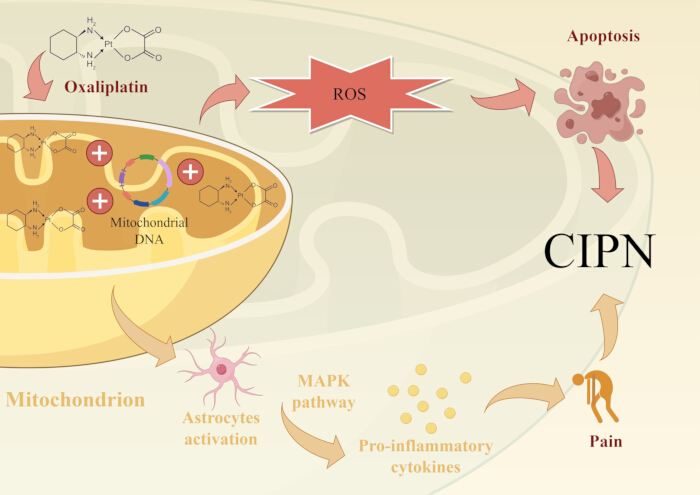
Figure 1: Mitochondrial dysfunction and oxidative stress-induced CIPN mechanisms. Platinum-based chemotherapeutic agents form platinum-DNA adducts that accumulate in the DRG, where they bind to nDNA and mtDNA. This induces DNA/mitochondrial damage, enhances the production of ROS, and induces neuronal apoptosis. There is also evidence that OXA induces neuropathic pain by activating astrocytes and upregulating proinflammatory cytokines in the MAPK pathway. Please click here to view a larger version of this figure.
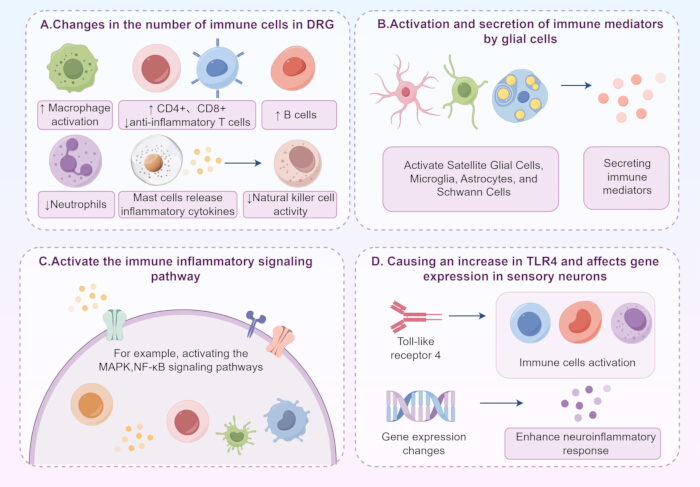
Figure 2: Mechanisms of CIPN induction by abnormalities in the immune system. (A) Chemotherapeutic agents lead to macrophage activation, increases in the numbers of T lymphocytes (CD4+), cytotoxic T cells (CD8+), and B cells in the DRG, and a decrease in the number of anti-inflammatory T cells and neutrophils. MCs contribute to the progression of CIPN by recruiting immune cells and releasing a variety of inflammatory cytokines in CIPN, thereby decreasing the activity of NK cells, which in turn exacerbates neuroinflammation and oxidative stress. (B) Chemotherapeutic agents modulate the activation of and immune mediator secretion from via SGCs in the DRG, microglia and astrocytes in the spinal cord, and Schwann cells in the axons, resulting in increased excitability of sensory neurons and intensified pain hypersensitivity in CIPN. (C) Activation of immuno-inflammatory signaling pathways, such as MAPK and NF-κB, also plays an important role in exacerbating neuroinflammatory responses. (D) Chemotherapeutic agents can also activate immune cells and enhance neuroinflammatory responses by increasing TLR4 and triggering associated gene dysregulation. Please click here to view a larger version of this figure.
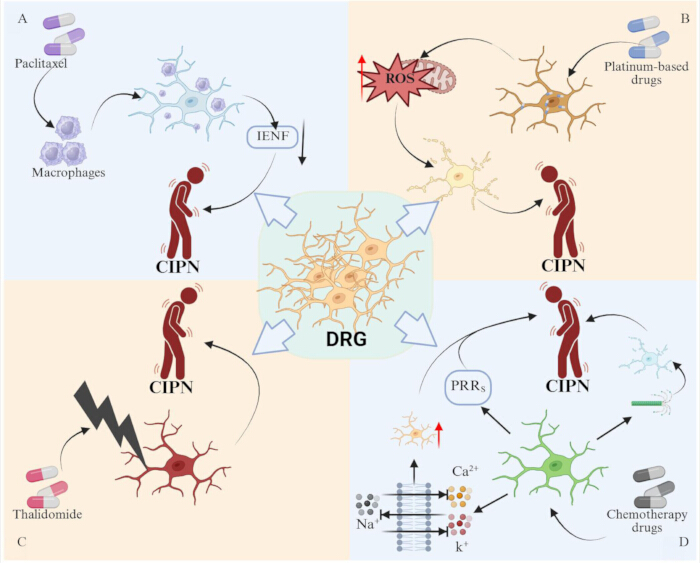
Figure 3: DRG is a major target for chemotherapeutic agents to trigger CIPN. (A) PTX can lead to macrophage infiltration into the DRG, which in turn triggers a decrease in the number of IENFs. (B) Platinum drugs accumulate in the DRG, leading to mitochondrial dysfunction and increased ROS levels, which, in turn, promote neuronal apoptosis. (C) Thalidomide can directly damage the DRG. (D) Chemotherapeutic agents can also damage DRG neurons by altering sodium, potassium, and calcium ion channels, disrupting microtubule structure, and activating PRRs. Please click here to view a larger version of this figure.
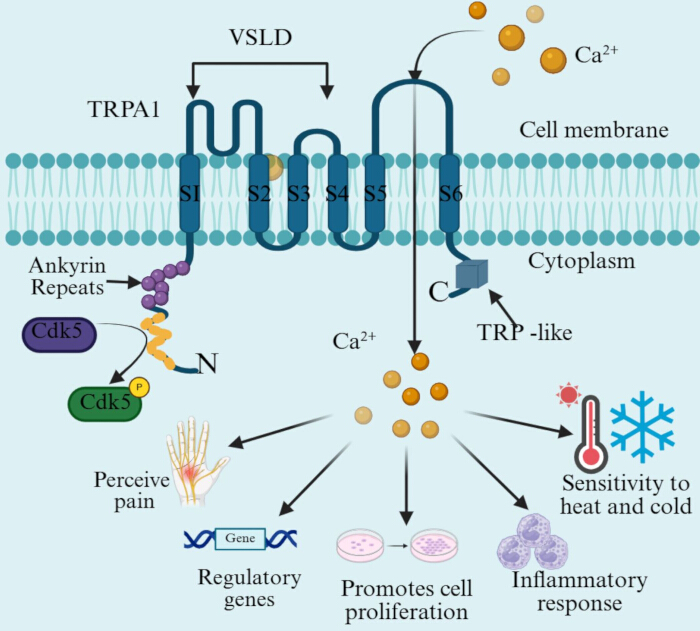
Figure 4: The key structural domains of TRPA1 relevant to its activation by chemotherapeutic agents. The TRPA1 channel contains six transmembrane α-helical fragments (S1-S6). Among them, S1-S4 constitute the VSLD, and S5 and S6 form a concave pore loop structure. Both the NH2 and COOH ends of the TRPA1 channel are located in the cytoplasm. One of the longer NH2 termini contains ARDs and the Cdk5 site, whereas the C-terminus of TRPA1 contains a TRP-like domain and is linked to the transmembrane structural domain. Channel activation can cause Ca2+ influx, which in turn triggers a series of cell signaling pathways, such as those that regulate gene expression, promote cell proliferation, and induce inflammatory responses.The structure of TRPA1 dictates its function in sensing pain and heat/cold sensitivity. Please click here to view a larger version of this figure.
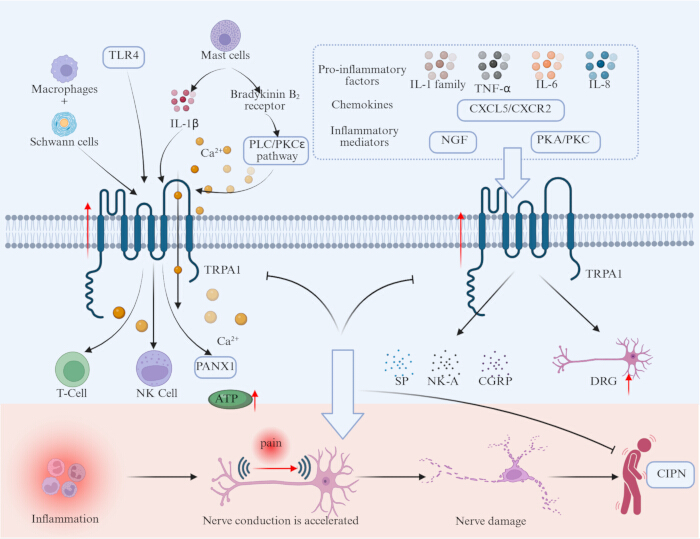
Figure 5: TRPA1 regulates immune cell-mediated neuroinflammatory nociception. Immune cells (macrophages, Schwann cells, and MCs), proinflammatory factors (IL-1 family, TNF-α, IL-6, IL-8), chemokines (CXCL5/CXCR2), inflammatory mediators (NGF, PKA/PKC), and TLR4 can activate TRPA1 channels. Activation of TRPA1 channels can increase intracellular Ca2+ concentration, which promotes the release of SP, NK-A, and CGRP, affects immune cells (T cells, NK cells), and modulates inflammation-related pathways (PANX1 pathway), thereby enhancing the excitability of DRG neurons and maintaining neuroinflammation and persistent pain. Please click here to view a larger version of this figure.
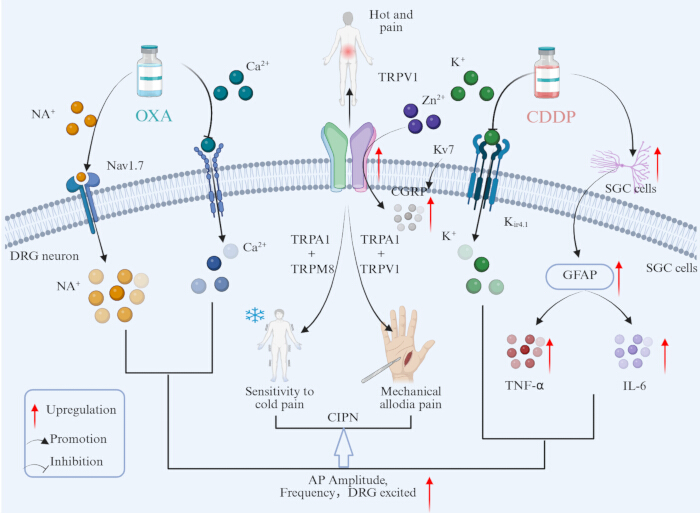
Figure 6: TRPA1 modulates ion channels to accelerate pain signaling. TRPA1 and TRPM8 are involved in cold hypersensitivity, and TRPA1 and TRPV1 are involved in mechanical allodynia. In addition, TRPA1 channels with voltage-gated Ca2+, Nav1.7, Zn2+, Kv 7, and Kir4.1 channels promote the release of inflammatory mediators (e.g., CGRP, GFAP) and proinflammatory factors (e.g., TNF-α, IL-6), triggering the hyperexcitability of DRG neurons, which in turn exerts a synergistic effect in exacerbating neuropathic and inflammatory pain. Please click here to view a larger version of this figure.
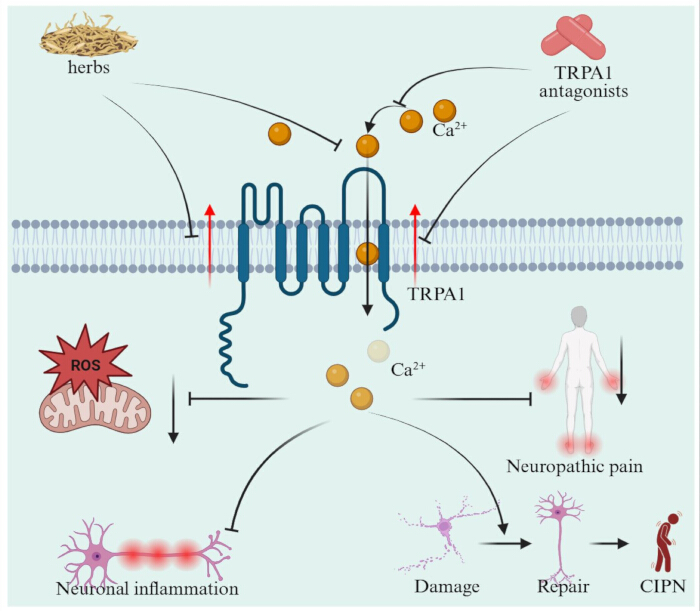
Figure 7: Potential of targeting TRPA1 for CIPN treatment. The use of TRPA1 antagonists and natural herbs can inhibit TRPA1 channel activity, thereby reducing Ca2+ flux and oxidative stress, which, in turn, suppresses neuroinflammatory responses and reduces neuropathic pain, ultimately reducing nerve damage and improving CIPN-related symptoms. Please click here to view a larger version of this figure.
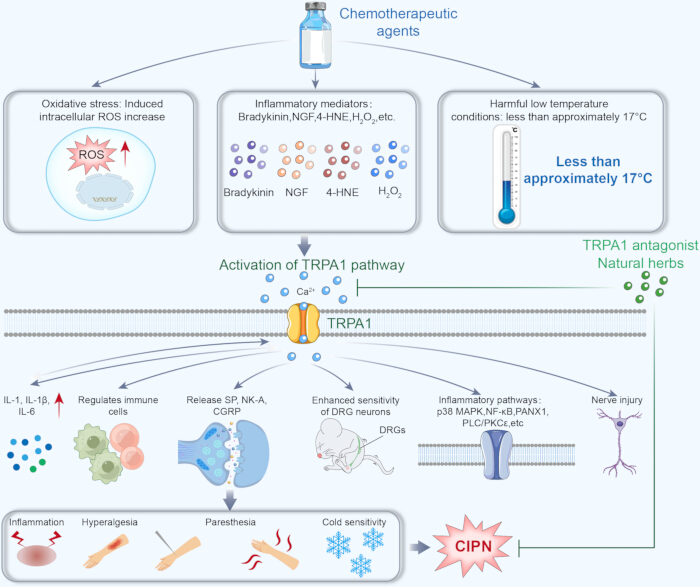
Figure 8: Inhibiting TRPA1. A Therapeutic Strategy for CIPN. TRPA1 activation drives inflammation and hypersensitivity in CIPN; its inhibition by antagonists or herbs may reduce neurogenic inflammation, nociceptive sensitization, and CIPN symptoms. Please click here to view a larger version of this figure.
Table 1: Potential mechanisms underlying CIPN. Chemotherapeutic agents contribute to CIPN through multiple pathological pathways, including mitochondrial dysfunction and oxidative stress, immune system abnormalities, ion channel dysregulation, DRG neuronal injury, and disruption of the neuronal cytoskeleton. These mechanisms collectively lead to neuroinflammation, neurotoxicity, and neuropathic pain. Please click here to download this Table.
Table 2: Mechanisms of CIPN associated with TRPA1. TRPA1 contributes to CIPN through multiple pathological processes, including oxidative stress-induced activation, immune modulation and inflammation, ion channel interactions, and DRG neuronal injury. These mechanisms collectively enhance neuronal excitability and promote neuropathic pain and hypersensitivity. Please click here to download this Table.
Table 3: Current development status and clinical indications of representative TRPA1 antagonists. This table summarizes the major TRPA1 antagonists investigated in preclinical and clinical studies, including their mechanisms of action, therapeutic indications, and drug development stages. These agents inhibit TRPA1 channel activity, thereby reducing oxidative stress, inflammation, and neuropathic pain associated with CIPN and other pathological conditions. Please click here to download this Table.
Table 4: Natural herbal sources of TRPA1 ligands and their potential mechanisms in alleviating CIPN. This table summarizes representative natural compounds and herbal extracts that modulate TRPA1 activity, including their sources, chemical types, experimental conditions, and molecular targets. These natural agents exert neuroprotective and anti-inflammatory effects by regulating TRPA1 and related signaling pathways, thereby alleviating oxidative stress, neuroinflammation, and neuronal hyperexcitability associated with CIPN. Please click here to download this Table.
Disclosures
Loading...
$$\rightleftharpoonup{xx}$$
$$\longleftharp{xx}$$,
$$\longrightharp{xx}$$,
There are no financial conflicts of interest to disclose.
Acknowledgements
Loading...
$$\rightleftharpoonup{xx}$$
$$\longleftharp{xx}$$,
$$\longrightharp{xx}$$,
The authors would like to express their gratitude to all members of Mingzhu Li's group for their support and assistance. This manuscript was supported by the China National Natural Science Foundation (82104838), China Promotion Foundation Spark Program (XH-D001), and Liaoning Provincial Key Research and Development Programme(2024JH2/102500062), which is gratefully acknowledged. Figure 1 and Figure 2 were drawn using FigDraw.
References
Loading...
$$\rightleftharpoonup{xx}$$
$$\longleftharp{xx}$$,
$$\longrightharp{xx}$$,
- Global cancer statistics 2022: Globocan estimates of incidence and mortality worldwide for 36 cancers in 185 countries. CA Cancer J Clin. 74 (3), 229-263 (2024).">Bray, F., et al. Global cancer statistics 2022: Globocan estimates of incidence and mortality worldwide for 36 cancers in 185 countries. CA Cancer J Clin. 74 (3), 229-263 (2024).
- Zhonghua Zhong Liu Za Zhi. 44 (9), 928-934 (2022).">Chinese expert consensus on the diagnosis and treatment of chemotherapy-induced peripheral neuropathy (2022 edition). Zhonghua Zhong Liu Za Zhi. 44 (9), 928-934 (2022).
- Chemotherapy-induced peripheral neuropathy: Assessment and treatment strategies for advanced practice providers. Clin J Oncol Nurs. 28 (4), 351-357 (2024).">Preti, K., Davis, M. E. Chemotherapy-induced peripheral neuropathy: Assessment and treatment strategies for advanced practice providers. Clin J Oncol Nurs. 28 (4), 351-357 (2024).
- Chemotherapy-induced peripheral neuropathy: Mechanisms and therapeutic avenues. Neurotherapeutics. 18 (4), 2384-2396 (2021).">Bae, E. H., Greenwald, M. K., Schwartz, A. G. Chemotherapy-induced peripheral neuropathy: Mechanisms and therapeutic avenues. Neurotherapeutics. 18 (4), 2384-2396 (2021).
- The association of clinical and patient factors with chemotherapy-induced peripheral neuropathy (CIPN) in colorectal cancer: Secondary analysis of the Scot trial. ESMO Open. 8 (6), 102063(2023).">Lemanska, A., et al. The association of clinical and patient factors with chemotherapy-induced peripheral neuropathy (CIPN) in colorectal cancer: Secondary analysis of the Scot trial. ESMO Open. 8 (6), 102063(2023).
- Prevention and management of chemotherapy-induced peripheral neuropathy in survivors of adult cancers: ASCO guideline update. J Clin Oncol. 38 (28), 3325-3348 (2020).">Loprinzi, C. L., et al. Prevention and management of chemotherapy-induced peripheral neuropathy in survivors of adult cancers: ASCO guideline update. J Clin Oncol. 38 (28), 3325-3348 (2020).
- Effect of duloxetine on pain, function, and quality of life among patients with chemotherapy-induced painful peripheral neuropathy: A randomized clinical trial. Jama. 309 (13), 1359-1367 (2013).">Smith, E. M., et al. Effect of duloxetine on pain, function, and quality of life among patients with chemotherapy-induced painful peripheral neuropathy: A randomized clinical trial. Jama. 309 (13), 1359-1367 (2013).
- Systemic anticancer therapy-induced peripheral and central neurotoxicity: ESMO-EONS-eano clinical practice guidelines for diagnosis, prevention, treatment and follow-up. Ann Oncol. 31 (10), 1306-1319 (2020).">Jordan, B., et al. Systemic anticancer therapy-induced peripheral and central neurotoxicity: ESMO-EONS-eano clinical practice guidelines for diagnosis, prevention, treatment and follow-up. Ann Oncol. 31 (10), 1306-1319 (2020).
- Recent developments of novel pharmacologic therapeutics for prevention of chemotherapy-induced peripheral neuropathy. Clin Cancer Res. 25 (21), 6295-6301 (2019).">Hu, S., Huang, K. M., Adams, E. J., Loprinzi, C. L., Lustberg, M. B. Recent developments of novel pharmacologic therapeutics for prevention of chemotherapy-induced peripheral neuropathy. Clin Cancer Res. 25 (21), 6295-6301 (2019).
- Current understanding of the molecular mechanisms of chemotherapy-induced peripheral neuropathy. Front Mol Neurosci. 17, 1345811(2024).">Chen, X., Gan, Y., Au, N. P. B., Ma, C. H. E. Current understanding of the molecular mechanisms of chemotherapy-induced peripheral neuropathy. Front Mol Neurosci. 17, 1345811(2024).
- Endoplasmic reticulum stress in chemotherapy-induced peripheral neuropathy: Emerging role of phytochemicals. Antioxidants (Basel). 11 (2), 265(2022).">Goel, Y., Fouda, R., Gupta, K. Endoplasmic reticulum stress in chemotherapy-induced peripheral neuropathy: Emerging role of phytochemicals. Antioxidants (Basel). 11 (2), 265(2022).
- Mini-review: Mitochondrial dysfunction and chemotherapy-induced neuropathic pain. Neurosci Lett. 760, 136087(2021).">Doyle, T. M., Salvemini, D. Mini-review: Mitochondrial dysfunction and chemotherapy-induced neuropathic pain. Neurosci Lett. 760, 136087(2021).
- Trpa1 mediates trigeminal neuropathic pain in mice downstream of monocytes/macrophages and oxidative stress. Brain. 139 (Pt 5), 1361-1377 (2016).">Trevisan, G., et al. Trpa1 mediates trigeminal neuropathic pain in mice downstream of monocytes/macrophages and oxidative stress. Brain. 139 (Pt 5), 1361-1377 (2016).
- Inflammation: The role of TRPA1 channel. Front Physiol. 14, 1093925(2023).">Yao, K., et al. Inflammation: The role of TRPA1 channel. Front Physiol. 14, 1093925(2023).
- 4-hydroxynonenal, an endogenous aldehyde, causes pain and neurogenic inflammation through activation of the irritant receptor TRPA1. Proc Natl Acad Sci U S A. 104 (33), 13519-13524 (2007).">Trevisani, M., et al. 4-hydroxynonenal, an endogenous aldehyde, causes pain and neurogenic inflammation through activation of the irritant receptor TRPA1. Proc Natl Acad Sci U S A. 104 (33), 13519-13524 (2007).
- Transient receptor potential A1 is a sensory receptor for multiple products of oxidative stress. J Neurosci. 28 (10), 2485-2494 (2008).">Andersson, D. A., Gentry, C., Moss, S., Bevan, S. Transient receptor potential A1 is a sensory receptor for multiple products of oxidative stress. J Neurosci. 28 (10), 2485-2494 (2008).
- Acute cold hypersensitivity characteristically induced by oxaliplatin is caused by the enhanced responsiveness of TRPA1 in mice. Mol Pain. 8, 55(2012).">Zhao, M., et al. Acute cold hypersensitivity characteristically induced by oxaliplatin is caused by the enhanced responsiveness of TRPA1 in mice. Mol Pain. 8, 55(2012).
- A TRPA1 antagonist reverts oxaliplatin-induced neuropathic pain. Sci Rep. 3, 2005(2013).">Nativi, C., et al. A TRPA1 antagonist reverts oxaliplatin-induced neuropathic pain. Sci Rep. 3, 2005(2013).
- Transient receptor potential ankyrin 1 (TRPA1) channel as a sensor of oxidative stress in cancer cells. Cells. 12 (9), 1261(2023).">Moccia, F., Montagna, D. Transient receptor potential ankyrin 1 (TRPA1) channel as a sensor of oxidative stress in cancer cells. Cells. 12 (9), 1261(2023).
- Transient receptor potential ankyrin 1 (TRPA1) mediates reactive oxygen species-induced Ca (2+) entry, mitochondrial dysfunction, and caspase-3/7 activation in primary cultures of metastatic colorectal carcinoma cells. Cell Death Discov. 9 (1), 213(2023).">Faris, P., et al. Transient receptor potential ankyrin 1 (TRPA1) mediates reactive oxygen species-induced Ca (2+) entry, mitochondrial dysfunction, and caspase-3/7 activation in primary cultures of metastatic colorectal carcinoma cells. Cell Death Discov. 9 (1), 213(2023).
- Trpa1 is a major oxidant sensor in murine airway sensory neurons. J Clin Invest. 118 (5), 1899-1910 (2008).">Bessac, B. F., et al. Trpa1 is a major oxidant sensor in murine airway sensory neurons. J Clin Invest. 118 (5), 1899-1910 (2008).
- TRPA1 channel as a regulator of neurogenic inflammation and pain: Structure, function, role in pathophysiology, and therapeutic potential of ligands. Biochemistry (Mosc). 84 (2), 101-118 (2019).">Logashina, Y. A., Korolkova, Y. V., Kozlov, S. A., Andreev, Y. A. TRPA1 channel as a regulator of neurogenic inflammation and pain: Structure, function, role in pathophysiology, and therapeutic potential of ligands. Biochemistry (Mosc). 84 (2), 101-118 (2019).
- Human TRPA1 is an inherently mechanosensitive bilayer-gated ion channel. Cell Calcium. 91, 102255(2020).">Moparthi, L., Zygmunt, P. M. Human TRPA1 is an inherently mechanosensitive bilayer-gated ion channel. Cell Calcium. 91, 102255(2020).
- TRPA1 expression and pathophysiology in immune cells. Int J Mol Sci. 22 (21), 11460(2021).">Naert, R., López-Requena, A., Talavera, K. TRPA1 expression and pathophysiology in immune cells. Int J Mol Sci. 22 (21), 11460(2021).
- Antinociceptive action of leonurine through TRPA1 and TRPV4 channels modulation. Br J Pharmacol. 182 (22), 5469-5488 (2025).">Marini, M., et al. Antinociceptive action of leonurine through TRPA1 and TRPV4 channels modulation. Br J Pharmacol. 182 (22), 5469-5488 (2025).
- Paclitaxel regulates TRPA1 function and expression through PKA and PKC. Neurochem Res. 48 (1), 295-304 (2023).">Sánchez, J. C., Muñoz, L. V., Galindo-Márquez, M. L., Valencia-Vásquez, A., García, A. M. Paclitaxel regulates TRPA1 function and expression through PKA and PKC. Neurochem Res. 48 (1), 295-304 (2023).
- Blocking TRPA1 and tnf-α signal improves bortezomib-induced neuropathic pain. Cell Physiol Biochem. 51 (5), 2098-2110 (2018).">Li, C., Deng, T., Shang, Z., Wang, D., Xiao, Y. Blocking TRPA1 and tnf-α signal improves bortezomib-induced neuropathic pain. Cell Physiol Biochem. 51 (5), 2098-2110 (2018).
- Oxaliplatin elicits mechanical and cold allodynia in rodents via TRPA1 receptor stimulation. Pain. 152 (7), 1621-1631 (2011).">Nassini, R., et al. Oxaliplatin elicits mechanical and cold allodynia in rodents via TRPA1 receptor stimulation. Pain. 152 (7), 1621-1631 (2011).
- TRPA1 antagonists for pain relief. Pharmaceuticals (Basel). 11 (4), 117(2018).">Koivisto, A., Jalava, N., Bratty, R., Pertovaara, A. TRPA1 antagonists for pain relief. Pharmaceuticals (Basel). 11 (4), 117(2018).
- Rosmarinic acid mitigates mitochondrial dysfunction and spinal glial activation in oxaliplatin-induced peripheral neuropathy. Mol Neurobiol. 55 (9), 7463-7475 (2018).">Areti, A., Komirishetty, P., Kalvala, A. K., Nellaiappan, K., Kumar, A. Rosmarinic acid mitigates mitochondrial dysfunction and spinal glial activation in oxaliplatin-induced peripheral neuropathy. Mol Neurobiol. 55 (9), 7463-7475 (2018).
- Chemotherapy for pain: Reversing inflammatory and neuropathic pain with the anticancer agent mithramycin a. Pain. 165 (1), 54-74 (2024).">Xu, Z., et al. Chemotherapy for pain: Reversing inflammatory and neuropathic pain with the anticancer agent mithramycin a. Pain. 165 (1), 54-74 (2024).
- Immune-mediated processes implicated in chemotherapy-induced peripheral neuropathy. Eur J Cancer. 73, 22-29 (2017).">Lees, J. G., et al. Immune-mediated processes implicated in chemotherapy-induced peripheral neuropathy. Eur J Cancer. 73, 22-29 (2017).
- Cisplatin-induced activation and functional modulation of satellite glial cells lead to cytokine-mediated modulation of sensory neuron excitability. Exp Neurol. 341, 113695(2021).">Leo, M., Schmitt, L. I., Kutritz, A., Kleinschnitz, C., Hagenacker, T. Cisplatin-induced activation and functional modulation of satellite glial cells lead to cytokine-mediated modulation of sensory neuron excitability. Exp Neurol. 341, 113695(2021).
- Redox-sensitive trp channels: A promising pharmacological target in chemotherapy-induced peripheral neuropathy. Expert Opin Ther Targets. 25 (7), 529-545 (2021).">Singh, R., Adhya, P., Sharma, S. S. Redox-sensitive trp channels: A promising pharmacological target in chemotherapy-induced peripheral neuropathy. Expert Opin Ther Targets. 25 (7), 529-545 (2021).
- Dorsal root ganglion infiltration by macrophages contributes to paclitaxel chemotherapy-induced peripheral neuropathy. J Pain. 17 (7), 775-786 (2016).">Zhang, H., et al. Dorsal root ganglion infiltration by macrophages contributes to paclitaxel chemotherapy-induced peripheral neuropathy. J Pain. 17 (7), 775-786 (2016).
- Review of the role of the brain in chemotherapy-induced peripheral neuropathy. Front Mol Biosci. 8, 693133(2021).">Omran, M., et al. Review of the role of the brain in chemotherapy-induced peripheral neuropathy. Front Mol Biosci. 8, 693133(2021).
- An updated understanding of the mechanisms involved in chemotherapy-induced neuropathy. Pain Manag. 8 (5), 363-375 (2018).">Boyette-Davis, J. A., Hou, S., Abdi, S., Dougherty, P. M. An updated understanding of the mechanisms involved in chemotherapy-induced neuropathy. Pain Manag. 8 (5), 363-375 (2018).
- Emerging approaches for the management of chemotherapy-induced peripheral neuropathy (CIPN): Therapeutic potential of the C5a/C5ar axis. Pain Ther. 11 (4), 1113-1136 (2022).">Spera, M. C., Cesta, M. C., Zippoli, M., Varrassi, G., Allegretti, M. Emerging approaches for the management of chemotherapy-induced peripheral neuropathy (CIPN): Therapeutic potential of the C5a/C5ar axis. Pain Ther. 11 (4), 1113-1136 (2022).
- Role of pattern recognition receptors in chemotherapy-induced neuropathic pain. Brain. 147 (3), 1025-1042 (2024).">Araldi, D., et al. Role of pattern recognition receptors in chemotherapy-induced neuropathic pain. Brain. 147 (3), 1025-1042 (2024).
- Probing for chemotherapy-induced peripheral neuropathy in live dorsal root ganglion neurons with atomic force microscopy. Nanomedicine. 10 (6), 1323-1333 (2014).">Au, N. P., Fang, Y., Xi, N., Lai, K. W., Ma, C. H. Probing for chemotherapy-induced peripheral neuropathy in live dorsal root ganglion neurons with atomic force microscopy. Nanomedicine. 10 (6), 1323-1333 (2014).
- Therapeutic benefits of maintaining mitochondrial integrity and calcium homeostasis by forced expression of hsp27 in chemotherapy-induced peripheral neuropathy. Neurobiol Dis. 130, 104492(2019).">Chine, V. B., Au, N. P. B., Ma, C. H. E. Therapeutic benefits of maintaining mitochondrial integrity and calcium homeostasis by forced expression of hsp27 in chemotherapy-induced peripheral neuropathy. Neurobiol Dis. 130, 104492(2019).
- Pathogenic role of delta 2 tubulin in bortezomib-induced peripheral neuropathy. Proc Natl Acad Sci U S A. 118 (4), e2012685118(2021).">Pero, M. E., et al. Pathogenic role of delta 2 tubulin in bortezomib-induced peripheral neuropathy. Proc Natl Acad Sci U S A. 118 (4), e2012685118(2021).
- Mitochondrial dysfunction in the pathogenesis of chemotherapy-induced peripheral neuropathy. Int Rev Neurobiol. 145, 83-126 (2019).">Trecarichi, A., Flatters, S. J. L. Mitochondrial dysfunction in the pathogenesis of chemotherapy-induced peripheral neuropathy. Int Rev Neurobiol. 145, 83-126 (2019).
- Mitochondrial dysfunction in chemotherapy-induced peripheral neuropathy (CIPN). Toxics. 3 (2), 198-223 (2015).">Canta, A., Pozzi, E., Carozzi, V. A. Mitochondrial dysfunction in chemotherapy-induced peripheral neuropathy (CIPN). Toxics. 3 (2), 198-223 (2015).
- Role of mitochondrial mechanism in chemotherapy-induced peripheral neuropathy. Curr Drug Metab. 19 (1), 47-54 (2018).">Waseem, M., Kaushik, P., Tabassum, H., Parvez, S. Role of mitochondrial mechanism in chemotherapy-induced peripheral neuropathy. Curr Drug Metab. 19 (1), 47-54 (2018).
- Targeting axon integrity to prevent chemotherapy-induced peripheral neuropathy. Mol Neurobiol. 56 (5), 3244-3259 (2019).">Chine, V. B., Au, N. P. B., Kumar, G., Ma, C. H. E. Targeting axon integrity to prevent chemotherapy-induced peripheral neuropathy. Mol Neurobiol. 56 (5), 3244-3259 (2019).
- Mitotoxicity and bortezomib-induced chronic painful peripheral neuropathy. Exp Neurol. 238 (2), 225-234 (2012).">Zheng, H., Xiao, W. H., Bennett, G. J. Mitotoxicity and bortezomib-induced chronic painful peripheral neuropathy. Exp Neurol. 238 (2), 225-234 (2012).
- Spinal HMGB1 participates in the early stages of paclitaxel-induced neuropathic pain via microglial TLR4 and rage activation. Front Immunol. 15, 1303937(2024).">Moraes, T. R., et al. Spinal HMGB1 participates in the early stages of paclitaxel-induced neuropathic pain via microglial TLR4 and rage activation. Front Immunol. 15, 1303937(2024).
- Role of HMGB1 in chemotherapy-induced peripheral neuropathy. Int J Mol Sci. 22 (1), 367(2020).">Sekiguchi, F., Kawabata, A. Role of HMGB1 in chemotherapy-induced peripheral neuropathy. Int J Mol Sci. 22 (1), 367(2020).
- TLR-4: A promising target for chemotherapy-induced peripheral neuropathy. Mol Biol Rep. 51 (1), 1099(2024).">Babu, N., et al. TLR-4: A promising target for chemotherapy-induced peripheral neuropathy. Mol Biol Rep. 51 (1), 1099(2024).
- Activation of TLR4/CCl2 in intact neurons drives radicular injury-induced global nerve trunk hypersensitivity in radiculopathy preclinical models. J Pain Res. 18, 3903-3918 (2025).">Tong, S. H., et al. Activation of TLR4/CCl2 in intact neurons drives radicular injury-induced global nerve trunk hypersensitivity in radiculopathy preclinical models. J Pain Res. 18, 3903-3918 (2025).
- Crosstalk of mast cells and natural killer cells with neurons in chemotherapy-induced peripheral neuropathy. Int J Mol Sci. 24 (16), 12543(2023).">Yun, H. D., Goel, Y., Gupta, K. Crosstalk of mast cells and natural killer cells with neurons in chemotherapy-induced peripheral neuropathy. Int J Mol Sci. 24 (16), 12543(2023).
- Inflammatory and neuropathic gene expression signatures of chemotherapy-induced neuropathy induced by vincristine, cisplatin, and oxaliplatin in C57BL/6j mice. J Pain. 21 (1-2), 182-194 (2020).">Starobova, H., Mueller, A., Deuis, J. R., Carter, D. A., Vetter, I. Inflammatory and neuropathic gene expression signatures of chemotherapy-induced neuropathy induced by vincristine, cisplatin, and oxaliplatin in C57BL/6j mice. J Pain. 21 (1-2), 182-194 (2020).
- Neuroinflammatory process involved in different preclinical models of chemotherapy-induced peripheral neuropathy. Front Immunol. 11, 626687(2020).">Fumagalli, G., Monza, L., Cavaletti, G., Rigolio, R., Meregalli, C. Neuroinflammatory process involved in different preclinical models of chemotherapy-induced peripheral neuropathy. Front Immunol. 11, 626687(2020).
- Duloxetine, a balanced serotonin-norepinephrine reuptake inhibitor, improves painful chemotherapy-induced peripheral neuropathy by inhibiting activation of p38 MAPK and nf-κb. Front Pharmacol. 10, 365(2019).">Meng, J., et al. Duloxetine, a balanced serotonin-norepinephrine reuptake inhibitor, improves painful chemotherapy-induced peripheral neuropathy by inhibiting activation of p38 MAPK and nf-κb. Front Pharmacol. 10, 365(2019).
- Pathomechanisms of paclitaxel-induced peripheral neuropathy. Toxics. 9 (10), 229(2021).">Klein, I., Lehmann, H. C. Pathomechanisms of paclitaxel-induced peripheral neuropathy. Toxics. 9 (10), 229(2021).
- The therapeutic potential of chemokines in the treatment of chemotherapy- induced peripheral neuropathy. Curr Drug Targets. 21 (3), 288-301 (2020).">Zhou, L., et al. The therapeutic potential of chemokines in the treatment of chemotherapy- induced peripheral neuropathy. Curr Drug Targets. 21 (3), 288-301 (2020).
- Targeting interleukin-20 alleviates paclitaxel-induced peripheral neuropathy. Pain. 161 (6), 1237-1254 (2020).">Chen, L. H., et al. Targeting interleukin-20 alleviates paclitaxel-induced peripheral neuropathy. Pain. 161 (6), 1237-1254 (2020).
- An HDAC6 inhibitor reverses chemotherapy-induced mechanical hypersensitivity via an IL-10 and macrophage-dependent pathway. Brain Behav Immun. 100, 287-296 (2022).">Zhang, J., Ma, J., Trinh, R. T., Heijnen, C. J., Kavelaars, A. An HDAC6 inhibitor reverses chemotherapy-induced mechanical hypersensitivity via an IL-10 and macrophage-dependent pathway. Brain Behav Immun. 100, 287-296 (2022).
- TRPA1 siRNA-loaded nanoformulation ameliorates chemotherapy-induced peripheral neuropathy. ACS Chem Neurosci. 16 (11), 2060-2075 (2025).">Akhilesh Singh, A. K., Tiwari, V. TRPA1 siRNA-loaded nanoformulation ameliorates chemotherapy-induced peripheral neuropathy. ACS Chem Neurosci. 16 (11), 2060-2075 (2025).
- Oxidative stress mediates thalidomide-induced pain by targeting peripheral TRPA1 and central TRPV4. BMC Biol. 18 (1), 197(2020).">De Logu, F., et al. Oxidative stress mediates thalidomide-induced pain by targeting peripheral TRPA1 and central TRPV4. BMC Biol. 18 (1), 197(2020).
- Neuronal and non-neuronal TRPA1 as therapeutic targets for pain and headache relief. Temperature (Austin). 10 (1), 50-66 (2023).">Iannone, L. F., Nassini, R., Patacchini, R., Geppetti, P., De Logu, F. Neuronal and non-neuronal TRPA1 as therapeutic targets for pain and headache relief. Temperature (Austin). 10 (1), 50-66 (2023).
- Actin dynamics, regulated by rhoa-limk-cofilin signaling, mediates rod photoreceptor axonal retraction after retinal injury. Invest Ophthalmol Vis Sci. 60 (6), 2274-2285 (2019).">Wang, W., Halasz, E., Townes-Anderson, E. Actin dynamics, regulated by rhoa-limk-cofilin signaling, mediates rod photoreceptor axonal retraction after retinal injury. Invest Ophthalmol Vis Sci. 60 (6), 2274-2285 (2019).
- Chemotherapy-induced peripheral neuropathy: What do we know about mechanisms. Neurosci Lett. 596, 90-107 (2015).">Carozzi, V. A., Canta, A., Chiorazzi, A. Chemotherapy-induced peripheral neuropathy: What do we know about mechanisms. Neurosci Lett. 596, 90-107 (2015).
- The human TRPA1 intrinsic cold and heat sensitivity involves separate channel structures beyond the N-ard domain. Nat Commun. 13 (1), 6113(2022).">Moparthi, L., et al. The human TRPA1 intrinsic cold and heat sensitivity involves separate channel structures beyond the N-ard domain. Nat Commun. 13 (1), 6113(2022).
- Trps in pain sensation. Front Physiol. 8, 392(2017).">Jardín, I., et al. Trps in pain sensation. Front Physiol. 8, 392(2017).
- Modulation of TRPA1 channel activity by cdk5 in sensory neurons. Channels (Austin). 12 (1), 65-75 (2018).">Sulak, M. A., Ghosh, M., Sinharoy, P., Andrei, S. R., Damron, D. S. Modulation of TRPA1 channel activity by cdk5 in sensory neurons. Channels (Austin). 12 (1), 65-75 (2018).
- Functional dynamics and allosteric modulation of TRPA1. Structure. 31 (12), 1556-1566.e3 (2023).">Koldsø, H., Jensen, M., Jogini, V., Shaw, D. E. Functional dynamics and allosteric modulation of TRPA1. Structure. 31 (12), 1556-1566.e3 (2023).
- Function and therapeutic potential of transient receptor potential ankyrin 1 in fibrosis. Front Pharmacol. 13, 1014041(2022).">Wei, Y., et al. Function and therapeutic potential of transient receptor potential ankyrin 1 in fibrosis. Front Pharmacol. 13, 1014041(2022).
- Pain control by targeting oxidized phospholipids: Functions, mechanisms, perspectives. Front Endocrinol (Lausanne). 11, 613868(2020).">Oehler, B., Brack, A., Blum, R., Rittner, H. L. Pain control by targeting oxidized phospholipids: Functions, mechanisms, perspectives. Front Endocrinol (Lausanne). 11, 613868(2020).
- Distinct mechanism of cysteine oxidation-dependent activation and cold sensitization of human transient receptor potential ankyrin 1 channel by high and low oxaliplatin. Front Physiol. 8, 878(2017).">Miyake, T., et al. Distinct mechanism of cysteine oxidation-dependent activation and cold sensitization of human transient receptor potential ankyrin 1 channel by high and low oxaliplatin. Front Physiol. 8, 878(2017).
- Macrophages and Schwann cell TRPA1 mediate chronic allodynia in a mouse model of complex regional pain syndrome type I. Brain Behav Immun. 88, 535-546 (2020).">De Logu, F., et al. Macrophages and Schwann cell TRPA1 mediate chronic allodynia in a mouse model of complex regional pain syndrome type I. Brain Behav Immun. 88, 535-546 (2020).
- Peripheral nerve resident macrophages and Schwann cells mediate cancer-induced pain. Cancer Res. 81 (12), 3387-3401 (2021).">De Logu, F., et al. Peripheral nerve resident macrophages and Schwann cells mediate cancer-induced pain. Cancer Res. 81 (12), 3387-3401 (2021).
- Functional TRPA1 channels regulate CD56 (dim)CD16(+) NK cell cytotoxicity against tumor cells. Int J Mol Sci. 24 (19), 14736(2023).">Scopelliti, F., Dimartino, V., Cattani, C., Cavani, A. Functional TRPA1 channels regulate CD56 (dim)CD16(+) NK cell cytotoxicity against tumor cells. Int J Mol Sci. 24 (19), 14736(2023).
- Transient receptor potential ankyrin-1-expressing vagus nerve fibers mediate il-1β induced hypothermia and reflex anti-inflammatory responses. Mol Med. 29 (1), 4(2023).">Silverman, H. A., et al. Transient receptor potential ankyrin-1-expressing vagus nerve fibers mediate il-1β induced hypothermia and reflex anti-inflammatory responses. Mol Med. 29 (1), 4(2023).
- TRPV1 and TRPA1 channels interact to mediate cold hyperalgesia in mice. Br J Anaesth. 131 (5), e167-e170 (2023).">Wang, C., et al. TRPV1 and TRPA1 channels interact to mediate cold hyperalgesia in mice. Br J Anaesth. 131 (5), e167-e170 (2023).
- TRPM8 and TRPA1 are ideal targets for treating cold-induced pain. Eur J Med Chem. 282, 117043(2025).">Qi, Y., et al. TRPM8 and TRPA1 are ideal targets for treating cold-induced pain. Eur J Med Chem. 282, 117043(2025).
- Sulfide and polysulfide as pronociceptive mediators: Focus on ca(v)3.2 function enhancement and trpa1 activation. J Pharmacol Sci. 155 (3), 113-120 (2024).">Sekiguchi, F., Tsubota, M., Kawabata, A. Sulfide and polysulfide as pronociceptive mediators: Focus on ca(v)3.2 function enhancement and trpa1 activation. J Pharmacol Sci. 155 (3), 113-120 (2024).
- Nav1.7 is essential for nociceptor action potentials in the mouse in a manner independent of endogenous opioids. Neuron. 111 (17), 2642-2659.e13 (2023).">Deng, L., et al. Nav1.7 is essential for nociceptor action potentials in the mouse in a manner independent of endogenous opioids. Neuron. 111 (17), 2642-2659.e13 (2023).
- Zinc drives vasorelaxation by acting in sensory nerves, endothelium, and smooth muscle. Nat Commun. 12 (1), 3296(2021).">Betrie, A. H., et al. Zinc drives vasorelaxation by acting in sensory nerves, endothelium, and smooth muscle. Nat Commun. 12 (1), 3296(2021).
- The effects of certain TRP channels and voltage-gated KCNQ/Kv7 channel opener retigabine on calcitonin gene-related peptide release in the trigeminovascular system. Cephalalgia. 42 (13), 1375-1386 (2022).">Citak, A., et al. The effects of certain TRP channels and voltage-gated KCNQ/Kv7 channel opener retigabine on calcitonin gene-related peptide release in the trigeminovascular system. Cephalalgia. 42 (13), 1375-1386 (2022).
- Deficiency of kif15 contributes to oxaliplatin-induced cold hypersensitivity by limiting annexin A2 and enhancing TRPA1 localization in DRG neuronal membrane. Neuropharmacology. 269, 110343(2025).">Wu, L. Y., et al. Deficiency of kif15 contributes to oxaliplatin-induced cold hypersensitivity by limiting annexin A2 and enhancing TRPA1 localization in DRG neuronal membrane. Neuropharmacology. 269, 110343(2025).
- Action potential-independent spontaneous microdomain Ca (2+) transients-mediated continuous neurotransmission regulates hyperalgesia. Proc Natl Acad Sci U S A. 122 (3), e2406741122(2025).">Zhang, Z., et al. Action potential-independent spontaneous microdomain Ca (2+) transients-mediated continuous neurotransmission regulates hyperalgesia. Proc Natl Acad Sci U S A. 122 (3), e2406741122(2025).
- Ros in cancer therapy: The bright side of the moon. Exp Mol Med. 52 (2), 192-203 (2020).">Perillo, B., et al. Ros in cancer therapy: The bright side of the moon. Exp Mol Med. 52 (2), 192-203 (2020).
- Intraganglionic reactive oxygen species mediate inflammatory pain and hyperalgesia through TRPA1 in the rat. Front Pain Res (Lausanne). 4, 1204057(2023).">Zhang, Y., et al. Intraganglionic reactive oxygen species mediate inflammatory pain and hyperalgesia through TRPA1 in the rat. Front Pain Res (Lausanne). 4, 1204057(2023).
- Cisplatin induces TRPA1-mediated mechanical allodynia in the oral mucosa. Arch Oral Biol. 133, 105317(2022).">Nakatomi, C., et al. Cisplatin induces TRPA1-mediated mechanical allodynia in the oral mucosa. Arch Oral Biol. 133, 105317(2022).
- Oxaliplatin induces pH acidification in dorsal root ganglia neurons. Sci Rep. 8 (1), 15084(2018).">Riva, B., et al. Oxaliplatin induces pH acidification in dorsal root ganglia neurons. Sci Rep. 8 (1), 15084(2018).
- Improving the response to oxaliplatin by targeting chemotherapy-induced cldn1 in resistant metastatic colorectal cancer cells. Cell Biosci. 13 (1), 72(2023).">Cherradi, S., et al. Improving the response to oxaliplatin by targeting chemotherapy-induced cldn1 in resistant metastatic colorectal cancer cells. Cell Biosci. 13 (1), 72(2023).
- TRPA1 modulation by sigma-1 receptor prevents oxaliplatin-induced painful peripheral neuropathy. Brain. 146 (2), 475-491 (2023).">Marcotti, A., et al. TRPA1 modulation by sigma-1 receptor prevents oxaliplatin-induced painful peripheral neuropathy. Brain. 146 (2), 475-491 (2023).
- Schwann cell transient receptor potential ankyrin 1 (TRPA1) ortholog in zebrafish larvae mediates chemotherapy-induced peripheral neuropathy. Br J Pharmacol. 181 (23), 4859-4873 (2024).">Bellantoni, E., et al. Schwann cell transient receptor potential ankyrin 1 (TRPA1) ortholog in zebrafish larvae mediates chemotherapy-induced peripheral neuropathy. Br J Pharmacol. 181 (23), 4859-4873 (2024).
- TRPA1 role in inflammatory disorders: What is known so far. Int J Mol Sci. 23 (9), 4529(2022).">Landini, L., et al. TRPA1 role in inflammatory disorders: What is known so far. Int J Mol Sci. 23 (9), 4529(2022).
- Presence of TRPA1 modifies CD4+/CD8+ t lymphocyte ratio and activation. Pharmaceuticals (Basel). 15 (1), 57(2022).">Szabó, K., et al. Presence of TRPA1 modifies CD4+/CD8+ t lymphocyte ratio and activation. Pharmaceuticals (Basel). 15 (1), 57(2022).
- The TRPA1 channel in inflammatory and neuropathic pain and migraine. Rev Physiol Biochem Pharmacol. 167, 1-43 (2014).">Nassini, R., Materazzi, S., Benemei, S., Geppetti, P. The TRPA1 channel in inflammatory and neuropathic pain and migraine. Rev Physiol Biochem Pharmacol. 167, 1-43 (2014).
- Toll-like receptor 4 signaling pathway in sensory neurons mediates remifentanil-induced postoperative hyperalgesia via transient receptor potential ankyrin 1. Mol Pain. 19, 17448069231158290(2023).">Liu, X., Gong, R., Peng, L., Zhao, J. Toll-like receptor 4 signaling pathway in sensory neurons mediates remifentanil-induced postoperative hyperalgesia via transient receptor potential ankyrin 1. Mol Pain. 19, 17448069231158290(2023).
- Transient receptor potential ankyrin1 channel is endogenously expressed in T cells and is involved in immune functions. Biosci Rep. 39 (9), BSR20191437(2019).">Sahoo, S. S., et al. Transient receptor potential ankyrin1 channel is endogenously expressed in T cells and is involved in immune functions. Biosci Rep. 39 (9), BSR20191437(2019).
- TRPA1 deficiency alleviates inflammation of atopic dermatitis by reducing macrophage infiltration. Life Sci. 266, 118906(2021).">Zeng, D., et al. TRPA1 deficiency alleviates inflammation of atopic dermatitis by reducing macrophage infiltration. Life Sci. 266, 118906(2021).
- Upregulation, functional association, and correlated expressions of TRPV1 and TRPA1 during telmisartan-driven immunosuppression of T cells. Immunol Invest. 53 (4), 622-639 (2024).">Mukherjee, T., Tung, K. S., Jena, P., Goswami, C., Chattopadhyay, S. Upregulation, functional association, and correlated expressions of TRPV1 and TRPA1 during telmisartan-driven immunosuppression of T cells. Immunol Invest. 53 (4), 622-639 (2024).
- CXCL5 activates CXCR2 in nociceptive sensory neurons to drive joint pain and inflammation in experimental gouty arthritis. Nat Commun. 15 (1), 3263(2024).">Yin, C., et al. CXCL5 activates CXCR2 in nociceptive sensory neurons to drive joint pain and inflammation in experimental gouty arthritis. Nat Commun. 15 (1), 3263(2024).
- IL-33/ST2 induces neutrophil-dependent reactive oxygen species production and mediates gout pain. Theranostics. 10 (26), 12189-12203 (2020).">Yin, C., et al. IL-33/ST2 induces neutrophil-dependent reactive oxygen species production and mediates gout pain. Theranostics. 10 (26), 12189-12203 (2020).
- Peripheral neuroinflammation and pain: How acute pain becomes chronic. Curr Neuropharmacol. 22 (1), 6-14 (2024).">Schumacher, M. A. Peripheral neuroinflammation and pain: How acute pain becomes chronic. Curr Neuropharmacol. 22 (1), 6-14 (2024).
- TRPA1: A transducer and amplifier of pain and inflammation. Basic Clin Pharmacol Toxicol. 114 (1), 50-55 (2014).">Koivisto, A., et al. TRPA1: A transducer and amplifier of pain and inflammation. Basic Clin Pharmacol Toxicol. 114 (1), 50-55 (2014).
- TRPA1 triggers hyperalgesia and inflammation after tooth bleaching. Sci Rep. 11 (1), 17418(2021).">Chen, C., et al. TRPA1 triggers hyperalgesia and inflammation after tooth bleaching. Sci Rep. 11 (1), 17418(2021).
- Kinin B (2) receptor mediates cisplatin-induced painful peripheral neuropathy by intracellular kinase pathways and TRPA1 channel sensitisation. Pharmaceuticals (Basel). 16 (7), 959(2023).">Becker, G., Fialho, M. F. P., Brum, E. S., Oliveira, S. M. K. Kinin B (2) receptor mediates cisplatin-induced painful peripheral neuropathy by intracellular kinase pathways and TRPA1 channel sensitisation. Pharmaceuticals (Basel). 16 (7), 959(2023).
- Loperamide, a peripheral mu-opioid receptor agonist, attenuates chemotherapy-induced neuropathic pain in rats. Int Immunopharmacol. 124 (Pt B), 110944(2023).">Gadepalli, A., et al. Loperamide, a peripheral mu-opioid receptor agonist, attenuates chemotherapy-induced neuropathic pain in rats. Int Immunopharmacol. 124 (Pt B), 110944(2023).
- Peripheral mu-opioid receptor activation by dermorphin [d-arg2, lys4] (1-4) amide alleviates behavioral and neurobiological aberrations in rat model of chemotherapy-induced neuropathic pain. Neurotherapeutics. 21 (1), e00302(2024).">Gadepalli, A., et al. Peripheral mu-opioid receptor activation by dermorphin [d-arg2, lys4] (1-4) amide alleviates behavioral and neurobiological aberrations in rat model of chemotherapy-induced neuropathic pain. Neurotherapeutics. 21 (1), e00302(2024).
- Ion channels of nociception. Int J Mol Sci. 21 (10), 3553(2020).">Giniatullin, R. Ion channels of nociception. Int J Mol Sci. 21 (10), 3553(2020).
- Interaction of NHE1 and TRPA1 activity in DRG neurons isolated from adult rats and its role in inflammatory nociception. Neuroscience. 465, 154-165 (2021).">Martínez-Rojas, V. A., et al. Interaction of NHE1 and TRPA1 activity in DRG neurons isolated from adult rats and its role in inflammatory nociception. Neuroscience. 465, 154-165 (2021).
- Dermorphin [d-arg2, lys4] (1-4) amide alleviates frostbite-induced pain by regulating TRP channel-mediated microglial activation and neuroinflammation. Mol Neurobiol. 61 (8), 6089-6100 (2024).">Ummadisetty, O., et al. Dermorphin [d-arg2, lys4] (1-4) amide alleviates frostbite-induced pain by regulating TRP channel-mediated microglial activation and neuroinflammation. Mol Neurobiol. 61 (8), 6089-6100 (2024).
- An updated patent review of TRPA1 antagonists (2020 - present). Expert Opin Ther Pat. 34 (5), 315-332 (2024).">Vitale, R. M., De Petrocellis, L., Amodeo, P. An updated patent review of TRPA1 antagonists (2020 - present). Expert Opin Ther Pat. 34 (5), 315-332 (2024).
- A TRPA1 inhibitor suppresses neurogenic inflammation and airway contraction for asthma treatment. J Exp Med. 218 (4), e20201637(2021).">Balestrini, A., et al. A TRPA1 inhibitor suppresses neurogenic inflammation and airway contraction for asthma treatment. J Exp Med. 218 (4), e20201637(2021).
- Structural basis of TRPA1 inhibition by hc-030031 utilizing species-specific differences. Sci Rep. 6, 37460(2016).">Gupta, R., et al. Structural basis of TRPA1 inhibition by hc-030031 utilizing species-specific differences. Sci Rep. 6, 37460(2016).
- Transient receptor potential ankyrin 1 receptor activation in vitro and in vivo by pro-tussive agents: Grc 17536 as a promising anti-tussive therapeutic. PLoS One. 9 (5), e97005(2014).">Mukhopadhyay, I., et al. Transient receptor potential ankyrin 1 receptor activation in vitro and in vivo by pro-tussive agents: Grc 17536 as a promising anti-tussive therapeutic. PLoS One. 9 (5), e97005(2014).
- TRPA1 antagonist ly3526318 inhibits the cinnamaldehyde-evoked dermal blood flow increase: Translational proof of pharmacology. Clin Pharmacol Ther. 114 (5), 1093-1103 (2023).">Bamps, D., et al. TRPA1 antagonist ly3526318 inhibits the cinnamaldehyde-evoked dermal blood flow increase: Translational proof of pharmacology. Clin Pharmacol Ther. 114 (5), 1093-1103 (2023).
- Discovery of TRPA1 antagonist gdc-6599: Derisking preclinical toxicity and aldehyde oxidase metabolism with a potential first-in-class therapy for respiratory disease. J Med Chem. 67 (5), 3287-3306 (2024).">Terrett, J. A., et al. Discovery of TRPA1 antagonist gdc-6599: Derisking preclinical toxicity and aldehyde oxidase metabolism with a potential first-in-class therapy for respiratory disease. J Med Chem. 67 (5), 3287-3306 (2024).
- Selective blockade of TRPA1 channel attenuates pathological pain without altering noxious cold sensation or body temperature regulation. Pain. 152 (5), 1165-1172 (2011).">Chen, J., et al. Selective blockade of TRPA1 channel attenuates pathological pain without altering noxious cold sensation or body temperature regulation. Pain. 152 (5), 1165-1172 (2011).
- Transient receptor potential ankyrin 1 (TRPA1) antagonists: A patent review (2015-2019). Expert Opin Ther Pat. 30 (9), 643-657 (2020).">Chen, H., Terrett, J. A. Transient receptor potential ankyrin 1 (TRPA1) antagonists: A patent review (2015-2019). Expert Opin Ther Pat. 30 (9), 643-657 (2020).
- Discovery of bay-390, a selective CNS penetrant chemical probe as transient receptor potential ankyrin 1 (TRPA1) antagonist. J Med Chem. 66 (2), 1583-1600 (2023).">Mesch, S., et al. Discovery of bay-390, a selective CNS penetrant chemical probe as transient receptor potential ankyrin 1 (TRPA1) antagonist. J Med Chem. 66 (2), 1583-1600 (2023).
- Antinociceptive activity of transient receptor potential channel trpv1, trpa1, and trpm8 antagonists in neurogenic and neuropathic pain models in mice. J Zhejiang Univ Sci B. 16 (3), 167-178 (2015).">Sałat, K., Filipek, B. Antinociceptive activity of transient receptor potential channel trpv1, trpa1, and trpm8 antagonists in neurogenic and neuropathic pain models in mice. J Zhejiang Univ Sci B. 16 (3), 167-178 (2015).
- Analysis of TRPA1 antagonist, a-967079, in plasma using high-performance liquid chromatography tandem mass-spectrometry. J Pharm Anal. 10 (2), 157-163 (2020).">Gyamfi, O. A., Bortey-Sam, N., Donkor, A. B., White, C. W., Logue, B. A. Analysis of TRPA1 antagonist, a-967079, in plasma using high-performance liquid chromatography tandem mass-spectrometry. J Pharm Anal. 10 (2), 157-163 (2020).
- Novel therapeutic strategy to prevent chemotherapy-induced persistent sensory neuropathy by TRPA1 blockade. Cancer Res. 73 (10), 3120-3131 (2013).">Trevisan, G., et al. Novel therapeutic strategy to prevent chemotherapy-induced persistent sensory neuropathy by TRPA1 blockade. Cancer Res. 73 (10), 3120-3131 (2013).
- Liquiritin, a novel inhibitor of TRPV1 and TRPA1, protects against LPS-induced acute lung injury. Cell Calcium. 88, 102198(2020).">Liu, Z., et al. Liquiritin, a novel inhibitor of TRPV1 and TRPA1, protects against LPS-induced acute lung injury. Cell Calcium. 88, 102198(2020).
- Antinociceptive effect of garlic, garlic preparations and derivative compounds. Eur J Pain. 26 (5), 947-964 (2022).">Hernández-Cruz, E. Y., Silva-Islas, C. A., Maldonado, P. D., Pedraza-Chaverri, J., Carballo-Villalobos, A. I. Antinociceptive effect of garlic, garlic preparations and derivative compounds. Eur J Pain. 26 (5), 947-964 (2022).
- Trp channels and monoterpenes: Past and current leads on analgesic properties. Front Mol Neurosci. 15, 945450(2022).">Petitjean, H., et al. Trp channels and monoterpenes: Past and current leads on analgesic properties. Front Mol Neurosci. 15, 945450(2022).
- Network pharmacology-based research uncovers cold resistance and thermogenesis mechanism of Cinnamomum cassia. Fitoterapia. 149, 104824(2021).">Xiang, L., et al. Network pharmacology-based research uncovers cold resistance and thermogenesis mechanism of Cinnamomum cassia. Fitoterapia. 149, 104824(2021).
- Cinnamaldehyde ameliorates vascular dysfunction in diabetic mice by activating Nrf2. Am J Hypertens. 33 (7), 610-619 (2020).">Wang, P., et al. Cinnamaldehyde ameliorates vascular dysfunction in diabetic mice by activating Nrf2. Am J Hypertens. 33 (7), 610-619 (2020).
- Berberine alleviates gastroesophageal reflux-induced airway hyperresponsiveness in a transient receptor potential A1-dependent manner. Evid Based Complement Alternat Med. 2022, 7464147(2022).">Zou, B., et al. Berberine alleviates gastroesophageal reflux-induced airway hyperresponsiveness in a transient receptor potential A1-dependent manner. Evid Based Complement Alternat Med. 2022, 7464147(2022).
- Ligustrazine mitigates chronic venous disease-induced pain hyperalgesia through desensitization of inflammation-associated TRPA1 activity in DRG. J Ethnopharmacol. 298, 115667(2022).">Yu, M., et al. Ligustrazine mitigates chronic venous disease-induced pain hyperalgesia through desensitization of inflammation-associated TRPA1 activity in DRG. J Ethnopharmacol. 298, 115667(2022).
- Identification and characterization of saikosaponins as antagonists of transient receptor potential A1 channel. Phytother Res. 34 (4), 788-795 (2020).">Lee, G., et al. Identification and characterization of saikosaponins as antagonists of transient receptor potential A1 channel. Phytother Res. 34 (4), 788-795 (2020).
- Water extract of Notopterygium incisum alleviates cold allodynia in neuropathic pain by regulation of TRPA1. J Ethnopharmacol. 305, 116065(2023).">Ruan, Y., et al. Water extract of Notopterygium incisum alleviates cold allodynia in neuropathic pain by regulation of TRPA1. J Ethnopharmacol. 305, 116065(2023).
- Cancer treatment-related neuropathic pain: Proof of concept study with menthol--a TRPM8 agonist. Support Care Cancer. 23 (9), 2769-2777 (2015).">Fallon, M. T., et al. Cancer treatment-related neuropathic pain: Proof of concept study with menthol--a TRPM8 agonist. Support Care Cancer. 23 (9), 2769-2777 (2015).
- Oxaliplatin-induced changes in expression of transient receptor potential channels in the dorsal root ganglion as a neuropathic mechanism for cold hypersensitivity. Neuropeptides. 67, 95-101 (2018).">Chukyo, A., et al. Oxaliplatin-induced changes in expression of transient receptor potential channels in the dorsal root ganglion as a neuropathic mechanism for cold hypersensitivity. Neuropeptides. 67, 95-101 (2018).
Reprints and Permissions
Request permission to reuse the text or figures of this JoVE article
Request Permission