
Guest Editors
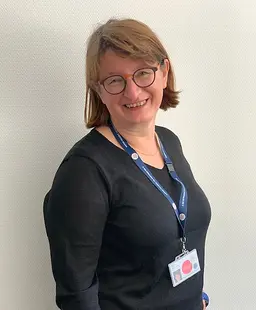
Anita Eckly
Université de Strasbourg, INSERM, EFS Grand Est, BPPS UMR-S 1255, FMTS, F-67065 Strasbourg, France
Anita obtained a PhD in Pharmacology (1995) at the Université Louis Pasteur in Strasbourg, France. She joined the laboratory of Christian Gachet (EFS, Strasbourg, France) in 1997.She is head of the electron microscopy department where she has implemented high-resolution imaging approaches (TEM, SEM, FIB-SEM, cryo-ultramicrotomy, immunogold labelling and, recently, correlative analyses-CLEM). She is known for her original work in the field of blood platelets and megakaryocytes and has made recognized contributions to the biogenesis of DMS, platelet formation and platelet exocytosis. More recently, she has focused on the mechanisms that control the passage of megakaryocytes through the walls of the medullary sinusoids. Her expertize is appreciated, so she has been involved in collaborations with teams of France, The Netherland, Germany, USA and Australia. She has published 70 papers in peer-reviewed journals in his area of expertise.

Christian Gachet
Université de Strasbourg, INSERM, EFS Grand Est, BPPS UMR-S 1255, FMTS, F-67065 Strasbourg, France
Dr Christian Gachet graduated as a medical doctor in 1985 and gained his PhD in Pharmacology in 1991, both at the University Louis Pasteur, Strasbourg, France. Dr. Gachet is currently the Director of the INSERM Research Unit 1255 and the Director at Etablissement Français du Sang-Grand Est. The focus of Dr. Gachet work has long been the molecular mechanisms of platelet activation and its inhibition. This led to the characterization and the identification of some of the platelet receptors. Dr Gachet general interest is in platelet physiology (formation of blood platelets, megakaryopoiesis, platelet activation, role of platelets in inflammatory processes and metastatic dissemination) and pharmacology (new drugs, new targets), animal models of platelet defects, mouse models of arterial thrombosis in a context of atherosclerosis and clinical studies. Dr Gachet is also involved in various topics related to transfusion medicine, including the role of platelets in adverse effects, the impact of pathogen inactivation technologies on platelet and red blood cells functions or blood donation policies. Dr Gachet has published over 300 papers in peer-reviewed journals in his area of expertise. Dr. Gachet has received several distinctions for his work in the field of atherothrombosis. These include the Prix JP Binet in 2004 in France and the Biennial Award for Contributions to Haemostasis, ISTH, 2013, Amsterdam. He has been elected as corresponding member of the French National Academy of Medicine in 2018.
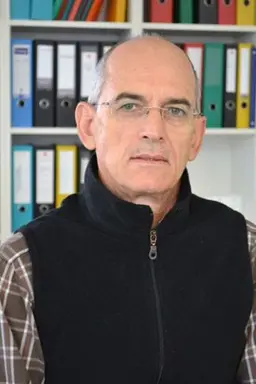
François Lanza
Université de Strasbourg, INSERM, EFS Grand Est, BPPS UMR-S 1255, FMTS, F-67065 Strasbourg, France
François Lanza graduated as a pharmacist (1980) and obtained a PhD in Pharmacology (1986) both at the Université Louis Pasteur in Strasbourg, then completed a post-doctoral fellowship in the laboratory of David Philips in San-Francisco (1987-1989) before obtaining a position at the INSERM (1989) and joining the INSERM unit U311 in Strasbourg. François Lanza is currently heading the ‘Biology of thrombopoiesis’ team of the UMR S_1255 laboratory located at the EFS Grand Est, Strasbourg site. His research has focused on blood platelets and their role in hemostasis and thrombosis, and more recently on the mechanisms controlling their production. He is particularly interested in those controlling the latest stages of megakaryopoiesis in physiology and pathology, in particular the role of the cellular microenvironment in megakaryocyte maturation and of the microtubule cytoskeleton in shaping circulating platelets. He has published over 160 papers in peer-reviewed journals in his area of expertise.
Collection Overview
Platelet biogenesis is a fascinating cell biological process. Platelets arise from the cytoplasmic fragmentation of their large marrow precursor, the megakaryocyte (MK). MKs are derived from hematopoietic stem cells and undergo a unique process of differentiation and maturation that includes polyploidization, development of an extensive intracellular demarcation membrane system, and formation of long cytoplasmic extensions, called proplatelets, into vascular sinusoids that further fragment to give rise to platelets. Although the transformation of MKs into circulating platelets is not fully elucidated, the development of MK culture systems and in vivo/in situ imaging modalities have significantly advanced our ability to comprehend the process of platelet formation.
The aim of this collection is to provide standardized protocols enabling (1) efficient selection and differentiation of MK progenitors from murine bone marrow (BM), (2) in vitro differentiation of MKs from human peripheral blood CD34+ cells, (3) 3D MK culture within methylcellulose hydrogels recapitulating mechanical constraints encountered in the BM (4) electron microscopy to characterize in situ MK ultrastructure, number, and maturation stages, (5) the study of the dynamics of proplatelets formation by MKs that have matured in their physiological context using a BM explant model, and (6) the real-time observation of proplatelet generation in the BM of living mice using a cranial intravital two‐photon microscopy procedure. Our overall goal is to bring together complementary in vitro and in vivo methods that can be readily applied to further improve our understanding of MK biology.
Editorial

Articles


Immunophenotyping and Cell Sorting of Human MKs from Human Primary Sources or Differentiated In Vitro from Hematopoietic Progenitors
0 Views
•
Cited by 1
•
2021
•
Andrea Acebes-Huerta1, Patricia Martínez-Botía1, Cristina Martín Martín2, Ángel Bernardo1,3, Adrián R. Rodríguez1, María Carmen Vicente-Ayuso4, Celina Benavente Cuesta5, Laura Gutiérrez1,6
1Platelet Research Lab, Instituto de Investigación Sanitaria del Principado de Asturias (ISPA), 2Flow Cytometry and Cell Sorting Platform (ISPA), 3Clinical Diagnosis Laboratory - Dept. of Hematology, Hospital Universitario Central de Asturias (HUCA), 4Department of Hematology, Hospital Universitario Severo Ochoa (HUSO), 5Department of Hematology, Instituto de Investigación Sanitaria San Carlos (IdISSC), Hospital Clínico San Carlos (HCSC), 6Dept. of Medicine, University of Oviedo