Small-animal positron emission tomography enables the assessment of the brain's two main energy substrates: glucose and ketones. In the present method, 11C-acetoacetate and 18F-fluorodeoxyglucose are injected sequentially in each animal, and their uptake is measured quantitatively in specific brain regions determined from the magnetic resonance images.
A subscription to JoVE is required to view this content. Sign in or start your free trial.
Method Article
A Dual Tracer PET-MRI Protocol for the Quantitative Measure of Regional Brain Energy Substrates Uptake in the Rat
In This Article
Summary
Abstract
We present a method for comparing the uptake of the brain's two key energy substrates: glucose and ketones (acetoacetate [AcAc] in this case) in the rat. The developed method is a small-animal positron emission tomography (PET) protocol, in which 11C-AcAc and 18F-fluorodeoxyglucose (18F-FDG) are injected sequentially in each animal. This dual tracer PET acquisition is possible because of the short half-life of 11C (20.4 min). The rats also undergo a magnetic resonance imaging (MRI) acquisition seven days before the PET protocol. Prior to image analysis, PET and MRI images are coregistered to allow the measurement of regional cerebral uptake (cortex, hippocampus, striatum, and cerebellum). A quantitative measure of 11C-AcAc and 18F-FDG brain uptake (cerebral metabolic rate; μmol/100 g/min) is determined by kinetic modeling using the image-derived input function (IDIF) method. Our new dual tracer PET protocol is robust and flexible; the two tracers used can be replaced by different radiotracers to evaluate other processes in the brain. Moreover, our protocol is applicable to the study of brain fuel supply in multiple conditions such as normal aging and neurodegenerative pathologies such as Alzheimer's and Parkinson's diseases.
Introduction
Context and Rationale
Positron emission tomography (PET) enables the minimally-invasive study of functional processes in the brain. Glucose is the brain's main energy substrate, but in conditions of glucose deficiency, ketones (acetoacetate [AcAc] and β-hydroxybutyrate) are the main alternative energy substrates. Brain energy metabolism has been widely studied by PET using the most common PET tracer, 18F-fluorodeoxyglucose (18F-FDG), a glucose analog. Our group recently developed a novel radiotracer -11C-AcAc - to measure brain ketone metabolism1. Magnetic resonance imaging (MRI) is a much higher resolution technique (0.1 mm × 0.1 mm in-plane resolution) than PET, and is needed to clearly localize anatomical brain regions required for the regional PET analysis of brain energy metabolism.
PET data are commonly expressed as standardized uptake values (SUV)2-6. SUV are the tissue activity concentration normalized by the fraction of the injected dose/unit weight, as initially proposed over 70 years ago7. These units are still widely used because they require simpler PET acquisition and image analysis methodologies. However, an important limitation is that SUV are relative not absolute units, making it difficult to compare results across different studies. This difficulty of comparison may contribute to contradictory findings in the literature on brain glucose uptake in the elderly8. Therefore, the quantitative cerebral metabolic rate (CMR; μmol/100 g/min) has particular advantages9-11. Generating CMR values requires a dynamic PET acquisition and the plasma radioactivity counts as a function of time, i.e. the plasma time-activity curve (TAC) or input function. The input function can be obtained by multiple blood samplings throughout the PET acquisition9,12 or by the image-derived input function (IDIF) method, in which a region of interest is drawn on a blood pool (heart's left ventricle or major artery)11,13-16.
Goal
The aim of our method was to quantitatively compare for the first time the uptake of the brain's two key energy substrates, glucose and ketones, using PET and MRI in rodents. 11C-AcAc and 18F-FDG were used sequentially in the same animal. The protocol was designed to measure regional uptakes in different relevant brain structures (cortex, hippocampus, striatum, and cerebellum) clearly visible in the MR images. The protocol was also specifically intended to permit quantitative analysis of tracer brain uptake, i.e. CMR of both 18F-FDG and 11C-AcAc. Although this protocol was developed to study brain energy substrates, the radiotracers we used could be replaced by others, and the same methodology can be used to study different brain functional processes.
Advantages over existing methods
PET and MRI do not require the animal to be sacrificed after the acquisition. Therefore, follow-up studies of treatments are possible. Thus, baseline data followed by an experimental condition can be measured within the same animal, thereby reducing both biological variability and the number of animals required. A key advantage of our dual tracer PET protocol is to compare both tracers uptake in the same animal under the same physiological conditions within the same imaging session, thereby reducing even more biological variability and systematic discrepancies. This dual tracer PET protocol is feasible primarily because of the short physical half-life of 11C (20.4 min) and the fast biological washout of 11C-AcAc, which leave minimal residual 11C radioactivity during the second acquisition with 18F-FDG. The MRI scan is an important feature of this protocol as it enables the tracer uptake to be studied in specific brain areas. In addition, this method enables an absolute quantitative measure of brain tracer uptake in contrast to relative units obtained by the SUV method. Finally, 11C-AcAc images have a low signal-to-noise ratio because of relatively low brain AcAc uptake under physiological conditions, which makes automatic 11C-AcAc and MR images registration challenging. Hence, because 11C-AcAc and 18F-FDG acquisitions are sequential (no motion of the animal), the 18F-FDG to MRI alignment can be applied to 11C-AcAc images.
Key papers where the protocol has been used
We have used the dual tracer PET protocol in a study involving the comparison of the fasted state and the ketogenic diet (KD) in young rats2. We showed that both fasting and the KD increase significantly both 11C-AcAc and 18F-FDG brain uptake. However, these were not quantitative results as we did not use the dynamic PET imaging and tracer kinetic modeling methodology at that time. Thereafter, we undertook a regional and quantitative study of brain metabolism in aged rats, where the effect of aging and a KD were evaluated on brain 11C-AcAc and 18F-FDG uptake11. We also showed that the percentage of distribution across brain regions was different between 11C-AcAc and 18F-FDG. Furthermore, not only the CMR of 11C-AcAc but also that of 18F-FDG was increased in the whole brain as well as in the striatum of aged rats on the KD.
Access restricted. Please log in or start a trial to view this content.
Protocol
All experiments were completed in accordance with the Animal Care and Use Committee at the Université de Sherbrooke and with the Canadian Council on Animal Care. The experimental protocol was approved by the Institutional Animal Research Ethics Review Board (protocol #011-09).
1. Brain Anatomy with MRI
- Let rats acclimatize in the animal facility for a minimum of 7 days prior to the protocol. Perform brain MRI scans 1-2 weeks prior to the dual tracer PET protocol to allow full recovery from the anesthesia.
- Anesthetize the rat in an induction chamber. Use 2% isoflurane and 1.5 L/min oxygen throughout the protocol for anesthesia. Pinch the hind leg to ensure the animal is fully anesthetized. CAUTION: inhalation of isoflurane can cause headache, dizziness, or unconsciousness in some cases; it should always be used in the presence of an air exchange system in a suitably ventilated room.
- Position the rat on the MRI examination table in the head-first prone position with a nose cone for isoflurane. Position the respiration and rectal probes. Monitor the respiration rate during the experiment and maintain body temperature at 37 °C with an automated air warming system.
- Acquire T2-weighted MR images using a fast spin-echo pulse sequence with acquisition parameters as detailed previously11. Place the rat on a heated mat during recovery from anesthesia.
2. Dual Tracer PET Acquisitions
- Use a small-animal PET scanner equipped with avalanche photodiode detectors, an axial field of view of ~7.5 cm and an isotropic spatial resolution of 1.2 mm17. Due to its short physical half-life, prepare 11C by proton bombardment of natural nitrogen (through the 14N(ρ,α)11C nuclear reaction) in a cyclotron on-site before each experiment.
- Fast the rat for 18 hr prior to PET scanning. Fasting allows higher brain uptake of 11C-AcAc and 18F-FDG, thereby improving signal-to-noise ratio.
- Anesthetize the rat in an induction chamber. Transfer the rat onto a heating mat with a nose cone for isoflurane. Start 11C-AcAc synthesis at this time. The synthesis takes 18 min from the end of bombardment, as previously described1.
- Position the rat on its side. Prepare a PE50 polyethylene catheter filled with heparinized 0.9% sodium chloride solution (saline). Install the catheter in the tail vein for tracer injection. Install a second catheter in the mid-ventral tail artery for blood sampling throughout the acquisitions.
- Rapidly transfer the rat to the scanner table in the head-first prone position with a nose cone for isoflurane. Position the respiration and rectal probes. Monitor the respiration rate during the experiment and maintain body temperature at 37 °C with an automated warming air system. Move the scanner table forward into the scanner to ensure the appropriate imaging of the brain and the heart simultaneously. As an anatomical landmark, position the edge of the field of view on the rat's eyes (with the help of laser lines).
- Using a concentrated 11C-AcAc solution (~1 GBq/ml), prepare a syringe of ~50 MBq of radioactivity (a range of 45-55 MBq is acceptable). Adjust the volume to 300 μl with saline. CAUTION: Radioactivity can be harmful for the health. It should always be handled behind a lead shield. The experimenter should be wearing a body and ring dosimeter. A Geiger counter should also be on during the experiment.
- Install the syringe on an injection pump. Start the bolus injection of 11C-AcAc at a rate of 1 ml/min (injection duration: ~19 sec). On a second pump, immediately after terminating the 11C-AcAc injection, start the injection of 300 μl of saline at a rate of 1 ml/min, which is important for an optimal injection of tracer into the blood circulation.
- Start a dynamic PET data acquisition 30 sec before starting the bolus injection for a total duration of 20.5 min. The 30 sec data acquisition before the tracer injection provides a measure of the ambient background to be subsequently subtracted from the PET data. Set the regular sampling mode and the energy window at 250-650 keV.
- Collect two 200 μl blood samples at ~15 and 18 min after starting the 11C-AcAc injection. Inject heparinized saline in the catheter after each sampling to avoid blood clotting. Take note of the time at the beginning and the end of blood sampling and use the mean time. Centrifuge at 6,000 RPM for 5 min and collect plasma. Measure radioactivity counts in plasma using a gamma counter calibrated with the PET scanner.
- After the 11C-AcAc scan, allow a waiting period of 20 min to ensure that most of radioactivity has decayed. The period can vary from 15-30 min. Do not move the scanner bed and leave the rat under isoflurane throughout this period.
- During this time, using a concentrated 18F-FDG solution (~5.5 GBq/μl), prepare a syringe of ~50 MBq. Proceed exactly as mentioned in steps 2.6 and 2.7. Start a dynamic acquisition of a total duration of 40.5 min, including the 30 sec before the injection. Collect two 200 μl blood samples at ~30 and 35 min after starting the 18F-FDG injection.
- At the end of the 18F-FDG acquisition, take one final 200 μl blood sample. Centrifuge and collect plasma. Keep plasma samples at -80 °C for glucose and AcAc analysis.
- Finally, place the rat on a heating mat during the waking period. Keep the animal for a longitudinal follow-up, or alternatively, euthanize the rat for brain sampling and further biochemical studies.
- Reconstruct the PET images according to the following time frame sequences: 1 × 30 sec; 12 × 5 sec; 8 × 30 sec; and n × 300 sec, where n = 3 for 11C-AcAc acquisition and n = 7 for 18F-FDG acquisition.
3. Plasma Glucose and AcAc Analysis
- Measure plasma glucose and AcAc with a clinical chemistry analyzer. Perform assays within 48 hr of the blood sampling to minimize AcAc decarboxylation into acetone. Measure glucose concentration with DF40 kit as previously described18 and AcAc with an open channel2. This type of analyzer is more accurate than strips (0.1 μM) and has a broad detection window.
4. Quantitative PET Analysis
- Use PMOD software or an equivalent system for small-animal PET image analysis.
- Plasma time-activity curve (TAC)
- Load 18F-FDG data. Sum image frames of the first 60 sec following injection (when tracer is mainly in blood).
- Using a manual drawing tool, draw a volume of interest (VOI) on the left ventricular cavity blood pool (a large pool centered in the bottom part of images). Draw the VOI ~1 mm inside of the edge of the blood pool (red voxels) to ensure no inclusion of tissue and avoid tissue radioactivity spill into the blood pool (Figure 1A). Copy the VOI to the entire dynamic image series and generate a curve of radioactivity as a function of time (TAC).
- In a spreadsheet, use radioactivity counts of the two plasma samples taken during the acquisition to correct plasma TAC (Figure 1B). Use the following equation:

Some smoothing of the plasma TAC can be performed. - Verify if residual radioactivity from 11C-AcAc is present in the first 30 sec of 18F-FDG scan, prior to injection. If so, subtract the following factor from all the subsequent time frames of the TAC:
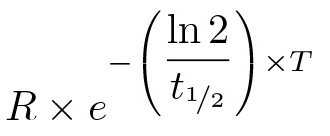 ,
,
where R is the residual radioactivity, t1/2 is the half-life of 11C (20.4 min) and T is the time frame2,13. Residual radioactivity from 11C-AcAc after a waiting period of 20 min can be up to 1.5% of maximal 18F-FDG counts.
- 18F-FDG/MRI coregistration
- Apply coregistration obtained with 18F-FDG images to the11C-AcAc images. This is necessary because 11C-AcAc images have a low signal-to-noise ratio and automatic coregistration is difficult.
- Load the corresponding MRI data. Load all 28 18F-FDG time frames in the same orientation as the MR images (on three axes).
- Compute the 18F-FDG summed image of the 28 time frames. This generates an image with higher counts, so it is easier to work with for coregistration with MRI than individual image frames.
- Perform the automatic coregistration of the 18F-FDG summed image on MR images (Figure 2). Apply the transformation to all individual 18F-FDG image frames. Save the transformation which will later be applied to 11C-AcAc images.
- Volumes of interest (VOIs)
- Using segmentation software such as PMOD, select MRI data and choose preferred plane for manual drawing. Choose the manual or the semi-automatic drawing tool, depending on brain region size and image contrast. Locate brain structures according to a standard rat brain atlas19.
- Draw the VOIs. As shown in Figure 3, segment the whole brain, cortex, hippocampus, striatum and cerebellum, but other regions could be chosen. Save the VOIs, which will be applied to the coregistered 18F-FDG and 11C-AcAc images.
- Apply VOIs to 18F-FDG coregistered images. Select the VOI statistics to visualize brain TAC. If needed, correct TAC by subtracting the decay-corrected mean radioactivity in the first 30 sec from all the subsequent time frames.
- Cerebral metabolic rate calculation
- Load brain and the corresponding plasma TACs.
- Select Patlak plot kinetic model20,21. Set the lumped constant to 0.4822 and the corresponding plasma glucose concentration (Figure 4B). Set the maximal relative deviation from the Patlak plot to 5%. Fit the data to the model.
- 11C-AcAc images
- Compute the 18F-FDG summed image of the 24 first time frames to have the same number of frames as the 11C-AcAc scan. Otherwise, 11C-AcAc/MRI coregistration fails. Perform the automatic coregistration of 18F-FDG on MRI. Save the transformation process which will be used for 11C-AcAc image coregistration.
- Repeat steps 4.2 and 4.3 for 11C-AcAc images. Use 18F-FDG transformation in step 4.6.1 and apply it to all individual 11C-AcAc image frames. Repeat steps 4.4 and 4.5 and use 18F-FDG saved VOIs. Set the lumped constant to 1.
Access restricted. Please log in or start a trial to view this content.
Results
As seen in Figure 2,11C-AcAc uptake is low within the brain itself. As mentioned earlier, ketones consumption by the brain is very low on a short-term fasting. 11C-AcAc uptake is higher in the tongue and cheek muscles. Indeed, ketones are rapidly taken up by rat skeletal muscles23. In contrast, 18F-FDG uptake is mostly in the brain and the cheek muscles. Figure 2 shows that during the coregistration process, MR images are fixed and PET images m...
Access restricted. Please log in or start a trial to view this content.
Discussion
Critical steps
A critical step in this dual tracer PET protocol is to be able to simultaneously scan the heart's left ventricle and the brain at the same time. This requires a PET scanner with a sufficient axial length, i.e. a minimum of 7.5 cm. A few test scans are needed to determine the exact position of the scanner table (x, y, and z values), where the brain and the heart are scanned correctly.
Tracer injection is also a crucial point for a succes...
Access restricted. Please log in or start a trial to view this content.
Disclosures
The authors declare that they have no competing financial interests.
Acknowledgements
This study was financially supported by the Fonds de la recherche en santé du Québec, Canadian Institutes of Health Research, Canadian Foundation for Innovation and the Canada Research Chairs Secretariat (SCC). The Sherbrooke Molecular Imaging Center is part of the FRQS-funded Étienne-Le Bel Clinical Research Center. The authors thank Mélanie Fortier, Jennifer Tremblay-Mercier, Alexandre Courchesne-Loyer, Dr. Fabien Pifferi, Dr. M'hamed Bentourkia, Dr. Otman Sarrhini, Dr. Jacques Rousseau, Caroline Mathieu, and Mélanie Archambault for generous support and technical assistance. The authors would like to thank the image analysis and visualization platform (http://pavi.dinf.usherbrooke.ca) for their help.
Access restricted. Please log in or start a trial to view this content.
Materials
| Name | Company | Catalog Number | Comments |
|---|---|---|---|
| MRI scanner | Varian | 7 Tesla | |
| Small-animal PET scanner | Gamma Medica | Lab-PET/-Triumph | |
| Heat mat | Sunbeam | PN 143937 | |
| Heater system | SA Instruments | 761 100 Rev B | |
| Respiratory gating | SA Instruments | SAII's P-resp | |
| Clinical chemistry analyzer | Siemens Healthcare Diagnosis | 765000.931 | Dimension Xpand Plus |
| Polyethylene tubing 50 | Becton Dickinson | 427411 | |
| Injection pump | KD Scientific | Model 210 | |
| Gamma-counter | GMI | Packard Cobra II | |
| Centrifuge | Thermo Scientific | 75002416 | Heraeus Pico 21 |
| PMOD software | PMOD Technologies | PMOD 3.2 version | |
| Geiger counter | Fluke Biomedical | ASM-990 | Advanced Survey Meter |
| Reagent | |||
| Isoflurane | Abbott Laboratories, Ltd | B506 | |
| 0.9% NaCl solution | Hospira | 4888010 | |
| Heparin | Sandoz | 1004336 | |
| Isopropenyl acetate | Aldrich | 11778 | 99% |
| Methyllithium | Aldrich | 197343 | 1.6 M |
| THF | Aldrich | 87371 | |
| Flex reagent cartridge glucose | Siemens Healthcare Diagnosis | DF40 | |
| Trizma base | Sigma | T6066-500G | prepare tris buffer 100 mM pH 7.0 |
| Sodium oxamate | Sigma | O2751 | 20 mM |
| NADH | Roche | 10128015001 | 0.15 mM |
| b-Hydroxybutyrate dehydrogenase | Toyobo | HBD-301 | 1 U/ml |
References
- Tremblay, S., et al. Automated synthesis of 11C-acetoacetic acid, a key alternate brain fuel to glucose. Appl. Radiat. Isot. 65, 934-940 (2007).
- Pifferi, F., et al. Mild experimental ketosis increases brain uptake of 11C-acetoacetate and 18F-fluorodeoxyglucose: a dual-tracer PET imaging study in rats. Nutr. Neurosci. 14, 51-58 (2011).
- Lopez-Grueso, R., Borras, C., Gambiniy, J., Vina, J. El envejecimiento y la ovariectomia causan una disminucion del consumo cerebral de glucosa in vivo en ratas Wistar. Revista Espanola de Geriatria y Gerontologia. 45, 136-140 (2010).
- Fueger, B. J., et al. Impact of animal handling on the results of 18F-FDG PET studies in mice. J. Nucl. Med. 47, 999-1006 (2006).
- Luo, F., et al. Characterization of 7- and 19-month-old Tg2576 mice using multimodal in vivo imaging: limitations as a translatable model of Alzheimer's disease. Neurobiol. Aging. 33, 933-944 (2012).
- Poisnel, G., et al. Increased regional cerebral glucose uptake in an APP/PS1 model of Alzheimer's disease. Neurobiol. Aging. 33, 1995-2005 (2012).
- Kenney, J. M., Marinelli, L. D., Woodard, H. Q. Tracer studies with radioactive phosphorus in malignant neoplastic disease. Radiology. 37, 683-690 (1941).
- Cunnane, S., et al. Brain fuel metabolism, aging, and Alzheimer's disease. Nutrition. 27, 3-20 (2011).
- Shimoji, K., et al. Measurement of cerebral glucose metabolic rates in the anesthetized rat by dynamic scanning with 18F-FDG, the ATLAS small animal PET scanner, and arterial blood sampling. J. Nucl. Med. 45, 665-672 (2004).
- Tantawy, M. N., Peterson, T. E. Simplified [18F]FDG image-derived input function using the left ventricle, liver, and one venous blood sample. Mol. Imaging. 9, 76-86 (2010).
- Roy, M., et al. The ketogenic diet increases brain glucose and ketone uptake in aged rats: A dual tracer PET and volumetric MRI study. Brain Res. , (2012).
- Yu, A. S., Lin, H. D., Huang, S. C., Phelps, M. E., Wu, H. M. Quantification of cerebral glucose metabolic rate in mice using 18F-FDG and small-animal PET.. J. Nucl. Med.. 50, 966-973 (2009).
- Bentourkia, M., et al. PET study of 11C-acetoacetate kinetics in rat brain during dietary treatments affecting ketosis. Am. J. Physiol. Endocrinol. Metab. 296, 796-801 (2009).
- Menard, S. L., et al. Abnormal in vivo myocardial energy substrate uptake in diet-induced type 2 diabetic cardiomyopathy in rats. Am. J. Physiol. Endocrinol. Metab. 298, 1049-1057 (2010).
- Liistro, T., et al. Brain glucose overexposure and lack of acute metabolic flexibility in obesity and type 2 diabetes: a PET-[18F]FDG study in Zucker and ZDF rats. J. Cereb. Blood Flow Metab. 30, 895-899 (2010).
- Croteau, E., et al. Image-derived input function in dynamic human PET/CT: methodology and validation with 11C-acetate and 18F-fluorothioheptadecanoic acid in muscle and 18F-fluorodeoxyglucose in brain. Eur. J. Nucl. Med. Mol. Imaging. 37, 1539-1550 (2010).
- Bergeron, M., Cadorette, J., Beaudoin, J. F. Performance evaluation of the LabPETTM APD-based digital PET scanner. IEEE Trans. Nucl. Sci. 56, 10-16 (2009).
- Freemantle, E., et al. Metabolic response to a ketogenic breakfast in the healthy elderly. J. Nutr. Health Aging. 13, 293-298 (2009).
- Paxinos, G., Watson, C. The rat brain in stereotaxic coordinates. sixth edn. , Elsevier. (2007).
- Patlak, C. S., Blasberg, R. G., Fenstermacher, J. D. Graphical evaluation of blood-to-brain transfer constants from multiple-time uptake data. J. Cereb. Blood Flow Metab. 3, 1-7 (1983).
- Patlak, C. S., Blasberg, R. G. Graphical evaluation of blood-to-brain transfer constants from multiple-time uptake data. Generalizations. J. Cereb. Blood Flow Metab. 5, 584-590 (1985).
- Sokoloff, L., et al. The 14C deoxyglucose method for the measurement of local cerebral glucose utilization: theory, procedure, and normal values in the conscious and anesthetized albino rat. J. Neurochem. 28, 897-916 (1977).
- Robinson, A. M., Williamson, D. H. Physiological roles of ketone bodies as substrates and signals in mammalian tissues. Physiol Rev. 60, 143-187 (1980).
- Blomqvist, G., et al. Use of R-beta-[1-11C]hydroxybutyrate in PET studies of regional cerebral uptake of ketone bodies in humans. Am. J. Physiol. 269, 948-959 (1995).
- Blomqvist, G., et al. Effect of acute hyperketonemia on the cerebral uptake of ketone bodies in nondiabetic subjects and IDDM patients. Am. J. Physiol. Endocrinol. Metab. 283, 20-28 (2002).
- Soret, M., Bacharach, S. L., Buvat, I. Partial-volume effect in PET tumor imaging. J. Nucl. Med. 48, 932-945 (2007).
- Jiang, L., Mason, G. F., Rothman, D. L., de Graaf, R. A., Behar, K. L. Cortical substrate oxidation during hyperketonemia in the fasted anesthetized rat in vivo. J. Cereb. Blood Flow Metab. 31, 2313-2323 (2011).
- Melo, T. M., Nehlig, A., Sonnewald, U. Neuronal-glial interactions in rats fed a ketogenic diet. Neurochem. Int. 48, 498-507 (2006).
- Yudkoff, M., et al. Response of brain amino acid metabolism to ketosis. Neurochem. Int. 47, 119-128 (2005).
- Matsumura, A., et al. Assessment of microPET performance in analyzing the rat brain under different types of anesthesia: comparison between quantitative data obtained with microPET and ex vivo autoradiography. Neuroimage. 20, 2040-2050 (2003).
Access restricted. Please log in or start a trial to view this content.
Reprints and Permissions
