Here we describe our detailed protocol for the preparation of single-cohort honeybee colonies – a useful tool for analyzing the role-associated worker physiology. We also describe detailed protocols for treating workers with juvenile hormone and ecdysone to evaluate the involvement of these hormones in the regulation of worker behavior and/or physiology.
Method Article
Preparation of Single-cohort Colonies and Hormone Treatment of Worker Honeybees to Analyze Physiology Associated with Role and/or Endocrine System
In This Article
Summary
Abstract
Honeybee workers are engaged in various tasks related to maintaining colony activity. The tasks of the workers change according to their age (age-related division of labor). Young workers are engaged in nursing the brood (nurse bees), while older workers are engaged in foraging for nectar and pollen (foragers). The physiology of the workers changes in association with this role shift. For example, the main function of the hypopharyngeal glands (HPGs) changes from the secretion of major royal jelly proteins (MRJPs) to the secretion of carbohydrate-metabolizing enzymes. Because worker tasks change as the workers age in typical colonies, it is difficult to discriminate the physiological changes that occur with aging from those that occur with the role shift. To study the physiological changes in worker tissues, including the HPGs, in association with the role shift, it would be useful to manipulate the honeybee colony population by preparing single-cohort colonies in which workers of almost the same age perform different tasks. Here we describe a detailed protocol for preparing single-cohort colonies for this analysis. Six to eight days after single-cohort colony preparation, precocious foragers that perform foraging tasks earlier than usual appear in the colony. Representative results indicated role-associated changes in HPG gene expression, suggesting role-associated HPG function. In addition to manipulating the colony population, analysis of the endocrine system is important for investigating role-associated physiology. Here, we also describe a detailed protocol for treating workers with 20-hydroxyecdysone (20E), an active form of ecdysone, and methoprene, a juvenile hormone analogue. The survival rate of treated bees was sufficient to examine gene expression in the HPGs. Gene expression changes were observed in response to 20E- and/or methoprene-treatment, suggesting that hormone treatments induce physiological changes of the HPGs. The protocol for hormone treatment described here is appropriate for examining hormonal effects on worker physiology.
Introduction
The European honeybee, Apis mellifera, is a eusocial insect with a highly organized society1. Worker honeybees (labor caste) are engaged in various tasks to maintain colony activity, and these tasks change according to the worker honeybee's age after eclosion, which is referred to as age-related division of labor2-4. Young workers (<13 days old) take care of the brood in the hive by secreting royal jelly (nurse bees), while older workers (>15 days old) collect nectar and pollen outside of the hive (foragers)2-4. The physiology of the workers changes in association with this role shift. For example, the function of the hypopharyngeal glands (HPGs), paired exocrine glands located in the head, changes in association with the role shift from nursing to foraging2,5. Nurse bee HPGs mainly synthesize major royal jelly proteins, which are major components of bee milk. On the other hand, forager HPGs mainly synthesize carbohydrate-metabolizing enzymes, such as α-glucosidase III, to process nectar into honey by converting sucrose into glucose and fructose. Our previous studies revealed that the expression of mrjp2, which encodes a major royal jelly protein, and Hbg3, which encodes α-glucosidase III, changes during the role shift6-9.
To determine whether the physiological changes in the worker tissues, including the HPGs, is associated with the role shift or with the age of the workers, it would be useful to manipulate the population composition of a honeybee colony, such as to prepare single-cohort colonies in which workers of almost the same age perform different tasks10,11. Robinson et al. (1989) described a method for establishing a single-cohort colony10. Single-cohort colonies initially comprise a queen and 0-2 day old workers. Several days after establishing the colonies, workers of almost the same age assume different tasks. Some workers perform nursing tasks as in typical colonies, whereas other workers perform foraging tasks earlier than usual and are thus called precocious foragers. Gene expression comparisons between nurse bees and precocious foragers would provide useful information about the role-associated physiology of worker tissues12-16. Here, we describe a detailed protocol for preparing single-cohort colonies for analysis of the role- and/or age-associated physiology of HPGs16. We also briefly describe how to examine the gene expression of mrjp2 and Hbg3 by quantitative reverse transcription-polymerase chain reaction (RT-PCR) to evaluate HPG physiology.
In addition to the analysis of worker physiology in single-cohort colonies, examination of the endocrine system is important for analyzing the regulatory mechanisms of role-associated worker physiology. Juvenile hormone (JH), which is known as the 'status quo' hormone in insect larvae, accelerates the shift in the role from nursing to foraging in worker honeybees11. Furthermore, ecdysone, which is known as the molting hormone during metamorphosis, might be involved in the role shift as genes encoding ecdysone signaling molecules are expressed in the mushroom bodies, a higher center of the worker brain17-19. Therefore, we also describe the detailed protocol used in our previous study16 to treat workers with 20E, which is an active form of ecdysone, and methoprene, a JH analogue, for analysis of the effect of the endocrine system on HPG physiology (expression of mrjp2 and Hbg3).
Protocol
1. Preparation of Single-cohort Colonies
- Prepare three honeybee colonies to create two single-cohort colonies and to obtain a sufficient number of newly emerged workers.
- Check that some pupae in the capped peripheral cells in the combs have brown eyes and a pigmented cuticle by opening the capped combs using tweezers. If these pupae exist in peripheral comb cells, most of pupae in the whole combs will emerge in approximately 1-3 days.
- Subsequently, collect the combs containing these pupae after all adherent adult bees have been removed with a brush, and mix combs from the three colonies to minimize variability among colonies.
- Place the collected combs in an empty hive box and incubate at 33 °C under humid conditions (>60% relative humidity). Collect approximately 6,000 newly emerged workers over 3 days (3,000 workers per colony) from the collected combs.
- Determine the quantity of workers based on the weight of five newly emerged workers randomly collected from unmanipulated colonies.
- Weigh five newly emerged workers randomly collected from unmanipulated colonies using weighing machines.
Note: The weight of five newly emerged workers is generally 500-600 mg. - Estimate the quantity of collected workers by dividing the weight of the collected workers by the average weight of five newly emerged workers.
- Weigh five newly emerged workers randomly collected from unmanipulated colonies using weighing machines.
- Apply paint marks to the thoraces of approximately 1,800 workers (900 workers per colony) using water-based poster paint markers.
Note: Washable marker which is used to apply the paint is listed in the Table of Materials. - Introduce a queen and approximately 3,000 of the 0-2 day old workers to a new hive box that contains two combs, one comb containing honey and pollen as preserved foods and another empty comb for egg-laying by the queen. Collect the comb containing honey and pollen from another unmanipulated colony after all adherent bees are removed.
Note: The use of nuclear hive box (small sized hive box) is recommended. - Collect nurse bees and precocious foragers with paint marks 6 to 8 days after creating single-cohort colonies.
- To collect nurse bees, pick up workers that put their heads into comb cells to take care of the brood. Use tweezers to collect the nurse bees from combs that contain many brood and adult workers.
Note: If HPGs of collected workers are developed when dissected as described in step 1.7, these workers are defined as nurse bees. Holding the thoraces by tweezers is recommended to pick up workers from the combs. - To collect foragers, use an insect net to capture workers that return to their hives with pollen loads on their hind legs.
Note: If HPGs of captured workers appear shrunken when dissected as described in step 1.7, those workers are defined as foragers.
- To collect nurse bees, pick up workers that put their heads into comb cells to take care of the brood. Use tweezers to collect the nurse bees from combs that contain many brood and adult workers.
- Classify the HPG into three groups, 'Developed', 'Intermediate', and 'Shrunken' by the dissection under a stereomicroscope.
- Anesthetize 10-15 bees in an insect cage in a refrigerator for 10-15 min until bees cannot fly or walk. Then, move bees onto ice and complete the anesthesia on ice for 5 min.
Note: It takes about total 15-20 min to achieve anesthesia. If the anesthesia time needs to be shortened, the number of bees in a cage should be reduced to 1-3 bees per cage. - Dissect the head from the body with scissors and tweezers. Fix the head on dental wax placed on a Petri dish with pins. Insert two pins into the bases of the antennae to fix the head. Soak fixed heads in insect saline (130 mM NaCl, 5 mM KCl, 1 mM CaCl2).
- Remove the anterior aspect of the cuticle of the head using fine tweezers and a surgical knife under a binocular microscope.
Note: The HPGs can be easily found in the head after removal of cuticle. The HPG is a botryoid organ that exists around the brain in the head. - Remove the tracheal tissue which is a white membranous tissue under the cuticle. Then, dissect the HPGs from the head by slowly pulling them with tweezers.
- Classify HPGs with large and circular acini as 'Developed'. Classify HPGs with small and distorted acini as 'Shrunken'. Classify HPGs corresponding to neither 'Developed' nor 'Shrunken' as 'Intermediate'.
Note: Representative photographs that show these three classes of HPG states are indicated in Figure 2. - Subject 'Developed' and 'Shrunken' HPGs to RNA extraction as 'nurse bee HPGs' and 'forager HPGs', respectively, and compare gene expression in the HPGs between nurse bees and foragers (section 4).
- Anesthetize 10-15 bees in an insect cage in a refrigerator for 10-15 min until bees cannot fly or walk. Then, move bees onto ice and complete the anesthesia on ice for 5 min.
2. Injection of 20E
- Collect nurse bees from typical colonies as described in the procedure 1.6.1.
Note: HPGs cannot be examined in these bees as the bees will be reared. - Anesthetize the bees at 4 °C in a refrigerator (not on ice).
Note: It takes about 30 min to achieve anesthesia. If the anesthesia time is shortened, the number of bees in the cage should be reduced to 1-3 bees per cage. - Using tweezers, immobilize the bees on dental wax placed on a Petri dish.
- Inject 1 µl of 20E solution into the anterior aspect of the head using an injection tip made from a calibrated capillary micropipette using a glass needle puller.
- Dissolve 20E in ethanol-insect saline (130 mM NaCl, 5 mM KCl, 1 mM CaCl2) mixture (1:4) at 2.5 µg/µl.
- Connect the injection tip to a rubber tube, and connect a yellow micropipette tip to the opposite side of the tube.
- Place 1 µl of 20E solution on parafilm using a micropipette, hold the yellow micropipette tip in the mouth, and draw the solution into the injection tip.
- Insert the injection tip into the base of the antennae, and inject the solution by blowing through the yellow micropipette tip.
Note: The protocol shown in this step is the representative injection method, but the use of the automated injection machine is recommended for safety as necessary20.
- Rear the injected bees in insect cages at 33-36 °C (the ideal temperature is 35 °C) under dark and humid conditions (>60 % relative humidity) for 1 or 3 days. Supply honey-water mixture (1:1) to the bees. If needed, count surviving bees after injection.
3. Application of Methoprene
- Collect the combs that contain pupae from typical colonies after all adherent adult bees are removed with a brush. Incubate the combs at 33-36 °C (the ideal temperature is 35 °C) in humid conditions (>60% relative humidity) for up to 1 day.
- Collect newly emerged bees from the collected combs and apply paint marks to their thoraces using poster paint as described in the protocol for preparing single-cohort colonies. Return the marked bees to their colonies.
- After 6 days, collect painted workers (6 day old) from the colonies. Pick up painted workers from the combs by holding their thoraces with tweezers.
- Anesthetize the bees at 4 °C in a refrigerator (not on ice) as in the procedure 2.2. Using tweezers, immobilize the bees on dental wax placed on a Petri dish and apply 1-5 µl of methoprene solution (50-250 µg/µl) dissolved in acetone to their heads using a micropipette. Use a filter tip that is resistant to acetone.
Note: Acetone may have the harmful effects on bees leading to death. If the high mortality of bees is observed, the reduction of the volume of acetone to 1 µl at the minimum is recommended. - Rear the bees in insect cages at 33-36 °C (the ideal temperature is 35 °C) for 7 days under dark and humid conditions (>60% relative humidity). Supply honey-water mixture (1:1) to the bees. If needed, count surviving bees after topical application.
Note: In this article, surviving bees are counted 7 days after application (Table 3).
4. RNA Extraction and Quantitative RT-PCR
- Anesthetize bees and dissect HPGs as described in steps 1.7.1 to 1.7.4.
- Collect the dissected HPGs in a microcentrifuge tube on dry ice and store at -80 °C until use.
- Add 400 µl of the reagent for protein denaturation.
Note: This reagent is commercially available (see the Table of Materials). - Homogenize the HPG tissues using a hand held electric mixer with a homogenization pestle that fits inside a microcentrifuge tube. Homogenize at a rotation speed of approximately 300 rpm for 1 min on ice to break and lyse tissue cells.
Note: The hand held electric mixer is commercially available (see the Table of Materials). - Add 80 µl chloroform and mix well. Incubate for 5 min at RT.
- Centrifuge the microcentrifuge tubes at 14,170 x g for 15 min at 4 °C. Transfer the aqueous phase to a new tube. Add an equal volume of isopropanol and 1 µl glycogen (5 mg/ml). Incubate at -20 °C for at least 20 min.
- Centrifuge the microcentrifuge tubes at 14,170 x g for 10 min at 4 °C and remove the supernatant.
- Add 400 µl of 75% ethanol to the pellet and mix well, centrifuge the microcentrifuge tubes at 14,170 x g for 15 min at 4 °C, and remove the supernatant. Repeat these procedures once more.
- Air-dry the pellet for 5-10 min and then dissolve it in 10 µl RNase-free water.
Note: Complete drying of the pellet may cause insolubilization of the RNA pellet in water. Thus, the pellet which is slightly wet is appropriate for dissolving. - Measure the RNA concentration using a spectrophotometer such as NanoDrop or similar.
- Treat 500 ng of total RNA with 2.0 U of DNase I by incubating at 37 °C for 30 min to degrade any contaminating genomic DNA.
- Reverse-transcribe 200 ng of DNase I-treated RNA and perform real time PCR using commercially available kits (see the list in the Table of Materials and Reagents) and gene-specific primers (mrjp2; 5'-AAATGGTCGCTCAAAATGACAGA-3', and 5'-ATTCATCCTTTACAGGTTTGTTGC-3', Hbg3; 5'-TACCTGGCTTCGTGTCAAC-3' and 5'-ATCTTCGGTTTCCCTAGAGAATG-3'). Perform the PCR as follows: [95 °C x 30 sec + (95°C x 5 sec + 60°C x 15 sec + 72 °C x 20 sec) x 45-55 cycles].
- Normalize the amount of transcript with that of elongation factor 1α-F2 (EF1α˗F2) or ribosomal protein 49 (rp49)9,16,21,22. These genes are reliable control genes for analyzing gene expression in the HPGs using qRT-PCR.
- Perform two-tailed t-test to detect the significant differences between two experiment groups (nurse bees vs. precocious foragers, 20E-treated bees vs. control bees, and methoprene-treated bees vs. control bees) using statistical software.
Note: If F-test assumes the homogeneity of variance, Student's t-test can be used. If not, Welch's t-test can be used.
Results
An overview of the protocol for preparing single-cohort colonies is illustrated in Figure 1A. Time-course of experiments from preparing single-cohort colonies to sample collection is shown in Figure 1B. Workers that satisfied the behavioral criteria for nursing behavior or foraging behavior were collected from single-cohort colonies, and HPG development was estimated in these workers. Table 1 shows the classification of HPG development into three groups; 'Developed', 'Intermediate', and 'Shrunken' according to the size. Representative photographs showing these three classes of HPGs are indicated in Figure 2. The results indicate that both nurse bees and precocious foragers, according to the criteria described in the protocol, were also observed in the single-cohort colonies. Expression of mrjp2 and Hbg3 in the HPGs was enriched in nurse bees and precocious foragers, respectively, indicating that HPG function is associated with the worker's role (Figure 3)16.
The procedure for injecting 20E into worker heads is illustrated in Figure 4. Surviving bees were counted 1, 5 and 7 days after injection to examine the survival rate of bees injected with insect saline or solvent for 20E solution before the 20E experiment. At 7 days after injection, approximately 60-80% of injected bees were alive, and survival rate of bees injected with solvent for 20E solution was comparable to that with insect saline (Table 2). The effect of the 20E injection decreased expression of both mrjp2 and Hgb3 in the HPGs (Figure 5)16. In addition to 20E, the effect of topical methoprene application on mrjp2 and Hbg3 expression in the HPGs was examined. Approximately 70-100% of bees treated with methoprene- or acetone by topical application survived 7 days after the application (Table 3). On the other hand, only approximately 20% to 30% of bees injected with acetone/bee saline (1:4) solution survived 7 days after injection when surviving bees were counted 1, 3, 5 and 7 days after injection (Table 4). Thus, the application method for methoprene treatment was adopted. Application of methoprene inhibited the expression of mrjp2 and enhanced the expression of Hbg3 (Figure 6)16.
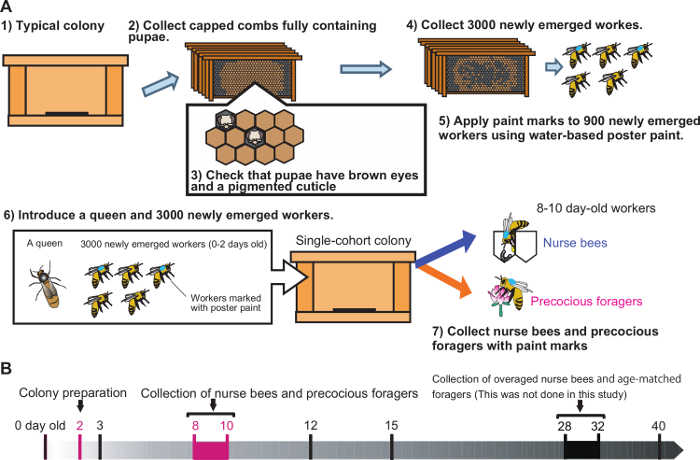
Figure 1. Overview of single-cohort colony experiment. (A) Scheme for preparing single-cohort colonies. (B) Time-course of experiment from preparing single-cohort colonies to collecting nurse bees and precocious foragers. Horizontal arrow indicates the course of a worker's lifetime in the single-cohort colonies. Numbers with vertical lines indicate worker age. Not only precocious foragers but also overaged nurse bees (28-32 days old) are reported to be found in single-cohort colonies15. Thus, comparison of the physiology between overaged nurse bees and foragers can be performed in single-cohort colonies, although this was not done in this study. Please click here to view a larger version of this figure.
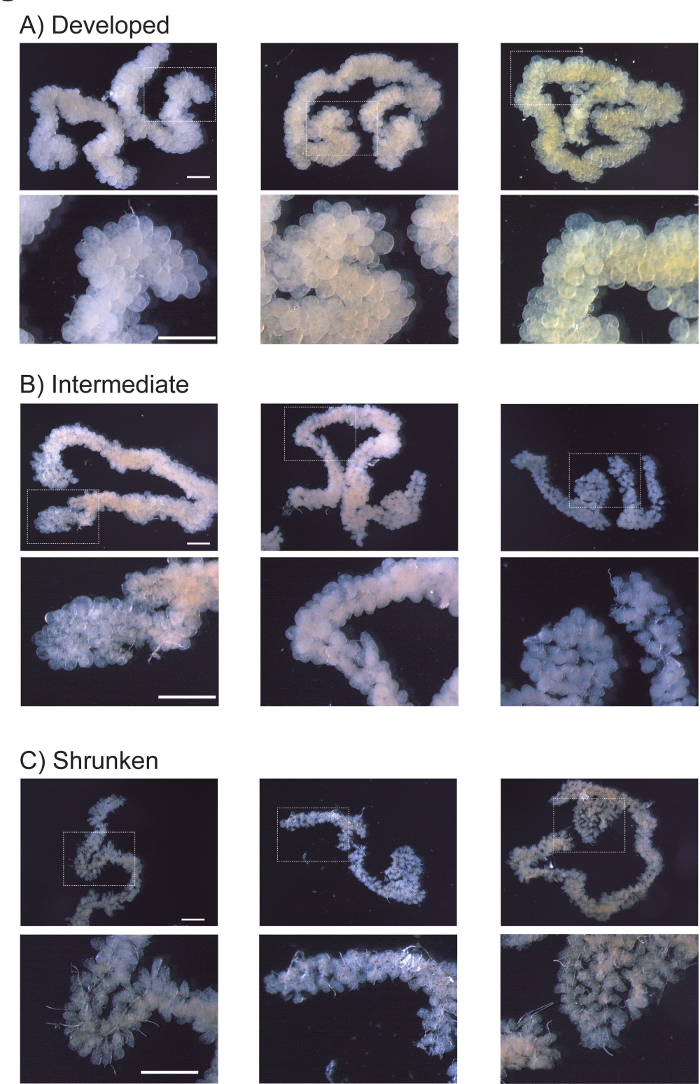
Figure 2. Photographs showing the three classes of HPG states. Developed (A), Intermediate (B), and Shrunken (C) HPGs described in step 1.7.5 of the Protocol are shown in this figure. Three representative photographs in each class of HPG are shown. Lower panels in each subfigure represent the magnified views of dotted square areas in the upper panels. Scale bars = 500 µm. Please click here to view a larger version of this figure.
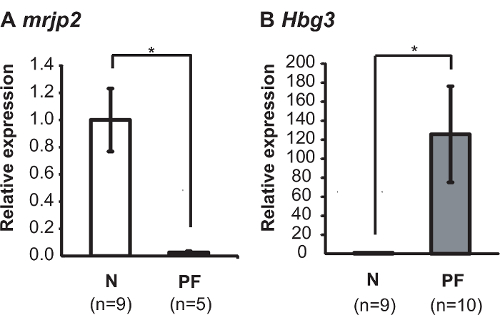
Figure 3. Role-associated expression of mrjp2 and Hbg3 in the HPGs of workers from single-cohort colonies. The graph displays a comparison of mRNA levels of mrjp2 (A) and Hbg3 (B) in the HPGs between nurse bees (N) and precocious foragers (PF) from two single-cohort colonies. The mRNA level of each gene was normalized with that of Ribosomal protein 49 (rp49). The relative mRNA level of each gene in the nurse bee HPGs was defined as 1. The mRNA level of mrjp2 in some precocious foragers could not be quantified because of signal intensities lower than the detection threshold. Therefore, the number of samples differs between genes. Relative mRNA levels are indicated with standard error. Asterisks indicate significant differences between nurse bees and precocious foragers (*, p <0.05; t-test). This figure has been reproduced from Ueno et al., (2015)16. Please click here to view a larger version of this figure.
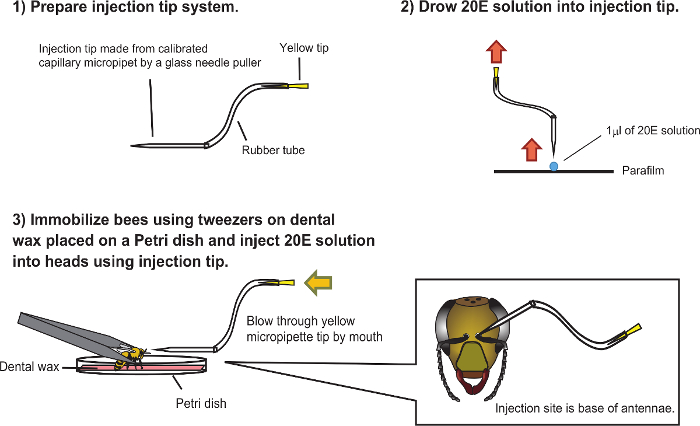
Figure 4. Scheme of the protocol for 20E injection. Procedures 2.3 and 2.4 in the protocol section are illustrated in this figure. Please click here to view a larger version of this figure.
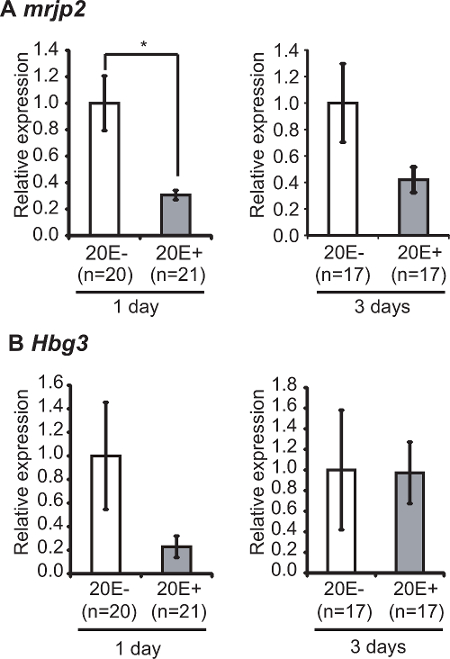
Figure 5. Effect of 20E injection on mrjp2 and Hbg3 expression in the HPGs16. The graph shows a comparison of mRNA levels of mrjp2 (A) and Hbg3 (B) in the HPGs between 20E-treated bees (20E+) and control bees (20E-). Numbers under the graph indicate the day after 20E treatment. The mRNA level of each gene was normalized with that of elongation factor 1α-F2 (EF1α-F2). Relative mRNA level of each gene in the control bee HPGs was defined as 1. Relative mRNA levels are indicated with a standard error. An asterisk indicates a significant difference between 20E-treated bees and control bees (*, p <0.05; t-test). This figure has been reproduced from Ueno et al., (2015)16. Please click here to view a larger version of this figure.
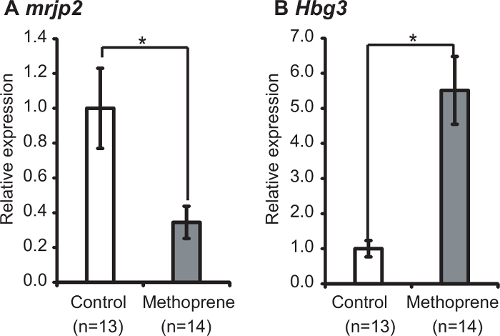
Figure 6. Effect of methoprene application on mrjp2 and Hbg3 expression in the HPGs16. The graph shows the comparison of mRNA levels of mrjp2 (A) and Hbg3 (B) in the HPGs between methoprene-treated bees and control bees. The mRNA level of each gene was normalized with that of EF1α-F2. Relative mRNA level of each gene in the control bee HPGs was defined as 1. Relative mRNA levels are indicated with standard error. Asterisks indicate significant differences between methoprene-treated bees and control bees (*, p <0.05; t-test). This figure has been reproduced from Ueno et al., (2015)16. Please click here to view a larger version of this figure.
| Colony No. | Observed behavior | Number of individuals in each HPG class | |||
| Developed | Intermediate | Shrunken | Total | ||
| 1 | Nursing | 8 | 1 | 1 | 10 |
| Foraging | 0 | 4 | 7 | 11 | |
| 2 | Nursing | 4 | 2 | 0 | 6 |
| Foraging | 0 | 0 | 5 | 5 | |
Table 1: Classification of HPGs of workers whose nursing or foraging behavior was observed in single-cohort colonies. HPG size in workers from two single-cohort colonies (colony nos. 1 and 2) was grouped into three classes; 'Developed', 'Intermediate' and 'Shrunken' by size.
| Days after injection | No injection | Insect saline | Solvent for 20E soln | |
| Trial 1 | Day0 | 15/15 | 15/15 | 14/15 |
| Day1 | 15/15 | 14/15 | 13/15 | |
| Day5 | 14/15 | 13/15 | 11/15 | |
| Day7 | 14/15 | 12/15 | 9/15 | |
| Trial 2 | Day0 | 15/15 | 15/15 | 15/15 |
| Day1 | 15/15 | 13/15 | 15/15 | |
| Day5 | 15/15 | 11/15 | 12/15 | |
| Day7 | 14/15 | 10/15 | 12/15 |
Table 2: Survival rate of bees injected with solvent for 20E solution. Fifteen workers were prepared in each experimental group.
| Days after application | Acetone | Methoprene | |
| Trial 1 | Day 0 | 7/7 | 8/8 |
| Day 7 | 7/7 | 6/8 | |
| Trial 2 | Day 0 | 7/7 | 8/8 |
| Day 7 | 7/7 | 8/8 |
Table 3: Survival rate of bees treated with methoprene. Seven to eight workers were prepared in each experimental group.
| Days after injection | No injection | Acetone/Bee saline (1:4) |
| Day 0 | 15/15 | 15/15 |
| Day 1 | 15/15 | 6/15 |
| Day 3 | 15/15 | 5/15 |
| Day 5 | 15/15 | 4/15 |
| Day 7 | 15/15 | 4/15 |
Table 4: Survival rate of bees injected with acetone/bee saline (1:4) solution. Fifteen workers were prepared for each experimental group. Acetone/bee saline (1:4) solution was injected into the worker abdomen. The composition of bee saline is 130 mM NaCl, 6 mM KCl, 4mM MgCl2, 2.5 mM CaCl2, 160 mM sucrose, 25 mM glucose, and 10 mM HEPES (pH 7.0).
Discussion
Preparation of single-cohort colonies
Here we described the protocol used in our previous study16 to prepare single-cohort colonies for analysis of HPG physiology associated with the shift in the role of worker bees. Nurse bees and precocious foragers that satisfied the criteria described in procedures 1.6-1.7 and Figure 2 were observed in the single-cohort colonies (Table 1). The photographs in Figure 2 would be useful in classification of HPG states as a reference. Criteria based on both worker behavior and HPG development are valid for defining nurse bees or foragers in typical colonies. Role shift from nursing to foraging gradually proceeds in those colonies: the amount of time spent in nursing behavior gradually declines while that in foraging behavior gradually increases during the role shift2. Thus, it would be difficult to collect workers that exclusively perform nursing or foraging by only behavioral criteria. The result that expression of mrjp2 and Hbg3 in the HPGs is associated with the role of the workers clearly indicates that the protocol described here can be adopted to examine HPG physiology in nurse bees and precocious foragers from single-cohort colonies (Figure 3). Criteria based on both worker behavior and HPG development could also be applicable in defining nurse bees and precocious foragers from single-cohort colonies. In addition to the HPGs, other exocrine glands in the head undergo physiological changes in association with the role shift. For example, the function of the mandibular gland changes from the synthesis of fatty acids for brood food to the synthesis of alarm pheromone 2-heptanone2. The protocol described here may thus be adapted to examine the role-associated physiology of exocrine glands other than the HPGs.
Successful collection of nurse bees and precocious foragers from single-cohort colonies depends on the collection of a sufficient number of newly emerged workers when the colonies are prepared. If a low number of newly emerged workers is collected, it would be difficult to collect enough nurse bees and precocious foragers. Moreover, the condition of the queens is another key point for successful sample collection. Queens with a large abdomen are good for laying eggs because these queens usually have developed ovaries. Thus, the labor of workers is thought to be effectively divided even in single-cohort colonies because the brood is constantly supplied by the queen. If no brood is supplied, it would be difficult to collect nurse bees from the single-cohort colonies. Finally, marking the workers using poster paint is required to ensure that workers are collected from single-cohort colonies, because foragers occasionally return to the wrong colony. To collect precocious foragers effectively, paint marks should be applied to as many workers as possible (more than 900 newly emerged workers per single-cohort colony). The use of water-based ink for marking may be recommended, because an oil-based ink, which usually contains volatile organic compounds, might disrupt the chemical communication between the bees. The water-based ink marks did not fade very much during the course of the experiment.
Hormone treatment
We also described the protocol for injecting 20E into the heads of workers to examine the effect of ecdysone on HPG physiology (mrjp2 and Hbg3 expression). The survival rate of bees injected with insect saline or the solvent for 20E solution was sufficient for the subsequent analysis, indicating that the protocol described here for injection using an injection tip and solvent for 20E solution can be adopted for the 20E injection experiment (Table 2). Moreover, comparison of gene expression in the HPGs between 20E-treated bees and control bees indicated that the injected 20E changed the expression of mrjp2 and Hbg3, both of which are related to HPG function (Figure 5). This result suggests that the protocol described here would be useful for examining the effects of ecdysone on HPG physiology, and can be adopted for examining other exocrine glands in the head, such as the mandibular glands. Furthermore, the injection method can be adopted for injecting other chemicals. For example, the protocol described here would be appropriate for injecting double-stranded RNA solutions into the heads for gene knockdown experiments.
In addition to 20E, we described a protocol for applying methoprene, which is a JH analogue. Methoprene is usually applied to the abdomen. On the other hand, methoprene was applied to the head of workers, here. Almost all bees with topical application of methoprene or acetone survived 7 days after treatment, suggesting that application of 5 µl methoprene or acetone solution to the heads has little effect on worker survival rate (Table 3). Furthermore, comparison of mrjp2 and Hbg3 expression in the HPGs between methoprene- and acetone-treated bees indicates that methoprene application inhibits mrjp2 expression and enhances Hbg3 expression (Figure 6). These results suggest that the protocol described here is appropriate for analyzing the effects of methoprene on the physiology of exocrine glands such as the HPGs in the head.
Successful hormone treatment depends on the survival rate of treated bees. Low-temperature exposure in a refrigerator may be appropriate for anesthetizing bees. Anesthesia on ice is not recommended because bees will get wet on the ice, leading to a low survival rate. Moreover, the injection method could be another key point for keeping bees alive. It is important to make the injection tip long and thin, and to shape it to a sharp tip using the cutter to minimize damage to the bees by injection. However, the injection method might not be appropriate for examining the effects of methoprene on HPG physiology, because the acetone solvent for methoprene negatively affects bee survival (Table 4). Additionally, the injection method described here may not be appropriate for behavioral analysis in colonies as injected bees would be excluded from their colonies when they are re-introduced after injection. Workers with slight injury might be excluded from the colonies. Other methods, such as application or oral administration of hormone may be appropriate for behavioral analysis.
The single-cohort colony has been used to examine the regulation of the division of labor of worker honeybees10,11. Additionally, the treatment with juvenile hormone has been used for the examination of behavior and brain function related to the division of labor11. However, detailed protocols for both the preparation of the single-cohort colonies and the treatment with JH has not been previously provided in such detail. Recently, the importance of ecdysone in the division of labor are becoming increasingly recognized, and the regulation of the division of labor by both JH and ecdysone is suggested23. The detailed protocols for the successful preparation of single-cohort colonies and hormone treatment such as JH and ecdysone described in this article might contribute to advancement in the study of worker physiology.
Disclosures
The authors have nothing to disclose.
Acknowledgements
This work was supported by a Grant-in-Aid for Scientific Research (B) and a Grant-in Aid for Scientific Research on Innovative Areas 'Systems Molecular Ethology' from the Ministry of Education, Culture, Sports, Science and Technology (MEXT) of Japan. T.U. was the recipient of a Grant-Aid from the Japan Society for the Promotion of Science for Young Scientists.
Materials
| Name | Company | Catalog Number | Comments |
|---|---|---|---|
| UNIPOSCA | Mitsubishi pencil | PC-5M | Marker pen for the application of marks to bees |
| 20-hydroxyecdysone | Sigma Aldrich | H5142 | |
| Methoprene | Sigma Aldrich | 33375 | |
| Breeding case insect | IRIS OHYAMA | CP-SS | |
| Electromotion mixier | ISO | 23M-R25 | homogenization of tissue |
| TRIZol Reagent | Invitrogen | 15596-026 | the reagent for total RNA extraction |
| DNase I | Takara | 2270A | |
| PrimeScript RT reagent kit | Takara | RR037A | the reagent for reverse transcription |
| SYBR Premix ExTaq II | Takara | RR820A | the reagent for real-time PCR |
| LightCycle 1.2 Instrument | Roche | 12011468001 | the instrument for real-time PCR |
| LightCycle Capillaries (20μl) | Roche | 4929292001 | the material for real-time PCR |
References
- Wilson, E. O. The insect societies. , Harvard university press. (1971).
- Winston, M. L. The biology of the honey bee. , Harvard university press. (1987).
- Lindauer, M. Ein Beitrag zur Frage der Arbeitsteilung im Bienenstaat. Zeitschrift für vergleichende Physiologie. 34 (4), 299-345 (1952).
- Sakagami, S. Untersuchungen uber die Arbeitsteilung in einen Zwergvolk der Honigbienen. Beitrage zur Biologie des Bienenvolkes, Apis mellifera L. I. Jap J Zool. 11, 117-185 (1953).
- Kubo, T., et al. Change in the expression of hypopharyngeal-gland proteins of the worker honeybees (Apis mellifera L.) with age and/or role. J Biochem. 119 (2), 291-295 (1996).
- Ohashi, K., Natori, S., Kubo, T. Change in the mode of gene expression of the hypopharyngeal gland cells with an age-dependent role change of the worker honeybee Apis mellifera L. Eur J Biochem. 249 (3), 797-802 (1997).
- Ohashi, K., Natori, S., Kubo, T. Expression of amylase and glucose oxidase in the hypopharyngeal gland with an age-dependent role change of the worker honeybee (Apis mellifera L). Eur J Biochem. 265 (1), 127-133 (1999).
- Ohashi, K., Sawata, M., Takeuchi, H., Natori, S., Kubo, T. Molecular cloning of cDNA and analysis of expression of the gene for alpha-glucosidase from the hypopharyngeal gland of the honeybee Apis mellifera L. Biochem Biophys Res Commun. 221 (2), 380-385 (1996).
- Ueno, T., Nakaoka, T., Takeuchi, H., Kubo, T. Differential gene expression in the hypopharyngeal glands of worker honeybees (Apis mellifera L.) associated with an age-dependent role change. Zoolog Sci. 26 (8), 557-563 (2009).
- Robinson, G. E., Page, R. E., Strambi, C., Strambi, A. Hormonal and genetic control of behavioral integration in honey bee colonies. Science. 246 (4926), 109-112 (1989).
- Sullivan, J. P., Fahrbach, S. E., Robinson, G. E. Juvenile hormone paces behavioral development in the adult worker honey bee. Horm Behav. 37 (1), 1-14 (2000).
- Ben-Shahar, Y., Robichon, A., Sokolowski, M. B., Robinson, G. E. Influence of gene action across different time scales on behavior. Science. 296 (5568), 741-744 (2002).
- Lehman, H. K., et al. Division of labor in the honey bee (Apis mellifera): the role of tyramine beta-hydroxylase. J Exp Biol. 209 (Pt 14), 2774-2784 (2006).
- Mutti, N. S., Wang, Y., Kaftanoglu, O., Amdam, G. V. Honey bee PTEN--description, developmental knockdown, and tissue-specific expression of splice-variants correlated with alternative social phenotypes). PLoS One. 6 (7), e22195(2011).
- Whitfield, C. W., Cziko, A. M., Robinson, G. E. Gene expression profiles in the brain predict behavior in individual honey bees. Science. 302 (5643), 296-299 (2003).
- Ueno, T., Takeuchi, H., Kawasaki, K., Kubo, T. Changes in the Gene Expression Profiles of the Hypopharyngeal Gland of Worker Honeybees in Association with Worker Behavior and Hormonal Factors. PLoS One. 10 (6), e0130206(2015).
- Paul, R. K., Takeuchi, H., Matsuo, Y., Kubo, T. Gene expression of ecdysteroid-regulated gene E74 of the honeybee in ovary and brain. Insect Mol Biol. 14 (1), 9-15 (2005).
- Takeuchi, H., et al. Identification of a novel gene, Mblk-1, that encodes a putative transcription factor expressed preferentially in the large-type Kenyon cells of the honeybee brain. Insect Mol Biol. 10 (5), 487-494 (2001).
- Takeuchi, H., Paul, R. K., Matsuzaka, E., Kubo, T. EcR-A expression in the brain and ovary of the honeybee (Apis mellifera L). Zoolog Sci. 24 (6), 596-603 (2007).
- Yamane, T., Miyatake, T. Reduced female mating receptivity and activation of oviposition in two Callosobruchus species due to injection of biogenic amines. Journal of Insect Physiology. 56 (3), 271-276 (2010).
- Ben-Shahar, Y., Leung, H. T., Pak, W. L., Sokolowski, M. B., Robinson, G. E. cGMP-dependent changes in phototaxis: a possible role for the foraging gene in honey bee division of labor. J Exp Biol. 206 (Pt 14), 2507-2515 (2003).
- Danforth, B. N., Ji, S. Elongation factor-1 alpha occurs as two copies in bees: implications for phylogenetic analysis of EF-1 alpha sequences in insects. Mol Biol Evol. 15 (3), 225-235 (1998).
- Pandey, A., Bloch, G. Juvenile hormone and ecdysteroids as major regulators of brain and behavior in bees. Current Opinion in Insect Science. 12, 26-37 (2015).
Reprints and Permissions
